PHISHING AND 1ST
ASSIGNMENT

Improving and sharing our
work
AGENDA
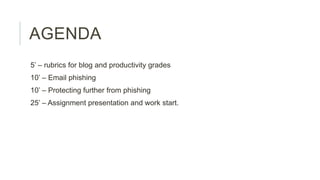
5’ – rubrics for blog and productivity grades
10’ – Email phishing
10’ – Protecting further from phishing
25’ – Assignment presentation and work start.
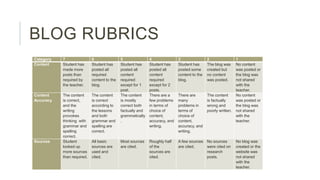
BLOG RUBRICS
Category
Content

7
Student has
made more
posts than
required by
the teacher.

6
Student has
posted all
required
content to the
blog.

Content
Accuracy

The content
is correct,
and the
writing
provokes
thinking with
grammar and
spelling
correct.
Student
looked up
more sources
than required.

The content
is correct
according to
the lessons
and both
grammar and
spelling are
correct.

Sources

All basic
sources are
used and
cited.

5
Student has
posted all
content
required
except for 1
post.
The content
is mostly
correct both
factually and
grammatically
.

4
Student has
posted all
content
required
except for 2
posts.
There are a
few problems
in terms of
choice of
content,
accuracy, and
writing.

3
Student has
posted some
content to the
blog.

2
The blog was
created but
no content
was posted.

There are
many
problems in
terms of
choice of
content,
accuracy, and
writing.

The content
is factually
wrong and
poorly written.

Most sources
are cited.

Roughly half
of the
sources are
cited.

A few sources No sources
are cited.
were cited on
research
posts.

1
No content
was posted or
the blog was
not shared
with the
teacher.
No content
was posted or
the blog was
not shared
with the
teacher.

No blog was
created or the
website was
not shared
with the
teacher.
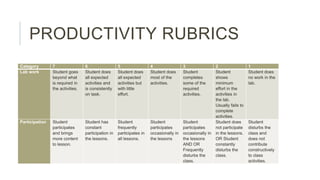
PRODUCTIVITY RUBRICS
Category
Lab work

7
Student goes
beyond what
is required in
the activities.

6
Student does
all expected
activities and
is consistently
on task.

5
Student does
all expected
activities but
with little
effort.

4
Student does
most of the
activities.

3
Student
completes
some of the
required
activities.

Participation

Student
participates
and brings
more content
to lesson.

Student has
constant
participation in
the lessons.

Student
frequently
participates in
all lessons.

Student
participates
occasionally in
the lessons

Student
participates
occasionally in
the lessons
AND OR
Frequently
disturbs the
class.

2
Student
shows
minimum
effort in the
activities in
the lab.
Usually fails to
complete
activities.
Student does
not participate
in the lessons.
OR Student
constantly
disturbs the
class.

1
Student does
no work in the
lab.

Student
disturbs the
class and
does not
contribute
constructively
to class
activities.
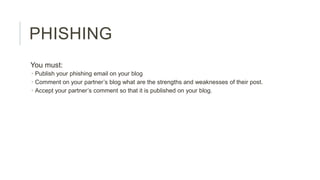
PHISHING
You must:
 Publish your phishing email on your blog
 Comment on your partner’s blog what are the strengths and weaknesses of their post.
 Accept your partner’s comment so that it is published on your blog.
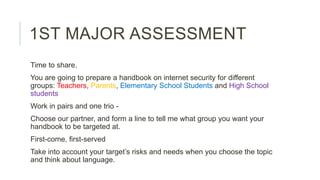
1ST MAJOR ASSESSMENT
Time to share.
You are going to prepare a handbook on internet security for different
groups: Teachers, Parents, Elementary School Students and High School
students

Work in pairs and one trio Choose our partner, and form a line to tell me what group you want your
handbook to be targeted at.
First-come, first-served
Take into account your target’s risks and needs when you choose the topic
and think about language.
QUESTIONS?

Phishing and 1st assignment

  • 1.
  • 2.
    AGENDA 5’ – rubricsfor blog and productivity grades 10’ – Email phishing 10’ – Protecting further from phishing 25’ – Assignment presentation and work start.
  • 3.
    BLOG RUBRICS Category Content 7 Student has mademore posts than required by the teacher. 6 Student has posted all required content to the blog. Content Accuracy The content is correct, and the writing provokes thinking with grammar and spelling correct. Student looked up more sources than required. The content is correct according to the lessons and both grammar and spelling are correct. Sources All basic sources are used and cited. 5 Student has posted all content required except for 1 post. The content is mostly correct both factually and grammatically . 4 Student has posted all content required except for 2 posts. There are a few problems in terms of choice of content, accuracy, and writing. 3 Student has posted some content to the blog. 2 The blog was created but no content was posted. There are many problems in terms of choice of content, accuracy, and writing. The content is factually wrong and poorly written. Most sources are cited. Roughly half of the sources are cited. A few sources No sources are cited. were cited on research posts. 1 No content was posted or the blog was not shared with the teacher. No content was posted or the blog was not shared with the teacher. No blog was created or the website was not shared with the teacher.
  • 4.
    PRODUCTIVITY RUBRICS Category Lab work 7 Studentgoes beyond what is required in the activities. 6 Student does all expected activities and is consistently on task. 5 Student does all expected activities but with little effort. 4 Student does most of the activities. 3 Student completes some of the required activities. Participation Student participates and brings more content to lesson. Student has constant participation in the lessons. Student frequently participates in all lessons. Student participates occasionally in the lessons Student participates occasionally in the lessons AND OR Frequently disturbs the class. 2 Student shows minimum effort in the activities in the lab. Usually fails to complete activities. Student does not participate in the lessons. OR Student constantly disturbs the class. 1 Student does no work in the lab. Student disturbs the class and does not contribute constructively to class activities.
  • 5.
    PHISHING You must:  Publishyour phishing email on your blog  Comment on your partner’s blog what are the strengths and weaknesses of their post.  Accept your partner’s comment so that it is published on your blog.
  • 6.
    1ST MAJOR ASSESSMENT Timeto share. You are going to prepare a handbook on internet security for different groups: Teachers, Parents, Elementary School Students and High School students Work in pairs and one trio Choose our partner, and form a line to tell me what group you want your handbook to be targeted at. First-come, first-served Take into account your target’s risks and needs when you choose the topic and think about language.
  • 7.