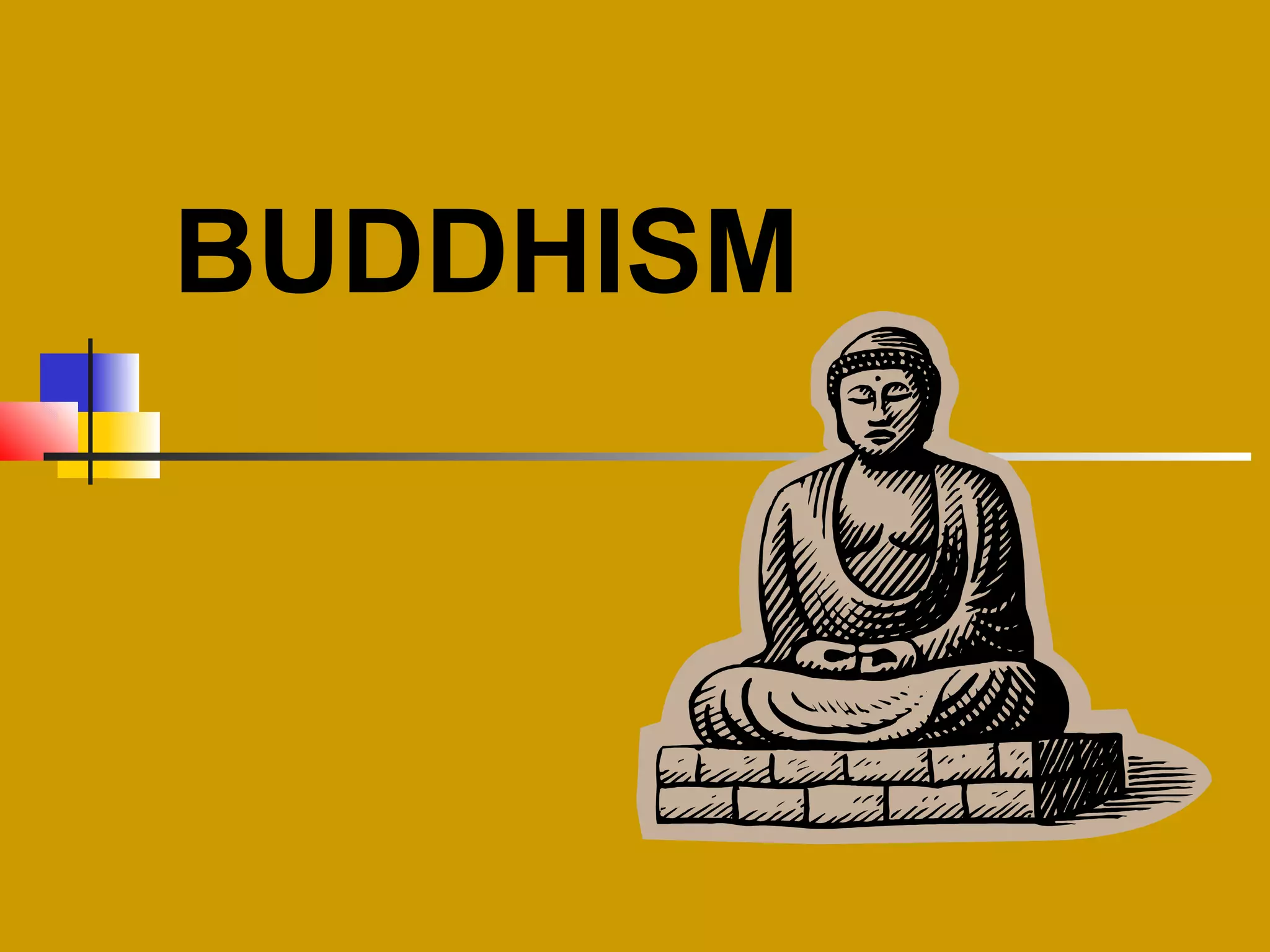
BUDDHISM
- an organized system of
beliefs, rites & celebrations
centered on a supernatural
being or power; belief
pursued with devotion.
Religion
Few definitions given in the
early Buddhist texts:
• Education is to lead the mind
from darkness to light or to lead
one from the veil of ignorance to
the light of wisdom.
• Education is to endow one with
right knowledge and conduct.
Two distinct areas covered
in Buddhist Education:
1.Vijja (knowledge)
2. Carana (conduct/behavior)
According to the Buddha,
man’s conduct is usually
motivated by following three
driving forces, namely, lobha,
dosa and moha.
• Lobha (desire)- attachment,
attachment to both material
and spiritual things.
• Dosa (aversion or hatred)-
conflict which drives man to
fight with others.
• Moha (ignorance)- vagueness
ATTITUDE OF THE BUDDHA
ON EDUCATION
• All beings are equal and
they are all endowed with the
potentiality to attain
enlightenment.
AIMS OF THE BUDDHIST
EDUCATION
• To help people in attaining
arahantship or Nirvana, the
complete liberation or
freedom from human suffering.
BONDAGES BY WHICH MAN IS BOUNDED IN
THE SUFFERING OF THE CYCLE OF
REBIRTH
A. The bondage of cultural habits
B. The bondage of economic systems
C. The bondage of political thoughts
D. The bondage of social problems
CONTENTS OF THE
BUDDHIST EDUCATION
1. The Four Noble Truths and
Eightfold Path
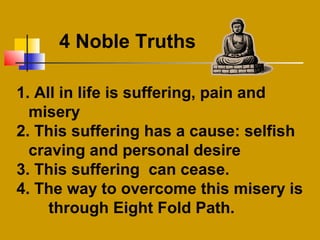
1. All in life is suffering, pain and
misery
2. This suffering has a cause: selfish
craving and personal desire
3. This suffering can cease.
4. The way to overcome this misery is
through Eight Fold Path.
4 Noble Truths
Eightfold Path
1.Right View
2.Right Intention
3.Right Speech
4.Right Action
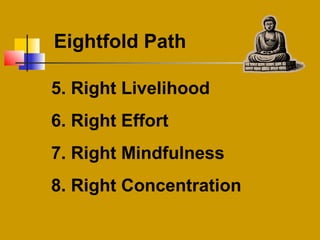
Eightfold Path
5. Right Livelihood
6. Right Effort
7. Right Mindfulness
8. Right Concentration
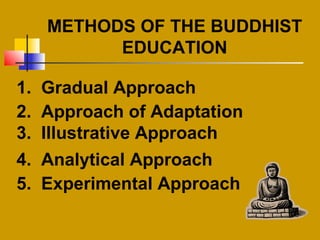
METHODS OF THE BUDDHIST
EDUCATION
1. Gradual Approach
2. Approach of Adaptation
3. Illustrative Approach
4. Analytical Approach
5. Experimental Approach
Philo buddhism
Philo buddhism

Philo buddhism

  • 1.
  • 2.
    - an organizedsystem of beliefs, rites & celebrations centered on a supernatural being or power; belief pursued with devotion. Religion
  • 3.
    Few definitions givenin the early Buddhist texts: • Education is to lead the mind from darkness to light or to lead one from the veil of ignorance to the light of wisdom. • Education is to endow one with right knowledge and conduct.
  • 4.
    Two distinct areascovered in Buddhist Education: 1.Vijja (knowledge) 2. Carana (conduct/behavior)
  • 5.
    According to theBuddha, man’s conduct is usually motivated by following three driving forces, namely, lobha, dosa and moha.
  • 6.
    • Lobha (desire)-attachment, attachment to both material and spiritual things.
  • 7.
    • Dosa (aversionor hatred)- conflict which drives man to fight with others. • Moha (ignorance)- vagueness
  • 8.
    ATTITUDE OF THEBUDDHA ON EDUCATION • All beings are equal and they are all endowed with the potentiality to attain enlightenment.
  • 9.
    AIMS OF THEBUDDHIST EDUCATION • To help people in attaining arahantship or Nirvana, the complete liberation or freedom from human suffering.
  • 10.
    BONDAGES BY WHICHMAN IS BOUNDED IN THE SUFFERING OF THE CYCLE OF REBIRTH A. The bondage of cultural habits B. The bondage of economic systems C. The bondage of political thoughts D. The bondage of social problems
  • 11.
    CONTENTS OF THE BUDDHISTEDUCATION 1. The Four Noble Truths and Eightfold Path
  • 12.
    1. All inlife is suffering, pain and misery 2. This suffering has a cause: selfish craving and personal desire 3. This suffering can cease. 4. The way to overcome this misery is through Eight Fold Path. 4 Noble Truths
  • 13.
    Eightfold Path 1.Right View 2.RightIntention 3.Right Speech 4.Right Action
  • 14.
    Eightfold Path 5. RightLivelihood 6. Right Effort 7. Right Mindfulness 8. Right Concentration
  • 15.
    METHODS OF THEBUDDHIST EDUCATION 1. Gradual Approach 2. Approach of Adaptation 3. Illustrative Approach 4. Analytical Approach 5. Experimental Approach