By Alexis Winans
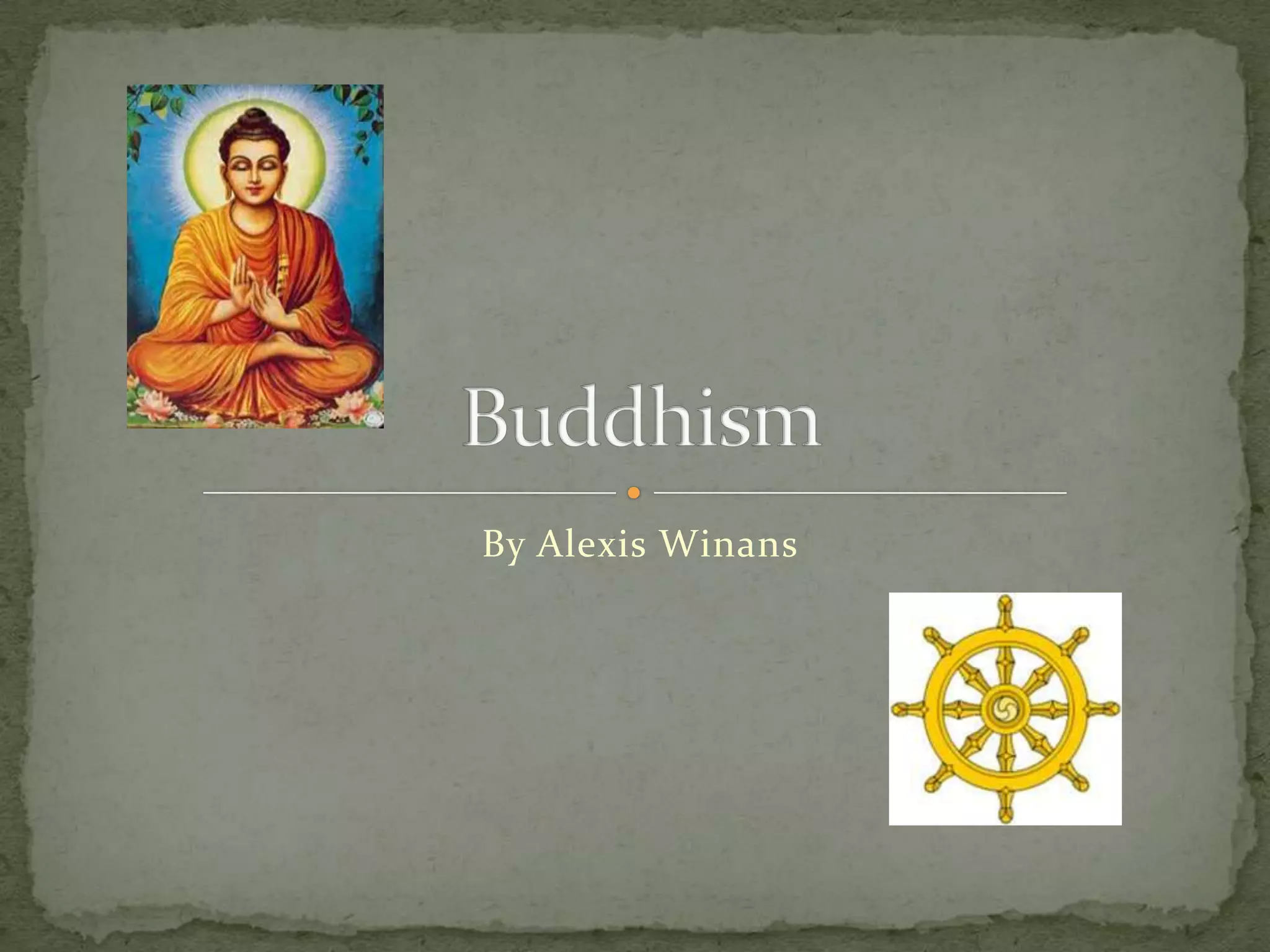
 Buddhism is a major global religion with a complex
  history and system of beliefs.
 The major points that make up Buddhism are: The
  Four Noble Truths, Nirvana, Karma , and the Eightfold
  Path.
 The Four Noble Truths comprise the essence of
    Buddha’s teachings. They are:
   The truth of suffering
   The truth of the cause of suffering
   The truth of the end of suffering
   The truth of the path that leads to the end of suffering.
 Basically the Four Noble Truths state that suffering
  exists; it has a cause; it has an end and it has a cause
  that leads to an end.
 The Four Noble Truths are a plan for dealing with the
  suffering humanity faces, suffering of a physical and
  mental nature. In Buddhism desire and ignorance lie
  at the root of suffering.
 The Four Noble Truths are achieved by the Eightfold
    Path:
   Right to understanding
   Right though (no bad or negative thoughts)
   Right speech (no bad or negative words)
   Right Action (no bad or negative actions)
 5. Right livelihood (living right)
 6. Right Effort (always attempting to do the right
  thing)
 7. Right Mindfulness (having the right intentions)
 8. Right Concentration (concentrating on what is
  important)
 The karma is Buddhism is different than society’s
  karma. It does not refer to preordained fate.
 Karma refers to good or bad actions a person takes
  during his/her lifetime.
 Good actions involve either the absence of bad actions
  or actual positive acts, bring about happiness in the
  long run.
 Bad actions like lying or stealing bring about
  unhappiness in the long run.
 The weight that bad actions carry is determined by 5
    conditions:
   Frequent Repetitive Actions
   Determine/Intentional Action
   Action performed without Regret
   Actions against Extraordinary Persons
   Actions toward those who have helped one in the past
 Other than good karma and bad karma there is
  neutral karma.
 Neutral karma derives from acts such as breathing,
  eating and sleeping. Neutral karma has no benefits or
  costs.
 Why would they think that simple acts such as these
  would create any karma?
 This is because when we breathe we kill living
  organisms in the air. When we eat we are eating what
  was once a living animal or plant. When we sleep may
  lay or accidently squish a living organism.
 Nirvana-transcendent state free from suffering and our
  worldly cycle of birth and rebirth, spiritual
  enlightenment has been achieved.
 This is the entire goal in Buddhism. To be freed from
  the reincarnation cycle and become enlightened.
 I think that Buddhism is a really interesting religion to
  learn about. Their concepts are so different from my
  religions but I also see some of that are the same. For
  example: Bad actions in Buddhism are kind of the
  same concept as sins. In both Buddhism and
  Christianity lying, cheating and stealing are wrong.
  Another thing they have in common is the fact that we
  are taught not to dwell on material things.
 My “Ah Ha” moment was the fact that karma has such
 an influence on these people’s lives. They live every
 day trying to create no karma either good or bad. It
 must be incredibly hard to make decisions, I cannot
 imagine that kind of pressure.
 We should learn about Buddhism for the same reason
  we need to learn about all other religions;
  understanding.
 In order to teach our diverse student we need to know
  where they come from and what religions and customs
  they do or do not practice. How can we teach someone
  that we do not understand?
 Basics of Buddhism
 www.pbs.org/edens/thailand/buddhism.htm

Buddhism

  • 1.
  • 2.
     Buddhism isa major global religion with a complex history and system of beliefs.  The major points that make up Buddhism are: The Four Noble Truths, Nirvana, Karma , and the Eightfold Path.
  • 3.
     The FourNoble Truths comprise the essence of Buddha’s teachings. They are:  The truth of suffering  The truth of the cause of suffering  The truth of the end of suffering  The truth of the path that leads to the end of suffering.
  • 4.
     Basically theFour Noble Truths state that suffering exists; it has a cause; it has an end and it has a cause that leads to an end.  The Four Noble Truths are a plan for dealing with the suffering humanity faces, suffering of a physical and mental nature. In Buddhism desire and ignorance lie at the root of suffering.
  • 5.
     The FourNoble Truths are achieved by the Eightfold Path:  Right to understanding  Right though (no bad or negative thoughts)  Right speech (no bad or negative words)  Right Action (no bad or negative actions)
  • 6.
     5. Rightlivelihood (living right)  6. Right Effort (always attempting to do the right thing)  7. Right Mindfulness (having the right intentions)  8. Right Concentration (concentrating on what is important)
  • 7.
     The karmais Buddhism is different than society’s karma. It does not refer to preordained fate.  Karma refers to good or bad actions a person takes during his/her lifetime.  Good actions involve either the absence of bad actions or actual positive acts, bring about happiness in the long run.  Bad actions like lying or stealing bring about unhappiness in the long run.
  • 8.
     The weightthat bad actions carry is determined by 5 conditions:  Frequent Repetitive Actions  Determine/Intentional Action  Action performed without Regret  Actions against Extraordinary Persons  Actions toward those who have helped one in the past
  • 9.
     Other thangood karma and bad karma there is neutral karma.  Neutral karma derives from acts such as breathing, eating and sleeping. Neutral karma has no benefits or costs.  Why would they think that simple acts such as these would create any karma?  This is because when we breathe we kill living organisms in the air. When we eat we are eating what was once a living animal or plant. When we sleep may lay or accidently squish a living organism.
  • 10.
     Nirvana-transcendent statefree from suffering and our worldly cycle of birth and rebirth, spiritual enlightenment has been achieved.  This is the entire goal in Buddhism. To be freed from the reincarnation cycle and become enlightened.
  • 12.
     I thinkthat Buddhism is a really interesting religion to learn about. Their concepts are so different from my religions but I also see some of that are the same. For example: Bad actions in Buddhism are kind of the same concept as sins. In both Buddhism and Christianity lying, cheating and stealing are wrong. Another thing they have in common is the fact that we are taught not to dwell on material things.
  • 13.
     My “AhHa” moment was the fact that karma has such an influence on these people’s lives. They live every day trying to create no karma either good or bad. It must be incredibly hard to make decisions, I cannot imagine that kind of pressure.
  • 14.
     We shouldlearn about Buddhism for the same reason we need to learn about all other religions; understanding.  In order to teach our diverse student we need to know where they come from and what religions and customs they do or do not practice. How can we teach someone that we do not understand?
  • 15.
     Basics ofBuddhism  www.pbs.org/edens/thailand/buddhism.htm