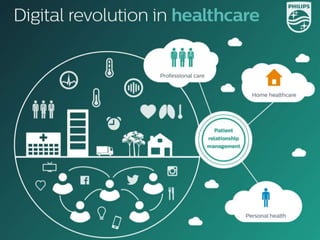
Hospital of Tomorrow 
Disruptive Change: 
How to Save the Healthcare System 
October 2014
Hospital of Tomorrow 
Align, Engage, Integrate, Enable and 
Partner Across the Health Continuum 
Amy Andersen 
Healthcare Transformation Services 
October 2014
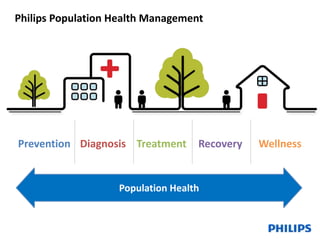
Philips Population Health Management 
Prevention Diagnosis Treatment Recovery Wellness 
Population Health
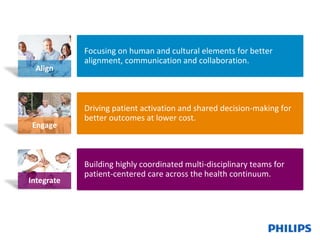
Focusing on human and cultural elements for better 
alignment, communication and collaboration. 
Align 
Driving patient activation and shared decision-making for 
better outcomes at lower cost. 
Engage 
Building highly coordinated multi-disciplinary teams for 
patient-centered care across the health continuum. 
Integrate
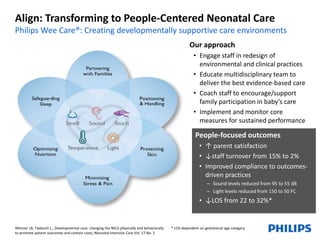
Align: Transforming to People-Centered Neonatal Care 
Philips Wee Care®: Creating developmentally supportive care environments 
Altimier LB, Tedeschi L., Developmental care: changing the NICU physically and behaviorally 
to promote patient outcomes and contain costs, Neonatal Intensive Care Vol .17 No. 2 
Our approach 
• Engage staff in redesign of 
environmental and clinical practices 
• Educate multidisciplinary team to 
deliver the best evidence-based care 
• Coach staff to encourage/support 
family participation in baby’s care 
• Implement and monitor core 
measures for sustained performance 
People-focused outcomes 
• ↑ parent satisfaction 
• ↓staff turnover from 15% to 2% 
• Improved compliance to outcomes-driven 
practices 
– Sound levels reduced from 95 to 55 dB 
– Light levels reduced from 150 to 50 FC 
• ↓LOS from 22 to 32%* 
* LOS dependent on gestational age category
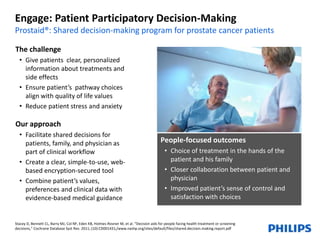
Engage: Patient Participatory Decision-Making 
Prostaid®: Shared decision-making program for prostate cancer patients 
People-focused outcomes 
• Choice of treatment in the hands of the 
patient and his family 
• Closer collaboration between patient and 
physician 
• Improved patient’s sense of control and 
satisfaction with choices 
The challenge 
• Give patients clear, personalized 
information about treatments and 
side effects 
• Ensure patient’s pathway choices 
align with quality of life values 
• Reduce patient stress and anxiety 
Our approach 
• Facilitate shared decisions for 
patients, family, and physician as 
part of clinical workflow 
• Create a clear, simple-to-use, web-based 
encryption-secured tool 
• Combine patient’s values, 
preferences and clinical data with 
evidence-based medical guidance 
Stacey D, Bennett CL, Barry MJ, Col NF, Eden KB, Holmes-Rovner M, et al. “Decision aids for people facing health treatment or screening 
decisions,” Cochrane Database Syst Rev. 2011; (10):CD001431;/www.nashp.org/sites/default/files/shared.decision.making.report.pdf
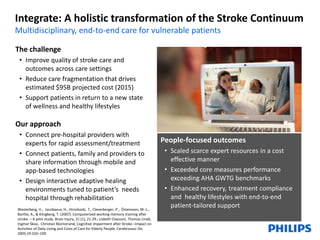
Integrate: A holistic transformation of the Stroke Continuum 
Multidisciplinary, end-to-end care for vulnerable patients 
People-focused outcomes 
• Scaled scarce expert resources in a cost 
effective manner 
• Exceeded core measures performance 
exceeding AHA GWTG benchmarks 
• Enhanced recovery, treatment compliance 
and healthy lifestyles with end-to-end 
patient-tailored support 
The challenge 
• Improve quality of stroke care and 
outcomes across care settings 
• Reduce care fragmentation that drives 
estimated $95B projected cost (2015) 
• Support patients in return to a new state 
of wellness and healthy lifestyles 
Our approach 
• Connect pre-hospital providers with 
experts for rapid assessment/treatment 
• Connect patients, family and providers to 
share information through mobile and 
app-based technologies 
• Design interactive adaptive healing 
environments tuned to patient’s needs 
hospital through rehabilitation 
Westerberg, H., Jacobaeus, H., Hirivikoski, T., Cleverberger, P., Östensson, M.-L., 
Bartfai, A., & Klingberg, T. (2007). Computerized working memory training after 
stroke – A pilot study. Brain Injury, 21 (1), 21-29.; Lisbeth Claesson, Thomas Lindé, 
Ingmar Skoo, Christian Blomstrand, Cognitive Impairment after Stroke –Impact on 
Activities of Daily Living and Costs of Care for Elderly People, Cerebrovasc Dis 
2005;19:102–109
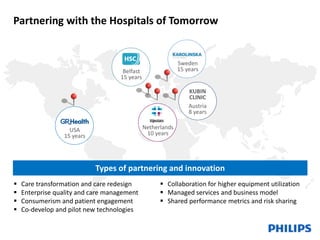
Partnering with the Hospitals of Tomorrow 
Sweden 
15 years 
USA 
15 years 
Netherlands 
10 years 
Belfast 
15 years 
KUBIN 
CLINIC 
Austria 
8 years 
Types of partnering and innovation 
 Care transformation and care redesign 
 Enterprise quality and care management 
 Consumerism and patient engagement 
 Co-develop and pilot new technologies 
 Collaboration for higher equipment utilization 
 Managed services and business model 
 Shared performance metrics and risk sharing
Hospital of Tomorrow 
Jane Lucas, Health Policy Counsel, 
Office of U.S. Senator John Thune
Coordinated Telehealth & 
Care Transformation 
“It is not the strongest of the species 
that survive, nor the most intelligent, 
but the one most responsive to change”. 
Charles Darwin 
Brian A. Rosenfeld, MD 
VP & Chief Medical Officer, Hospital to Home 
October 2014
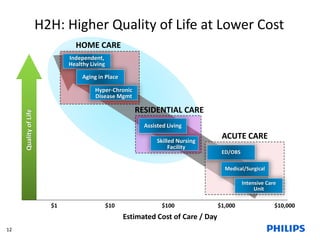
Quality of Life 
H2H: Higher Quality of Life at Lower Cost 
Assisted Living 
$1 $10 $100 $1,000 $10,000 
Estimated Cost of Care / Day 
ACUTE CARE 
ED/OBS 
Medical/Surgical 
Intensive Care 
Unit 
RESIDENTIAL CARE 
Skilled Nursing 
Facility 
HOME CARE 
Independent, 
Healthy Living 
Aging in Place 
Hyper-Chronic 
Disease Mgmt 
12
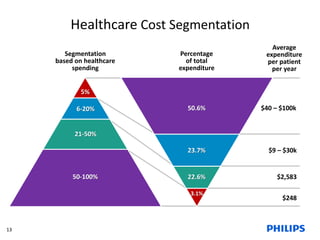
$40 – $100k 
$9 – $30k 
$2,583 
$248 
Healthcare Cost Segmentation 
Segmentation 
based on healthcare 
spending 
Percentage 
of total 
expenditure 
Average 
expenditure 
per patient 
per year 
50.6% 
23.7% 
22.6% 
3.1% 
5% 
6-20% 
21-50% 
50-100% 
13
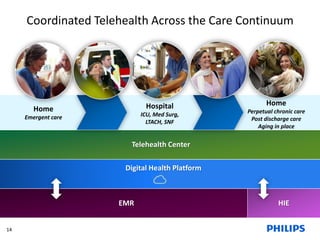
Coordinated Telehealth Across the Care Continuum 
Home 
Emergent care 
Home 
Perpetual chronic care 
Post discharge care 
Aging in place 
Hospital 
ICU, Med Surg, 
LTACH, SNF 
Telehealth Center 
Digital Health Platform 
EMR HIE 
14
15 
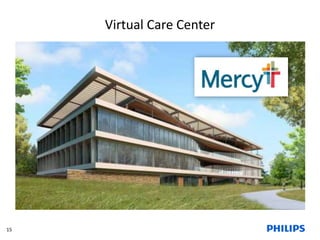
Virtual Care Center 
15
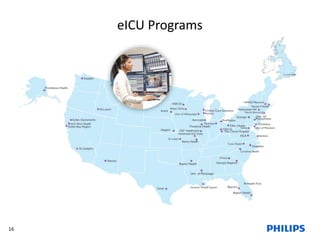
eICU Programs 
16
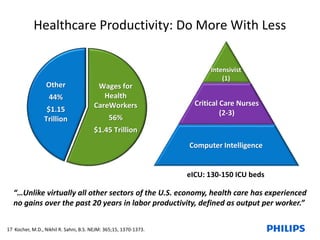
Healthcare Productivity: Do More With Less 
Wages for 
Health 
CareWorkers 
56% 
$1.45 Trillion 
Other 
44% 
$1.15 
Trillion 
Intensivist 
(1) 
Critical Care Nurses 
(2-3) 
Computer Intelligence 
eICU: 130-150 ICU beds 
“…Unlike virtually all other sectors of the U.S. economy, health care has experienced 
no gains over the past 20 years in labor productivity, defined as output per worker.” 
Kocher, M.D., Nikhil 17 R. Sahni, B.S. NEJM: 365;15, 1370-1373.
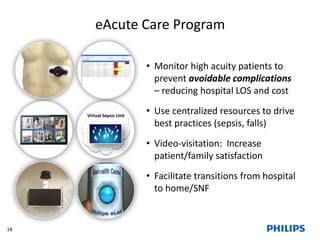
eAcute Care Program 
• Monitor high acuity patients to 
prevent avoidable complications 
– reducing hospital LOS and cost 
• Use centralized resources to drive 
best practices (sepsis, falls) 
• Video-visitation: Increase 
patient/family satisfaction 
• Facilitate transitions from hospital 
to home/SNF 
Virtual Sepsis Unit 
18
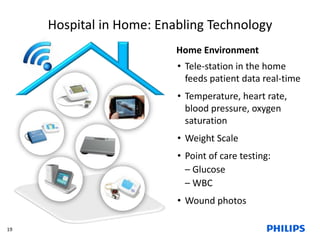
Hospital in Home: Enabling Technology 
Home Environment 
• Tele-station in the home 
feeds patient data real-time 
• Temperature, heart rate, 
blood pressure, oxygen 
saturation 
• Weight Scale 
• Point of care testing: 
– Glucose 
– WBC 
• Wound photos 
19
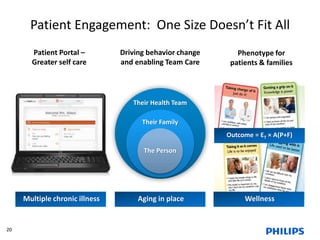
Patient Engagement: One Size Doesn’t Fit All 
Driving behavior change 
and enabling Team Care 
Phenotype for 
patients & families 
Patient Portal – 
Greater self care 
Outcome = ET × A(P+F) 
Their Health Team 
Their Family 
The Person 
Multiple chronic illness Aging in place Wellness 
20
211 21 
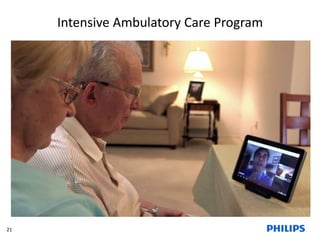
Intensive Ambulatory Care Program
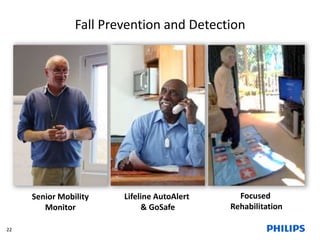
Fall Prevention and Detection 
Lifeline AutoAlert 
& GoSafe 
Senior Mobility 
Monitor 
Focused 
Rehabilitation 
22
23 
“Vision without action is just 
imagination”
Robert Groves, MD, Vice President, 
Health Management 
Banner Health
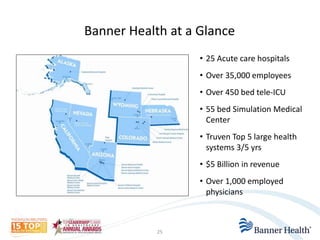
Banner Health at a Glance 
• 25 Acute care hospitals 
• Over 35,000 employees 
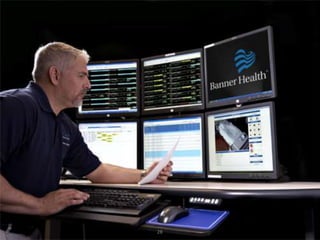
• Over 450 bed tele-ICU 
• 55 bed Simulation Medical 
Center 
• Truven Top 5 large health 
systems 3/5 yrs 
• $5 Billion in revenue 
• Over 1,000 employed 
physicians 
25
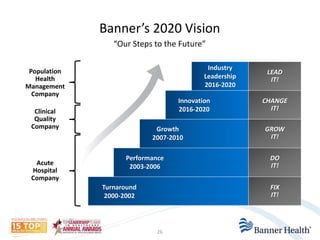
Banner’s 2020 Vision 
26 
Population 
Health 
Management 
Company 
Clinical 
Quality 
Company 
Acute 
Hospital 
Company 
“Our Steps to the Future” 
Industry 
Leadership 
2016-2020 
Innovation 
2016-2020 
Growth 
2007-2010 
Performance 
2003-2006 
Turnaround 
2000-2002 
LEAD 
IT! 
CHANGE 
IT! 
GROW 
IT! 
DO 
IT! 
FIX 
IT!
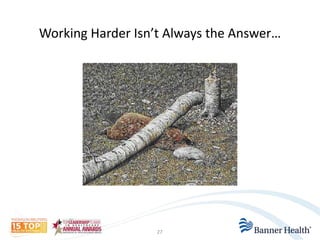
Working Harder Isn’t Always the Answer… 
27
28
1. Identify adverse trends and intervene before they become 
adverse outcomes 
2. Respond quickly to requests for help 
3. Monitor and assist with “evidence-based practice” and reliability 
4. Measure performance across the system 
5. Use data (real time and retrospective) to drive performance 
improvement 
Five Areas of Focus… 
29
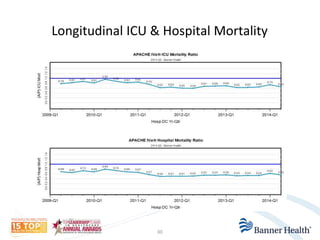
Longitudinal ICU & Hospital Mortality 
30
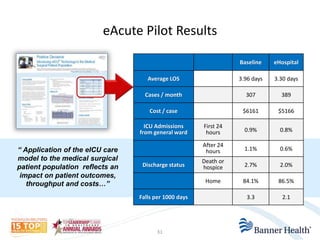
eAcute Pilot Results 
“ Application of the eICU care 
model to the medical surgical 
patient population reflects an 
impact on patient outcomes, 
throughput and costs…” 
Baseline eHospital 
Average LOS 3.96 days 3.30 days 
Cases / month 307 389 
Cost / case $6161 $5166 
ICU Admissions 
from general ward 
First 24 
hours 0.9% 0.8% 
After 24 
hours 1.1% 0.6% 
Discharge status 
Death or 
hospice 2.7% 2.0% 
Home 84.1% 86.5% 
Falls per 1000 days 3.3 2.1 
31
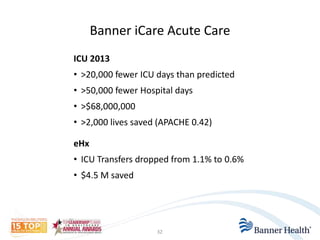
Banner iCare Acute Care 
ICU 2013 
• >20,000 fewer ICU days than predicted 
• >50,000 fewer Hospital days 
• >$68,000,000 
• >2,000 lives saved (APACHE 0.42) 
eHx 
• ICU Transfers dropped from 1.1% to 0.6% 
• $4.5 M saved 
32
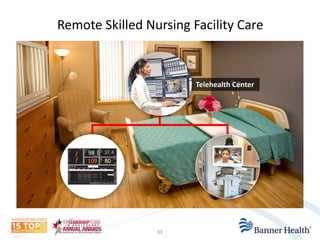
Remote Skilled Nursing Facility Care 
33 
Telehealth Center
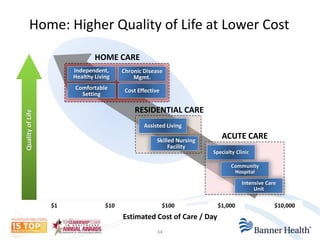
Home: Higher Quality of Life at Lower Cost 
Quality of Life 
Assisted Living 
$1 $10 $100 $1,000 $10,000 
Estimated Cost of Care / Day 
ACUTE CARE 
Specialty Clinic 
Community 
Hospital 
Intensive Care 
Unit 
RESIDENTIAL CARE 
Skilled Nursing 
Facility 
HOME CARE 
Independent, 
Healthy Living 
Comfortable 
Setting 
Chronic Disease 
Mgmt. 
Cost Effective 
34
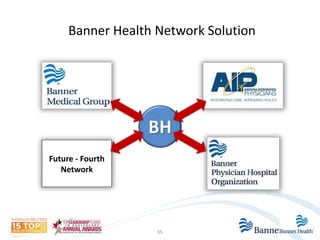
Banner Health Network Solution 
BH 
35 
Future - Fourth 
Network
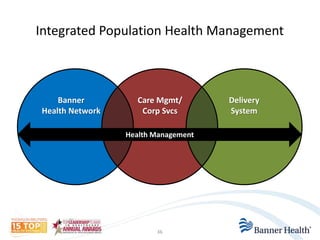
Integrated Population Health Management 
Health Management 
Delivery 
System 
Care Mgmt/ 
Corp Svcs 
Banner 
Health Network 
36
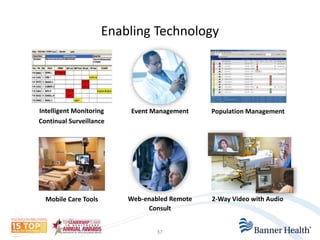
Enabling Technology 
Intelligent Monitoring Population Management 
Continual Surveillance 
Mobile Care Tools 
Event Management 
Web-enabled Remote 2-Way Video with Audio 
Consult 
37
38
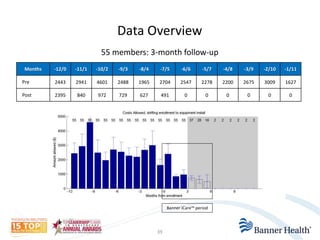
Data Overview 
55 members: 3-month follow-up 
Months -12/0 -11/1 -10/2 -9/3 -8/4 -7/5 -6/6 -5/7 -4/8 -3/9 -2/10 -1/11 
Pre 2443 2941 4601 2488 1965 2704 2547 2278 2200 2675 3009 1627 
Post 2395 840 972 729 627 491 0 0 0 0 0 0 
39 
Banner iCare™ period
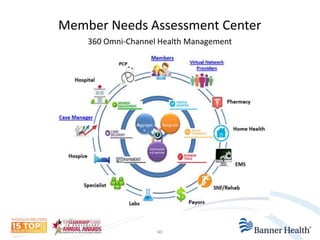
Member Needs Assessment Center 
360 Omni-Channel Health Management 
40
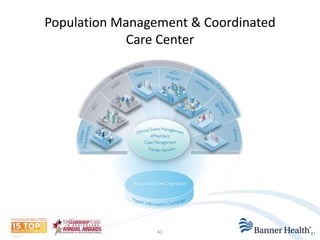
Population Management & Coordinated 
Care Center 
41 41
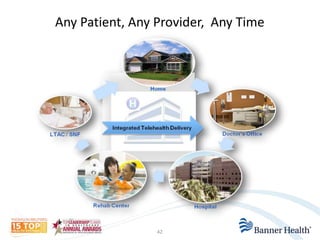
Any Patient, Any Provider, Any Time 
42
“If you don’t like change, 
you will like irrelevance even less.” 
Eric K. Sinseki, Former U.S. Army General Chief of Staff 
43
Question & Answer Session 
Brian A. Rosenfeld, MD
Thank you!
Philips - Disruptive Change: How to save the healthcare system

Philips - Disruptive Change: How to save the healthcare system

  • 1.
    Hospital of Tomorrow Disruptive Change: How to Save the Healthcare System October 2014
  • 2.
    Hospital of Tomorrow Align, Engage, Integrate, Enable and Partner Across the Health Continuum Amy Andersen Healthcare Transformation Services October 2014
  • 3.
    Philips Population HealthManagement Prevention Diagnosis Treatment Recovery Wellness Population Health
  • 4.
    Focusing on humanand cultural elements for better alignment, communication and collaboration. Align Driving patient activation and shared decision-making for better outcomes at lower cost. Engage Building highly coordinated multi-disciplinary teams for patient-centered care across the health continuum. Integrate
  • 5.
    Align: Transforming toPeople-Centered Neonatal Care Philips Wee Care®: Creating developmentally supportive care environments Altimier LB, Tedeschi L., Developmental care: changing the NICU physically and behaviorally to promote patient outcomes and contain costs, Neonatal Intensive Care Vol .17 No. 2 Our approach • Engage staff in redesign of environmental and clinical practices • Educate multidisciplinary team to deliver the best evidence-based care • Coach staff to encourage/support family participation in baby’s care • Implement and monitor core measures for sustained performance People-focused outcomes • ↑ parent satisfaction • ↓staff turnover from 15% to 2% • Improved compliance to outcomes-driven practices – Sound levels reduced from 95 to 55 dB – Light levels reduced from 150 to 50 FC • ↓LOS from 22 to 32%* * LOS dependent on gestational age category
  • 6.
    Engage: Patient ParticipatoryDecision-Making Prostaid®: Shared decision-making program for prostate cancer patients People-focused outcomes • Choice of treatment in the hands of the patient and his family • Closer collaboration between patient and physician • Improved patient’s sense of control and satisfaction with choices The challenge • Give patients clear, personalized information about treatments and side effects • Ensure patient’s pathway choices align with quality of life values • Reduce patient stress and anxiety Our approach • Facilitate shared decisions for patients, family, and physician as part of clinical workflow • Create a clear, simple-to-use, web-based encryption-secured tool • Combine patient’s values, preferences and clinical data with evidence-based medical guidance Stacey D, Bennett CL, Barry MJ, Col NF, Eden KB, Holmes-Rovner M, et al. “Decision aids for people facing health treatment or screening decisions,” Cochrane Database Syst Rev. 2011; (10):CD001431;/www.nashp.org/sites/default/files/shared.decision.making.report.pdf
  • 7.
    Integrate: A holistictransformation of the Stroke Continuum Multidisciplinary, end-to-end care for vulnerable patients People-focused outcomes • Scaled scarce expert resources in a cost effective manner • Exceeded core measures performance exceeding AHA GWTG benchmarks • Enhanced recovery, treatment compliance and healthy lifestyles with end-to-end patient-tailored support The challenge • Improve quality of stroke care and outcomes across care settings • Reduce care fragmentation that drives estimated $95B projected cost (2015) • Support patients in return to a new state of wellness and healthy lifestyles Our approach • Connect pre-hospital providers with experts for rapid assessment/treatment • Connect patients, family and providers to share information through mobile and app-based technologies • Design interactive adaptive healing environments tuned to patient’s needs hospital through rehabilitation Westerberg, H., Jacobaeus, H., Hirivikoski, T., Cleverberger, P., Östensson, M.-L., Bartfai, A., & Klingberg, T. (2007). Computerized working memory training after stroke – A pilot study. Brain Injury, 21 (1), 21-29.; Lisbeth Claesson, Thomas Lindé, Ingmar Skoo, Christian Blomstrand, Cognitive Impairment after Stroke –Impact on Activities of Daily Living and Costs of Care for Elderly People, Cerebrovasc Dis 2005;19:102–109
  • 9.
    Partnering with theHospitals of Tomorrow Sweden 15 years USA 15 years Netherlands 10 years Belfast 15 years KUBIN CLINIC Austria 8 years Types of partnering and innovation  Care transformation and care redesign  Enterprise quality and care management  Consumerism and patient engagement  Co-develop and pilot new technologies  Collaboration for higher equipment utilization  Managed services and business model  Shared performance metrics and risk sharing
  • 10.
    Hospital of Tomorrow Jane Lucas, Health Policy Counsel, Office of U.S. Senator John Thune
  • 11.
    Coordinated Telehealth & Care Transformation “It is not the strongest of the species that survive, nor the most intelligent, but the one most responsive to change”. Charles Darwin Brian A. Rosenfeld, MD VP & Chief Medical Officer, Hospital to Home October 2014
  • 12.
    Quality of Life H2H: Higher Quality of Life at Lower Cost Assisted Living $1 $10 $100 $1,000 $10,000 Estimated Cost of Care / Day ACUTE CARE ED/OBS Medical/Surgical Intensive Care Unit RESIDENTIAL CARE Skilled Nursing Facility HOME CARE Independent, Healthy Living Aging in Place Hyper-Chronic Disease Mgmt 12
  • 13.
    $40 – $100k $9 – $30k $2,583 $248 Healthcare Cost Segmentation Segmentation based on healthcare spending Percentage of total expenditure Average expenditure per patient per year 50.6% 23.7% 22.6% 3.1% 5% 6-20% 21-50% 50-100% 13
  • 14.
    Coordinated Telehealth Acrossthe Care Continuum Home Emergent care Home Perpetual chronic care Post discharge care Aging in place Hospital ICU, Med Surg, LTACH, SNF Telehealth Center Digital Health Platform EMR HIE 14
  • 15.
    15 Virtual CareCenter 15
  • 16.
  • 17.
    Healthcare Productivity: DoMore With Less Wages for Health CareWorkers 56% $1.45 Trillion Other 44% $1.15 Trillion Intensivist (1) Critical Care Nurses (2-3) Computer Intelligence eICU: 130-150 ICU beds “…Unlike virtually all other sectors of the U.S. economy, health care has experienced no gains over the past 20 years in labor productivity, defined as output per worker.” Kocher, M.D., Nikhil 17 R. Sahni, B.S. NEJM: 365;15, 1370-1373.
  • 18.
    eAcute Care Program • Monitor high acuity patients to prevent avoidable complications – reducing hospital LOS and cost • Use centralized resources to drive best practices (sepsis, falls) • Video-visitation: Increase patient/family satisfaction • Facilitate transitions from hospital to home/SNF Virtual Sepsis Unit 18
  • 19.
    Hospital in Home:Enabling Technology Home Environment • Tele-station in the home feeds patient data real-time • Temperature, heart rate, blood pressure, oxygen saturation • Weight Scale • Point of care testing: – Glucose – WBC • Wound photos 19
  • 20.
    Patient Engagement: OneSize Doesn’t Fit All Driving behavior change and enabling Team Care Phenotype for patients & families Patient Portal – Greater self care Outcome = ET × A(P+F) Their Health Team Their Family The Person Multiple chronic illness Aging in place Wellness 20
  • 21.
    211 21 IntensiveAmbulatory Care Program
  • 22.
    Fall Prevention andDetection Lifeline AutoAlert & GoSafe Senior Mobility Monitor Focused Rehabilitation 22
  • 23.
    23 “Vision withoutaction is just imagination”
  • 24.
    Robert Groves, MD,Vice President, Health Management Banner Health
  • 25.
    Banner Health ata Glance • 25 Acute care hospitals • Over 35,000 employees • Over 450 bed tele-ICU • 55 bed Simulation Medical Center • Truven Top 5 large health systems 3/5 yrs • $5 Billion in revenue • Over 1,000 employed physicians 25
  • 26.
    Banner’s 2020 Vision 26 Population Health Management Company Clinical Quality Company Acute Hospital Company “Our Steps to the Future” Industry Leadership 2016-2020 Innovation 2016-2020 Growth 2007-2010 Performance 2003-2006 Turnaround 2000-2002 LEAD IT! CHANGE IT! GROW IT! DO IT! FIX IT!
  • 27.
    Working Harder Isn’tAlways the Answer… 27
  • 28.
  • 29.
    1. Identify adversetrends and intervene before they become adverse outcomes 2. Respond quickly to requests for help 3. Monitor and assist with “evidence-based practice” and reliability 4. Measure performance across the system 5. Use data (real time and retrospective) to drive performance improvement Five Areas of Focus… 29
  • 30.
    Longitudinal ICU &Hospital Mortality 30
  • 31.
    eAcute Pilot Results “ Application of the eICU care model to the medical surgical patient population reflects an impact on patient outcomes, throughput and costs…” Baseline eHospital Average LOS 3.96 days 3.30 days Cases / month 307 389 Cost / case $6161 $5166 ICU Admissions from general ward First 24 hours 0.9% 0.8% After 24 hours 1.1% 0.6% Discharge status Death or hospice 2.7% 2.0% Home 84.1% 86.5% Falls per 1000 days 3.3 2.1 31
  • 32.
    Banner iCare AcuteCare ICU 2013 • >20,000 fewer ICU days than predicted • >50,000 fewer Hospital days • >$68,000,000 • >2,000 lives saved (APACHE 0.42) eHx • ICU Transfers dropped from 1.1% to 0.6% • $4.5 M saved 32
  • 33.
    Remote Skilled NursingFacility Care 33 Telehealth Center
  • 34.
    Home: Higher Qualityof Life at Lower Cost Quality of Life Assisted Living $1 $10 $100 $1,000 $10,000 Estimated Cost of Care / Day ACUTE CARE Specialty Clinic Community Hospital Intensive Care Unit RESIDENTIAL CARE Skilled Nursing Facility HOME CARE Independent, Healthy Living Comfortable Setting Chronic Disease Mgmt. Cost Effective 34
  • 35.
    Banner Health NetworkSolution BH 35 Future - Fourth Network
  • 36.
    Integrated Population HealthManagement Health Management Delivery System Care Mgmt/ Corp Svcs Banner Health Network 36
  • 37.
    Enabling Technology IntelligentMonitoring Population Management Continual Surveillance Mobile Care Tools Event Management Web-enabled Remote 2-Way Video with Audio Consult 37
  • 38.
  • 39.
    Data Overview 55members: 3-month follow-up Months -12/0 -11/1 -10/2 -9/3 -8/4 -7/5 -6/6 -5/7 -4/8 -3/9 -2/10 -1/11 Pre 2443 2941 4601 2488 1965 2704 2547 2278 2200 2675 3009 1627 Post 2395 840 972 729 627 491 0 0 0 0 0 0 39 Banner iCare™ period
  • 40.
    Member Needs AssessmentCenter 360 Omni-Channel Health Management 40
  • 41.
    Population Management &Coordinated Care Center 41 41
  • 42.
    Any Patient, AnyProvider, Any Time 42
  • 43.
    “If you don’tlike change, you will like irrelevance even less.” Eric K. Sinseki, Former U.S. Army General Chief of Staff 43
  • 44.
    Question & AnswerSession Brian A. Rosenfeld, MD
  • 45.