PharmacologyJalisa BakerBiology 120Chapter 7
Antihistamine   Antihistamine is a brand name for drug to generic drugs like diphenhydramine, fexofenadine. Antihistamine is a drug that blocks the effects of histamine that has been released by the body during an allergy attack. In other words, antihistamine is used to treat the symptoms of an allergic reaction.
Side effects to antihistaminechanges in visionconfused, agitated, nervousirregular or fast heartbeattremortrouble passing urineunusual bleeding or bruisingunusually weak or tired
bronchodilatorBronchodilators are drugs used to treat asthma. Bronchodilators open up the bronchial tubes so that more air can move through. Bronchodilators also help clear mucus from the lungs. As the airways open, the mucus moves more freely and can be coughed out more easily.
Different bronchodilators for treating asthma symptoms Beta-agonists- Beta-agonists can be administered by inhalers or orally. They are called "agonists" because they activate the beta-2 receptor on the muscles surrounding the airways. Anticholinergics- Anticholinergics provide some bronchodilatation ,airway opening, in certain individuals. Although not generally the first choice of rescue medicines for acute symptoms, some asthmatics cannot tolerate short acting beta2-agonists and thus an anticholinergic
AntibioticAntibiotics  are a substance, such as penicillin or streptomycin, derived  from certain fungi, bacteria, and other organisms, that can destroy or inhibit the growth of other microorganisms
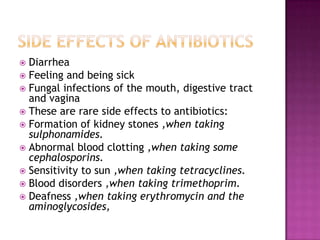
Side effects of antibioticsDiarrheaFeeling and being sick Fungal infections of the mouth, digestive tract and vagina These are rare side effects to antibiotics:Formation of kidney stones ,when taking sulphonamides.Abnormal blood clotting ,when taking some cephalosporins.Sensitivity to sun ,when taking tetracyclines.Blood disorders ,when taking trimethoprim.Deafness ,when taking erythromycin and the aminoglycosides,

Pharmacology

  • 1.
  • 2.
    Antihistamine Antihistamine is a brand name for drug to generic drugs like diphenhydramine, fexofenadine. Antihistamine is a drug that blocks the effects of histamine that has been released by the body during an allergy attack. In other words, antihistamine is used to treat the symptoms of an allergic reaction.
  • 3.
    Side effects toantihistaminechanges in visionconfused, agitated, nervousirregular or fast heartbeattremortrouble passing urineunusual bleeding or bruisingunusually weak or tired
  • 4.
    bronchodilatorBronchodilators are drugsused to treat asthma. Bronchodilators open up the bronchial tubes so that more air can move through. Bronchodilators also help clear mucus from the lungs. As the airways open, the mucus moves more freely and can be coughed out more easily.
  • 5.
    Different bronchodilators fortreating asthma symptoms Beta-agonists- Beta-agonists can be administered by inhalers or orally. They are called "agonists" because they activate the beta-2 receptor on the muscles surrounding the airways. Anticholinergics- Anticholinergics provide some bronchodilatation ,airway opening, in certain individuals. Although not generally the first choice of rescue medicines for acute symptoms, some asthmatics cannot tolerate short acting beta2-agonists and thus an anticholinergic
  • 6.
    AntibioticAntibiotics area substance, such as penicillin or streptomycin, derived from certain fungi, bacteria, and other organisms, that can destroy or inhibit the growth of other microorganisms
  • 7.
    Side effects ofantibioticsDiarrheaFeeling and being sick Fungal infections of the mouth, digestive tract and vagina These are rare side effects to antibiotics:Formation of kidney stones ,when taking sulphonamides.Abnormal blood clotting ,when taking some cephalosporins.Sensitivity to sun ,when taking tetracyclines.Blood disorders ,when taking trimethoprim.Deafness ,when taking erythromycin and the aminoglycosides,