PHARMACEUTICAL
BIOTECHNOLOGY:
Introduction and History of
Biotechnology
Edupharmaexpert
Introduction:
The term biotechnology represents fusion or an alliance between
biology and technology. Biotechnology is a old human civilization and
which is an integral part of human life. The term biotechnology was
introduced in 1917 by Hungarian engineer, Karl ereky. He was used
sugar beets as the source of food for large scale production of pigs.
Bread and curd were prepared in 4000BC.Wine and beer was prepared
in early 6000BC. Today we know all these processes are based on
natural capabilities of microorganisms.
i. Definition of Biotechnology: The use of living microorganisms and
their components in agriculture, food and other industries.
Edupharmaexpert
History:
ii. History: From the historical records the first biotechnology
principles were used in around 6000BC, Yeast was first used for
production of beer and wine. Some researchers consider, Louis
Pasteur identified the role of microorganisms in fermentation between
1857-1876.He was the father of biotechnology. The development of
biotechnology in the first half of 20th century is associated with fields
of applied microbiology and industrial fermentation. A strong
foundation of genetic engineering and modern biotechnology was
framed by Cohen and Boyer in 1973. When they could successfully
introduce the desired genes of one organism in to another organism
and clone the new genes by r-DNA technology. Edupharmaexpert
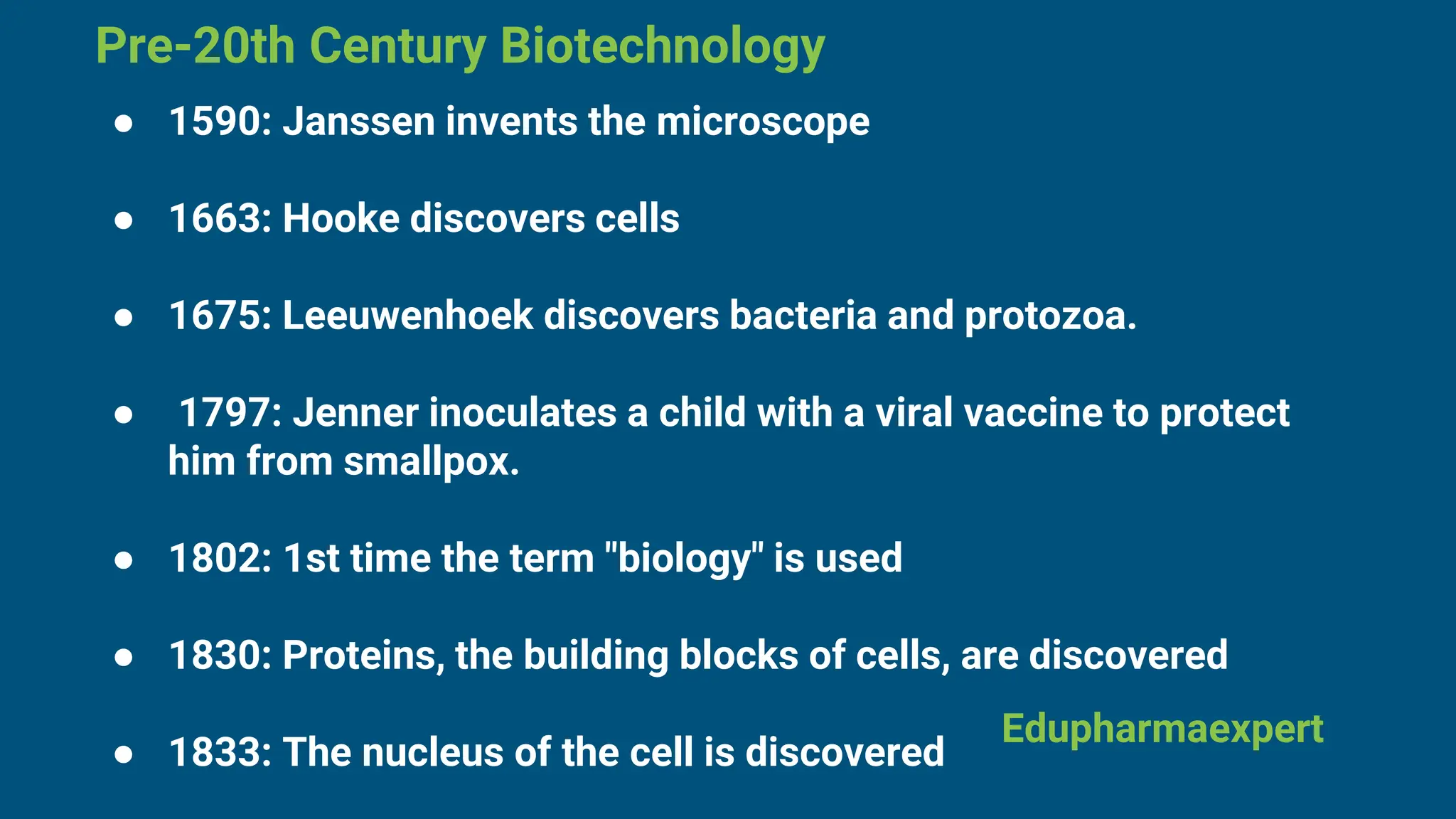
● 1590: Janssen invents the microscope
● 1663: Hooke discovers cells
● 1675: Leeuwenhoek discovers bacteria and protozoa.
● 1797: Jenner inoculates a child with a viral vaccine to protect
him from smallpox.
● 1802: 1st time the term "biology" is used
● 1830: Proteins, the building blocks of cells, are discovered
● 1833: The nucleus of the cell is discovered
Pre-20th Century Biotechnology
Edupharmaexpert
● 1855: The E. coli bacterium is discovered
● 1855: Pasteur works with yeast, eventually proving they are
living organisms
● 1863: Mendel discovers genes while working with peas. He
lays the groundwork for genetics.
● 1879: Flemming discovers chromatins
● 1883: The rabies vaccine is developed
● 1888: Waldyer discovers the chromosome
Edupharmexpert
● 1902: The term "immunology" first used 1906: The term
"genetics" is used
● 1915: Bacterial viruses, called phages, are discovered
● 1919: The word "biotechnology" is first used
● 1927: Muller discovers that X-rays cause mutation
● 1928: Fleming discovers penicillin
● 1938: The term "molecular biology" is used
● 1941: The term "genetic engineering" is first used
Biotechnology In The First Part Of The 20th Century
Edupharmaexpert
● 1942: The electron microscope is used and characterizes
viruses that infect bacteria, called bacteriaphages
● 1944: DNA is shown to be the building block of the gene
● 1949: Pauling proves that sickle cell anemia is a "molecular
disease" caused by a mutation
Edupharmaexpert
Thank you
Edupharmaexpert

Pharmaceutical Biotechnology Introduction and History

  • 1.
  • 2.
    Introduction: The term biotechnologyrepresents fusion or an alliance between biology and technology. Biotechnology is a old human civilization and which is an integral part of human life. The term biotechnology was introduced in 1917 by Hungarian engineer, Karl ereky. He was used sugar beets as the source of food for large scale production of pigs. Bread and curd were prepared in 4000BC.Wine and beer was prepared in early 6000BC. Today we know all these processes are based on natural capabilities of microorganisms. i. Definition of Biotechnology: The use of living microorganisms and their components in agriculture, food and other industries. Edupharmaexpert
  • 3.
    History: ii. History: Fromthe historical records the first biotechnology principles were used in around 6000BC, Yeast was first used for production of beer and wine. Some researchers consider, Louis Pasteur identified the role of microorganisms in fermentation between 1857-1876.He was the father of biotechnology. The development of biotechnology in the first half of 20th century is associated with fields of applied microbiology and industrial fermentation. A strong foundation of genetic engineering and modern biotechnology was framed by Cohen and Boyer in 1973. When they could successfully introduce the desired genes of one organism in to another organism and clone the new genes by r-DNA technology. Edupharmaexpert
  • 4.
    ● 1590: Jansseninvents the microscope ● 1663: Hooke discovers cells ● 1675: Leeuwenhoek discovers bacteria and protozoa. ● 1797: Jenner inoculates a child with a viral vaccine to protect him from smallpox. ● 1802: 1st time the term "biology" is used ● 1830: Proteins, the building blocks of cells, are discovered ● 1833: The nucleus of the cell is discovered Pre-20th Century Biotechnology Edupharmaexpert
  • 5.
    ● 1855: TheE. coli bacterium is discovered ● 1855: Pasteur works with yeast, eventually proving they are living organisms ● 1863: Mendel discovers genes while working with peas. He lays the groundwork for genetics. ● 1879: Flemming discovers chromatins ● 1883: The rabies vaccine is developed ● 1888: Waldyer discovers the chromosome Edupharmexpert
  • 6.
    ● 1902: Theterm "immunology" first used 1906: The term "genetics" is used ● 1915: Bacterial viruses, called phages, are discovered ● 1919: The word "biotechnology" is first used ● 1927: Muller discovers that X-rays cause mutation ● 1928: Fleming discovers penicillin ● 1938: The term "molecular biology" is used ● 1941: The term "genetic engineering" is first used Biotechnology In The First Part Of The 20th Century Edupharmaexpert
  • 7.
    ● 1942: Theelectron microscope is used and characterizes viruses that infect bacteria, called bacteriaphages ● 1944: DNA is shown to be the building block of the gene ● 1949: Pauling proves that sickle cell anemia is a "molecular disease" caused by a mutation Edupharmaexpert
  • 8.