PHARMACEUTICAL
ANALYSIS
By Pharmacist: Pawan Dhamala
Principal of Analytical Methods
Absorption Methods: Atomic Absorption Method, Ultraviolet & Visible
Method, IR
Emission Methods: Atomic Emission Spectroscopy, Flame
Spectroscopy, Fluorimetry (@ EF)
Base on molecular level
• Atomic spectroscopy: Atomic absorption spectroscopy , Flame
photometry
• Molecular spectroscopy: UV, IR, Fluorimetry
Acid Base Titrations
• Lewis Acid: Electron Acceptor (LA)
• Lewis base : Electron doner
• Bronsted –Lowry concept Acid: Proton doner
• Bronsted –Lowry concept Base: Proton acceptor
• Arrhenius acid: gives H+ ions in water.
• Arrhenius base: gives OH- ions in water.
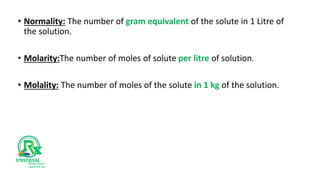
• Normality: The number of gram equivalent of the solute in 1 Litre of
the solution.
• Molarity:The number of moles of solute per litre of solution.
• Molality: The number of moles of the solute in 1 kg of the solution.
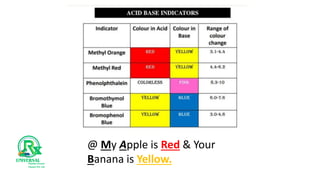
@ My Apple is Red & Your
Banana is Yellow.
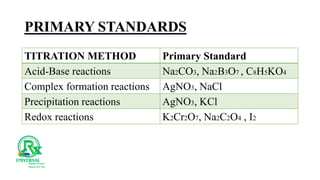
PRIMARY STANDARDS
TITRATION METHOD Primary Standard
Acid-Base reactions Na2CO3, Na2B3O7 , C8H5KO4
Complex formation reactions AgNO3, NaCl
Precipitation reactions AgNO3, KCl
Redox reactions K2Cr2O7, Na2C2O4 , I2
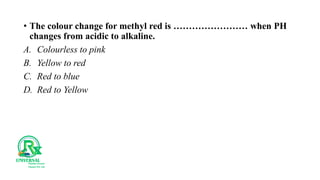
• The colour change for methyl red is …………………… when PH
changes from acidic to alkaline.
A. Colourless to pink
B. Yellow to red
C. Red to blue
D. Red to Yellow
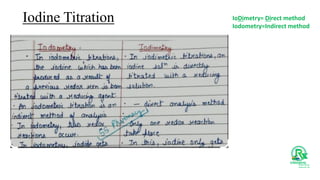
Iodine Titration IoDimetry= Direct method
Iodometry=Indirect method
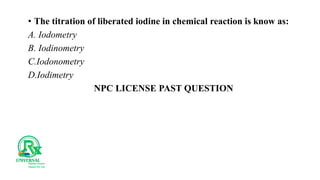
• The titration of liberated iodine in chemical reaction is know as:
A. Iodometry
B. Iodinometry
C.Iodonometry
D.Iodimetry
NPC LICENSE PAST QUESTION
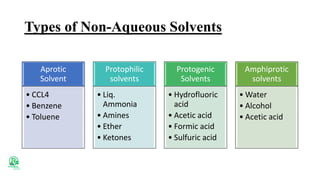
Types of Non-Aqueous Solvents
Aprotic
Solvent
• CCL4
• Benzene
• Toluene
Protophilic
solvents
• Liq.
Ammonia
• Amines
• Ether
• Ketones
Protogenic
Solvents
• Hydrofluoric
acid
• Acetic acid
• Formic acid
• Sulfuric acid
Amphiprotic
solvents
• Water
• Alcohol
• Acetic acid
Precipitation titration
• Mohr’s Method
Indicator: Chromate (@ MC)
Endpoint: brick ppt of silver chromate
• Volhard’s method (Back Titration)
Indicator: Ferric ions (@ VF)
Endpoint: Reddish colour
Fajan’s method:
Indicator: Fluorescein
Endpoint: Reddish colour
Indicators of Complex titration
1. Murexide
2. Solochrome titration
3. Calmagite
4. Pyrocatechol violet
Kjedahal method
• Used to determine the nitrogen content is organic and inorganic
substances.
• This method is also used to estimate protein content in food.
The kjedahal method is used to determine:
A.Oxygen
B.Sulphur
C.Nitrogen
D.Chlorine
NPC PAST QUESTION
Karl Fischer Titration:
• Used to determine quantity of water present in a given analyte.
The Karl Fischer method is used to determine:
A.Oxygen
B.Sulphur
C.Moisture
D.Chlorine
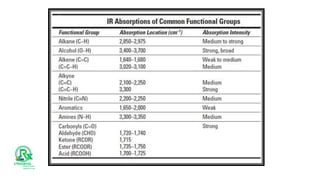
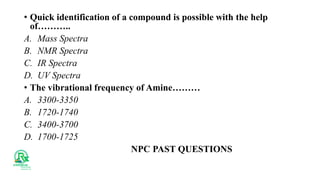
• Quick identification of a compound is possible with the help
of………..
A. Mass Spectra
B. NMR Spectra
C. IR Spectra
D. UV Spectra
• The vibrational frequency of Amine………
A. 3300-3350
B. 1720-1740
C. 3400-3700
D. 1700-1725
NPC PAST QUESTIONS
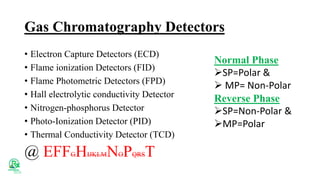
Gas Chromatography Detectors
• Electron Capture Detectors (ECD)
• Flame ionization Detectors (FID)
• Flame Photometric Detectors (FPD)
• Hall electrolytic conductivity Detector
• Nitrogen-phosphorus Detector
• Photo-Ionization Detector (PID)
• Thermal Conductivity Detector (TCD)
@ EFFGHIJKLMNOPQRST
Normal Phase
SP=Polar &
 MP= Non-Polar
Reverse Phase
SP=Non-Polar &
MP=Polar
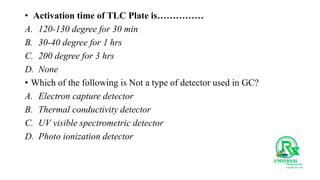
• Activation time of TLC Plate is……………
A. 120-130 degree for 30 min
B. 30-40 degree for 1 hrs
C. 200 degree for 3 hrs
D. None
• Which of the following is Not a type of detector used in GC?
A. Electron capture detector
B. Thermal conductivity detector
C. UV visible spectrometric detector
D. Photo ionization detector
HPLC DETECTORS
• UV-Visible Spectrometer (most widely used)
• Refractive Index Detector
• Fluorescent Detector
• Conductometric Detector
@ U R Fired From Company

Pharmaceutical Analysis Nepal Pharmacy License Classes.pdf

  • 1.
  • 2.
    Principal of AnalyticalMethods Absorption Methods: Atomic Absorption Method, Ultraviolet & Visible Method, IR Emission Methods: Atomic Emission Spectroscopy, Flame Spectroscopy, Fluorimetry (@ EF)
  • 3.
    Base on molecularlevel • Atomic spectroscopy: Atomic absorption spectroscopy , Flame photometry • Molecular spectroscopy: UV, IR, Fluorimetry
  • 4.
    Acid Base Titrations •Lewis Acid: Electron Acceptor (LA) • Lewis base : Electron doner • Bronsted –Lowry concept Acid: Proton doner • Bronsted –Lowry concept Base: Proton acceptor • Arrhenius acid: gives H+ ions in water. • Arrhenius base: gives OH- ions in water.
  • 5.
    • Normality: Thenumber of gram equivalent of the solute in 1 Litre of the solution. • Molarity:The number of moles of solute per litre of solution. • Molality: The number of moles of the solute in 1 kg of the solution.
  • 6.
    @ My Appleis Red & Your Banana is Yellow.
  • 7.
    PRIMARY STANDARDS TITRATION METHODPrimary Standard Acid-Base reactions Na2CO3, Na2B3O7 , C8H5KO4 Complex formation reactions AgNO3, NaCl Precipitation reactions AgNO3, KCl Redox reactions K2Cr2O7, Na2C2O4 , I2
  • 9.
    • The colourchange for methyl red is …………………… when PH changes from acidic to alkaline. A. Colourless to pink B. Yellow to red C. Red to blue D. Red to Yellow
  • 10.
    Iodine Titration IoDimetry=Direct method Iodometry=Indirect method
  • 11.
    • The titrationof liberated iodine in chemical reaction is know as: A. Iodometry B. Iodinometry C.Iodonometry D.Iodimetry NPC LICENSE PAST QUESTION
  • 12.
    Types of Non-AqueousSolvents Aprotic Solvent • CCL4 • Benzene • Toluene Protophilic solvents • Liq. Ammonia • Amines • Ether • Ketones Protogenic Solvents • Hydrofluoric acid • Acetic acid • Formic acid • Sulfuric acid Amphiprotic solvents • Water • Alcohol • Acetic acid
  • 13.
    Precipitation titration • Mohr’sMethod Indicator: Chromate (@ MC) Endpoint: brick ppt of silver chromate • Volhard’s method (Back Titration) Indicator: Ferric ions (@ VF) Endpoint: Reddish colour Fajan’s method: Indicator: Fluorescein Endpoint: Reddish colour
  • 14.
    Indicators of Complextitration 1. Murexide 2. Solochrome titration 3. Calmagite 4. Pyrocatechol violet
  • 15.
    Kjedahal method • Usedto determine the nitrogen content is organic and inorganic substances. • This method is also used to estimate protein content in food. The kjedahal method is used to determine: A.Oxygen B.Sulphur C.Nitrogen D.Chlorine NPC PAST QUESTION
  • 16.
    Karl Fischer Titration: •Used to determine quantity of water present in a given analyte. The Karl Fischer method is used to determine: A.Oxygen B.Sulphur C.Moisture D.Chlorine
  • 18.
    • Quick identificationof a compound is possible with the help of……….. A. Mass Spectra B. NMR Spectra C. IR Spectra D. UV Spectra • The vibrational frequency of Amine……… A. 3300-3350 B. 1720-1740 C. 3400-3700 D. 1700-1725 NPC PAST QUESTIONS
  • 19.
    Gas Chromatography Detectors •Electron Capture Detectors (ECD) • Flame ionization Detectors (FID) • Flame Photometric Detectors (FPD) • Hall electrolytic conductivity Detector • Nitrogen-phosphorus Detector • Photo-Ionization Detector (PID) • Thermal Conductivity Detector (TCD) @ EFFGHIJKLMNOPQRST Normal Phase SP=Polar &  MP= Non-Polar Reverse Phase SP=Non-Polar & MP=Polar
  • 20.
    • Activation timeof TLC Plate is…………… A. 120-130 degree for 30 min B. 30-40 degree for 1 hrs C. 200 degree for 3 hrs D. None • Which of the following is Not a type of detector used in GC? A. Electron capture detector B. Thermal conductivity detector C. UV visible spectrometric detector D. Photo ionization detector
  • 21.
    HPLC DETECTORS • UV-VisibleSpectrometer (most widely used) • Refractive Index Detector • Fluorescent Detector • Conductometric Detector @ U R Fired From Company