
Pharma industry-
present landscape and
main trends
November, 14th 2012
www.pwc.com/es
PwC
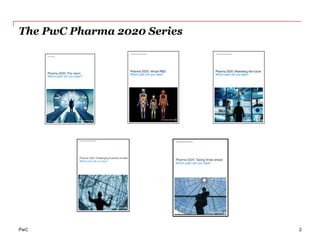
The PwC Pharma 2020 Series
2
PwC 3
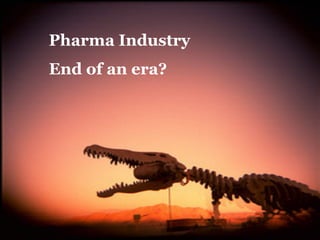
Pharma Industry
End of an era?
PwC 4
…or a New Beginning?
PwC
Agenda
1.  General landscape and main challenges
2.  What way to choose?
5
PwC
General landscape and main
challenges
1 6
PwC
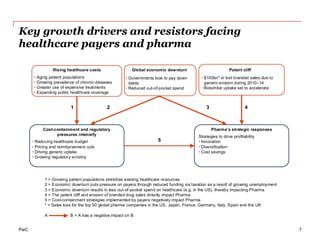
Key growth drivers and resistors facing
healthcare payers and pharma
7
1 = Growing patient populations stretches existing healthcare resources
2 = Economic downturn puts pressure on payers through reduced funding via taxation as a result of growing unemployment
3 = Economic downturn results in less out-of-pocket spend on healthcare (e.g. in the US), thereby impacting Pharma
4 = The patent cliff and erosion of branded drug sales directly impact Pharma
5 = Cost-containment strategies implemented by payers negatively impact Pharma
* = Sales loss for the top 50 global pharma companies in the US, Japan, France, Germany, Italy, Spain and the UK
A B = A has a negative impact on B
Global economic downturn Patent cliff
1 2 3 4
5
• Aging patient populations
• Growing prevalence of chronic diseases
• Greater use of expensive treatments
• Expanding public healthcare coverage
Rising healthcare costs
Cost-containment and regulatory
pressures intensify
• Reducing healthcare budget
• Pricing and reimbursement cuts
• Driving generic uptake
• Growing regulatory scrutiny
• Governments look to pay down
debts
• Reduced out-of-pocket spend
• $100bn* in lost branded sales due to
generic erosion during 2010–14
• Biosimilar uptake set to accelerate
Pharma’s strategic responses
Strategies to drive profitability
• Innovation
• Diversification
• Cost savings
PwC
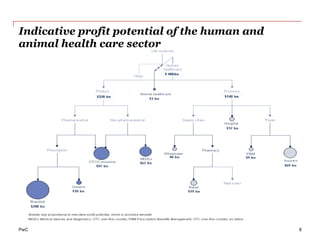
Indicative profit potential of the human and
animal health care sector
8
PwC
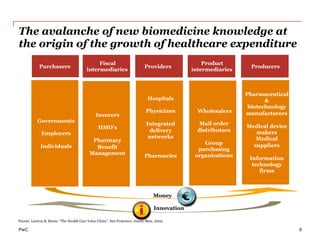
The avalanche of new biomedicine knowledge at
the origin of the growth of healthcare expenditure
9
Pharmaceutical
&
biotechnology
manufacturers
Medical device
makers
Medical
suppliers
Information
technology
firms
Governments
Employers
Individuals
Insurers
HMO’s
Pharmacy
Benefit
Management
Hospitals
Physicians
Integrated
delivery
networks
Pharmacies
Wholesalers
Mail order
distributors
Group
purchasing
organizations
Purchasers
Fiscal
intermediaries
Providers
Product
intermediaries
Producers
Innovation
Money
Fuente: Lawton R. Burns. “The Health Care Value Chain”. San Francisco. Jossey-Bass. 2002.Fuente: Lawton R. Burns. “The Health Care Value Chain”. San Francisco. Jossey-Bass. 2002.
PwC
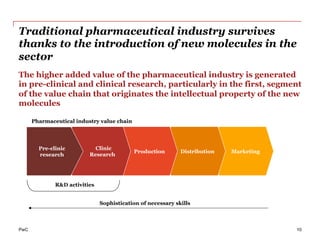
Traditional pharmaceutical industry survives
thanks to the introduction of new molecules in the
sector
10
Fuente: Lawton R. Burns. “The Health Care Value Chain”. San Francisco. Jossey-Bass. 2002.
The higher added value of the pharmaceutical industry is generated
in pre-clinical and clinical research, particularly in the first, segment
of the value chain that originates the intellectual property of the new
molecules
Pharmaceutical industry value chain
MarketingDistributionProduction
Clinic
Research
Pre-clinic
research
R&D activities
Sophistication of necessary skills
PwC
PwC
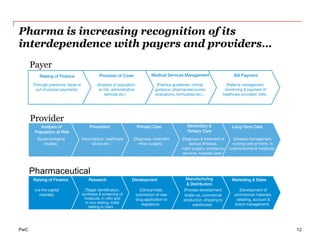
Pharma is increasing recognition of its
interdependence with payers and providers…
12
Fuente: Lawton R. Burns. “The Health Care Value Chain”. San Francisco. Jossey-Bass. 2002.
Provider
Payer
Pharmaceutical
PwC
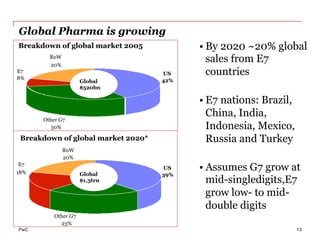
Global Pharma is growing
13
Fuente: Lawton R. Burns. “The Health Care Value Chain”. San Francisco. Jossey-Bass. 2002.
Breakdown of global market 2005
Other G7
30%
E7
8%
RoW
20%
US
42%
Breakdown of global market 2020*
Global
$520bn
Other G7
23%
E7
18%
RoW
20%
US
39%Global
$1.3trn
• By 2020 ~20% global
sales from E7
countries
• E7 nations: Brazil,
China, India,
Indonesia, Mexico,
Russia and Turkey
• Assumes G7 grow at
mid-singledigits,E7
grow low- to mid-
double digits
PwC
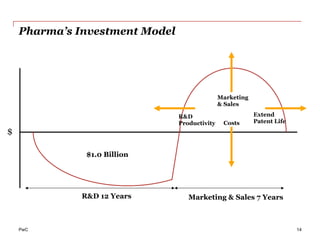
Pharma’s Investment Model
14
R&D 12 Years Marketing & Sales 7 Years
$
R&D
Productivity
Extend
Patent Life
Marketing
& Sales
$1.0 Billion
Costs
PwC
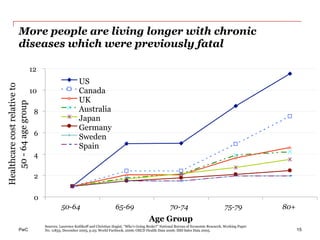
More people are living longer with chronic
diseases which were previously fatal
15
Fuente: Lawton R. Burns. “The Health Care Value Chain”. San Francisco. Jossey-Bass. 2002.
0
2
4
6
8
10
12
50-64 65-69 70-74 75-79 80+
US
Canada
UK
Australia
Japan
Germany
Sweden
Spain
Age Group
Healthcarecostrelativeto
50-64agegroup
Sources: Laurence Kotlikoff and Christian Hagist, “Who’s Going Broke?” National Bureau of Economic Research, Working Paper
No. 11833, December 2005, p.25; World Factbook, 2006; OECD Health Data 2006; IMS Sales Data 2005.
PwC
PwC
Pharma has to develop medicines the market
wants to buy
17
Fuente: Lawton R. Burns. “The Health Care Value Chain”. San Francisco. Jossey-Bass. 2002.
0
5
10
15
20
25
30
35
40
45
50
1996 1997 1998 1999 2000 2001 2002 2003 2004 2005 2006 2007*
R&Dspend($bn)
0
10
20
30
40
50
60
NMEsandBiologicsapproved
PhRMA member
R&D spend ($bn)
NME and New
Biologics Approved
by FDA
NME:
New Molecular Entity.
Excludes vaccines, antigens
and combination therapies
which do not include at least
one new constituents
* PwC estimate
R&D productivity continues to decline
Over last decade:
•  PhRMA member R&D investment almost tripled, reaching an estimated $46bn in 2007
•  FDA approved medicines declined by two thirds - 56 in 1996, 19 in 2007
PwC
Yet the industry is unable to develop affordable
innovative treatment to meet these future
demands
18
Fuente: Lawton R. Burns. “The Health Care Value Chain”. San Francisco. Jossey-Bass. 2002.
•  R&D investment doubled since 1996, to >$55bn p.a. and expected to
reach $160bn in 2020 at current growth rates
•  FDA approved medicines declined by 60% - 53 in 1996, 22 in 2006
WHY?
•  Phase III trials typically cost between $135m and $270m
•  20-40% of R&D spend on line extensions
•  Over 40-45% of all drugs fail in phase III
PwC
PwC
PwC
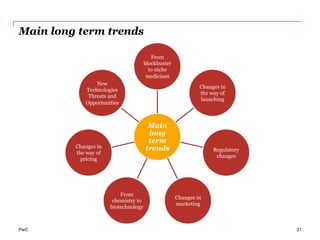
Main long term trends
21
Fuente: Lawton R. Burns. “The Health Care Value Chain”. San Francisco. Jossey-Bass. 2002.
Main
long
term
trends
From
blockbuster
to niche
medicines
Changes in
the way of
launching
Regulatory
changes
Changes in
marketing
From
chemistry to
biotechnology
Changes in
the way of
pricing
New
Technologies
Threats and
Opportunities
PwC
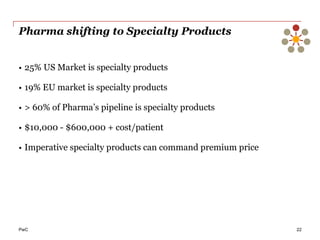
Pharma shifting to Specialty Products
22
Fuente: Lawton R. Burns. “The Health Care Value Chain”. San Francisco. Jossey-Bass. 2002.
•  25% US Market is specialty products
•  19% EU market is specialty products
•  > 60% of Pharma’s pipeline is specialty products
•  $10,000 - $600,000 + cost/patient
•  Imperative specialty products can command premium price
PwC
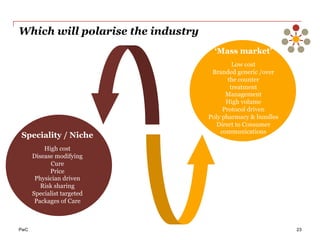
Which will polarise the industry
23
Fuente: Lawton R. Burns. “The Health Care Value Chain”. San Francisco. Jossey-Bass. 2002.
‘Mass market’
Low cost
Branded generic /over
the counter
treatment
Management
High volume
Protocol driven
Poly pharmacy & bundles
Direct to Consumer
communications
Speciality / Niche
High cost
Disease modifying
Cure
Price
Physician driven
Risk sharing
Specialist targeted
Packages of Care
PwC
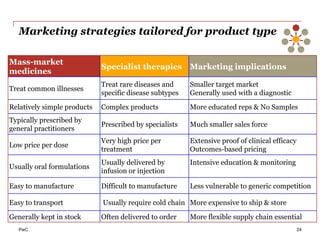
Marketing strategies tailored for product type
24
Fuente: Lawton R. Burns. “The Health Care Value Chain”. San Francisco. Jossey-Bass. 2002.
Mass-market
medicines
Specialist therapies Marketing implications
Treat common illnesses
Treat rare diseases and
specific disease subtypes
Smaller target market
Generally used with a diagnostic
Relatively simple products Complex products More educated reps & No Samples
Typically prescribed by
general practitioners
Prescribed by specialists Much smaller sales force
Low price per dose
Very high price per
treatment
Extensive proof of clinical efficacy
Outcomes-based pricing
Usually oral formulations
Usually delivered by
infusion or injection
Intensive education & monitoring
Easy to manufacture Difficult to manufacture Less vulnerable to generic competition
Easy to transport Usually require cold chain More expensive to ship & store
Generally kept in stock Often delivered to order More flexible supply chain essential
PwC
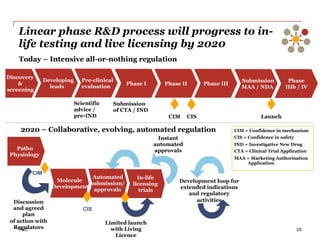
Linear phase R&D process will progress to in-
life testing and live licensing by 2020
25
Fuente: Lawton R. Burns. “The Health Care Value Chain”. San Francisco. Jossey-Bass. 2002.
Today – Intensive all-or-nothing regulation
Developing
leads
Discovery
&
screening
Pre-clinical
evaluation
Phase I Phase II Phase III
Submission
MAA / NDA
Phase
IIIb / IV
Scientific
advice /
pre-IND
Submission
of CTA / IND
CIM CIS Launch
2020 – Collaborative, evolving, automated regulation
CIM
Discussion
and agreed
plan
of action with
Regulators
Limited launch
with Living
Licence
Instant
automated
approvals
Development loop for
extended indications
and regulatory
activities
Patho
Physiology
Molecule
Development
In-life
licensing
trials
Automated
submission/
approvals
CIS
CIM = Confidence in mechanism
CIS = Confidence in safety
IND = Investigative New Drug
CTA = Clinical Trial Application
MAA = Marketing Authorisation
Application
PwC
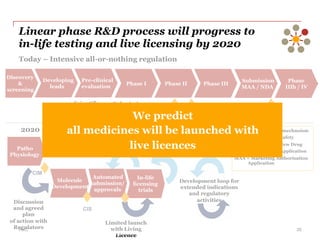
Linear phase R&D process will progress to
in-life testing and live licensing by 2020
26
Fuente: Lawton R. Burns. “The Health Care Value Chain”. San Francisco. Jossey-Bass. 2002.
Today – Intensive all-or-nothing regulation
Developing
leads
Discovery
&
screening
Pre-clinical
evaluation
Phase I Phase II Phase III
Submission
MAA / NDA
Phase
IIIb / IV
Scientific
advice /
pre-IND
Submission
of CTA / IND
CIM CIS Launch
2020 – Collaborative, evolving, automated regulation
CIM
Discussion
and agreed
plan
of action with
Regulators
Limited launch
with Living
Licence
Instant
automated
approvals
Development loop for
extended indications
and regulatory
activities
Patho
Physiology
Molecule
Development
In-life
licensing
trials
Automated
submission/
approvals
CIS
CIM = Confidence in mechanism
CIS = Confidence in safety
IND = Investigative New Drug
CTA = Clinical Trial Application
MAA = Marketing Authorisation
Application
We predict
all medicines will be launched with
live licences
PwC
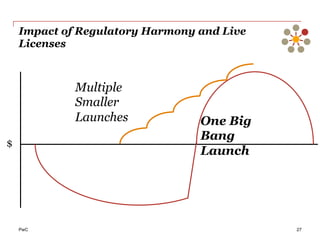
Impact of Regulatory Harmony and Live
Licenses
27
Fuente: Lawton R. Burns. “The Health Care Value Chain”. San Francisco. Jossey-Bass. 2002.
$
One Big
Bang
Launch
Multiple
Smaller
Launches
PwC
Greater international regulatory co-operation
28
Fuente: Lawton R. Burns. “The Health Care Value Chain”. San Francisco. Jossey-Bass. 2002.
Access
Regulators use risk
benefit analyses not
average outcomes.
Complexity will
increase
Value for Money
Payers / providers use
Cost-effectiveness /
HTA assessments for all
regulatory reviews plus
safety and efficacy
Transparency
Public will demand independent
verification of all clinical data
Single global
regulator?
Resources
Regulators lack manpower
for expanded range of
studies.
Greater need / use of
specialist panels or “notified
bodies” ~ medical devices
Qualified auditors
Lifecycle regulation
Life time monitoring of all
treatments (Live License)
PwC
Customers are more complex and ever
changing…
29
Fuente: Lawton R. Burns. “The Health Care Value Chain”. San Francisco. Jossey-Bass. 2002.
TOMORROW
Key Account Managers
TODAY
Sales Representatives
Secondary Care Practices
• Management Board
• Professional Executive
Committee
• Prescribing Advisor
Primary Care Practices
• Practice Manager
• GPs
• Practice Nurses
Secondary Care Practices
• Management Board
• Professional Executive
Committee
• Prescribing Advisor
Primary Care Practices
• Practice Manager
• Family Practitioners
• Practice Nurses
Retail Pharmacies
Government / Payers
PwC
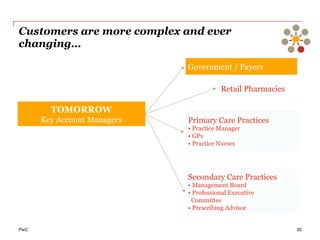
Customers are more complex and ever
changing…
30
TOMORROW
Key Account Managers
Government / Payers
Secondary Care Practices
• Management Board
• Professional Executive
Committee
• Prescribing Advisor
Primary Care Practices
• Practice Manager
• GPs
• Practice Nurses
Retail Pharmacies
PwC
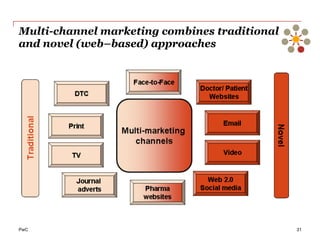
Multi-channel marketing combines traditional
and novel (web–based) approaches
31
PwC
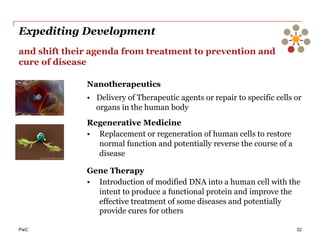
Expediting Development
32
and shift their agenda from treatment to prevention and
cure of disease
Nanotherapeutics
•  Delivery of Therapeutic agents or repair to specific cells or
organs in the human body
Regenerative Medicine
•  Replacement or regeneration of human cells to restore
normal function and potentially reverse the course of a
disease
Gene Therapy
•  Introduction of modified DNA into a human cell with the
intent to produce a functional protein and improve the
effective treatment of some diseases and potentially
provide cures for others
PwC
Flexible Pricing
33
Fuente: Lawton R. Burns. “The Health Care Value Chain”. San Francisco. Jossey-Bass. 2002.
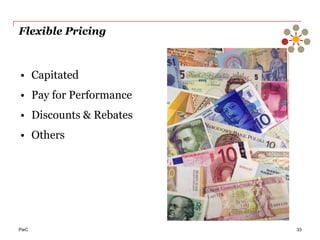
•  Capitated
•  Pay for Performance
•  Discounts & Rebates
•  Others
PwC
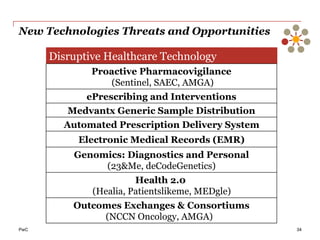
New Technologies Threats and Opportunities
34
Fuente: Lawton R. Burns. “The Health Care Value Chain”. San Francisco. Jossey-Bass. 2002.
Disruptive Healthcare Technology
Proactive Pharmacovigilance
(Sentinel, SAEC, AMGA)
ePrescribing and Interventions
Medvantx Generic Sample Distribution
Automated Prescription Delivery System
Electronic Medical Records (EMR)
Genomics: Diagnostics and Personal
(23&Me, deCodeGenetics)
Health 2.0
(Healia, Patientslikeme, MEDgle)
Outcomes Exchanges & Consortiums
(NCCN Oncology, AMGA)
PwC
What way to choose?
2 35
PwC
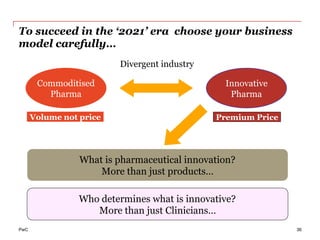
To succeed in the ‘2021’ era choose your business
model carefully…
36
What is pharmaceutical innovation?
More than just products…
Who determines what is innovative?
More than just Clinicians…
Commoditised
Pharma
Innovative
Pharma
Divergent industry
Premium PriceVolume not price
PwC
PwC
Innovation spans the value chain
38
Fuente: Lawton R. Burns. “The Health Care Value Chain”. San Francisco. Jossey-Bass. 2002.
Cures a disease or condition
Prevents a disease or condition
Decreases mortality
Decreases morbidity
Decreases cost of care
Increases QALY’s
Increases safety
Increases ease of use
Increases persistency or compliance
Will command a
premium price
Product or /
service which…
Etc…
PwC
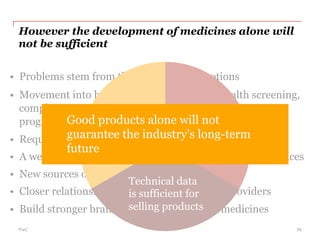
However the development of medicines alone will
not be sufficient
39
Fuente: Lawton R. Burns. “The Health Care Value Chain”. San Francisco. Jossey-Bass. 2002.
•  Problems stem from three invalid assumptions
•  Movement into healthcare management – health screening,
compliance programmes, nutritional advice, exercise
programmes & facilities, etc
•  Requirement for accompanying diagnostics
•  A web of alliances will be needed to offer supporting services
•  New sources of revenue generation
•  Closer relationships with patients, payers & providers
•  Build stronger brands and protect value of medicines
Value comes
in the form
of products
Pharma alone
determines
value
Technical data
is sufficient for
selling products
Good products alone will not
guarantee the industry’s long-term
future
PwC
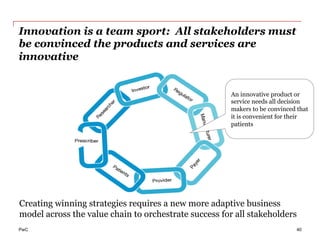
Innovation is a team sport: All stakeholders must
be convinced the products and services are
innovative
40
Fuente: Lawton R. Burns. “The Health Care Value Chain”. San Francisco. Jossey-Bass. 2002.
An innovative product or
service needs all decision
makers to be convinced that
it is convenient for their
patients
Creating winning strategies requires a new more adaptive business
model across the value chain to orchestrate success for all stakeholders
PwC
PwC
What does it mean to be a partner?
1.  Better understand the entire value chain
2.  Further integrate in the value chain
3.  Participate in the risk
42
noviembre 2010
El presente documento ha sido preparado a efectos de orientación general sobre materias de interés y no constituye asesoramiento profesional alguno. No deben
llevarse a cabo actuaciones en base a la información contenida en este documento, sin obtener el específico asesoramiento profesional. No se efectúa manifestación ni
se presta garantía alguna (de carácter expreso o tácito) respecto de la exactitud o integridad de la información contenida en el mismo y, en la medida legalmente
permitida PricewaterhouseCoopers Asesores de Negocios, S.L.., sus socios, empleados o colaboradores no aceptan ni asumen obligación, responsabilidad o deber de
diligencia alguna respecto de las consecuencias de la actuación u omisión por su parte o de terceros, en base a la información contenida en este documento o respecto
de cualquier decisión fundada en la misma.
© 2012 PricewaterhouseCoopers Asesores de Negocios, S.L Todos los derechos reservados. "PwC" se refiere a PricewaterhouseCoopers Asesores de Negocios, S.L, firma
miembro de PricewaterhouseCoopers International Limited; cada una de las cuales es una entidad legal separada e independiente.

Pharma industry: present landscape and main trends

  • 1.
    Pharma industry- present landscapeand main trends November, 14th 2012 www.pwc.com/es
  • 2.
    PwC The PwC Pharma2020 Series 2
  • 3.
  • 4.
    PwC 4 …or aNew Beginning?
  • 5.
    PwC Agenda 1.  General landscapeand main challenges 2.  What way to choose? 5
  • 6.
    PwC General landscape andmain challenges 1 6
  • 7.
    PwC Key growth driversand resistors facing healthcare payers and pharma 7 1 = Growing patient populations stretches existing healthcare resources 2 = Economic downturn puts pressure on payers through reduced funding via taxation as a result of growing unemployment 3 = Economic downturn results in less out-of-pocket spend on healthcare (e.g. in the US), thereby impacting Pharma 4 = The patent cliff and erosion of branded drug sales directly impact Pharma 5 = Cost-containment strategies implemented by payers negatively impact Pharma * = Sales loss for the top 50 global pharma companies in the US, Japan, France, Germany, Italy, Spain and the UK A B = A has a negative impact on B Global economic downturn Patent cliff 1 2 3 4 5 • Aging patient populations • Growing prevalence of chronic diseases • Greater use of expensive treatments • Expanding public healthcare coverage Rising healthcare costs Cost-containment and regulatory pressures intensify • Reducing healthcare budget • Pricing and reimbursement cuts • Driving generic uptake • Growing regulatory scrutiny • Governments look to pay down debts • Reduced out-of-pocket spend • $100bn* in lost branded sales due to generic erosion during 2010–14 • Biosimilar uptake set to accelerate Pharma’s strategic responses Strategies to drive profitability • Innovation • Diversification • Cost savings
  • 8.
    PwC Indicative profit potentialof the human and animal health care sector 8
  • 9.
    PwC The avalanche ofnew biomedicine knowledge at the origin of the growth of healthcare expenditure 9 Pharmaceutical & biotechnology manufacturers Medical device makers Medical suppliers Information technology firms Governments Employers Individuals Insurers HMO’s Pharmacy Benefit Management Hospitals Physicians Integrated delivery networks Pharmacies Wholesalers Mail order distributors Group purchasing organizations Purchasers Fiscal intermediaries Providers Product intermediaries Producers Innovation Money Fuente: Lawton R. Burns. “The Health Care Value Chain”. San Francisco. Jossey-Bass. 2002.Fuente: Lawton R. Burns. “The Health Care Value Chain”. San Francisco. Jossey-Bass. 2002.
  • 10.
    PwC Traditional pharmaceutical industrysurvives thanks to the introduction of new molecules in the sector 10 Fuente: Lawton R. Burns. “The Health Care Value Chain”. San Francisco. Jossey-Bass. 2002. The higher added value of the pharmaceutical industry is generated in pre-clinical and clinical research, particularly in the first, segment of the value chain that originates the intellectual property of the new molecules Pharmaceutical industry value chain MarketingDistributionProduction Clinic Research Pre-clinic research R&D activities Sophistication of necessary skills
  • 11.
  • 12.
    PwC Pharma is increasingrecognition of its interdependence with payers and providers… 12 Fuente: Lawton R. Burns. “The Health Care Value Chain”. San Francisco. Jossey-Bass. 2002. Provider Payer Pharmaceutical
  • 13.
    PwC Global Pharma isgrowing 13 Fuente: Lawton R. Burns. “The Health Care Value Chain”. San Francisco. Jossey-Bass. 2002. Breakdown of global market 2005 Other G7 30% E7 8% RoW 20% US 42% Breakdown of global market 2020* Global $520bn Other G7 23% E7 18% RoW 20% US 39%Global $1.3trn • By 2020 ~20% global sales from E7 countries • E7 nations: Brazil, China, India, Indonesia, Mexico, Russia and Turkey • Assumes G7 grow at mid-singledigits,E7 grow low- to mid- double digits
  • 14.
    PwC Pharma’s Investment Model 14 R&D12 Years Marketing & Sales 7 Years $ R&D Productivity Extend Patent Life Marketing & Sales $1.0 Billion Costs
  • 15.
    PwC More people areliving longer with chronic diseases which were previously fatal 15 Fuente: Lawton R. Burns. “The Health Care Value Chain”. San Francisco. Jossey-Bass. 2002. 0 2 4 6 8 10 12 50-64 65-69 70-74 75-79 80+ US Canada UK Australia Japan Germany Sweden Spain Age Group Healthcarecostrelativeto 50-64agegroup Sources: Laurence Kotlikoff and Christian Hagist, “Who’s Going Broke?” National Bureau of Economic Research, Working Paper No. 11833, December 2005, p.25; World Factbook, 2006; OECD Health Data 2006; IMS Sales Data 2005.
  • 16.
  • 17.
    PwC Pharma has todevelop medicines the market wants to buy 17 Fuente: Lawton R. Burns. “The Health Care Value Chain”. San Francisco. Jossey-Bass. 2002. 0 5 10 15 20 25 30 35 40 45 50 1996 1997 1998 1999 2000 2001 2002 2003 2004 2005 2006 2007* R&Dspend($bn) 0 10 20 30 40 50 60 NMEsandBiologicsapproved PhRMA member R&D spend ($bn) NME and New Biologics Approved by FDA NME: New Molecular Entity. Excludes vaccines, antigens and combination therapies which do not include at least one new constituents * PwC estimate R&D productivity continues to decline Over last decade: •  PhRMA member R&D investment almost tripled, reaching an estimated $46bn in 2007 •  FDA approved medicines declined by two thirds - 56 in 1996, 19 in 2007
  • 18.
    PwC Yet the industryis unable to develop affordable innovative treatment to meet these future demands 18 Fuente: Lawton R. Burns. “The Health Care Value Chain”. San Francisco. Jossey-Bass. 2002. •  R&D investment doubled since 1996, to >$55bn p.a. and expected to reach $160bn in 2020 at current growth rates •  FDA approved medicines declined by 60% - 53 in 1996, 22 in 2006 WHY? •  Phase III trials typically cost between $135m and $270m •  20-40% of R&D spend on line extensions •  Over 40-45% of all drugs fail in phase III
  • 19.
  • 20.
  • 21.
    PwC Main long termtrends 21 Fuente: Lawton R. Burns. “The Health Care Value Chain”. San Francisco. Jossey-Bass. 2002. Main long term trends From blockbuster to niche medicines Changes in the way of launching Regulatory changes Changes in marketing From chemistry to biotechnology Changes in the way of pricing New Technologies Threats and Opportunities
  • 22.
    PwC Pharma shifting toSpecialty Products 22 Fuente: Lawton R. Burns. “The Health Care Value Chain”. San Francisco. Jossey-Bass. 2002. •  25% US Market is specialty products •  19% EU market is specialty products •  > 60% of Pharma’s pipeline is specialty products •  $10,000 - $600,000 + cost/patient •  Imperative specialty products can command premium price
  • 23.
    PwC Which will polarisethe industry 23 Fuente: Lawton R. Burns. “The Health Care Value Chain”. San Francisco. Jossey-Bass. 2002. ‘Mass market’ Low cost Branded generic /over the counter treatment Management High volume Protocol driven Poly pharmacy & bundles Direct to Consumer communications Speciality / Niche High cost Disease modifying Cure Price Physician driven Risk sharing Specialist targeted Packages of Care
  • 24.
    PwC Marketing strategies tailoredfor product type 24 Fuente: Lawton R. Burns. “The Health Care Value Chain”. San Francisco. Jossey-Bass. 2002. Mass-market medicines Specialist therapies Marketing implications Treat common illnesses Treat rare diseases and specific disease subtypes Smaller target market Generally used with a diagnostic Relatively simple products Complex products More educated reps & No Samples Typically prescribed by general practitioners Prescribed by specialists Much smaller sales force Low price per dose Very high price per treatment Extensive proof of clinical efficacy Outcomes-based pricing Usually oral formulations Usually delivered by infusion or injection Intensive education & monitoring Easy to manufacture Difficult to manufacture Less vulnerable to generic competition Easy to transport Usually require cold chain More expensive to ship & store Generally kept in stock Often delivered to order More flexible supply chain essential
  • 25.
    PwC Linear phase R&Dprocess will progress to in- life testing and live licensing by 2020 25 Fuente: Lawton R. Burns. “The Health Care Value Chain”. San Francisco. Jossey-Bass. 2002. Today – Intensive all-or-nothing regulation Developing leads Discovery & screening Pre-clinical evaluation Phase I Phase II Phase III Submission MAA / NDA Phase IIIb / IV Scientific advice / pre-IND Submission of CTA / IND CIM CIS Launch 2020 – Collaborative, evolving, automated regulation CIM Discussion and agreed plan of action with Regulators Limited launch with Living Licence Instant automated approvals Development loop for extended indications and regulatory activities Patho Physiology Molecule Development In-life licensing trials Automated submission/ approvals CIS CIM = Confidence in mechanism CIS = Confidence in safety IND = Investigative New Drug CTA = Clinical Trial Application MAA = Marketing Authorisation Application
  • 26.
    PwC Linear phase R&Dprocess will progress to in-life testing and live licensing by 2020 26 Fuente: Lawton R. Burns. “The Health Care Value Chain”. San Francisco. Jossey-Bass. 2002. Today – Intensive all-or-nothing regulation Developing leads Discovery & screening Pre-clinical evaluation Phase I Phase II Phase III Submission MAA / NDA Phase IIIb / IV Scientific advice / pre-IND Submission of CTA / IND CIM CIS Launch 2020 – Collaborative, evolving, automated regulation CIM Discussion and agreed plan of action with Regulators Limited launch with Living Licence Instant automated approvals Development loop for extended indications and regulatory activities Patho Physiology Molecule Development In-life licensing trials Automated submission/ approvals CIS CIM = Confidence in mechanism CIS = Confidence in safety IND = Investigative New Drug CTA = Clinical Trial Application MAA = Marketing Authorisation Application We predict all medicines will be launched with live licences
  • 27.
    PwC Impact of RegulatoryHarmony and Live Licenses 27 Fuente: Lawton R. Burns. “The Health Care Value Chain”. San Francisco. Jossey-Bass. 2002. $ One Big Bang Launch Multiple Smaller Launches
  • 28.
    PwC Greater international regulatoryco-operation 28 Fuente: Lawton R. Burns. “The Health Care Value Chain”. San Francisco. Jossey-Bass. 2002. Access Regulators use risk benefit analyses not average outcomes. Complexity will increase Value for Money Payers / providers use Cost-effectiveness / HTA assessments for all regulatory reviews plus safety and efficacy Transparency Public will demand independent verification of all clinical data Single global regulator? Resources Regulators lack manpower for expanded range of studies. Greater need / use of specialist panels or “notified bodies” ~ medical devices Qualified auditors Lifecycle regulation Life time monitoring of all treatments (Live License)
  • 29.
    PwC Customers are morecomplex and ever changing… 29 Fuente: Lawton R. Burns. “The Health Care Value Chain”. San Francisco. Jossey-Bass. 2002. TOMORROW Key Account Managers TODAY Sales Representatives Secondary Care Practices • Management Board • Professional Executive Committee • Prescribing Advisor Primary Care Practices • Practice Manager • GPs • Practice Nurses Secondary Care Practices • Management Board • Professional Executive Committee • Prescribing Advisor Primary Care Practices • Practice Manager • Family Practitioners • Practice Nurses Retail Pharmacies Government / Payers
  • 30.
    PwC Customers are morecomplex and ever changing… 30 TOMORROW Key Account Managers Government / Payers Secondary Care Practices • Management Board • Professional Executive Committee • Prescribing Advisor Primary Care Practices • Practice Manager • GPs • Practice Nurses Retail Pharmacies
  • 31.
    PwC Multi-channel marketing combinestraditional and novel (web–based) approaches 31
  • 32.
    PwC Expediting Development 32 and shifttheir agenda from treatment to prevention and cure of disease Nanotherapeutics •  Delivery of Therapeutic agents or repair to specific cells or organs in the human body Regenerative Medicine •  Replacement or regeneration of human cells to restore normal function and potentially reverse the course of a disease Gene Therapy •  Introduction of modified DNA into a human cell with the intent to produce a functional protein and improve the effective treatment of some diseases and potentially provide cures for others
  • 33.
    PwC Flexible Pricing 33 Fuente: LawtonR. Burns. “The Health Care Value Chain”. San Francisco. Jossey-Bass. 2002. •  Capitated •  Pay for Performance •  Discounts & Rebates •  Others
  • 34.
    PwC New Technologies Threatsand Opportunities 34 Fuente: Lawton R. Burns. “The Health Care Value Chain”. San Francisco. Jossey-Bass. 2002. Disruptive Healthcare Technology Proactive Pharmacovigilance (Sentinel, SAEC, AMGA) ePrescribing and Interventions Medvantx Generic Sample Distribution Automated Prescription Delivery System Electronic Medical Records (EMR) Genomics: Diagnostics and Personal (23&Me, deCodeGenetics) Health 2.0 (Healia, Patientslikeme, MEDgle) Outcomes Exchanges & Consortiums (NCCN Oncology, AMGA)
  • 35.
    PwC What way tochoose? 2 35
  • 36.
    PwC To succeed inthe ‘2021’ era choose your business model carefully… 36 What is pharmaceutical innovation? More than just products… Who determines what is innovative? More than just Clinicians… Commoditised Pharma Innovative Pharma Divergent industry Premium PriceVolume not price
  • 37.
  • 38.
    PwC Innovation spans thevalue chain 38 Fuente: Lawton R. Burns. “The Health Care Value Chain”. San Francisco. Jossey-Bass. 2002. Cures a disease or condition Prevents a disease or condition Decreases mortality Decreases morbidity Decreases cost of care Increases QALY’s Increases safety Increases ease of use Increases persistency or compliance Will command a premium price Product or / service which… Etc…
  • 39.
    PwC However the developmentof medicines alone will not be sufficient 39 Fuente: Lawton R. Burns. “The Health Care Value Chain”. San Francisco. Jossey-Bass. 2002. •  Problems stem from three invalid assumptions •  Movement into healthcare management – health screening, compliance programmes, nutritional advice, exercise programmes & facilities, etc •  Requirement for accompanying diagnostics •  A web of alliances will be needed to offer supporting services •  New sources of revenue generation •  Closer relationships with patients, payers & providers •  Build stronger brands and protect value of medicines Value comes in the form of products Pharma alone determines value Technical data is sufficient for selling products Good products alone will not guarantee the industry’s long-term future
  • 40.
    PwC Innovation is ateam sport: All stakeholders must be convinced the products and services are innovative 40 Fuente: Lawton R. Burns. “The Health Care Value Chain”. San Francisco. Jossey-Bass. 2002. An innovative product or service needs all decision makers to be convinced that it is convenient for their patients Creating winning strategies requires a new more adaptive business model across the value chain to orchestrate success for all stakeholders
  • 41.
  • 42.
    PwC What does itmean to be a partner? 1.  Better understand the entire value chain 2.  Further integrate in the value chain 3.  Participate in the risk 42 noviembre 2010
  • 43.
    El presente documentoha sido preparado a efectos de orientación general sobre materias de interés y no constituye asesoramiento profesional alguno. No deben llevarse a cabo actuaciones en base a la información contenida en este documento, sin obtener el específico asesoramiento profesional. No se efectúa manifestación ni se presta garantía alguna (de carácter expreso o tácito) respecto de la exactitud o integridad de la información contenida en el mismo y, en la medida legalmente permitida PricewaterhouseCoopers Asesores de Negocios, S.L.., sus socios, empleados o colaboradores no aceptan ni asumen obligación, responsabilidad o deber de diligencia alguna respecto de las consecuencias de la actuación u omisión por su parte o de terceros, en base a la información contenida en este documento o respecto de cualquier decisión fundada en la misma. © 2012 PricewaterhouseCoopers Asesores de Negocios, S.L Todos los derechos reservados. "PwC" se refiere a PricewaterhouseCoopers Asesores de Negocios, S.L, firma miembro de PricewaterhouseCoopers International Limited; cada una de las cuales es una entidad legal separada e independiente.