What next after metformin
Sulfonylureas
Dr.Veerendra Singh
Fellow UPDA
Vice President UP Diabetes Association
President Faizabad Diabetes Association
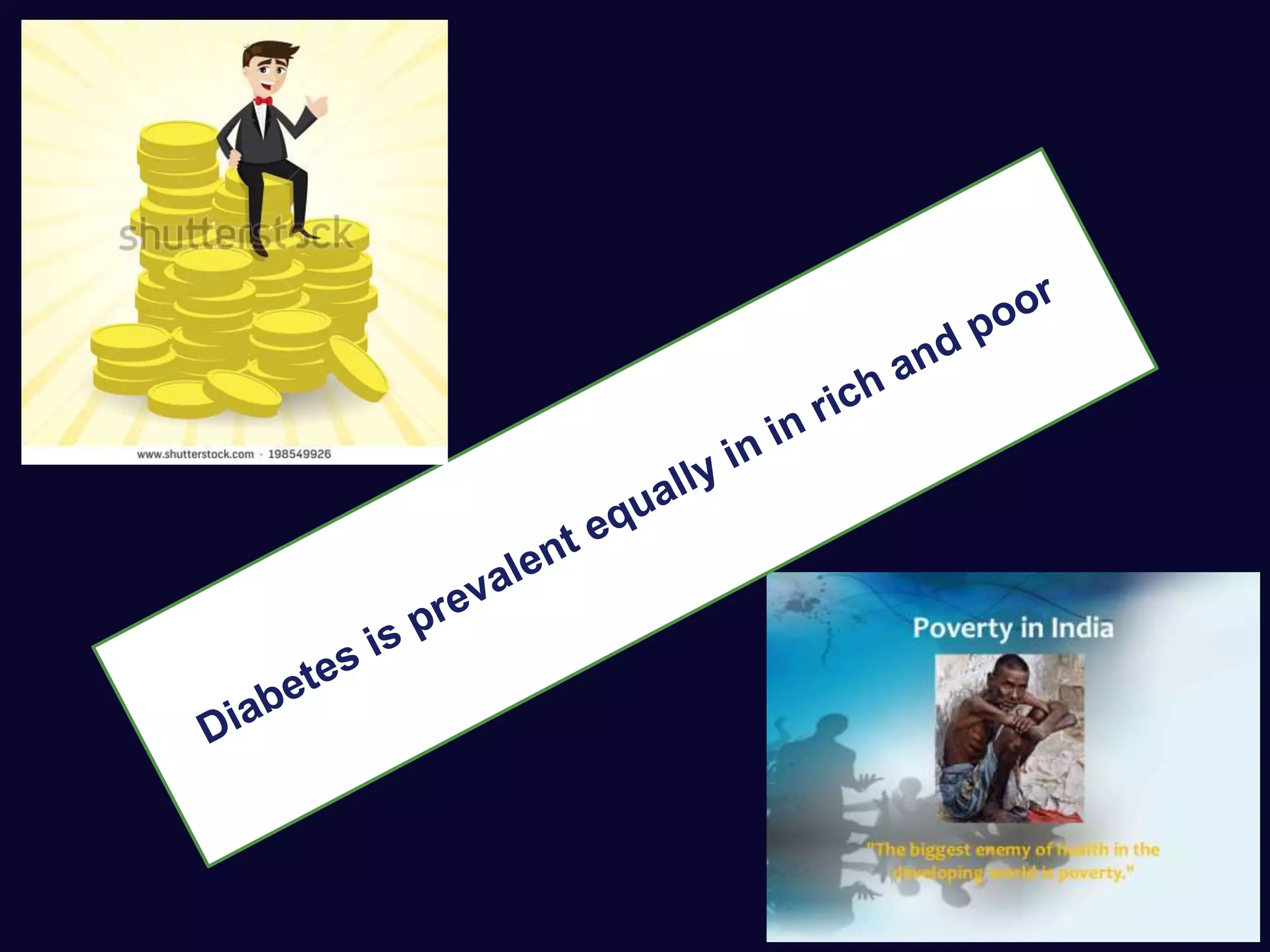
We are developing economy
Not beggars
Gliptins are good drugs. But are
they the best drugs ?
certainly not
has it been so
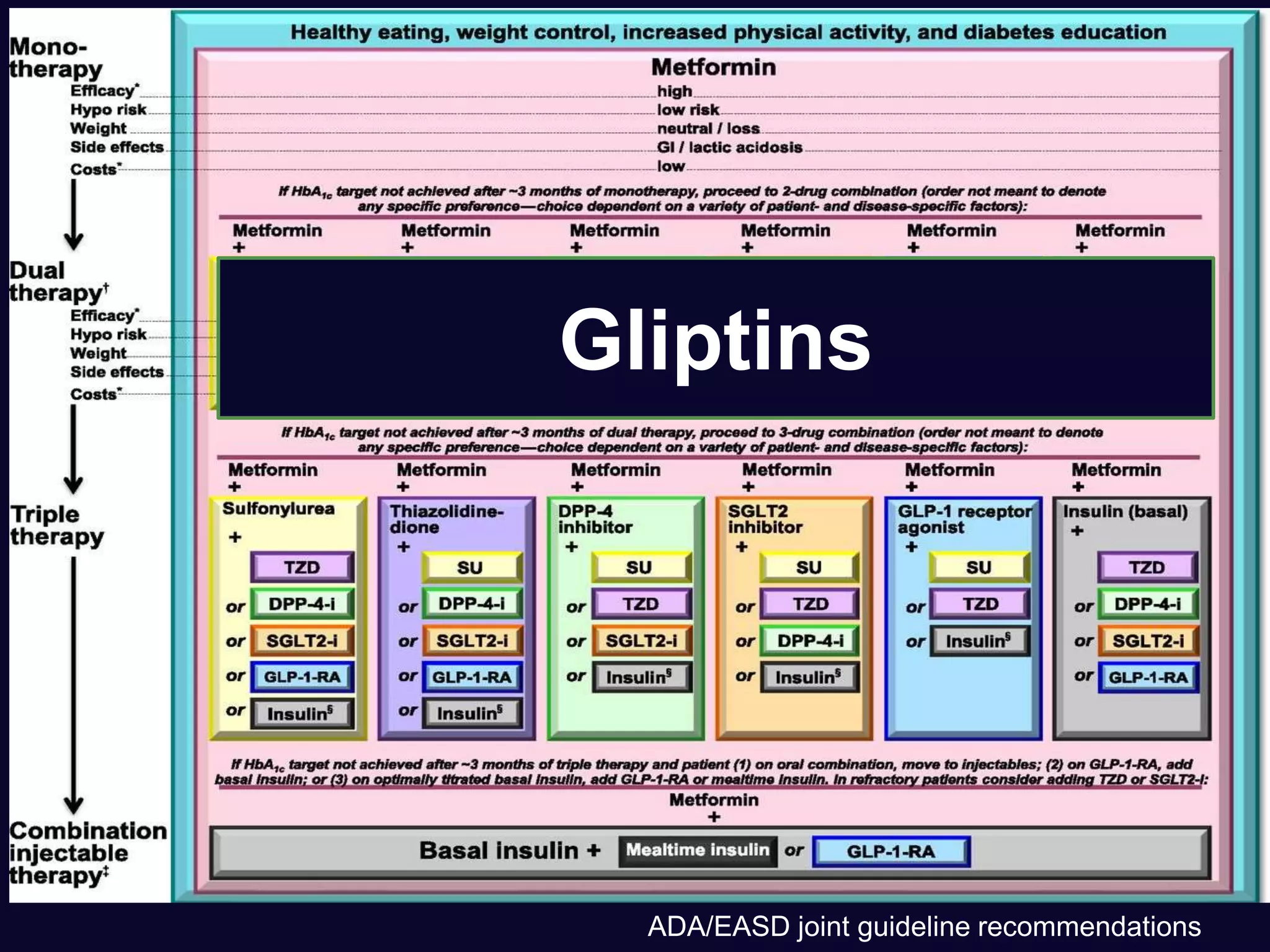
Gliptins
ADA/EASD joint guideline recommendations
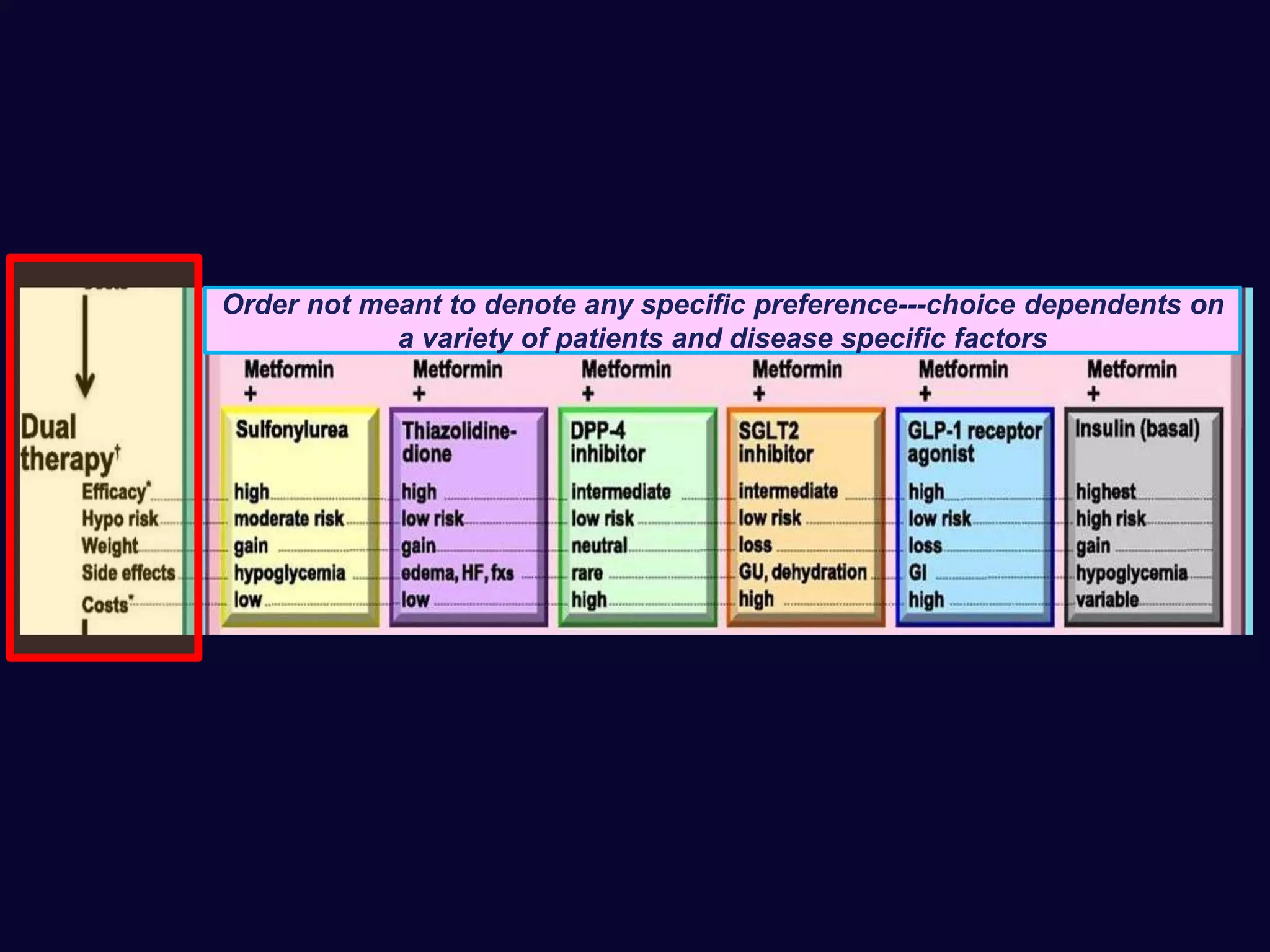
Order not meant to denote any specific preference---choice dependents on
a variety of patients and disease specific factors
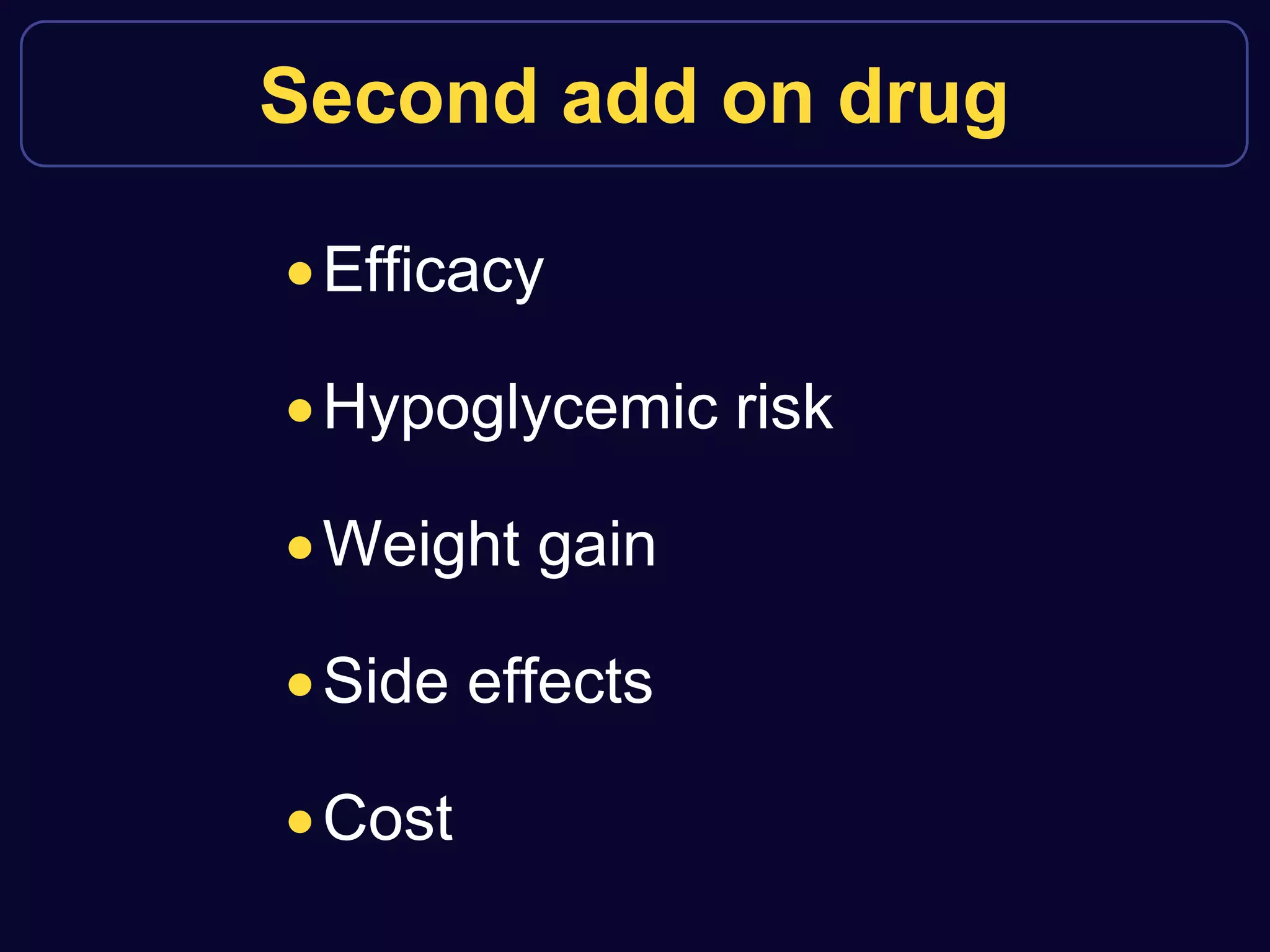
Second add on drug
Efficacy
Hypoglycemic risk
Weight gain
Side effects
Cost
Efficacy
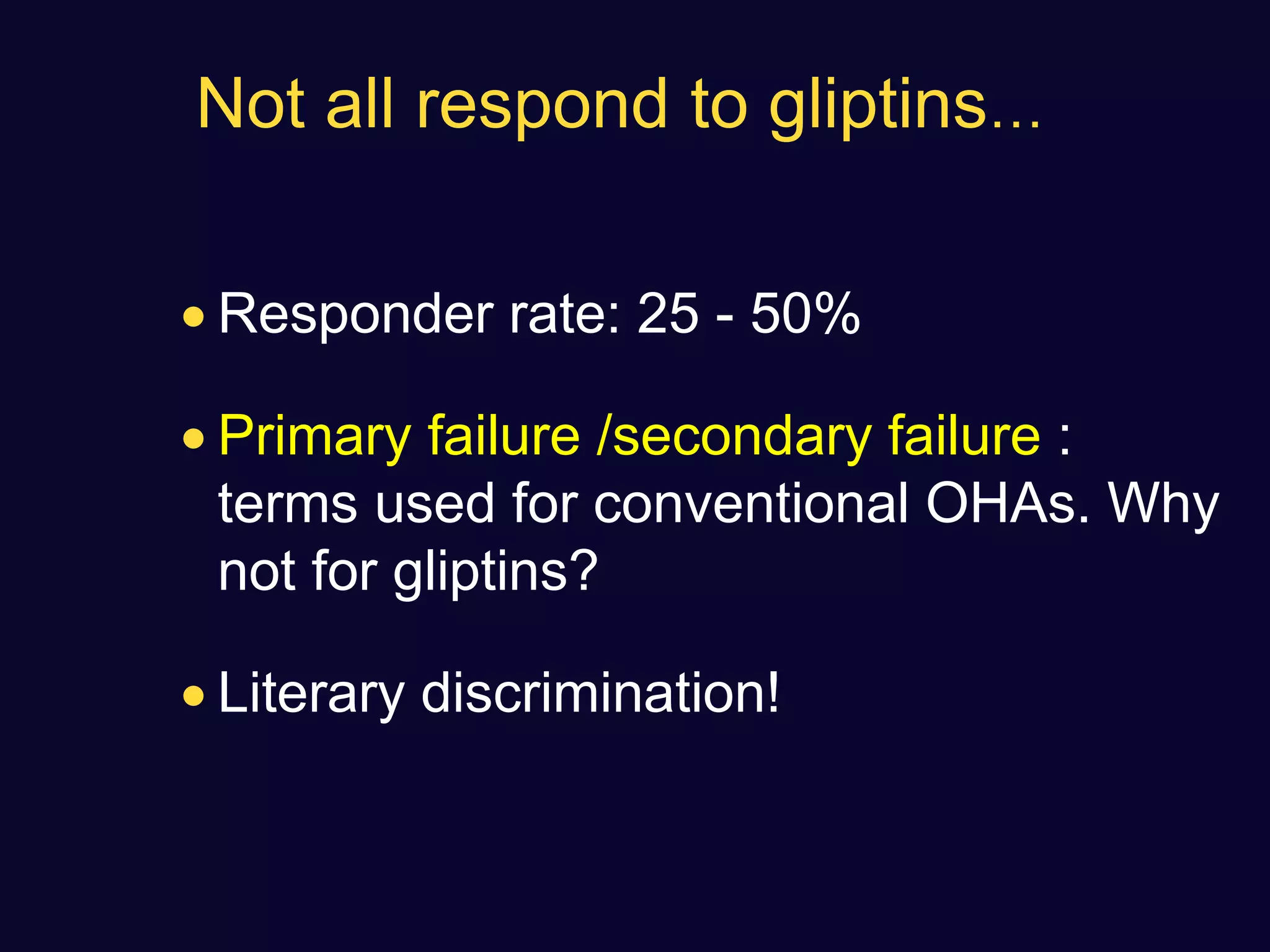
Not all respond to gliptins…
 Responder rate: 25 - 50%
 Primary failure /secondary failure :
terms used for conventional OHAs. Why
not for gliptins?
 Literary discrimination!
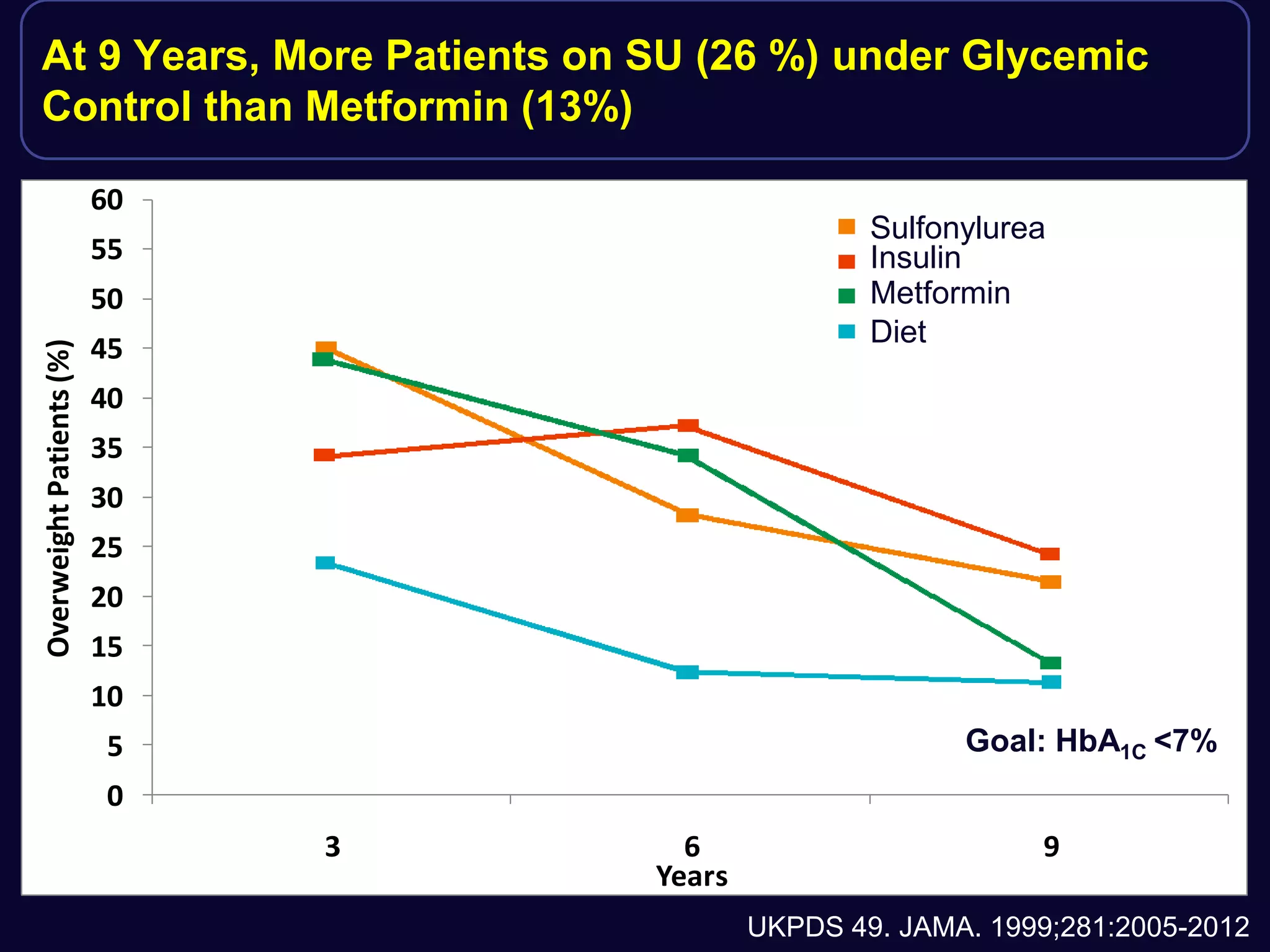
At 9 Years, More Patients on SU (26 %) under Glycemic
Control than Metformin (13%)
UKPDS 49. JAMA. 1999;281:2005-2012
0
5
10
15
20
25
30
35
40
45
50
55
60
3 6 9
Overweight
Patients
(%)
Years
Sulfonylurea
Insulin
Metformin
Diet
Goal: HbA1C <7%
Rosenstock et al. 2013
Arjona-Ferreira et al. 2013
a
Arjona-Ferreira et al. 2013
b
Nauck et al. 2007
Arechavaleta et al. 2011
Foley &
Sreenan
2009
Ferrannini et al. 2009
Filozof &
Gautier 2010
Gause-Nilsson
et al. 2010
Gallwitz et al. 2012
-1.0
-0.9
-0.8
-0.7
-0.6
-0.5
-0.4
-0.3
-0.2
-0.1
Baseline HbA1c:
7.5 7.8 7.9 7.3 7.5
Glimepiride
Linagliptin
Sitagliptin
Glipizide
8.6 8.5 7.7 7.7
Saxagliptin
Alogliptin
Vildagliptin
Gliclazide
7.7
Renal functional
impairment
Metformin
background

HbA
1c
[%]
DPP-4 Inhibitors vs. Sulfonylureas as
Monotherapy or Add-On to Metformin
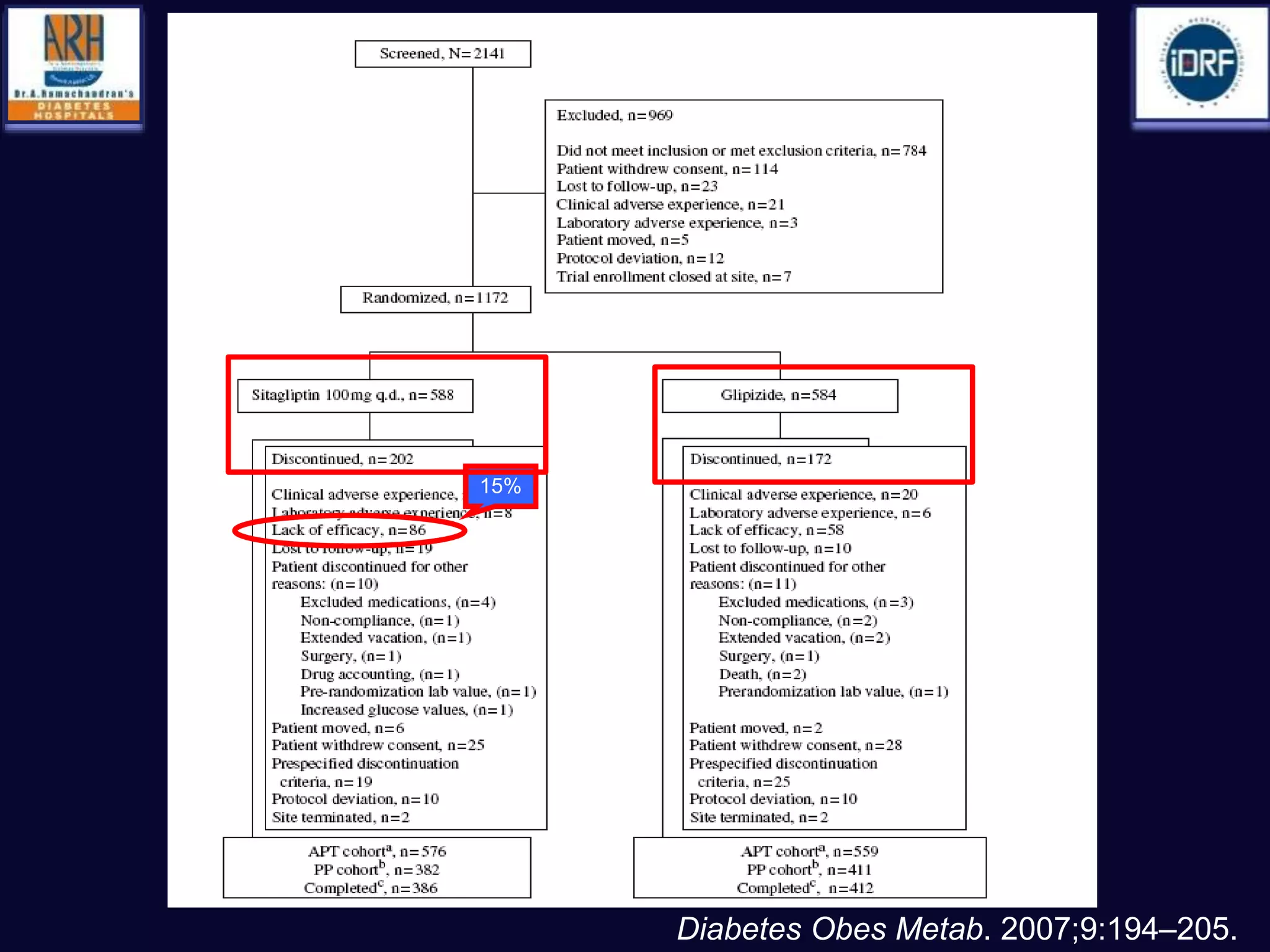
15%
Diabetes Obes Metab. 2007;9:194–205.
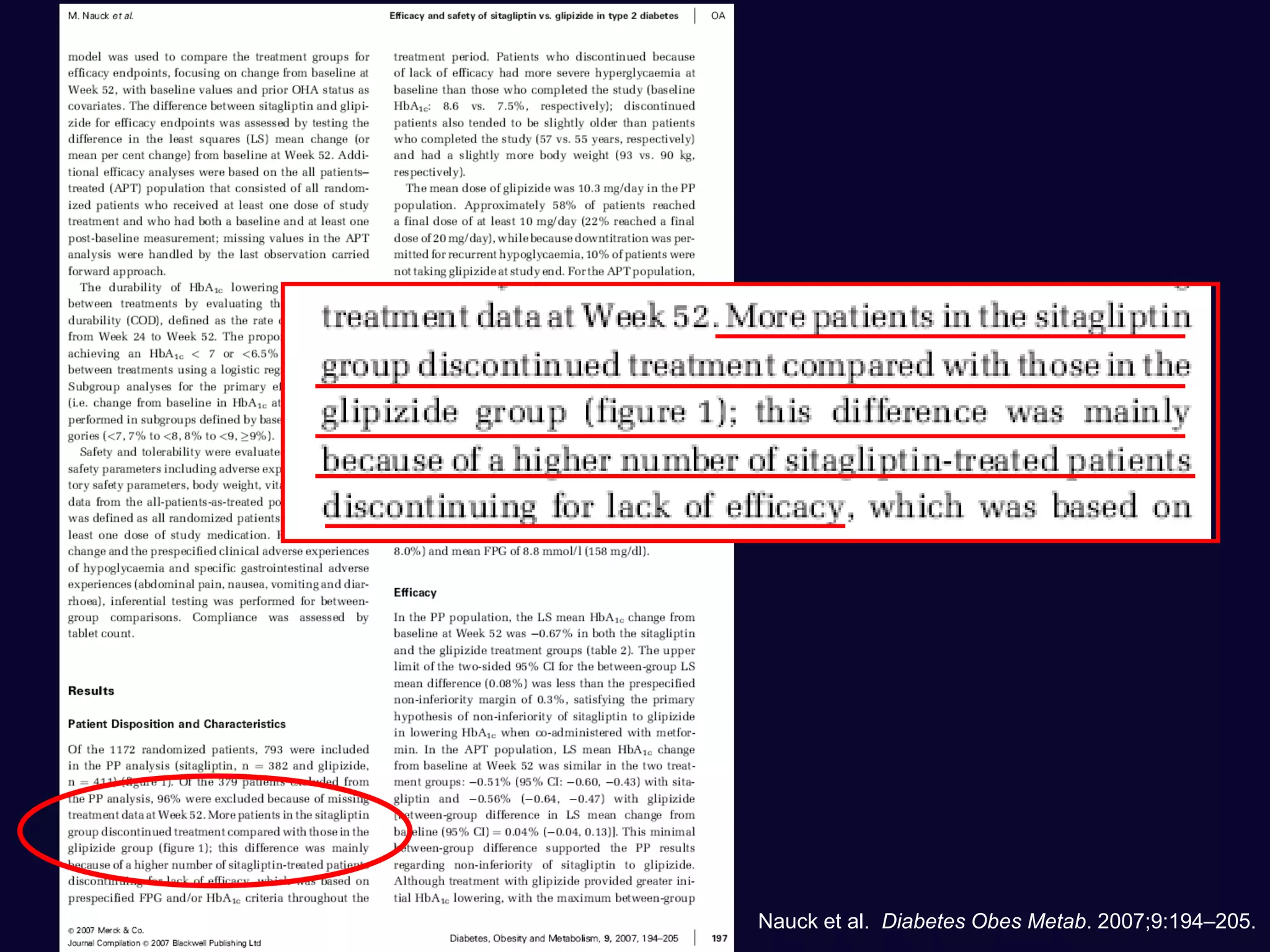
Nauck et al. Diabetes Obes Metab. 2007;9:194–205.
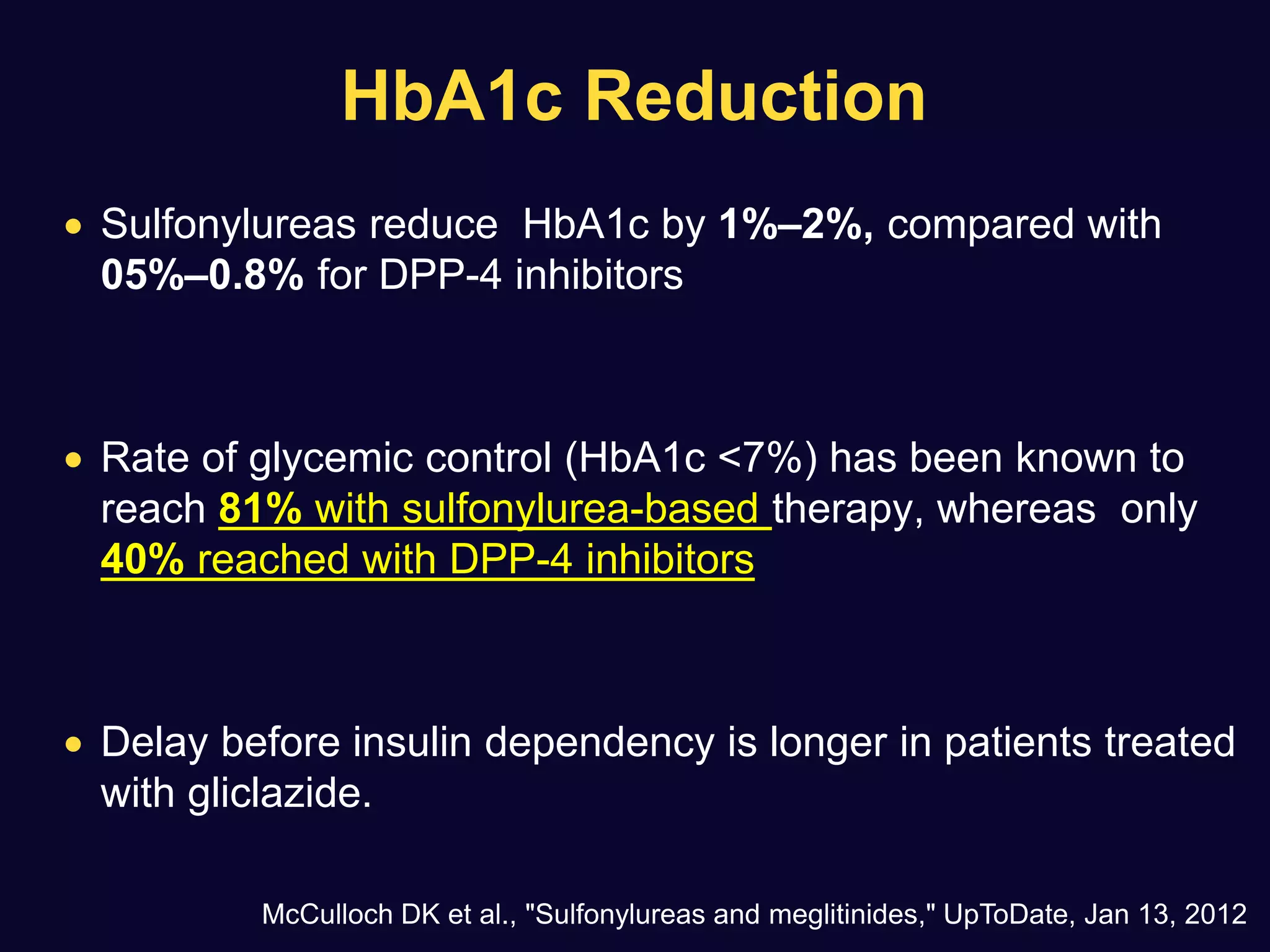
HbA1c Reduction
 Sulfonylureas reduce HbA1c by 1%–2%, compared with
05%–0.8% for DPP-4 inhibitors
 Rate of glycemic control (HbA1c <7%) has been known to
reach 81% with sulfonylurea-based therapy, whereas only
40% reached with DPP-4 inhibitors
 Delay before insulin dependency is longer in patients treated
with gliclazide.
McCulloch DK et al., "Sulfonylureas and meglitinides," UpToDate, Jan 13, 2012
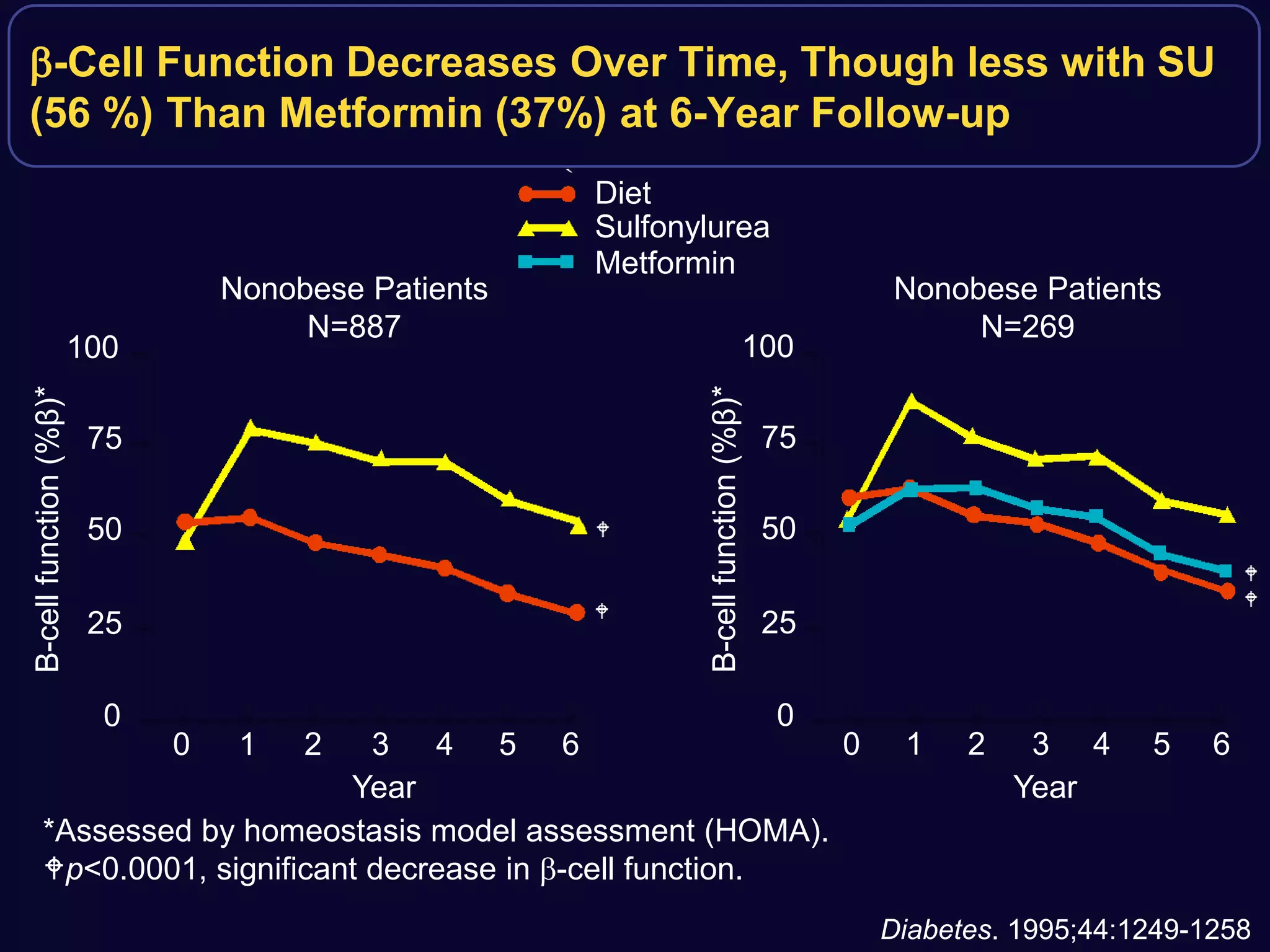
b-Cell Function Decreases Over Time, Though less with SU
(56 %) Than Metformin (37%) at 6-Year Follow-up
Diabetes. 1995;44:1249-1258
*Assessed by homeostasis model assessment (HOMA).
Wp<0.0001, significant decrease in b-cell function.
100
75
50
25
0
0 1 2 3 4 5 6
Β-cell
function
(%β)*
Year
Nonobese Patients
N=887
100
75
50
25
0
0 1 2 3 4 5 6
Β-cell
function
(%β)*
Year
Nonobese Patients
N=269
Diet
Sulfonylurea
Metformin
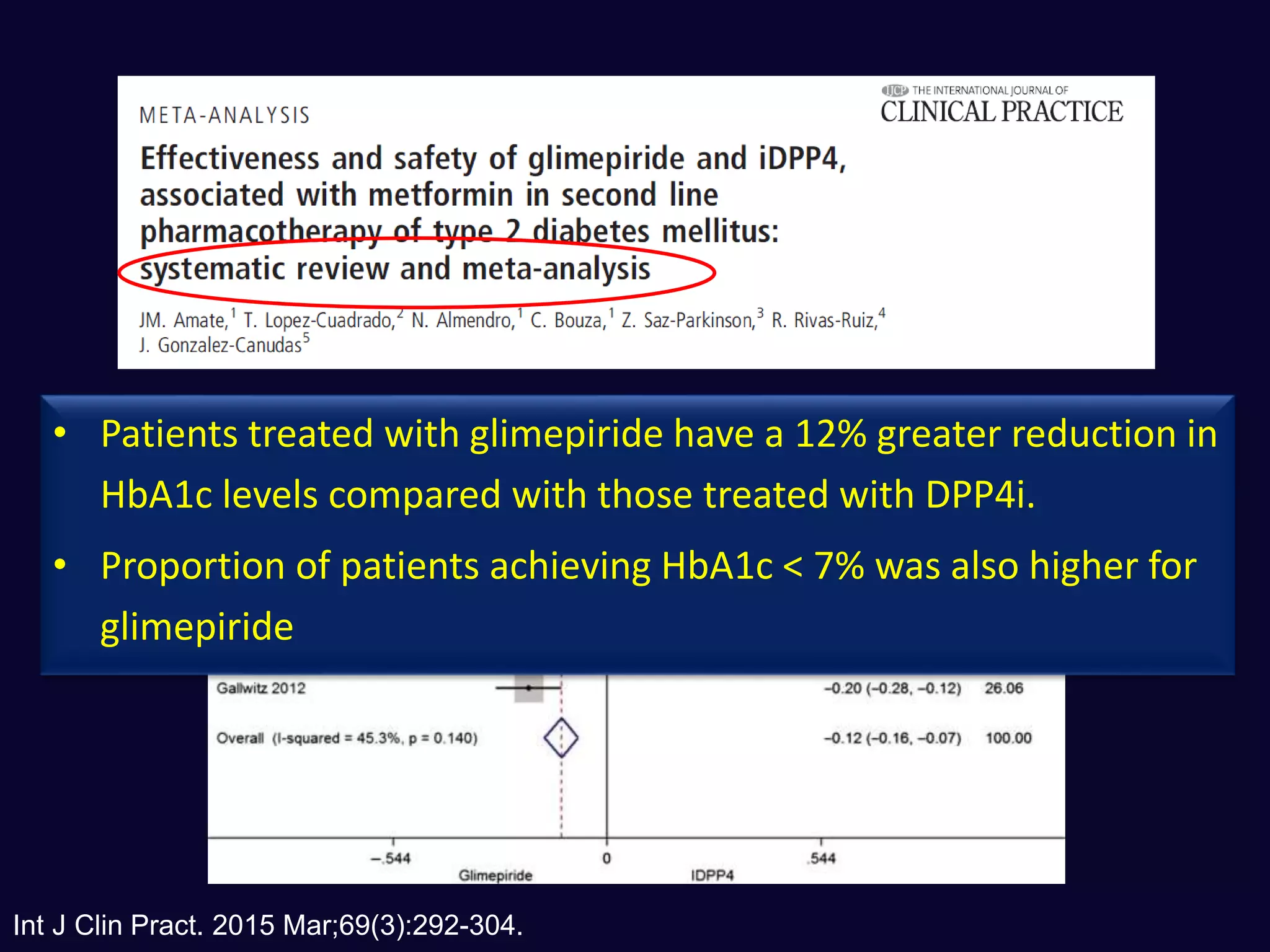
Int J Clin Pract. 2015 Mar;69(3):292-304.
• Patients treated with glimepiride have a 12% greater reduction in
HbA1c levels compared with those treated with DPP4i.
• Proportion of patients achieving HbA1c < 7% was also higher for
glimepiride
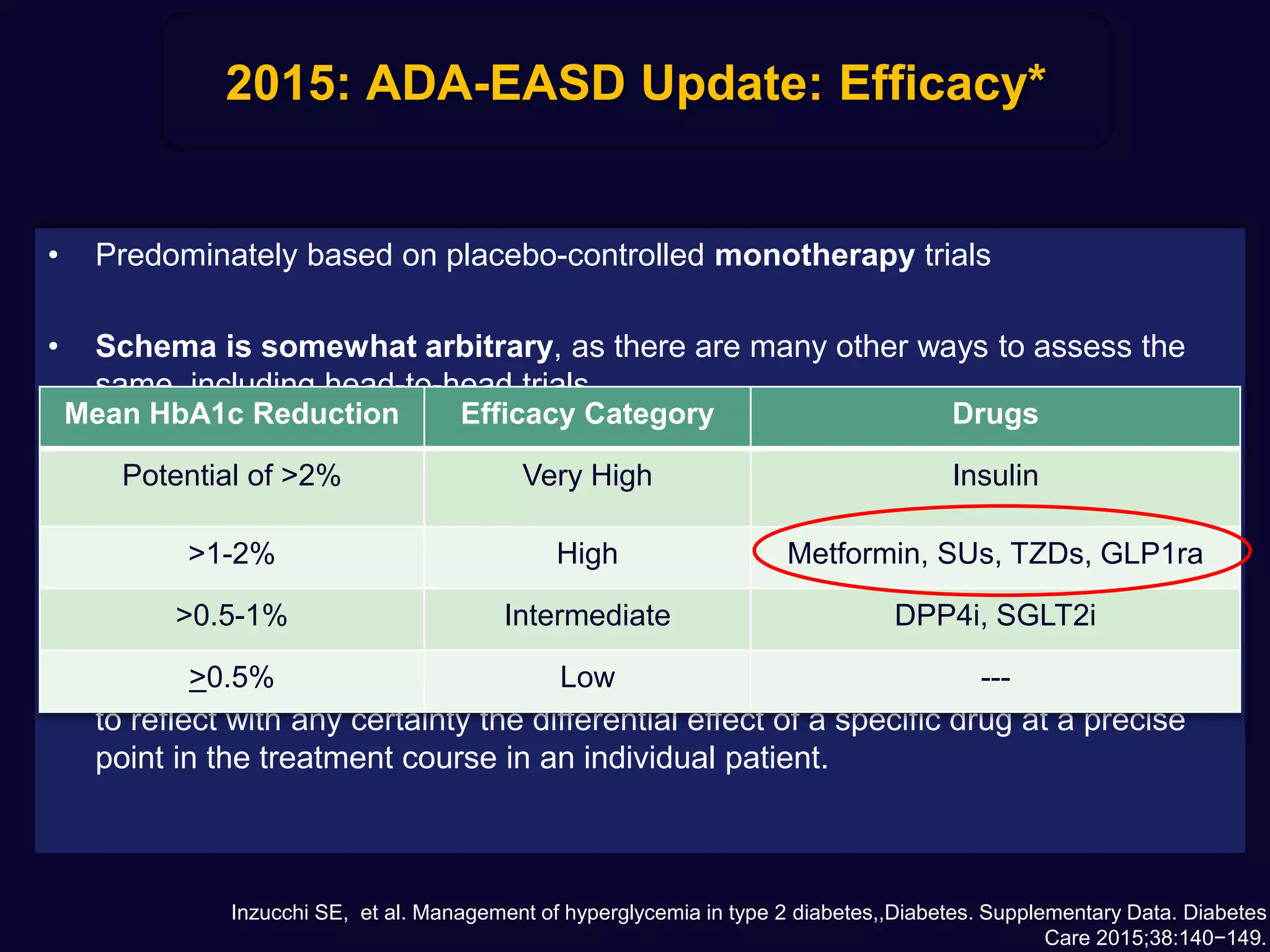
2015: ADA-EASD Update: Efficacy*
• Predominately based on placebo-controlled monotherapy trials
• Schema is somewhat arbitrary, as there are many other ways to assess the
same, including head-to-head trials.
• The results of all such trials are influenced by baseline HbA1c, drug type and
dose, duration of treatment, wash-out from other antihyperglycemic therapies, as
well as adherence among participants to study medication and diet and exercise,
among other factors.
• Mean differences of efficacy between most agents, are modest and unlikely
to reflect with any certainty the differential effect of a specific drug at a precise
point in the treatment course in an individual patient.
Mean HbA1c Reduction Efficacy Category Drugs
Potential of >2% Very High Insulin
>1-2% High Metformin, SUs, TZDs, GLP1ra
>0.5-1% Intermediate DPP4i, SGLT2i
>0.5% Low ---
Inzucchi SE, et al. Management of hyperglycemia in type 2 diabetes,,Diabetes. Supplementary Data. Diabetes
Care 2015;38:140−149.
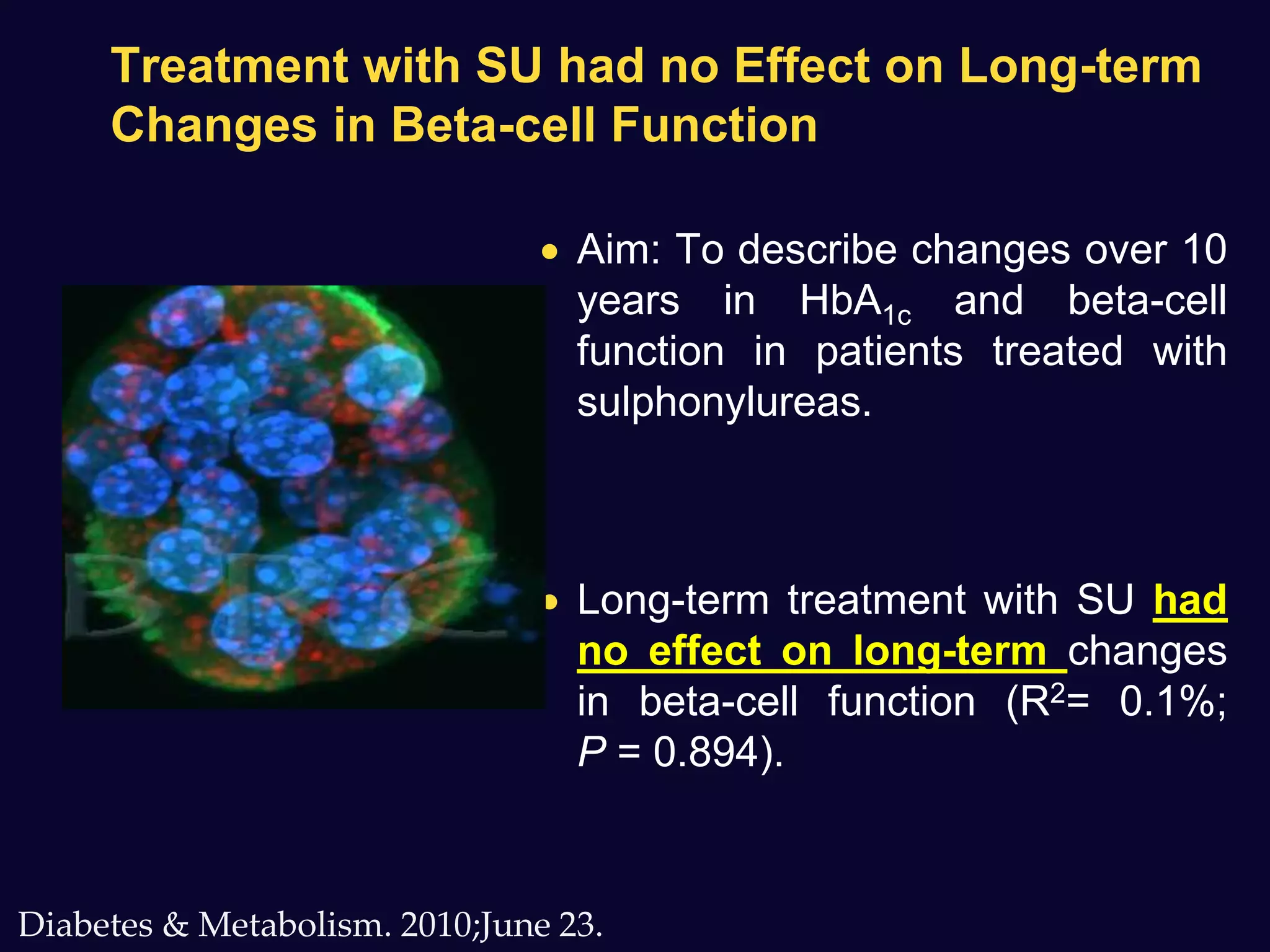
Treatment with SU had no Effect on Long-term
Changes in Beta-cell Function
 Aim: To describe changes over 10
years in HbA1c and beta-cell
function in patients treated with
sulphonylureas.
 Long-term treatment with SU had
no effect on long-term changes
in beta-cell function (R2= 0.1%;
P = 0.894).
Diabetes & Metabolism. 2010;June 23.
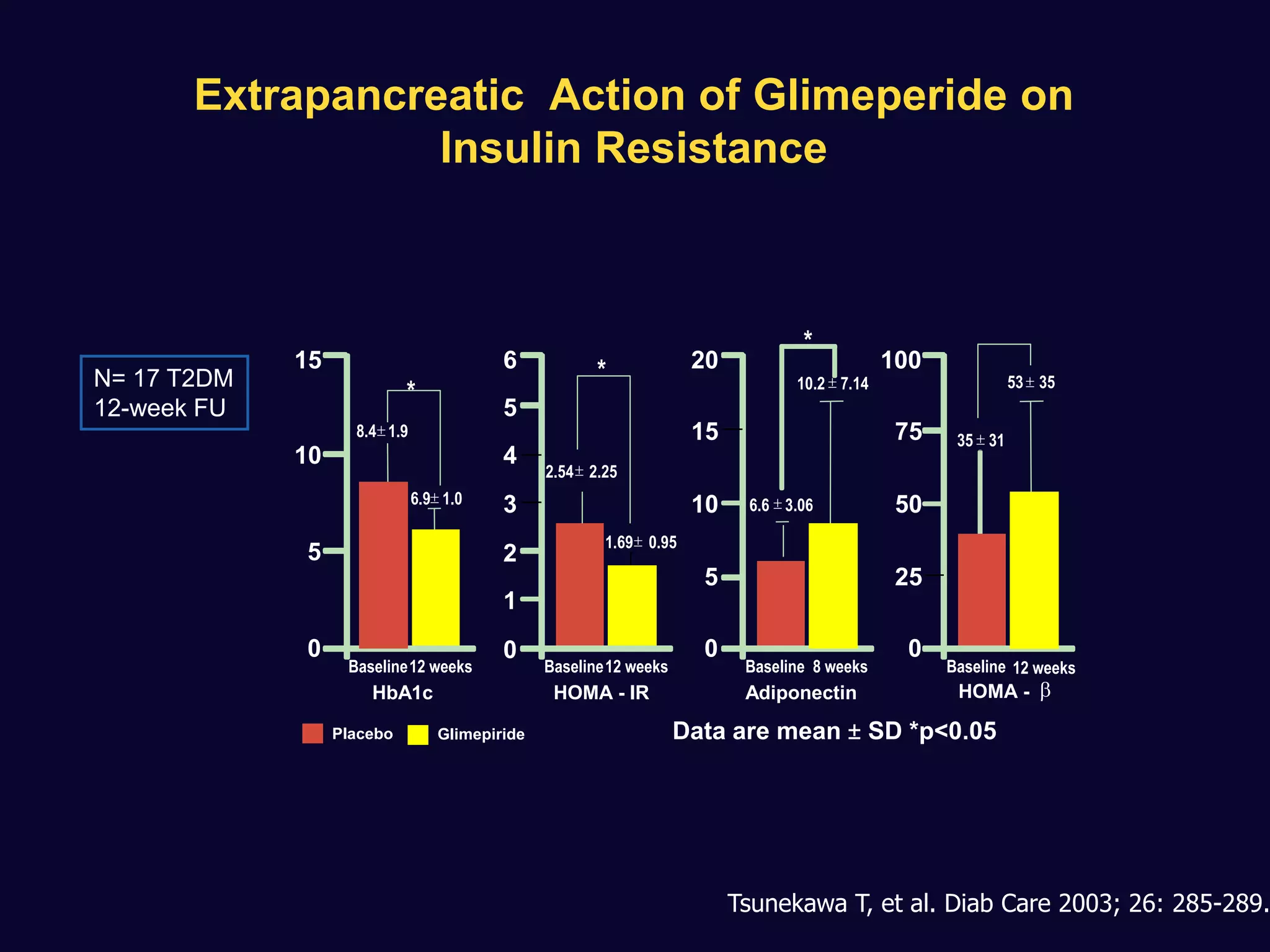
Tsunekawa T, et al. Diab Care 2003; 26: 285-289.
15
10
5
0
8.4 1.9

6.9 1.0

*
Baseline12 weeks
HbA1c
6
5
4
3
2
1
0
2.54 2.25

1.69 0.95

*
Baseline12 weeks
HOMA - IR
20
15
10
5
0
10.2 7.14

*
Baseline 8 weeks
Adiponectin
100
75
50
25
0
53 35

Baseline 12 weeks
HOMA - b
35 31

Data are mean ± SD *p<0.05
Glimepiride
Placebo
N= 17 T2DM
12-week FU
6.6 3.06

Extrapancreatic Action of Glimeperide on
Insulin Resistance
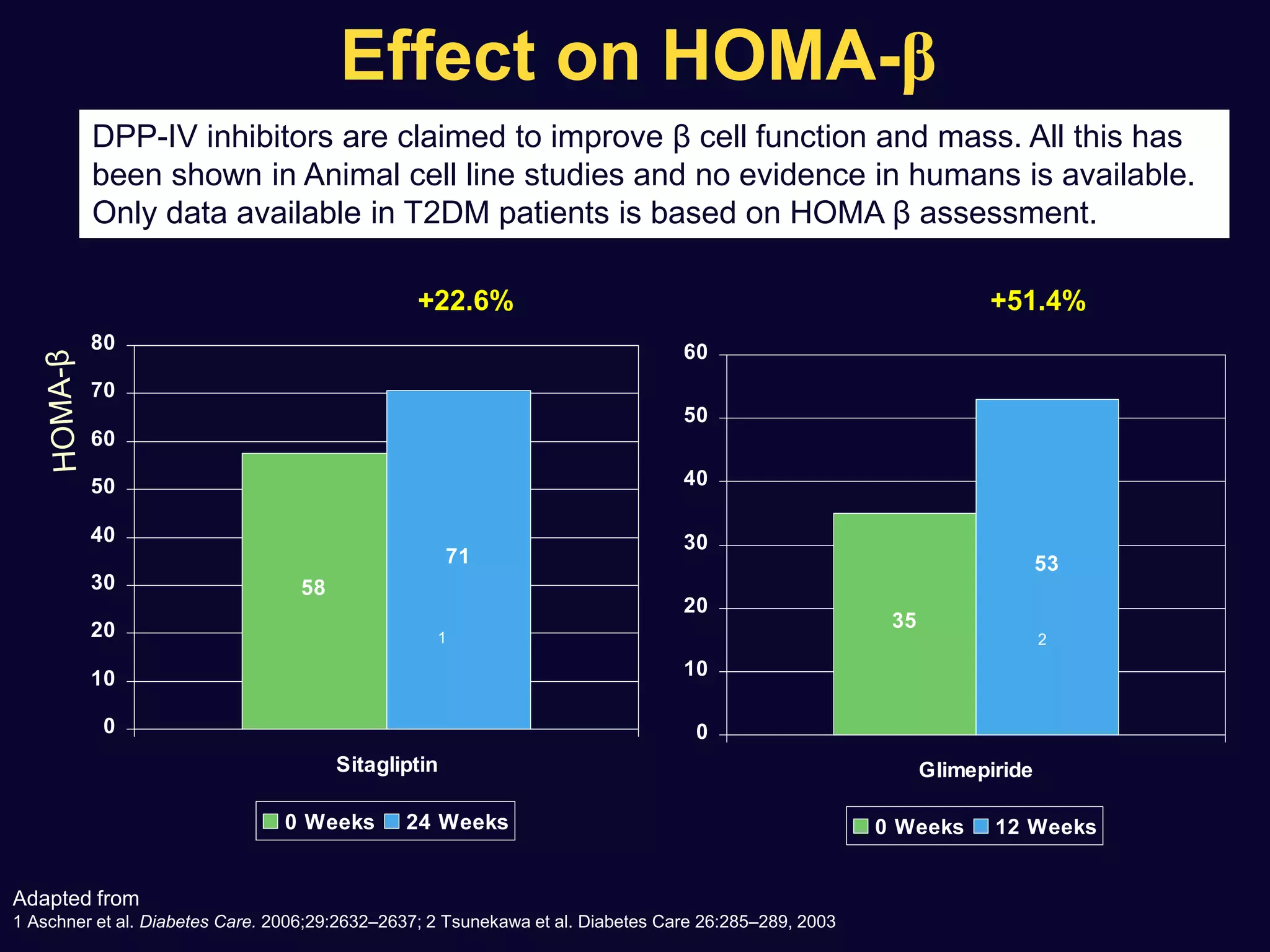
Effect on HOMA-β
58
71
0
10
20
30
40
50
60
70
80
Sitagliptin
0 Weeks 24 Weeks
35
53
0
10
20
30
40
50
60
Glimepiride
0 Weeks 12 Weeks
+22.6% +51.4%
Adapted from
1 Aschner et al. Diabetes Care. 2006;29:2632–2637; 2 Tsunekawa et al. Diabetes Care 26:285–289, 2003
1 2
DPP-IV inhibitors are claimed to improve β cell function and mass. All this has
been shown in Animal cell line studies and no evidence in humans is available.
Only data available in T2DM patients is based on HOMA β assessment.
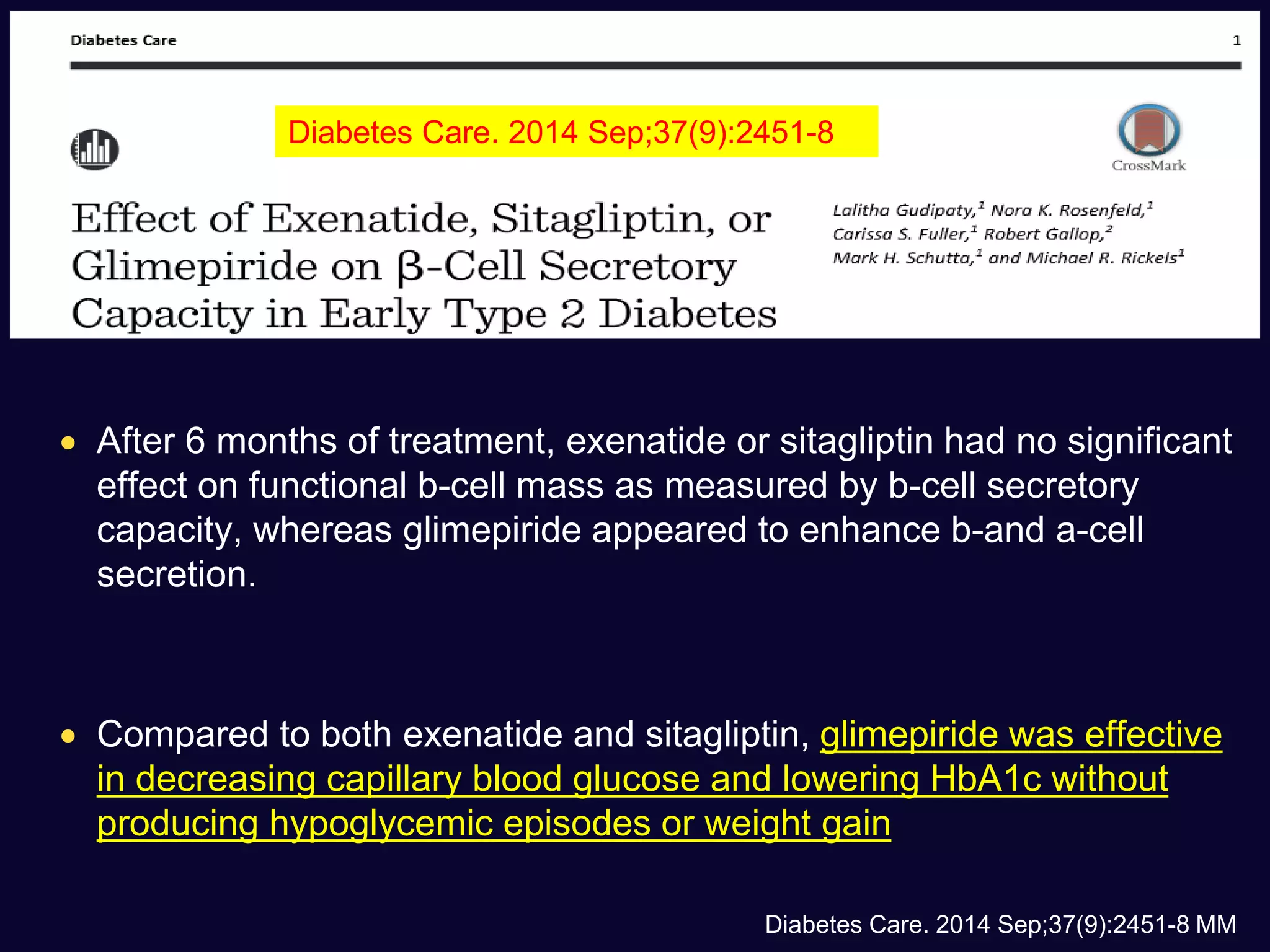
 After 6 months of treatment, exenatide or sitagliptin had no significant
effect on functional b-cell mass as measured by b-cell secretory
capacity, whereas glimepiride appeared to enhance b-and a-cell
secretion.
 Compared to both exenatide and sitagliptin, glimepiride was effective
in decreasing capillary blood glucose and lowering HbA1c without
producing hypoglycemic episodes or weight gain
Diabetes Care. 2014 Sep;37(9):2451-8 MM
Diabetes Care. 2014 Sep;37(9):2451-8
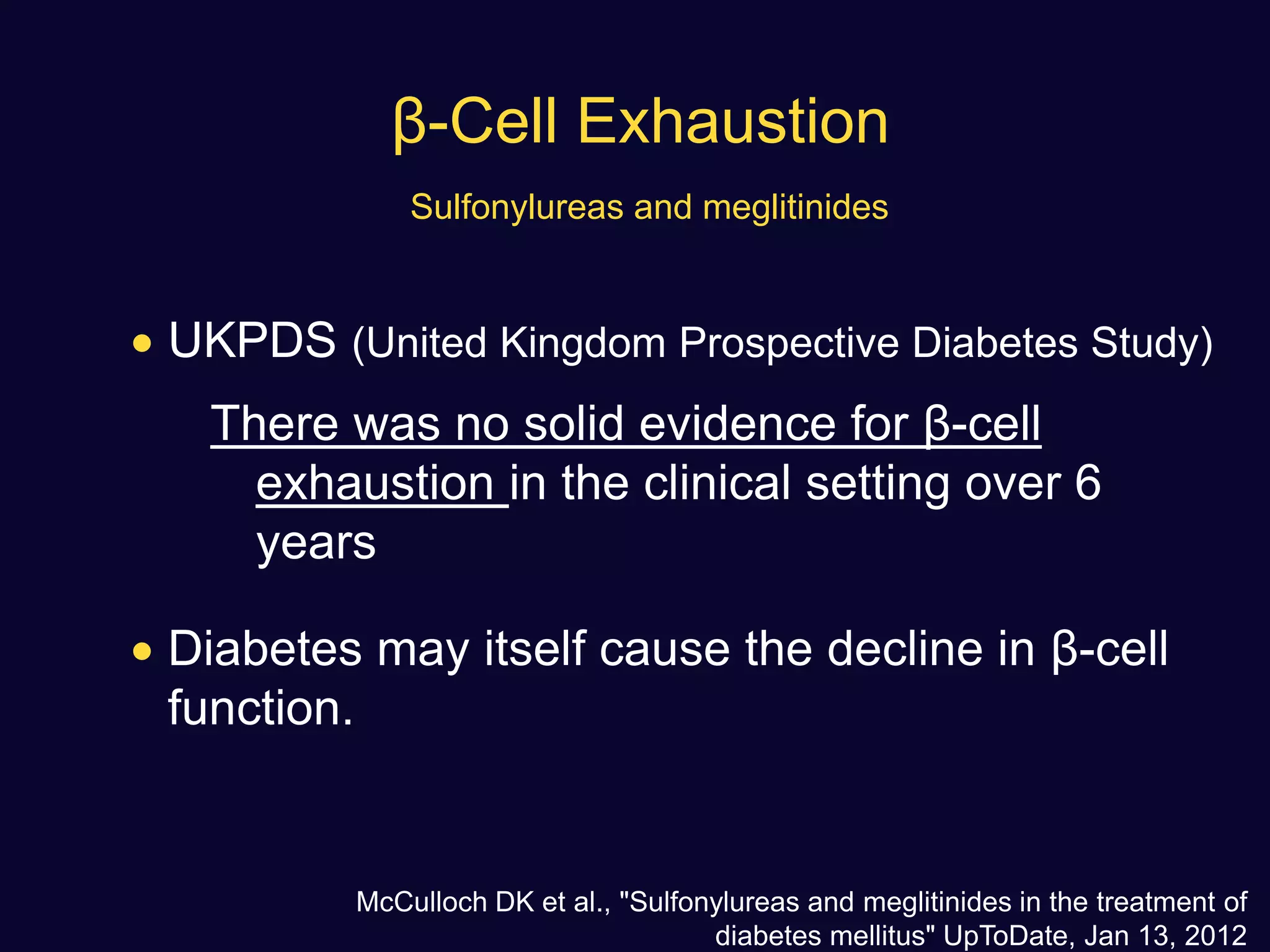
β-Cell Exhaustion
Sulfonylureas and meglitinides
 UKPDS (United Kingdom Prospective Diabetes Study)
There was no solid evidence for β-cell
exhaustion in the clinical setting over 6
years
 Diabetes may itself cause the decline in β-cell
function.
McCulloch DK et al., "Sulfonylureas and meglitinides in the treatment of
diabetes mellitus" UpToDate, Jan 13, 2012
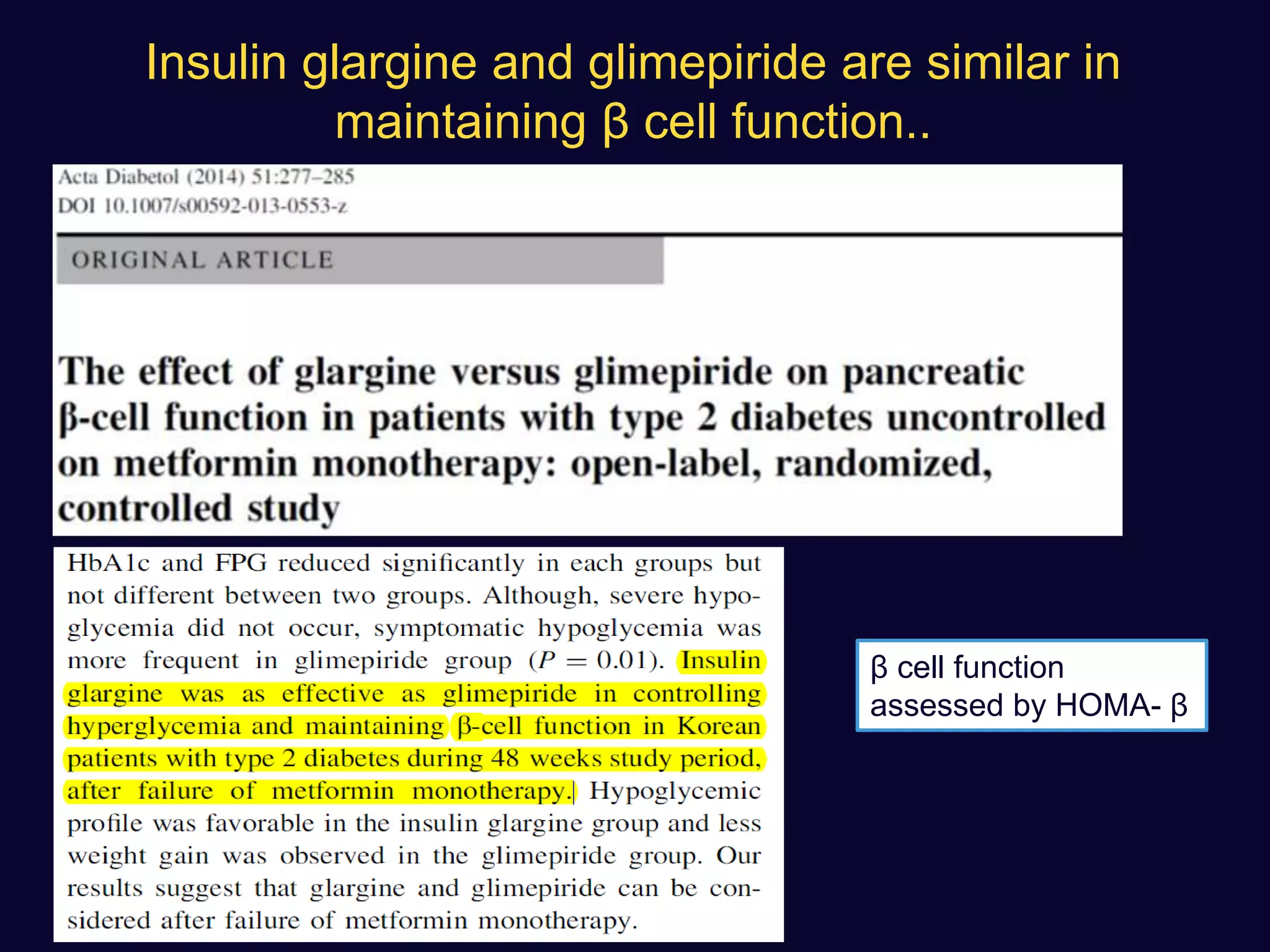
Insulin glargine and glimepiride are similar in
maintaining β cell function..
β cell function
assessed by HOMA- β
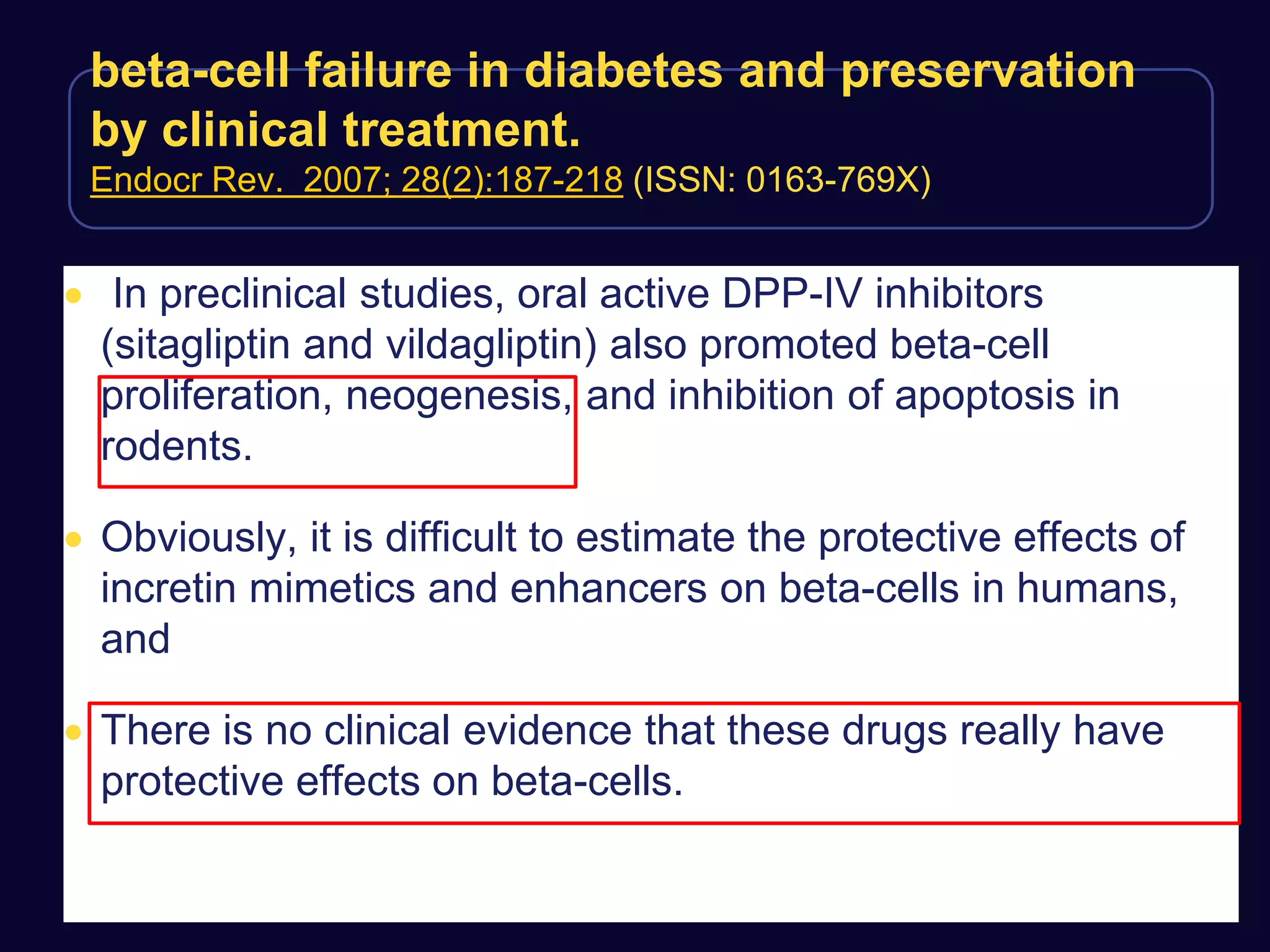
beta-cell failure in diabetes and preservation
by clinical treatment.
Endocr Rev. 2007; 28(2):187-218 (ISSN: 0163-769X)
 In preclinical studies, oral active DPP-IV inhibitors
(sitagliptin and vildagliptin) also promoted beta-cell
proliferation, neogenesis, and inhibition of apoptosis in
rodents.
 Obviously, it is difficult to estimate the protective effects of
incretin mimetics and enhancers on beta-cells in humans,
and
 There is no clinical evidence that these drugs really have
protective effects on beta-cells.
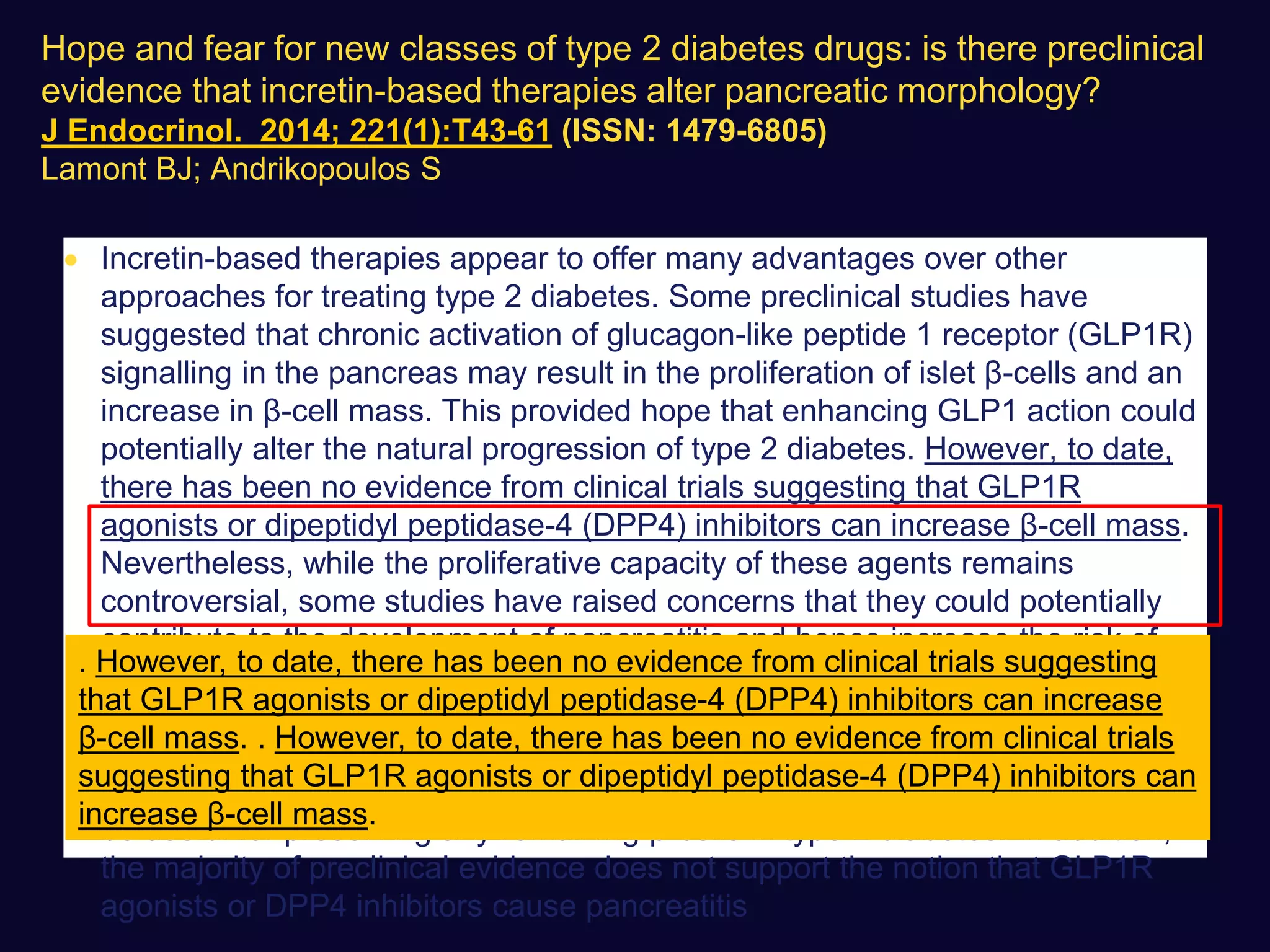
 Incretin-based therapies appear to offer many advantages over other
approaches for treating type 2 diabetes. Some preclinical studies have
suggested that chronic activation of glucagon-like peptide 1 receptor (GLP1R)
signalling in the pancreas may result in the proliferation of islet β-cells and an
increase in β-cell mass. This provided hope that enhancing GLP1 action could
potentially alter the natural progression of type 2 diabetes. However, to date,
there has been no evidence from clinical trials suggesting that GLP1R
agonists or dipeptidyl peptidase-4 (DPP4) inhibitors can increase β-cell mass.
Nevertheless, while the proliferative capacity of these agents remains
controversial, some studies have raised concerns that they could potentially
contribute to the development of pancreatitis and hence increase the risk of
pancreatic cancer. Currently, there are very limited clinical data to directly
assess these potential benefits and risks of incretin-based therapies. However,
a review of the preclinical studies indicates that incretin-based therapies
probably have only a limited capacity to regenerate pancreatic β-cells, but may
be useful for preserving any remaining β-cells in type 2 diabetes. In addition,
the majority of preclinical evidence does not support the notion that GLP1R
agonists or DPP4 inhibitors cause pancreatitis
. However, to date, there has been no evidence from clinical trials suggesting
that GLP1R agonists or dipeptidyl peptidase-4 (DPP4) inhibitors can increase
β-cell mass. . However, to date, there has been no evidence from clinical trials
suggesting that GLP1R agonists or dipeptidyl peptidase-4 (DPP4) inhibitors can
increase β-cell mass.
Hope and fear for new classes of type 2 diabetes drugs: is there preclinical
evidence that incretin-based therapies alter pancreatic morphology?
J Endocrinol. 2014; 221(1):T43-61 (ISSN: 1479-6805)
Lamont BJ; Andrikopoulos S
Sulfonylureas and cardiovascular risk
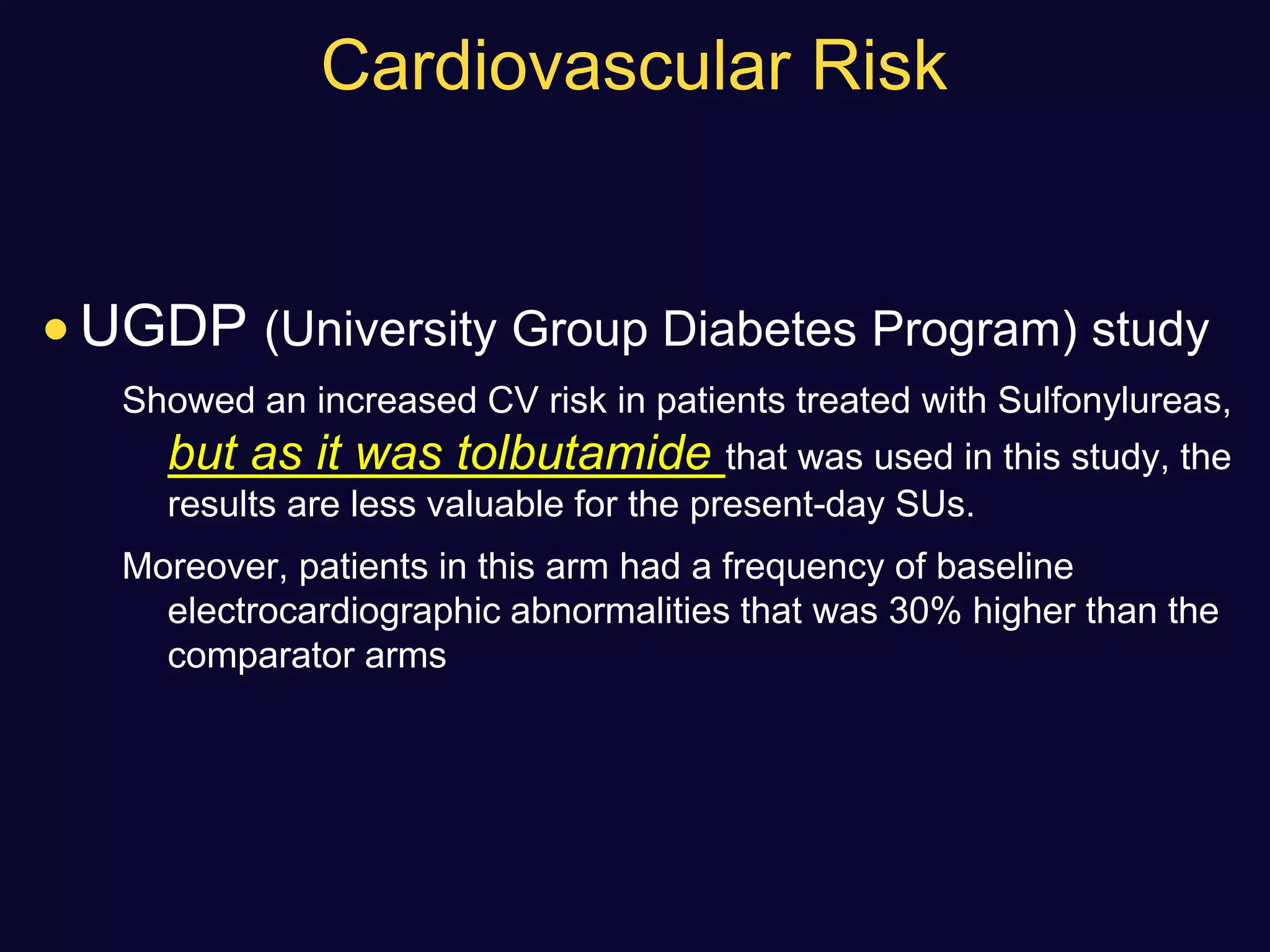
Cardiovascular Risk
 UGDP (University Group Diabetes Program) study
Showed an increased CV risk in patients treated with Sulfonylureas,
but as it was tolbutamide that was used in this study, the
results are less valuable for the present-day SUs.
Moreover, patients in this arm had a frequency of baseline
electrocardiographic abnormalities that was 30% higher than the
comparator arms
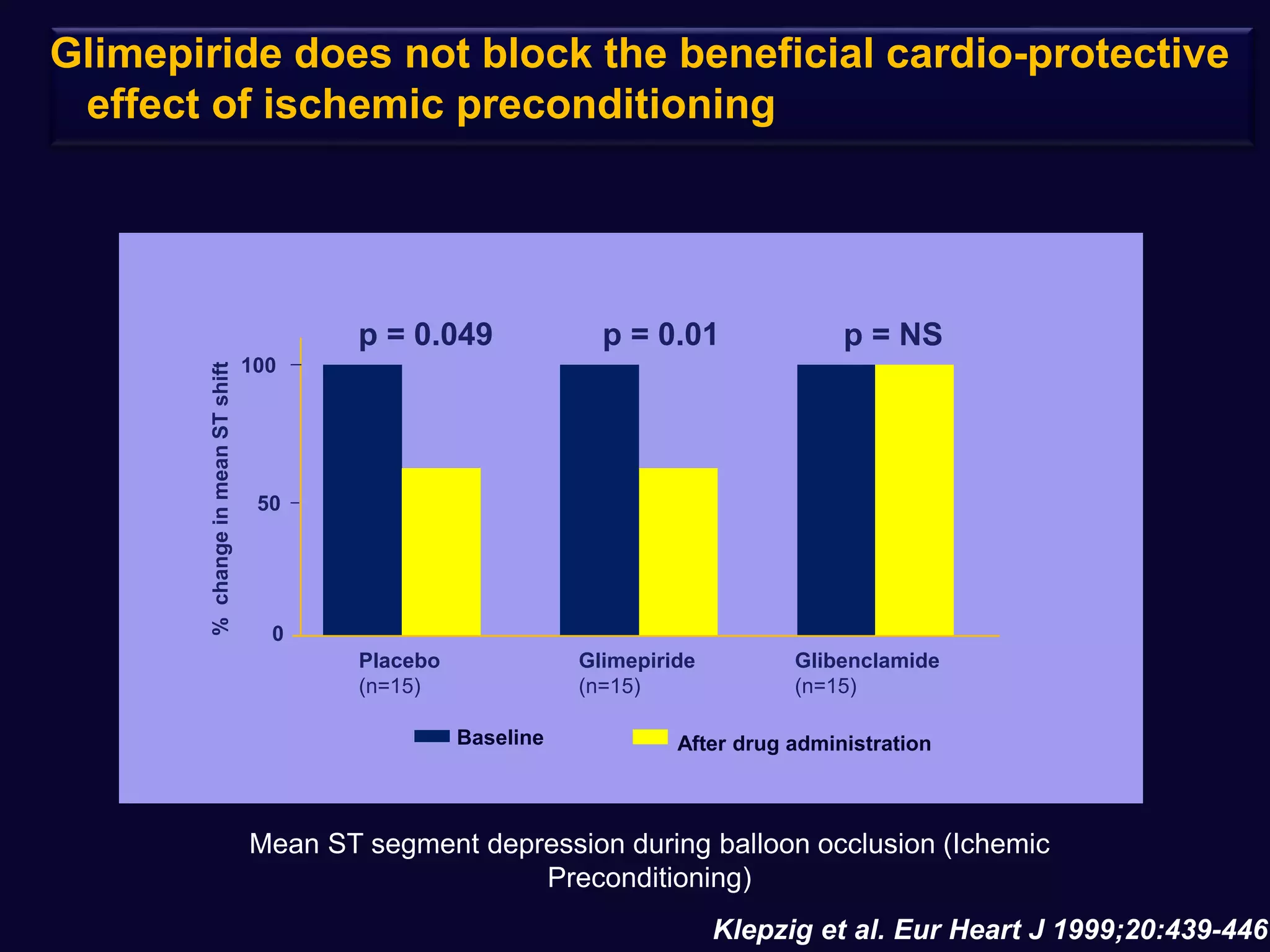
%
change
in
mean
ST
shift
Baseline After drug administration
Mean ST segment depression during balloon occlusion (Ichemic
Preconditioning)
Klepzig et al. Eur Heart J 1999;20:439-446
50
100
Placebo
(n=15)
Glimepiride
(n=15)
Glibenclamide
(n=15)
p = 0.01 p = NS
p = 0.049
0
Glimepiride does not block the beneficial cardio-protective
effect of ischemic preconditioning
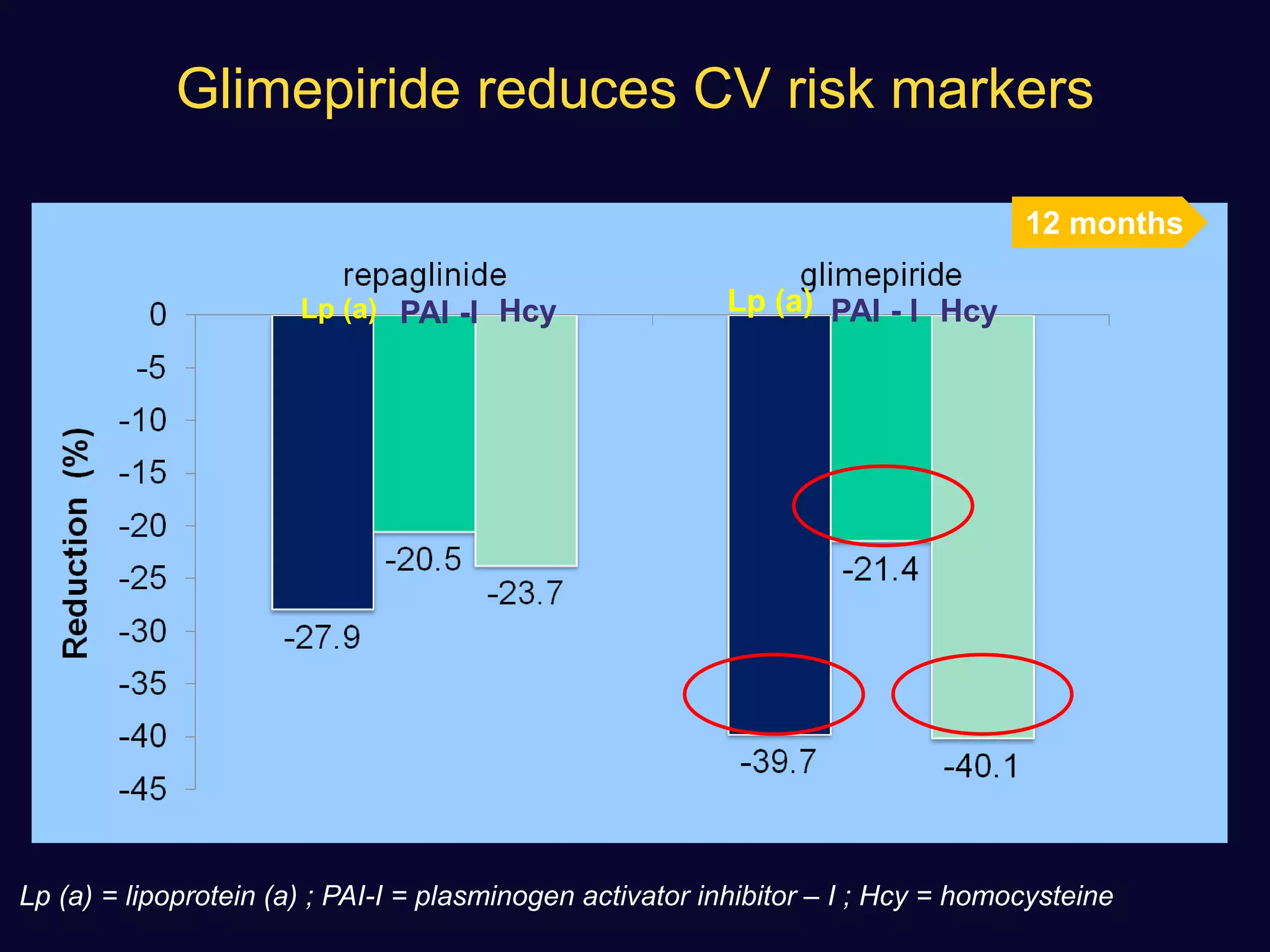
Glimepiride reduces CV risk markers
Lp (a) = lipoprotein (a) ; PAI-I = plasminogen activator inhibitor – I ; Hcy = homocysteine
Lp (a) Lp (a)
PAI -I PAI - I Hcy
Hcy
12 months
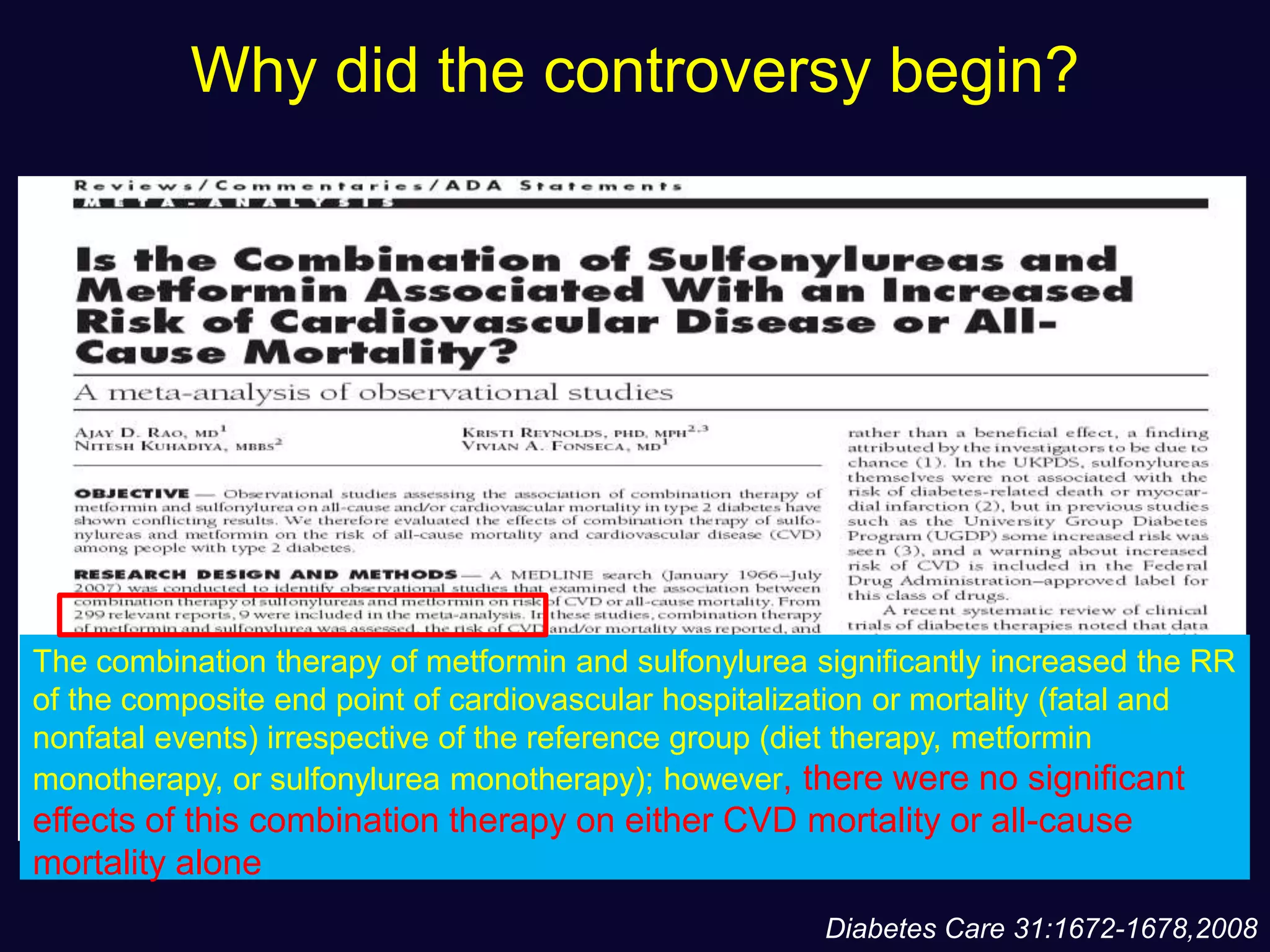
Why did the controversy begin?
The combination therapy of metformin and sulfonylurea significantly increased the RR
of the composite end point of cardiovascular hospitalization or mortality (fatal and
nonfatal events) irrespective of the reference group (diet therapy, metformin
monotherapy, or sulfonylurea monotherapy); however, there were no significant
effects of this combination therapy on either CVD mortality or all-cause
mortality alone
Diabetes Care 31:1672-1678,2008
Flaws in the study
 9 studies were included, 6 retrospective, 2 prospective and 1 case
control. The two largest studies were not included in the CV
hospitalizations or mortality analysis
 Note the lack of significant difference in all cause mortality and CVD
mortality
 Data represents a meta-analysis of observational, generally
retrospective studies.
The authors said, it is “unclear to what extent certain biases and
methodological limitations … might exist in the studies included in this
meta-analysis…”
What is truth
The authors note: “It is likely that patients on combination
therapy were likely to have either a more rapidly
progressive form of the disease or a longer duration of
diabetes, perhaps both.” Hence the higher rate of
mortality or hospitalization observed in the group
receiving combination therapy could be related not to the
combination regimen but to a higher severity of the
disease in this subgroup.
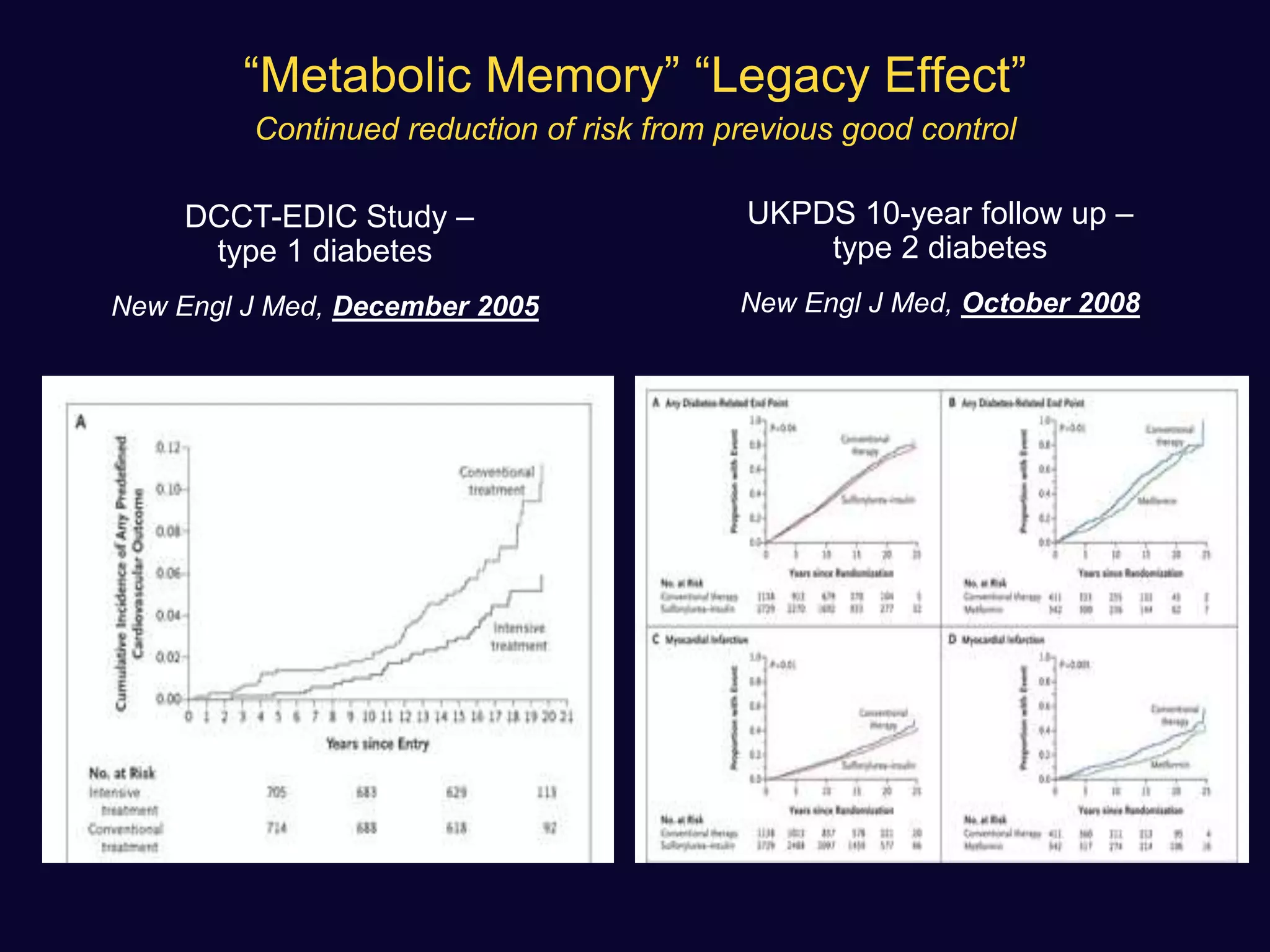
“Metabolic Memory” “Legacy Effect”
Continued reduction of risk from previous good control
DCCT-EDIC Study –
type 1 diabetes
New Engl J Med, December 2005
UKPDS 10-year follow up –
type 2 diabetes
New Engl J Med, October 2008
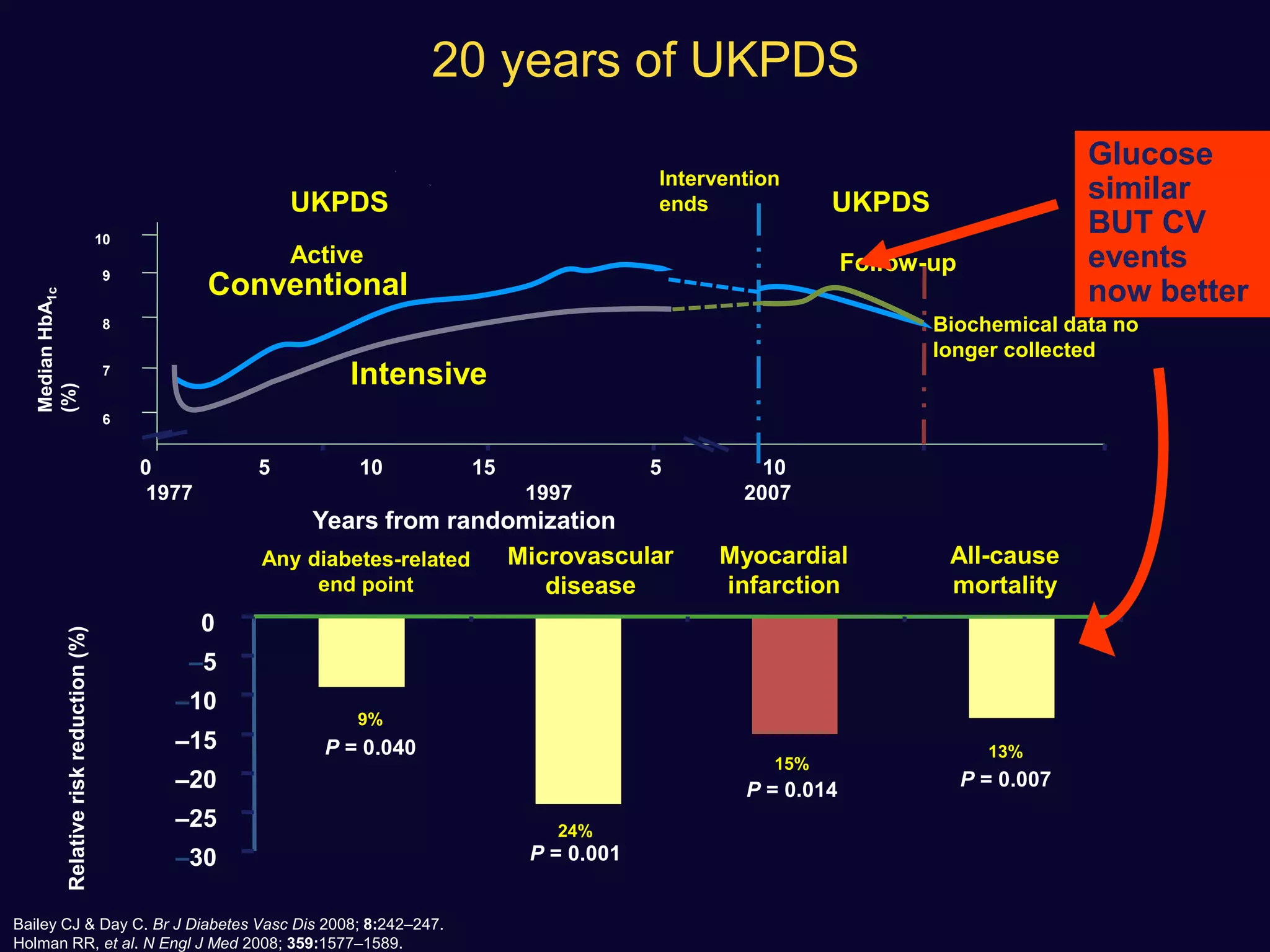
20 years of UKPDS
–30
–25
–20
–15
–10
–5
0
Relative
risk
reduction
(%)
All-cause
mortality
9%
24%
15%
13%
P = 0.040
P = 0.001
P = 0.014 P = 0.007
Bailey CJ & Day C. Br J Diabetes Vasc Dis 2008; 8:242–247.
Holman RR, et al. N Engl J Med 2008; 359:1577–1589.
10
9
8
7
6
0 5 10 15 5 10
1977 1997 2007
Years from randomization
UKPDS
Active
Conventional
Intensive
Intervention
ends UKPDS
Follow-up
Median
HbA
1c
(%)
Biochemical data no
longer collected
Glucose
similar
BUT CV
events
now better
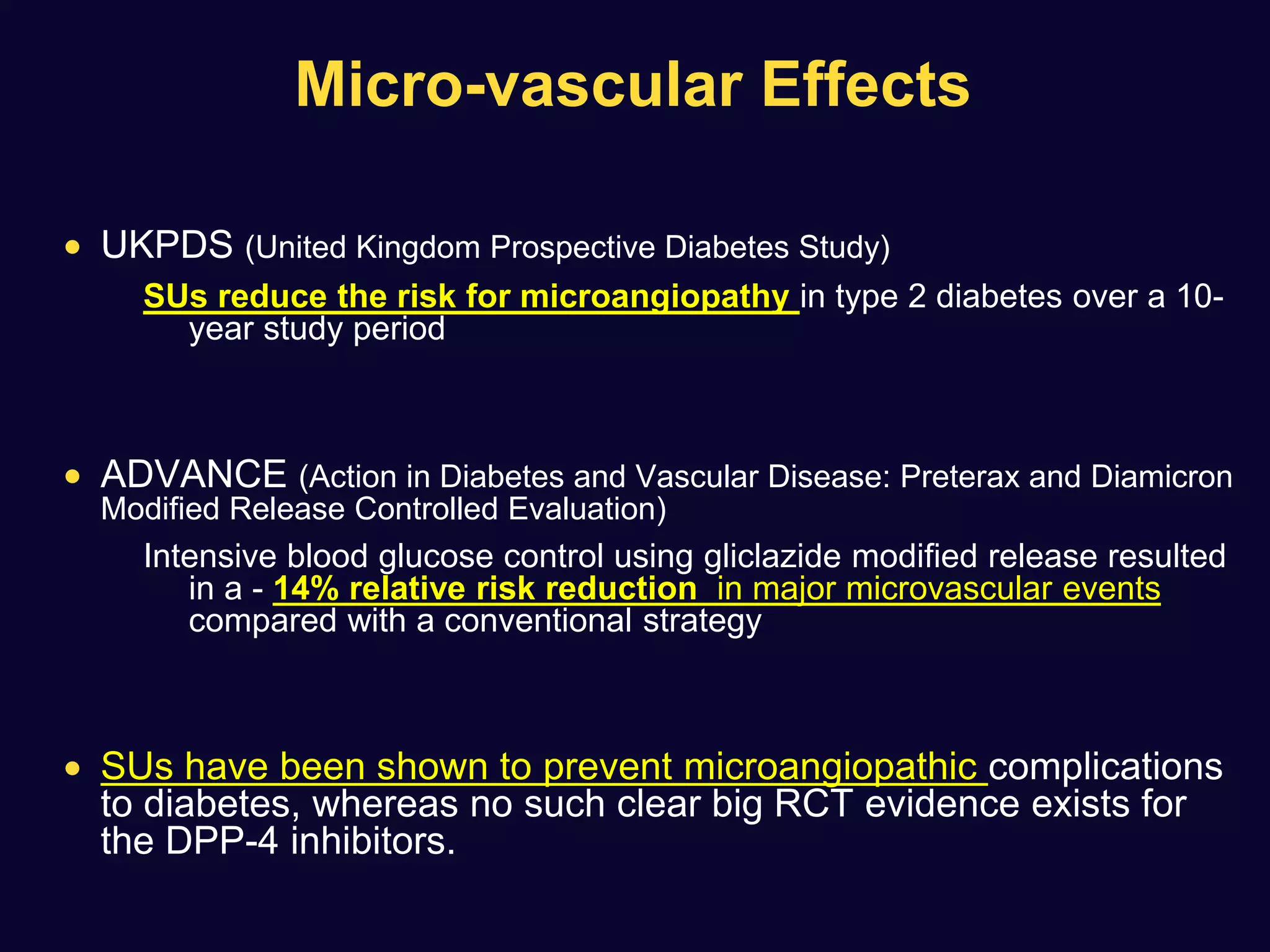
Micro-vascular Effects
 UKPDS (United Kingdom Prospective Diabetes Study)
SUs reduce the risk for microangiopathy in type 2 diabetes over a 10-
year study period
 ADVANCE (Action in Diabetes and Vascular Disease: Preterax and Diamicron
Modified Release Controlled Evaluation)
Intensive blood glucose control using gliclazide modified release resulted
in a - 14% relative risk reduction in major microvascular events
compared with a conventional strategy
 SUs have been shown to prevent microangiopathic complications
to diabetes, whereas no such clear big RCT evidence exists for
the DPP-4 inhibitors.
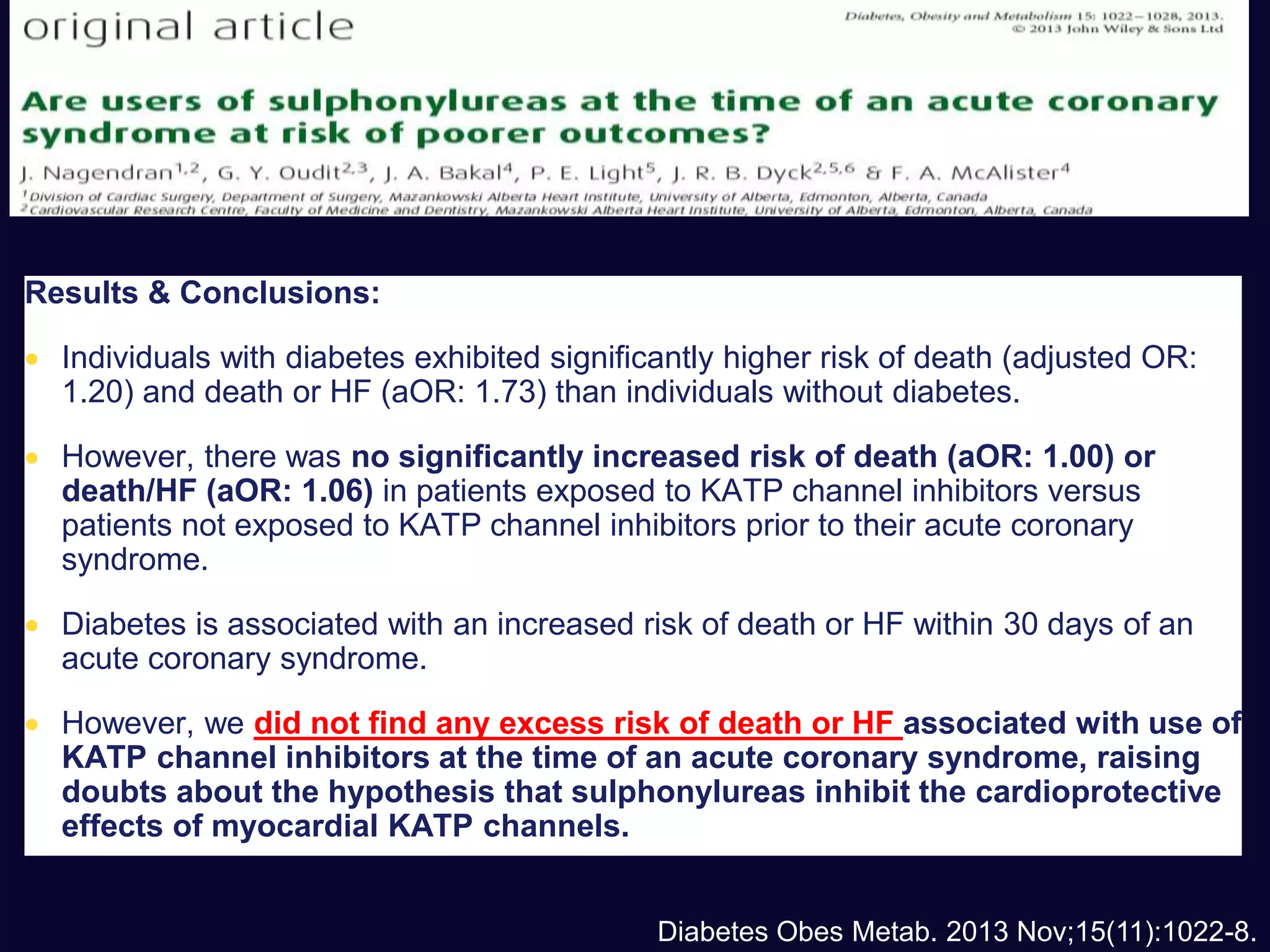
Results & Conclusions:
 Individuals with diabetes exhibited significantly higher risk of death (adjusted OR:
1.20) and death or HF (aOR: 1.73) than individuals without diabetes.
 However, there was no significantly increased risk of death (aOR: 1.00) or
death/HF (aOR: 1.06) in patients exposed to KATP channel inhibitors versus
patients not exposed to KATP channel inhibitors prior to their acute coronary
syndrome.
 Diabetes is associated with an increased risk of death or HF within 30 days of an
acute coronary syndrome.
 However, we did not find any excess risk of death or HF associated with use of
KATP channel inhibitors at the time of an acute coronary syndrome, raising
doubts about the hypothesis that sulphonylureas inhibit the cardioprotective
effects of myocardial KATP channels.
Diabetes Obes Metab. 2013 Nov;15(11):1022-8.
 Use of SU not associated with any significant difference in the incidence
of MI with respect to comparators (OR: 0.88 [0.75–1.04], p=0.13)
 A non-significant trend towards a reduction was observed in
comparison with placebo or no therapy.
 None of the sulfonylureas appeared to affect the incidence of MI
Diabetes, Obesity and Metabolism 15: 938–953, 2013.
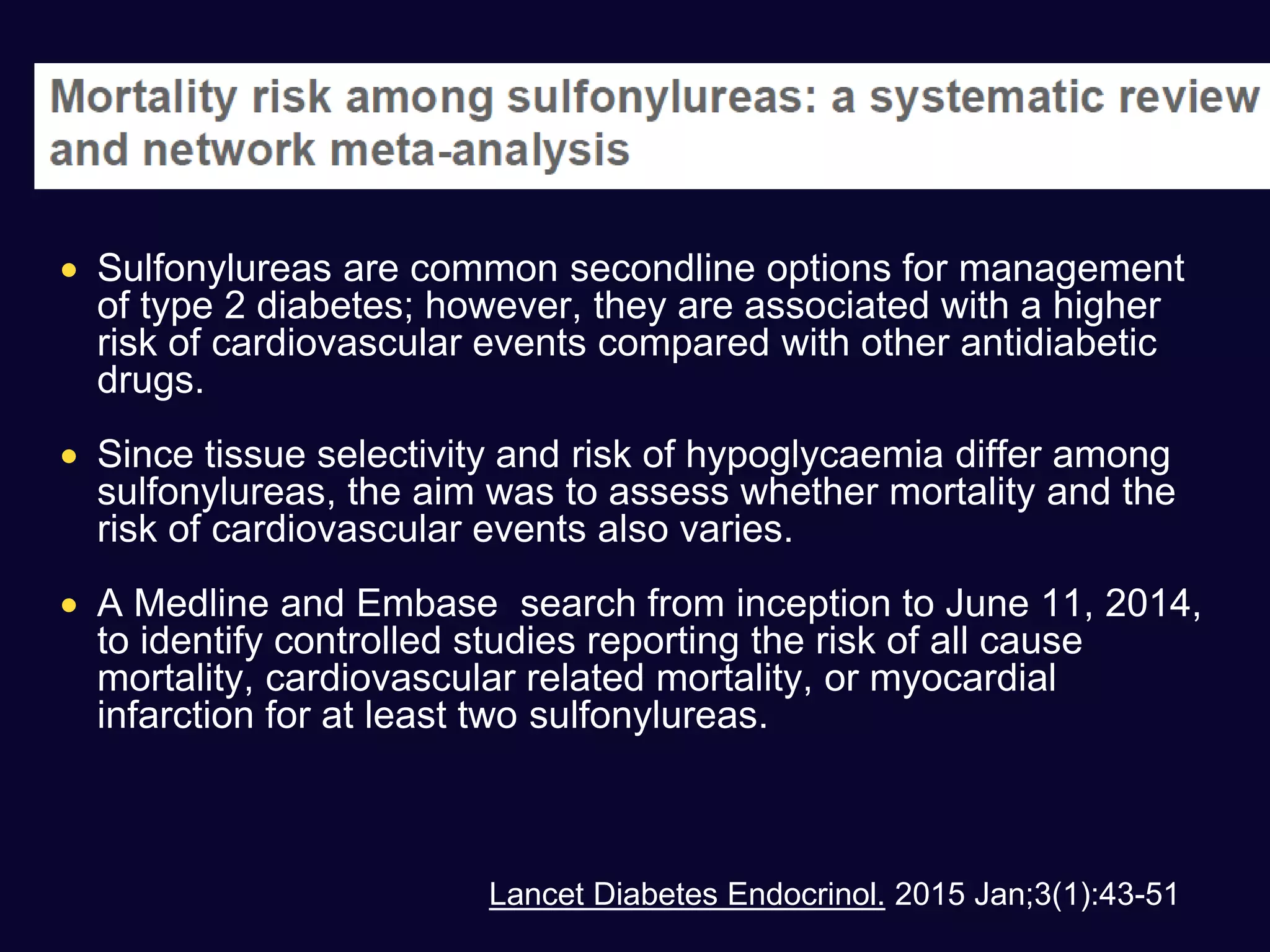
 Sulfonylureas are common secondline options for management
of type 2 diabetes; however, they are associated with a higher
risk of cardiovascular events compared with other antidiabetic
drugs.
 Since tissue selectivity and risk of hypoglycaemia differ among
sulfonylureas, the aim was to assess whether mortality and the
risk of cardiovascular events also varies.
 A Medline and Embase search from inception to June 11, 2014,
to identify controlled studies reporting the risk of all cause
mortality, cardiovascular related mortality, or myocardial
infarction for at least two sulfonylureas.
Lancet Diabetes Endocrinol. 2015 Jan;3(1):43-51
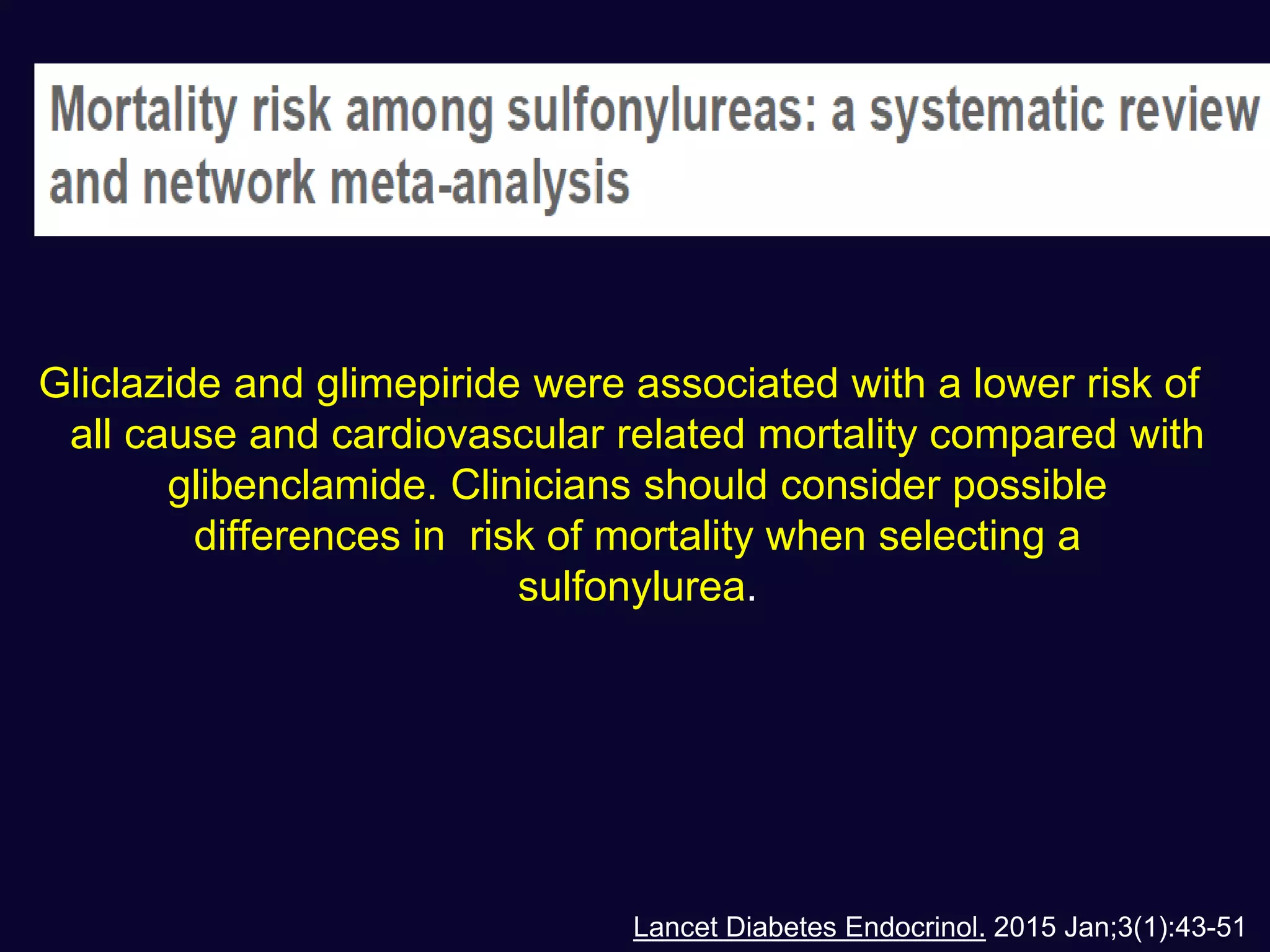
Gliclazide and glimepiride were associated with a lower risk of
all cause and cardiovascular related mortality compared with
glibenclamide. Clinicians should consider possible
differences in risk of mortality when selecting a
sulfonylurea.
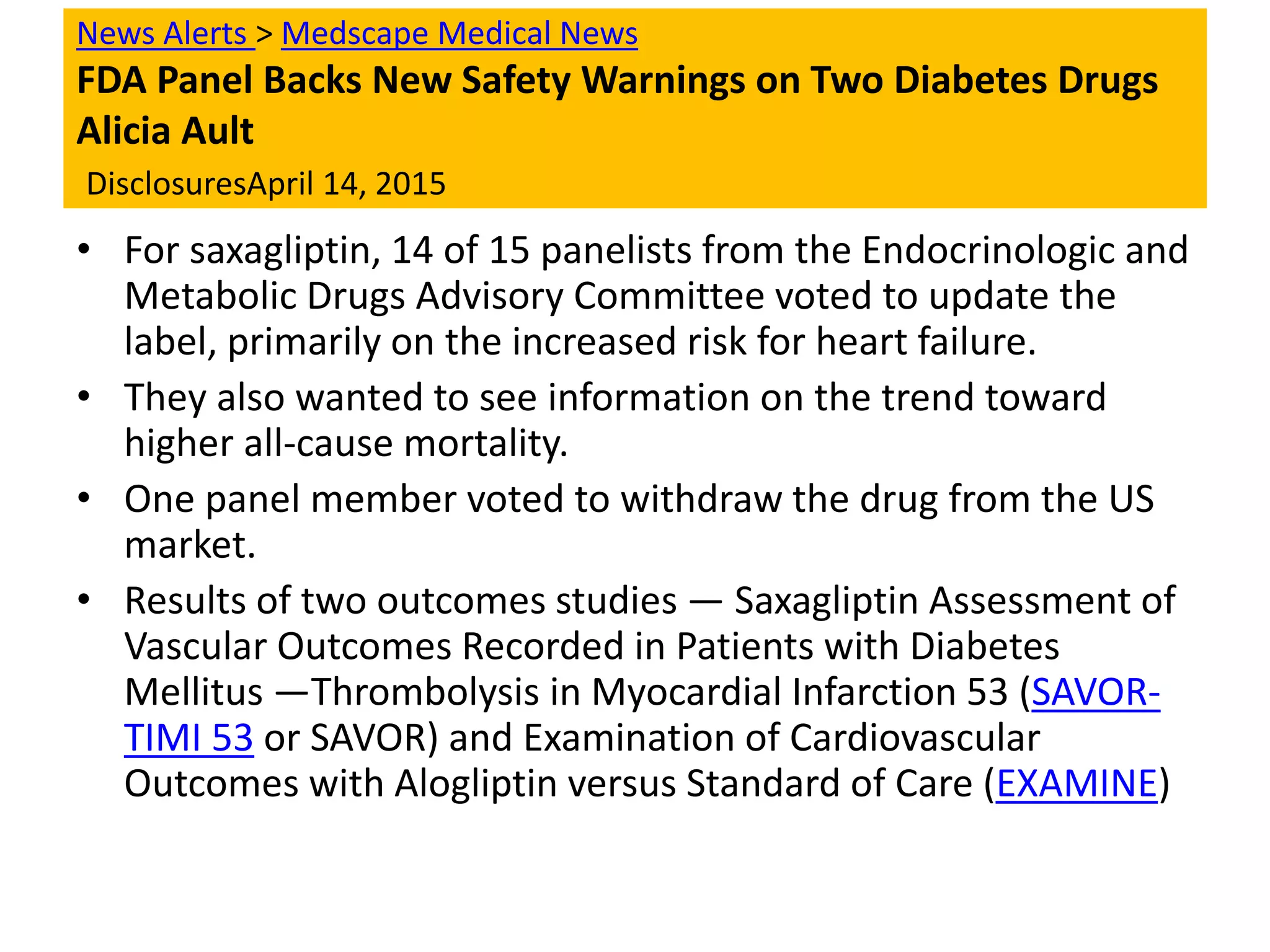
News Alerts > Medscape Medical News
FDA Panel Backs New Safety Warnings on Two Diabetes Drugs
Alicia Ault
DisclosuresApril 14, 2015
• For saxagliptin, 14 of 15 panelists from the Endocrinologic and
Metabolic Drugs Advisory Committee voted to update the
label, primarily on the increased risk for heart failure.
• They also wanted to see information on the trend toward
higher all-cause mortality.
• One panel member voted to withdraw the drug from the US
market.
• Results of two outcomes studies — Saxagliptin Assessment of
Vascular Outcomes Recorded in Patients with Diabetes
Mellitus —Thrombolysis in Myocardial Infarction 53 (SAVOR-
TIMI 53 or SAVOR) and Examination of Cardiovascular
Outcomes with Alogliptin versus Standard of Care (EXAMINE)
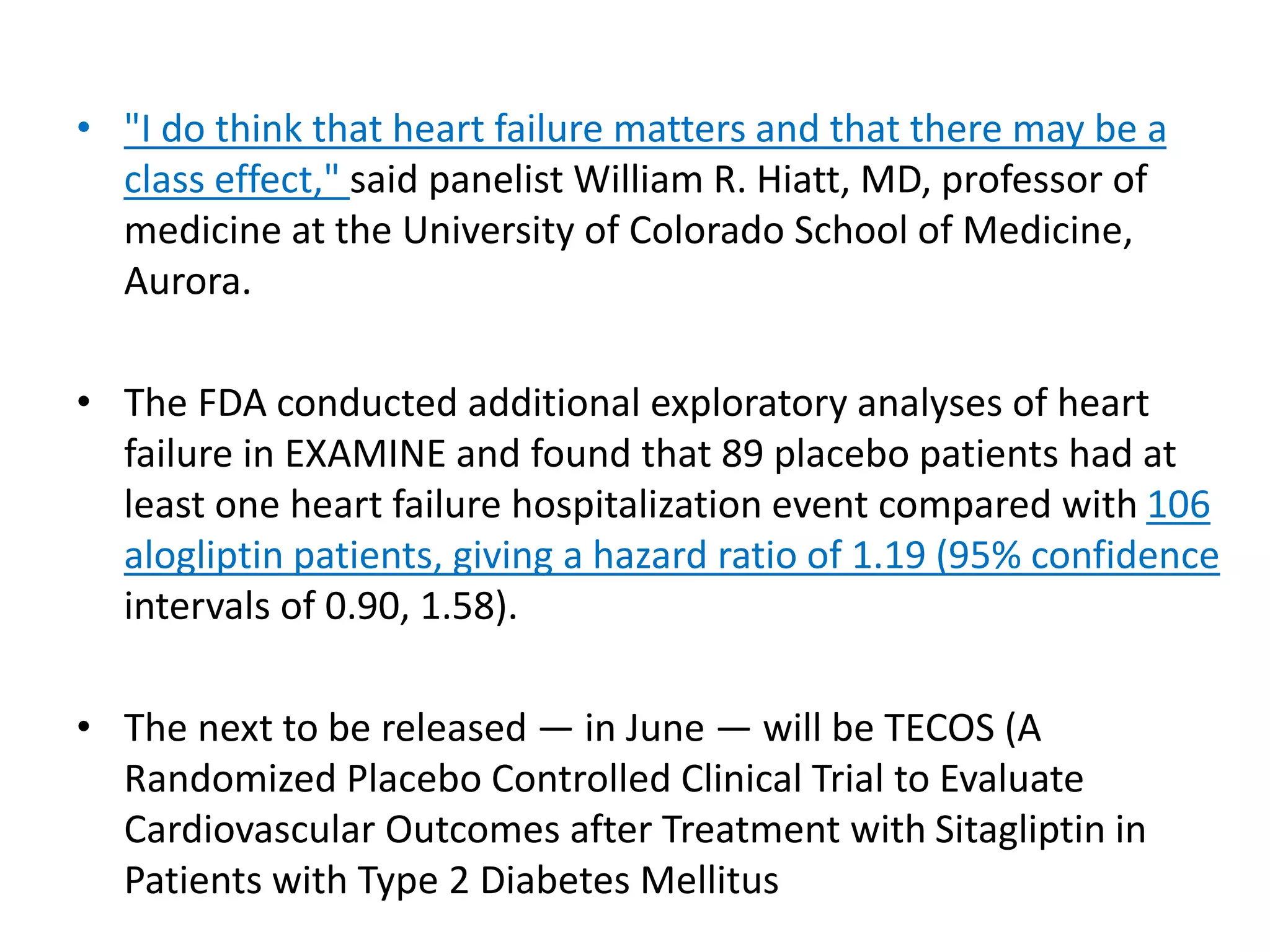
• "I do think that heart failure matters and that there may be a
class effect," said panelist William R. Hiatt, MD, professor of
medicine at the University of Colorado School of Medicine,
Aurora.
• The FDA conducted additional exploratory analyses of heart
failure in EXAMINE and found that 89 placebo patients had at
least one heart failure hospitalization event compared with 106
alogliptin patients, giving a hazard ratio of 1.19 (95% confidence
intervals of 0.90, 1.58).
• The next to be released — in June — will be TECOS (A
Randomized Placebo Controlled Clinical Trial to Evaluate
Cardiovascular Outcomes after Treatment with Sitagliptin in
Patients with Type 2 Diabetes Mellitus
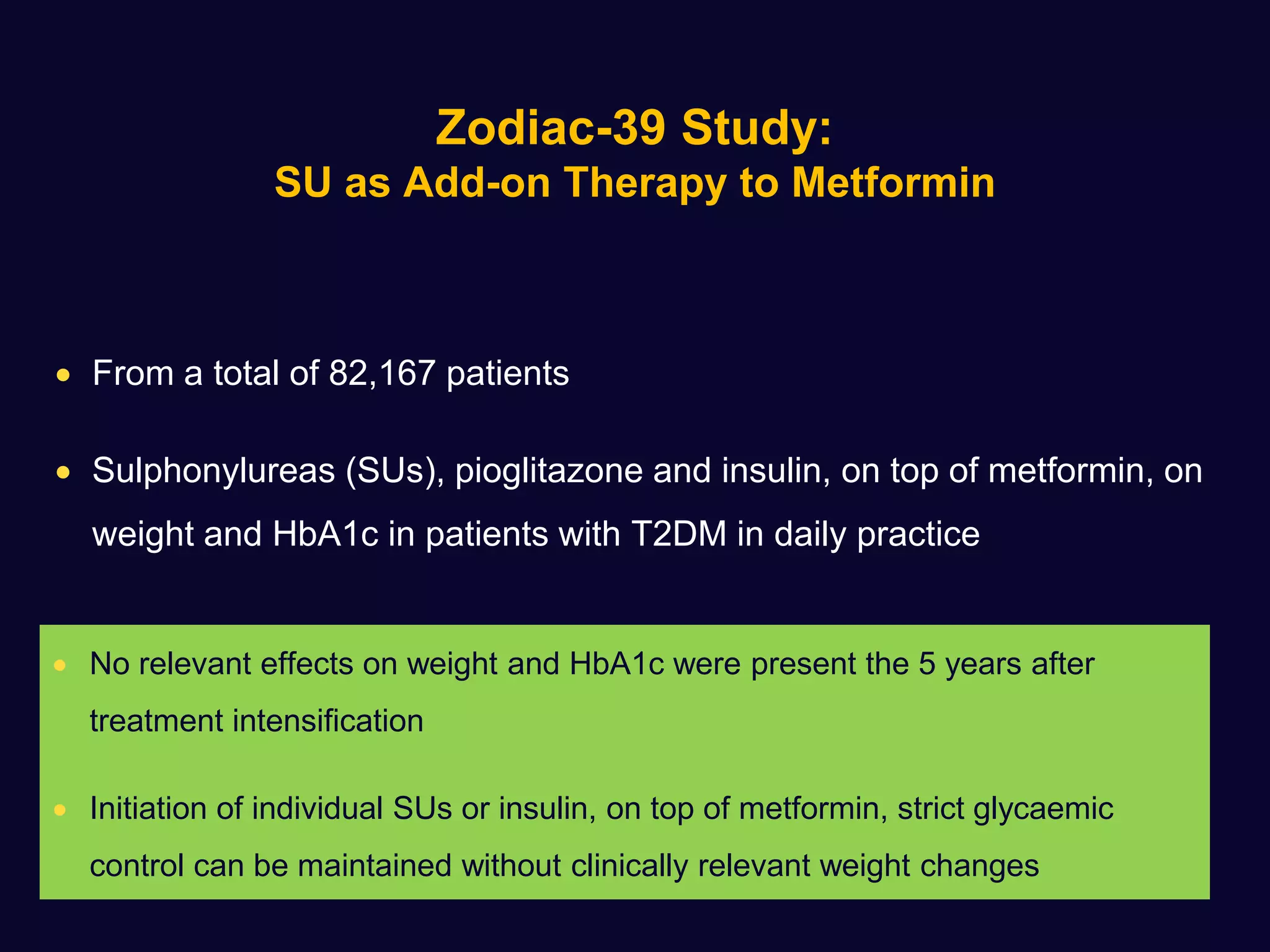
Zodiac-39 Study:
SU as Add-on Therapy to Metformin
 From a total of 82,167 patients
 Sulphonylureas (SUs), pioglitazone and insulin, on top of metformin, on
weight and HbA1c in patients with T2DM in daily practice
 No relevant effects on weight and HbA1c were present the 5 years after
treatment intensification
 Initiation of individual SUs or insulin, on top of metformin, strict glycaemic
control can be maintained without clinically relevant weight changes
Weight Gain
Weight Gain
There was no increase in body weight with the
sulfonylurea gliclazide and a remarkably low
rate of severe hypoglycaemia (0.7 events per
100 patients per year)
Patel A et al. Intensive blood glucose control and vascular outcomes in
patients with type 2 diabetes. N Engl J Med. 2008;358:2560–72.
Weight gain
Evidence indicates a benefit for weight reduction with a DPP-4
inhibitor over SFU, either as monotherapy and as
combination therapy with metformin
However, due to lack of direct monotherapy comparative
data, unable to determine true effect
McCulloch DK et al., "Sulfonylureas and meglitinides in the treatment of diabetes
mellitus" UpToDate, Jan 13, 2012
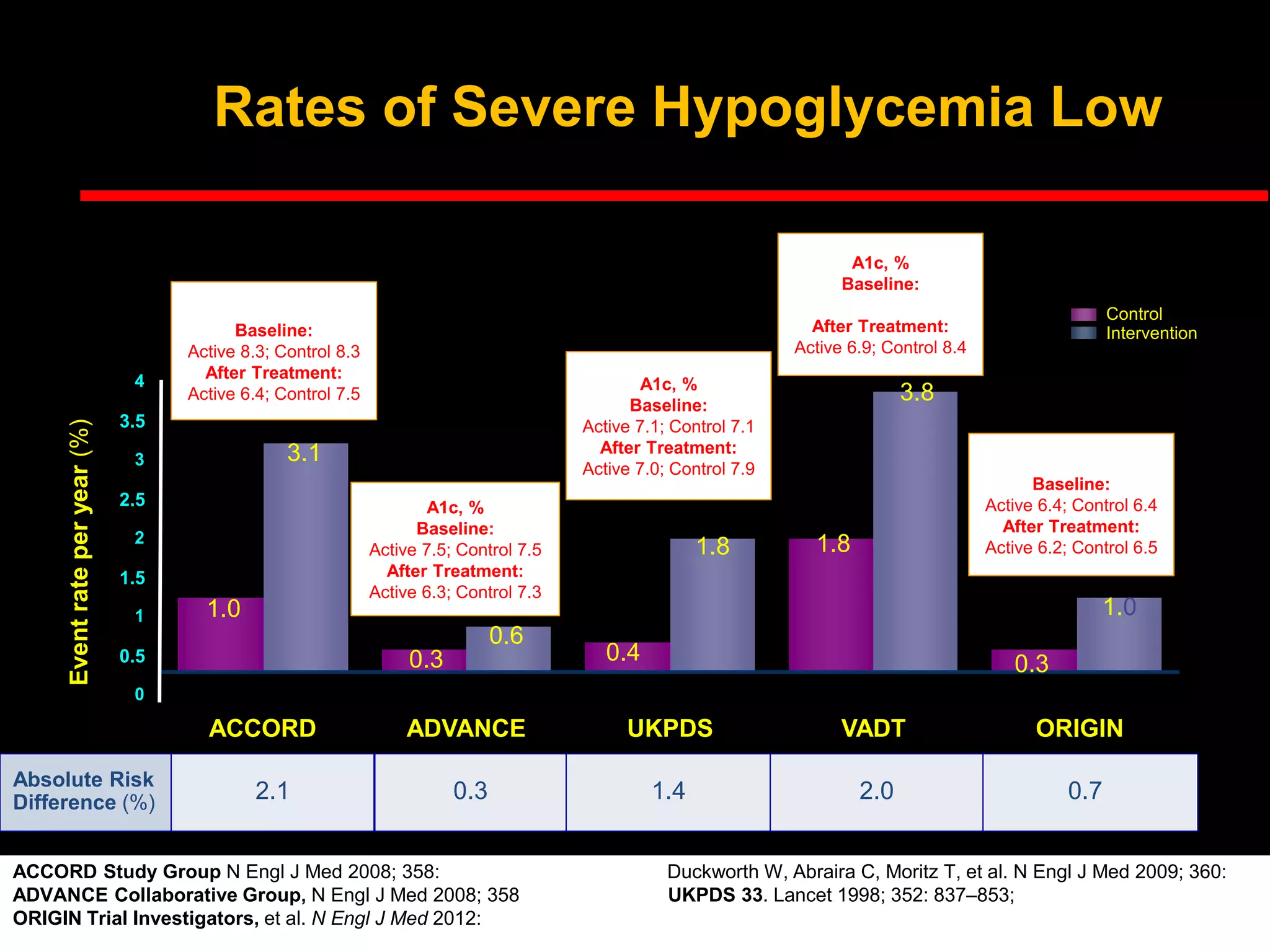
Hypoglycemia: sulfonylureas
ACCORD ADVANCE UKPDS VADT ORIGIN
1.0
3.1
0.3
0.6
0.4
1.8 1.8
3.8
0.3
1.0
Event
rate
per
year
(%)
Control
Intervention
Absolute Risk
Difference (%) 0.7
2.1 0.3 1.4 2.0
A1c, %
Baseline:
Active 8.3; Control 8.3
After Treatment:
Active 6.4; Control 7.5
A1c, %
Baseline:
Active 7.5; Control 7.5
After Treatment:
Active 6.3; Control 7.3
A1c, %
Baseline:
Active 7.1; Control 7.1
After Treatment:
Active 7.0; Control 7.9
A1c, %
Baseline:
Active 9.4; Control 9.4
After Treatment:
Active 6.9; Control 8.4
A1c, %
Baseline:
Active 6.4; Control 6.4
After Treatment:
Active 6.2; Control 6.5
4
3
2
1
0
0.5
1.5
2.5
3.5
ACCORD Study Group N Engl J Med 2008; 358: Duckworth W, Abraira C, Moritz T, et al. N Engl J Med 2009; 360:
ADVANCE Collaborative Group, N Engl J Med 2008; 358 UKPDS 33. Lancet 1998; 352: 837–853;
ORIGIN Trial Investigators, et al. N Engl J Med 2012:
Rates of Severe Hypoglycemia Low
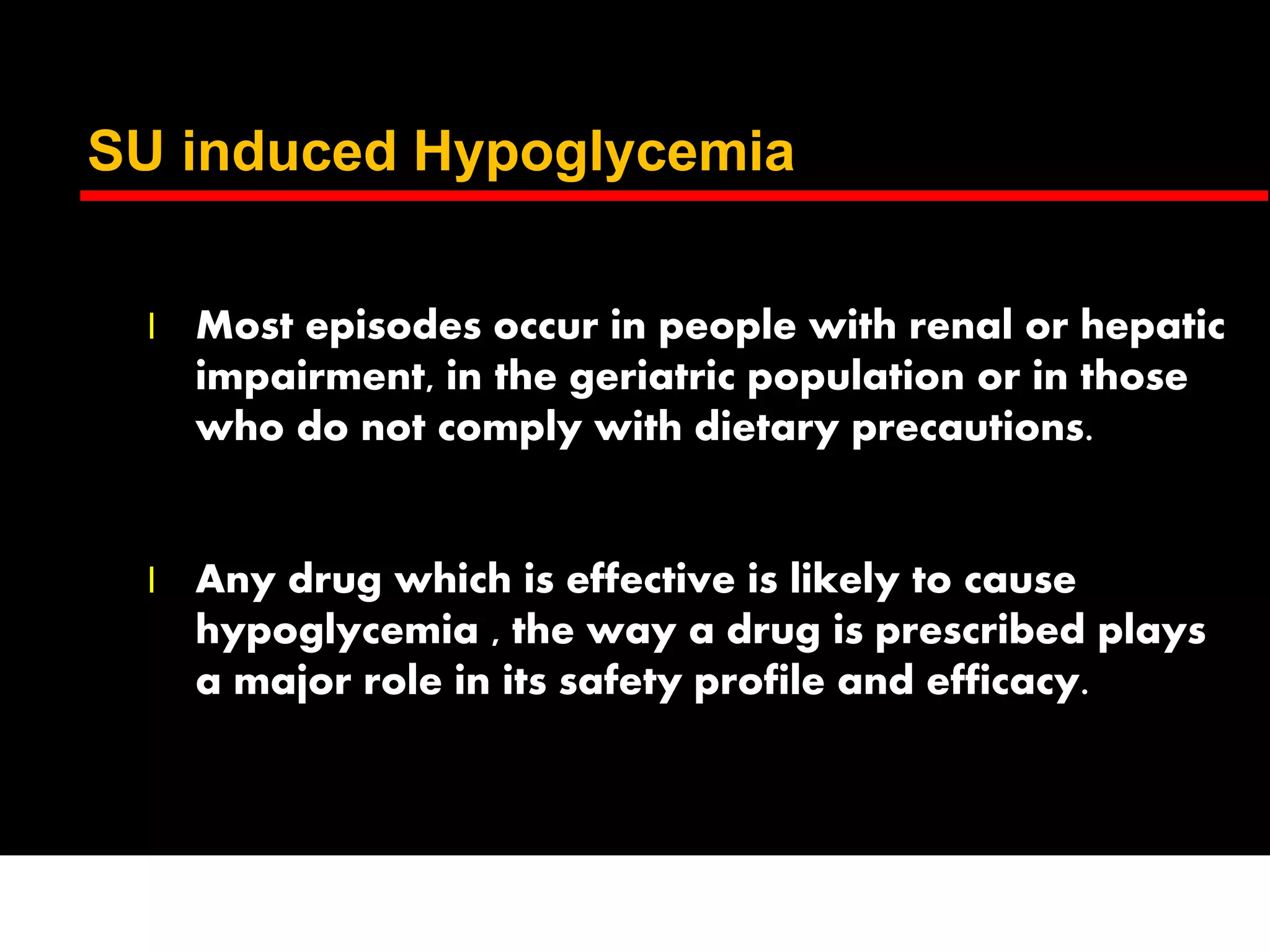
SU induced Hypoglycemia
l Most episodes occur in people with renal or hepatic
impairment, in the geriatric population or in those
who do not comply with dietary precautions.
l Any drug which is effective is likely to cause
hypoglycemia , the way a drug is prescribed plays
a major role in its safety profile and efficacy.
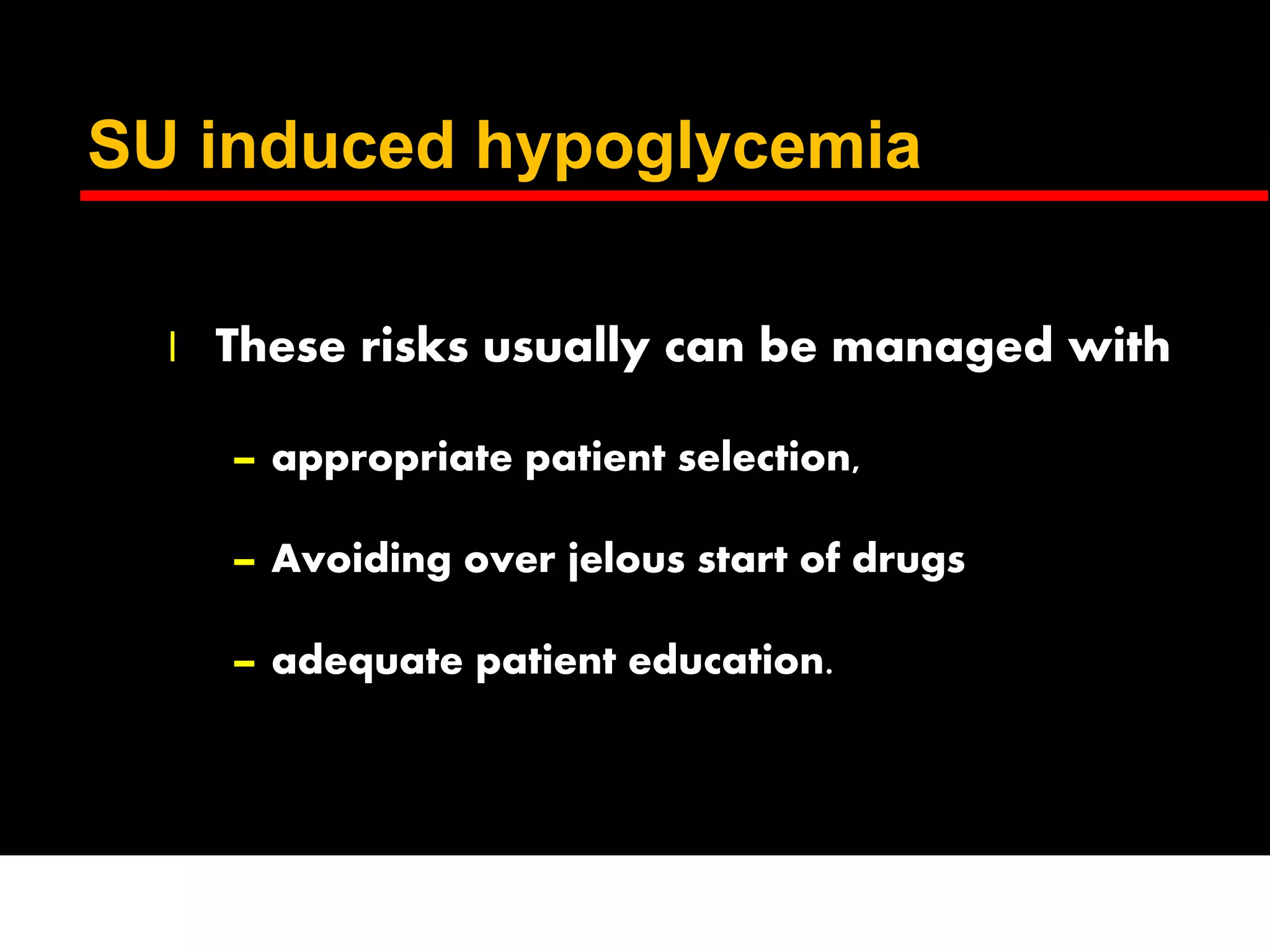
SU induced hypoglycemia
l These risks usually can be managed with
– appropriate patient selection,
– Avoiding over jelous start of drugs
– adequate patient education.
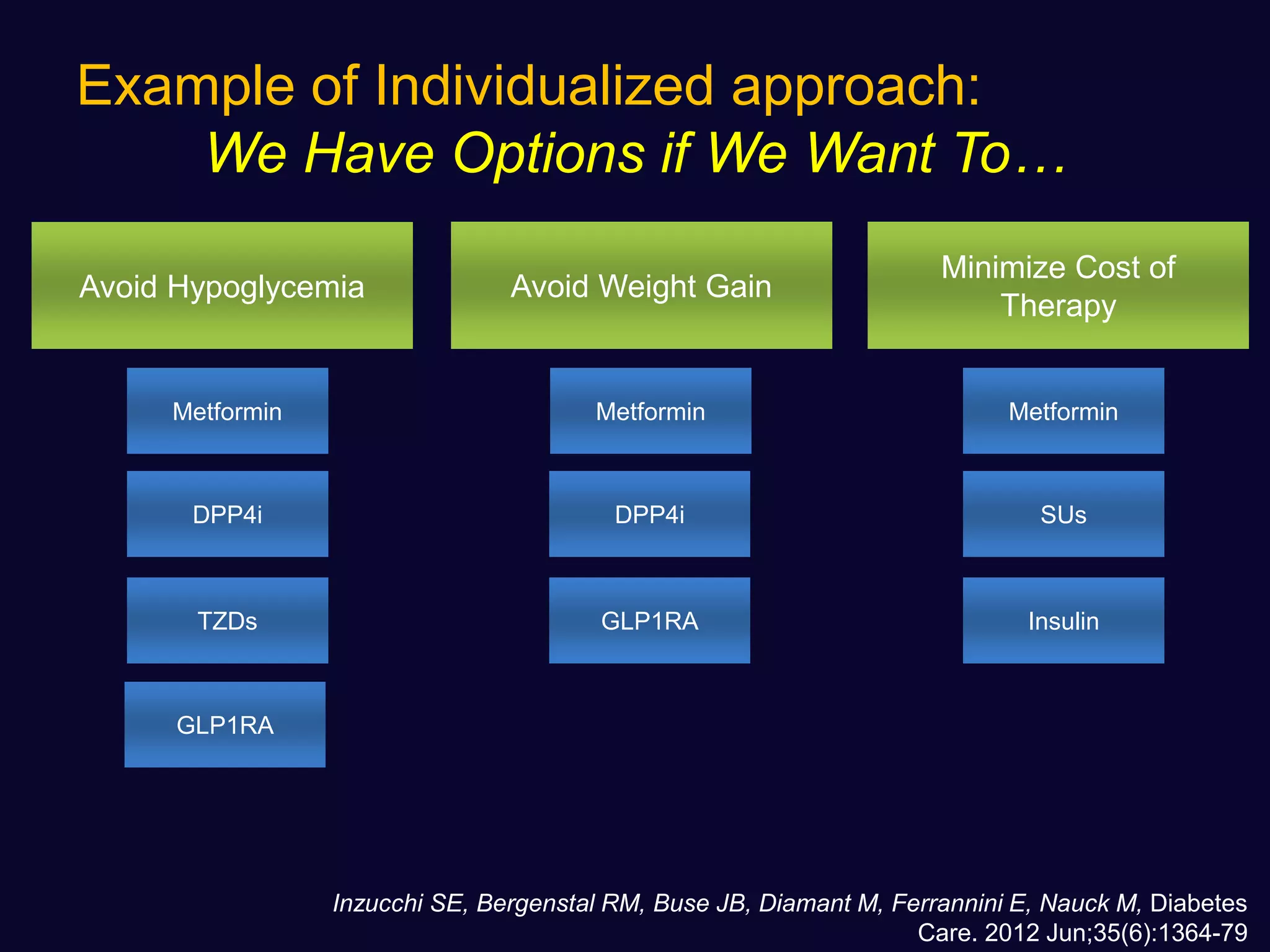
Example of Individualized approach:
We Have Options if We Want To…
Inzucchi SE, Bergenstal RM, Buse JB, Diamant M, Ferrannini E, Nauck M, Diabetes
Care. 2012 Jun;35(6):1364-79
Avoid Hypoglycemia Avoid Weight Gain
Minimize Cost of
Therapy
Metformin
DPP4i
TZDs Insulin
DPP4i SUs
Metformin
Metformin
GLP1RA
GLP1RA
And not gliptins to all
Sulfonylureas are clearly effective and safe oral
antidiabetic drugs, and we can expect them to continue to
play a major role in the management of type 2 diabetes
for many years to come.
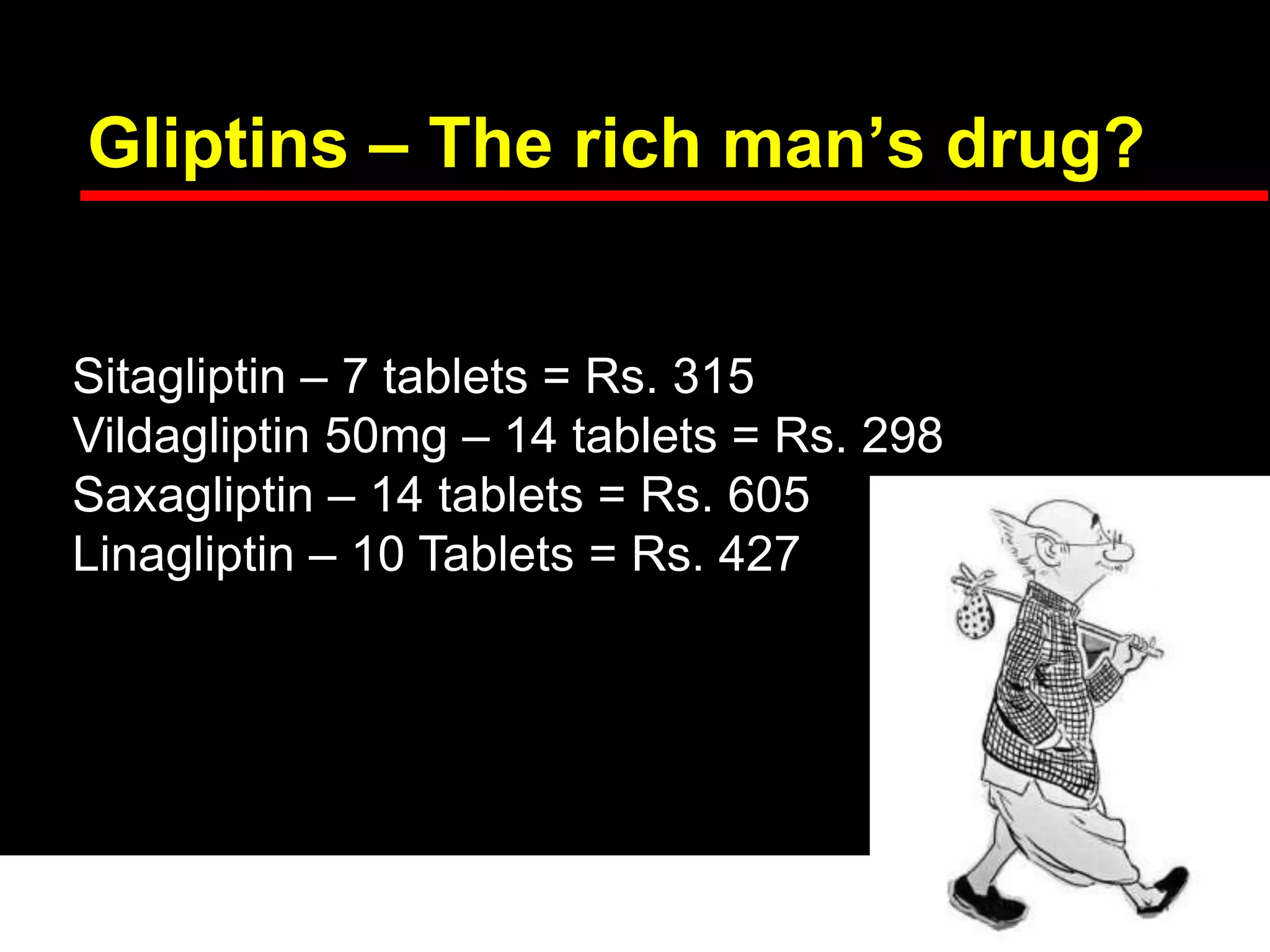
Gliptins – The rich man’s drug?
Sitagliptin – 7 tablets = Rs. 315
Vildagliptin 50mg – 14 tablets = Rs. 298
Saxagliptin – 14 tablets = Rs. 605
Linagliptin – 10 Tablets = Rs. 427
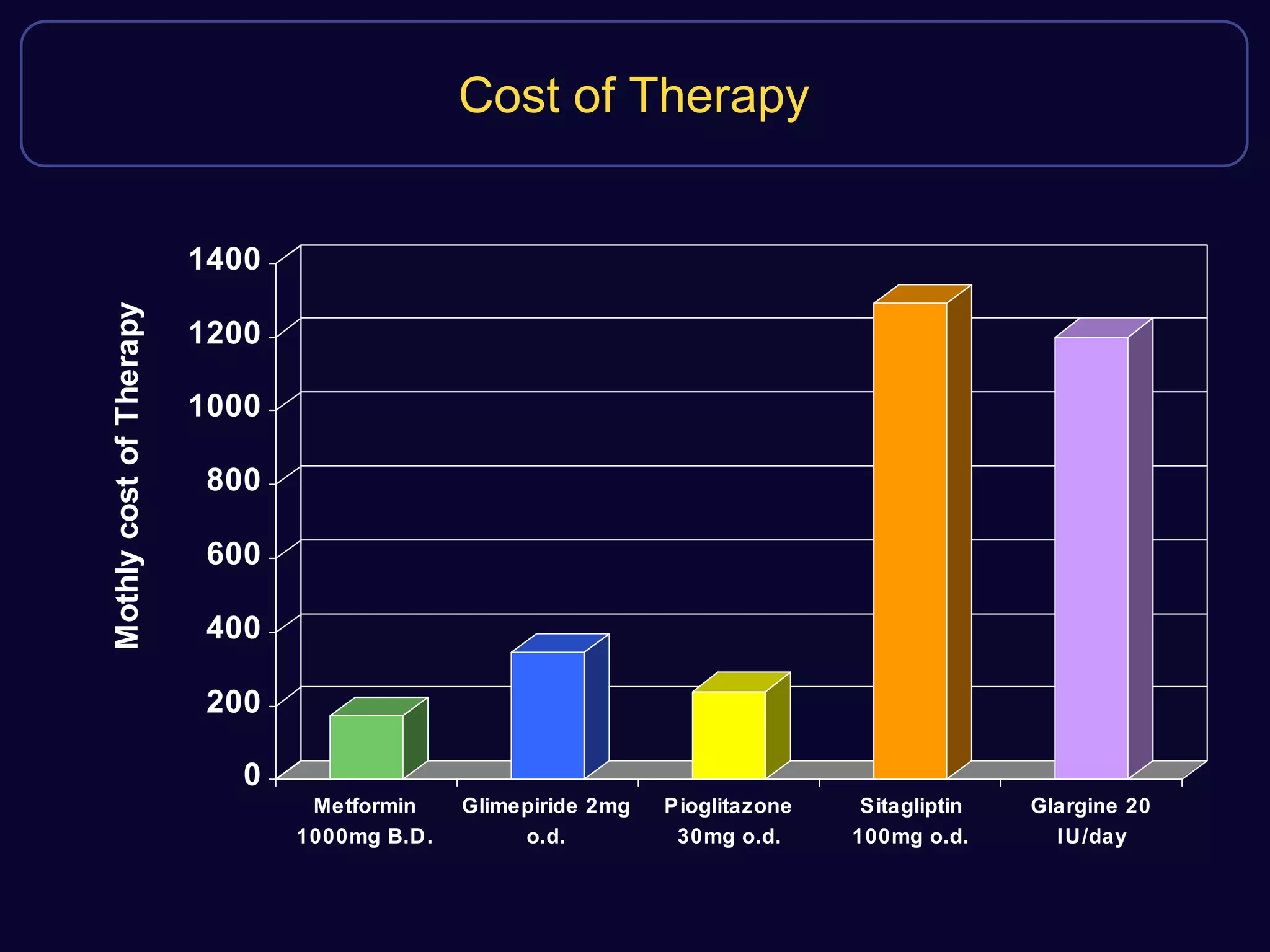
Cost of Therapy
0
200
400
600
800
1000
1200
1400
Mothly
cost
of
Therapy
Metformin
1000mg B.D.
Glimepiride 2mg
o.d.
Pioglitazone
30mg o.d.
Sitagliptin
100mg o.d.
Glargine 20
IU/day
Cost
 Although DPP-4 inhibitors are emerging as an interesting
option in type 2 diabetes, they are also appearing as a costly
alternative, with an added 20,000 USD per person per lifetime
of cost over sulfonylureas
 Cost is always a consideration in treatment, and
sulfonylureas offer an inexpensive and safe therapy
for a disease that is a worldwide pandemic.
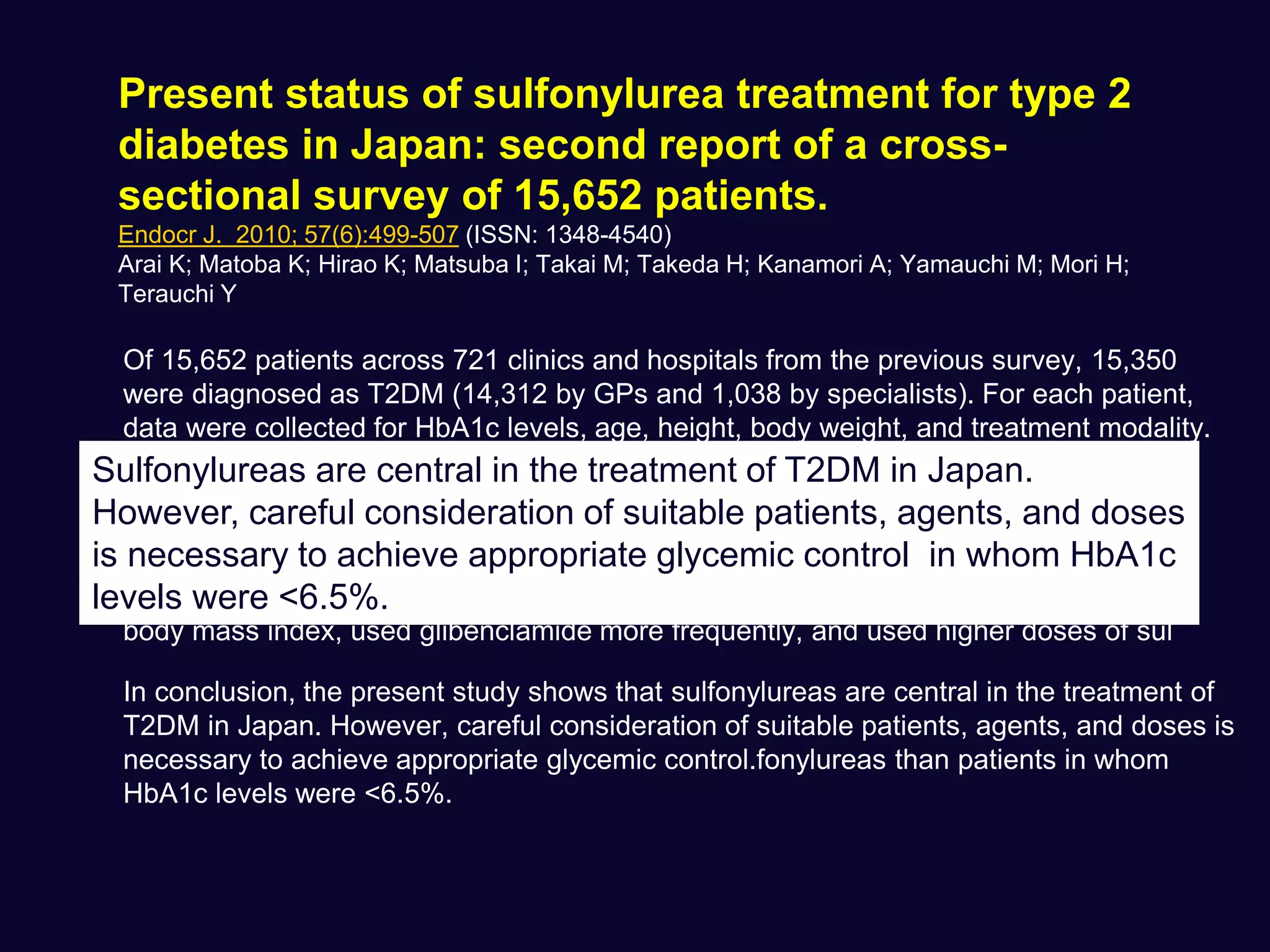
Present status of sulfonylurea treatment for type 2
diabetes in Japan: second report of a cross-
sectional survey of 15,652 patients.
Endocr J. 2010; 57(6):499-507 (ISSN: 1348-4540)
Arai K; Matoba K; Hirao K; Matsuba I; Takai M; Takeda H; Kanamori A; Yamauchi M; Mori H;
Terauchi Y
Of 15,652 patients across 721 clinics and hospitals from the previous survey, 15,350
were diagnosed as T2DM (14,312 by GPs and 1,038 by specialists). For each patient,
data were collected for HbA1c levels, age, height, body weight, and treatment modality.
Of T2DM patients being treated by GPs, 35.4% and 60.0% received sulfonylureas in
entire oral drugs or as monotherapy, respectively, compared with 29.2% and 61.2% of
patients, respectively, treated by specialists. Of the patients treated with sulfonylurea
monotherapy, 1335 patients (35.2%) achieved HbA1c <6.5%, whereas HbA1c was
>or=8.0% in 531 patients (14.0%). Patients with HbA1c levels >or=8.0% had a higher
body mass index, used glibenclamide more frequently, and used higher doses of sul
In conclusion, the present study shows that sulfonylureas are central in the treatment of
T2DM in Japan. However, careful consideration of suitable patients, agents, and doses is
necessary to achieve appropriate glycemic control.fonylureas than patients in whom
HbA1c levels were <6.5%.
Sulfonylureas are central in the treatment of T2DM in Japan.
However, careful consideration of suitable patients, agents, and doses
is necessary to achieve appropriate glycemic control in whom HbA1c
levels were <6.5%.
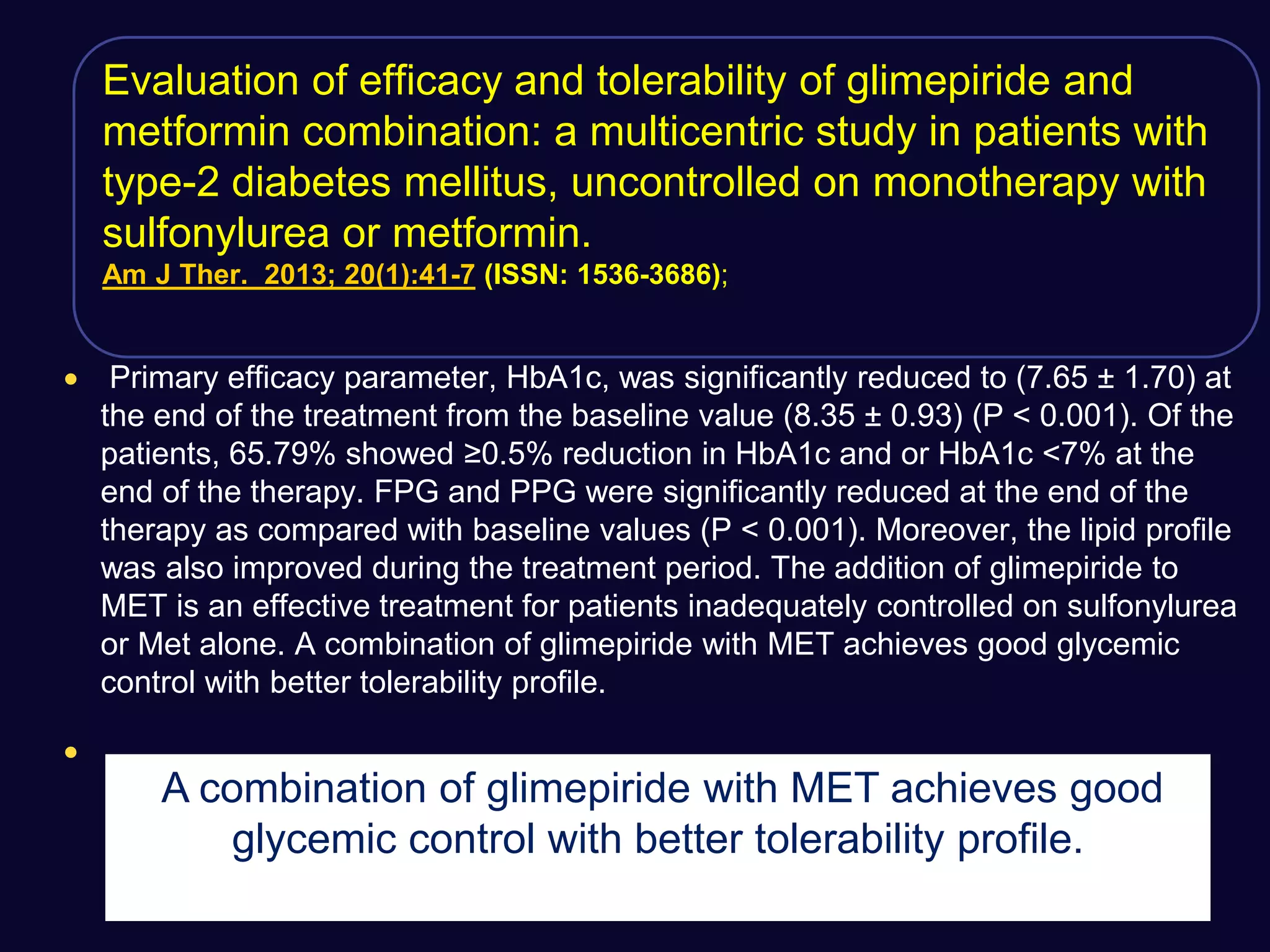
Evaluation of efficacy and tolerability of glimepiride and
metformin combination: a multicentric study in patients with
type-2 diabetes mellitus, uncontrolled on monotherapy with
sulfonylurea or metformin.
Am J Ther. 2013; 20(1):41-7 (ISSN: 1536-3686);
 Primary efficacy parameter, HbA1c, was significantly reduced to (7.65 ± 1.70) at
the end of the treatment from the baseline value (8.35 ± 0.93) (P < 0.001). Of the
patients, 65.79% showed ≥0.5% reduction in HbA1c and or HbA1c <7% at the
end of the therapy. FPG and PPG were significantly reduced at the end of the
therapy as compared with baseline values (P < 0.001). Moreover, the lipid profile
was also improved during the treatment period. The addition of glimepiride to
MET is an effective treatment for patients inadequately controlled on sulfonylurea
or Met alone. A combination of glimepiride with MET achieves good glycemic
control with better tolerability profile.

A combination of glimepiride with MET achieves good
glycemic control with better tolerability profile.
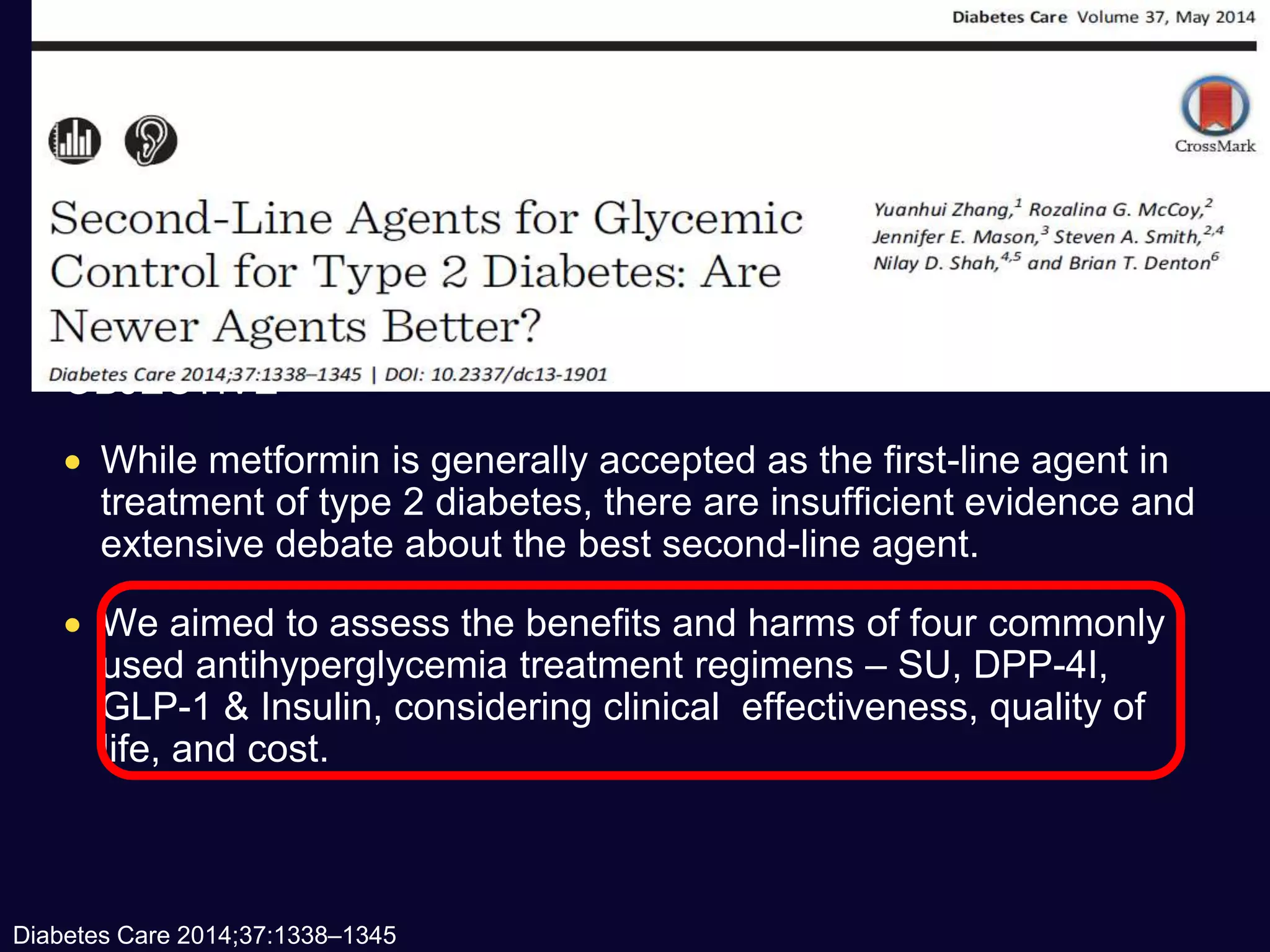
OBJECTIVE
 While metformin is generally accepted as the first-line agent in
treatment of type 2 diabetes, there are insufficient evidence and
extensive debate about the best second-line agent.
 We aimed to assess the benefits and harms of four commonly
used antihyperglycemia treatment regimens – SU, DPP-4I,
GLP-1 & Insulin, considering clinical effectiveness, quality of
life, and cost.
Diabetes Care 2014;37:1338–1345
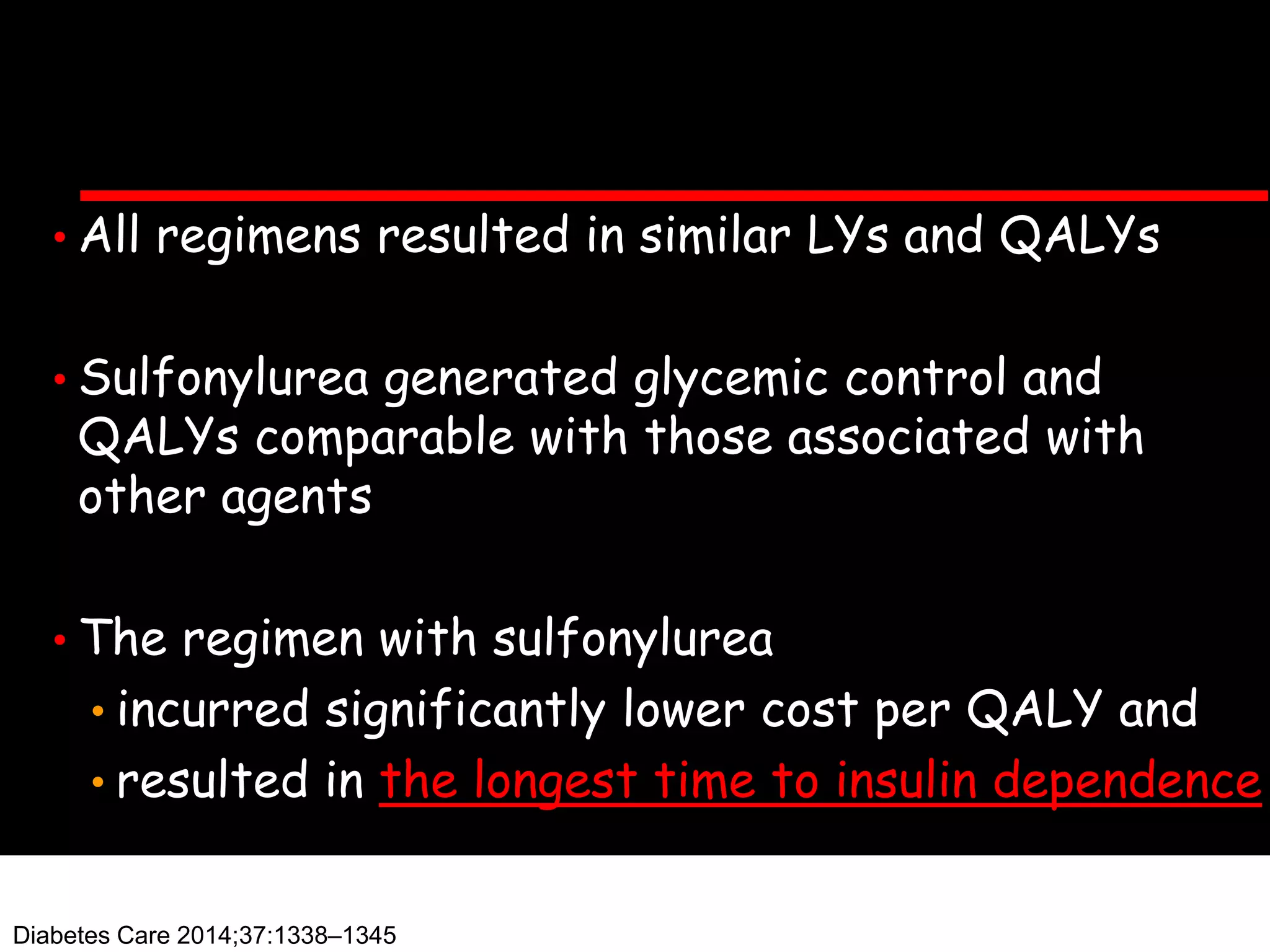
• All regimens resulted in similar LYs and QALYs
• Sulfonylurea generated glycemic control and
QALYs comparable with those associated with
other agents
• The regimen with sulfonylurea
• incurred significantly lower cost per QALY and
• resulted in the longest time to insulin dependence
Diabetes Care 2014;37:1338–1345
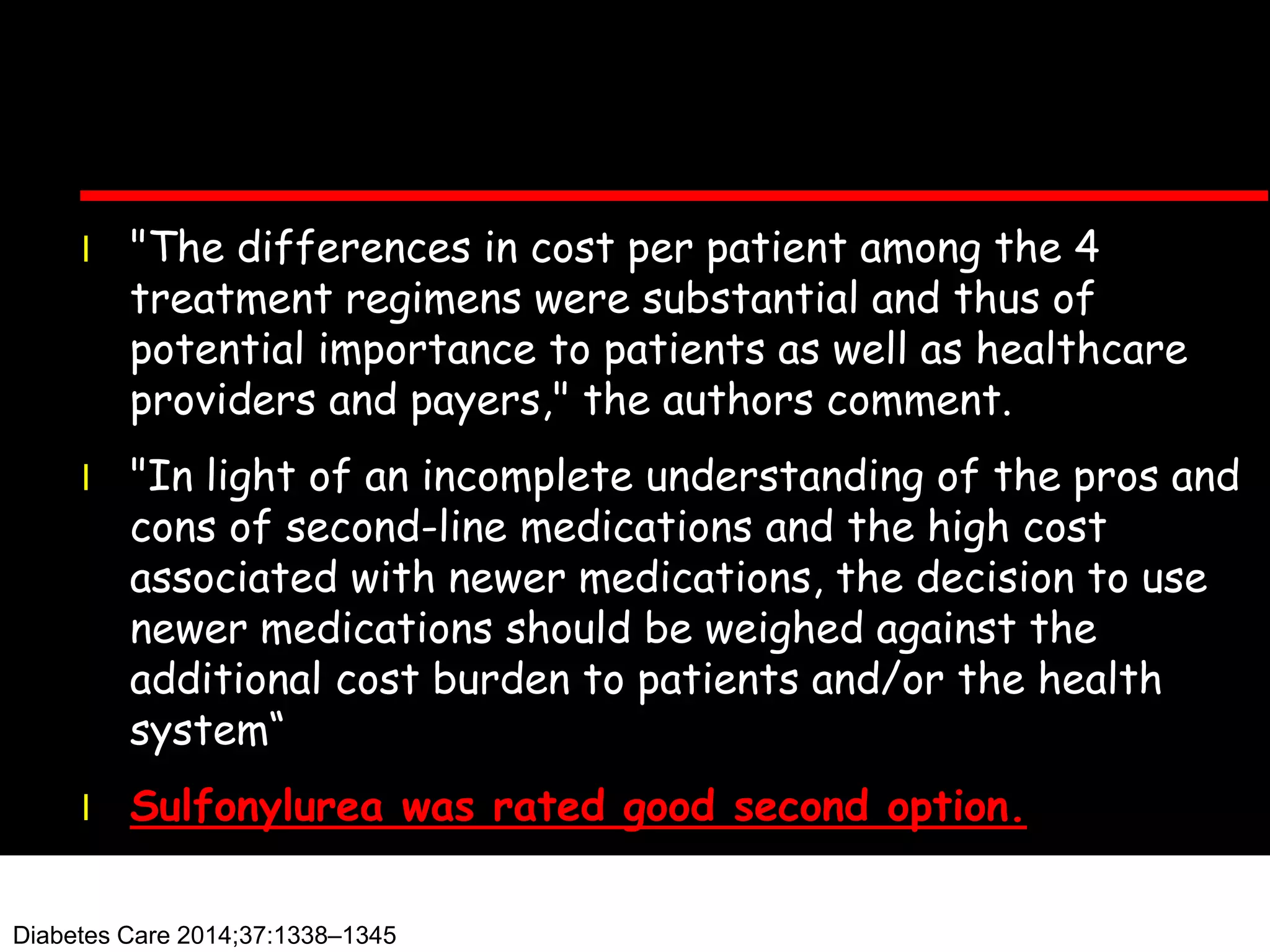
l "The differences in cost per patient among the 4
treatment regimens were substantial and thus of
potential importance to patients as well as healthcare
providers and payers," the authors comment.
l "In light of an incomplete understanding of the pros and
cons of second-line medications and the high cost
associated with newer medications, the decision to use
newer medications should be weighed against the
additional cost burden to patients and/or the health
system“
l Sulfonylurea was rated good second option.
Diabetes Care 2014;37:1338–1345
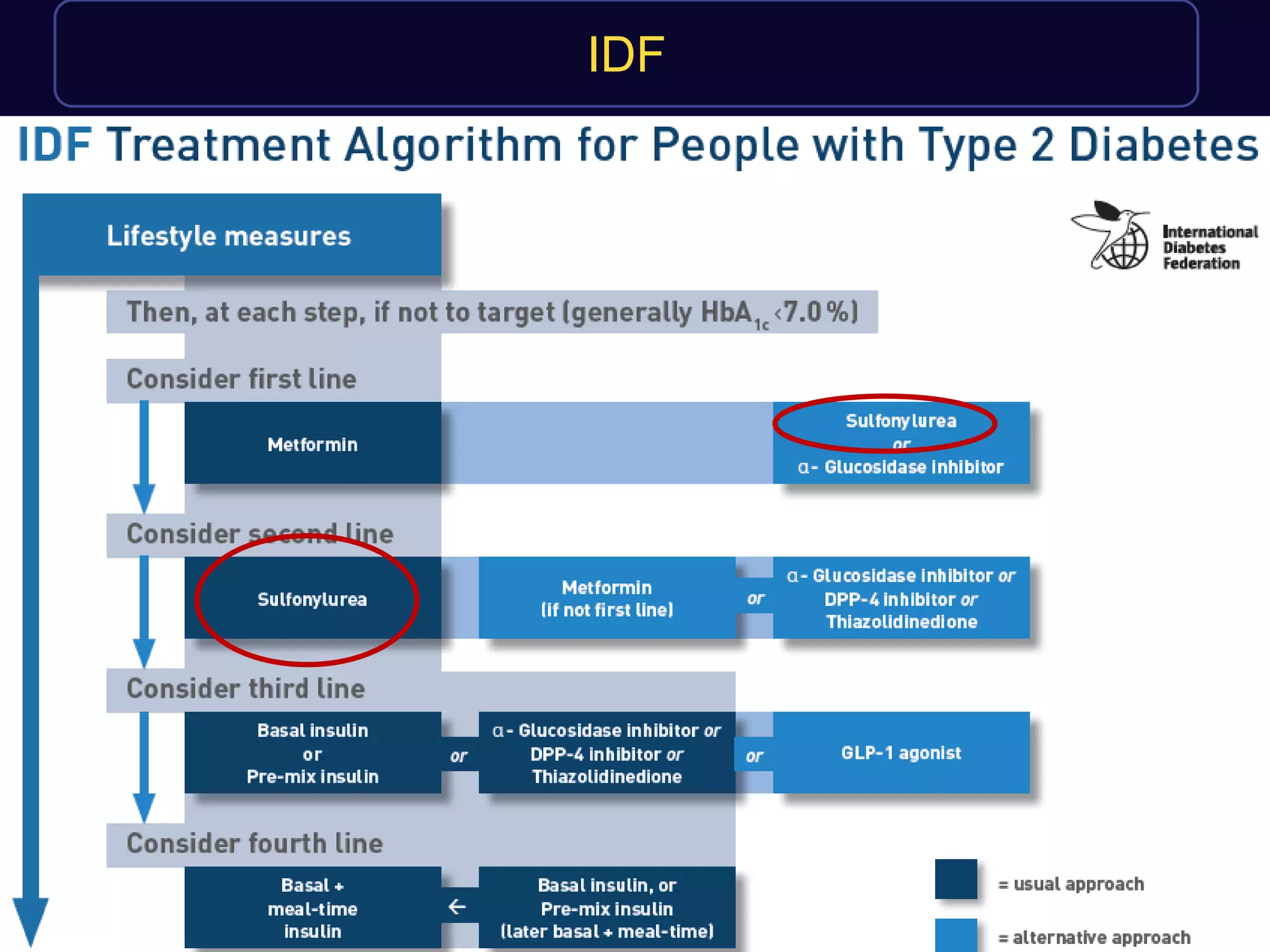
IDF
It is up to you to decide what you want to
give to people
A well balanced economic, safe
and effective medication or run
after branding
Thank you

What next after metformin dpp4 vs su

  • 1.
    What next aftermetformin Sulfonylureas Dr.Veerendra Singh Fellow UPDA Vice President UP Diabetes Association President Faizabad Diabetes Association
  • 2.
    We are developingeconomy Not beggars
  • 3.
    Gliptins are gooddrugs. But are they the best drugs ? certainly not has it been so
  • 4.
  • 5.
    Order not meantto denote any specific preference---choice dependents on a variety of patients and disease specific factors
  • 6.
    Second add ondrug Efficacy Hypoglycemic risk Weight gain Side effects Cost
  • 7.
  • 8.
    Not all respondto gliptins…  Responder rate: 25 - 50%  Primary failure /secondary failure : terms used for conventional OHAs. Why not for gliptins?  Literary discrimination!
  • 9.
    At 9 Years,More Patients on SU (26 %) under Glycemic Control than Metformin (13%) UKPDS 49. JAMA. 1999;281:2005-2012 0 5 10 15 20 25 30 35 40 45 50 55 60 3 6 9 Overweight Patients (%) Years Sulfonylurea Insulin Metformin Diet Goal: HbA1C <7%
  • 10.
    Rosenstock et al.2013 Arjona-Ferreira et al. 2013 a Arjona-Ferreira et al. 2013 b Nauck et al. 2007 Arechavaleta et al. 2011 Foley & Sreenan 2009 Ferrannini et al. 2009 Filozof & Gautier 2010 Gause-Nilsson et al. 2010 Gallwitz et al. 2012 -1.0 -0.9 -0.8 -0.7 -0.6 -0.5 -0.4 -0.3 -0.2 -0.1 Baseline HbA1c: 7.5 7.8 7.9 7.3 7.5 Glimepiride Linagliptin Sitagliptin Glipizide 8.6 8.5 7.7 7.7 Saxagliptin Alogliptin Vildagliptin Gliclazide 7.7 Renal functional impairment Metformin background  HbA 1c [%] DPP-4 Inhibitors vs. Sulfonylureas as Monotherapy or Add-On to Metformin
  • 11.
    15% Diabetes Obes Metab.2007;9:194–205.
  • 12.
    Nauck et al.Diabetes Obes Metab. 2007;9:194–205.
  • 13.
    HbA1c Reduction  Sulfonylureasreduce HbA1c by 1%–2%, compared with 05%–0.8% for DPP-4 inhibitors  Rate of glycemic control (HbA1c <7%) has been known to reach 81% with sulfonylurea-based therapy, whereas only 40% reached with DPP-4 inhibitors  Delay before insulin dependency is longer in patients treated with gliclazide. McCulloch DK et al., "Sulfonylureas and meglitinides," UpToDate, Jan 13, 2012
  • 14.
    b-Cell Function DecreasesOver Time, Though less with SU (56 %) Than Metformin (37%) at 6-Year Follow-up Diabetes. 1995;44:1249-1258 *Assessed by homeostasis model assessment (HOMA). Wp<0.0001, significant decrease in b-cell function. 100 75 50 25 0 0 1 2 3 4 5 6 Β-cell function (%β)* Year Nonobese Patients N=887 100 75 50 25 0 0 1 2 3 4 5 6 Β-cell function (%β)* Year Nonobese Patients N=269 Diet Sulfonylurea Metformin
  • 15.
    Int J ClinPract. 2015 Mar;69(3):292-304. • Patients treated with glimepiride have a 12% greater reduction in HbA1c levels compared with those treated with DPP4i. • Proportion of patients achieving HbA1c < 7% was also higher for glimepiride
  • 16.
    2015: ADA-EASD Update:Efficacy* • Predominately based on placebo-controlled monotherapy trials • Schema is somewhat arbitrary, as there are many other ways to assess the same, including head-to-head trials. • The results of all such trials are influenced by baseline HbA1c, drug type and dose, duration of treatment, wash-out from other antihyperglycemic therapies, as well as adherence among participants to study medication and diet and exercise, among other factors. • Mean differences of efficacy between most agents, are modest and unlikely to reflect with any certainty the differential effect of a specific drug at a precise point in the treatment course in an individual patient. Mean HbA1c Reduction Efficacy Category Drugs Potential of >2% Very High Insulin >1-2% High Metformin, SUs, TZDs, GLP1ra >0.5-1% Intermediate DPP4i, SGLT2i >0.5% Low --- Inzucchi SE, et al. Management of hyperglycemia in type 2 diabetes,,Diabetes. Supplementary Data. Diabetes Care 2015;38:140−149.
  • 17.
    Treatment with SUhad no Effect on Long-term Changes in Beta-cell Function  Aim: To describe changes over 10 years in HbA1c and beta-cell function in patients treated with sulphonylureas.  Long-term treatment with SU had no effect on long-term changes in beta-cell function (R2= 0.1%; P = 0.894). Diabetes & Metabolism. 2010;June 23.
  • 18.
    Tsunekawa T, etal. Diab Care 2003; 26: 285-289. 15 10 5 0 8.4 1.9  6.9 1.0  * Baseline12 weeks HbA1c 6 5 4 3 2 1 0 2.54 2.25  1.69 0.95  * Baseline12 weeks HOMA - IR 20 15 10 5 0 10.2 7.14  * Baseline 8 weeks Adiponectin 100 75 50 25 0 53 35  Baseline 12 weeks HOMA - b 35 31  Data are mean ± SD *p<0.05 Glimepiride Placebo N= 17 T2DM 12-week FU 6.6 3.06  Extrapancreatic Action of Glimeperide on Insulin Resistance
  • 19.
    Effect on HOMA-β 58 71 0 10 20 30 40 50 60 70 80 Sitagliptin 0Weeks 24 Weeks 35 53 0 10 20 30 40 50 60 Glimepiride 0 Weeks 12 Weeks +22.6% +51.4% Adapted from 1 Aschner et al. Diabetes Care. 2006;29:2632–2637; 2 Tsunekawa et al. Diabetes Care 26:285–289, 2003 1 2 DPP-IV inhibitors are claimed to improve β cell function and mass. All this has been shown in Animal cell line studies and no evidence in humans is available. Only data available in T2DM patients is based on HOMA β assessment.
  • 20.
     After 6months of treatment, exenatide or sitagliptin had no significant effect on functional b-cell mass as measured by b-cell secretory capacity, whereas glimepiride appeared to enhance b-and a-cell secretion.  Compared to both exenatide and sitagliptin, glimepiride was effective in decreasing capillary blood glucose and lowering HbA1c without producing hypoglycemic episodes or weight gain Diabetes Care. 2014 Sep;37(9):2451-8 MM Diabetes Care. 2014 Sep;37(9):2451-8
  • 21.
    β-Cell Exhaustion Sulfonylureas andmeglitinides  UKPDS (United Kingdom Prospective Diabetes Study) There was no solid evidence for β-cell exhaustion in the clinical setting over 6 years  Diabetes may itself cause the decline in β-cell function. McCulloch DK et al., "Sulfonylureas and meglitinides in the treatment of diabetes mellitus" UpToDate, Jan 13, 2012
  • 22.
    Insulin glargine andglimepiride are similar in maintaining β cell function.. β cell function assessed by HOMA- β
  • 23.
    beta-cell failure indiabetes and preservation by clinical treatment. Endocr Rev. 2007; 28(2):187-218 (ISSN: 0163-769X)  In preclinical studies, oral active DPP-IV inhibitors (sitagliptin and vildagliptin) also promoted beta-cell proliferation, neogenesis, and inhibition of apoptosis in rodents.  Obviously, it is difficult to estimate the protective effects of incretin mimetics and enhancers on beta-cells in humans, and  There is no clinical evidence that these drugs really have protective effects on beta-cells.
  • 24.
     Incretin-based therapiesappear to offer many advantages over other approaches for treating type 2 diabetes. Some preclinical studies have suggested that chronic activation of glucagon-like peptide 1 receptor (GLP1R) signalling in the pancreas may result in the proliferation of islet β-cells and an increase in β-cell mass. This provided hope that enhancing GLP1 action could potentially alter the natural progression of type 2 diabetes. However, to date, there has been no evidence from clinical trials suggesting that GLP1R agonists or dipeptidyl peptidase-4 (DPP4) inhibitors can increase β-cell mass. Nevertheless, while the proliferative capacity of these agents remains controversial, some studies have raised concerns that they could potentially contribute to the development of pancreatitis and hence increase the risk of pancreatic cancer. Currently, there are very limited clinical data to directly assess these potential benefits and risks of incretin-based therapies. However, a review of the preclinical studies indicates that incretin-based therapies probably have only a limited capacity to regenerate pancreatic β-cells, but may be useful for preserving any remaining β-cells in type 2 diabetes. In addition, the majority of preclinical evidence does not support the notion that GLP1R agonists or DPP4 inhibitors cause pancreatitis . However, to date, there has been no evidence from clinical trials suggesting that GLP1R agonists or dipeptidyl peptidase-4 (DPP4) inhibitors can increase β-cell mass. . However, to date, there has been no evidence from clinical trials suggesting that GLP1R agonists or dipeptidyl peptidase-4 (DPP4) inhibitors can increase β-cell mass. Hope and fear for new classes of type 2 diabetes drugs: is there preclinical evidence that incretin-based therapies alter pancreatic morphology? J Endocrinol. 2014; 221(1):T43-61 (ISSN: 1479-6805) Lamont BJ; Andrikopoulos S
  • 25.
  • 26.
    Cardiovascular Risk  UGDP(University Group Diabetes Program) study Showed an increased CV risk in patients treated with Sulfonylureas, but as it was tolbutamide that was used in this study, the results are less valuable for the present-day SUs. Moreover, patients in this arm had a frequency of baseline electrocardiographic abnormalities that was 30% higher than the comparator arms
  • 27.
    % change in mean ST shift Baseline After drugadministration Mean ST segment depression during balloon occlusion (Ichemic Preconditioning) Klepzig et al. Eur Heart J 1999;20:439-446 50 100 Placebo (n=15) Glimepiride (n=15) Glibenclamide (n=15) p = 0.01 p = NS p = 0.049 0 Glimepiride does not block the beneficial cardio-protective effect of ischemic preconditioning
  • 28.
    Glimepiride reduces CVrisk markers Lp (a) = lipoprotein (a) ; PAI-I = plasminogen activator inhibitor – I ; Hcy = homocysteine Lp (a) Lp (a) PAI -I PAI - I Hcy Hcy 12 months
  • 29.
    Why did thecontroversy begin? The combination therapy of metformin and sulfonylurea significantly increased the RR of the composite end point of cardiovascular hospitalization or mortality (fatal and nonfatal events) irrespective of the reference group (diet therapy, metformin monotherapy, or sulfonylurea monotherapy); however, there were no significant effects of this combination therapy on either CVD mortality or all-cause mortality alone Diabetes Care 31:1672-1678,2008
  • 30.
    Flaws in thestudy  9 studies were included, 6 retrospective, 2 prospective and 1 case control. The two largest studies were not included in the CV hospitalizations or mortality analysis  Note the lack of significant difference in all cause mortality and CVD mortality  Data represents a meta-analysis of observational, generally retrospective studies. The authors said, it is “unclear to what extent certain biases and methodological limitations … might exist in the studies included in this meta-analysis…”
  • 31.
    What is truth Theauthors note: “It is likely that patients on combination therapy were likely to have either a more rapidly progressive form of the disease or a longer duration of diabetes, perhaps both.” Hence the higher rate of mortality or hospitalization observed in the group receiving combination therapy could be related not to the combination regimen but to a higher severity of the disease in this subgroup.
  • 32.
    “Metabolic Memory” “LegacyEffect” Continued reduction of risk from previous good control DCCT-EDIC Study – type 1 diabetes New Engl J Med, December 2005 UKPDS 10-year follow up – type 2 diabetes New Engl J Med, October 2008
  • 33.
    20 years ofUKPDS –30 –25 –20 –15 –10 –5 0 Relative risk reduction (%) All-cause mortality 9% 24% 15% 13% P = 0.040 P = 0.001 P = 0.014 P = 0.007 Bailey CJ & Day C. Br J Diabetes Vasc Dis 2008; 8:242–247. Holman RR, et al. N Engl J Med 2008; 359:1577–1589. 10 9 8 7 6 0 5 10 15 5 10 1977 1997 2007 Years from randomization UKPDS Active Conventional Intensive Intervention ends UKPDS Follow-up Median HbA 1c (%) Biochemical data no longer collected Glucose similar BUT CV events now better
  • 34.
    Micro-vascular Effects  UKPDS(United Kingdom Prospective Diabetes Study) SUs reduce the risk for microangiopathy in type 2 diabetes over a 10- year study period  ADVANCE (Action in Diabetes and Vascular Disease: Preterax and Diamicron Modified Release Controlled Evaluation) Intensive blood glucose control using gliclazide modified release resulted in a - 14% relative risk reduction in major microvascular events compared with a conventional strategy  SUs have been shown to prevent microangiopathic complications to diabetes, whereas no such clear big RCT evidence exists for the DPP-4 inhibitors.
  • 35.
    Results & Conclusions: Individuals with diabetes exhibited significantly higher risk of death (adjusted OR: 1.20) and death or HF (aOR: 1.73) than individuals without diabetes.  However, there was no significantly increased risk of death (aOR: 1.00) or death/HF (aOR: 1.06) in patients exposed to KATP channel inhibitors versus patients not exposed to KATP channel inhibitors prior to their acute coronary syndrome.  Diabetes is associated with an increased risk of death or HF within 30 days of an acute coronary syndrome.  However, we did not find any excess risk of death or HF associated with use of KATP channel inhibitors at the time of an acute coronary syndrome, raising doubts about the hypothesis that sulphonylureas inhibit the cardioprotective effects of myocardial KATP channels. Diabetes Obes Metab. 2013 Nov;15(11):1022-8.
  • 36.
     Use ofSU not associated with any significant difference in the incidence of MI with respect to comparators (OR: 0.88 [0.75–1.04], p=0.13)  A non-significant trend towards a reduction was observed in comparison with placebo or no therapy.  None of the sulfonylureas appeared to affect the incidence of MI Diabetes, Obesity and Metabolism 15: 938–953, 2013.
  • 37.
     Sulfonylureas arecommon secondline options for management of type 2 diabetes; however, they are associated with a higher risk of cardiovascular events compared with other antidiabetic drugs.  Since tissue selectivity and risk of hypoglycaemia differ among sulfonylureas, the aim was to assess whether mortality and the risk of cardiovascular events also varies.  A Medline and Embase search from inception to June 11, 2014, to identify controlled studies reporting the risk of all cause mortality, cardiovascular related mortality, or myocardial infarction for at least two sulfonylureas. Lancet Diabetes Endocrinol. 2015 Jan;3(1):43-51
  • 38.
    Lancet Diabetes Endocrinol.2015 Jan;3(1):43-51 Gliclazide and glimepiride were associated with a lower risk of all cause and cardiovascular related mortality compared with glibenclamide. Clinicians should consider possible differences in risk of mortality when selecting a sulfonylurea.
  • 39.
    News Alerts >Medscape Medical News FDA Panel Backs New Safety Warnings on Two Diabetes Drugs Alicia Ault DisclosuresApril 14, 2015 • For saxagliptin, 14 of 15 panelists from the Endocrinologic and Metabolic Drugs Advisory Committee voted to update the label, primarily on the increased risk for heart failure. • They also wanted to see information on the trend toward higher all-cause mortality. • One panel member voted to withdraw the drug from the US market. • Results of two outcomes studies — Saxagliptin Assessment of Vascular Outcomes Recorded in Patients with Diabetes Mellitus —Thrombolysis in Myocardial Infarction 53 (SAVOR- TIMI 53 or SAVOR) and Examination of Cardiovascular Outcomes with Alogliptin versus Standard of Care (EXAMINE)
  • 40.
    • "I dothink that heart failure matters and that there may be a class effect," said panelist William R. Hiatt, MD, professor of medicine at the University of Colorado School of Medicine, Aurora. • The FDA conducted additional exploratory analyses of heart failure in EXAMINE and found that 89 placebo patients had at least one heart failure hospitalization event compared with 106 alogliptin patients, giving a hazard ratio of 1.19 (95% confidence intervals of 0.90, 1.58). • The next to be released — in June — will be TECOS (A Randomized Placebo Controlled Clinical Trial to Evaluate Cardiovascular Outcomes after Treatment with Sitagliptin in Patients with Type 2 Diabetes Mellitus
  • 41.
    Zodiac-39 Study: SU asAdd-on Therapy to Metformin  From a total of 82,167 patients  Sulphonylureas (SUs), pioglitazone and insulin, on top of metformin, on weight and HbA1c in patients with T2DM in daily practice  No relevant effects on weight and HbA1c were present the 5 years after treatment intensification  Initiation of individual SUs or insulin, on top of metformin, strict glycaemic control can be maintained without clinically relevant weight changes
  • 42.
  • 43.
    Weight Gain There wasno increase in body weight with the sulfonylurea gliclazide and a remarkably low rate of severe hypoglycaemia (0.7 events per 100 patients per year) Patel A et al. Intensive blood glucose control and vascular outcomes in patients with type 2 diabetes. N Engl J Med. 2008;358:2560–72.
  • 44.
    Weight gain Evidence indicatesa benefit for weight reduction with a DPP-4 inhibitor over SFU, either as monotherapy and as combination therapy with metformin However, due to lack of direct monotherapy comparative data, unable to determine true effect McCulloch DK et al., "Sulfonylureas and meglitinides in the treatment of diabetes mellitus" UpToDate, Jan 13, 2012
  • 45.
  • 46.
    ACCORD ADVANCE UKPDSVADT ORIGIN 1.0 3.1 0.3 0.6 0.4 1.8 1.8 3.8 0.3 1.0 Event rate per year (%) Control Intervention Absolute Risk Difference (%) 0.7 2.1 0.3 1.4 2.0 A1c, % Baseline: Active 8.3; Control 8.3 After Treatment: Active 6.4; Control 7.5 A1c, % Baseline: Active 7.5; Control 7.5 After Treatment: Active 6.3; Control 7.3 A1c, % Baseline: Active 7.1; Control 7.1 After Treatment: Active 7.0; Control 7.9 A1c, % Baseline: Active 9.4; Control 9.4 After Treatment: Active 6.9; Control 8.4 A1c, % Baseline: Active 6.4; Control 6.4 After Treatment: Active 6.2; Control 6.5 4 3 2 1 0 0.5 1.5 2.5 3.5 ACCORD Study Group N Engl J Med 2008; 358: Duckworth W, Abraira C, Moritz T, et al. N Engl J Med 2009; 360: ADVANCE Collaborative Group, N Engl J Med 2008; 358 UKPDS 33. Lancet 1998; 352: 837–853; ORIGIN Trial Investigators, et al. N Engl J Med 2012: Rates of Severe Hypoglycemia Low
  • 47.
    SU induced Hypoglycemia lMost episodes occur in people with renal or hepatic impairment, in the geriatric population or in those who do not comply with dietary precautions. l Any drug which is effective is likely to cause hypoglycemia , the way a drug is prescribed plays a major role in its safety profile and efficacy.
  • 48.
    SU induced hypoglycemia lThese risks usually can be managed with – appropriate patient selection, – Avoiding over jelous start of drugs – adequate patient education.
  • 49.
    Example of Individualizedapproach: We Have Options if We Want To… Inzucchi SE, Bergenstal RM, Buse JB, Diamant M, Ferrannini E, Nauck M, Diabetes Care. 2012 Jun;35(6):1364-79 Avoid Hypoglycemia Avoid Weight Gain Minimize Cost of Therapy Metformin DPP4i TZDs Insulin DPP4i SUs Metformin Metformin GLP1RA GLP1RA
  • 50.
    And not gliptinsto all Sulfonylureas are clearly effective and safe oral antidiabetic drugs, and we can expect them to continue to play a major role in the management of type 2 diabetes for many years to come.
  • 51.
    Gliptins – Therich man’s drug? Sitagliptin – 7 tablets = Rs. 315 Vildagliptin 50mg – 14 tablets = Rs. 298 Saxagliptin – 14 tablets = Rs. 605 Linagliptin – 10 Tablets = Rs. 427
  • 52.
    Cost of Therapy 0 200 400 600 800 1000 1200 1400 Mothly cost of Therapy Metformin 1000mgB.D. Glimepiride 2mg o.d. Pioglitazone 30mg o.d. Sitagliptin 100mg o.d. Glargine 20 IU/day
  • 53.
    Cost  Although DPP-4inhibitors are emerging as an interesting option in type 2 diabetes, they are also appearing as a costly alternative, with an added 20,000 USD per person per lifetime of cost over sulfonylureas  Cost is always a consideration in treatment, and sulfonylureas offer an inexpensive and safe therapy for a disease that is a worldwide pandemic.
  • 54.
    Present status ofsulfonylurea treatment for type 2 diabetes in Japan: second report of a cross- sectional survey of 15,652 patients. Endocr J. 2010; 57(6):499-507 (ISSN: 1348-4540) Arai K; Matoba K; Hirao K; Matsuba I; Takai M; Takeda H; Kanamori A; Yamauchi M; Mori H; Terauchi Y Of 15,652 patients across 721 clinics and hospitals from the previous survey, 15,350 were diagnosed as T2DM (14,312 by GPs and 1,038 by specialists). For each patient, data were collected for HbA1c levels, age, height, body weight, and treatment modality. Of T2DM patients being treated by GPs, 35.4% and 60.0% received sulfonylureas in entire oral drugs or as monotherapy, respectively, compared with 29.2% and 61.2% of patients, respectively, treated by specialists. Of the patients treated with sulfonylurea monotherapy, 1335 patients (35.2%) achieved HbA1c <6.5%, whereas HbA1c was >or=8.0% in 531 patients (14.0%). Patients with HbA1c levels >or=8.0% had a higher body mass index, used glibenclamide more frequently, and used higher doses of sul In conclusion, the present study shows that sulfonylureas are central in the treatment of T2DM in Japan. However, careful consideration of suitable patients, agents, and doses is necessary to achieve appropriate glycemic control.fonylureas than patients in whom HbA1c levels were <6.5%. Sulfonylureas are central in the treatment of T2DM in Japan. However, careful consideration of suitable patients, agents, and doses is necessary to achieve appropriate glycemic control in whom HbA1c levels were <6.5%.
  • 55.
    Evaluation of efficacyand tolerability of glimepiride and metformin combination: a multicentric study in patients with type-2 diabetes mellitus, uncontrolled on monotherapy with sulfonylurea or metformin. Am J Ther. 2013; 20(1):41-7 (ISSN: 1536-3686);  Primary efficacy parameter, HbA1c, was significantly reduced to (7.65 ± 1.70) at the end of the treatment from the baseline value (8.35 ± 0.93) (P < 0.001). Of the patients, 65.79% showed ≥0.5% reduction in HbA1c and or HbA1c <7% at the end of the therapy. FPG and PPG were significantly reduced at the end of the therapy as compared with baseline values (P < 0.001). Moreover, the lipid profile was also improved during the treatment period. The addition of glimepiride to MET is an effective treatment for patients inadequately controlled on sulfonylurea or Met alone. A combination of glimepiride with MET achieves good glycemic control with better tolerability profile.  A combination of glimepiride with MET achieves good glycemic control with better tolerability profile.
  • 56.
    OBJECTIVE  While metforminis generally accepted as the first-line agent in treatment of type 2 diabetes, there are insufficient evidence and extensive debate about the best second-line agent.  We aimed to assess the benefits and harms of four commonly used antihyperglycemia treatment regimens – SU, DPP-4I, GLP-1 & Insulin, considering clinical effectiveness, quality of life, and cost. Diabetes Care 2014;37:1338–1345
  • 57.
    • All regimensresulted in similar LYs and QALYs • Sulfonylurea generated glycemic control and QALYs comparable with those associated with other agents • The regimen with sulfonylurea • incurred significantly lower cost per QALY and • resulted in the longest time to insulin dependence Diabetes Care 2014;37:1338–1345
  • 58.
    l "The differencesin cost per patient among the 4 treatment regimens were substantial and thus of potential importance to patients as well as healthcare providers and payers," the authors comment. l "In light of an incomplete understanding of the pros and cons of second-line medications and the high cost associated with newer medications, the decision to use newer medications should be weighed against the additional cost burden to patients and/or the health system“ l Sulfonylurea was rated good second option. Diabetes Care 2014;37:1338–1345
  • 59.
  • 61.
    It is upto you to decide what you want to give to people A well balanced economic, safe and effective medication or run after branding
  • 62.