Pervious concrete
 Pervious concrete is a mixture of coarse
aggregate, Portland cement, water and little to no
sand.
 A typical pervious concrete pavement has a 15-
25% void structure and allows 125 to 325 litres
of water per minute to pass through each square
metre.
Abhidnya A. Adwant – (+91)9421594494
Pervious concrete for road pavements
 Pervious Concrete can be successfully used for
pavements and is environmentally friendly paving
material that offers the durability of standard
concrete while retaining storm water runoff and
replenishing local watershed systems
 By using pervious concrete drainage of run off
water at parking lots, sidewalks, streets,
driveways, etc. can be done.
Abhidnya A. Adwant
Where it is used?
 pervious concrete is helping communities in
California and Washington restore groundwater
supplies and reduce pollution of coastal waters,
which can endanger fragile aquatic ecosystems
and even swimmers.
 In California, pervious concrete is primarily being
used to pave parking lots. But its also becoming a
practical alternative for subdivision streets,
sidewalks, and golf cart paths.
Abhidnya A. Adwant
Installation process of Pervious
Concrete
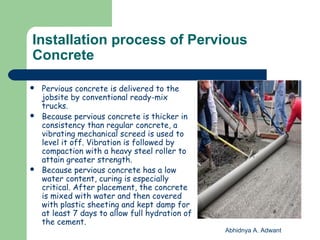
 Pervious concrete is delivered to the
jobsite by conventional ready-mix
trucks.
 Because pervious concrete is thicker in
consistency than regular concrete, a
vibrating mechanical screed is used to
level it off. Vibration is followed by
compaction with a heavy steel roller to
attain greater strength.
 Because pervious concrete has a low
water content, curing is especially
critical. After placement, the concrete
is mixed with water and then covered
with plastic sheeting and kept damp for
at least 7 days to allow full hydration of
the cement.
Abhidnya A. Adwant
Benefits of Pervious Concrete
 Economic Benefits
 Environmental Benefits
 Other Benefits
Abhidnya A. Adwant
Economic Benefits
 initial costs for pervious concrete pavements
are higher than those for conventional
concrete or asphalt paving. But total costs
can be substantially lower.
Abhidnya A. Adwant
Environmental Benefits
Abhidnya A. Adwant
Other Benefits
 Lower installation costs
 Permits the use of existing sewer systems
 Increased land utilization
 Lower life-cycle costs
Abhidnya A. Adwant
Limitations
 As pervious concrete contain no fine
aggregate its surface is quiet rough and
honeycombed. Hence it seems unsuitable for
roads where traffic is heavy as on highways.
 It can not used for highways, because it has
low strength
Abhidnya A. Adwant
Further Scope
 There is much more scope for research
work to impart sufficient smoothness to
pervious concrete pavement surface.
Grinding of surface or providing porous
plaster may be tried.
Abhidnya A. Adwant

Pervious concrete for Road Pavements

  • 1.
    Pervious concrete  Perviousconcrete is a mixture of coarse aggregate, Portland cement, water and little to no sand.  A typical pervious concrete pavement has a 15- 25% void structure and allows 125 to 325 litres of water per minute to pass through each square metre. Abhidnya A. Adwant – (+91)9421594494
  • 2.
    Pervious concrete forroad pavements  Pervious Concrete can be successfully used for pavements and is environmentally friendly paving material that offers the durability of standard concrete while retaining storm water runoff and replenishing local watershed systems  By using pervious concrete drainage of run off water at parking lots, sidewalks, streets, driveways, etc. can be done. Abhidnya A. Adwant
  • 3.
    Where it isused?  pervious concrete is helping communities in California and Washington restore groundwater supplies and reduce pollution of coastal waters, which can endanger fragile aquatic ecosystems and even swimmers.  In California, pervious concrete is primarily being used to pave parking lots. But its also becoming a practical alternative for subdivision streets, sidewalks, and golf cart paths. Abhidnya A. Adwant
  • 4.
    Installation process ofPervious Concrete  Pervious concrete is delivered to the jobsite by conventional ready-mix trucks.  Because pervious concrete is thicker in consistency than regular concrete, a vibrating mechanical screed is used to level it off. Vibration is followed by compaction with a heavy steel roller to attain greater strength.  Because pervious concrete has a low water content, curing is especially critical. After placement, the concrete is mixed with water and then covered with plastic sheeting and kept damp for at least 7 days to allow full hydration of the cement. Abhidnya A. Adwant
  • 5.
    Benefits of PerviousConcrete  Economic Benefits  Environmental Benefits  Other Benefits Abhidnya A. Adwant
  • 6.
    Economic Benefits  initialcosts for pervious concrete pavements are higher than those for conventional concrete or asphalt paving. But total costs can be substantially lower. Abhidnya A. Adwant
  • 7.
  • 8.
    Other Benefits  Lowerinstallation costs  Permits the use of existing sewer systems  Increased land utilization  Lower life-cycle costs Abhidnya A. Adwant
  • 9.
    Limitations  As perviousconcrete contain no fine aggregate its surface is quiet rough and honeycombed. Hence it seems unsuitable for roads where traffic is heavy as on highways.  It can not used for highways, because it has low strength Abhidnya A. Adwant
  • 10.
    Further Scope  Thereis much more scope for research work to impart sufficient smoothness to pervious concrete pavement surface. Grinding of surface or providing porous plaster may be tried. Abhidnya A. Adwant