This document provides guidance on creating persuasive speeches for different types of questions: questions of fact, questions of value, and questions of policy.
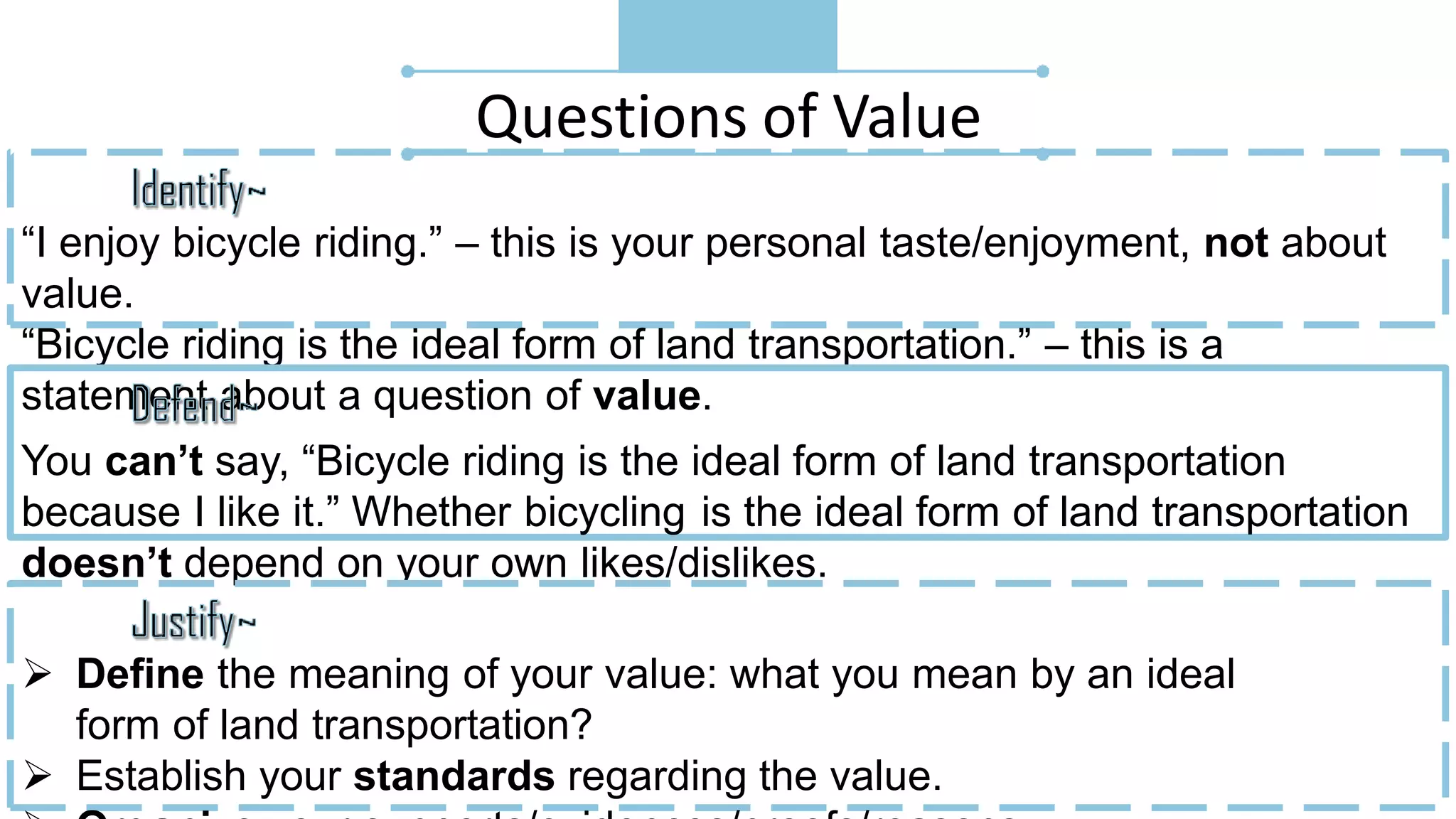
For questions of fact speeches, the speaker takes a partisan stance to present facts in a way that persuades the audience of a particular view. They must provide reliable evidence and avoid bias. For questions of value, the speaker appeals to a standard or criteria for judgment and provides facts supporting their view using that criteria. Questions of policy speeches argue either for passive agreement or immediate action on a proposed course of action or policy change. They establish a need, propose a solution, and convince the audience the plan is practical.