Propaganda and Persuasive
Techniques
to use and not to use
Propaganda Techniques
Used to influence people to believe,
buy, or do something.
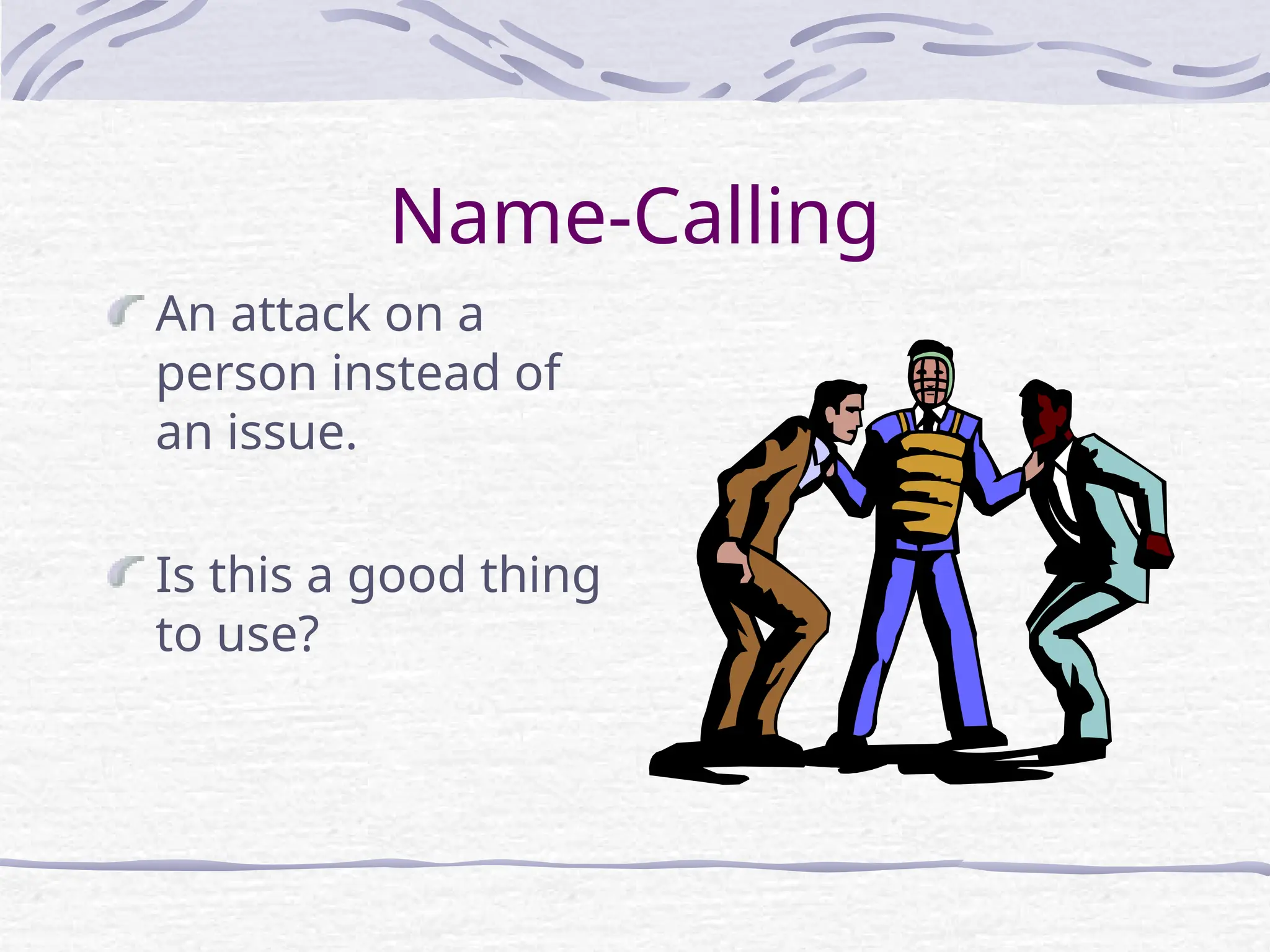
Name-Calling
An attack on a
person instead of
an issue.
Is this a good thing
to use?
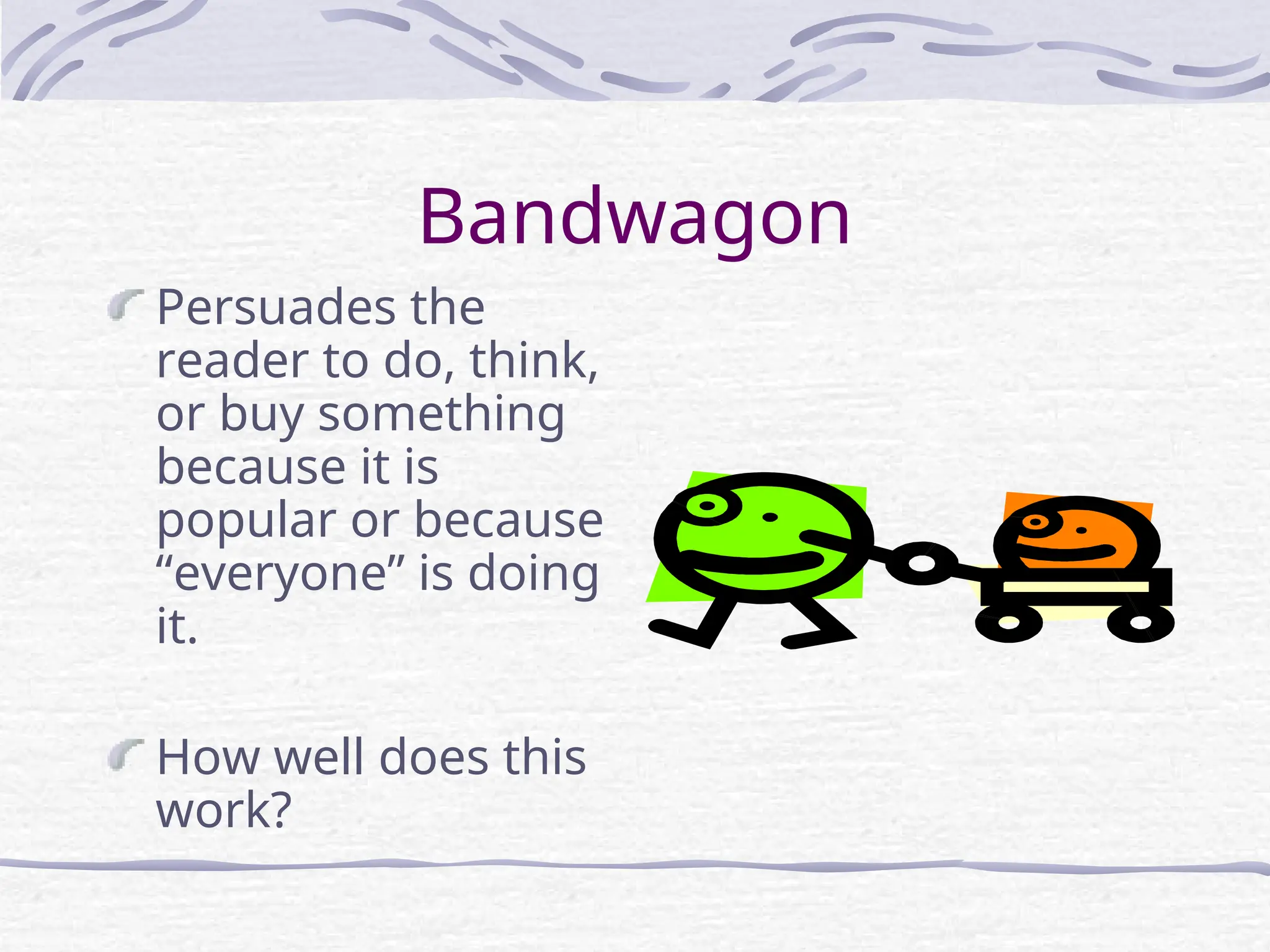
Bandwagon
Persuades the
reader to do, think,
or buy something
because it is
popular or because
“everyone” is doing
it.
How well does this
work?
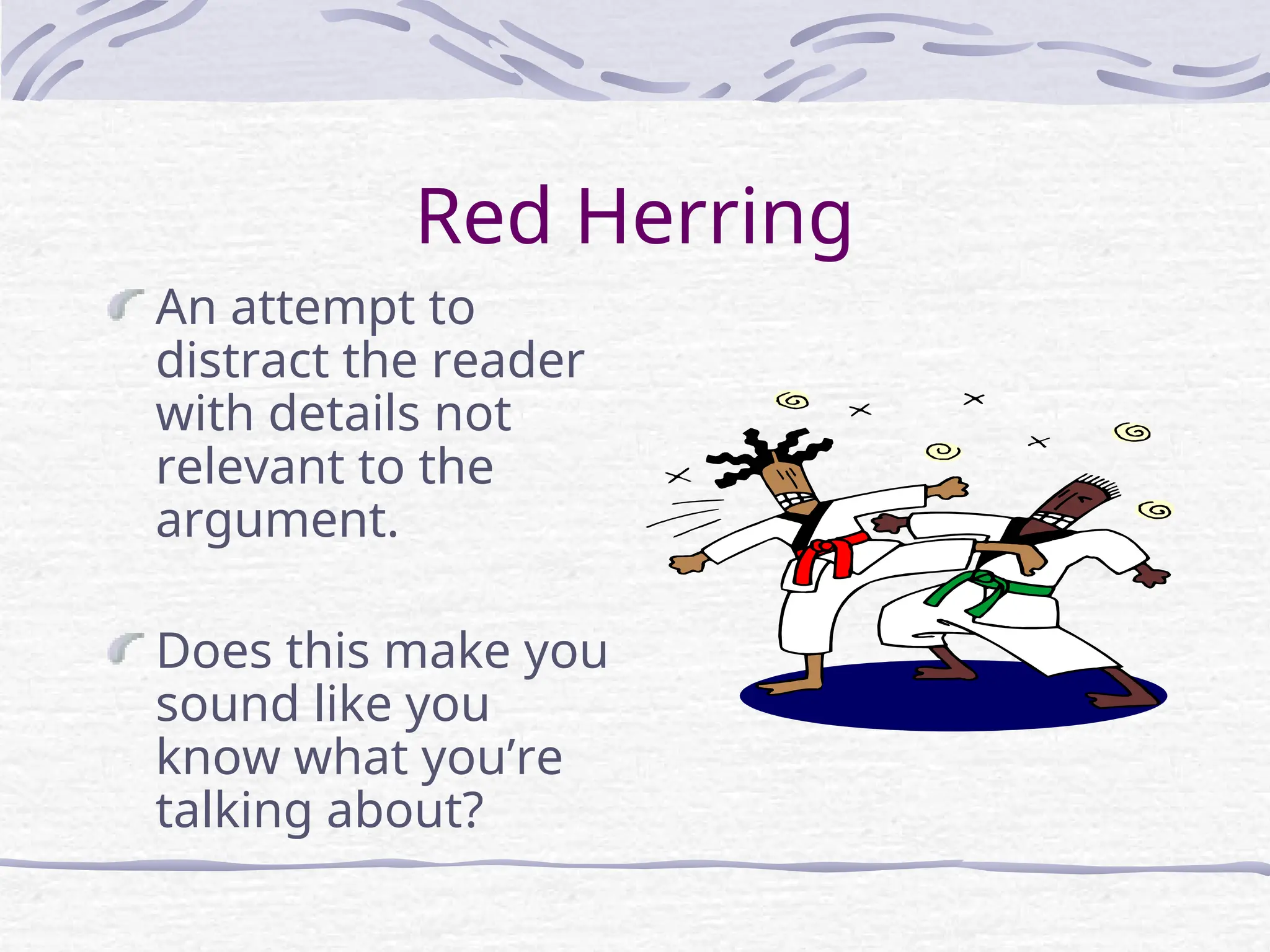
Red Herring
An attempt to
distract the reader
with details not
relevant to the
argument.
Does this make you
sound like you
know what you’re
talking about?
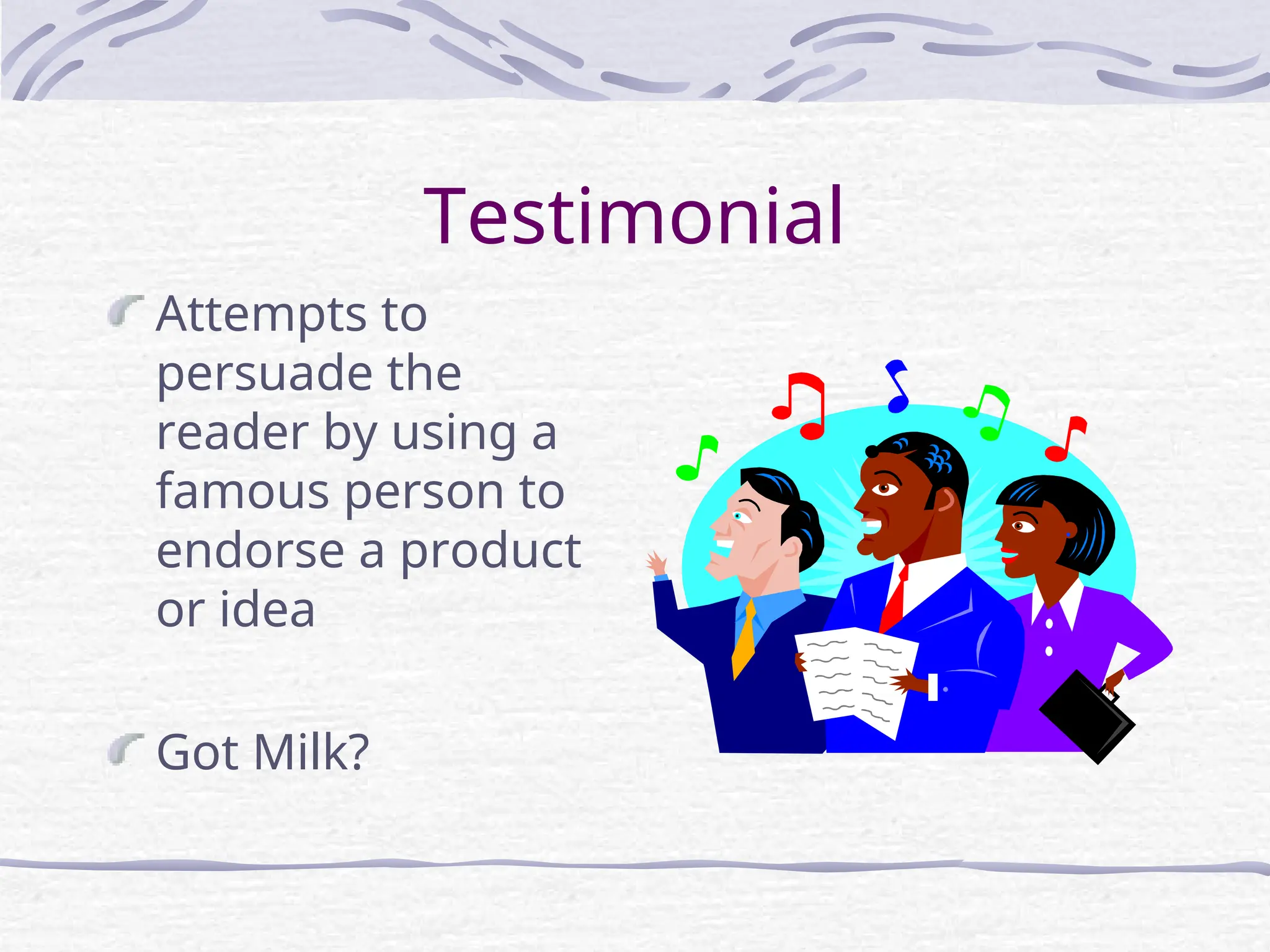
Testimonial
Attempts to
persuade the
reader by using a
famous person to
endorse a product
or idea
Got Milk?
Sweeping generalization
(stereotyping)
Makes an
oversimplified
statement about a
group based on
limited information.
Avoid words such as
always, everybody,
never, and none.
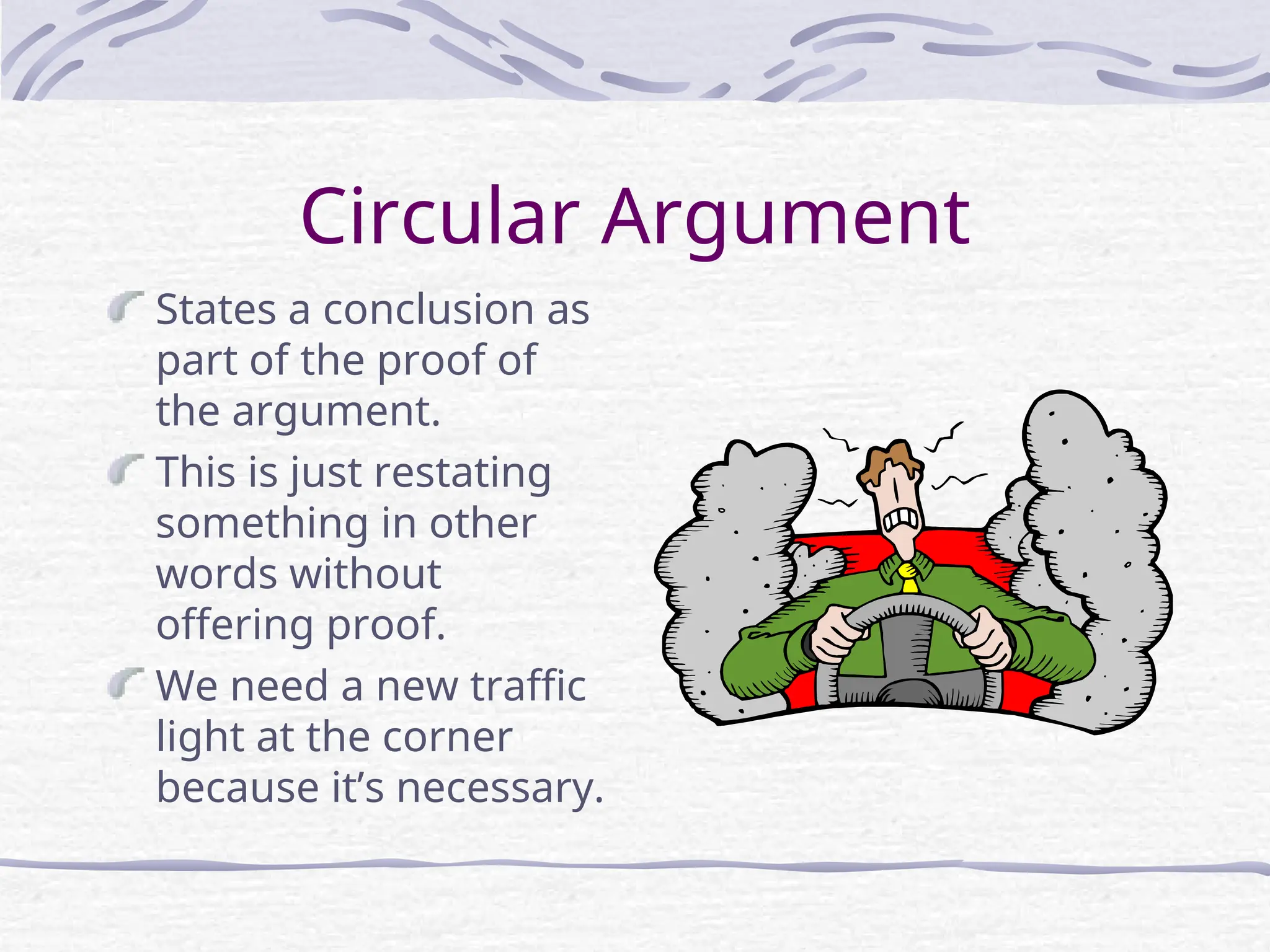
Circular Argument
States a conclusion as
part of the proof of
the argument.
This is just restating
something in other
words without
offering proof.
We need a new traffic
light at the corner
because it’s necessary.
Either-Or
Stating that there
are only two
possible
alternatives (Either I
get into the college
of my dreams, or
my life is ruined).
Really? (Try not to
use this!)
Cause and Effect
Assuming that
because event B
followed event A, A
caused B.
I flunked the test
because Joe sat
beside me instead
of in front of me.
Glittering Generality
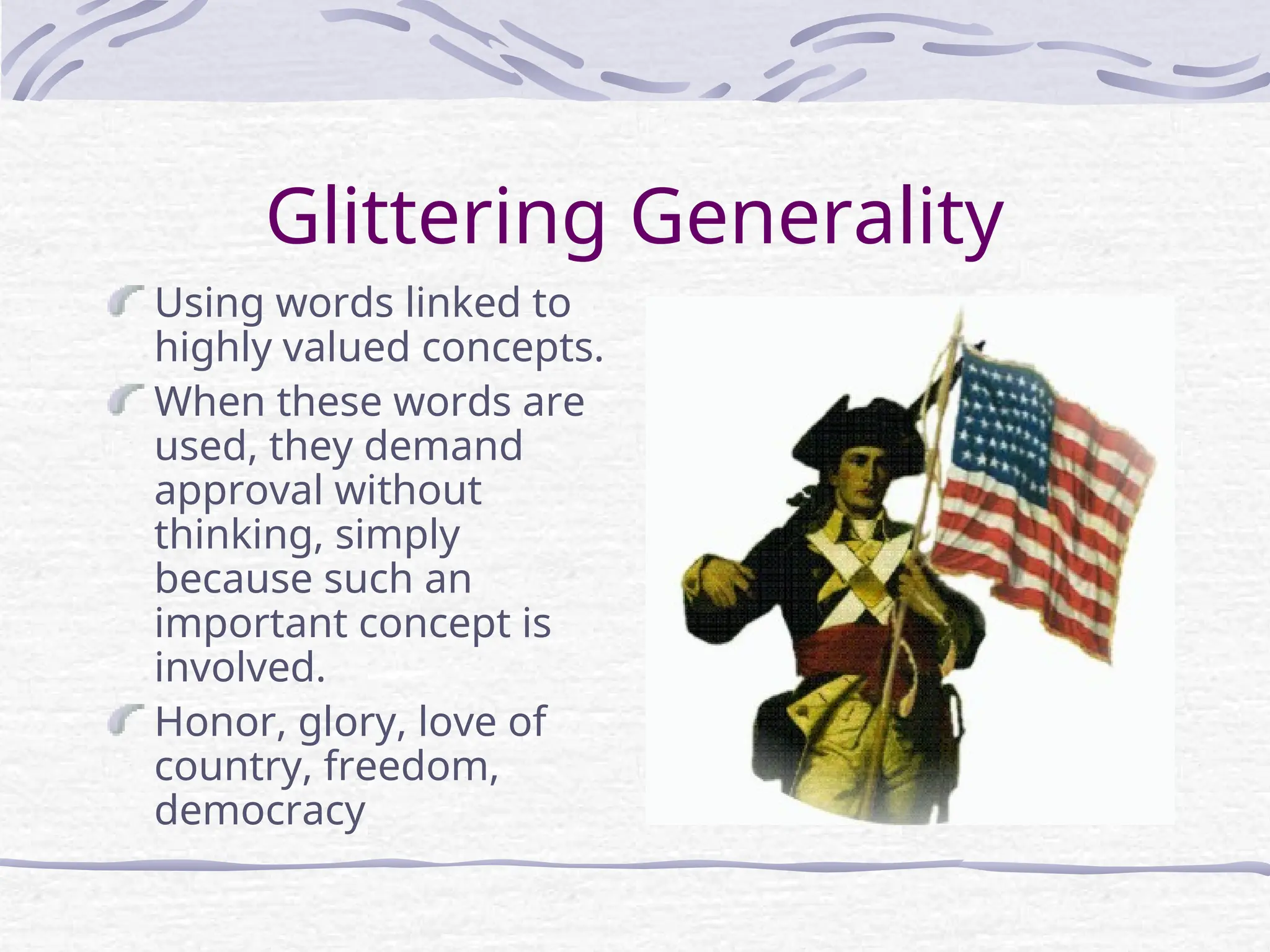
Using words linked to
highly valued concepts.
When these words are
used, they demand
approval without
thinking, simply
because such an
important concept is
involved.
Honor, glory, love of
country, freedom,
democracy
Transfer
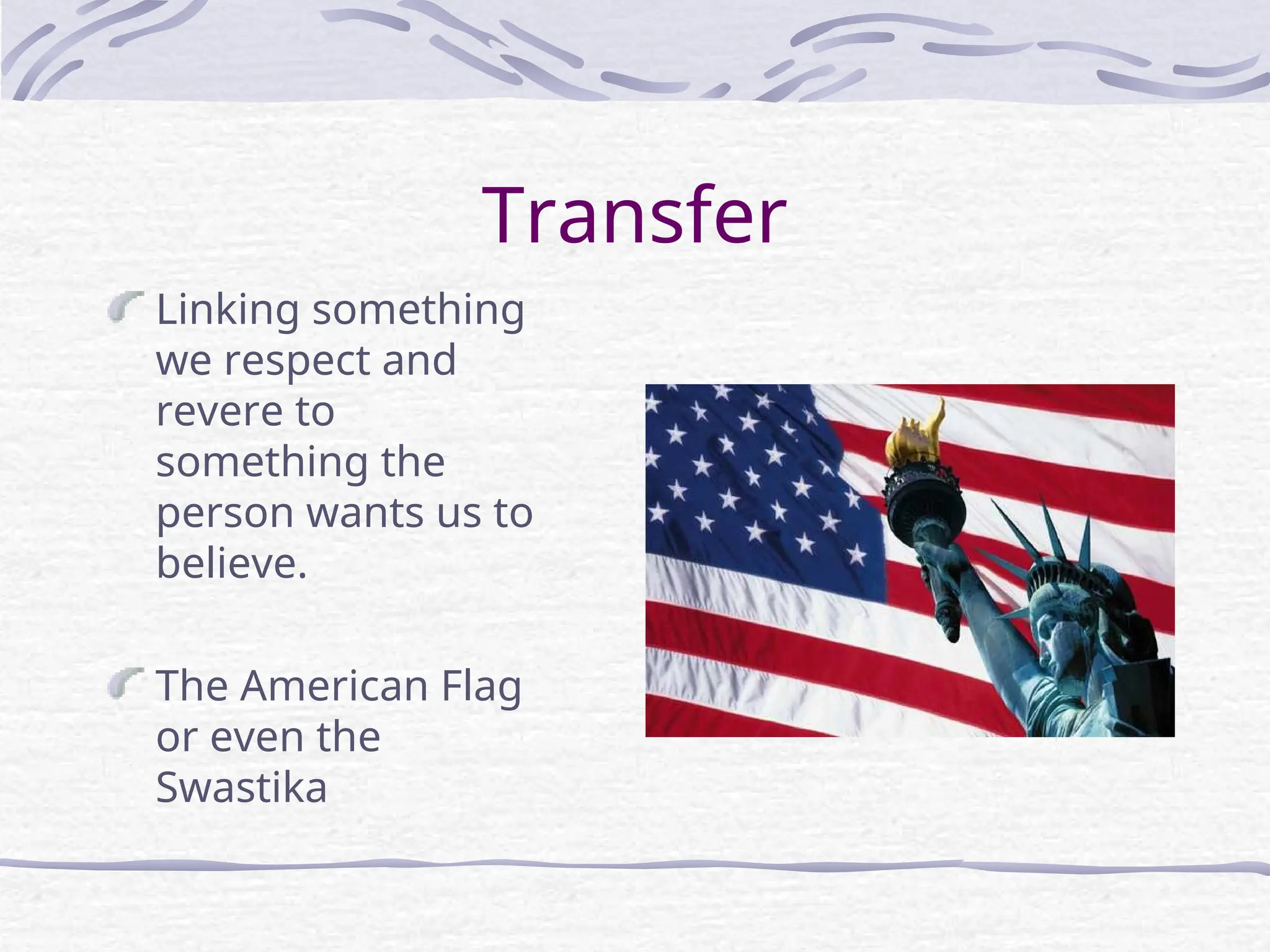
Linking something
we respect and
revere to
something the
person wants us to
believe.
The American Flag
or even the
Swastika
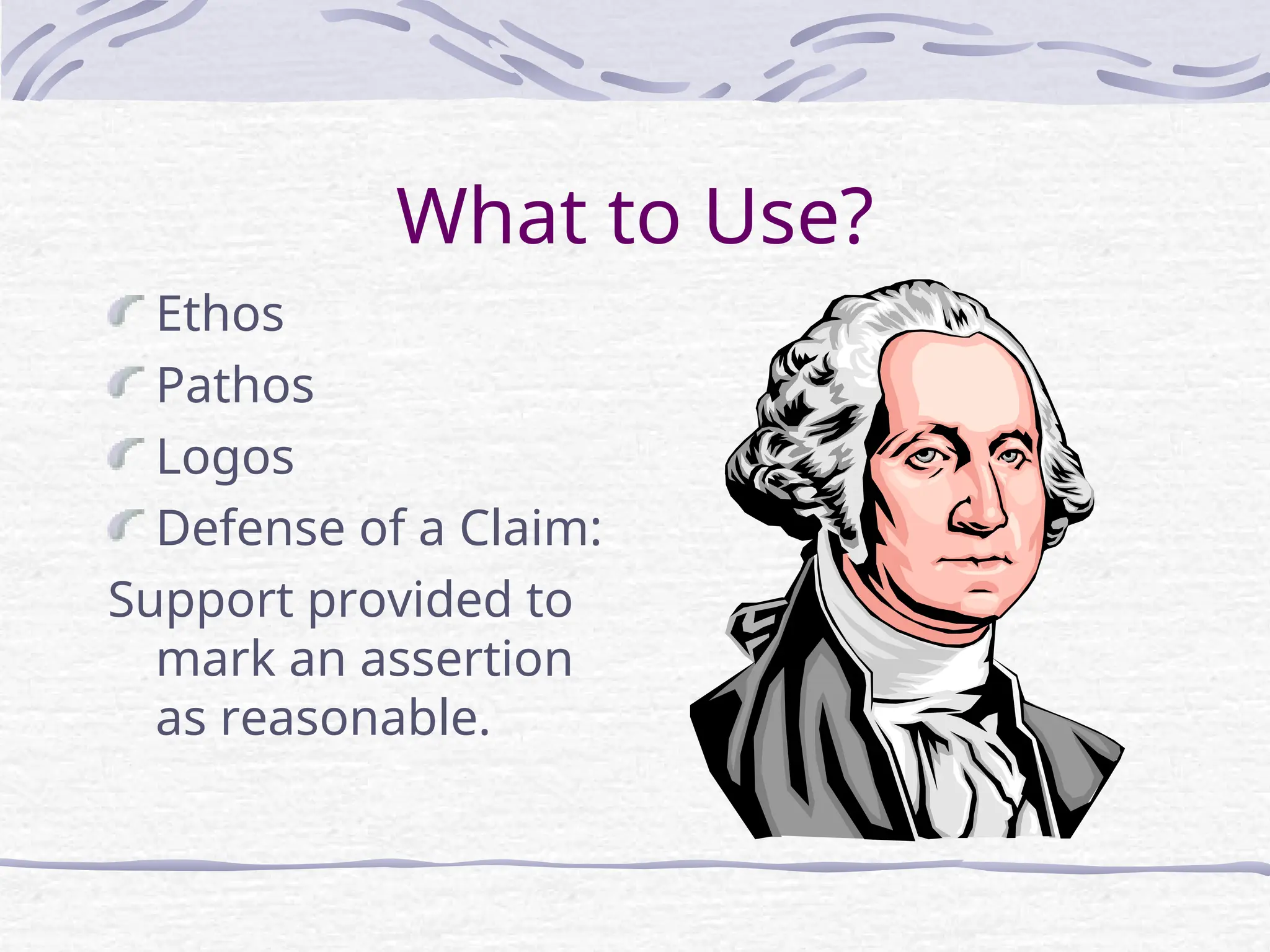
What to Use?
Ethos
Pathos
Logos
Defense of a Claim:
Support provided to
mark an assertion
as reasonable.

Persuasive Propaganda Techniques for Paper.ppt