Pernicious Anemia: An
Overview
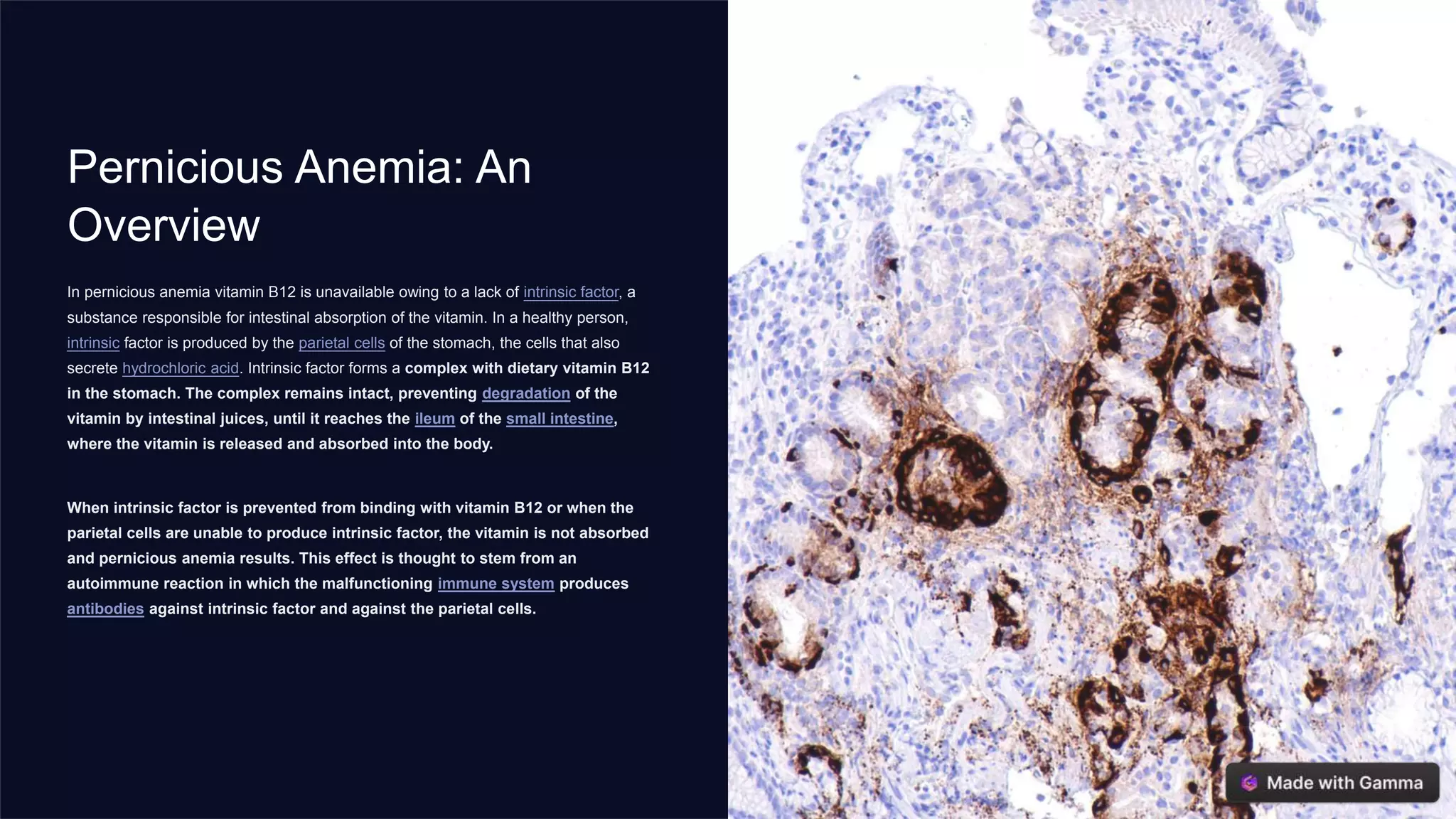
In pernicious anemia vitamin B12 is unavailable owing to a lack of intrinsic factor, a
substance responsible for intestinal absorption of the vitamin. In a healthy person,
intrinsic factor is produced by the parietal cells of the stomach, the cells that also
secrete hydrochloric acid. Intrinsic factor forms a complex with dietary vitamin B12
in the stomach. The complex remains intact, preventing degradation of the
vitamin by intestinal juices, until it reaches the ileum of the small intestine,
where the vitamin is released and absorbed into the body.
When intrinsic factor is prevented from binding with vitamin B12 or when the
parietal cells are unable to produce intrinsic factor, the vitamin is not absorbed
and pernicious anemia results. This effect is thought to stem from an
autoimmune reaction in which the malfunctioning immune system produces
antibodies against intrinsic factor and against the parietal cells.
Epidemiology of Pernicious
Anemia
Pernicious anemia is a rare condition, with an estimated prevalence of 0.1% to 1% in the general
population. The incidence of pernicious anemia increases with age, with a peak incidence in the seventh
and eighth decades of life. Pernicious anemia is more common in women and in people of Northern
European or Scandinavian descent. The condition is rare in people of African or Asian descent.
Additionally, people with a family history of pernicious anemia may have an increased risk of developing
the condition.
Causes
Intrinsic Factor Deficiency
The most common cause of pernicious anemia
is the autoimmune destruction of intrinsic factor,
a protein produced by the stomach that's
essential for the absorption of vitamin B12 in the
small intestine.
Gut Surgery
Surgical removal of part or all of the stomach, or
other gastrointestinal surgeries, can also lead to
the development of pernicious anemia if intrinsic
factor is removed or damaged.
Symptoms of Pernicious Anemia
Diarrhea or constipation.
• Lightheadedness when standing up or with exertion.
• Loss of appetite.
Pale skin (mild jaundice or yellowing of your eyes or skin).
Shortness of breath (dyspnea), mostly during exercise.
• Heartburn.
• Swollen, red tongue or bleeding gums.
Differential Diagnosis
Megaloblastic
Anemia
Megaloblastic anemia is
a type of anemia
characterized by the
presence of large,
abnormal red blood
cells. It's also caused by
vitamin B12 deficiency
and can sometimes be
confused with pernicious
anemia.
Iron Deficiency
Anemia
Iron deficiency anemia is
the most common type of
anemia and can have
similar symptoms to
pernicious anemia.
However, it's caused by a
lack of iron instead of
vitamin B12.
Hypothyroidism
Hypothyroidism can cause
fatigue, weakness, and
depression, which are
similar to the symptoms of
pernicious anemia.
However, there will be
other distinctive symptoms
like weight gain, cold
intolerance, and a slow
heart rate.
Chronic Fatigue Syndrome
Chronic fatigue syndrome is a disorder characterized by extreme fatigue that can't be explained by
an underlying medical condition. It can mimic the symptoms of pernicious anemia.
Diagnosis of Pernicious Anemia
Initial Blood Tests
If initial blood tests suggest pernicious anemia, doctors may order an
intrinsic factor antibody test to confirm the diagnosis.
In some cases, doctors may order a Schilling test to determine if the
body is absorbing vitamin B12 properly.
Treatment Options for Pernicious Anemia
Vitamin B12 injections
The primary treatment option
is vitamin B12 injections.
Usually, it starts with a series
of weekly shots for six weeks
then followed by shots every
other week for four weeks
before moving to monthly
shots indefinitely.
Oral supplements
In mild cases, oral
supplements are sufficient.
Consuming high doses of
vitamin B12 can help
replenish the deficiency.
Blood transfusions
In life-threatening cases, such
as severe anemia, blood
transfusions may be required.
Complications of Pernicious
Anemia
Neurological Damage
If pernicious anemia is left untreated it
can cause permanent nerve damage
and contribute to problems like tingling
in the hands and feet, muscle
weakness and difficulty walking.
Gastrointestinal Cancer
Studies suggest a link between
pernicious anemia and a higher chance
of gastric cancer, as the lack of intrinsic
factor can lead to gastritis.
Preventing Pernicious Anemia
1 Eat foods rich in vitamin B12
Good sources include meat, fish, poultry,
eggs, and dairy products. If you're
following a vegan or strict vegetarian diet,
consider taking a vitamin B12 supplement.
2 Get enough folic acid
Folic acid is important for healthy red blood
cell production. Good sources include
fortified cereals, leafy green vegetables,
and legumes.
3 Consider genetic testing
If you have a family history of pernicious anemia, talk to your doctor about genetic testing.
Knowing your risk can help you take steps to prevent the condition.
Living with Pernicious Anemia
Regular Follow-ups
Regular follow-ups with healthcare professionals help people manage the disease and get
appropriate treatment in case of any relapse.
Listen to the body
Individuals should avoid overexertion and listen to their body; it's essential to maintain healthy sleep
patterns, control stress levels and stay physically active.
References
1. Banerjee, R., Koner, BC., & Bhattacharya, AK. (2012). Diagnosis of pernicious anemia
revisited. Indian Journal of Clinical Biochemistry, 27(4), 349-354.
2. Kodaly, BS., Bhowmik, D., Mara, KV., & Bhowmik, S. (2020). Pernicious Anemia. In: Stat
Pearls [Internet]. Treasure Island (FL): Stat Pearls Publishing.

Pernicious-Anemia-An-Overview (1).pptx

  • 1.
    Pernicious Anemia: An Overview Inpernicious anemia vitamin B12 is unavailable owing to a lack of intrinsic factor, a substance responsible for intestinal absorption of the vitamin. In a healthy person, intrinsic factor is produced by the parietal cells of the stomach, the cells that also secrete hydrochloric acid. Intrinsic factor forms a complex with dietary vitamin B12 in the stomach. The complex remains intact, preventing degradation of the vitamin by intestinal juices, until it reaches the ileum of the small intestine, where the vitamin is released and absorbed into the body. When intrinsic factor is prevented from binding with vitamin B12 or when the parietal cells are unable to produce intrinsic factor, the vitamin is not absorbed and pernicious anemia results. This effect is thought to stem from an autoimmune reaction in which the malfunctioning immune system produces antibodies against intrinsic factor and against the parietal cells.
  • 2.
    Epidemiology of Pernicious Anemia Perniciousanemia is a rare condition, with an estimated prevalence of 0.1% to 1% in the general population. The incidence of pernicious anemia increases with age, with a peak incidence in the seventh and eighth decades of life. Pernicious anemia is more common in women and in people of Northern European or Scandinavian descent. The condition is rare in people of African or Asian descent. Additionally, people with a family history of pernicious anemia may have an increased risk of developing the condition.
  • 3.
    Causes Intrinsic Factor Deficiency Themost common cause of pernicious anemia is the autoimmune destruction of intrinsic factor, a protein produced by the stomach that's essential for the absorption of vitamin B12 in the small intestine. Gut Surgery Surgical removal of part or all of the stomach, or other gastrointestinal surgeries, can also lead to the development of pernicious anemia if intrinsic factor is removed or damaged.
  • 4.
    Symptoms of PerniciousAnemia Diarrhea or constipation. • Lightheadedness when standing up or with exertion. • Loss of appetite. Pale skin (mild jaundice or yellowing of your eyes or skin). Shortness of breath (dyspnea), mostly during exercise. • Heartburn. • Swollen, red tongue or bleeding gums.
  • 5.
    Differential Diagnosis Megaloblastic Anemia Megaloblastic anemiais a type of anemia characterized by the presence of large, abnormal red blood cells. It's also caused by vitamin B12 deficiency and can sometimes be confused with pernicious anemia. Iron Deficiency Anemia Iron deficiency anemia is the most common type of anemia and can have similar symptoms to pernicious anemia. However, it's caused by a lack of iron instead of vitamin B12. Hypothyroidism Hypothyroidism can cause fatigue, weakness, and depression, which are similar to the symptoms of pernicious anemia. However, there will be other distinctive symptoms like weight gain, cold intolerance, and a slow heart rate. Chronic Fatigue Syndrome Chronic fatigue syndrome is a disorder characterized by extreme fatigue that can't be explained by an underlying medical condition. It can mimic the symptoms of pernicious anemia.
  • 6.
    Diagnosis of PerniciousAnemia Initial Blood Tests If initial blood tests suggest pernicious anemia, doctors may order an intrinsic factor antibody test to confirm the diagnosis. In some cases, doctors may order a Schilling test to determine if the body is absorbing vitamin B12 properly.
  • 7.
    Treatment Options forPernicious Anemia Vitamin B12 injections The primary treatment option is vitamin B12 injections. Usually, it starts with a series of weekly shots for six weeks then followed by shots every other week for four weeks before moving to monthly shots indefinitely. Oral supplements In mild cases, oral supplements are sufficient. Consuming high doses of vitamin B12 can help replenish the deficiency. Blood transfusions In life-threatening cases, such as severe anemia, blood transfusions may be required.
  • 8.
    Complications of Pernicious Anemia NeurologicalDamage If pernicious anemia is left untreated it can cause permanent nerve damage and contribute to problems like tingling in the hands and feet, muscle weakness and difficulty walking. Gastrointestinal Cancer Studies suggest a link between pernicious anemia and a higher chance of gastric cancer, as the lack of intrinsic factor can lead to gastritis.
  • 9.
    Preventing Pernicious Anemia 1Eat foods rich in vitamin B12 Good sources include meat, fish, poultry, eggs, and dairy products. If you're following a vegan or strict vegetarian diet, consider taking a vitamin B12 supplement. 2 Get enough folic acid Folic acid is important for healthy red blood cell production. Good sources include fortified cereals, leafy green vegetables, and legumes. 3 Consider genetic testing If you have a family history of pernicious anemia, talk to your doctor about genetic testing. Knowing your risk can help you take steps to prevent the condition.
  • 10.
    Living with PerniciousAnemia Regular Follow-ups Regular follow-ups with healthcare professionals help people manage the disease and get appropriate treatment in case of any relapse. Listen to the body Individuals should avoid overexertion and listen to their body; it's essential to maintain healthy sleep patterns, control stress levels and stay physically active.
  • 11.
    References 1. Banerjee, R.,Koner, BC., & Bhattacharya, AK. (2012). Diagnosis of pernicious anemia revisited. Indian Journal of Clinical Biochemistry, 27(4), 349-354. 2. Kodaly, BS., Bhowmik, D., Mara, KV., & Bhowmik, S. (2020). Pernicious Anemia. In: Stat Pearls [Internet]. Treasure Island (FL): Stat Pearls Publishing.