Preoperative CarePaulette Hamner RN, MSNNUR 1213
SurgeryArt and science of treating diseases, injuries, and deformities by operation and instrumentation
SurgeryPerformed forDiagnosisCurePalliationPreventionExplorationCosmetic improvement
Surgical SettingsInpatient Same day admissionAmbulatory (outpatient)Usually less than 3 to 4 hours in PACU
Patient InterviewCheck documented information prior to interviewAvoids repetitionOccurs in advance or on day of surgery
Patient InterviewPurposeObtain health informationDetermine expectationsProvide and clarify information on procedureAssess emotional state and readiness
Nursing AssessmentOverall goalIdentify risk factorsPlan care to ensure patient safety
Nursing Assessment GoalsDetermine psychological status to reinforce coping strategiesDetermine psychological factors of procedure contributing to risks
Nursing Assessment GoalsEstablish baseline dataIdentify medications and herbs taken that may affect surgical outcomeIdentify, document, and communicate results of laboratory/diagnostic tests
Nursing Assessment GoalsIdentify cultural and ethnic factors that may affect surgical experienceDetermine receipt of adequate information from surgeon in order to sign informed consent
Nursing AssessmentPsychosocial assessmentExcessive stress response can be magnified and recovery affected
Nursing AssessmentInfluencing factorsAgePast experienceCurrent healthSocioeconomic status
Nursing AssessmentUse common languageUse translators if neededDecreases level of anxietyCommunicate all concerns to surgical team
Nursing AssessmentAnxiety can impair cognition, decision making, and coping abilitiesLack of knowledgeUnrealistic expectationsInformation lessens anxiety
Nursing AssessmentAnxiety may arise from conflict with interventions (i.e., blood transfusions) and religious/cultural beliefs Identify beliefs and discuss with surgeon and operative staff
Nursing AssessmentFearsDeath or disabilityMay prompt postponementInfluence outcomePainConsult with ACPReassure drugs will be available
Nursing AssessmentFears Mutilation/alteration in body imageAssess concerns nonjudgmentallyAnesthesiaACP for consultAssess malignant hyperthermia risk
Nursing AssessmentFearsDisruption of life functioningRange from fear of permanent disability to temporary lossInclude family and financial concernsConsultations PRN
Nursing AssessmentHopeMay be strongest positive coping mechanismNever deny or minimizeAssess and support
Nursing AssessmentHealth historyDiagnosed medical conditionsPrevious surgeries and problemsMenstrual/obstetric history
Nursing AssessmentHealth history Familial diseasesConditionsReactions/problems to anesthesia (patient or family)
Nursing AssessmentCurrent medicationsPrescription and OTCHerbsVitaminsRecreationalDrugsAlcoholTobacco
Nursing AssessmentAllergies (drug and nondrug)Screen areas:Risk factorsContact  urticariaAerosol reactionsHistory of reactions suggesting latex allergy
Nursing AssessmentCardiovascular systemReportProblems for effective monitoringUse of cardiac drugsPresence of pacemaker/MI
Nursing AssessmentCardiovascular systemVitals recorded preoperatively for baselineBleeding/clotting timesLaboratory reportsPossible prophylactic antibiotics
Nursing AssessmentRespiratory systemInquire about recent airway infectionsProcedure could be cancelled because of increased risk of laryngo/bronchospasm or decreased SaO2
Nursing AssessmentRespiratory systemHistory of dyspnea, coughing, or hemoptysis reported to operative teamCOPD or asthmaHigh risk for atelectasis and hypoxemia
Nursing AssessmentRespiratory systemSmokers should be encouraged to quit 6 weeks before procedureDecreases risk of complicationsGreater years and number of packs = greater risk
Nursing AssessmentNervous systemEvaluation of neurologic functioningVision or hearing loss can influence results
Nursing AssessmentNervous systemCognitive functionAssess or correct any deficits before surgeryDurable power of attorney for health care should be obtained if deficits cannot be corrected
Nursing AssessmentNervous systemCognitive functionPostoperative delirium (falsely labeled senility or dementia) can occur with dehydration, hypothermia, and adjunctive medications
Nursing AssessmentUrinary systemHistory of urinary or renal diseasesRenal dysfunction contributes toF and E imbalancesIncreased risk of infectionImpaired wound healingAltered response to drugs and their elimination
Nursing AssessmentUrinary system Renal function testsNote problems voiding and inform operative team
Nursing AssessmentIntegumentary systemHistory of skin and musculoskeletal problemsHistory of pressure ulcersExtra padding during procedureAffect postoperative healing
Nursing AssessmentMusculoskeletal systemIdentify joints affected with arthritisMobility restrictions may affect positioning and ambulationBring mobility aids to surgery
Nursing AssessmentMusculoskeletal system Report problems affecting neck or lumbar spine to ACPCan affect airway management and anesthesia delivery
Nursing AssessmentEndocrine systemPatients with diabetes mellitus especially at risk for:Hypo/hyperglycemiaKetosisCardiovascular alterationsDelayed wound healingInfection
Nursing AssessmentEndocrine systemPatients with diabetes mellitus Serum glucose tests morning of surgery (baseline)Clarify with physician or ACP if usual dose of insulin is taken
Nursing AssessmentEndocrine systemPatients with thyroid dysfunctionHyper/hypothyroidism are surgical risk due to altered metabolic rateVerify with ACP about giving medications
Nursing AssessmentEndocrine systemPatients with Addison’s diseaseAbruptly stopping replacement corticosteroids could cause addisonian crisisStress of surgery may require increased dose of corticosteroids
Nursing AssessmentImmune systemPatients with history of compromised immune system or use of immunosuppressive drugs can haveDelayed wound healingIncreased risk for infection
Nursing AssessmentFluid and electrolyte statusVomiting, diarrhea, or difficulty swallowing can cause imbalanceIdentify drugs that alter statusDiuretics	Evaluate serum electrolyte levels
Nursing AssessmentFluid and electrolyte status NPO status	May require additional fluids and electrolytes prior to surgery if dehydration occurs
Nursing AssessmentNutritional statusObesityStresses cardiac and pulmonary systemsIncreased risk of wound dehiscence and infectionSlower recovery from anesthesiaSlower wound healing
Nursing AssessmentNutritional status Provide extra padding to underweight patients to prevent pressure ulcersIdentify dietary habits that may affect recovery (i.e., caffeine)
Nursing Assessment: ExamFindings enable ACP to rate patient for anesthesia administrationIndicator of perioperative risk and overall outcome
Nursing Assessment: ExamDocument relevant findings and report to perioperative teamObtain and evaluate results of laboratory testsMonitor blood glucose for diabetics
Nursing ManagementPreoperative teachingPatient has right to know what to expect and how to participateIncreases patient satisfactionReduces fear, anxiety, stress, pain, and vomiting
Nursing ManagementPreoperative teaching Limited time availableAddress needs of highest priorityInclude information focused on safetyProvide written material
Nursing ManagementPreoperative teaching Several days before surgeryObserve and listen to determine amount of teaching for each sessionAnxiety and fear can hinder learningGive priority to patient’s concerns
Nursing ManagementPreoperative teaching Must be documented and reported to postoperative nursesAvoid duplication of informationAssess learning
Nursing ManagementPreoperative teachingTeach deep breathing, coughing, and moving for postopInform if tubes, drains, monitoring devices, or special equipment will be used postop
Nursing ManagementPreoperative teachingBasic information before arrivalTime and placeFluid and food restrictionsNeed for enemaNeed for shower
Nursing ManagementLegal preparationAll required forms are signed and in chartInformed consentBlood transfusionsAdvance directivesPower of attorney
Nursing ManagementConsent for surgeryInformed consent must includeAdequate disclosureUnderstanding and comprehension Voluntarily given consent
Nursing ManagementSurgeon responsible for obtaining consentNurse may obtain and witness signatureVerify patient has understandingPermission may be withdrawn at any time
Nursing ManagementConsent for surgeryMedical emergency may override need for consent
Nursing ManagementLegally appointed representative of family may consent if patient isChildUnconsciousMentally incompetent
Nursing ManagementDay-of-surgery preparationFinal preoperative teaching Assessment and report of pertinent findingsVerify signed consent
Nursing ManagementDay-of-surgery preparationLabs History and physical examinationBaseline vitalsConsultation recordsNurse’s notes
Nursing ManagementDay-of-surgery preparation Patient should not wear any cosmeticsObservation of skin color is importantRemove nail polish for pulse oximeter
Nursing ManagementDay-of-surgery preparationValuables returned to family member or locked upDentures, contacts, prostheses are removedIdentification and allergy bands on wrist
Nursing ManagementVoid before surgeryPrevents involuntary elimination under anesthesia or early postoperative recoveryBefore medication administration
Nursing Management:Intraoperative Care
Physical EnvironmentDepartment LayoutHolding AreaOperating Room
Surgical TeamRegistered NurseLicensed Practical Nurse and Surgical TechnicianSurgeon and AssistantRegistered Nurse First AssistantAnesthesia Care Provider
Nursing Management: Patient Before SurgeryPsychosocial AssessmentPhysical AssessmentChart ReviewAdmitting the Patient
Nursing Management: Patient During SurgeryRoom PreparationTransferring the PatientScrubbing, Gowning, and GlovingBasic Aseptic TechniqueAssisting the Anesthesia Care Provider
Nursing Management: Patient During Surgery (cont.)Positioning the PatientPreparing the Surgical SiteSafety ConsiderationsPatient After Surgery
Classification of AnesthesiaGeneral AnesthesiaIntravenous Induction AgentsInhalation Agents
Classification of AnesthesiaGeneral Anesthesia (cont.)Adjuncts to General AnesthesiaOpioidsBenzodiazepinesNeuromuscular blocking agentsAntiemeticsDissociative Anesthesia
Classification of Anesthesia (cont.)Local AnesthesiaMethods of AdministrationSpinal and epidural anesthesiaAdditional Anesthesia Considerations
Gerontologic Considerations: Patient During Surgery
Catastrophic Eventsin the Operating RoomAnaphylactic ReactionsMalignant Hyperthermia
Postoperative Care in the Postanesthesia Care Unit (cont.)Potential Alterations in Cardiovascular FunctionEtiology
Nursing Management:Cardiovascular ComplicationsNursing AssessmentNursing DiagnosesNursing Implementation
Postoperative Care in the Postanesthesia Care Unit (cont.)Potential Alterations in Neurologic FunctionEtiology
Nursing Management:Neurologic ComplicationsNursing AssessmentNursing DiagnosesNursing Implementation
Postoperative Care in the Postanesthesia Care Unit (cont.)Pain and DiscomfortEtiology
Nursing Management: PainNursing AssessmentNursing DiagnosesNursing Implementation
Postoperative Care in the Postanesthesia Care Unit (cont.)HypothermaEtiology
Nursing Management: HypothermiaNursing AssessmentNursing DiagnosesNursing Implementation
Postoperative Care in the Postanesthesia Care Unit (cont.)Nausea and VomitingEtiology
Nursing Management:Nausea and VomitingNursing AssessmentNursing DiagnosesNursing Implementation
Postoperative Care in the Postanesthesia Care Unit (cont.)Surgical-Specific Care of the Patient in the PACUDischarge from the PACUAmbulatory Surgery Discharge
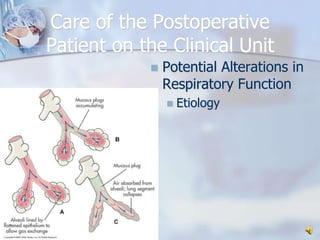
Care of the Postoperative Patient on the Clinical UnitPotential Alterations in Respiratory FunctionEtiology
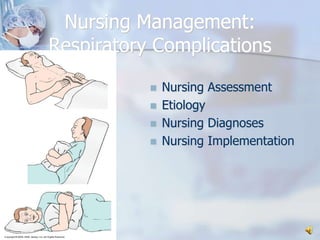
Nursing Management:Respiratory ComplicationsNursing AssessmentEtiologyNursing DiagnosesNursing Implementation
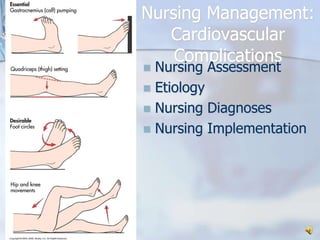
Nursing Management:Cardiovascular ComplicationsNursing AssessmentEtiologyNursing DiagnosesNursing Implementation
Nursing Management:Urinary ComplicationsNursing AssessmentNursing DiagnosesNursing Implementation
Nursing Management:Gastrointestinal ComplicationsNursing AssessmentEtiologyNursing DiagnosesNursing Implementation
Nursing Management:Surgical WoundsNursing AssessmentEtiologyNursing DiagnosesNursing Implementation
Nursing Management:Psychologic FunctionNursing DiagnosesEtiologyNursing Implementation
Care of the Postoperative Patienton the Clinical Unit (cont.)Planning for Discharge and Follow-Up Care

Periop 2010