Downloaded 23 times








![In Elasticsearch
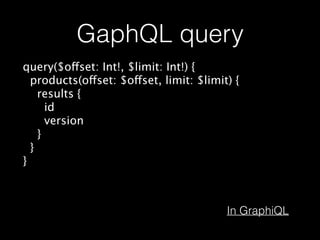
{
"_source": true,
"query" : […]
}
{
"_source": [ "id", "version"],
"query" : […]
}](https://image.slidesharecdn.com/perf-optimization-with-graphql-offline-160513100049/85/Performance-optimisation-with-GraphQL-17-320.jpg)
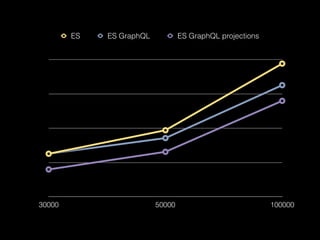
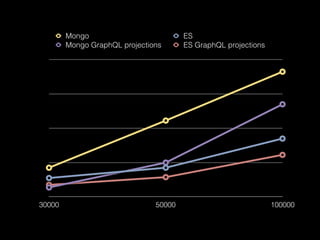
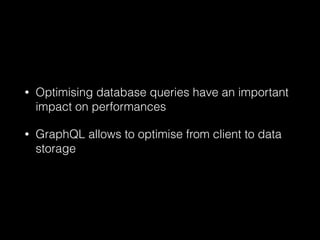

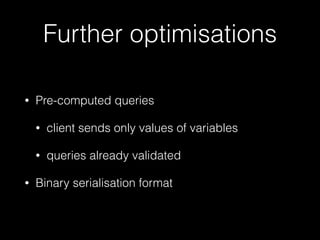

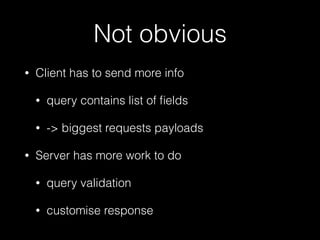
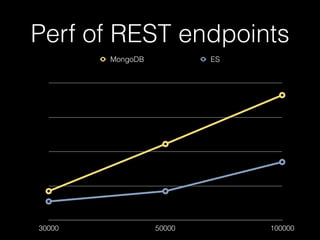
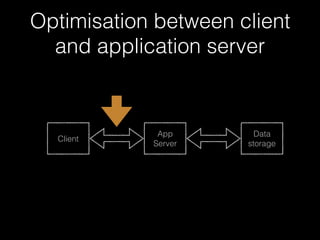
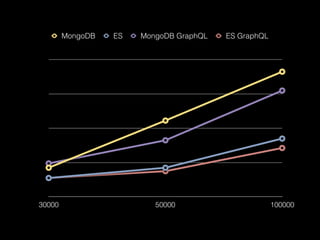
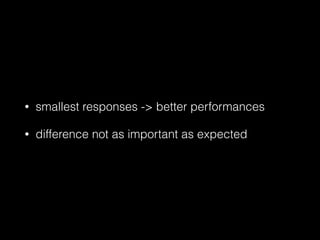
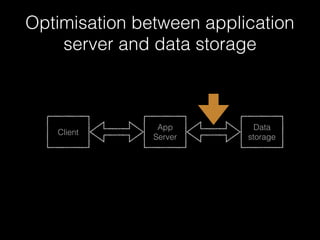
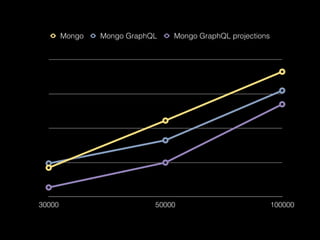
The document summarizes an experiment comparing the performance of GraphQL and REST APIs when querying data from MongoDB and ElasticSearch databases. The key findings are: 1) Optimizing queries between the client and application server had less impact than expected, with GraphQL responses being smaller but not significantly faster. 2) Optimizing queries between the application server and databases showed more significant performance gains, with projections in GraphQL and optimized database queries improving speeds. 3) GraphQL's ability to optimize queries from client to data storage is an advantage, but it should not be chosen primarily for performance reasons alone. Further testing is needed to evaluate performance for specific use cases.


