Rewards & Performance
Management
By:
Alonzo, Paul
Placido, Kyle
Performance Management:
Introduction
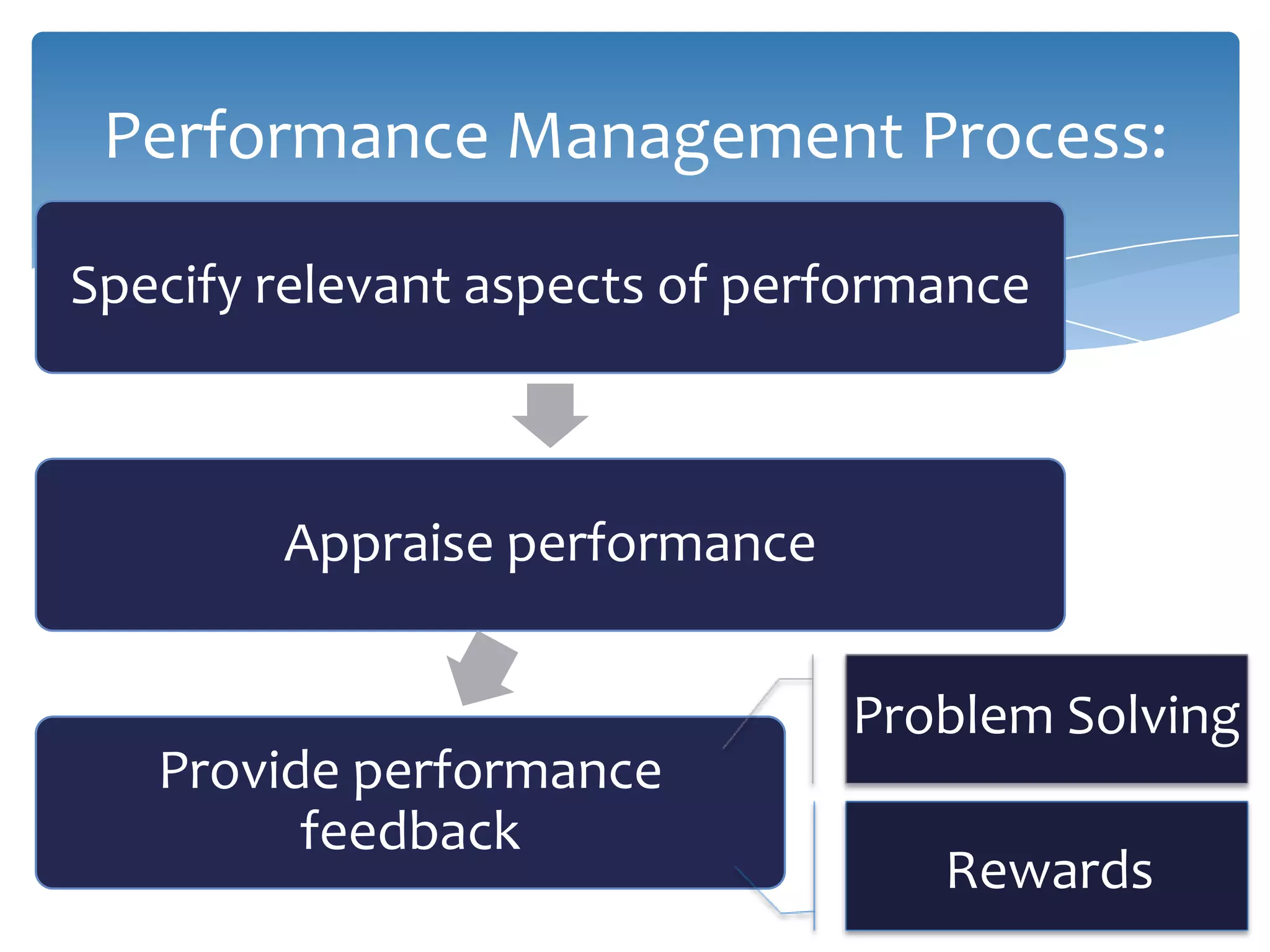
Performance Management Process:
Specify relevant aspects of performance

Appraise performance

Provide performance
feedback

Problem Solving

Rewards
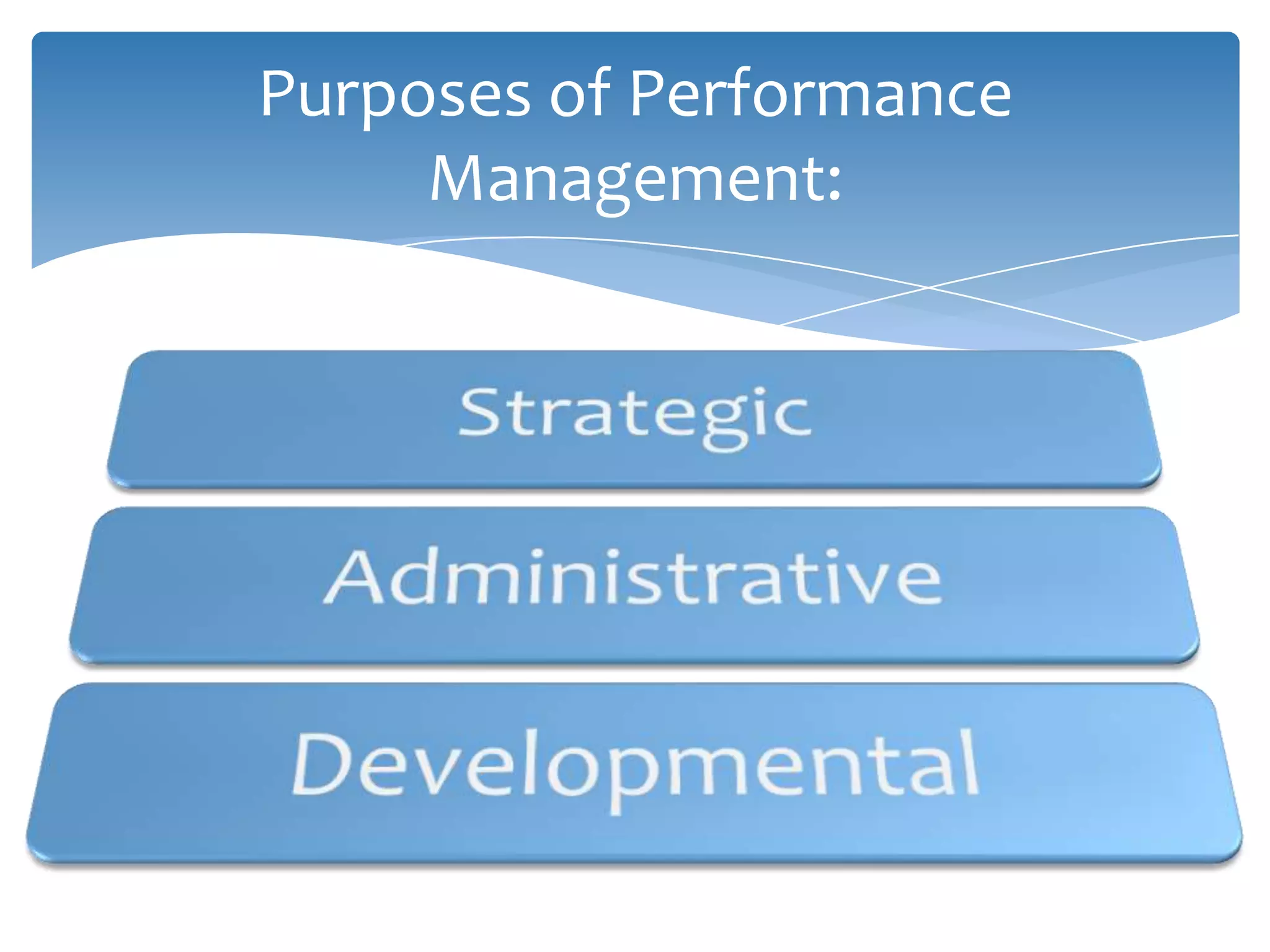
Purposes of Performance
Management:
Why should we assess
performance?
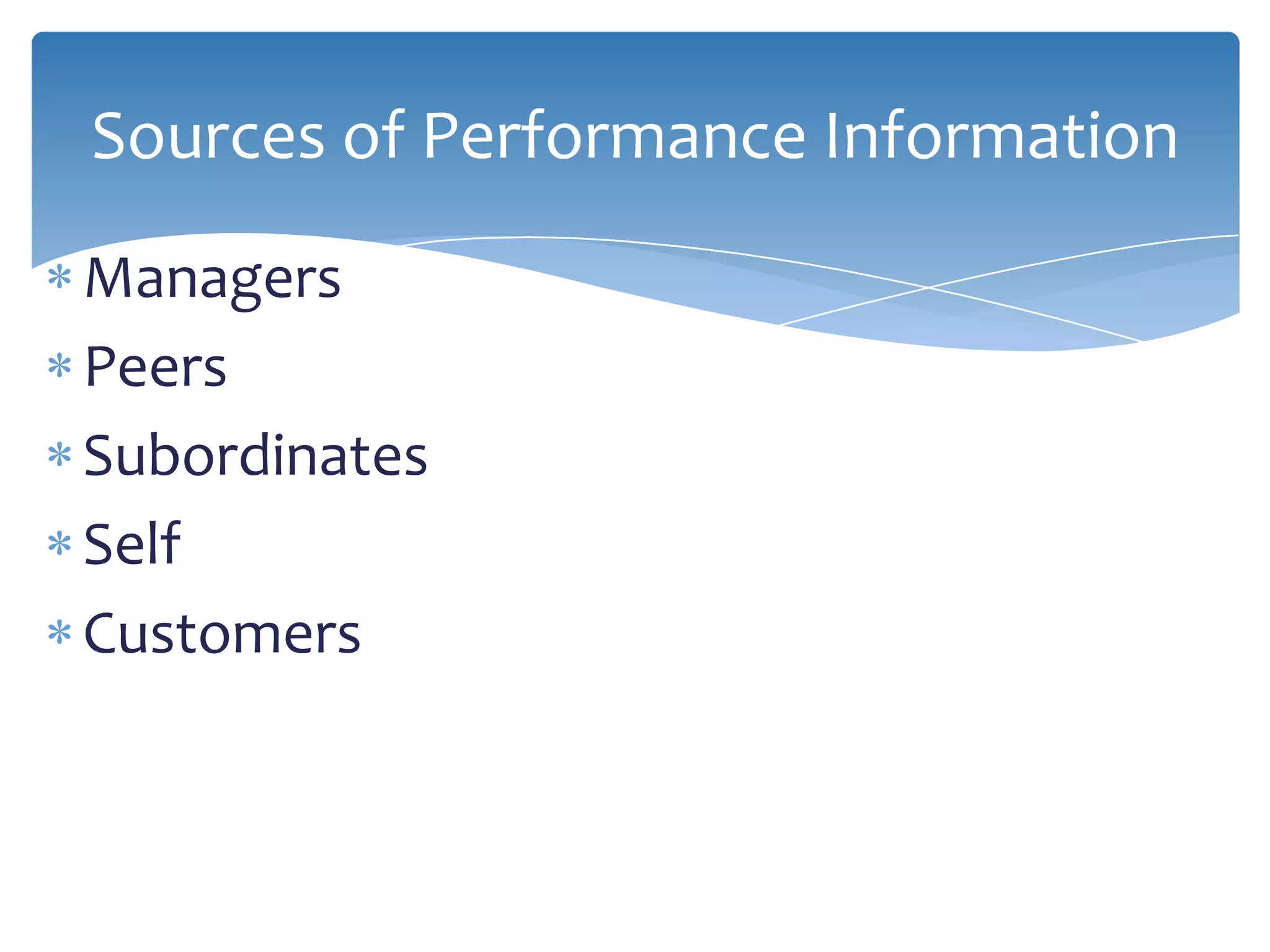
Sources of Performance Information
Managers
Peers
Subordinates
Self
Customers
Giving Performance Feedback
Scheduling performance feedback
Preparing for a feedback session
Conducting the feedback session
Tell and Sell
Tell and Listen
Problem Solving

Performance Management

Editor's Notes

  • #3 The Jelly Belly Candy Company has always recognized that employees are more likely to stay with their employer if they feel connected and recognized for their efforts. That is why the company did not waste time in creating a new program to align employee evaluation and performance management programs when the company’s two branches merged. The driving factor behind Jelly Belly’s performance management automation – (the use or introduction of automatic equipment in performance management process) was the belief that thorough and accurate reviews help employees to better understand what is expected of them, so that they can set clear and measurable objectives.To meet it’s strategic goals, Jelly Belly teamed up with Halogen Software to meet the new program’s needs. This led them to choose a Web-based employee performance and talent management application. Managers use the system to complete annual employee evaluations, and employees use one standard form to add comments and sign their appraisals electronically. The new system is also used to track training requirements and employee development and to better align employee goals. Setting goals, rating performance, and discussing performance are all parts of performance management.
  • #4 Organization specifies which aspects of performance are relevant to the organization. These decisions are based on the job analysis. The organization measures the relevant aspects of performance by conducting performance appraisals (assessment). Finally, through performance feedback sessions, managers give employees information about their performance so they can adjust their behavior to meet the organization’s goals. When there are performance problems, the feedback session should include efforts to identify and resolve underlying problems. In addition, performance feedback can come through the organization’s rewards. Using this performance management process helps managers and employees focus on the organization’s goals.
  • #5 Strategic Purpose – means effective performance management helps the organization achieve its business objectives. How? It does this by helping to link employees’ behavior with the organization’s goals. It measures employee’s performance to identify where those expectations are and are not being met. This enables organization to take corrective action, such as training, incentives, or discipline.Administrative Purpose – refers to the ways in which organizations use the system to provide information for day to day decisions about salary, benefits, and recognition programs. Performance management can also support decision making related to employee retention, termination for poor behavior, and hiring or layoffs.Developmental Purpose – developmetal, meaning that it serves as a basis for developing employees’ KSAO’s (Knowledge, Skill, Abilities, and Other Characteristics). Even employees who are meeting expectations can become more valuable when they hear and discuss performance feedback. Effective performance feedback makes employees aware of their strengths and of areas in which they can improve. Discussing areas in which employees fall short can help the employees and their manager uncover the source of problems and identify steps for improvement. Although discussing weaknesses may feel uncomfortable, it is necessary when performance management has a developmental purpose.
  • #6 Why assess employee performance?What you can’t measure you can’t improve. We are also looking for the SWOT analysis result of the employee, to know what his/her strengths & weaknesses are. HR Managers measure performance to keep up or maintain to the times especially in our present economy. Always remember that this tool keeps our employees in tiptop shape and on the go.
  • #7 Sources of Performance InformationTo get as complete an assessment possible, some organizations combine information from most or all of the possible sources, in what is called a 360-degree performance appraisal. The following are the sources:Managers – Head/LeaderPeers - FriendsSubordinates - ColleaguesSelfCustomers – Feedback forms
  • #8 Giving Performance FeedbackOnce the manager and others have measured an employee’s performance, this information must be given to the concerned employee. Only after the employee has received feedback can he or she begin to plan how to correct any shortcomings. Although the feedback stages of performance management is essential, it is uncomfortable to managers and employees. Delivering feedback feels to the manager as if he or she is standing in judgment of others . Similarly, receiving criticism feels even worse on the part of the employee. Fortunately, managers can do so much to smooth the feedback process and make it effective.Scheduling performance feedback – Prepare a date for feedback session.Preparing for a feedback session – Managers should be well prepared for each formal feedback session. The manager should create the right context for the meeting. The location should be neutral. If the manager’s office is the site of unpleasant conversations, a conference room may be more appropriate.Conducting the feedback session – During the feedback session, managers can take any of the 3 approaches: a.) Tell and Sell, b.) Tell and Listen, c.) Problem SolvingTell and Sell – managers tell the employee their ratings and then justify those ratingsTell and Listen – managers tell the employee their ratings and then let the employee explain their side of the story.Problem Solving – managers and employees work together to solve performance problems in an atmosphere of respect and encouragement.