Chapter 1
Brief History and Nature of Dance
 Is an activity which can take many forms and fill many
different needs.
 It can be recreation, entertainment, education, therapy, and
religion.
 It is an art, the art of body movement.
DANCE

 Dance differs from athletics or other daily activities.
 It focuses primarily on “an aesthetic or even entertaining
experience”
What is Dance?

A. To please the gods
B. To please others
C. To please themselves or self expression
D. To build community within an ethnic group or social
interaction
4 main reasons

 Dance has been a major form of religious ritual and social
expression within primitive cultures.
 It was used as a way of expressing and reinforcing tribal
unity and strength, as an approach for;
1. Courtship and mating
2. As a means of worship
3. Communication
4. And therapeutic experience
BRIEF HISTORY AND NATURE
OF DANCE
 It was only during the pre-Christian era that the real
knowledge of dance came about within the Great
Mediterranean and Middle Eastern civilizations.
 Dance was richly recorded in ancient Egypt.
 It was reflected in their wall paintings, reliefs, and in the
literary record in hieroglyphs.
EGYPT

 They also thought highly of dance
 Dancing was taught as an aid to military education among
the boys inAthens and Sparta.
Also, a form of entertainment and display.
GREEKS

 Dance was also commonly used in education.
 PLA
TO
ARISTOTLE
 SOCRATES
EDUCATION

Strongly supported
this art as an
integration of the
body and soul
 2 kinds of dance and music
1. NOBLE – Fine and Honorable
2. IGNOBLE – Imitating what is mean or ugly
Plato

 They give less importance to dancing.
 It stopped valuing such qualities in art as the nation grew
wealthy and powerful.
 Dance became brutal and sensationalized as their
entertainers were slaves and captives from many
nationalities.
 It was used more often for gruesome purposes.
 It became an integral part of corruption
ANCIENT ROME

 It transformed the history of dance.
 The Christian fathers approved the use of dance, provided
that its form and intent were holy and profound.
 Dances then became part of worships and church services.
Development of Christian
Church
 Peasants performed;
1. ROUND DANCE
2. COUPLE DANCE
2 basic types of dancing

 Dancers hold each other by hand, forming a long chain
and move about in an open or closed circle, or in an
extended line.
ROUND DANCE

 Was not as popular as round dance
 It was considered scandalous when first seen.
COUPLE DANCE

 NOBILITY
 Court dances emerged as part of the chivalric way of life.
 Because of the nature of clothing and elaborate accessories,
their dance steps were limited to gliding, curtseying and
posing.
 Noblemen danced in smooth floor or wood polished marble
called BALLROOM
NOBILITY VS. PEASANTS

 PEASANTS
 Dances have large movements and wide-stepping figures.
 Peasants danced on grass or on the beaten earth of the town
NOBILITY VS. PEASANTS

 The rise of BALLET in Italy and France.
 After the pinnacle of ballet prominence,
CONTEMPORARY DANCES that were stylistic
variations of ballet emerged and evolved.
15th and 16th centuries

“Dance is fun! It lifts the spirit, strengthens the
body, and stimulates the mind.” –Wayne Sleep (1986)

 Dance is one of the oldest and most popular forms of
exercise.
AEROBIC – it entails about an hour of “continuous
exercises, choreographed to music.”

SPECIFIC BENEFITS OF
DANCE

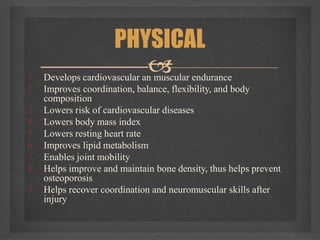
1. Develops cardiovascular an muscular endurance
2. Improves coordination, balance, flexibility, and body
composition
3. Lowers risk of cardiovascular diseases
4. Lowers body mass index
5. Lowers resting heart rate
6. Improves lipid metabolism
7. Enables joint mobility
8. Helps improve and maintain bone density, thus helps prevent
osteoporosis
9. Helps recover coordination and neuromuscular skills after
injury
PHYSICAL
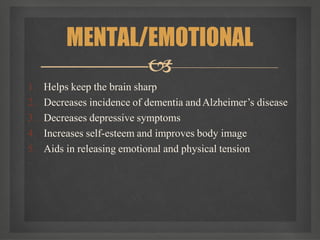
1. Helps keep the brain sharp
2. Decreases incidence of dementia andAlzheimer’s disease
3. Decreases depressive symptoms
4. Increases self-esteem and improves body image
5. Aids in releasing emotional and physical tension
MENTAL/EMOTIONAL

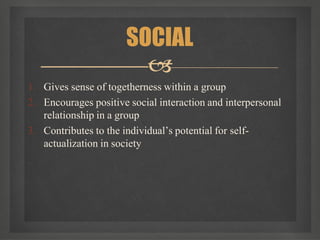
1. Gives sense of togetherness within a group
2. Encourages positive social interaction and interpersonal
relationship in a group
3. Contributes to the individual’s potential for self-
actualization in society
SOCIAL

1. Promotes cultural values
CULTURAL

1. Create a Tiktok dance video. (20points)
2. Send to me through messenger
ASSIGNMENT


peonline-201125013218.pptx

  • 1.
    Chapter 1 Brief Historyand Nature of Dance
  • 2.
     Is anactivity which can take many forms and fill many different needs.  It can be recreation, entertainment, education, therapy, and religion.  It is an art, the art of body movement. DANCE 
  • 3.
     Dance differsfrom athletics or other daily activities.  It focuses primarily on “an aesthetic or even entertaining experience” What is Dance? 
  • 4.
    A. To pleasethe gods B. To please others C. To please themselves or self expression D. To build community within an ethnic group or social interaction 4 main reasons 
  • 9.
     Dance hasbeen a major form of religious ritual and social expression within primitive cultures.  It was used as a way of expressing and reinforcing tribal unity and strength, as an approach for; 1. Courtship and mating 2. As a means of worship 3. Communication 4. And therapeutic experience BRIEF HISTORY AND NATURE OF DANCE
  • 10.
     It wasonly during the pre-Christian era that the real knowledge of dance came about within the Great Mediterranean and Middle Eastern civilizations.  Dance was richly recorded in ancient Egypt.  It was reflected in their wall paintings, reliefs, and in the literary record in hieroglyphs. EGYPT 
  • 11.
     They alsothought highly of dance  Dancing was taught as an aid to military education among the boys inAthens and Sparta. Also, a form of entertainment and display. GREEKS 
  • 12.
     Dance wasalso commonly used in education.  PLA TO ARISTOTLE  SOCRATES EDUCATION  Strongly supported this art as an integration of the body and soul
  • 13.
     2 kindsof dance and music 1. NOBLE – Fine and Honorable 2. IGNOBLE – Imitating what is mean or ugly Plato 
  • 14.
     They giveless importance to dancing.  It stopped valuing such qualities in art as the nation grew wealthy and powerful.  Dance became brutal and sensationalized as their entertainers were slaves and captives from many nationalities.  It was used more often for gruesome purposes.  It became an integral part of corruption ANCIENT ROME 
  • 15.
     It transformedthe history of dance.  The Christian fathers approved the use of dance, provided that its form and intent were holy and profound.  Dances then became part of worships and church services. Development of Christian Church
  • 16.
     Peasants performed; 1.ROUND DANCE 2. COUPLE DANCE 2 basic types of dancing 
  • 17.
     Dancers holdeach other by hand, forming a long chain and move about in an open or closed circle, or in an extended line. ROUND DANCE 
  • 18.
     Was notas popular as round dance  It was considered scandalous when first seen. COUPLE DANCE 
  • 19.
     NOBILITY  Courtdances emerged as part of the chivalric way of life.  Because of the nature of clothing and elaborate accessories, their dance steps were limited to gliding, curtseying and posing.  Noblemen danced in smooth floor or wood polished marble called BALLROOM NOBILITY VS. PEASANTS 
  • 20.
     PEASANTS  Danceshave large movements and wide-stepping figures.  Peasants danced on grass or on the beaten earth of the town NOBILITY VS. PEASANTS 
  • 21.
     The riseof BALLET in Italy and France.  After the pinnacle of ballet prominence, CONTEMPORARY DANCES that were stylistic variations of ballet emerged and evolved. 15th and 16th centuries 
  • 22.
    “Dance is fun!It lifts the spirit, strengthens the body, and stimulates the mind.” –Wayne Sleep (1986)
  • 23.
      Dance isone of the oldest and most popular forms of exercise. AEROBIC – it entails about an hour of “continuous exercises, choreographed to music.”
  • 24.
  • 25.
     1. Develops cardiovascularan muscular endurance 2. Improves coordination, balance, flexibility, and body composition 3. Lowers risk of cardiovascular diseases 4. Lowers body mass index 5. Lowers resting heart rate 6. Improves lipid metabolism 7. Enables joint mobility 8. Helps improve and maintain bone density, thus helps prevent osteoporosis 9. Helps recover coordination and neuromuscular skills after injury PHYSICAL
  • 26.
    1. Helps keepthe brain sharp 2. Decreases incidence of dementia andAlzheimer’s disease 3. Decreases depressive symptoms 4. Increases self-esteem and improves body image 5. Aids in releasing emotional and physical tension MENTAL/EMOTIONAL 
  • 27.
    1. Gives senseof togetherness within a group 2. Encourages positive social interaction and interpersonal relationship in a group 3. Contributes to the individual’s potential for self- actualization in society SOCIAL 
  • 28.
    1. Promotes culturalvalues CULTURAL 
  • 29.
    1. Create aTiktok dance video. (20points) 2. Send to me through messenger ASSIGNMENT 