*
                              Inspired by Design Thinking


Fight Against Peer Pressure
*
* Do you think peer pressure is a problem in your school or in
    society in general, why or why not? If so, what are some
    ideas to overcome students getting into trouble due to
    negative peer pressure either personally or as a society?

* Use livejournal.com or another online journal system;
    students can make their journals live or private
*   NETS for Teachers 2008
*   1. Facilitate and Inspire Student Learning and Creativity
*   2. Design and Develop Digital-Age Learning Experiences and Assessments
*   3. Model Digital-Age Work and Learning
*   4. Promote and Model Digital Citizenship and Responsibility

*   NETS for Students 2007
*   1. Creativity and Innovation
*   2. Communication and Collaboration
*   4. Critical Thinking, Problem Solving, and Decision Making
*   5. Digital Citizenship
*   6. Technology Operations and Concepts
*
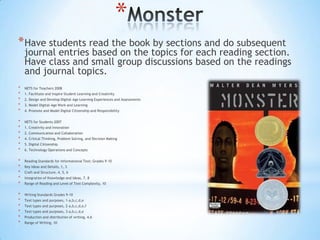
* Have students read the book by sections and do subsequent
    journal entries based on the topics for each reading section.
    Have class and small group discussions based on the readings
    and journal topics.
*   NETS for Teachers 2008
*   1. Facilitate and Inspire Student Learning and Creativity
*   2. Design and Develop Digital-Age Learning Experiences and Assessments
*   3. Model Digital-Age Work and Learning
*   4. Promote and Model Digital Citizenship and Responsibility


*   NETS for Students 2007
*   1. Creativity and Innovation
*   2. Communication and Collaboration
*   4. Critical Thinking, Problem Solving, and Decision Making
*   5. Digital Citizenship
*   6. Technology Operations and Concepts


*   Reading Standards for Informational Text: Grades 9-10
*   Key Ideas and Details, 1, 3
*   Craft and Structure, 4, 5, 6
*   Integration of Knowledge and Ideas, 7, 8
*   Range of Reading and Level of Text Complexity, 10


*   Writing Standards Grades 9-10
*   Text types and purposes, 1-a,b,c,d,e
*   Text types and purposes, 2-a,b,c,d,e,f
*   Text types and purposes, 3-a,b,c,d,e
*   Production and distribution of writing, 4,6
*   Range of Writing, 10
*
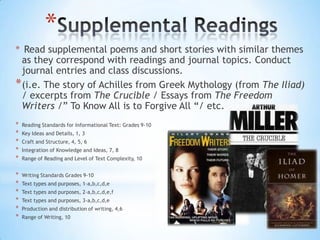
* Read supplemental poems and short stories with similar themes
  as they correspond with readings and journal topics. Conduct
  journal entries and class discussions.
* (i.e. The story of Achilles from Greek Mythology (from The Iliad)
  / excerpts from The Crucible / Essays from The Freedom
  Writers /” To Know All is to Forgive All “/ etc.
*   Reading Standards for Informational Text: Grades 9-10
*   Key Ideas and Details, 1, 3
*   Craft and Structure, 4, 5, 6
*   Integration of Knowledge and Ideas, 7, 8
*   Range of Reading and Level of Text Complexity, 10


*   Writing Standards Grades 9-10
*   Text types and purposes, 1-a,b,c,d,e
*   Text types and purposes, 2-a,b,c,d,e,f
*   Text types and purposes, 3-a,b,c,d,e
*   Production and distribution of writing, 4,6
*   Range of Writing, 10
*
* Students reflect on their original journal entry and have a class discussion based on their
    entries.
*   Break into small groups to further discuss the suggestions for helping overcome negative
    actions due to peer pressure within their school/community .
*   Each group will come up with at least two to three feasible ideas that they actually feel could
    be implemented.
*   Develop a presentation to present to the class using a visual aid with some form of technology
    of their choice: i.e. Prezi, PowerPoint, videos, etc.

*   NETS for Teachers 2008
*   1. Facilitate and Inspire Student Learning and Creativity
*   2. Design and Develop Digital-Age Learning Experiences and Assessments
*   3. Model Digital-Age Work and Learning
*   4. Promote and Model Digital Citizenship and Responsibility


*   NETS for Students 2007
*   1. Creativity and Innovation
*   2. Communication and Collaboration
*   4. Critical Thinking, Problem Solving, and Decision Making
*   5. Digital Citizenship
*   6. Technology Operations and Concepts


*   Writing Standards Grades 9-10
*   Range of Writing, 10
*
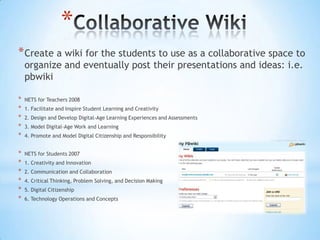
* Create a wiki for the students to use as a collaborative space to
    organize and eventually post their presentations and ideas: i.e.
    pbwiki

*   NETS for Teachers 2008
*   1. Facilitate and Inspire Student Learning and Creativity
*   2. Design and Develop Digital-Age Learning Experiences and Assessments
*   3. Model Digital-Age Work and Learning
*   4. Promote and Model Digital Citizenship and Responsibility


*   NETS for Students 2007
*   1. Creativity and Innovation
*   2. Communication and Collaboration
*   4. Critical Thinking, Problem Solving, and Decision Making
*   5. Digital Citizenship
*   6. Technology Operations and Concepts
*
* After the presentations have students refer to the wiki on their
    own to reflect on all of the presentations and ideas and have
    them write a journal entry on the top two ideas they feel
    could actually be implemented and why they chose those.


*   NETS for Teachers 2008
*   1. Facilitate and Inspire Student Learning and Creativity
*   2. Design and Develop Digital-Age Learning Experiences and Assessments
*   3. Model Digital-Age Work and Learning
*   4. Promote and Model Digital Citizenship and Responsibility


*   NETS for Students 2007
*   1. Creativity and Innovation
*   2. Communication and Collaboration
*   4. Critical Thinking, Problem Solving, and Decision Making
*   5. Digital Citizenship
*   6. Technology Operations and Concepts
*
*   Break the class into groups based on their top selections and have
    them develop an action plan through their wiki for implementing
    their group’s top two ideas based on research, budgeting, etc.
*   NETS for Teachers 2008
*   1. Facilitate and Inspire Student Learning and Creativity
*   2. Design and Develop Digital-Age Learning Experiences and Assessments
*   3. Model Digital-Age Work and Learning
*   4. Promote and Model Digital Citizenship and Responsibility


*   NETS for Students 2007
*   1. Creativity and Innovation
*   2. Communication and Collaboration
*   3. Research and Information Fluency
*   4. Critical Thinking, Problem Solving, and Decision Making
*   5. Digital Citizenship
*   6. Technology Operations and Concepts


*   Writing Standards Grades 9-10
*   Text types and purposes, 1-a,b,c,d,e
*   Text types and purposes, 2-a,b,c,d,e,f
*   Text types and purposes, 3-a,b,c,d,e
*   Production and distribution of writing, 4,6
*   Research to build and present knowledge, 7,8
*   Range of Writing, 10
*
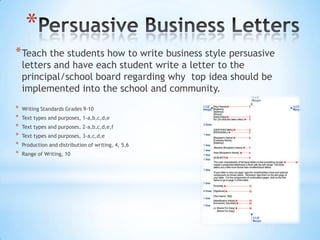
* Teach the students how to write business style persuasive
    letters and have each student write a letter to the
    principal/school board regarding why top idea should be
    implemented into the school and community.
*   Writing Standards Grades 9-10
*   Text types and purposes, 1-a,b,c,d,e
*   Text types and purposes, 2-a,b,c,d,e,f
*   Text types and purposes, 3-a,c,d,e
*   Production and distribution of writing, 4, 5,6
*   Range of Writing, 10
*
* Break students into two groups: guilty and not guilty. Give
    the students a few days to come up with support for “their
    side,” whether or not the main character in Monster is
    guilty or innocent.
* Conduct an organized debate.
*   Writing Standards Grades 9-10
*   Text types and purposes, 1-a,b,c,d,e
*   Text types and purposes, 2-a,b,c,d,e,f
*   Text types and purposes, 3-a,c,d,e
*
* Have the students collaborate to actually act on all ideas that
 were approved by the principal/school board.

Peer Pressure Unit

  • 1.
    * Inspired by Design Thinking Fight Against Peer Pressure
  • 2.
    * * Do youthink peer pressure is a problem in your school or in society in general, why or why not? If so, what are some ideas to overcome students getting into trouble due to negative peer pressure either personally or as a society? * Use livejournal.com or another online journal system; students can make their journals live or private * NETS for Teachers 2008 * 1. Facilitate and Inspire Student Learning and Creativity * 2. Design and Develop Digital-Age Learning Experiences and Assessments * 3. Model Digital-Age Work and Learning * 4. Promote and Model Digital Citizenship and Responsibility * NETS for Students 2007 * 1. Creativity and Innovation * 2. Communication and Collaboration * 4. Critical Thinking, Problem Solving, and Decision Making * 5. Digital Citizenship * 6. Technology Operations and Concepts
  • 3.
    * * Have studentsread the book by sections and do subsequent journal entries based on the topics for each reading section. Have class and small group discussions based on the readings and journal topics. * NETS for Teachers 2008 * 1. Facilitate and Inspire Student Learning and Creativity * 2. Design and Develop Digital-Age Learning Experiences and Assessments * 3. Model Digital-Age Work and Learning * 4. Promote and Model Digital Citizenship and Responsibility * NETS for Students 2007 * 1. Creativity and Innovation * 2. Communication and Collaboration * 4. Critical Thinking, Problem Solving, and Decision Making * 5. Digital Citizenship * 6. Technology Operations and Concepts * Reading Standards for Informational Text: Grades 9-10 * Key Ideas and Details, 1, 3 * Craft and Structure, 4, 5, 6 * Integration of Knowledge and Ideas, 7, 8 * Range of Reading and Level of Text Complexity, 10 * Writing Standards Grades 9-10 * Text types and purposes, 1-a,b,c,d,e * Text types and purposes, 2-a,b,c,d,e,f * Text types and purposes, 3-a,b,c,d,e * Production and distribution of writing, 4,6 * Range of Writing, 10
  • 4.
    * * Read supplementalpoems and short stories with similar themes as they correspond with readings and journal topics. Conduct journal entries and class discussions. * (i.e. The story of Achilles from Greek Mythology (from The Iliad) / excerpts from The Crucible / Essays from The Freedom Writers /” To Know All is to Forgive All “/ etc. * Reading Standards for Informational Text: Grades 9-10 * Key Ideas and Details, 1, 3 * Craft and Structure, 4, 5, 6 * Integration of Knowledge and Ideas, 7, 8 * Range of Reading and Level of Text Complexity, 10 * Writing Standards Grades 9-10 * Text types and purposes, 1-a,b,c,d,e * Text types and purposes, 2-a,b,c,d,e,f * Text types and purposes, 3-a,b,c,d,e * Production and distribution of writing, 4,6 * Range of Writing, 10
  • 5.
    * * Students reflecton their original journal entry and have a class discussion based on their entries. * Break into small groups to further discuss the suggestions for helping overcome negative actions due to peer pressure within their school/community . * Each group will come up with at least two to three feasible ideas that they actually feel could be implemented. * Develop a presentation to present to the class using a visual aid with some form of technology of their choice: i.e. Prezi, PowerPoint, videos, etc. * NETS for Teachers 2008 * 1. Facilitate and Inspire Student Learning and Creativity * 2. Design and Develop Digital-Age Learning Experiences and Assessments * 3. Model Digital-Age Work and Learning * 4. Promote and Model Digital Citizenship and Responsibility * NETS for Students 2007 * 1. Creativity and Innovation * 2. Communication and Collaboration * 4. Critical Thinking, Problem Solving, and Decision Making * 5. Digital Citizenship * 6. Technology Operations and Concepts * Writing Standards Grades 9-10 * Range of Writing, 10
  • 6.
    * * Create awiki for the students to use as a collaborative space to organize and eventually post their presentations and ideas: i.e. pbwiki * NETS for Teachers 2008 * 1. Facilitate and Inspire Student Learning and Creativity * 2. Design and Develop Digital-Age Learning Experiences and Assessments * 3. Model Digital-Age Work and Learning * 4. Promote and Model Digital Citizenship and Responsibility * NETS for Students 2007 * 1. Creativity and Innovation * 2. Communication and Collaboration * 4. Critical Thinking, Problem Solving, and Decision Making * 5. Digital Citizenship * 6. Technology Operations and Concepts
  • 7.
    * * After thepresentations have students refer to the wiki on their own to reflect on all of the presentations and ideas and have them write a journal entry on the top two ideas they feel could actually be implemented and why they chose those. * NETS for Teachers 2008 * 1. Facilitate and Inspire Student Learning and Creativity * 2. Design and Develop Digital-Age Learning Experiences and Assessments * 3. Model Digital-Age Work and Learning * 4. Promote and Model Digital Citizenship and Responsibility * NETS for Students 2007 * 1. Creativity and Innovation * 2. Communication and Collaboration * 4. Critical Thinking, Problem Solving, and Decision Making * 5. Digital Citizenship * 6. Technology Operations and Concepts
  • 8.
    * * Break the class into groups based on their top selections and have them develop an action plan through their wiki for implementing their group’s top two ideas based on research, budgeting, etc. * NETS for Teachers 2008 * 1. Facilitate and Inspire Student Learning and Creativity * 2. Design and Develop Digital-Age Learning Experiences and Assessments * 3. Model Digital-Age Work and Learning * 4. Promote and Model Digital Citizenship and Responsibility * NETS for Students 2007 * 1. Creativity and Innovation * 2. Communication and Collaboration * 3. Research and Information Fluency * 4. Critical Thinking, Problem Solving, and Decision Making * 5. Digital Citizenship * 6. Technology Operations and Concepts * Writing Standards Grades 9-10 * Text types and purposes, 1-a,b,c,d,e * Text types and purposes, 2-a,b,c,d,e,f * Text types and purposes, 3-a,b,c,d,e * Production and distribution of writing, 4,6 * Research to build and present knowledge, 7,8 * Range of Writing, 10
  • 9.
    * * Teach thestudents how to write business style persuasive letters and have each student write a letter to the principal/school board regarding why top idea should be implemented into the school and community. * Writing Standards Grades 9-10 * Text types and purposes, 1-a,b,c,d,e * Text types and purposes, 2-a,b,c,d,e,f * Text types and purposes, 3-a,c,d,e * Production and distribution of writing, 4, 5,6 * Range of Writing, 10
  • 10.
    * * Break studentsinto two groups: guilty and not guilty. Give the students a few days to come up with support for “their side,” whether or not the main character in Monster is guilty or innocent. * Conduct an organized debate. * Writing Standards Grades 9-10 * Text types and purposes, 1-a,b,c,d,e * Text types and purposes, 2-a,b,c,d,e,f * Text types and purposes, 3-a,c,d,e
  • 11.
    * * Have thestudents collaborate to actually act on all ideas that were approved by the principal/school board.