Canterbury School 
Peer Observation and Coaching 
Wednesday, October 23, 13
formal evaluation is... 
• one-way 
• can feel threatening because it 
involves a supervisor 
• backward-looking; focused on 
what has happened 
• targets comprehensive 
classroom practice 
• formally scheduled 
• data becomes part of “the file” 
• focus is on“what I should see” 
• summative 
Wednesday, October 23, 13
peer observation/coaching is... 
• reciprocal 
• between peers and non-threatening 
• forward looking; focused on 
improvement 
• targets specific areas 
• ongoing and informal 
• data shared only between 
teachers for reflective practice 
and self-assessment 
• focus is “what I saw” 
• formative 
Wednesday, October 23, 13
the game plan 
Wednesday, October 23, 13
the perspective 
1. We’re engaging in exploration, not critique. 
We’re teaching together, not monitoring one 
another. We’re equally (if differently) skilled, so 
we learn from one another. 
2. Observations are shared resources; both 
observed and coach should take something 
away from them. 
3.Look for, describe, and discuss the practice 
and its results, not the person. 
4.We share a common language in the 
Canterbury Teachers Tracery. Our emphasis is 
on interacting around evidence of how each 
of us works towards this shared pedagogy. 
5.Peers are co-collaborators. We take turns 
being the coach and the observed. 
Wednesday, October 23, 13
the conversation 
1. Describe first and discuss details later. 
Use data to describe what happened. If the observed teacher initiates further 
discussion, describe observed results of what happened and ask questions that 
prompt a shared understanding of it. 
2. Make your talk specific and concrete. 
Phrase comments so that they are very precise and offer an observed example. 
3. Talk about things that can be changed and 
are worth changing. Use the shared view of good pedagogy from 
the Tracery and focus on best practice as we have defined it.Think big picture 
and ignore the small stuff unless it impacts student learning. Work together to 
formulate a plan of action to impact growth and change. 
4. Comment on observable strengths. Often, 
growth comes from building on our strengths to address areas of challenge. 
5. Check to ensure clear communication and 
use active listening strategies. Paraphrase a lot and and 
seek common language. Incorporate phrases like “I think I hear you saying 
that...” 
6. Interact! Both the teacher and the coach use good interaction skills 
of attending, listening, responding, and acknowledging. 
Wednesday, October 23, 13
communicate 
Allow time to discuss the Canterbury Teachers Tracery and 
ideas about educational theory and pedagogy. Discuss: 
• 
goals for students, 
• 
desired learning outcomes, 
• 
perceived strengths and challenges, 
• 
goals, and ways in which both peers hope the process will 
work. 
Outline the general parameters of the reciprocal observations, 
but also set a focus. Each peer needs to be sure that the coach 
knows what to look for and why that is an area on which s/he 
would like to place emphasis. 
observe 
Remember that the observation is to be 
a way that each coach gathers 
information about the peer and his/her 
classroom. The observing coach should 
sit in an unobtrusive place, but s/he 
should have a good view of everything 
that takes place. Using various methods 
the coach should take descriptive notes 
about observations. Field notes should 
include both descriptions of 'focus" 
events as well as any related 
observations that coaches might wish to 
raise during the follow-up conversations. 
communicate 
The follow-up meeting should be enjoyable and 
constructive. Allow for plenty of two-way input. Each 
coach should be careful not to ask questions that might 
be perceived as thinly veiled criticism. Instead, questions 
should be those that genuinely seek information to help 
the coach clarify observations. Along with "de-briefing" 
from the observation, this conversation should allow for 
collaborative brainstorming regarding ways that future 
practice (and, hence, student learning) might be positively 
impacted. Shared conversations about professional 
development are also great! 
reflect 
Throughout and at the end of the process, 
both peers should reflect on the process, 
their reactions to it, and what they took 
away from the interactions. Consider: 
• 
How will our conversations impact my 
perspective about teaching and learning? 
• 
How might I use my coach's 
observations to improve my professional 
practice? 
• 
What unanswered questions were raised 
about which I would like to do further 
research? 
How can this and other interactions with my 
PLC make me a more engaged practitioner? 
Wednesday, October 23, 13
how does a coach gather information? 
selective 
verbatim anecdotal 
records verbal 
flow 
class traffic 
event 
count 
duration 
time sample 
physical map 
or sketch 
Wednesday, October 23, 13
drive 
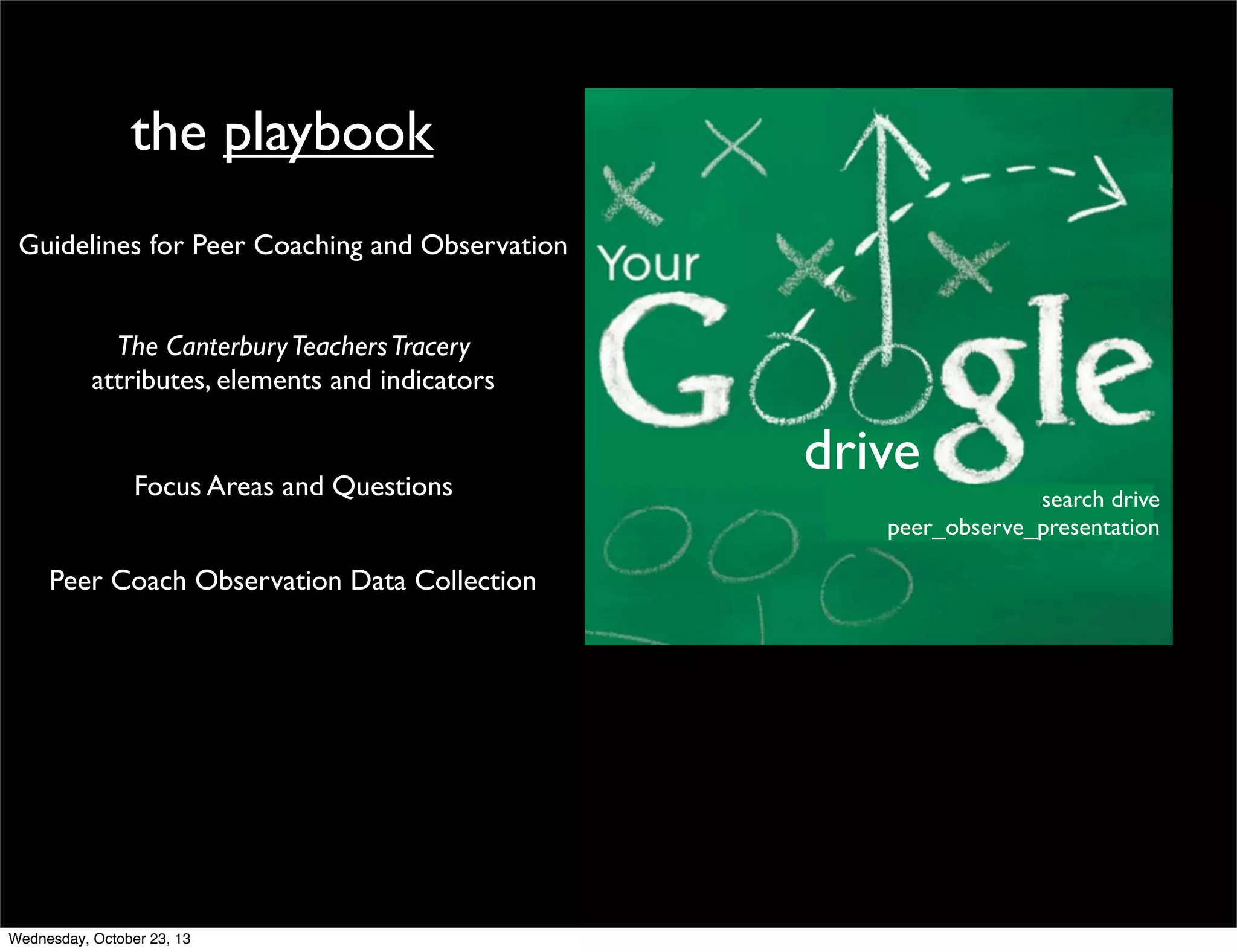
the playbook 
Guidelines for Peer Coaching and Observation 
The Canterbury Teachers Tracery 
attributes, elements and indicators 
Focus Areas and Questions 
Peer Coach Observation Data Collection 
search drive 
peer_observe_presentation 
Wednesday, October 23, 13

Peer Observation & Coaching Presentation

  • 1.
    Canterbury School PeerObservation and Coaching Wednesday, October 23, 13
  • 2.
    formal evaluation is... • one-way • can feel threatening because it involves a supervisor • backward-looking; focused on what has happened • targets comprehensive classroom practice • formally scheduled • data becomes part of “the file” • focus is on“what I should see” • summative Wednesday, October 23, 13
  • 3.
    peer observation/coaching is... • reciprocal • between peers and non-threatening • forward looking; focused on improvement • targets specific areas • ongoing and informal • data shared only between teachers for reflective practice and self-assessment • focus is “what I saw” • formative Wednesday, October 23, 13
  • 4.
    the game plan Wednesday, October 23, 13
  • 5.
    the perspective 1.We’re engaging in exploration, not critique. We’re teaching together, not monitoring one another. We’re equally (if differently) skilled, so we learn from one another. 2. Observations are shared resources; both observed and coach should take something away from them. 3.Look for, describe, and discuss the practice and its results, not the person. 4.We share a common language in the Canterbury Teachers Tracery. Our emphasis is on interacting around evidence of how each of us works towards this shared pedagogy. 5.Peers are co-collaborators. We take turns being the coach and the observed. Wednesday, October 23, 13
  • 6.
    the conversation 1.Describe first and discuss details later. Use data to describe what happened. If the observed teacher initiates further discussion, describe observed results of what happened and ask questions that prompt a shared understanding of it. 2. Make your talk specific and concrete. Phrase comments so that they are very precise and offer an observed example. 3. Talk about things that can be changed and are worth changing. Use the shared view of good pedagogy from the Tracery and focus on best practice as we have defined it.Think big picture and ignore the small stuff unless it impacts student learning. Work together to formulate a plan of action to impact growth and change. 4. Comment on observable strengths. Often, growth comes from building on our strengths to address areas of challenge. 5. Check to ensure clear communication and use active listening strategies. Paraphrase a lot and and seek common language. Incorporate phrases like “I think I hear you saying that...” 6. Interact! Both the teacher and the coach use good interaction skills of attending, listening, responding, and acknowledging. Wednesday, October 23, 13
  • 7.
    communicate Allow timeto discuss the Canterbury Teachers Tracery and ideas about educational theory and pedagogy. Discuss: • goals for students, • desired learning outcomes, • perceived strengths and challenges, • goals, and ways in which both peers hope the process will work. Outline the general parameters of the reciprocal observations, but also set a focus. Each peer needs to be sure that the coach knows what to look for and why that is an area on which s/he would like to place emphasis. observe Remember that the observation is to be a way that each coach gathers information about the peer and his/her classroom. The observing coach should sit in an unobtrusive place, but s/he should have a good view of everything that takes place. Using various methods the coach should take descriptive notes about observations. Field notes should include both descriptions of 'focus" events as well as any related observations that coaches might wish to raise during the follow-up conversations. communicate The follow-up meeting should be enjoyable and constructive. Allow for plenty of two-way input. Each coach should be careful not to ask questions that might be perceived as thinly veiled criticism. Instead, questions should be those that genuinely seek information to help the coach clarify observations. Along with "de-briefing" from the observation, this conversation should allow for collaborative brainstorming regarding ways that future practice (and, hence, student learning) might be positively impacted. Shared conversations about professional development are also great! reflect Throughout and at the end of the process, both peers should reflect on the process, their reactions to it, and what they took away from the interactions. Consider: • How will our conversations impact my perspective about teaching and learning? • How might I use my coach's observations to improve my professional practice? • What unanswered questions were raised about which I would like to do further research? How can this and other interactions with my PLC make me a more engaged practitioner? Wednesday, October 23, 13
  • 8.
    how does acoach gather information? selective verbatim anecdotal records verbal flow class traffic event count duration time sample physical map or sketch Wednesday, October 23, 13
  • 9.
    drive the playbook Guidelines for Peer Coaching and Observation The Canterbury Teachers Tracery attributes, elements and indicators Focus Areas and Questions Peer Coach Observation Data Collection search drive peer_observe_presentation Wednesday, October 23, 13