P R E S E N T E D B Y -
A R P I T S H U K L A ( C H 1 9 5 0 6 )
R I T I K R A W A T ( C H 1 9 5 2 6 )
Estimation of Fat & SNF Content
- By Pearson Method
Standardisation
 Defined as the adjustment of one or more of the milk
constituents to meet the legal requirement or
nominated level.
 In market milk industry, normally involves reducing
the butterfat content by addition of skim milk or
 Through the removal of cream
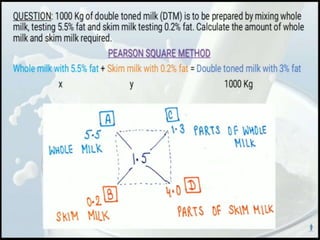
Pearson’s square Method
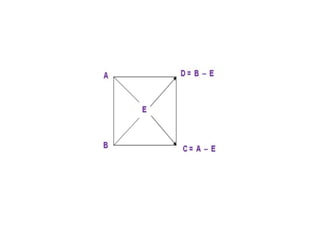
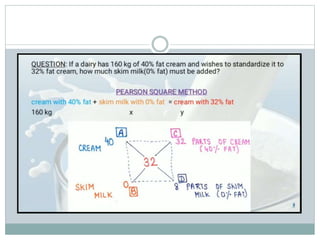
 Draw a square and place in the Centre of it the desired fat percentage.
 Place at the left hand corners of the square, the fat percentage of the
materials
to be mixed.
 Next, subtract the number in the Centre from the larger number at the left
hand side of the square and place the remainder at the diagonally opposite
right hand corners.
 The number on the right hand side now represents the number of parts of
each of the original materials that must be blended to have the desired fat
content in resultant mix
 The number at the upper right corner refers to the parts of material whose
fat test was placed at the upper left corner.
 The number at the lower right corner refers to the parts of material whose
fat test was placed at the lower left corner.
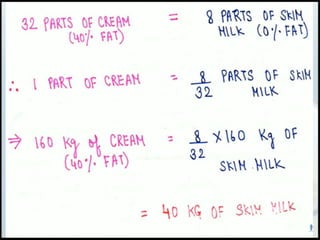
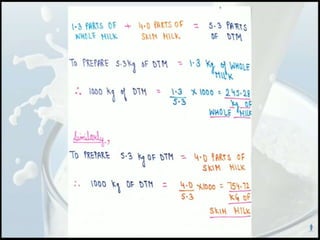
 If the numbers on the right are added, the sum obtained will represent the
parts of the finished product.
Objective
 To comply with legal requirements.
 To provide the consumer with a uniform product.
 Mostly done to have a uniform milk fat content in finished
dairy product.
 To ensure economics in production.• Addition of skim milk
increases the volume of milk available for sale and removal of
cream allows the production of other value added dairy
products such as table cream, butter or other high fat
products.
Done either by-
 Addition of skim milk
 Or removal of cream.
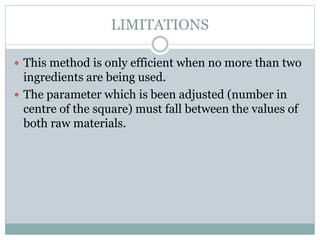
LIMITATIONS
 This method is only efficient when no more than two
ingredients are being used.
 The parameter which is been adjusted (number in
centre of the square) must fall between the values of
both raw materials.
THANK YOU!


pearson method.pptx

  • 1.
    P R ES E N T E D B Y - A R P I T S H U K L A ( C H 1 9 5 0 6 ) R I T I K R A W A T ( C H 1 9 5 2 6 ) Estimation of Fat & SNF Content - By Pearson Method
  • 2.
    Standardisation  Defined asthe adjustment of one or more of the milk constituents to meet the legal requirement or nominated level.  In market milk industry, normally involves reducing the butterfat content by addition of skim milk or  Through the removal of cream
  • 3.
    Pearson’s square Method Draw a square and place in the Centre of it the desired fat percentage.  Place at the left hand corners of the square, the fat percentage of the materials to be mixed.  Next, subtract the number in the Centre from the larger number at the left hand side of the square and place the remainder at the diagonally opposite right hand corners.  The number on the right hand side now represents the number of parts of each of the original materials that must be blended to have the desired fat content in resultant mix  The number at the upper right corner refers to the parts of material whose fat test was placed at the upper left corner.  The number at the lower right corner refers to the parts of material whose fat test was placed at the lower left corner.  If the numbers on the right are added, the sum obtained will represent the parts of the finished product.
  • 5.
    Objective  To complywith legal requirements.  To provide the consumer with a uniform product.  Mostly done to have a uniform milk fat content in finished dairy product.  To ensure economics in production.• Addition of skim milk increases the volume of milk available for sale and removal of cream allows the production of other value added dairy products such as table cream, butter or other high fat products. Done either by-  Addition of skim milk  Or removal of cream.
  • 10.
    LIMITATIONS  This methodis only efficient when no more than two ingredients are being used.  The parameter which is been adjusted (number in centre of the square) must fall between the values of both raw materials.
  • 11.