

With 
Teri Lesesne (rhymes with insane) 
Sam Houston State University 
 1Library  
Department of Science
 @professornana 
 www.slideshare.net/professorn 
ana 
 doctorL@shsu.edu 
 Professornana.livejournal.com 
 LS5385blog.blogspot.com
 
 So, what are the highlights of your reading life? 
 What are the low points? 
 Titles, series, authors, books you recall strongly?
Take a few minutes now to jot down some memories of 
reading from your childhood, school years, adult life. 
We are asking each of you to design your own reading 
autobiography. You may write it as an essay, present it 
in slides, or make timelines. Use Prezi, Power Point, 
Padlet, or any app you like. Or use a pen and paper or 
computer. Be prepared to share this week.
 Ask them to create a reading autobiography 
o Can be written 
o Can use app such as www.whenintime.com 
 Collect them, analyze them for commonalities 
 Identify kids who are already readers and those who are 
not
 12 
14
 Edge time (Donalyn 
Miller) 
 Priority time 
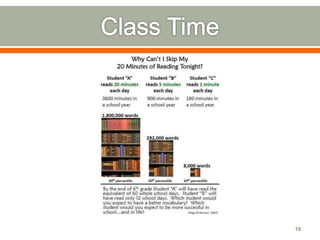
 Class time 
15
 Reading on the fringes 
o Appointments 
o Bathroom books 
o Car 
o Purse or bookbag 
o Phone books 
• eBooks and audiobooks (more later about these) 
16
 Rainy days 
 Mental health days 
 Scheduled days (once a month? 
17
 If it is not a priority for us, how can we expect it 
to be a priority for them? 
 Take a moment to jot down one time you will set 
aside daily (just 5 minutes) to read. 
 Make this commitment real by adding it to your 
calendar. 
18
19
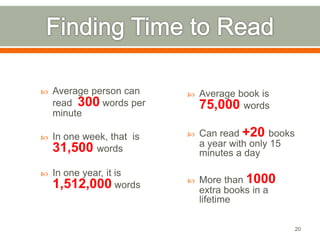
 Average person can 
read 300 words per 
minute 
 In one week, that is 
31,500 words 
 In one year, it is 
1,512,000 words 
 Average book is 
75,000 words 
 Can read +20 books 
a year with only 15 
minutes a day 
 More than 1000 
extra books in a 
lifetime 
20
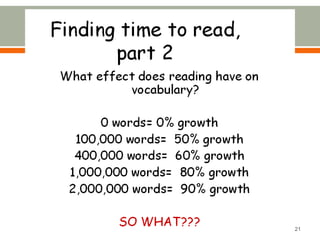
21
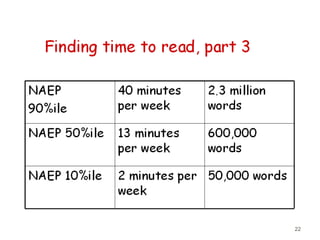
22
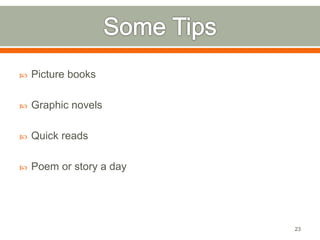
 Picture books 
 Graphic novels 
 Quick reads 
 Poem or story a day 
23
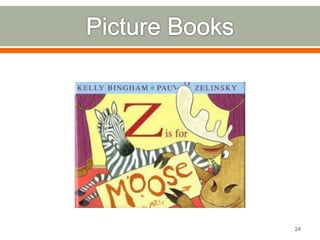
24
25
26
Now, turn to a few people around you 
and see if any of YOUR books are on 
27 
THEIR lists, too.
 
30
31
32
33
34
36
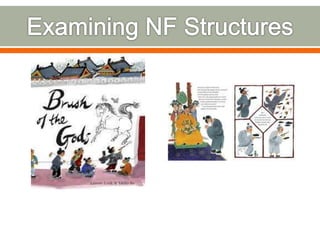
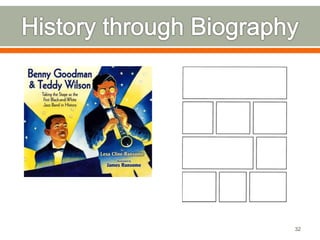
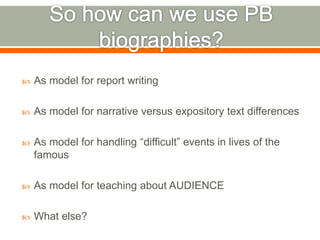
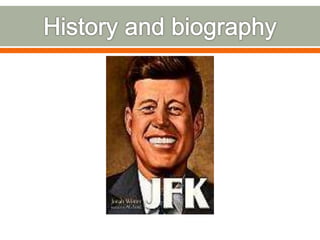
 As model for report writing 
 As model for narrative versus expository text differences 
 As model for handling “difficult” events in lives of the 
famous 
 As model for teaching about AUDIENCE 
 What else?
39
40
41
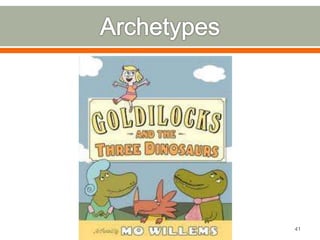
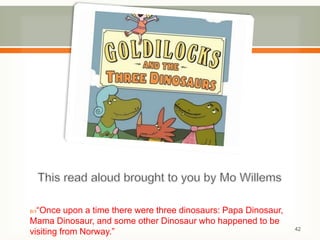
“Once upon a time there were three dinosaurs: Papa Dinosaur, 
Mama Dinosaur, and some other Dinosaur who happened to be 
visiting from Norway.” 42
– 
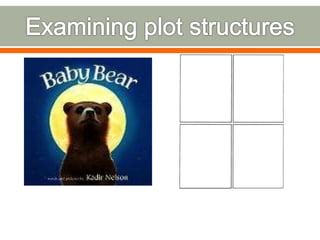
 Setting 
 Main characters 
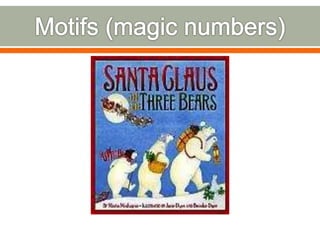
 Motif 
 Archetype 
 And…it’s going to be 
funny! 
Plus it addresses this 
CCSS (anchor standard): 
Write narratives to develop 
real or imagined 
experiences or events 
using effective technique, 
well-chosen details, 
and well-structured event 
sequences 
43
44
45
46
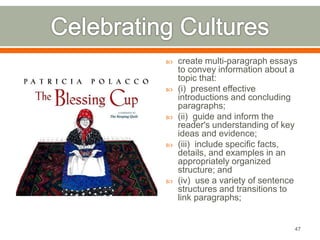
 create multi-paragraph essays 
to convey information about a 
topic that: 
 (i) present effective 
introductions and concluding 
paragraphs; 
 (ii) guide and inform the 
reader's understanding of key 
ideas and evidence; 
 (iii) include specific facts, 
details, and examples in an 
appropriately organized 
structure; and 
 (iv) use a variety of sentence 
structures and transitions to 
link paragraphs; 
47
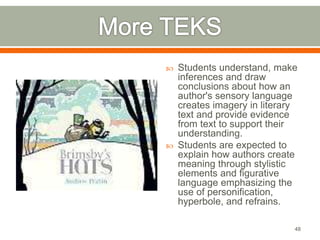
 Students understand, make 
inferences and draw 
conclusions about how an 
author's sensory language 
creates imagery in literary 
text and provide evidence 
from text to support their 
understanding. 
 Students are expected to 
explain how authors create 
meaning through stylistic 
elements and figurative 
language emphasizing the 
use of personification, 
hyperbole, and refrains. 
48
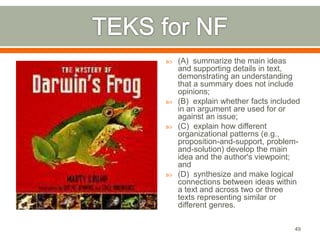
 (A) summarize the main ideas 
and supporting details in text, 
demonstrating an understanding 
that a summary does not include 
opinions; 
 (B) explain whether facts included 
in an argument are used for or 
against an issue; 
 (C) explain how different 
organizational patterns (e.g., 
proposition-and-support, problem-and- 
solution) develop the main 
idea and the author's viewpoint; 
and 
 (D) synthesize and make logical 
connections between ideas within 
a text and across two or three 
texts representing similar or 
different genres. 
49
51
52
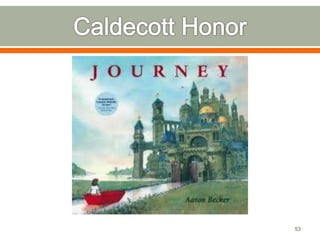
53
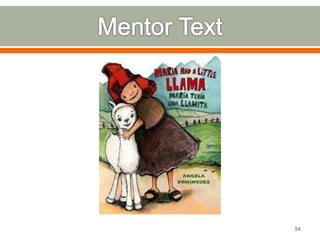
54
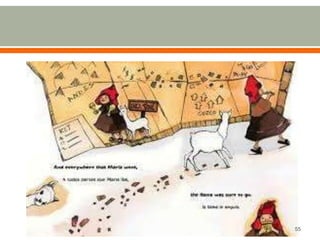
55
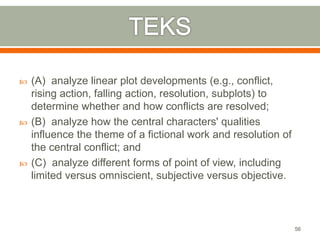
 (A) analyze linear plot developments (e.g., conflict, 
rising action, falling action, resolution, subplots) to 
determine whether and how conflicts are resolved; 
 (B) analyze how the central characters' qualities 
influence the theme of a fictional work and resolution of 
the central conflict; and 
 (C) analyze different forms of point of view, including 
limited versus omniscient, subjective versus objective. 
56
 Average picture book is 32 pages 
 Average picture book can be read aloud in less than 10 
minutes 
 Fluency and prosody are being modeled 
 Readers are being introduced to new words 
(splendiferous)
86
87
88
89
90
91
92
93
94
  
102 
Scaffolding, Visual Literacy, and More
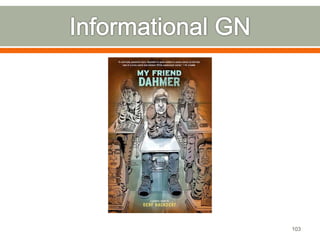
103
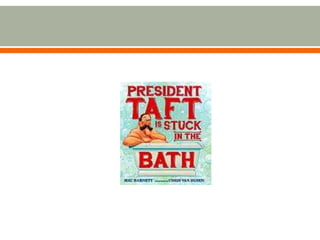
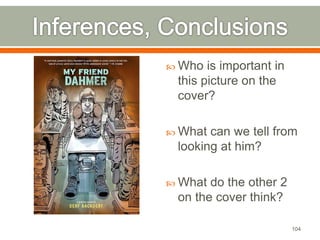
 Who is important in 
this picture on the 
cover? 
 What can we tell from 
looking at him? 
 What do the other 2 
on the cover think? 
104
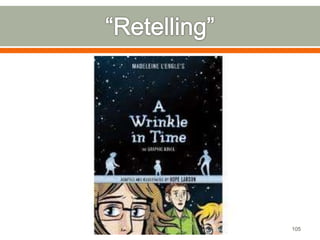
105
106
107
108
109
110
111
112
113
114
115
116
117
118
119
120
121
 Where are they? 
 Where would we like 
them to head next? 
 What is our ultimate 
goal? 
122
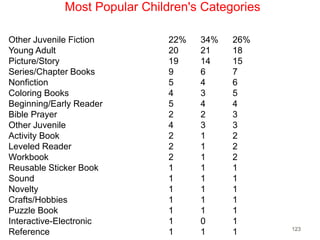
Most Popular Children's Categories 
Other Juvenile Fiction 22% 34% 26% 
Young Adult 20 21 18 
Picture/Story 19 14 15 
Series/Chapter Books 9 6 7 
Nonfiction 5 4 6 
Coloring Books 4 3 5 
Beginning/Early Reader 5 4 4 
Bible Prayer 2 2 3 
Other Juvenile 4 3 3 
Activity Book 2 1 2 
Leveled Reader 2 1 2 
Workbook 2 1 2 
Reusable Sticker Book 1 1 1 
Sound 1 1 1 
Novelty 1 1 1 
Crafts/Hobbies 1 1 1 
Puzzle Book 1 1 1 
Interactive-Electronic 1 0 1 
Reference 1 1 1 123
124
125
What are their favorite authors? 
What are their favorite genres, forms, 
formats? 
What titles are rising to the top? 
126
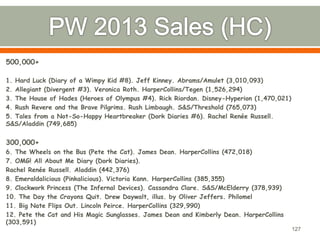
500,000+ 
1. Hard Luck (Diary of a Wimpy Kid #8). Jeff Kinney. Abrams/Amulet (3,010,093) 
2. Allegiant (Divergent #3). Veronica Roth. HarperCollins/Tegen (1,526,294) 
3. The House of Hades (Heroes of Olympus #4). Rick Riordan. Disney-Hyperion (1,470,021) 
4. Rush Revere and the Brave Pilgrims. Rush Limbaugh. S&S/Threshold (765,073) 
5. Tales from a Not-So-Happy Heartbreaker (Dork Diaries #6). Rachel Renée Russell. 
S&S/Aladdin (749,685) 
300,000+ 
6. The Wheels on the Bus (Pete the Cat). James Dean. HarperCollins (472,018) 
7. OMG! All About Me Diary (Dork Diaries). 
Rachel Renée Russell. Aladdin (442,376) 
8. Emeraldalicious (Pinkalicious). Victoria Kann. HarperCollins (385,355) 
9. Clockwork Princess (The Infernal Devices). Cassandra Clare. S&S/McElderry (378,939) 
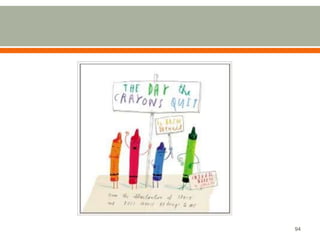
10. The Day the Crayons Quit. Drew Daywalt, illus. by Oliver Jeffers. Philomel 
11. Big Nate Flips Out. Lincoln Peirce. HarperCollins (329,990) 
12. Pete the Cat and His Magic Sunglasses. James Dean and Kimberly Dean. HarperCollins 
(303,591) 
127
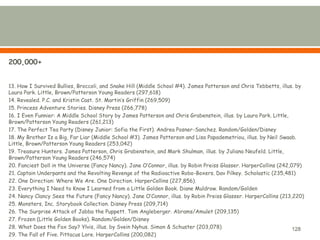
200,000+ 
13. How I Survived Bullies, Broccoli, and Snake Hill (Middle School #4). James Patterson and Chris Tebbetts, illus. by 
Laura Park. Little, Brown/Patterson Young Readers (297,618) 
14. Revealed. P.C. and Kristin Cast. St. Martin’s Griffin (269,509) 
15. Princess Adventure Stories. Disney Press (266,778) 
16. I Even Funnier: A Middle School Story by James Patterson and Chris Grabenstein, illus. by Laura Park. Little, 
Brown/Patterson Young Readers (261,213) 
17. The Perfect Tea Party (Disney Junior: Sofia the First). Andrea Posner-Sanchez. Random/Golden/Disney 
18. My Brother Is a Big, Far Liar (Middle School #3). James Patterson and Lisa Papademetriou, illus. by Neil Swaab. 
Little, Brown/Patterson Young Readers (253,042) 
19. Treasure Hunters. James Patterson, Chris Grabenstein, and Mark Shulman, illus. by Juliana Neufeld. Little, 
Brown/Patterson Young Readers (246,574) 
20. Fanciest Doll in the Universe (Fancy Nancy). Jane O’Connor, illus. by Robin Preiss Glasser. HarperCollins (242,079) 
21. Captain Underpants and the Revolting Revenge of the Radioactive Robo-Boxers. Dav Pilkey. Scholastic (235,481) 
22. One Direction: Where We Are. One Direction. HarperCollins (227,856). 
23. Everything I Need to Know I Learned from a Little Golden Book. Diane Muldrow. Random/Golden 
24. Nancy Clancy Sees the Future (Fancy Nancy). Jane O’Connor, illus. by Robin Preiss Glasser. HarperCollins (213,220) 
25. Monsters, Inc. Storybook Collection. Disney Press (209,714) 
26. The Surprise Attack of Jabba the Puppett. Tom Angleberger. Abrams/Amulet (209,135) 
27. Frozen (Little Golden Books). Random/Golden/Disney 
28. What Does the Fox Say? Ylvis, illus. by Svein Nyhus. Simon & Schuster (203,078) 
128 
29. The Fall of Five. Pittacus Lore. HarperCollins (200,082)
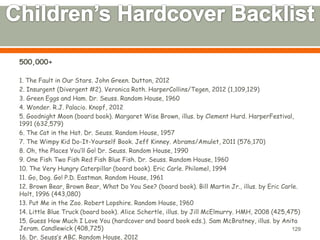
500,000+ 
1. The Fault in Our Stars. John Green. Dutton, 2012 
2. Insurgent (Divergent #2). Veronica Roth. HarperCollins/Tegen, 2012 (1,109,129) 
3. Green Eggs and Ham. Dr. Seuss. Random House, 1960 
4. Wonder. R.J. Palacio. Knopf, 2012 
5. Goodnight Moon (board book). Margaret Wise Brown, illus. by Clement Hurd. HarperFestival, 
1991 (632,579) 
6. The Cat in the Hat. Dr. Seuss. Random House, 1957 
7. The Wimpy Kid Do-It-Yourself Book. Jeff Kinney. Abrams/Amulet, 2011 (576,170) 
8. Oh, the Places You’ll Go! Dr. Seuss. Random House, 1990 
9. One Fish Two Fish Red Fish Blue Fish. Dr. Seuss. Random House, 1960 
10. The Very Hungry Caterpillar (board book). Eric Carle. Philomel, 1994 
11. Go, Dog. Go! P.D. Eastman. Random House, 1961 
12. Brown Bear, Brown Bear, What Do You See? (board book). Bill Martin Jr., illus. by Eric Carle. 
Holt, 1996 (443,080) 
13. Put Me in the Zoo. Robert Lopshire. Random House, 1960 
14. Little Blue Truck (board book). Alice Schertle, illus. by Jill McElmurry. HMH, 2008 (425,475) 
15. Guess How Much I Love You (hardcover and board book eds.). Sam McBratney, illus. by Anita 
Jeram. Candlewick (408,725) 
16. Dr. Seuss’s ABC. Random House, 2012 
129
300,000+ 
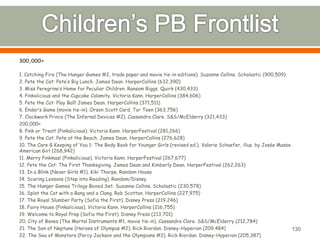
1. Catching Fire (The Hunger Games #2, trade paper and movie tie-in editions). Suzanne Collins. Scholastic (900,509) 
2. Pete the Cat: Pete’s Big Lunch. James Dean. HarperCollins (632,390) 
3. Miss Peregrine’s Home for Peculiar Children. Ransom Riggs. Quirk (430,433) 
4. Pinkalicious and the Cupcake Calamity. Victoria Kann. HarperCollins (384,606) 
5. Pete the Cat: Play Ball! James Dean. HarperCollins (371,511) 
6. Ender’s Game (movie tie-in). Orson Scott Card. Tor Teen (363,756) 
7. Clockwork Prince (The Infernal Devices #2). Cassandra Clare. S&S/McElderry (321,433) 
200,000+ 
8. Pink or Treat! (Pinkalicious). Victoria Kann. HarperFestival (281,266) 
9. Pete the Cat: Pete at the Beach. James Dean. HarperCollins (276,628) 
10. The Care & Keeping of You 1: The Body Book for Younger Girls (revised ed.). Valorie Schaefer, illus. by Josée Masse. 
American Girl (268,942) 
11. Merry Pinkmas! (Pinkalicious). Victoria Kann. HarperFestival (267,677) 
12. Pete the Cat: The First Thanksgiving. James Dean and Kimberly Dean. HarperFestival (262,263) 
13. In a Blink (Never Girls #1). Kiki Thorpe. Random House 
14. Scaring Lessons (Step into Reading). Random/Disney 
15. The Hunger Games Trilogy Boxed Set. Suzanne Collins. Scholastic (230,578) 
16. Splat the Cat with a Bang and a Clang. Rob Scotton. HarperCollins (227,975) 
17. The Royal Slumber Party (Sofia the First). Disney Press (219,246) 
18. Fairy House (Pinkalicious). Victoria Kann. HarperCollins (216,755) 
19. Welcome to Royal Prep (Sofia the First). Disney Press (213,701) 
20. City of Bones (The Mortal Instruments #1, movie tie-in). Cassandra Clare. S&S/McElderry (212,784) 
21. The Son of Neptune (Heroes of Olympus #2). Rick Riordan. Disney-Hyperion (209,484) 
22. The Sea of Monsters (Percy Jackson and the Olympians #2). Rick Riordan. Disney-Hyperion (205,387) 
130
 UP is good, but let’s not forget that they might 
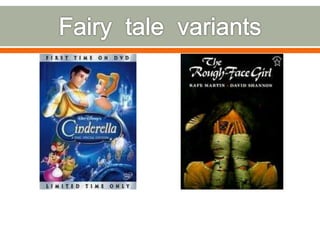
have missed some good books. (fairy tales) 
 Sideways is good, too. Let them read “easy.” 
 DOWN is also okay. Sometimes it is nice to 
have a Calgon moment in reading. 
131
Turn to folks around you and talk 
about what YOUR goal is (or 
maybe will be or could be). 
132
133
134
147
148
149
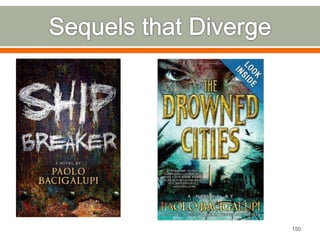
150
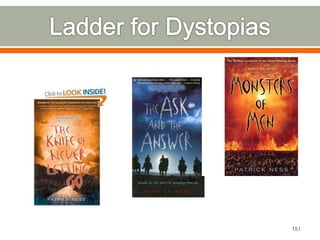
151
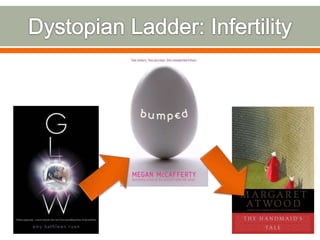
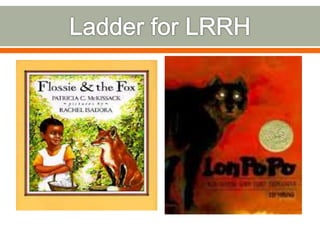
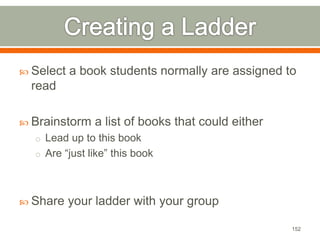
 Select a book students normally are assigned to 
read 
 Brainstorm a list of books that could either 
o Lead up to this book 
o Are “just like” this book 
 Share your ladder with your group 
152
 What do they like? And WHY do they like it? 
 What will move them horizontally? 
 What will push them a bit? 
 What might be a diagonal move? 
153
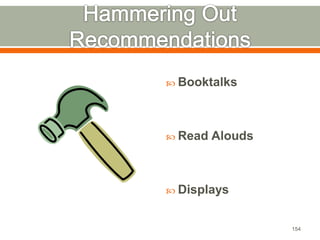
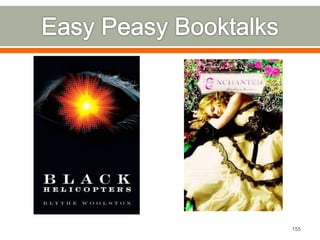
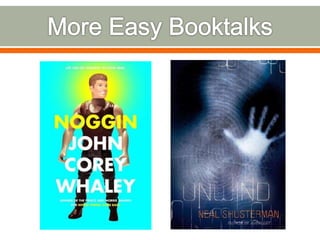
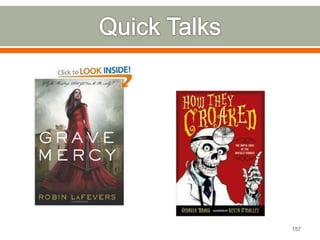
 Booktalks 
 Read Alouds 
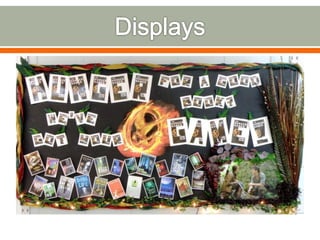
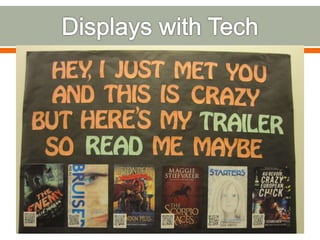
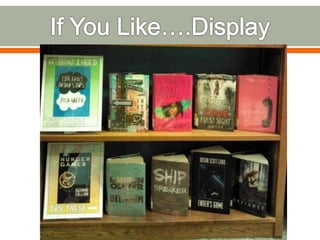
 Displays 
154
155
157
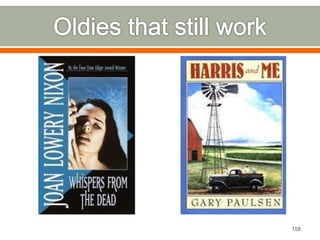
158
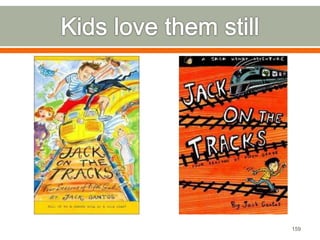
159
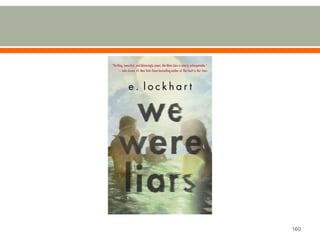
160
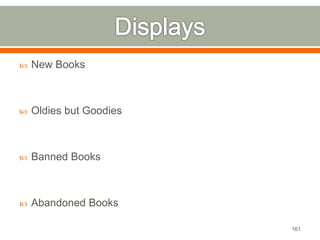
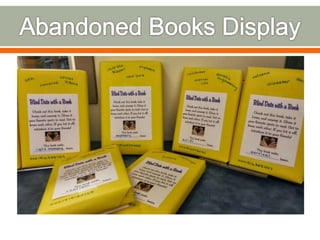
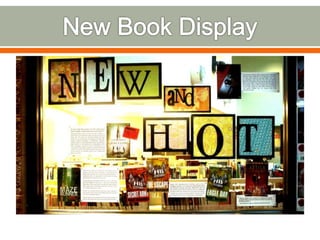
 New Books 
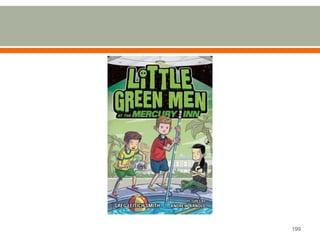
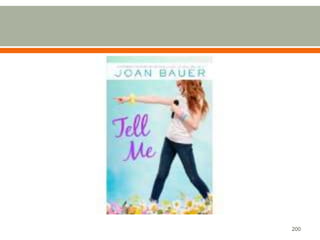
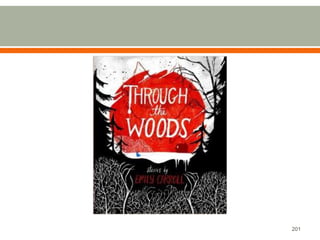
 Oldies but Goodies 
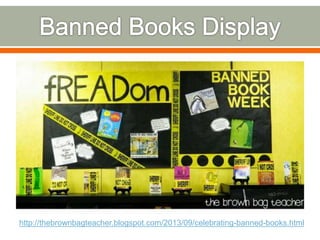
 Banned Books 
 Abandoned Books 
161
http://thebrownbagteacher.blogspot.com/2013/09/celebrating-banned-books.html
 NOVEMBER 
 DECEMBER 
 JANUARY 
 FEBRUARY 
 MARCH 
168
 Mind the Gap 
 Crossing bridges 
 Challenging comfort 
zones 
169
 What HOLES are in your reading range? 
 What will you do to address them? 
 How can you help kids do the same? 
 Identify ONE genre, form, format you will read in the next 
60 days. 
170
 Titletalk 
o Last Sunday of the month from 7-8 pm Central Time 
o Hosted by @donalynbooks and @colbysharp 
o Talk is archived as well 
 Centurions of 2014 
o Resolved to read 114 books in 2013 
 Nerdbery Challenge 
 Caldecott Challenge 
171
 It is important to read a wide variety of literature in order 
to recommend books to all your readers. 
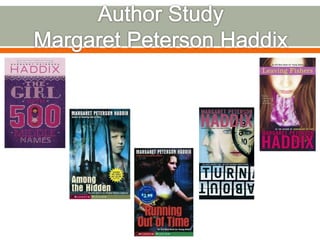
 Check your favorite authors to see if they’ve written other 
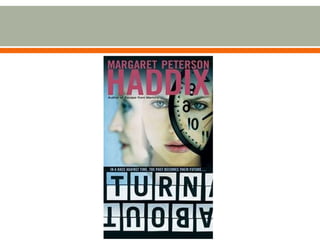
genres. ex. Margaret Peterson Haddix, Avi, Richard 
Peck, etc. 
 Set a goal. Read one new genre for five of your usual 
books. 
 Take reading suggestions from your students. Make a 
point to go talk to them after you’ve finished their 
recommendation.
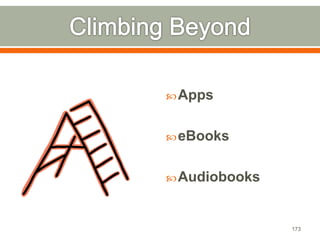
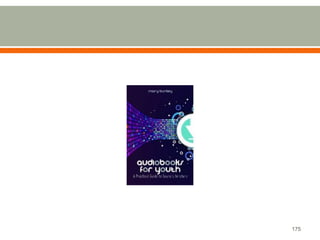
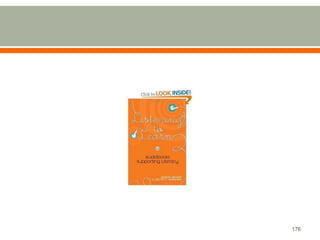
Apps 
eBooks 
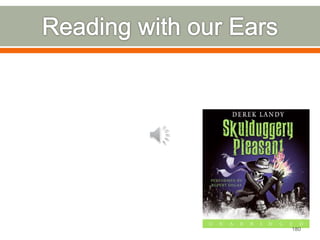
Audiobooks 
173
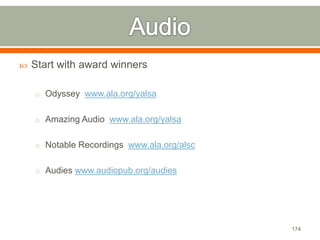
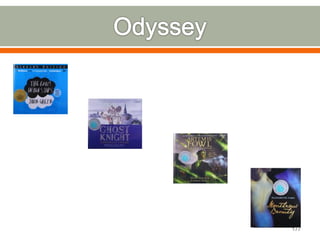
 Start with award winners 
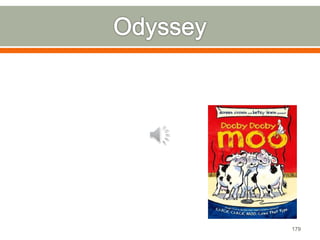
o Odyssey www.ala.org/yalsa 
o Amazing Audio www.ala.org/yalsa 
o Notable Recordings www.ala.org/alsc 
o Audies www.audiopub.org/audies 
174
175
176
177
178
179
180
 New books 
 Old books 
181
 Divergent Survey 
1. Ad 
2. Amazon 
3. Browsing 
4. Friend 
5. Goodreads 
6. Librarian 
7. Teacher 
8. Trailer 
 See if you can rank 
order these 8 as kids 
did. And then rank 
order them as YOU 
would find them useful. 
182
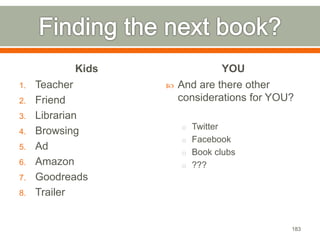
Kids 
1. Teacher 
2. Friend 
3. Librarian 
4. Browsing 
5. Ad 
6. Amazon 
7. Goodreads 
8. Trailer 
YOU 
 And are there other 
considerations for YOU? 
o Twitter 
o Facebook 
o Book clubs 
o ??? 
183
184
185
186
187
188
189
190
191
192
193
197
198
199
200
201
  
202 
Dust off some neglected books
206
207
208
209
210
211
212
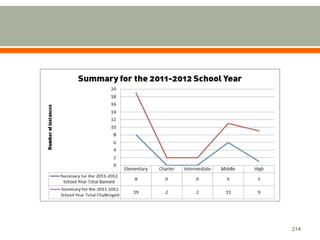
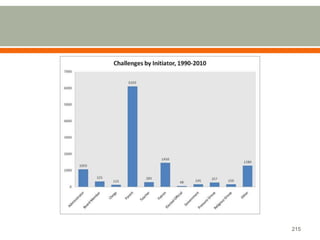
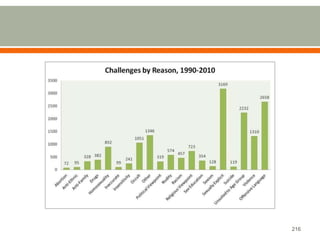
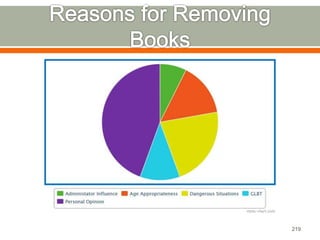
 Fighting censorship 
213
214
215
216
217
218
219
 Resources 
 Recommendations 
220
221
222
223
224
225
226
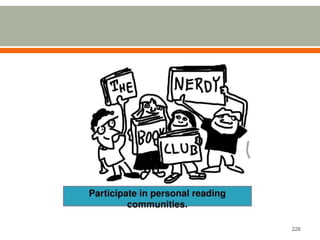
 1. Someone with the heart of a reader is already a reader, enjoys reading, 
and turns to reading on a regular basis as an activity they prefer. 
2. Someone with the heart of a reader does not need extrinsic motivation. 
No points, pizza, or other incentives are needed. 
3. Someone with the heart of a reader tends to have friends who have 
reader hearts, too. They enjoy taking about books they have read, 
comparing notes. 
4. Someone with the heart of a reader reads up and down and sideways. 
Sometimes they turn to books that are easy reads, and occasionally they 
challenge themselves, too. While they have comfort books, they read 
widely as well. 
5. Someone with the heart of a reader recognizes that books entertain, 
inform, provoke, and touch them deep in those hearts. They know books 
can elicit laughter, tears, rage, and the full range of emotions. 
227
228
229
230
231
232
233
234
235
236
237
238
239
240
241

Pearland I S D 2014

  • 1.
    With Teri Lesesne(rhymes with insane) Sam Houston State University  1Library  Department of Science
  • 2.
     @professornana www.slideshare.net/professorn ana  doctorL@shsu.edu  Professornana.livejournal.com  LS5385blog.blogspot.com
  • 3.
  • 9.
     So, whatare the highlights of your reading life?  What are the low points?  Titles, series, authors, books you recall strongly?
  • 10.
    Take a fewminutes now to jot down some memories of reading from your childhood, school years, adult life. We are asking each of you to design your own reading autobiography. You may write it as an essay, present it in slides, or make timelines. Use Prezi, Power Point, Padlet, or any app you like. Or use a pen and paper or computer. Be prepared to share this week.
  • 11.
     Ask themto create a reading autobiography o Can be written o Can use app such as www.whenintime.com  Collect them, analyze them for commonalities  Identify kids who are already readers and those who are not
  • 12.
  • 14.
  • 15.
     Edge time(Donalyn Miller)  Priority time  Class time 15
  • 16.
     Reading onthe fringes o Appointments o Bathroom books o Car o Purse or bookbag o Phone books • eBooks and audiobooks (more later about these) 16
  • 17.
     Rainy days  Mental health days  Scheduled days (once a month? 17
  • 18.
     If itis not a priority for us, how can we expect it to be a priority for them?  Take a moment to jot down one time you will set aside daily (just 5 minutes) to read.  Make this commitment real by adding it to your calendar. 18
  • 19.
  • 20.
     Average personcan read 300 words per minute  In one week, that is 31,500 words  In one year, it is 1,512,000 words  Average book is 75,000 words  Can read +20 books a year with only 15 minutes a day  More than 1000 extra books in a lifetime 20
  • 21.
  • 22.
  • 23.
     Picture books  Graphic novels  Quick reads  Poem or story a day 23
  • 24.
  • 25.
  • 26.
  • 27.
    Now, turn toa few people around you and see if any of YOUR books are on 27 THEIR lists, too.
  • 28.
  • 30.
  • 31.
  • 32.
  • 33.
  • 34.
  • 36.
  • 37.
     As modelfor report writing  As model for narrative versus expository text differences  As model for handling “difficult” events in lives of the famous  As model for teaching about AUDIENCE  What else?
  • 39.
  • 40.
  • 41.
  • 42.
    “Once upon atime there were three dinosaurs: Papa Dinosaur, Mama Dinosaur, and some other Dinosaur who happened to be visiting from Norway.” 42
  • 43.
    –  Setting  Main characters  Motif  Archetype  And…it’s going to be funny! Plus it addresses this CCSS (anchor standard): Write narratives to develop real or imagined experiences or events using effective technique, well-chosen details, and well-structured event sequences 43
  • 44.
  • 45.
  • 46.
  • 47.
     create multi-paragraphessays to convey information about a topic that:  (i) present effective introductions and concluding paragraphs;  (ii) guide and inform the reader's understanding of key ideas and evidence;  (iii) include specific facts, details, and examples in an appropriately organized structure; and  (iv) use a variety of sentence structures and transitions to link paragraphs; 47
  • 48.
     Students understand,make inferences and draw conclusions about how an author's sensory language creates imagery in literary text and provide evidence from text to support their understanding.  Students are expected to explain how authors create meaning through stylistic elements and figurative language emphasizing the use of personification, hyperbole, and refrains. 48
  • 49.
     (A) summarizethe main ideas and supporting details in text, demonstrating an understanding that a summary does not include opinions;  (B) explain whether facts included in an argument are used for or against an issue;  (C) explain how different organizational patterns (e.g., proposition-and-support, problem-and- solution) develop the main idea and the author's viewpoint; and  (D) synthesize and make logical connections between ideas within a text and across two or three texts representing similar or different genres. 49
  • 51.
  • 52.
  • 53.
  • 54.
  • 55.
  • 56.
     (A) analyzelinear plot developments (e.g., conflict, rising action, falling action, resolution, subplots) to determine whether and how conflicts are resolved;  (B) analyze how the central characters' qualities influence the theme of a fictional work and resolution of the central conflict; and  (C) analyze different forms of point of view, including limited versus omniscient, subjective versus objective. 56
  • 76.
     Average picturebook is 32 pages  Average picture book can be read aloud in less than 10 minutes  Fluency and prosody are being modeled  Readers are being introduced to new words (splendiferous)
  • 86.
  • 87.
  • 88.
  • 89.
  • 90.
  • 91.
  • 92.
  • 93.
  • 94.
  • 102.
      102 Scaffolding, Visual Literacy, and More
  • 103.
  • 104.
     Who isimportant in this picture on the cover?  What can we tell from looking at him?  What do the other 2 on the cover think? 104
  • 105.
  • 106.
  • 107.
  • 108.
  • 109.
  • 110.
  • 111.
  • 112.
  • 113.
  • 114.
  • 115.
  • 116.
  • 117.
  • 118.
  • 119.
  • 120.
  • 121.
  • 122.
     Where arethey?  Where would we like them to head next?  What is our ultimate goal? 122
  • 123.
    Most Popular Children'sCategories Other Juvenile Fiction 22% 34% 26% Young Adult 20 21 18 Picture/Story 19 14 15 Series/Chapter Books 9 6 7 Nonfiction 5 4 6 Coloring Books 4 3 5 Beginning/Early Reader 5 4 4 Bible Prayer 2 2 3 Other Juvenile 4 3 3 Activity Book 2 1 2 Leveled Reader 2 1 2 Workbook 2 1 2 Reusable Sticker Book 1 1 1 Sound 1 1 1 Novelty 1 1 1 Crafts/Hobbies 1 1 1 Puzzle Book 1 1 1 Interactive-Electronic 1 0 1 Reference 1 1 1 123
  • 124.
  • 125.
  • 126.
    What are theirfavorite authors? What are their favorite genres, forms, formats? What titles are rising to the top? 126
  • 127.
    500,000+ 1. HardLuck (Diary of a Wimpy Kid #8). Jeff Kinney. Abrams/Amulet (3,010,093) 2. Allegiant (Divergent #3). Veronica Roth. HarperCollins/Tegen (1,526,294) 3. The House of Hades (Heroes of Olympus #4). Rick Riordan. Disney-Hyperion (1,470,021) 4. Rush Revere and the Brave Pilgrims. Rush Limbaugh. S&S/Threshold (765,073) 5. Tales from a Not-So-Happy Heartbreaker (Dork Diaries #6). Rachel Renée Russell. S&S/Aladdin (749,685) 300,000+ 6. The Wheels on the Bus (Pete the Cat). James Dean. HarperCollins (472,018) 7. OMG! All About Me Diary (Dork Diaries). Rachel Renée Russell. Aladdin (442,376) 8. Emeraldalicious (Pinkalicious). Victoria Kann. HarperCollins (385,355) 9. Clockwork Princess (The Infernal Devices). Cassandra Clare. S&S/McElderry (378,939) 10. The Day the Crayons Quit. Drew Daywalt, illus. by Oliver Jeffers. Philomel 11. Big Nate Flips Out. Lincoln Peirce. HarperCollins (329,990) 12. Pete the Cat and His Magic Sunglasses. James Dean and Kimberly Dean. HarperCollins (303,591) 127
  • 128.
    200,000+ 13. HowI Survived Bullies, Broccoli, and Snake Hill (Middle School #4). James Patterson and Chris Tebbetts, illus. by Laura Park. Little, Brown/Patterson Young Readers (297,618) 14. Revealed. P.C. and Kristin Cast. St. Martin’s Griffin (269,509) 15. Princess Adventure Stories. Disney Press (266,778) 16. I Even Funnier: A Middle School Story by James Patterson and Chris Grabenstein, illus. by Laura Park. Little, Brown/Patterson Young Readers (261,213) 17. The Perfect Tea Party (Disney Junior: Sofia the First). Andrea Posner-Sanchez. Random/Golden/Disney 18. My Brother Is a Big, Far Liar (Middle School #3). James Patterson and Lisa Papademetriou, illus. by Neil Swaab. Little, Brown/Patterson Young Readers (253,042) 19. Treasure Hunters. James Patterson, Chris Grabenstein, and Mark Shulman, illus. by Juliana Neufeld. Little, Brown/Patterson Young Readers (246,574) 20. Fanciest Doll in the Universe (Fancy Nancy). Jane O’Connor, illus. by Robin Preiss Glasser. HarperCollins (242,079) 21. Captain Underpants and the Revolting Revenge of the Radioactive Robo-Boxers. Dav Pilkey. Scholastic (235,481) 22. One Direction: Where We Are. One Direction. HarperCollins (227,856). 23. Everything I Need to Know I Learned from a Little Golden Book. Diane Muldrow. Random/Golden 24. Nancy Clancy Sees the Future (Fancy Nancy). Jane O’Connor, illus. by Robin Preiss Glasser. HarperCollins (213,220) 25. Monsters, Inc. Storybook Collection. Disney Press (209,714) 26. The Surprise Attack of Jabba the Puppett. Tom Angleberger. Abrams/Amulet (209,135) 27. Frozen (Little Golden Books). Random/Golden/Disney 28. What Does the Fox Say? Ylvis, illus. by Svein Nyhus. Simon & Schuster (203,078) 128 29. The Fall of Five. Pittacus Lore. HarperCollins (200,082)
  • 129.
    500,000+ 1. TheFault in Our Stars. John Green. Dutton, 2012 2. Insurgent (Divergent #2). Veronica Roth. HarperCollins/Tegen, 2012 (1,109,129) 3. Green Eggs and Ham. Dr. Seuss. Random House, 1960 4. Wonder. R.J. Palacio. Knopf, 2012 5. Goodnight Moon (board book). Margaret Wise Brown, illus. by Clement Hurd. HarperFestival, 1991 (632,579) 6. The Cat in the Hat. Dr. Seuss. Random House, 1957 7. The Wimpy Kid Do-It-Yourself Book. Jeff Kinney. Abrams/Amulet, 2011 (576,170) 8. Oh, the Places You’ll Go! Dr. Seuss. Random House, 1990 9. One Fish Two Fish Red Fish Blue Fish. Dr. Seuss. Random House, 1960 10. The Very Hungry Caterpillar (board book). Eric Carle. Philomel, 1994 11. Go, Dog. Go! P.D. Eastman. Random House, 1961 12. Brown Bear, Brown Bear, What Do You See? (board book). Bill Martin Jr., illus. by Eric Carle. Holt, 1996 (443,080) 13. Put Me in the Zoo. Robert Lopshire. Random House, 1960 14. Little Blue Truck (board book). Alice Schertle, illus. by Jill McElmurry. HMH, 2008 (425,475) 15. Guess How Much I Love You (hardcover and board book eds.). Sam McBratney, illus. by Anita Jeram. Candlewick (408,725) 16. Dr. Seuss’s ABC. Random House, 2012 129
  • 130.
    300,000+ 1. CatchingFire (The Hunger Games #2, trade paper and movie tie-in editions). Suzanne Collins. Scholastic (900,509) 2. Pete the Cat: Pete’s Big Lunch. James Dean. HarperCollins (632,390) 3. Miss Peregrine’s Home for Peculiar Children. Ransom Riggs. Quirk (430,433) 4. Pinkalicious and the Cupcake Calamity. Victoria Kann. HarperCollins (384,606) 5. Pete the Cat: Play Ball! James Dean. HarperCollins (371,511) 6. Ender’s Game (movie tie-in). Orson Scott Card. Tor Teen (363,756) 7. Clockwork Prince (The Infernal Devices #2). Cassandra Clare. S&S/McElderry (321,433) 200,000+ 8. Pink or Treat! (Pinkalicious). Victoria Kann. HarperFestival (281,266) 9. Pete the Cat: Pete at the Beach. James Dean. HarperCollins (276,628) 10. The Care & Keeping of You 1: The Body Book for Younger Girls (revised ed.). Valorie Schaefer, illus. by Josée Masse. American Girl (268,942) 11. Merry Pinkmas! (Pinkalicious). Victoria Kann. HarperFestival (267,677) 12. Pete the Cat: The First Thanksgiving. James Dean and Kimberly Dean. HarperFestival (262,263) 13. In a Blink (Never Girls #1). Kiki Thorpe. Random House 14. Scaring Lessons (Step into Reading). Random/Disney 15. The Hunger Games Trilogy Boxed Set. Suzanne Collins. Scholastic (230,578) 16. Splat the Cat with a Bang and a Clang. Rob Scotton. HarperCollins (227,975) 17. The Royal Slumber Party (Sofia the First). Disney Press (219,246) 18. Fairy House (Pinkalicious). Victoria Kann. HarperCollins (216,755) 19. Welcome to Royal Prep (Sofia the First). Disney Press (213,701) 20. City of Bones (The Mortal Instruments #1, movie tie-in). Cassandra Clare. S&S/McElderry (212,784) 21. The Son of Neptune (Heroes of Olympus #2). Rick Riordan. Disney-Hyperion (209,484) 22. The Sea of Monsters (Percy Jackson and the Olympians #2). Rick Riordan. Disney-Hyperion (205,387) 130
  • 131.
     UP isgood, but let’s not forget that they might have missed some good books. (fairy tales)  Sideways is good, too. Let them read “easy.”  DOWN is also okay. Sometimes it is nice to have a Calgon moment in reading. 131
  • 132.
    Turn to folksaround you and talk about what YOUR goal is (or maybe will be or could be). 132
  • 133.
  • 134.
  • 147.
  • 148.
  • 149.
  • 150.
  • 151.
  • 152.
     Select abook students normally are assigned to read  Brainstorm a list of books that could either o Lead up to this book o Are “just like” this book  Share your ladder with your group 152
  • 153.
     What dothey like? And WHY do they like it?  What will move them horizontally?  What will push them a bit?  What might be a diagonal move? 153
  • 154.
     Booktalks Read Alouds  Displays 154
  • 155.
  • 157.
  • 158.
  • 159.
  • 160.
  • 161.
     New Books  Oldies but Goodies  Banned Books  Abandoned Books 161
  • 165.
  • 168.
     NOVEMBER DECEMBER  JANUARY  FEBRUARY  MARCH 168
  • 169.
     Mind theGap  Crossing bridges  Challenging comfort zones 169
  • 170.
     What HOLESare in your reading range?  What will you do to address them?  How can you help kids do the same?  Identify ONE genre, form, format you will read in the next 60 days. 170
  • 171.
     Titletalk oLast Sunday of the month from 7-8 pm Central Time o Hosted by @donalynbooks and @colbysharp o Talk is archived as well  Centurions of 2014 o Resolved to read 114 books in 2013  Nerdbery Challenge  Caldecott Challenge 171
  • 172.
     It isimportant to read a wide variety of literature in order to recommend books to all your readers.  Check your favorite authors to see if they’ve written other genres. ex. Margaret Peterson Haddix, Avi, Richard Peck, etc.  Set a goal. Read one new genre for five of your usual books.  Take reading suggestions from your students. Make a point to go talk to them after you’ve finished their recommendation.
  • 173.
  • 174.
     Start withaward winners o Odyssey www.ala.org/yalsa o Amazing Audio www.ala.org/yalsa o Notable Recordings www.ala.org/alsc o Audies www.audiopub.org/audies 174
  • 175.
  • 176.
  • 177.
  • 178.
  • 179.
  • 180.
  • 181.
     New books  Old books 181
  • 182.
     Divergent Survey 1. Ad 2. Amazon 3. Browsing 4. Friend 5. Goodreads 6. Librarian 7. Teacher 8. Trailer  See if you can rank order these 8 as kids did. And then rank order them as YOU would find them useful. 182
  • 183.
    Kids 1. Teacher 2. Friend 3. Librarian 4. Browsing 5. Ad 6. Amazon 7. Goodreads 8. Trailer YOU  And are there other considerations for YOU? o Twitter o Facebook o Book clubs o ??? 183
  • 184.
  • 185.
  • 186.
  • 187.
  • 188.
  • 189.
  • 190.
  • 191.
  • 192.
  • 193.
  • 197.
  • 198.
  • 199.
  • 200.
  • 201.
  • 202.
      202 Dust off some neglected books
  • 206.
  • 207.
  • 208.
  • 209.
  • 210.
  • 211.
  • 212.
  • 213.
  • 214.
  • 215.
  • 216.
  • 217.
  • 218.
  • 219.
  • 220.
     Resources Recommendations 220
  • 221.
  • 222.
  • 223.
  • 224.
  • 225.
  • 226.
  • 227.
     1. Someonewith the heart of a reader is already a reader, enjoys reading, and turns to reading on a regular basis as an activity they prefer. 2. Someone with the heart of a reader does not need extrinsic motivation. No points, pizza, or other incentives are needed. 3. Someone with the heart of a reader tends to have friends who have reader hearts, too. They enjoy taking about books they have read, comparing notes. 4. Someone with the heart of a reader reads up and down and sideways. Sometimes they turn to books that are easy reads, and occasionally they challenge themselves, too. While they have comfort books, they read widely as well. 5. Someone with the heart of a reader recognizes that books entertain, inform, provoke, and touch them deep in those hearts. They know books can elicit laughter, tears, rage, and the full range of emotions. 227
  • 228.
  • 229.
  • 230.
  • 231.
  • 232.
  • 233.
  • 234.
  • 235.
  • 236.
  • 237.
  • 238.
  • 239.
  • 240.
  • 241.