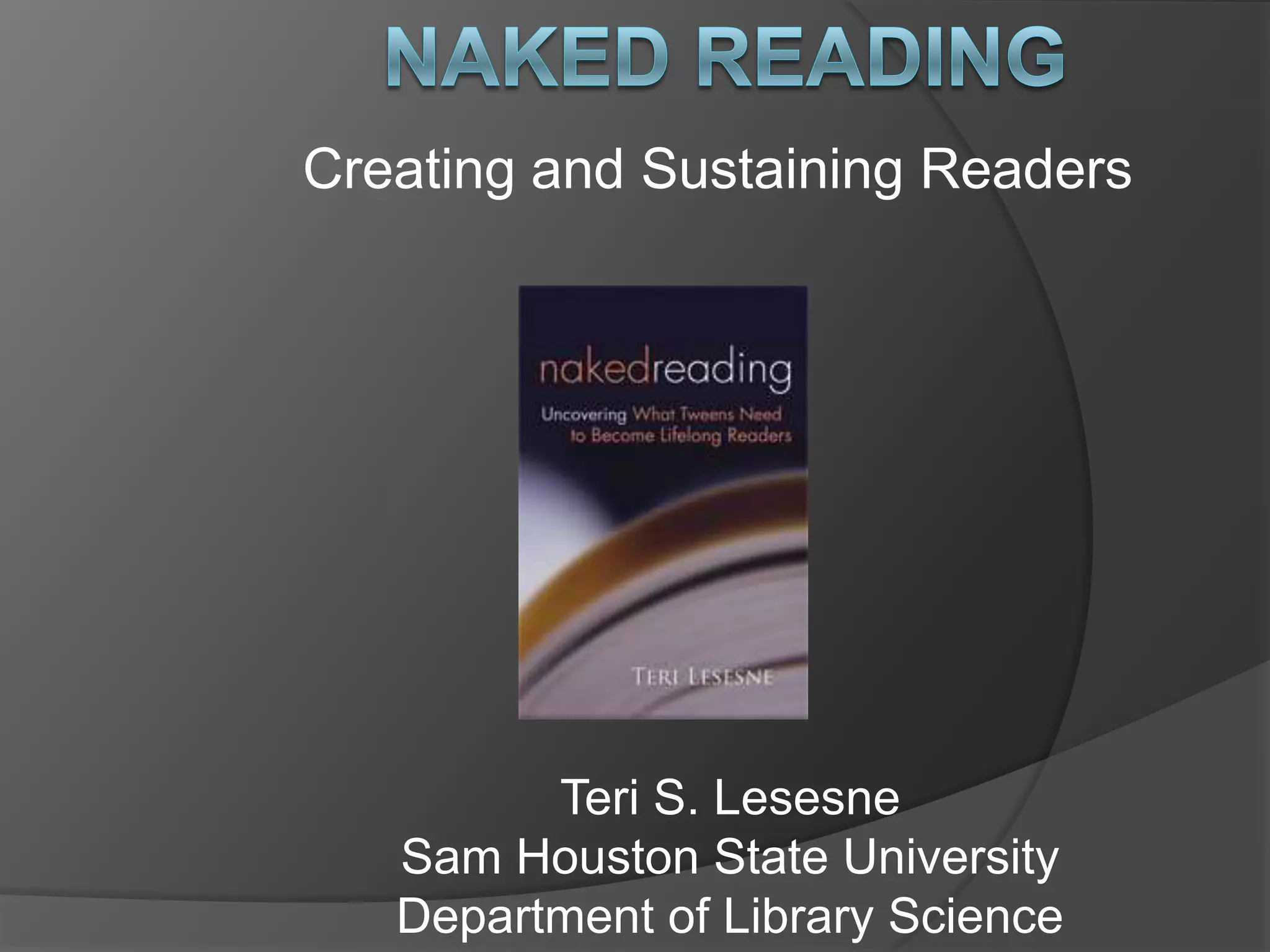

















Creating and Sustaining Readers


         Teri S. Lesesne
   Sam Houston State University
   Department of Library Science
Here is the real problem…

 People are so desperate to raise test
 scores that we could well end up with a
nation full of kids who can pass tests but
 can neither read critically nor enjoy the
            act of reading itself.

           P. David Pearson
            February 2003
Some Important Notes
   Twitter
     @professornana


   Email
     terilesesne@gmail.com


   YAPP
     http://my.yapp.us/CA8H6B
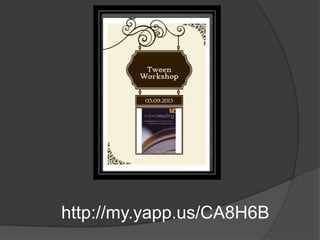
http://my.yapp.us/CA8H6B
Why Naked Reading?
   A naked child

   A drive with an author

   Some great research findings

   A late night inspiration
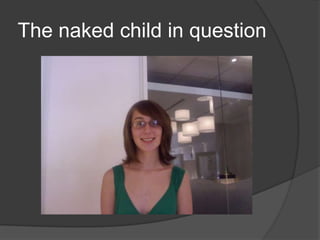
The naked child in question
A drive with an author
The research?

   Vickey Giles, 2006

   Karen Sue Gibson, 2003

   Replicating Livaudais, 1982
The questions?
   What could someone do BEFORE you
    read to make you WANT/HATE to read?


   What could someone do AFTER you
    read to make you WANT/HATE to read?
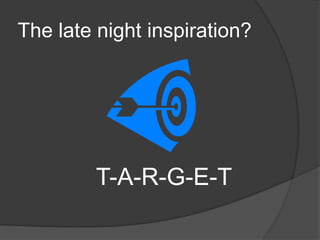
The late night inspiration?


         T-A-R-G-E-T
T-A-R-G-E-T
   TRUST

   ACCESS

   RESPONSE

   GUIDANCE

   ENTHUSIASM

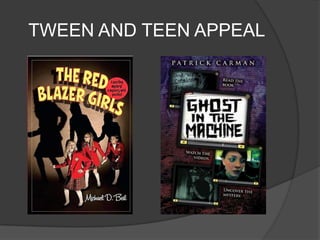
   TWEEN AND TEEN APPEAL
Starting with the Basics
•   a happy memory from when you were 10 years old
•   a sad memory from when you were 11 years old
•an embarrassing memory from when you were 12
years old
•   a great memory from when you were 13 years old
•a “traumatic” memory from when you were 14 years
old
How different were your memories
from the person next to you? They
may have been very different or
there may have been some
similarities.
Defining Tweens

   Tweens is a fluid definition  meaning
    that different cognitive, emotional, and
    social developments happen at different
    rates in different adolescents. Some 10
    year olds may have begun physically
    developing while others may not see
    these changes until they are 13.


                                     Anderson, 2007
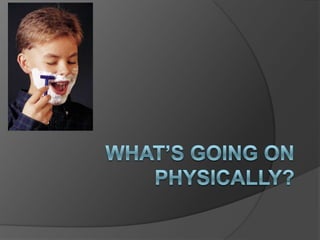
Some Physical Basics
 Tweens and early teens are being
  bombarded by hormones and begin to
  develop reproductively (i.e. breasts,
  pubic hair, etc.)*
 Many experience a growth surge. Guys
  get taller, and girls get rounder.
 Many experience a hormonal
  rollercoaster – becoming moody and
  seemingly different over night.

                                     Pruitt, 1999
Some Psychological Basics
 Their reasoning capabilities rise to new
  levels of complexity.
 The adolescent is learning how to
  handle adult responsibilities.
 By age 12, he or she will be able to think
  about possibilities, consider hypotheses,
  think ahead, consider the thought
  process, and think beyond conventional
  limits.
                                           Pruitt, 1999
More Psychological Basics
 Increased ability to use abstract verbal
  concepts.
 Increased ability to engage in abstract
  thought to engage in issues like politics,
  religion and morality.
 During the middle school years, moral
  development continues to evolve as the
  adolescent becomes more aware the
  relationship between the individual and
  society.
                                               Pruitt, 1999
Social Development Basics
  Expected increase in freedom
  Move away from family toward peers
  Likely to have best friends of the similar
   social and ethnic backgrounds.
  In 7th grade, the above holds true PLUS
   they want friends with similar attitudes
   and values.
  Peer approval and acceptance grows
   more important.
                                                Pruitt, 1999
Social Development Basics
  Rely on friends for everything from
   companionship to understanding.
  In middle school, the more a child is
   pressured by peers, the greater the
   chance he or she will go along or join in.


                                                Pruitt, 1999
   Anderson, S. (2007). Serving young teens and „tweens. Westport, CT:
    Libraries Unlimited.

   American Academy of Child and Adolescent Psychiatry. (1999). Your
    adolescent: Emotional, behavioral, and cognitive development from early
    adolescence through the teen years. New York: Harper Collins.

   Zuckerman, D. (2001). When little girls become women: Early onset of
    puberty in girls. The Ribbon, 6(1).
So…


   List at least 2 ways you believe tweens
    and teens are different.

   How do these differences, then, affect
    what you will do in terms of meeting
    those differences?
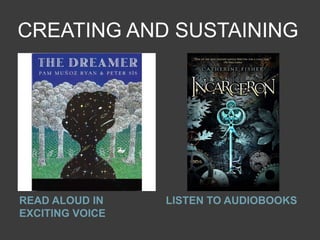
CREATING AND SUSTAINING


READ ALOUD IN    LISTEN TO AUDIOBOOKS
EXCITING VOICE
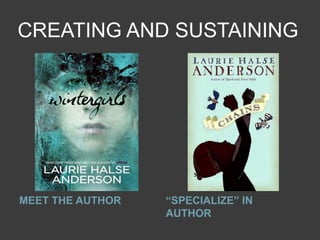
CREATING AND SUSTAINING


MEET THE AUTHOR   “SPECIALIZE” IN
                  AUTHOR
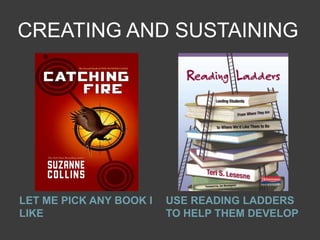
CREATING AND SUSTAINING


LET ME PICK ANY BOOK I   USE READING LADDERS
LIKE                     TO HELP THEM DEVELOP
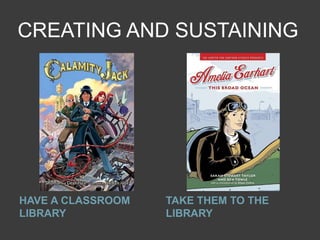
CREATING AND SUSTAINING


HAVE A CLASSROOM   TAKE THEM TO THE
LIBRARY            LIBRARY
CREATING AND SUSTAINING
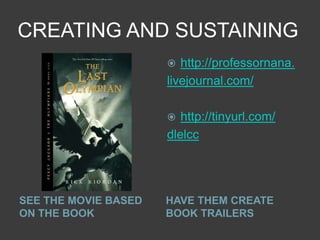
                        http://professornana.
                      livejournal.com/

                        http://tinyurl.com/
                      dlelcc


SEE THE MOVIE BASED   HAVE THEM CREATE
ON THE BOOK           BOOK TRAILERS
CREATING AND SUSTAINING


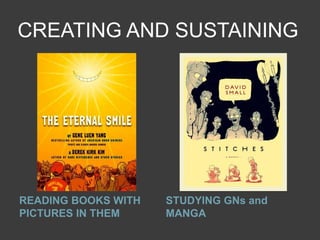
READING BOOKS WITH   STUDYING GNs and
PICTURES IN THEM     MANGA
The questions?

   What could someone do BEFORE you
    read to make you WANT/HATE to read?


   What could someone do AFTER you
    read to make you WANT/HATE to read?
What could someone do to make you want
      to read BEFORE you read?
                 K-12


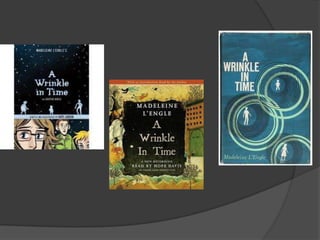
   Being   allowed to choose any book
               you want to read
What could someone do to make
you want to read BEFORE you
             read?
              K-12

   Having   a classroom library
How does this translate to the
public library?


 Displays
 Separate section for tweens
 Carts or trucks or stacks reserved for
  tweens
 Ideas?
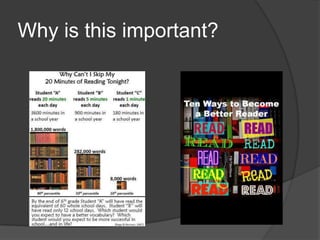
Why is this important?
What could someone do to
 make you want to read
  BEFORE you read?
          K-12

 Having   the teacher read a book or
              chapter a day
Include read alouds as part of
          book talks
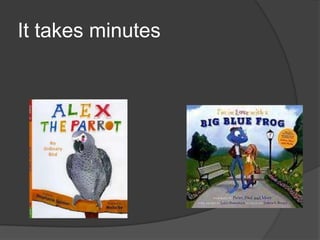
It takes minutes
What could someone do to
 make you want to read
  BEFORE you read?
          K-12

 Having   the teacher take you to the
                  library
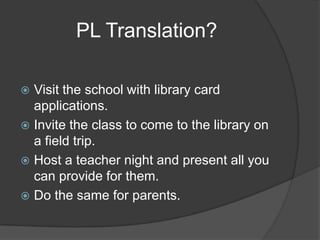
PL Translation?

 Visit the school with library card
  applications.
 Invite the class to come to the library on
  a field trip.
 Host a teacher night and present all you
  can provide for them.
 Do the same for parents.
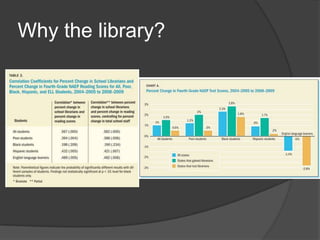
Why the library?
Translation for PL?

   SRP
     Research shows slump during summer can
     be ameliorated by kids reading books over
     vacation.


   Need circ stats that show how kids are
    accessing PL.
What could someone do to make
you want to read BEFORE you
             read?
              6-12


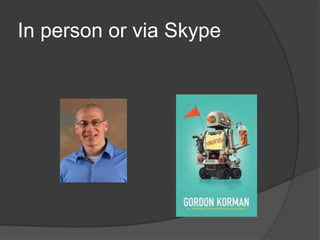
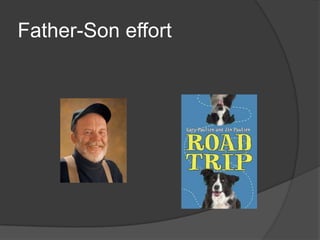
        Meeting   the author
In person or via Skype
Father-Son effort
What could someone do to make
you want to read BEFORE you
             read?
                    6-12

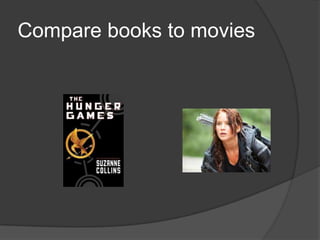
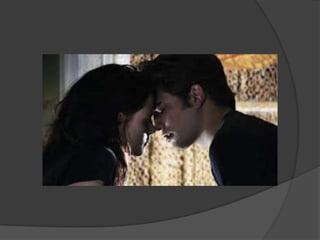
   Seeing the movie or television production of
    a book.
Compare books to movies
What could someone do to
 make you want to read
  BEFORE you read?
          6-12

 Being   allowed to read books with lots
             of pictures in them.
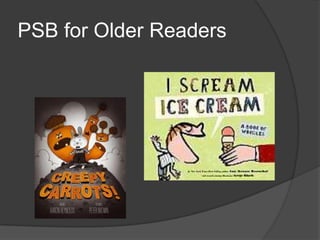
PSB for Older Readers
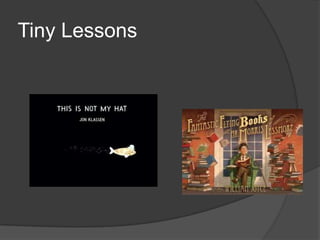
Tiny Lessons
Classics
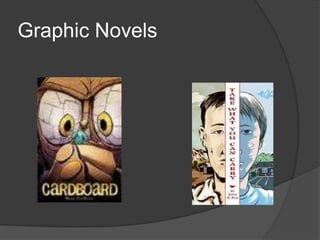
Graphic Novels
T-A-R-G-E-TING
   READERS
WE NEED TO BE THE EXPERTS
   OR WE RUN THE RISK
OF PROGRAMS TAKING OVER
63
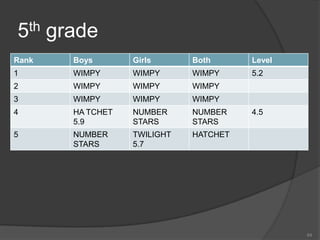
5th grade
Rank   Boys       Girls      Both      Level
1      WIMPY      WIMPY      WIMPY     5.2
2      WIMPY      WIMPY      WIMPY
3      WIMPY      WIMPY      WIMPY
4      HA TCHET   NUMBER     NUMBER    4.5
       5.9        STARS      STARS
5      NUMBER     TWILIGHT   HATCHET
       STARS      5.7


                                               64
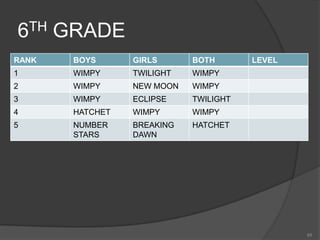
6TH GRADE
RANK   BOYS      GIRLS      BOTH       LEVEL
1      WIMPY     TWILIGHT   WIMPY
2      WIMPY     NEW MOON   WIMPY
3      WIMPY     ECLIPSE    TWILIGHT
4      HATCHET   WIMPY      WIMPY
5      NUMBER    BREAKING   HATCHET
       STARS     DAWN


                                               65
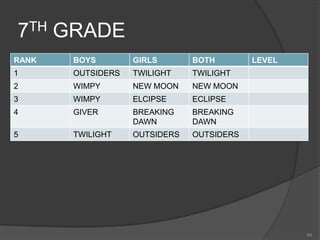
7TH GRADE
RANK   BOYS        GIRLS       BOTH        LEVEL
1      OUTSIDERS   TWILIGHT    TWILIGHT
2      WIMPY       NEW MOON    NEW MOON
3      WIMPY       ELCIPSE     ECLIPSE
4      GIVER       BREAKING    BREAKING
                   DAWN        DAWN
5      TWILIGHT    OUTSIDERS   OUTSIDERS


                                                   66
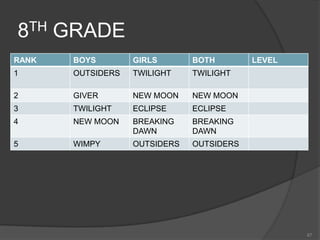
8TH GRADE
RANK   BOYS        GIRLS       BOTH        LEVEL
1      OUTSIDERS   TWILIGHT    TWILIGHT

2      GIVER       NEW MOON    NEW MOON
3      TWILIGHT    ECLIPSE     ECLIPSE
4      NEW MOON    BREAKING    BREAKING
                   DAWN        DAWN
5      WIMPY       OUTSIDERS   OUTSIDERS


                                                   67
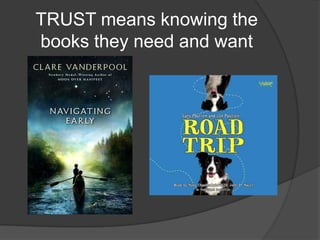
TRUST means knowing the
books they need and want
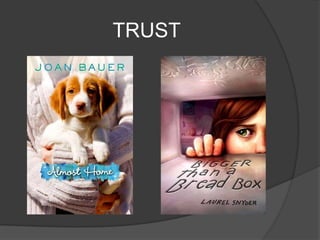
TRUST
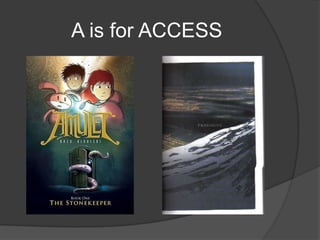
A is for ACCESS
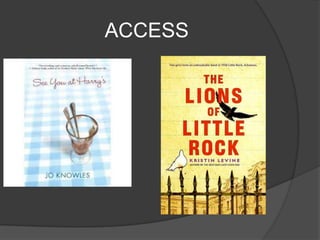
ACCESS
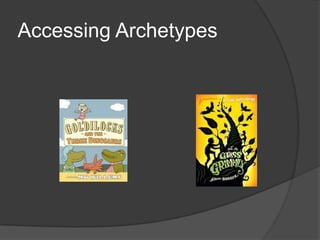
Accessing Archetypes
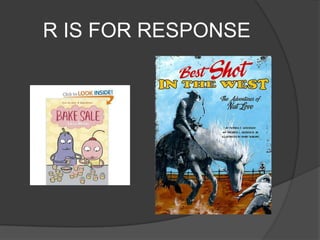
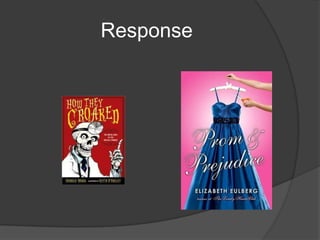
R IS FOR RESPONSE
Response
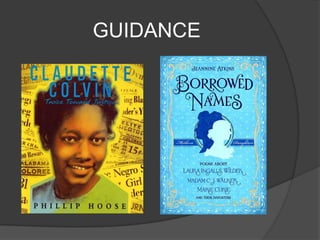
GUIDANCE
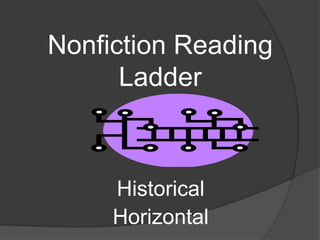
Nonfiction Reading
      Ladder


     Historical
     Horizontal
79
80
86
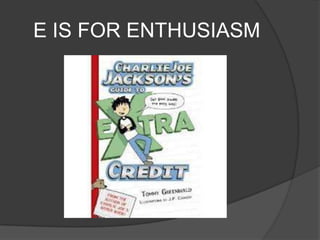
E IS FOR ENTHUSIASM
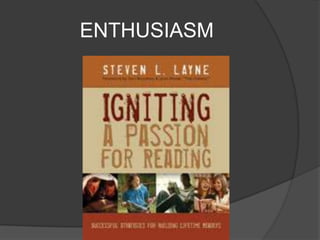
ENTHUSIASM
TWEEN AND TEEN APPEAL
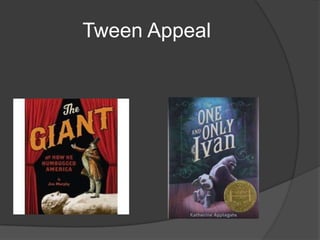
Tween Appeal
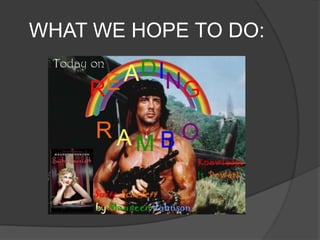
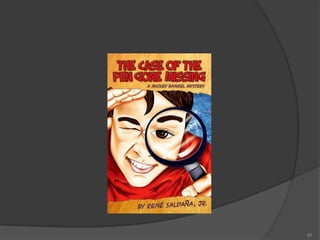
WHAT WE HOPE TO DO:
92
93
94
95
96
97
98
99
100
101
102
103
104
105
106
107
108
109
TO DO THIS:
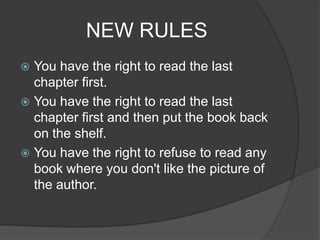
NEW RULES
 You have the right to read the last
  chapter first.
 You have the right to read the last
  chapter first and then put the book back
  on the shelf.
 You have the right to refuse to read any
  book where you don't like the picture of
  the author.
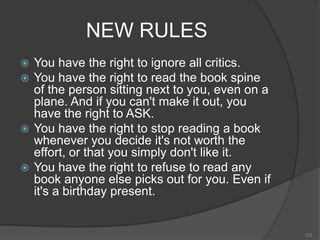
NEW RULES
 You have the right to ignore all critics.
 You have the right to read the book spine
  of the person sitting next to you, even on a
  plane. And if you can't make it out, you
  have the right to ASK.
 You have the right to stop reading a book
  whenever you decide it's not worth the
  effort, or that you simply don't like it.
 You have the right to refuse to read any
  book anyone else picks out for you. Even if
  it's a birthday present.


                                                 122
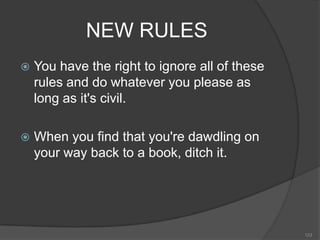
NEW RULES
   You have the right to ignore all of these
    rules and do whatever you please as
    long as it's civil.

   When you find that you're dawdling on
    your way back to a book, ditch it.


                                                123
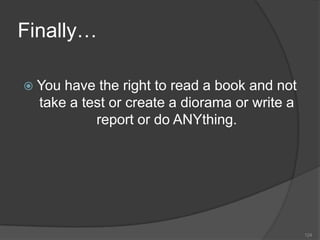
Finally…

 You have the right to read a book and not
  take a test or create a diorama or write a
           report or do ANYthing.


                                               124
ACCEPT THE CHALLENGE
        AND

Ohio tween workshop

  • 1.
    Creating and SustainingReaders Teri S. Lesesne Sam Houston State University Department of Library Science
  • 3.
    Here is thereal problem… People are so desperate to raise test scores that we could well end up with a nation full of kids who can pass tests but can neither read critically nor enjoy the act of reading itself. P. David Pearson February 2003
  • 4.
    Some Important Notes  Twitter  @professornana  Email  terilesesne@gmail.com  YAPP  http://my.yapp.us/CA8H6B
  • 5.
  • 6.
    Why Naked Reading?  A naked child  A drive with an author  Some great research findings  A late night inspiration
  • 7.
    The naked childin question
  • 8.
    A drive withan author
  • 9.
    The research?  Vickey Giles, 2006  Karen Sue Gibson, 2003  Replicating Livaudais, 1982
  • 10.
    The questions?  What could someone do BEFORE you read to make you WANT/HATE to read?  What could someone do AFTER you read to make you WANT/HATE to read?
  • 11.
    The late nightinspiration? T-A-R-G-E-T
  • 12.
    T-A-R-G-E-T  TRUST  ACCESS  RESPONSE  GUIDANCE  ENTHUSIASM  TWEEN AND TEEN APPEAL
  • 13.
  • 14.
    a happy memory from when you were 10 years old • a sad memory from when you were 11 years old •an embarrassing memory from when you were 12 years old • a great memory from when you were 13 years old •a “traumatic” memory from when you were 14 years old
  • 15.
    How different wereyour memories from the person next to you? They may have been very different or there may have been some similarities.
  • 17.
    Defining Tweens  Tweens is a fluid definition  meaning that different cognitive, emotional, and social developments happen at different rates in different adolescents. Some 10 year olds may have begun physically developing while others may not see these changes until they are 13. Anderson, 2007
  • 19.
    Some Physical Basics Tweens and early teens are being bombarded by hormones and begin to develop reproductively (i.e. breasts, pubic hair, etc.)*  Many experience a growth surge. Guys get taller, and girls get rounder.  Many experience a hormonal rollercoaster – becoming moody and seemingly different over night. Pruitt, 1999
  • 21.
    Some Psychological Basics Their reasoning capabilities rise to new levels of complexity.  The adolescent is learning how to handle adult responsibilities.  By age 12, he or she will be able to think about possibilities, consider hypotheses, think ahead, consider the thought process, and think beyond conventional limits. Pruitt, 1999
  • 22.
    More Psychological Basics Increased ability to use abstract verbal concepts.  Increased ability to engage in abstract thought to engage in issues like politics, religion and morality.  During the middle school years, moral development continues to evolve as the adolescent becomes more aware the relationship between the individual and society. Pruitt, 1999
  • 24.
    Social Development Basics  Expected increase in freedom  Move away from family toward peers  Likely to have best friends of the similar social and ethnic backgrounds.  In 7th grade, the above holds true PLUS they want friends with similar attitudes and values.  Peer approval and acceptance grows more important. Pruitt, 1999
  • 25.
    Social Development Basics  Rely on friends for everything from companionship to understanding.  In middle school, the more a child is pressured by peers, the greater the chance he or she will go along or join in. Pruitt, 1999
  • 28.
    Anderson, S. (2007). Serving young teens and „tweens. Westport, CT: Libraries Unlimited.  American Academy of Child and Adolescent Psychiatry. (1999). Your adolescent: Emotional, behavioral, and cognitive development from early adolescence through the teen years. New York: Harper Collins.  Zuckerman, D. (2001). When little girls become women: Early onset of puberty in girls. The Ribbon, 6(1).
  • 29.
    So…  List at least 2 ways you believe tweens and teens are different.  How do these differences, then, affect what you will do in terms of meeting those differences?
  • 30.
    CREATING AND SUSTAINING READALOUD IN LISTEN TO AUDIOBOOKS EXCITING VOICE
  • 31.
    CREATING AND SUSTAINING MEETTHE AUTHOR “SPECIALIZE” IN AUTHOR
  • 32.
    CREATING AND SUSTAINING LETME PICK ANY BOOK I USE READING LADDERS LIKE TO HELP THEM DEVELOP
  • 33.
    CREATING AND SUSTAINING HAVEA CLASSROOM TAKE THEM TO THE LIBRARY LIBRARY
  • 34.
    CREATING AND SUSTAINING  http://professornana. livejournal.com/  http://tinyurl.com/ dlelcc SEE THE MOVIE BASED HAVE THEM CREATE ON THE BOOK BOOK TRAILERS
  • 35.
    CREATING AND SUSTAINING READINGBOOKS WITH STUDYING GNs and PICTURES IN THEM MANGA
  • 37.
    The questions?  What could someone do BEFORE you read to make you WANT/HATE to read?  What could someone do AFTER you read to make you WANT/HATE to read?
  • 38.
    What could someonedo to make you want to read BEFORE you read? K-12  Being allowed to choose any book you want to read
  • 40.
    What could someonedo to make you want to read BEFORE you read? K-12  Having a classroom library
  • 41.
    How does thistranslate to the public library?  Displays  Separate section for tweens  Carts or trucks or stacks reserved for tweens  Ideas?
  • 42.
    Why is thisimportant?
  • 43.
    What could someonedo to make you want to read BEFORE you read? K-12  Having the teacher read a book or chapter a day
  • 44.
    Include read aloudsas part of book talks
  • 45.
  • 46.
    What could someonedo to make you want to read BEFORE you read? K-12  Having the teacher take you to the library
  • 47.
    PL Translation?  Visitthe school with library card applications.  Invite the class to come to the library on a field trip.  Host a teacher night and present all you can provide for them.  Do the same for parents.
  • 48.
  • 49.
    Translation for PL?  SRP  Research shows slump during summer can be ameliorated by kids reading books over vacation.  Need circ stats that show how kids are accessing PL.
  • 50.
    What could someonedo to make you want to read BEFORE you read? 6-12  Meeting the author
  • 51.
    In person orvia Skype
  • 52.
  • 53.
    What could someonedo to make you want to read BEFORE you read? 6-12  Seeing the movie or television production of a book.
  • 54.
  • 56.
    What could someonedo to make you want to read BEFORE you read? 6-12  Being allowed to read books with lots of pictures in them.
  • 57.
  • 58.
  • 59.
  • 60.
  • 61.
  • 62.
    WE NEED TOBE THE EXPERTS OR WE RUN THE RISK OF PROGRAMS TAKING OVER
  • 63.
  • 64.
    5th grade Rank Boys Girls Both Level 1 WIMPY WIMPY WIMPY 5.2 2 WIMPY WIMPY WIMPY 3 WIMPY WIMPY WIMPY 4 HA TCHET NUMBER NUMBER 4.5 5.9 STARS STARS 5 NUMBER TWILIGHT HATCHET STARS 5.7 64
  • 65.
    6TH GRADE RANK BOYS GIRLS BOTH LEVEL 1 WIMPY TWILIGHT WIMPY 2 WIMPY NEW MOON WIMPY 3 WIMPY ECLIPSE TWILIGHT 4 HATCHET WIMPY WIMPY 5 NUMBER BREAKING HATCHET STARS DAWN 65
  • 66.
    7TH GRADE RANK BOYS GIRLS BOTH LEVEL 1 OUTSIDERS TWILIGHT TWILIGHT 2 WIMPY NEW MOON NEW MOON 3 WIMPY ELCIPSE ECLIPSE 4 GIVER BREAKING BREAKING DAWN DAWN 5 TWILIGHT OUTSIDERS OUTSIDERS 66
  • 67.
    8TH GRADE RANK BOYS GIRLS BOTH LEVEL 1 OUTSIDERS TWILIGHT TWILIGHT 2 GIVER NEW MOON NEW MOON 3 TWILIGHT ECLIPSE ECLIPSE 4 NEW MOON BREAKING BREAKING DAWN DAWN 5 WIMPY OUTSIDERS OUTSIDERS 67
  • 68.
    TRUST means knowingthe books they need and want
  • 69.
  • 72.
    A is forACCESS
  • 73.
  • 74.
  • 75.
    R IS FORRESPONSE
  • 76.
  • 77.
  • 78.
    Nonfiction Reading Ladder Historical Horizontal
  • 79.
  • 80.
  • 86.
  • 87.
    E IS FORENTHUSIASM
  • 88.
  • 89.
  • 90.
  • 91.
  • 92.
  • 93.
  • 94.
  • 95.
  • 96.
  • 97.
  • 98.
  • 99.
  • 100.
  • 101.
  • 102.
  • 103.
  • 104.
  • 105.
  • 106.
  • 107.
  • 108.
  • 109.
  • 120.
  • 121.
    NEW RULES  Youhave the right to read the last chapter first.  You have the right to read the last chapter first and then put the book back on the shelf.  You have the right to refuse to read any book where you don't like the picture of the author.
  • 122.
    NEW RULES  Youhave the right to ignore all critics.  You have the right to read the book spine of the person sitting next to you, even on a plane. And if you can't make it out, you have the right to ASK.  You have the right to stop reading a book whenever you decide it's not worth the effort, or that you simply don't like it.  You have the right to refuse to read any book anyone else picks out for you. Even if it's a birthday present. 122
  • 123.
    NEW RULES  You have the right to ignore all of these rules and do whatever you please as long as it's civil.  When you find that you're dawdling on your way back to a book, ditch it. 123
  • 124.
    Finally…  You havethe right to read a book and not take a test or create a diorama or write a report or do ANYthing. 124
  • 126.