Bacteriology-2
‫الثالثة‬ ‫المحاضـــرة‬
‫المقرر‬ ‫مدرس‬
/
‫د‬
.
‫الحبيشـــي‬ ‫عمــرو‬
Enterobacteriaceae
E. coli
I) Basic information of Enterobacteriaceae
Large group
All members are
gram negative bacilli
A
❖ Normal flora in
intestine & animals
❖ Some in the
environmental
I) Basic information of Enterobacteriaceae
B
Inhibition of pathogenic
colonization
I) Basic information of Enterobacteriaceae
Importance
C
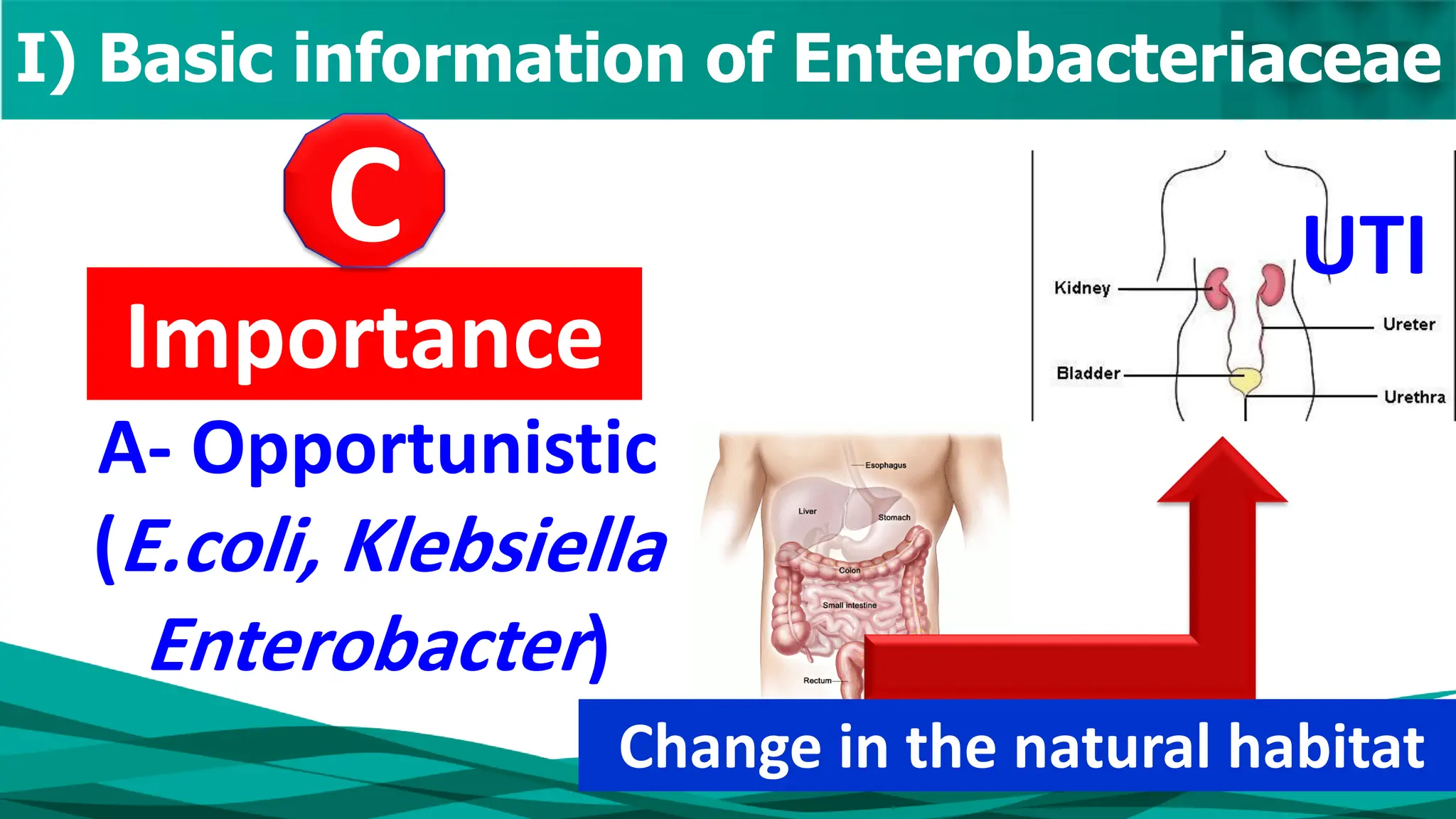
A- Opportunistic
(E.coli, Klebsiella
Enterobacter)
I) Basic information of Enterobacteriaceae
Importance
UTI
Change in the natural habitat
C
B- Enteric pathogen
❖Salmonella
❖Shigella
❖E.coli*
I) Basic information of Enterobacteriaceae
Importance
C
Multi-drug
resistant
(ESBL).
I) Basic information of Enterobacteriaceae
D
II)General features of Enterobacteriaceae
❖ Facultative anaerobes
❖ 38 ATP (Aerobic)
❖ 2 ATP (Anaerobic)
1
II)General features of Enterobacteriaceae
2
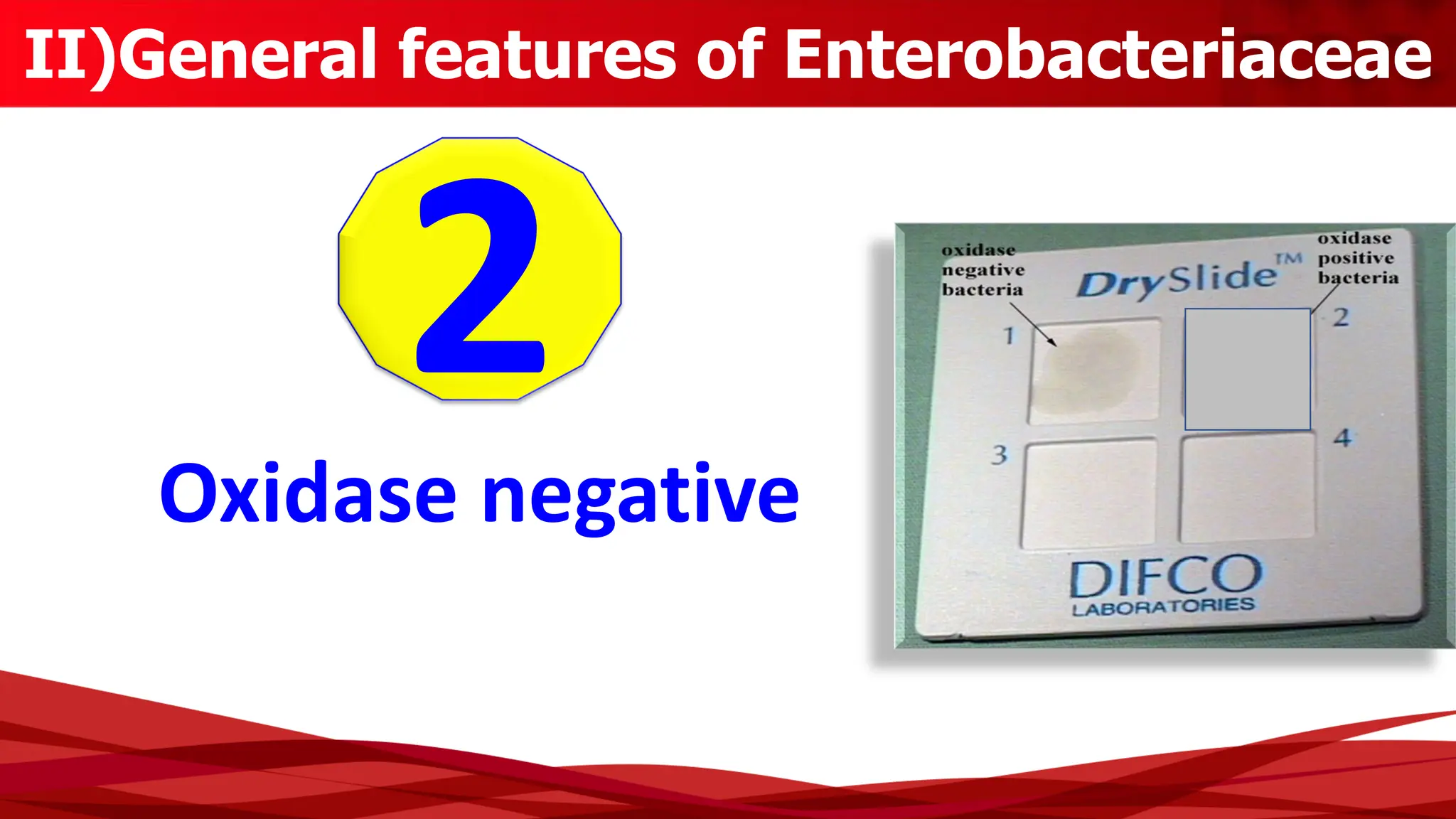
Oxidase negative
II)General features of Enterobacteriaceae
3
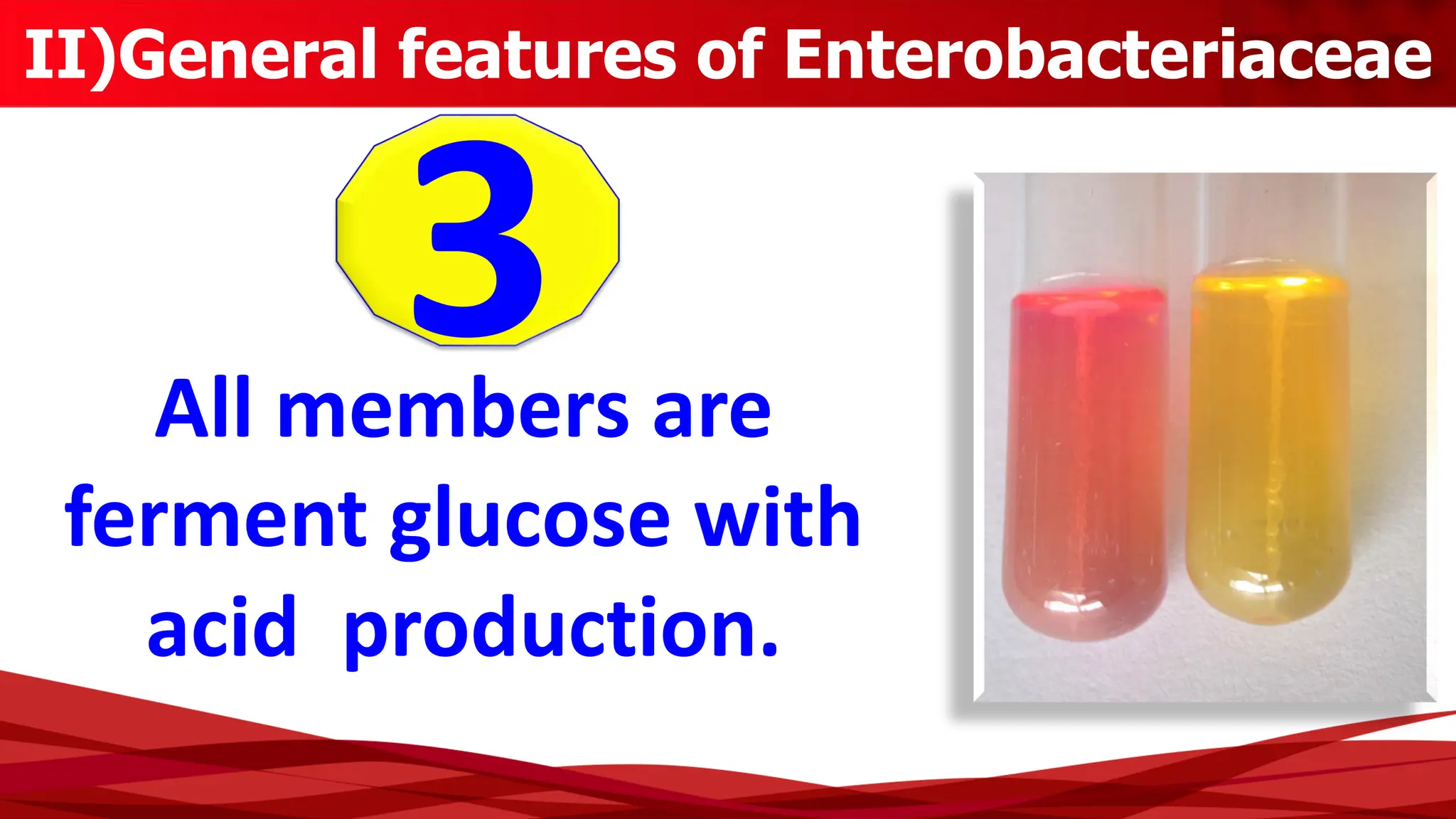
All members are
ferment glucose with
acid production.
II)General features of Enterobacteriaceae
4
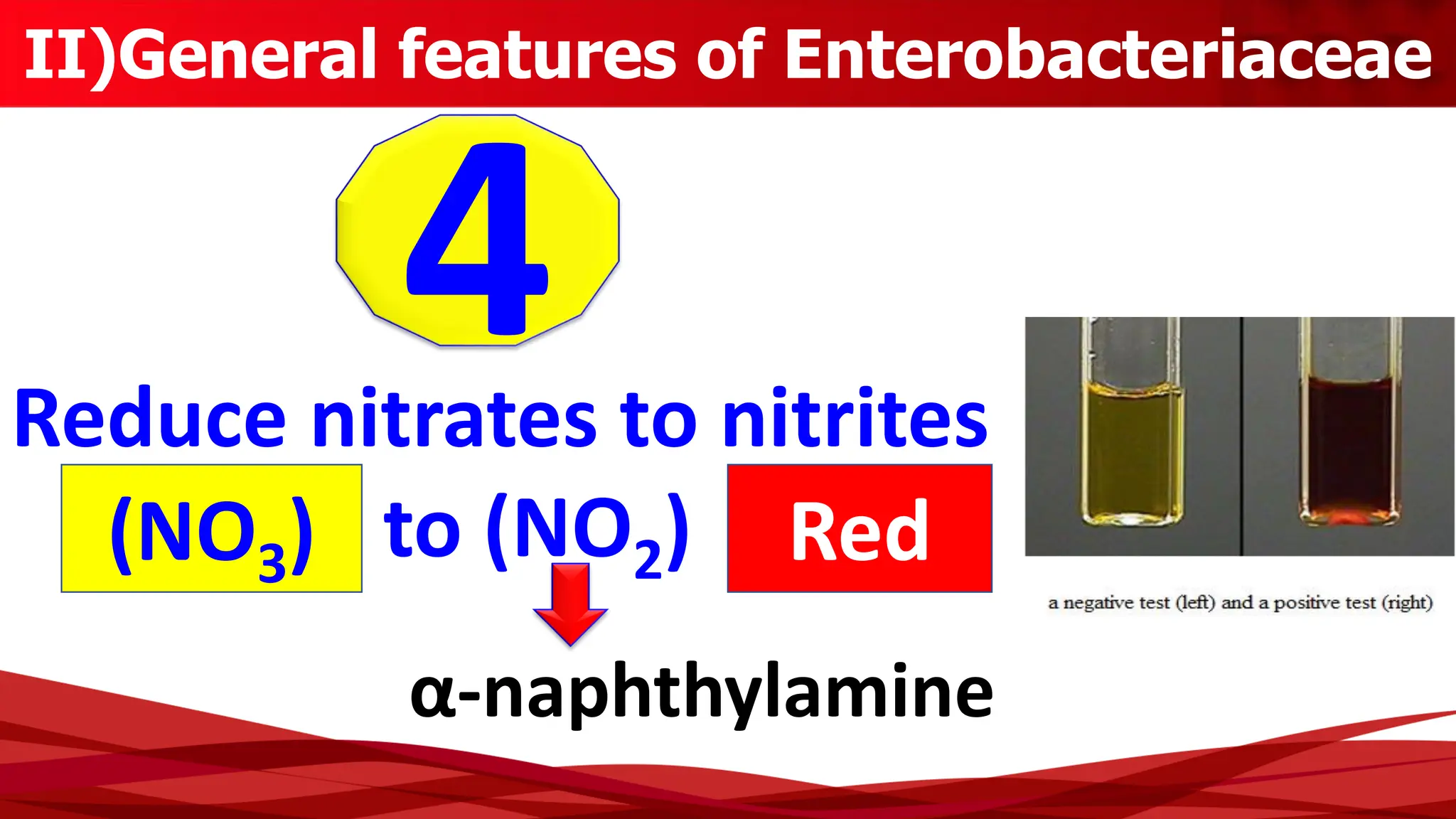
Reduce nitrates to nitrites
to (NO2)
(NO3) Red
α-naphthylamine
II)General features of Enterobacteriaceae
P. aeruginosa & Bacteroides species
are non-Enterobacteriaceae instead
of gram negative bacilli and found in
intestine.
Give reason
II)General features of Enterobacteriaceae
P. aeruginosa
❖ Obligate aerobes
❖ Oxidase positive
❖ No glucose ferment
Bacteroides
❖ Obligate
anaerobes
❖ No reduce nitrate
III) Classification
They are divided into two groups
according to their effect on lactose.
1- Non-lactose
fermenter
2- Lactose fermenter
Salmonella
Shigella
Proteus
Escherichia coli
Klebsiella
Citrobacter
Enterobacter
Serratia
Biochemical reactions
Triple sugar iron
(TSI)
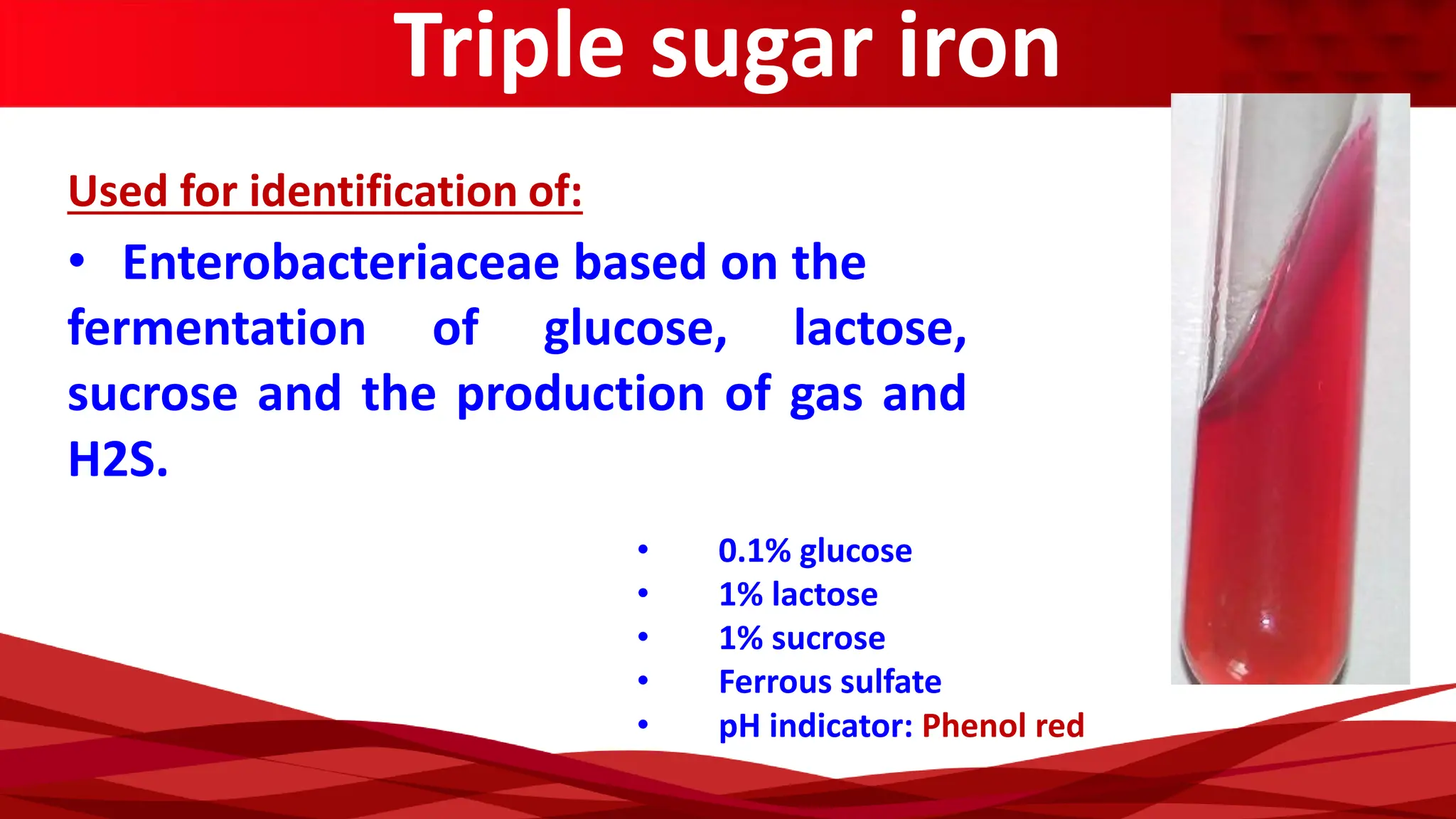
Triple sugar iron
• 0.1% glucose
• 1% lactose
• 1% sucrose
• Ferrous sulfate
• pH indicator: Phenol red
Used for identification of:
• Enterobacteriaceae based on the
fermentation of glucose, lactose,
sucrose and the production of gas and
H2S.
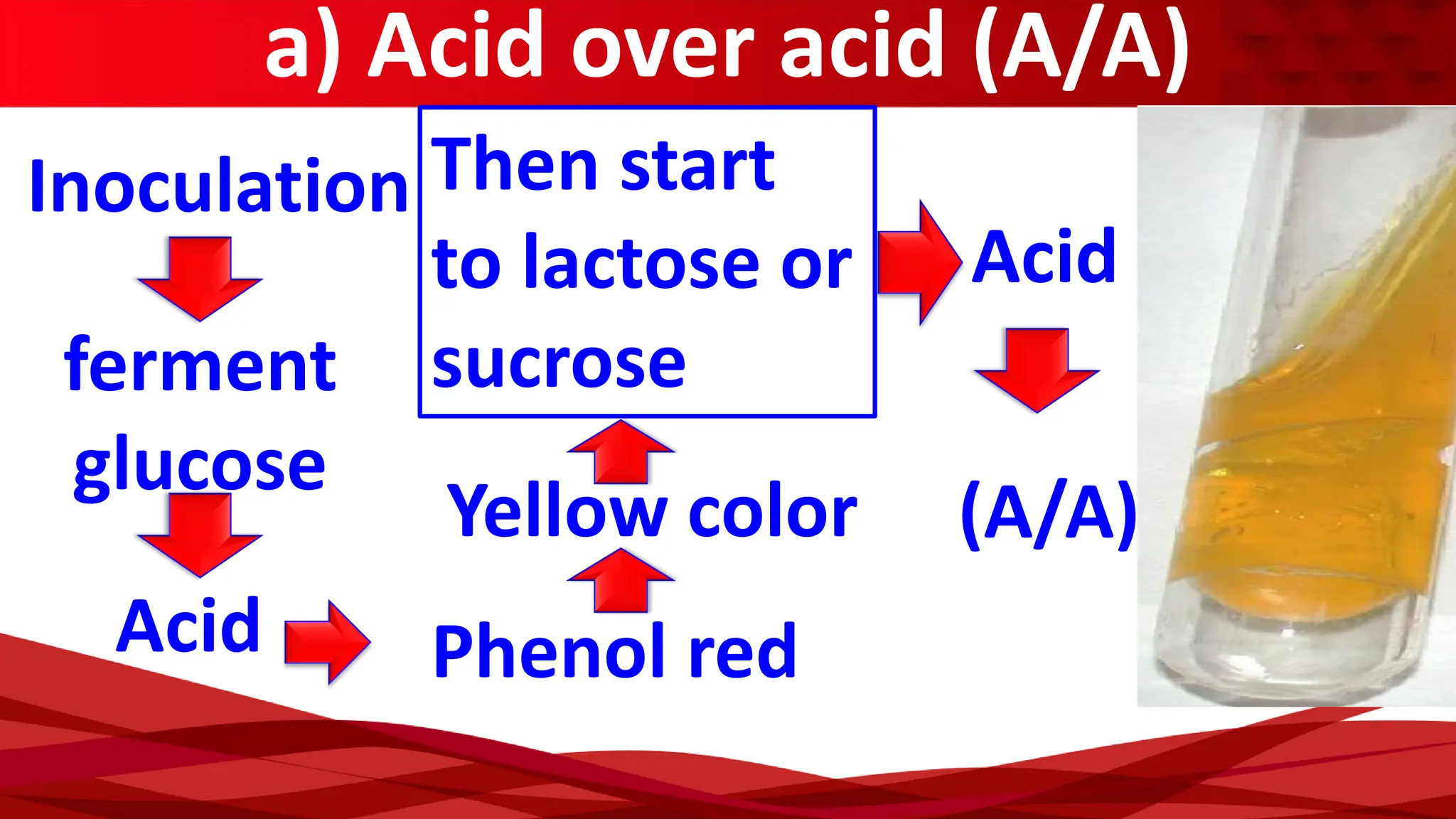
a) Acid over acid (A/A)
Inoculation
ferment
glucose
Acid Phenol red
Yellow color
Then start
to lactose or
sucrose
Acid
(A/A)
Triple sugar iron
b) Gas production
Detection of gas
production by break
up the medium or
pushed up the tube.
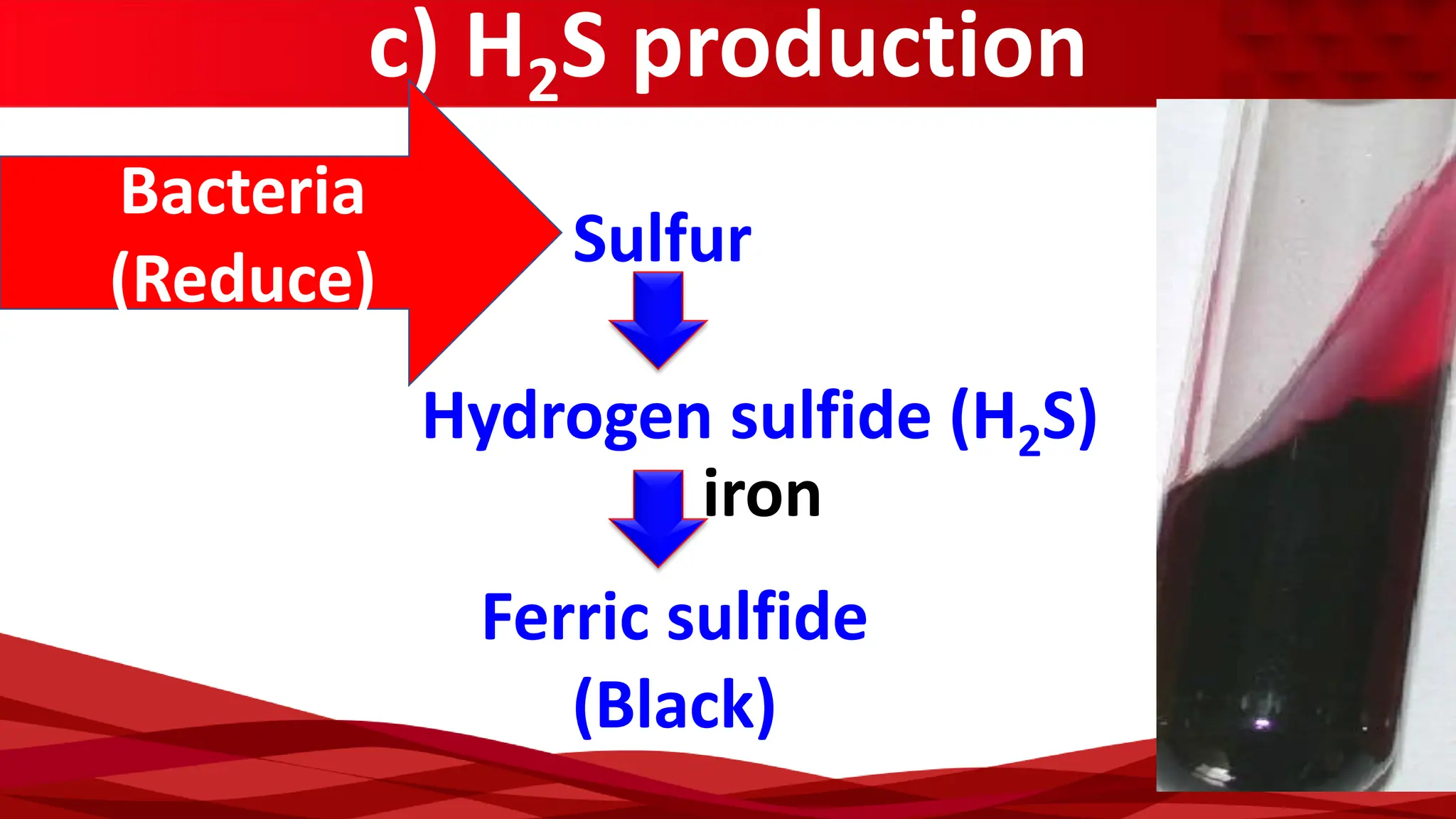
c) H2S production
Bacteria
(Reduce)
Sulfur
Hydrogen sulfide (H2S)
iron
Ferric sulfide
(Black)
I) Morphology
Escherichia coli
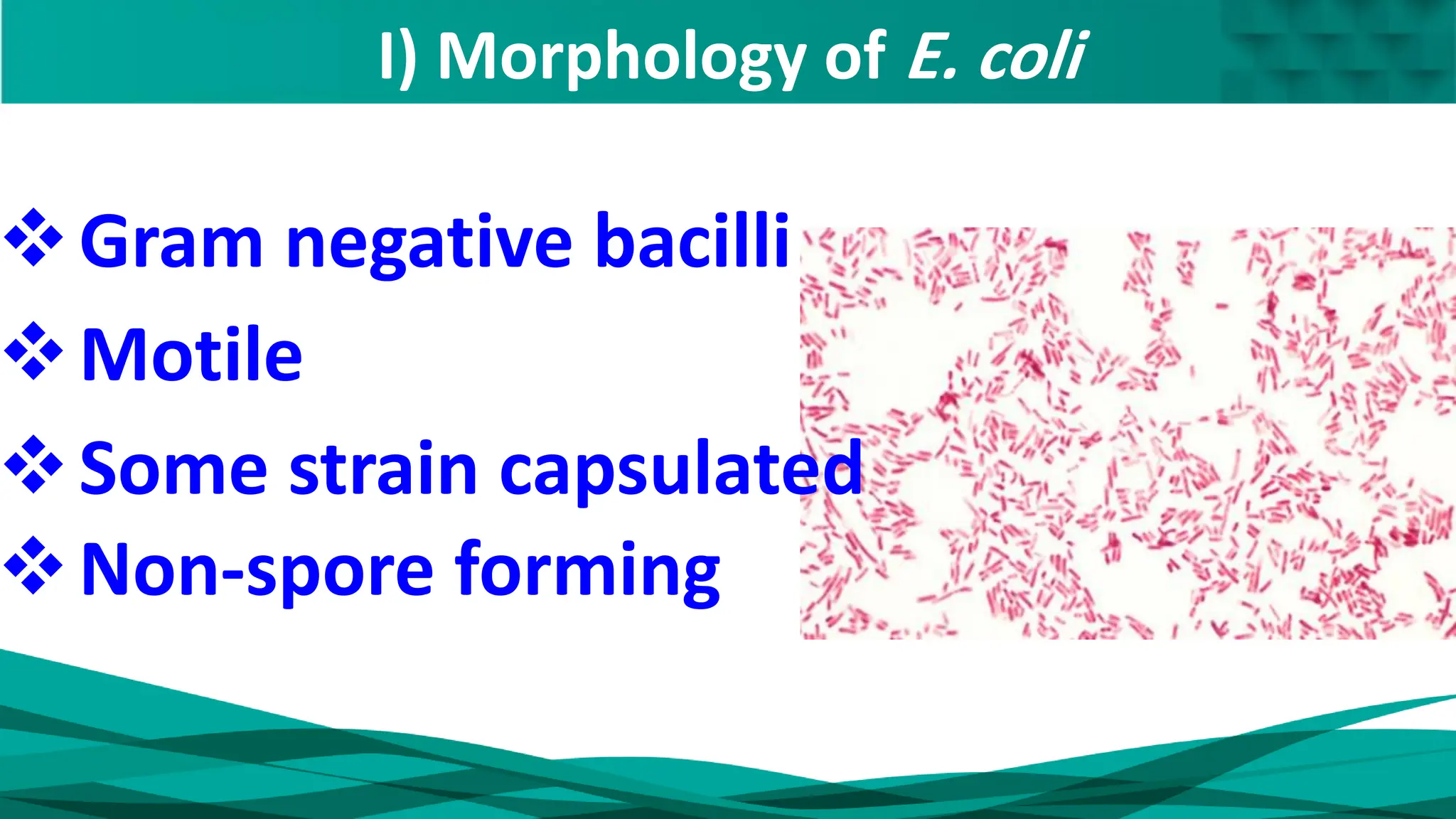
I) Morphology of E. coli
❖Gram negative bacilli
❖Some strain capsulated
❖Motile
❖Non-spore forming
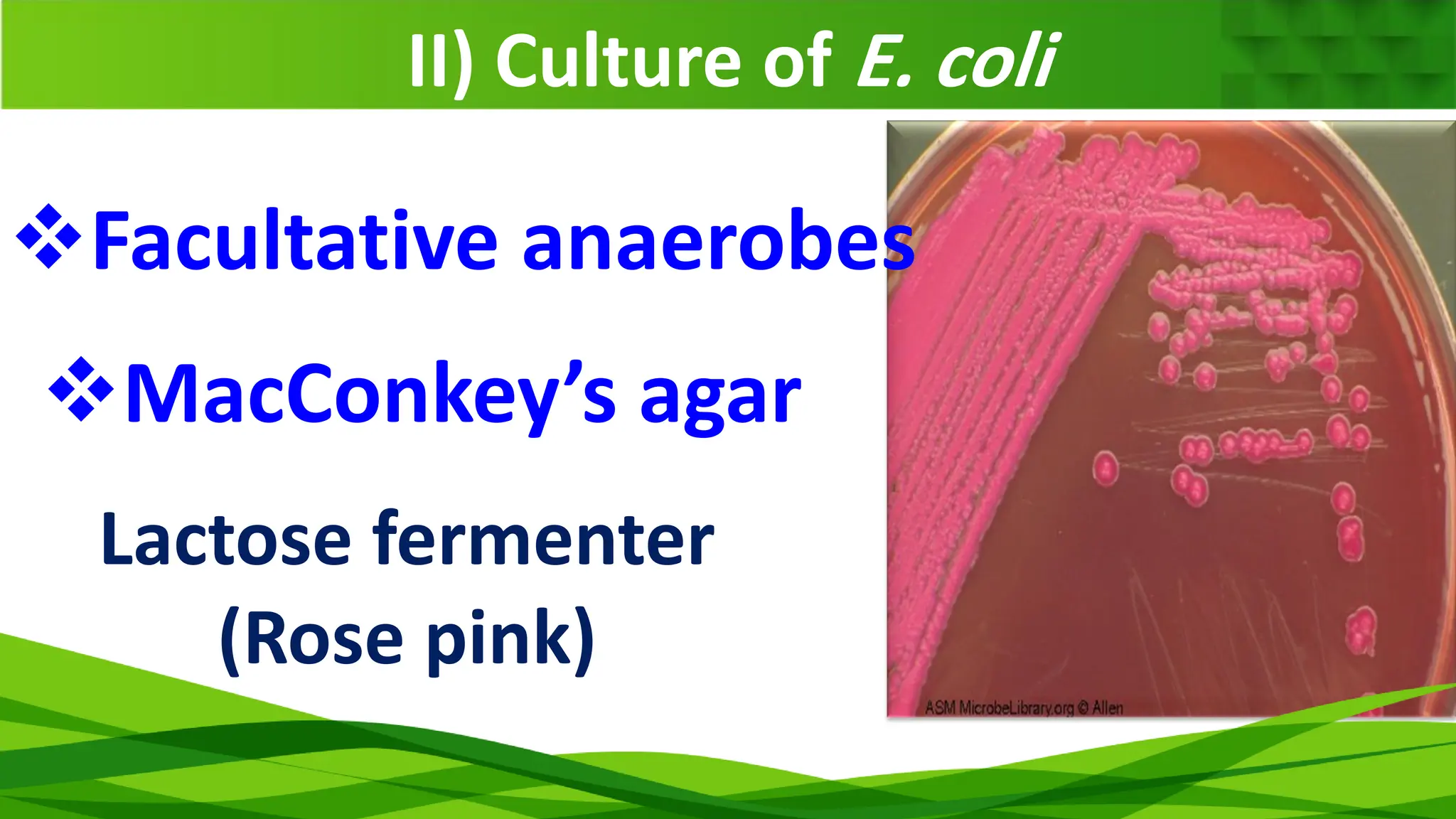
II) Culture of E. coli
❖MacConkey’s agar
❖Facultative anaerobes
Lactose fermenter
(Rose pink)
III) Antigenic structure
3 antigens used in classification
O antigen (Somatic Ag)
H antigen (Flagellar Ag)
K antigen (Capsular Ag)
Serological
III) Antigenic structure
1
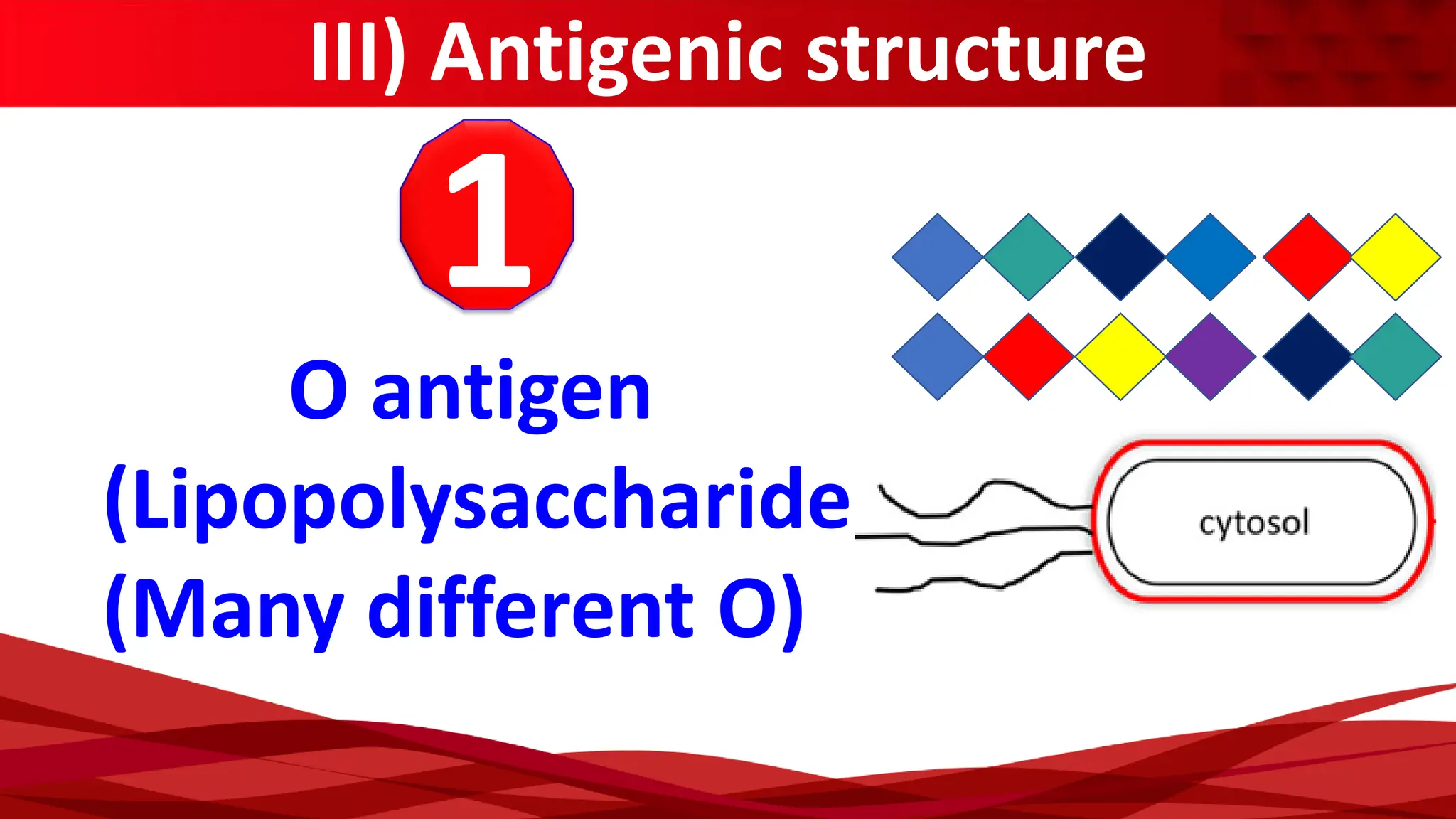
O antigen
(Lipopolysaccharide
(Many different O)
III) Antigenic structure
H antigen
(Flagellar)
2
(Many different H)
III) Antigenic structure
K antigen
(Capsular)
3
(Many different K)
III) Antigenic structure
Many different
O, H & K antigens
>1000 antigenic types of E.coli
(>1000 strains of E.coli)
IV) Virulence factors
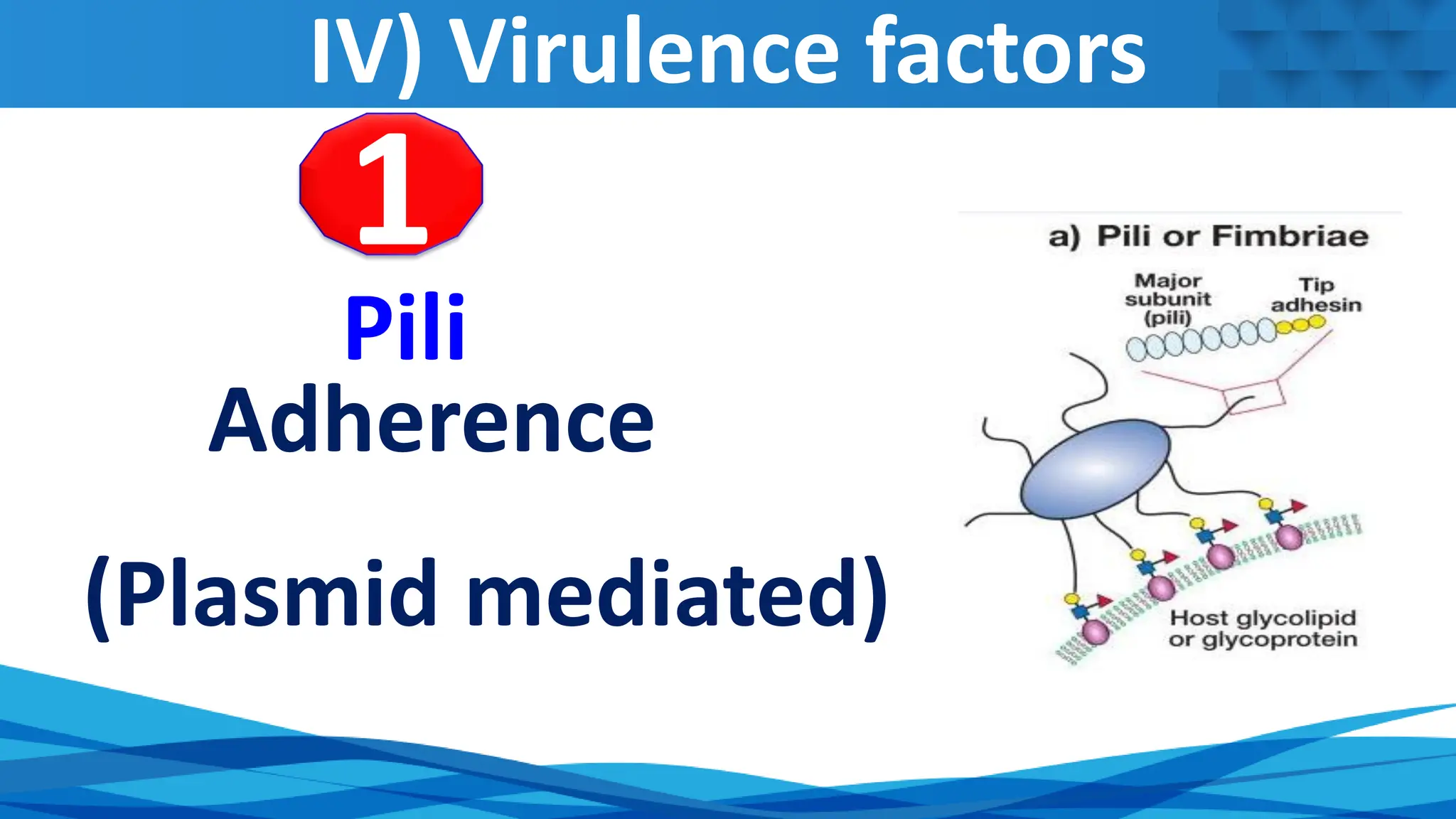
Pili
Adherence
(Plasmid mediated)
1
IV) Virulence factors
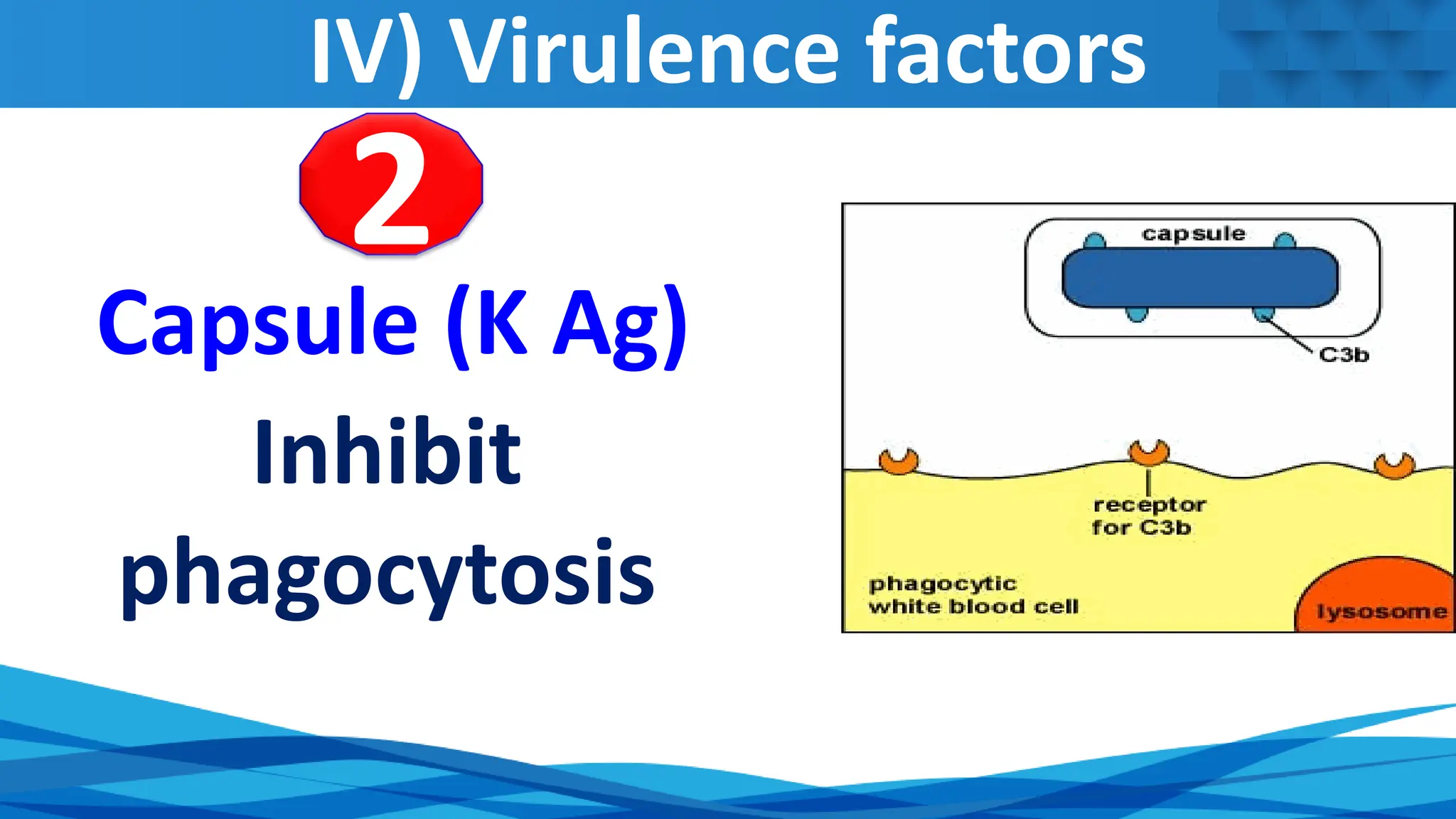
Capsule (K Ag)
Inhibit
phagocytosis
2
IV) Virulence factors
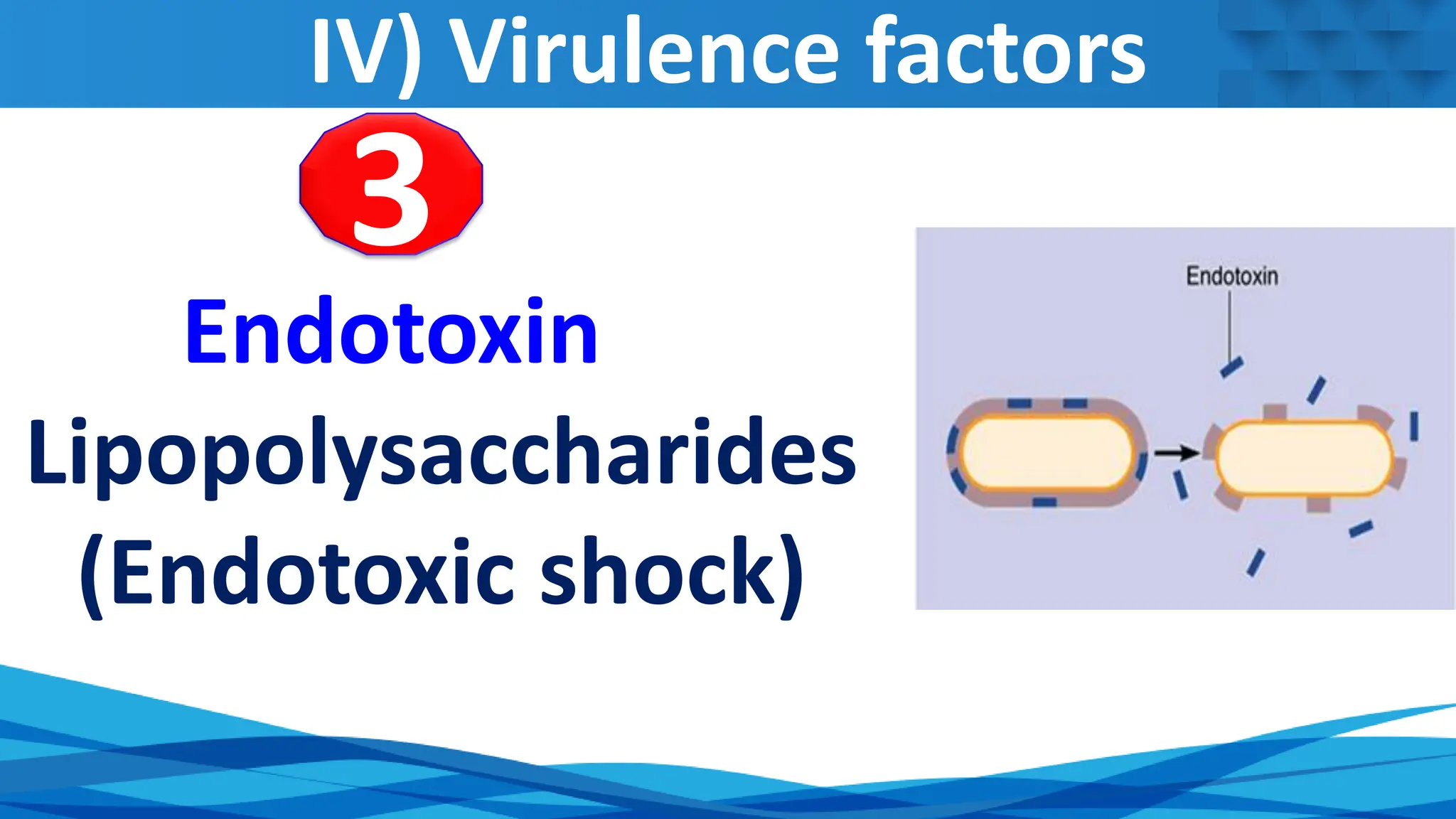
Endotoxin
Lipopolysaccharides
(Endotoxic shock)
3
IV) Virulence factors
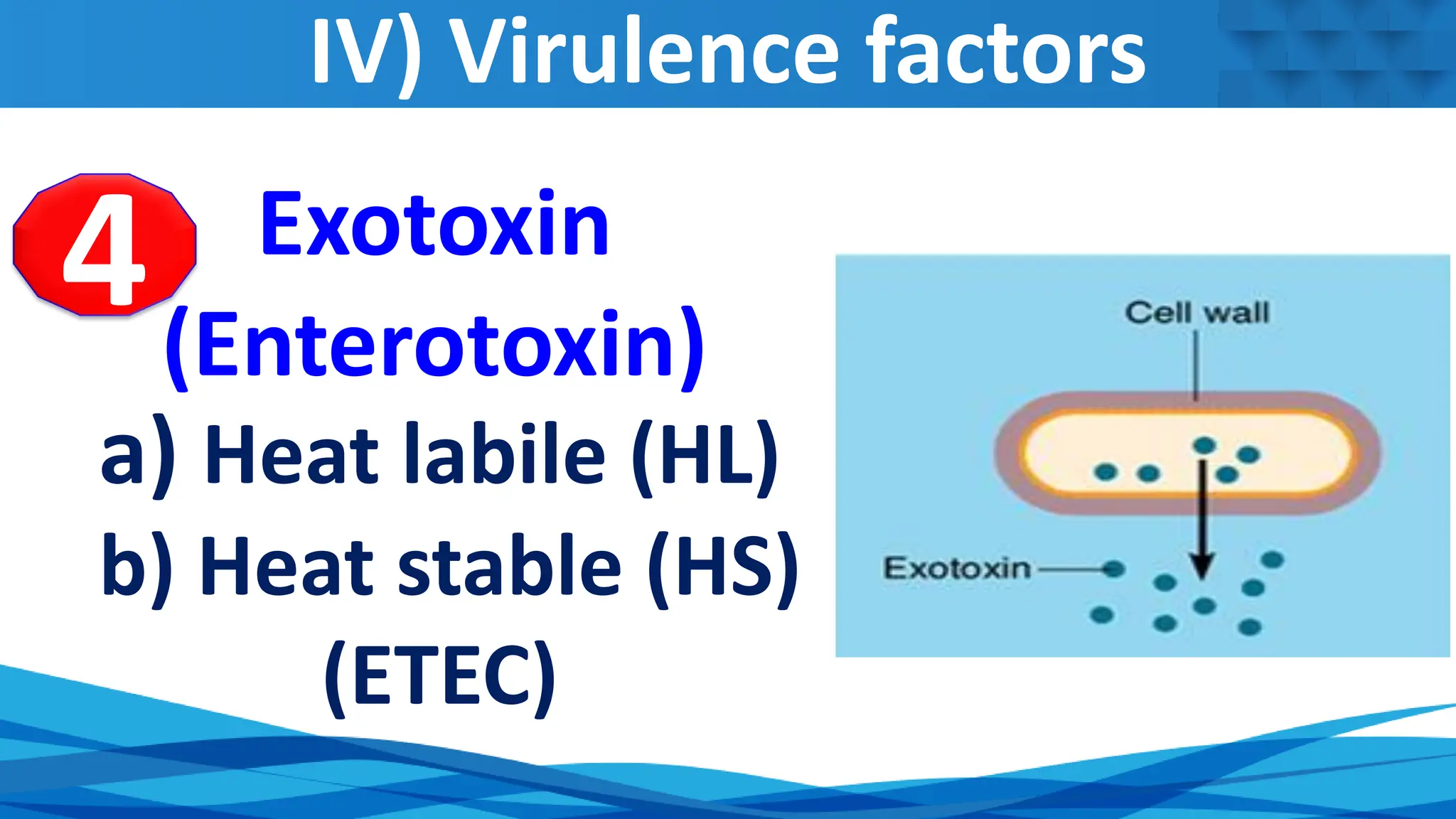
Exotoxin
(Enterotoxin)
a) Heat labile (HL)
b) Heat stable (HS)
(ETEC)
4
IV) Virulence factors
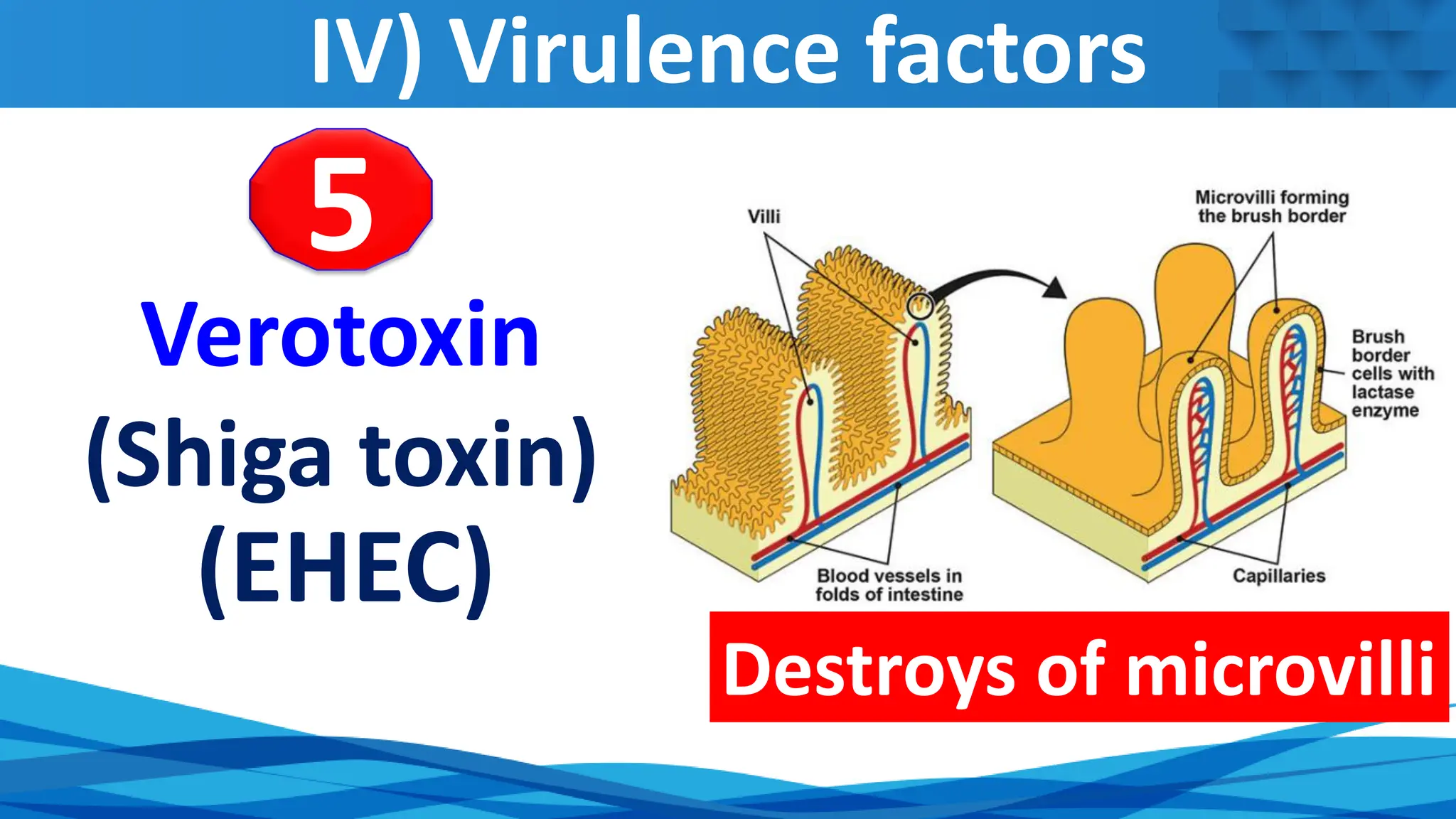
Verotoxin
(Shiga toxin)
(EHEC)
5
Destroys of microvilli
I) UTI
Diseases of Escherichia coli
I) UTI
• 90% by E.coli
(uropathogenic)
Cystitis
Pyelonephritis
➢ Dysuria
➢ Polyuria
➢ Pyuria
➢Flank pain
I) UTI
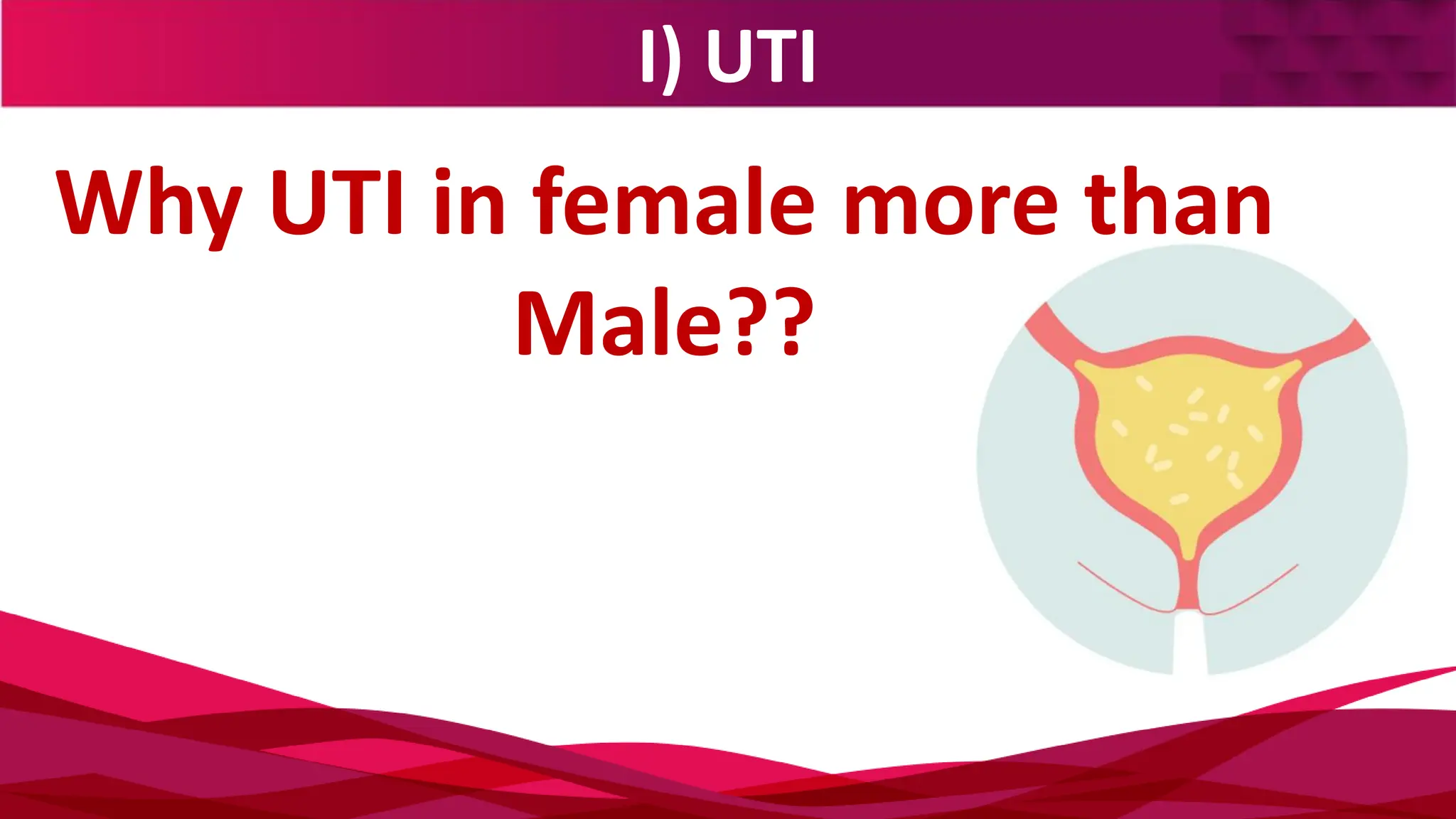
Why UTI in female more than
Male??
II) Neonatal meningitis
During
delivery
Aspiration of
intestinal & genital
tract secretion
Nasopharynx
Blood
Meninges
E. coli (K1 Ag)
causes 40%
E. coli
III) Sepsis & pneumonia
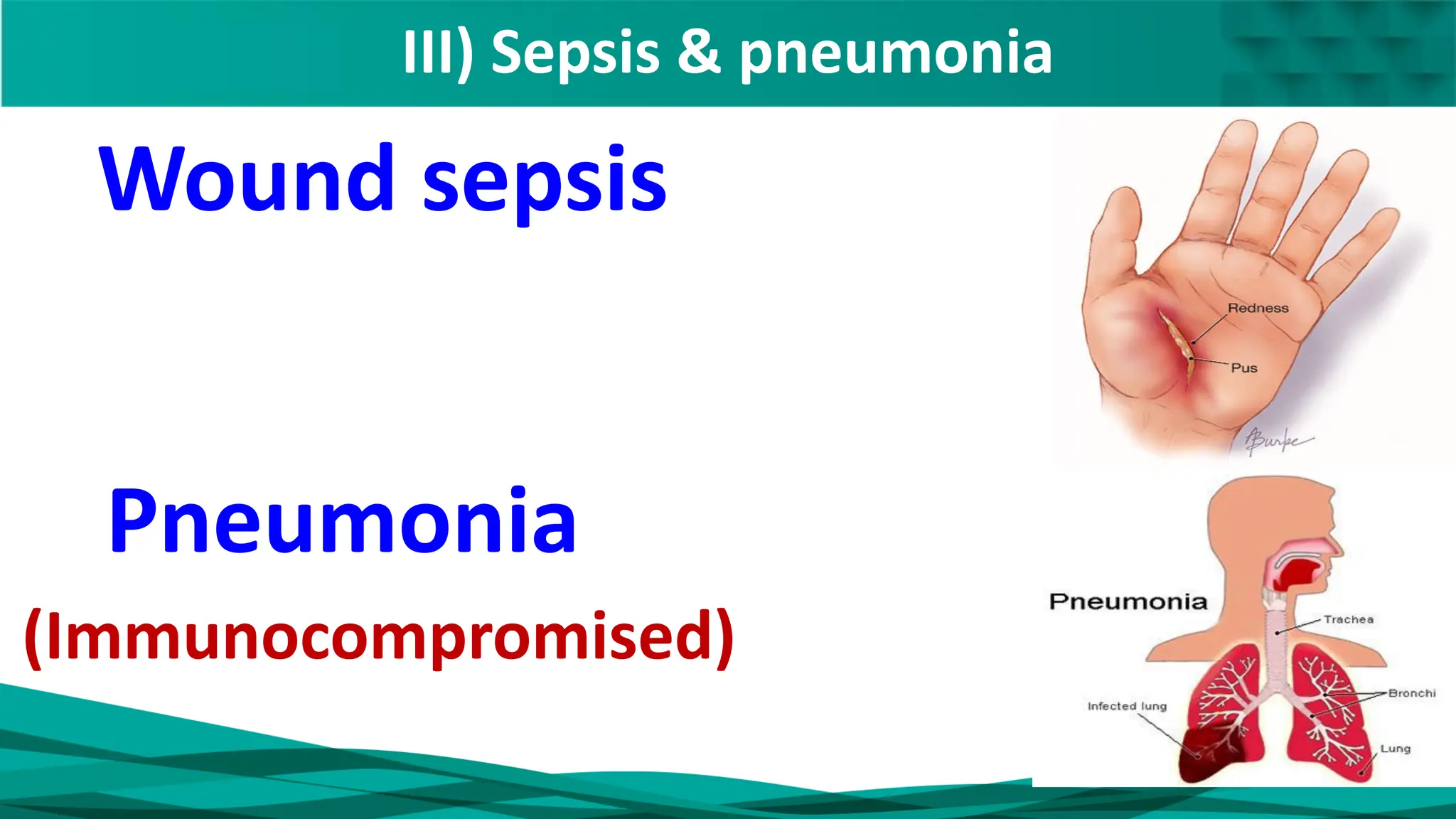
Wound sepsis
Pneumonia
(Immunocompromised)
IV) Intestinal diseases
A) Enterotoxigenic E. coli (ETEC)
Traveler’s diarrhea
Infants
A) Enterotoxigenic E. coli (ETEC)
Ingestion of
contaminated
food & water by
ETEC
1
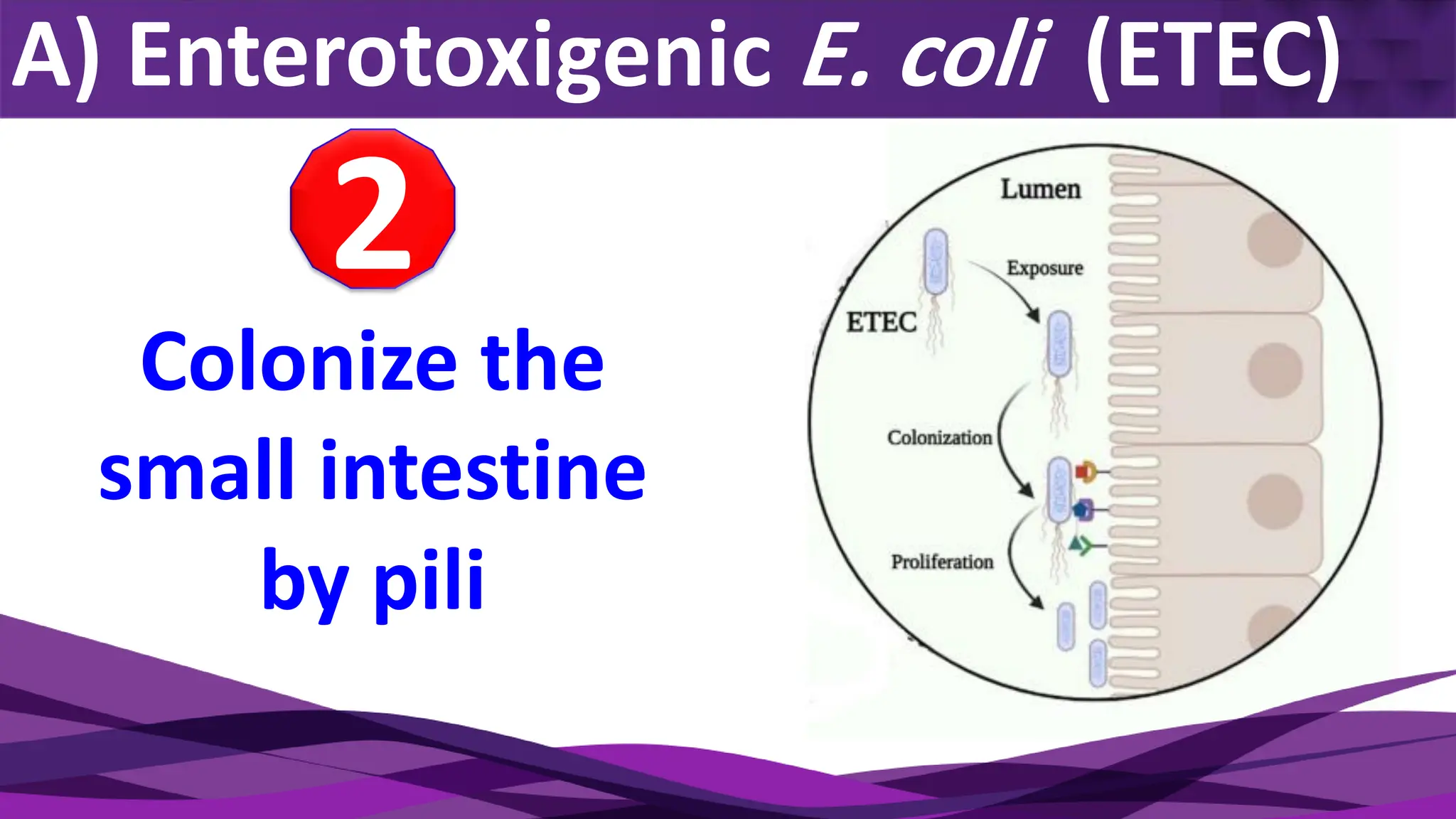
A) Enterotoxigenic E. coli (ETEC)
Colonize the
small intestine
by pili
2
A) Enterotoxigenic E. coli (ETEC)
Produce cholera
like toxin (LT &ST)
(Enterotoxin)
3
A) Enterotoxigenic E. coli (ETEC)
Heat labile toxin
(LT)
3
adenylate cyclase
ATP
A
A
A
cAMP
(5 B subunit +1 A subunit)
Diarrhea
I.P 1- 4 days
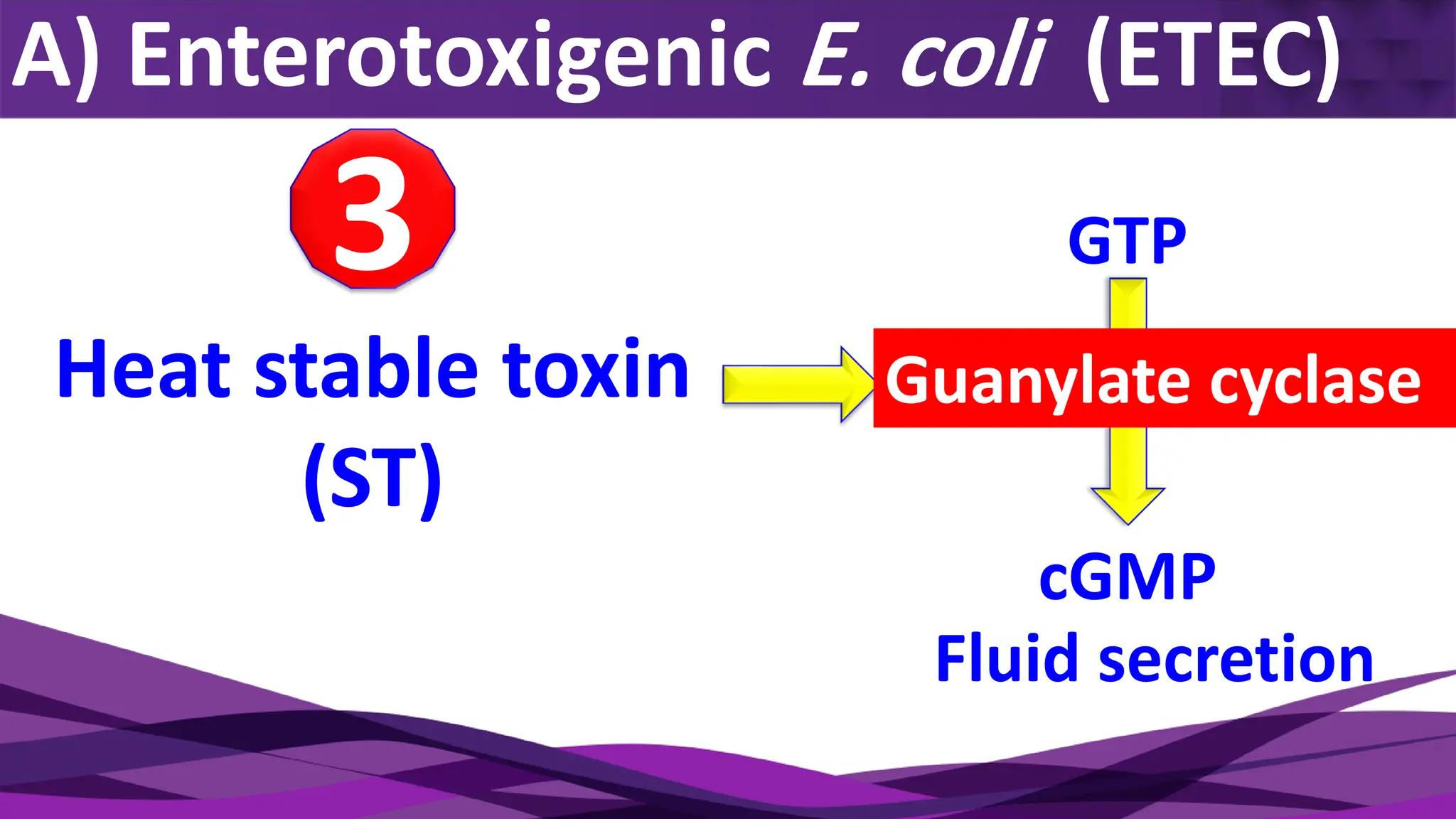
A) Enterotoxigenic E. coli (ETEC)
Heat stable toxin
(ST)
3
Fluid secretion
GTP
cGMP
Guanylate cyclase
2)Enteropathogenic E.coli (EPEC)
Diarrhea in
Infants
Poor sanitation
2)Enteropathogenic E.coli (EPEC)
Fecal oral route
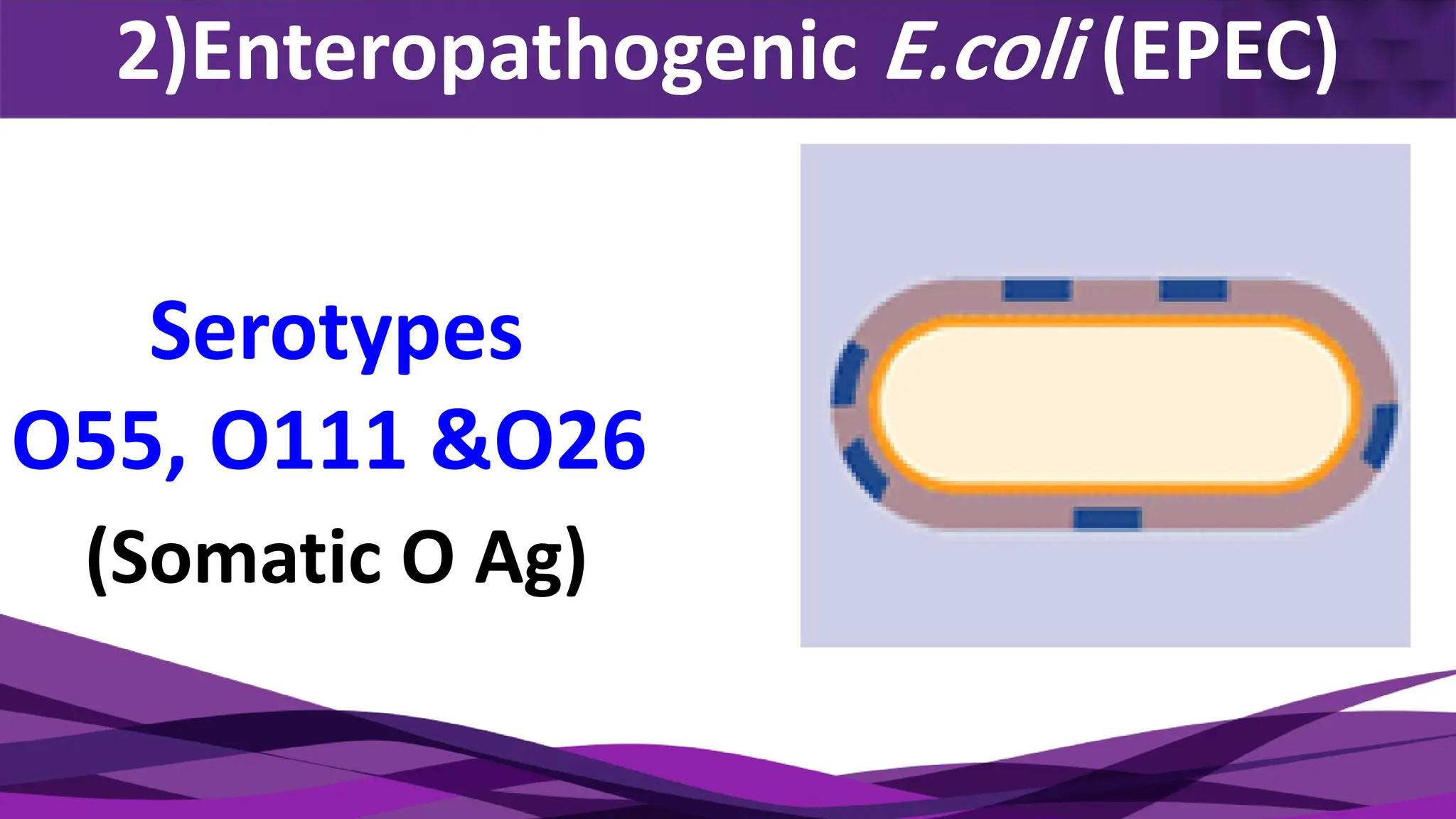
2)Enteropathogenic E.coli (EPEC)
Serotypes
O55, O111 &O26
(Somatic O Ag)
2)Enteropathogenic E.coli (EPEC)
EPEC
Destroys microvilli
Preventing of
absorption & secretion
Severe watery diarrhea
By pili (bundle forming pili)
2)Enteropathogenic E.coli (EPEC)
❖ Fever
❖ Watery diarrhea
(Non-bloody)
❖ Vomiting
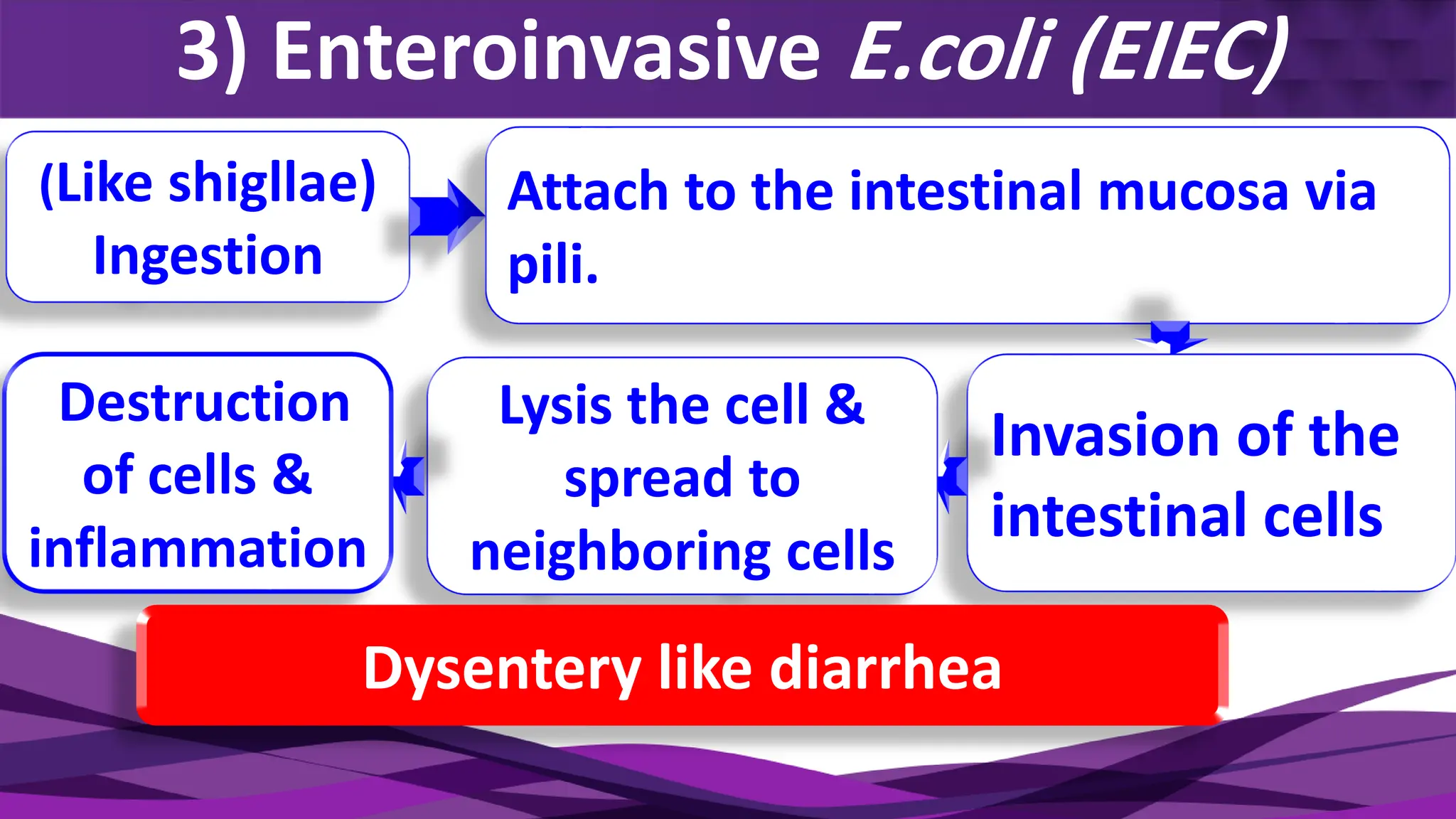
3) Enteroinvasive E.coli (EIEC)
(Like shigllae)
Ingestion
Attach to the intestinal mucosa via
pili.
Invasion of the
intestinal cells
Lysis the cell &
spread to
neighboring cells
Destruction
of cells &
inflammation
Dysentery like diarrhea
3) Enteroinvasive E.coli (EIEC)
❖ Fever
❖ Sever abdominal
cramps
❖ Bloody diarrhea
(mucus & pus)
❖ Vomiting.
(Resembles shigellosis).
3) Enteroinvasive E.coli (EIEC)
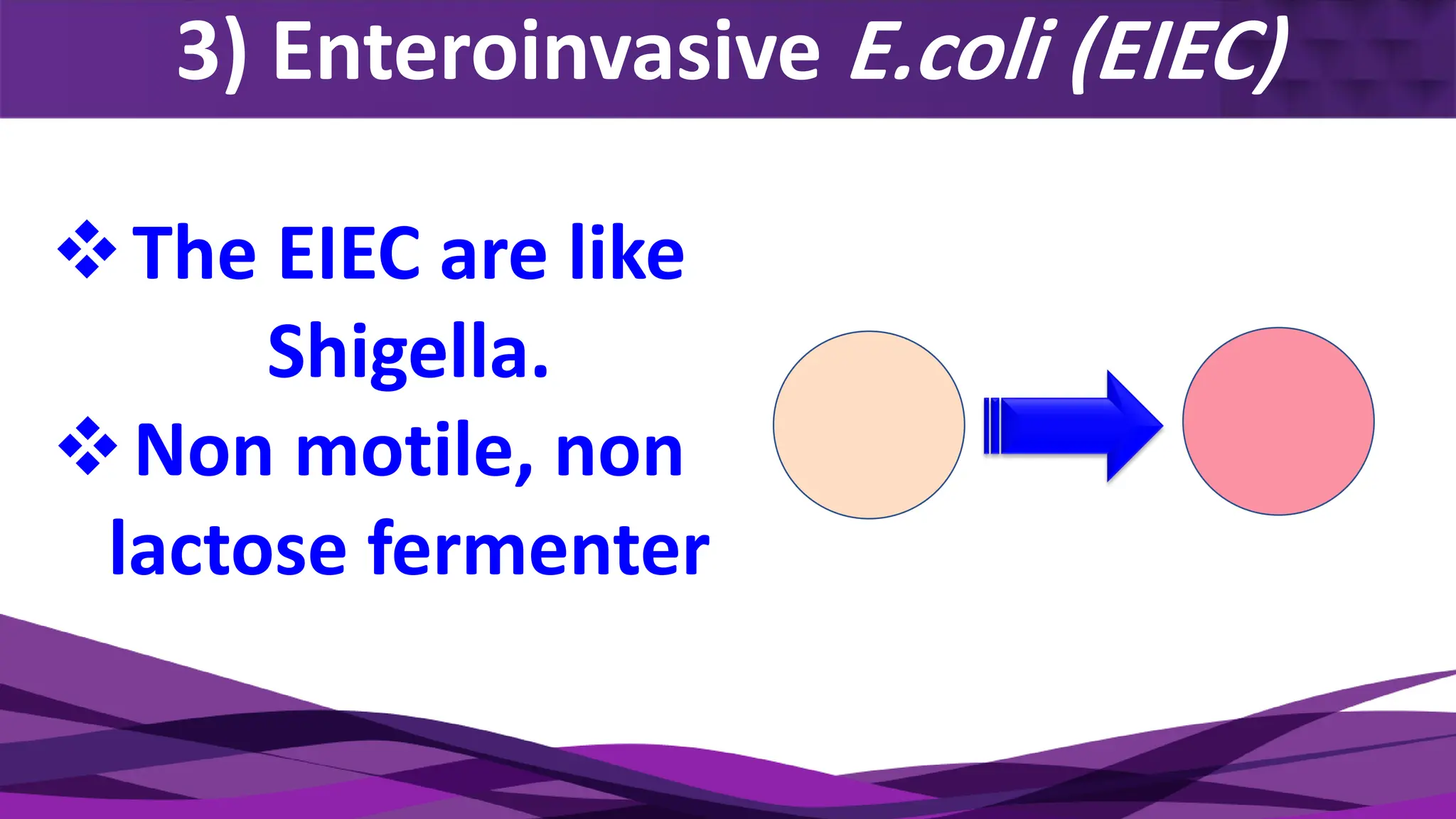
❖The EIEC are like
Shigella.
❖Non motile, non
lactose fermenter
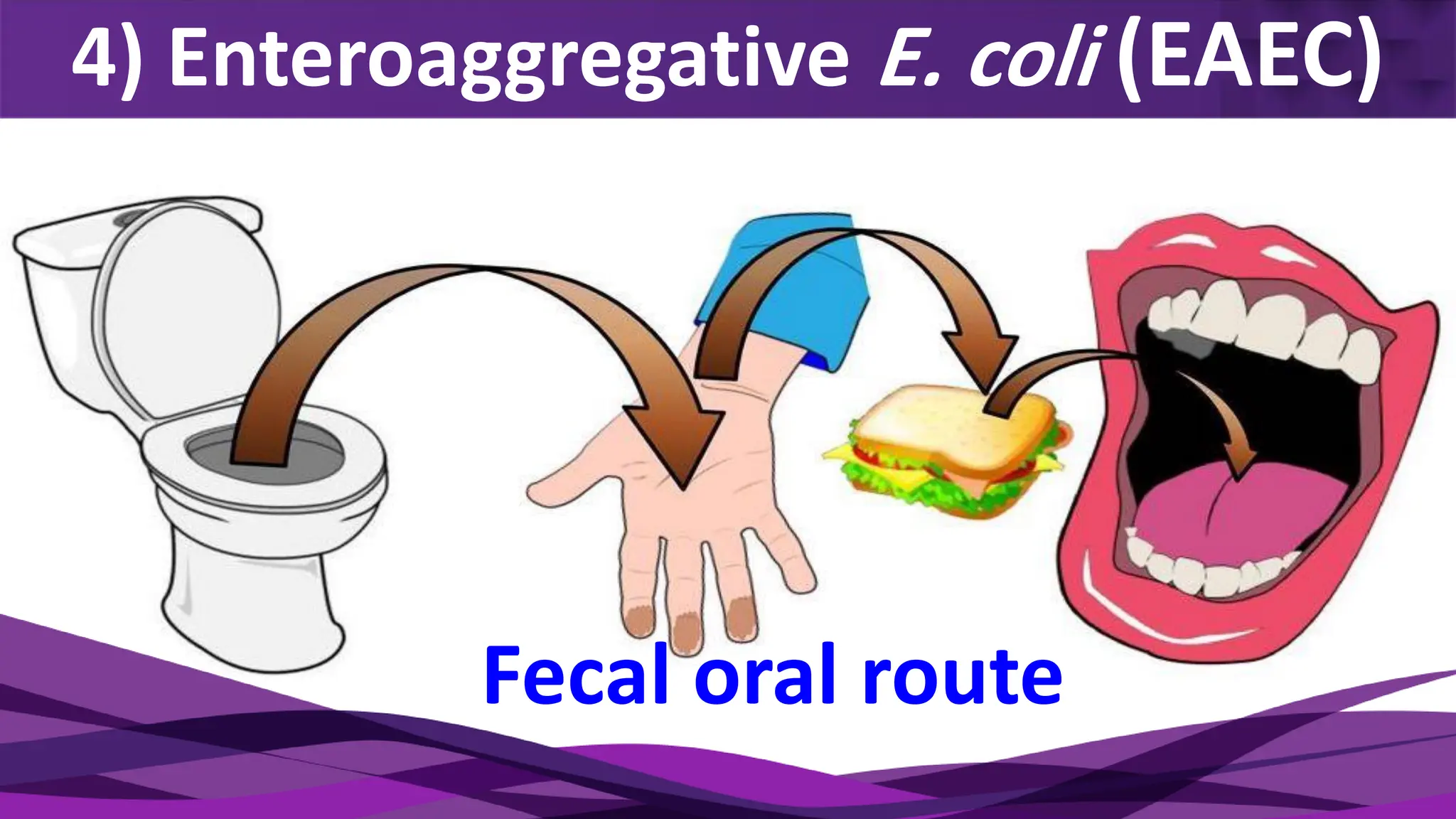
4) Enteroaggregative E. coli (EAEC)
Fecal oral route
4) Enteroaggregative E. coli (EAEC)
EAEC aggregate to
intestinal mucosa
Producing ST like
toxin (Enterotoxin)
Persistent
diarrhea in
children &HIV
patients
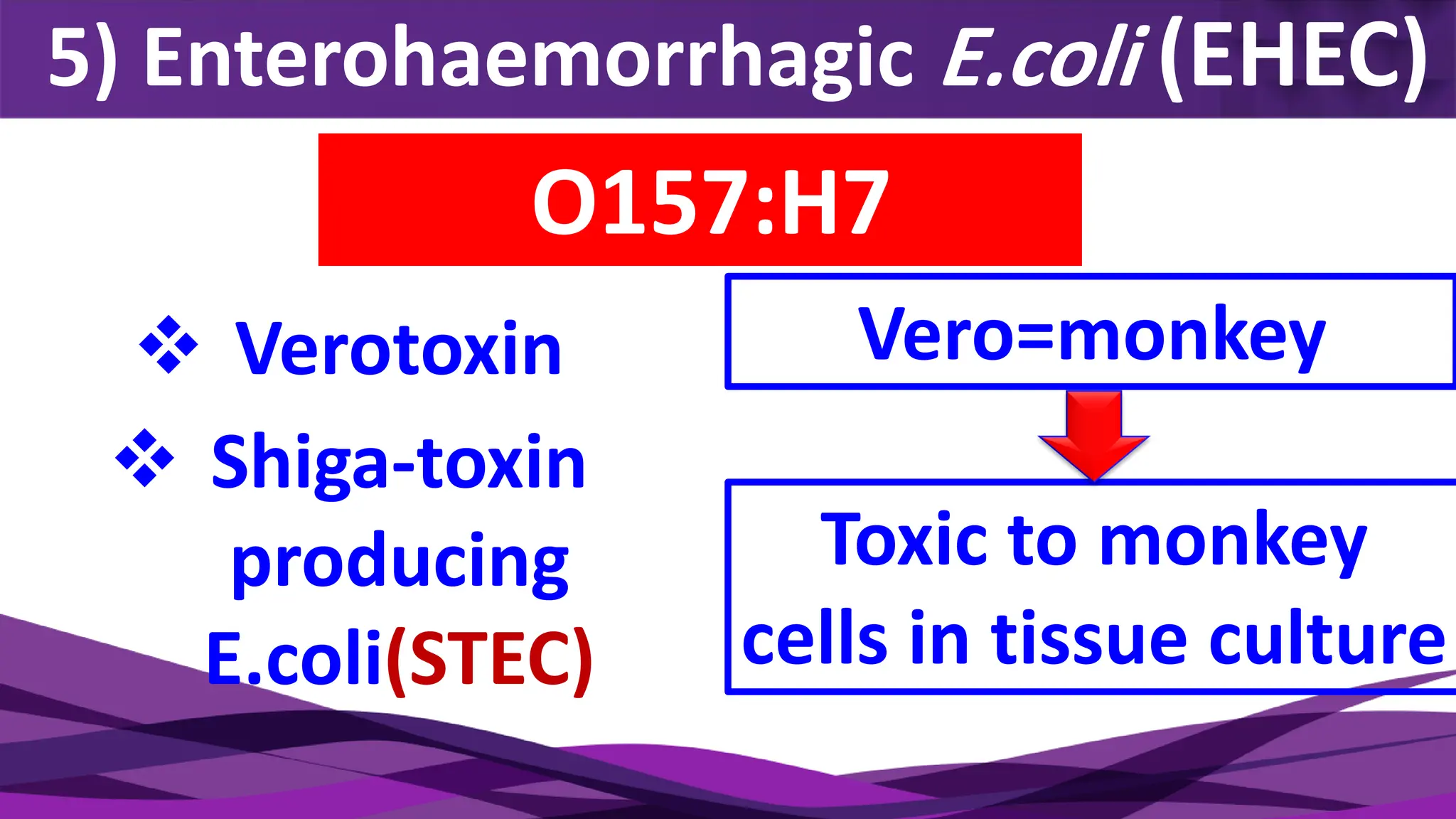
5) Enterohaemorrhagic E.coli (EHEC)
❖ Verotoxin
❖ Shiga-toxin
producing
E.coli(STEC)
O157:H7
Vero=monkey
Toxic to monkey
cells in tissue culture
Mode of transmission of EHEC
O157
2) Undercooked meat
1) Raw vegetables
Water
3) FOR
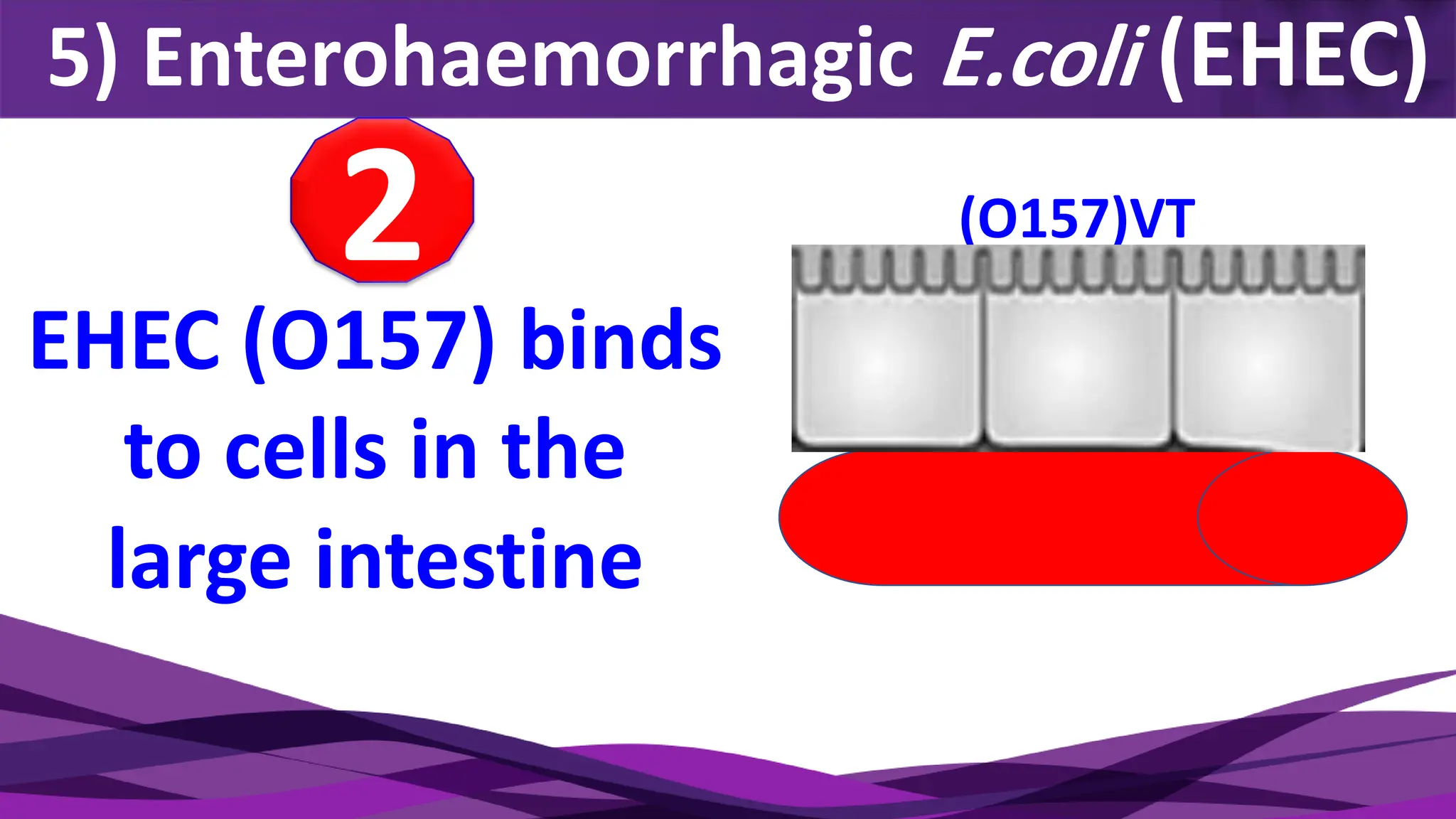
5) Enterohaemorrhagic E.coli (EHEC)
EHEC (O157) binds
to cells in the
large intestine
(O157)VT
2
5) Enterohaemorrhagic E.coli (EHEC)
EHEC (O157) VT
destroys microvilli
3 VT
5) Enterohaemorrhagic E.coli (EHEC)
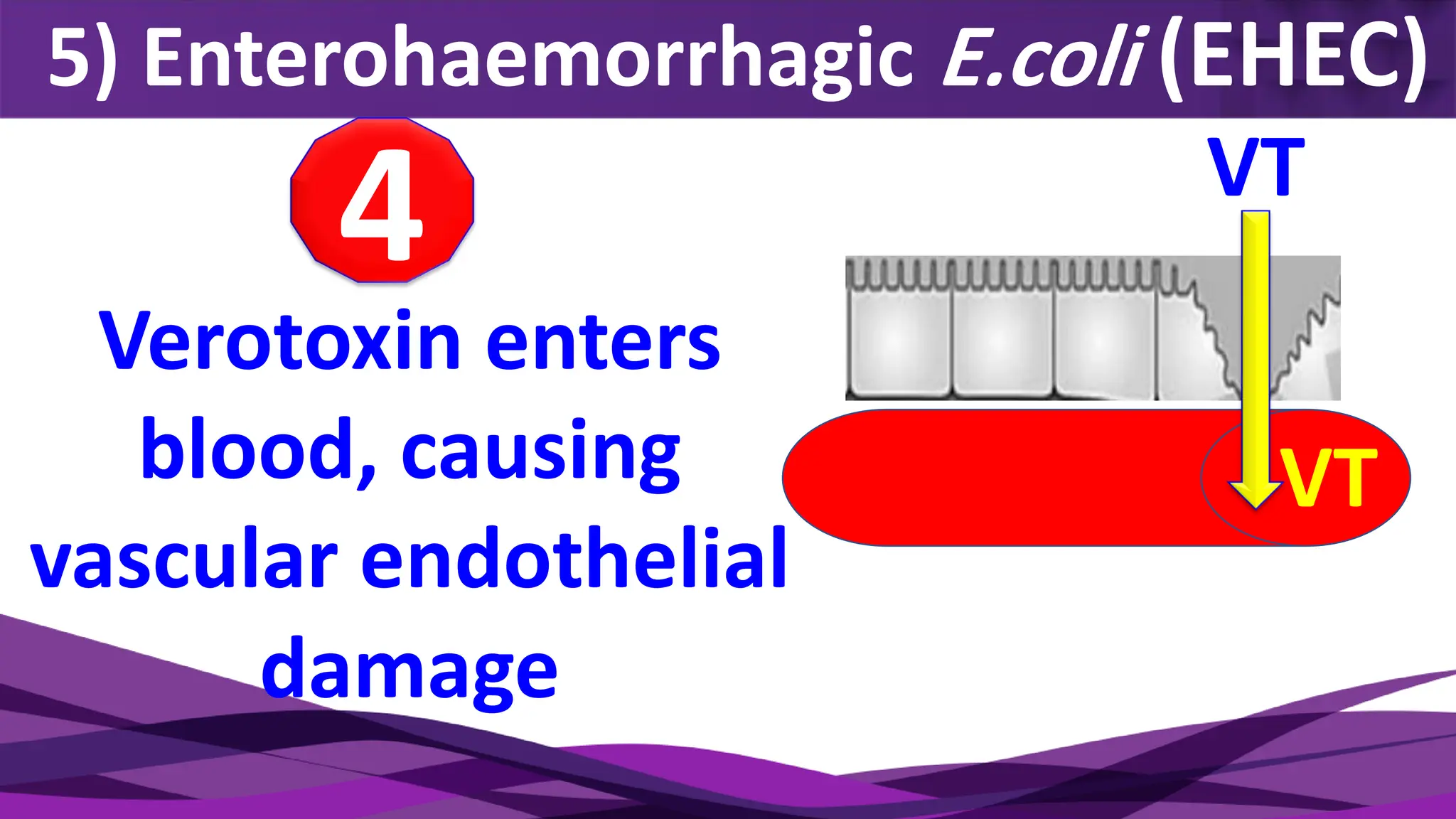
Verotoxin enters
blood, causing
vascular endothelial
damage
4 VT
VT
5) Enterohaemorrhagic E.coli (EHEC)
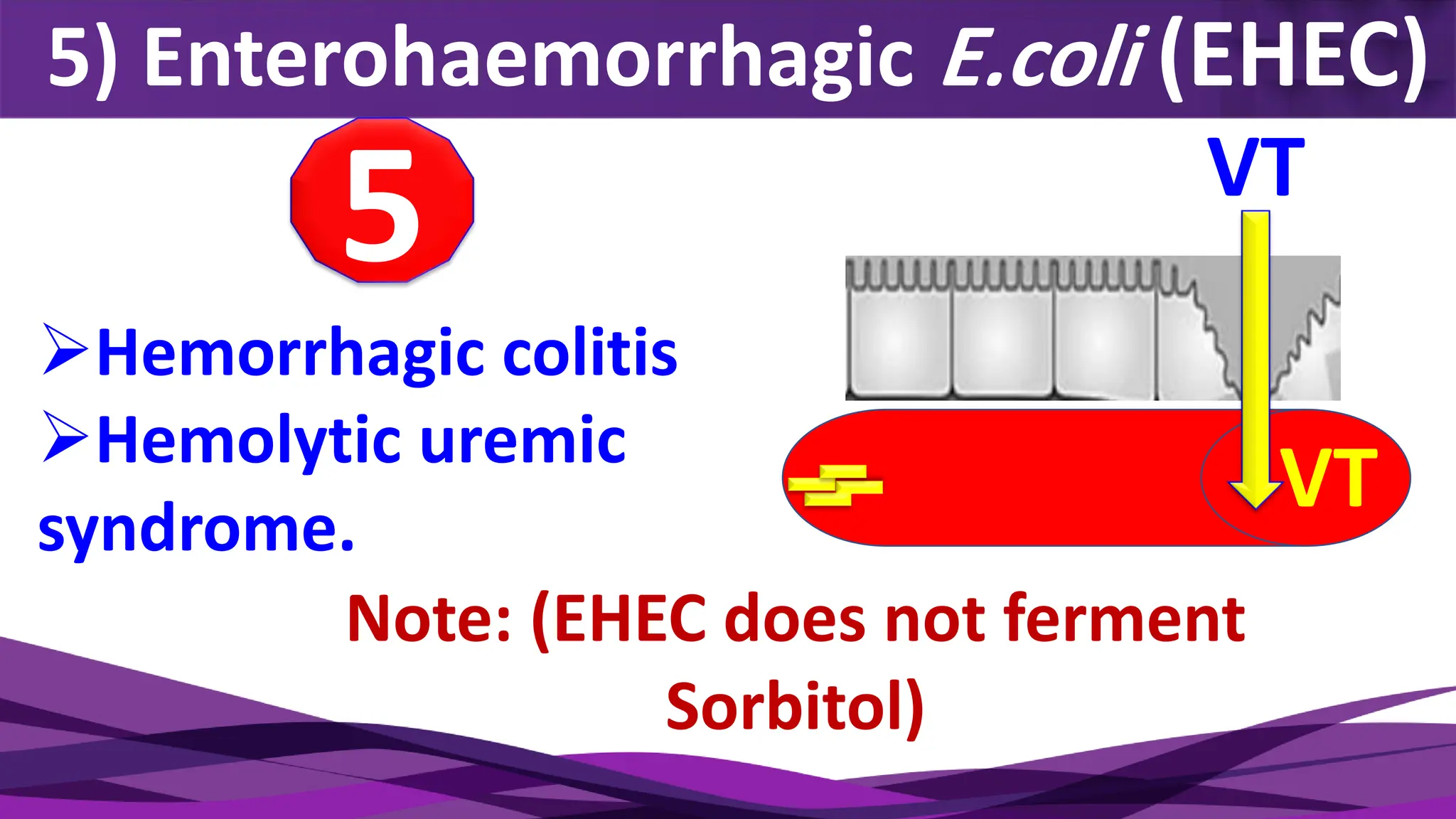
5 VT
VT
➢Hemorrhagic colitis
➢Hemolytic uremic
syndrome.
Note: (EHEC does not ferment
Sorbitol)
5) Enterohaemorrhagic E.coli (EHEC)
Antibiotic should
not be used
HUS if antibiotics
used.
Indicators of fecal pollution of water
❖ E. Coli
❖ S. Faecalis
❖ Cl. Perfringenes
Indicators of fecal pollution of water
❖ Give reason
• Klebsiella spp can not
used as indicator for
fecal pollution of water.
Indicators of fecal pollution of water
Because Klebsiella spp
inhabitant in intestine &
environmental (soil).
Lab. diagnosis of E. coli
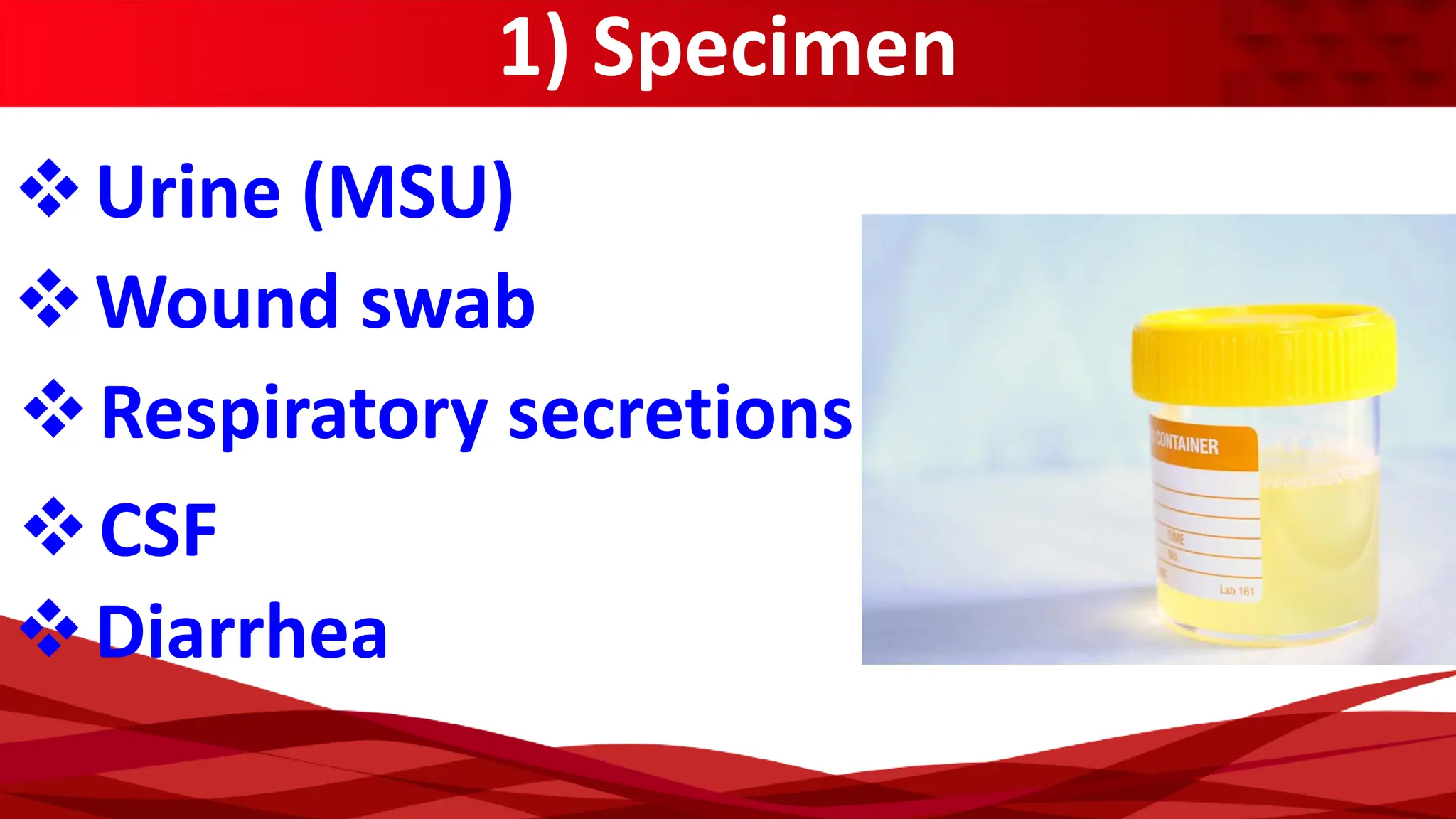
1) Specimen
❖Urine (MSU)
❖Wound swab
❖Respiratory secretions
❖CSF
❖Diarrhea
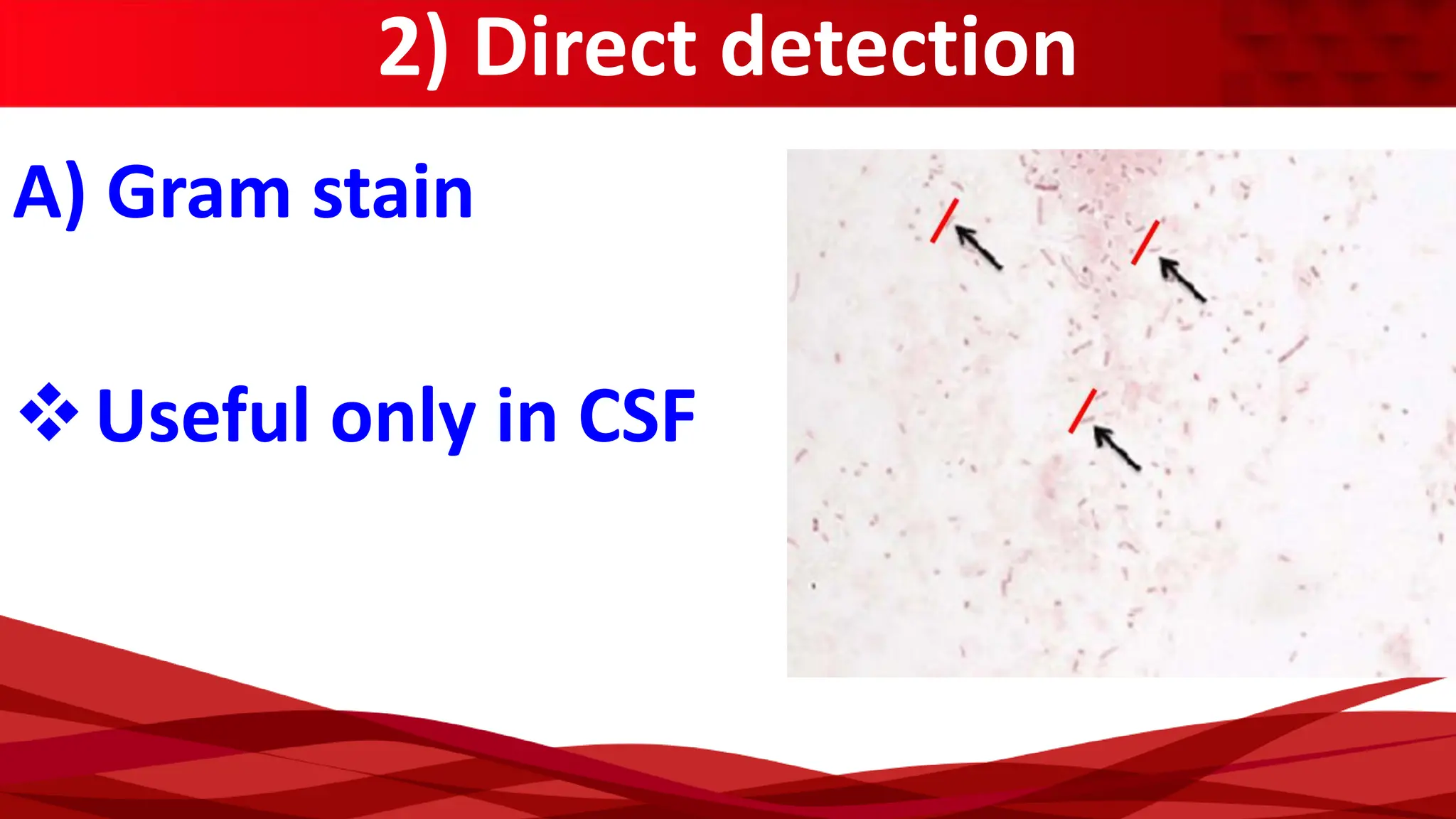
2) Direct detection
A) Gram stain
❖Useful only in CSF
2) Direct detection
B) E. coli K1 Ag in CSF
❖Latex
agglutination
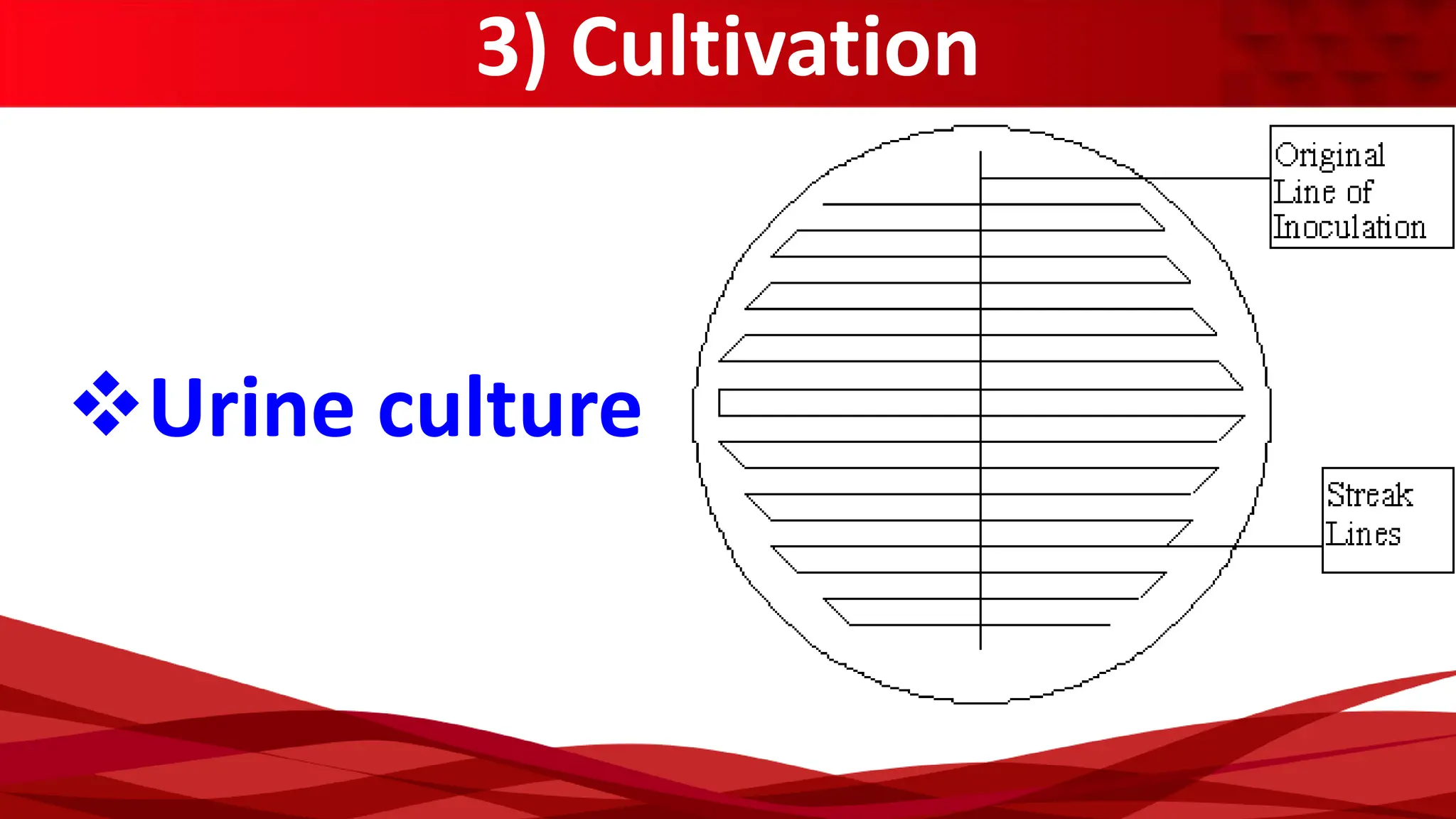
3) Cultivation
❖ MacConkey agar ❖ Blood agar ❖ CLED agar
3) Cultivation
❖Urine culture
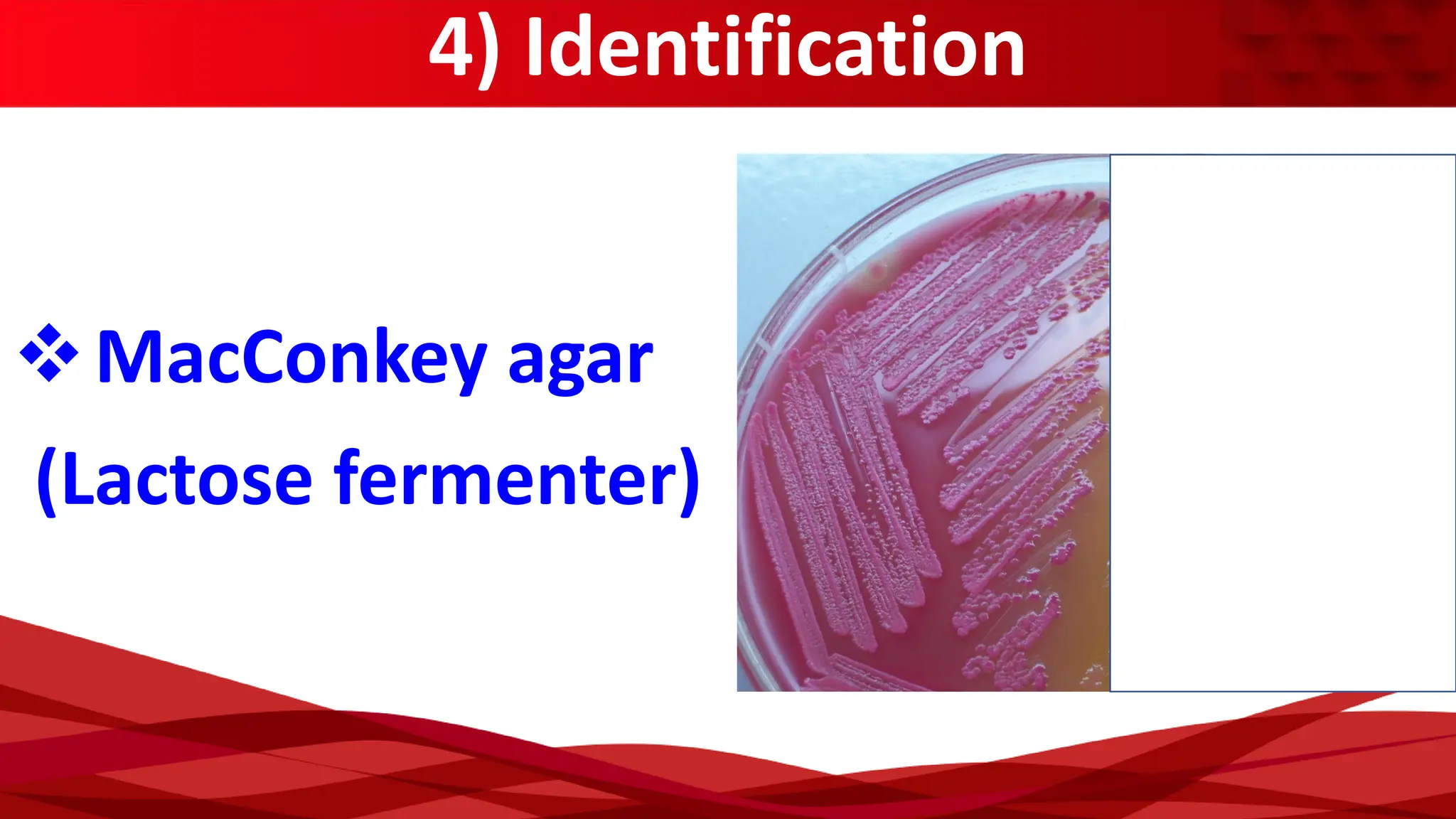
4) Identification
(Lactose fermenter)
❖MacConkey agar
4) Identification
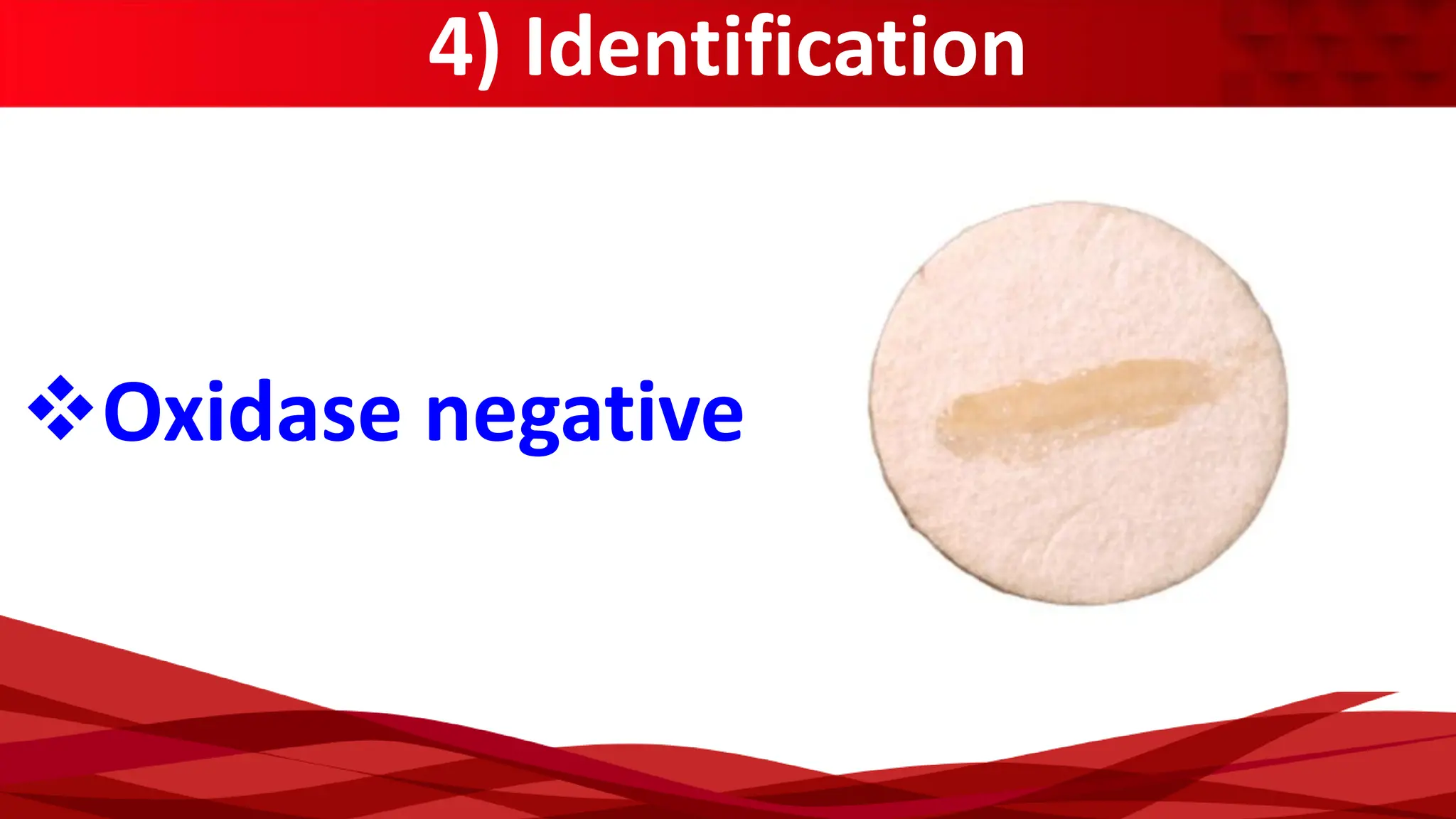
❖Oxidase negative
(In case of diarrhea)
Sorbitol
MacConkey agar
95% of strains are
sorbital fermenters
EHEC
Sorbitol non
fermenter
4) Identification
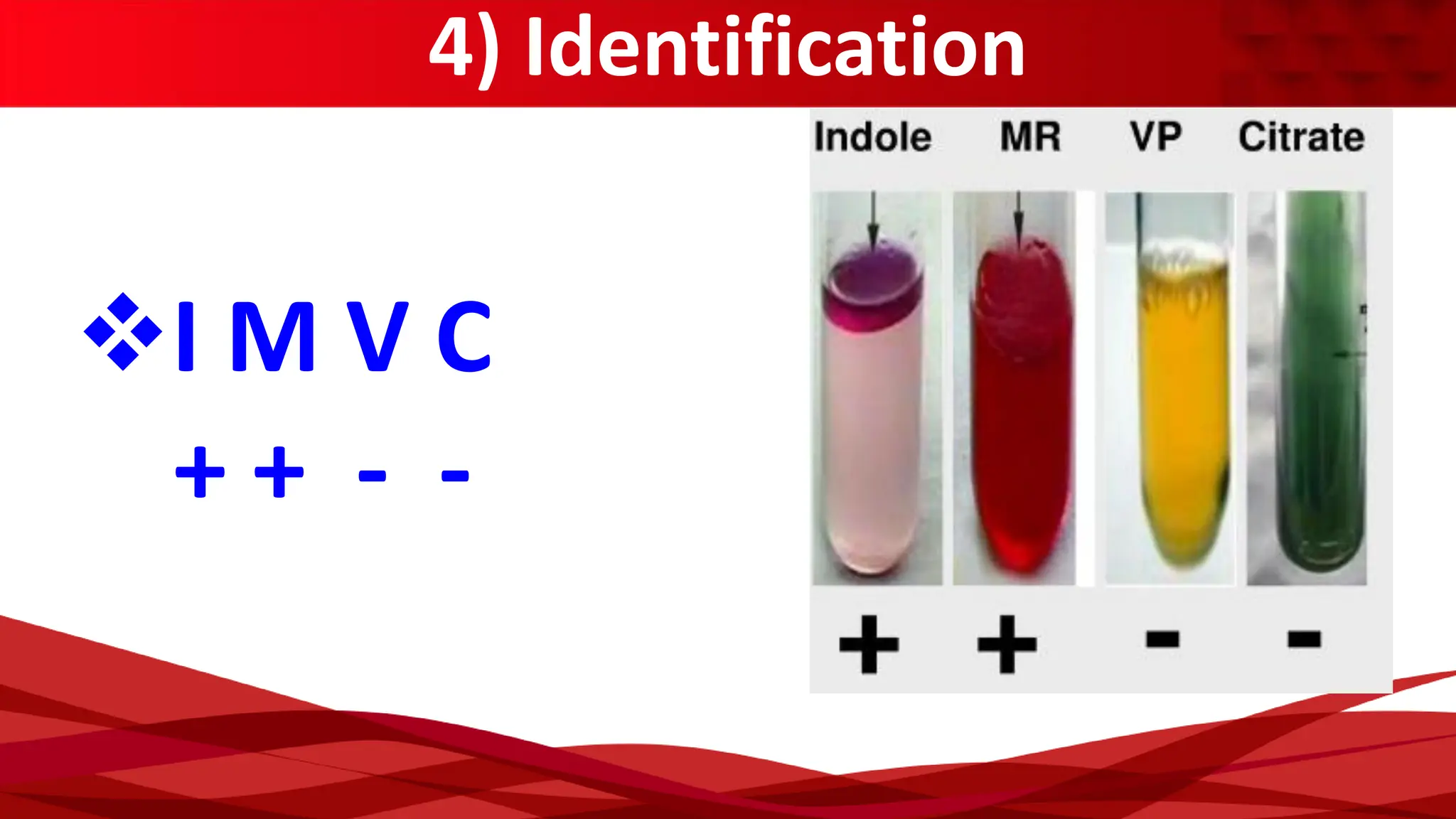
❖I M V C
+ + - -
4) Identification
• The analytical
profile index
(API)
(Biochemical tests for identification)
API 20E
4) Identification
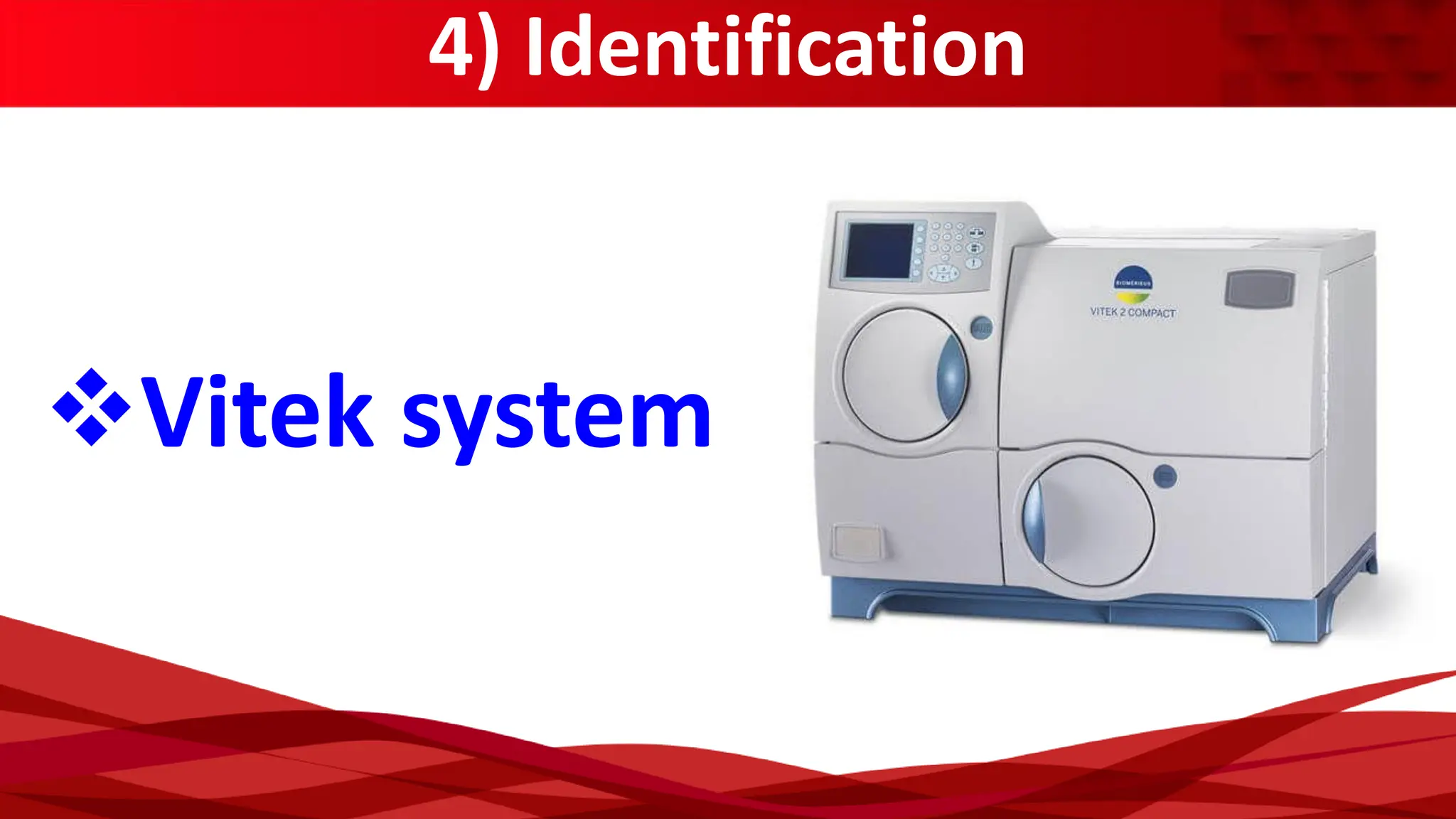
❖Vitek system
Treatment
• For UTI:
• Sulfamethoxazole/trimethoprim is
a first-choice medication.
• For neonatal meningitis:
Ampicillin plus Gentamicin.
Prevention
• How to prevent E. coli
infection from
spreading???
محاضرة عمرو الحبيشي .pdf بكتيريا جرام نيجتف رودس

محاضرة عمرو الحبيشي .pdf بكتيريا جرام نيجتف رودس