E. coli
Prof. Jyotsna Agarwal
Dept. Microbiology
KGMU
E. coli
• Present in GUT- Normal flora
• Endogennous
• Belongs to enterobacteriacae family
Identification
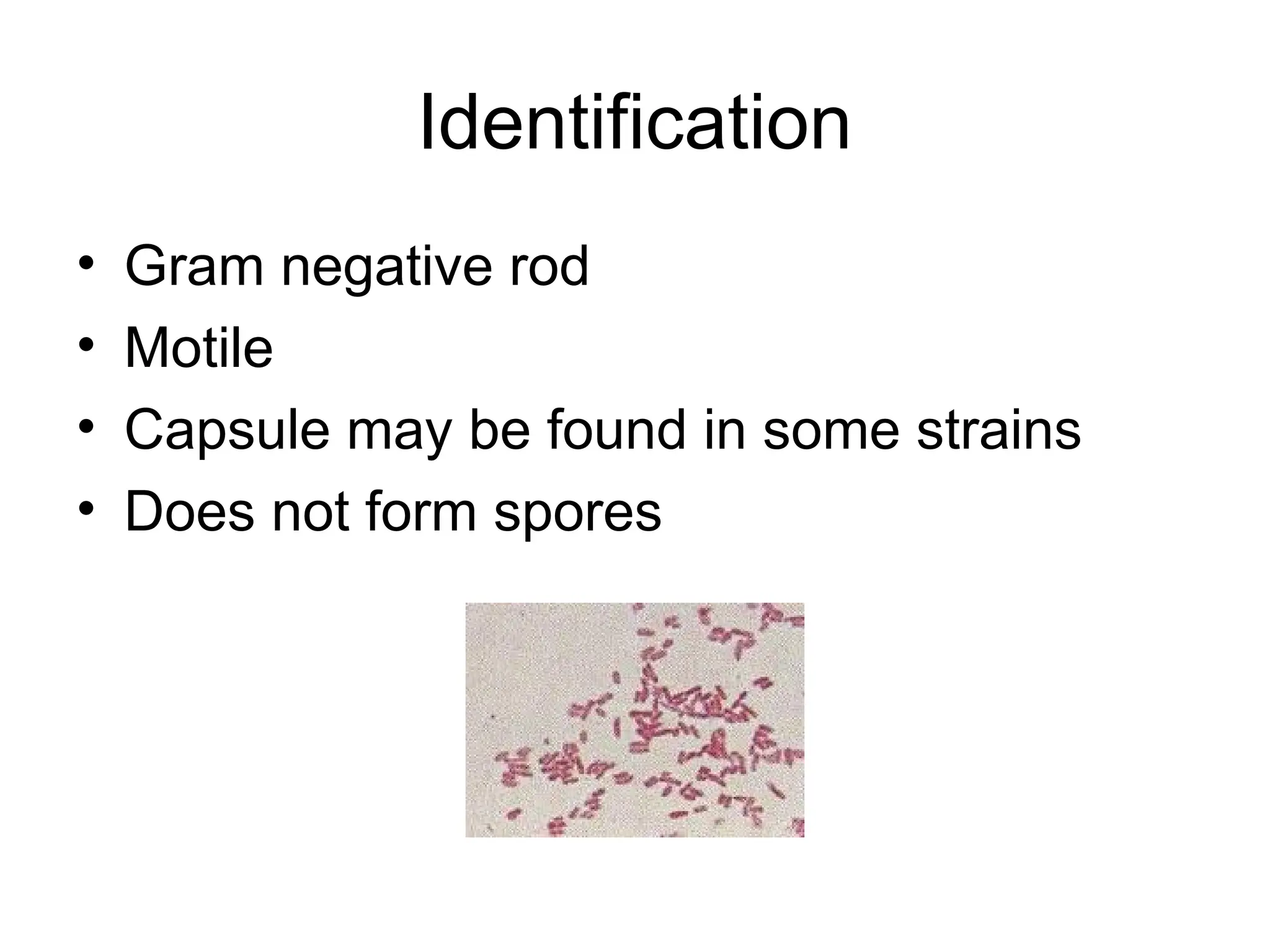
• Gram negative rod
• Motile
• Capsule may be found in some strains
• Does not form spores
• Aerobe and facultative anaerobe
• Optimum temperature for growth 37C
• Tolerates bile salt, Grows on MacConkey
agar forms pink colour colonies due to
lactose fermentation
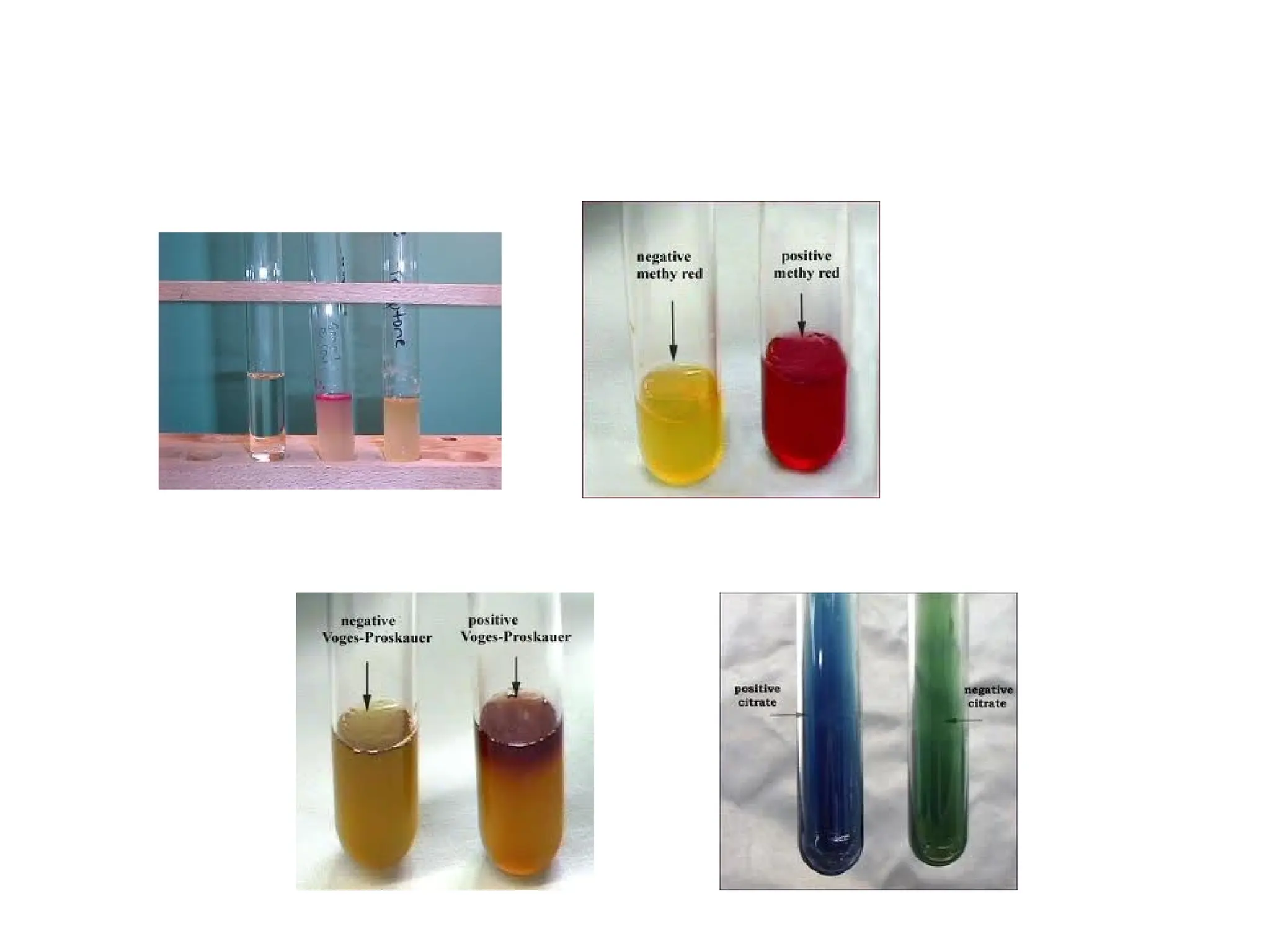
IMViC + + - - (Indole, methyl red, VP, Citrate
Antigenic structure
• O somatic
• H flagellar
• K capsular
• K has a strong association with virulence,
particularly meningitis, pyelonephritis
Factors of pathogenicity and virulence
• Endotoxin
• Capsule
• Antigenic variation
• Exotoxin- Hemolysins, Enterotoxins- LT, ST, VT
• Adhesins, fimbriae
Infections
• Urinary tract infection
• Diarrhoea
• Pyogenic/wound infection-post surgical
• Septicemia
• Neonatal meningitis
Urinary tract infections
• E. coli is the most common cause of UTI
• Account for 90% of cases in sexually active
women, Why?
• Ascending infection
• Symptoms- ?
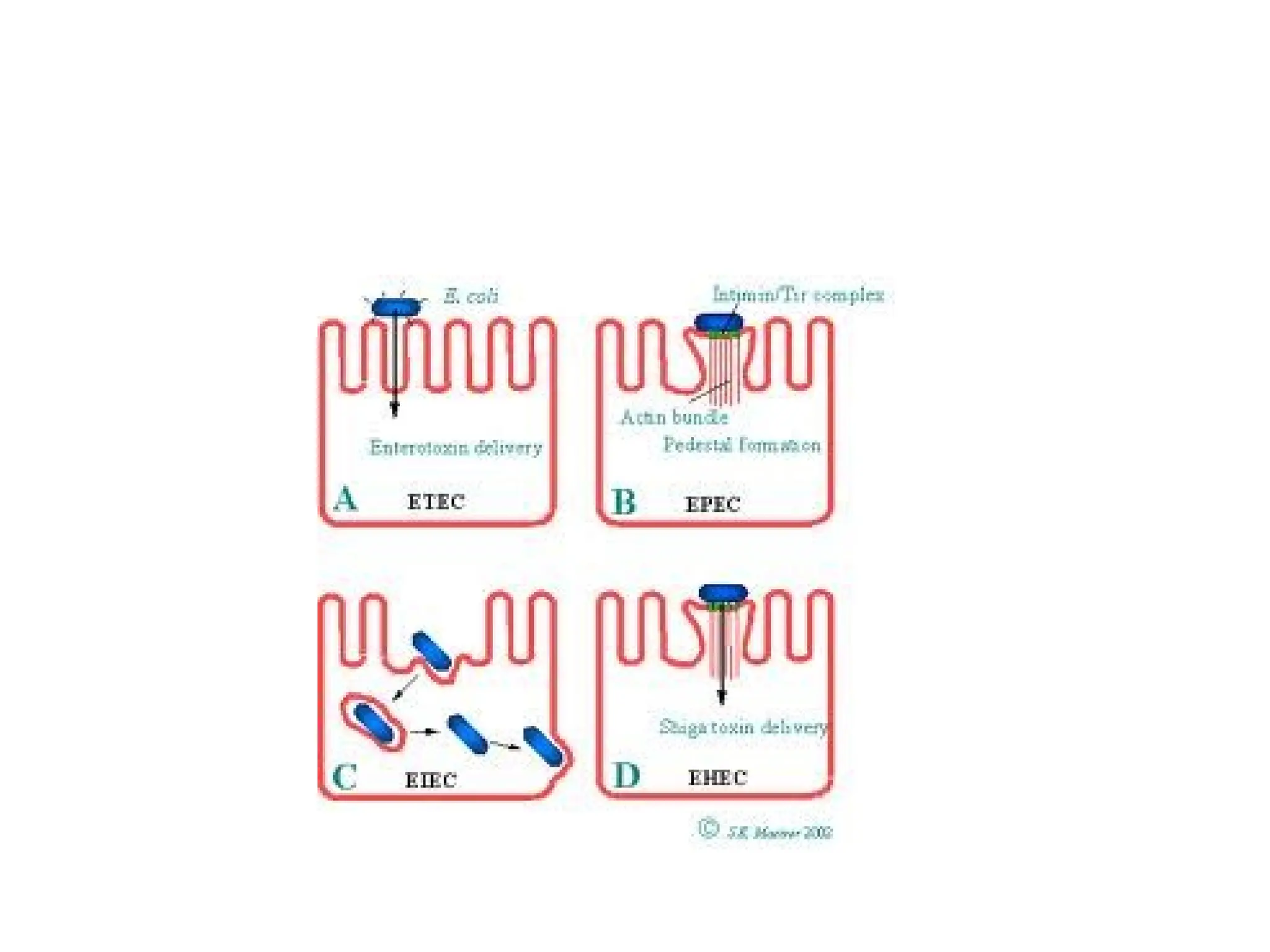
Types of diarrheagenic E.coli
• ETEC entero toxic E. coli
• EIEC- entero invasive E. coli
• EPEC enetro pathogenic
• EAEC entero aggregative
• EHEC entero haemorrhagic- some strains
can cause “Hemolytic uremic syndrome”
• LT–is heat labile and binds to specific Gm11
gangliosides on epithelial cells of small intestine where it
stimulates production of cAMP.
• Increased cAMP opens up chloride channel, leading to
Cl secretion in to bowel lumen. Sodium follows to
maintain electroneutrality. Resulting in secretory
diarrhoea which is watery.
• Produce 2 types of enterotoxin: LT & ST
• Entero toxigenic E coli is common cause
for travellers diarrhoea and watery
diarrhoea in children.
Entero toxigenic E. coli (ETEC)
Entero pathogenic E. coli (EPEC)
• Important cause of diarrhoea in infants of
developing countries.
• Adhere to mucosal cells in small bowel, lead to
loss of microvilli, result in watery diarrhoea.
• Normally do not produce toxins, NON
INVASIVE
Entero hemorrhagic E. coli (EHEC)
• Produce verotoxin (VT) also called Shiga like toxin.
• Toxin acts systemically- vascular endothelium
• Clinically it can cause mild to severe form of diarrhoea
with hemorrhagic colitis, and potentially fatal Hemolytic
uremic syndrome in young children and elderly
• Typical example is E coli O157:H7,
Entero invasive E. coli (EIEC)
• Produces disease similar to shigella
• Commonly affect children in developing
countries and travellers.
• Disease is due to invasion in to mucosal cells of
intestine. Bacteria multiply inside epithelial cells
and destruction/ inflammation /ulceration occurs
with bloody diarrhoea with mucus and necrotic
tissue
Entero aggregative E. coli (EAEC)
• Produce acute/chronic diarrhoea in
persons in developing countries.
summary
• Normal flora of gut, Endogennous infection
• Most common cause of urinary tract infection
• Other infections-
• Gastroenteritis (diff types of E. coli)
• Neonatal meningitis
• Hemolytic uremic syndrome
• Wound infection (eg. GI surgery sepsis)

Ecoli_UG_lecture.ppt it expane the E coli very good

  • 1.
    E. coli Prof. JyotsnaAgarwal Dept. Microbiology KGMU
  • 2.
    E. coli • Presentin GUT- Normal flora • Endogennous • Belongs to enterobacteriacae family
  • 3.
    Identification • Gram negativerod • Motile • Capsule may be found in some strains • Does not form spores
  • 4.
    • Aerobe andfacultative anaerobe • Optimum temperature for growth 37C • Tolerates bile salt, Grows on MacConkey agar forms pink colour colonies due to lactose fermentation IMViC + + - - (Indole, methyl red, VP, Citrate
  • 6.
    Antigenic structure • Osomatic • H flagellar • K capsular • K has a strong association with virulence, particularly meningitis, pyelonephritis
  • 7.
    Factors of pathogenicityand virulence • Endotoxin • Capsule • Antigenic variation • Exotoxin- Hemolysins, Enterotoxins- LT, ST, VT • Adhesins, fimbriae
  • 8.
    Infections • Urinary tractinfection • Diarrhoea • Pyogenic/wound infection-post surgical • Septicemia • Neonatal meningitis
  • 9.
    Urinary tract infections •E. coli is the most common cause of UTI • Account for 90% of cases in sexually active women, Why? • Ascending infection • Symptoms- ?
  • 10.
    Types of diarrheagenicE.coli • ETEC entero toxic E. coli • EIEC- entero invasive E. coli • EPEC enetro pathogenic • EAEC entero aggregative • EHEC entero haemorrhagic- some strains can cause “Hemolytic uremic syndrome”
  • 11.
    • LT–is heatlabile and binds to specific Gm11 gangliosides on epithelial cells of small intestine where it stimulates production of cAMP. • Increased cAMP opens up chloride channel, leading to Cl secretion in to bowel lumen. Sodium follows to maintain electroneutrality. Resulting in secretory diarrhoea which is watery.
  • 12.
    • Produce 2types of enterotoxin: LT & ST • Entero toxigenic E coli is common cause for travellers diarrhoea and watery diarrhoea in children. Entero toxigenic E. coli (ETEC)
  • 13.
    Entero pathogenic E.coli (EPEC) • Important cause of diarrhoea in infants of developing countries. • Adhere to mucosal cells in small bowel, lead to loss of microvilli, result in watery diarrhoea. • Normally do not produce toxins, NON INVASIVE
  • 14.
    Entero hemorrhagic E.coli (EHEC) • Produce verotoxin (VT) also called Shiga like toxin. • Toxin acts systemically- vascular endothelium • Clinically it can cause mild to severe form of diarrhoea with hemorrhagic colitis, and potentially fatal Hemolytic uremic syndrome in young children and elderly • Typical example is E coli O157:H7,
  • 15.
    Entero invasive E.coli (EIEC) • Produces disease similar to shigella • Commonly affect children in developing countries and travellers. • Disease is due to invasion in to mucosal cells of intestine. Bacteria multiply inside epithelial cells and destruction/ inflammation /ulceration occurs with bloody diarrhoea with mucus and necrotic tissue
  • 16.
    Entero aggregative E.coli (EAEC) • Produce acute/chronic diarrhoea in persons in developing countries.
  • 18.
    summary • Normal floraof gut, Endogennous infection • Most common cause of urinary tract infection • Other infections- • Gastroenteritis (diff types of E. coli) • Neonatal meningitis • Hemolytic uremic syndrome • Wound infection (eg. GI surgery sepsis)