ELECTRO 3
LEARNING OBJECTIVES
16 Explains such sources of supply can be run in parallel and those
which cannot
17 Performs or describes the synchronizing sequence to bring a
generator into service in parallel with a running generator, using both
a synchroscope and lamps
18 Adjusts, or describes how to adjust, the load sharing of two
generators running in parallel
19 Either performs the procedure, or describes how, to reduce the
load on a generator and takes it out of service
20 States that load sharing can be automatically controlled
• 21 States that the emergency generator feeds its own switchboard
and that both are usually installed in the same compartment above
the waterline
22 Describes the connections between the emergency and main
switchboards and the necessary safeguards
23 Describes the situation where the emergency generator would be
started up automatically and the methods of starting
• 24 Describes the regular “no load” running and the occasional “on
load” running of the emergency generator
EXPLAINS SUCH SOURCES OF SUPPLY CAN BE RUN
IN PARALLEL AND THOSE WHICH CANNOT:
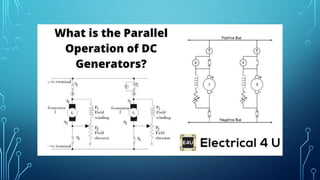
Certain power sources, like generators, can be
run in parallel if they are designed to share the
load evenly. However, sources with different
output characteristics, like voltage or frequency,
may not run in parallel without proper
synchronization.
PERFORMS OR DESCRIBES THE SYNCHRONIZING
SEQUENCE TO BRING A GENERATOR INTO SERVICE IN
PARALLEL WITH A RUNNING GENERATOR, USING BOTH A
SYNCHROSCOPE AND LAMPS:
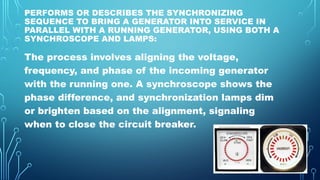
The process involves aligning the voltage,
frequency, and phase of the incoming generator
with the running one. A synchroscope shows the
phase difference, and synchronization lamps dim
or brighten based on the alignment, signaling
when to close the circuit breaker.
ADJUSTS, OR DESCRIBES HOW TO
ADJUST, THE LOAD SHARING OF TWO
GENERATORS RUNNING IN PARALLEL:
Load sharing between two generators is adjusted
by controlling their power output. This is done by
adjusting the fuel supply (for diesel generators)
or excitation voltage to balance the load. An
automatic load-sharing control system may also
be used.
EITHER PERFORMS THE PROCEDURE,
OR DESCRIBES HOW, TO REDUCE THE
LOAD ON A GENERATOR AND TAKES
IT OUT OF SERVICE:
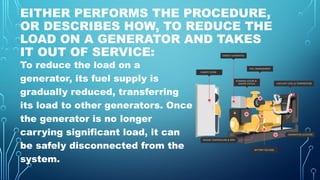
To reduce the load on a
generator, its fuel supply is
gradually reduced, transferring
its load to other generators. Once
the generator is no longer
carrying significant load, it can
be safely disconnected from the
system.
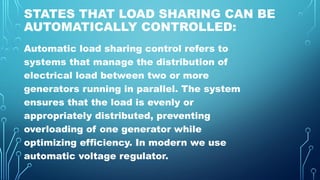
STATES THAT LOAD SHARING CAN BE
AUTOMATICALLY CONTROLLED:
Automatic load sharing control refers to
systems that manage the distribution of
electrical load between two or more
generators running in parallel. The system
ensures that the load is evenly or
appropriately distributed, preventing
overloading of one generator while
optimizing efficiency. In modern we use
automatic voltage regulator.
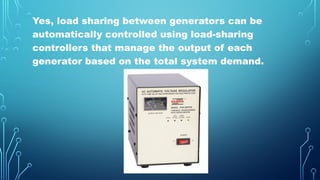
Yes, load sharing between generators can be
automatically controlled using load-sharing
controllers that manage the output of each
generator based on the total system demand.
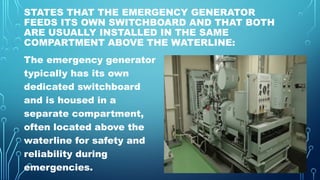
STATES THAT THE EMERGENCY GENERATOR
FEEDS ITS OWN SWITCHBOARD AND THAT BOTH
ARE USUALLY INSTALLED IN THE SAME
COMPARTMENT ABOVE THE WATERLINE:
The emergency generator
typically has its own
dedicated switchboard
and is housed in a
separate compartment,
often located above the
waterline for safety and
reliability during
emergencies.
DESCRIBES THE CONNECTIONS BETWEEN
THE EMERGENCY AND MAIN
SWITCHBOARDS AND THE NECESSARY
SAFEGUARDS:
The emergency switchboard is connected to the
main switchboard through an automatic transfer
switch (ATS) or circuit breakers, ensuring that
during a failure of the main power, the emergency
system can take over safely. The emergency
switchboard is isolated to prevent backfeeding
into the main system.
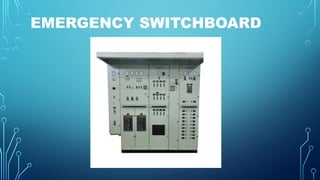
EMERGENCY SWITCHBOARD
DESCRIBES THE SITUATION WHERE THE
EMERGENCY GENERATOR WOULD BE
STARTED UP AUTOMATICALLY AND THE
METHODS OF STARTING:
The emergency generator starts automatically
when the main power supply fails. It can be
started using various methods, such as batteries
(electric start), compressed air, or hydraulic
systems, depending on the setup.
DESCRIBES THE REGULAR “NO LOAD”
RUNNING AND THE OCCASIONAL “ON
LOAD” RUNNING OF THE EMERGENCY
GENERATOR:
No-Load Running: Regularly running the
emergency generator without load ensures it is
operational, the lubricants are distributed, and
any issues can be identified before an actual
emergency.
On-Load Running: Occasionally, the generator is
run with load to ensure it can handle its designed
power output and to maintain its readiness for
emergency conditions.
THANK YOU!

PC - Electro: The Alternating current and Direct Generators

  • 1.
  • 2.
    LEARNING OBJECTIVES 16 Explainssuch sources of supply can be run in parallel and those which cannot 17 Performs or describes the synchronizing sequence to bring a generator into service in parallel with a running generator, using both a synchroscope and lamps 18 Adjusts, or describes how to adjust, the load sharing of two generators running in parallel 19 Either performs the procedure, or describes how, to reduce the load on a generator and takes it out of service 20 States that load sharing can be automatically controlled • 21 States that the emergency generator feeds its own switchboard and that both are usually installed in the same compartment above the waterline
  • 3.
    22 Describes theconnections between the emergency and main switchboards and the necessary safeguards 23 Describes the situation where the emergency generator would be started up automatically and the methods of starting • 24 Describes the regular “no load” running and the occasional “on load” running of the emergency generator
  • 4.
    EXPLAINS SUCH SOURCESOF SUPPLY CAN BE RUN IN PARALLEL AND THOSE WHICH CANNOT: Certain power sources, like generators, can be run in parallel if they are designed to share the load evenly. However, sources with different output characteristics, like voltage or frequency, may not run in parallel without proper synchronization.
  • 6.
    PERFORMS OR DESCRIBESTHE SYNCHRONIZING SEQUENCE TO BRING A GENERATOR INTO SERVICE IN PARALLEL WITH A RUNNING GENERATOR, USING BOTH A SYNCHROSCOPE AND LAMPS: The process involves aligning the voltage, frequency, and phase of the incoming generator with the running one. A synchroscope shows the phase difference, and synchronization lamps dim or brighten based on the alignment, signaling when to close the circuit breaker.
  • 7.
    ADJUSTS, OR DESCRIBESHOW TO ADJUST, THE LOAD SHARING OF TWO GENERATORS RUNNING IN PARALLEL: Load sharing between two generators is adjusted by controlling their power output. This is done by adjusting the fuel supply (for diesel generators) or excitation voltage to balance the load. An automatic load-sharing control system may also be used.
  • 8.
    EITHER PERFORMS THEPROCEDURE, OR DESCRIBES HOW, TO REDUCE THE LOAD ON A GENERATOR AND TAKES IT OUT OF SERVICE: To reduce the load on a generator, its fuel supply is gradually reduced, transferring its load to other generators. Once the generator is no longer carrying significant load, it can be safely disconnected from the system.
  • 9.
    STATES THAT LOADSHARING CAN BE AUTOMATICALLY CONTROLLED: Automatic load sharing control refers to systems that manage the distribution of electrical load between two or more generators running in parallel. The system ensures that the load is evenly or appropriately distributed, preventing overloading of one generator while optimizing efficiency. In modern we use automatic voltage regulator.
  • 10.
    Yes, load sharingbetween generators can be automatically controlled using load-sharing controllers that manage the output of each generator based on the total system demand.
  • 11.
    STATES THAT THEEMERGENCY GENERATOR FEEDS ITS OWN SWITCHBOARD AND THAT BOTH ARE USUALLY INSTALLED IN THE SAME COMPARTMENT ABOVE THE WATERLINE: The emergency generator typically has its own dedicated switchboard and is housed in a separate compartment, often located above the waterline for safety and reliability during emergencies.
  • 12.
    DESCRIBES THE CONNECTIONSBETWEEN THE EMERGENCY AND MAIN SWITCHBOARDS AND THE NECESSARY SAFEGUARDS: The emergency switchboard is connected to the main switchboard through an automatic transfer switch (ATS) or circuit breakers, ensuring that during a failure of the main power, the emergency system can take over safely. The emergency switchboard is isolated to prevent backfeeding into the main system.
  • 13.
  • 14.
    DESCRIBES THE SITUATIONWHERE THE EMERGENCY GENERATOR WOULD BE STARTED UP AUTOMATICALLY AND THE METHODS OF STARTING: The emergency generator starts automatically when the main power supply fails. It can be started using various methods, such as batteries (electric start), compressed air, or hydraulic systems, depending on the setup.
  • 15.
    DESCRIBES THE REGULAR“NO LOAD” RUNNING AND THE OCCASIONAL “ON LOAD” RUNNING OF THE EMERGENCY GENERATOR: No-Load Running: Regularly running the emergency generator without load ensures it is operational, the lubricants are distributed, and any issues can be identified before an actual emergency. On-Load Running: Occasionally, the generator is run with load to ensure it can handle its designed power output and to maintain its readiness for emergency conditions.
  • 16.