The American Revolution and Speech Devices
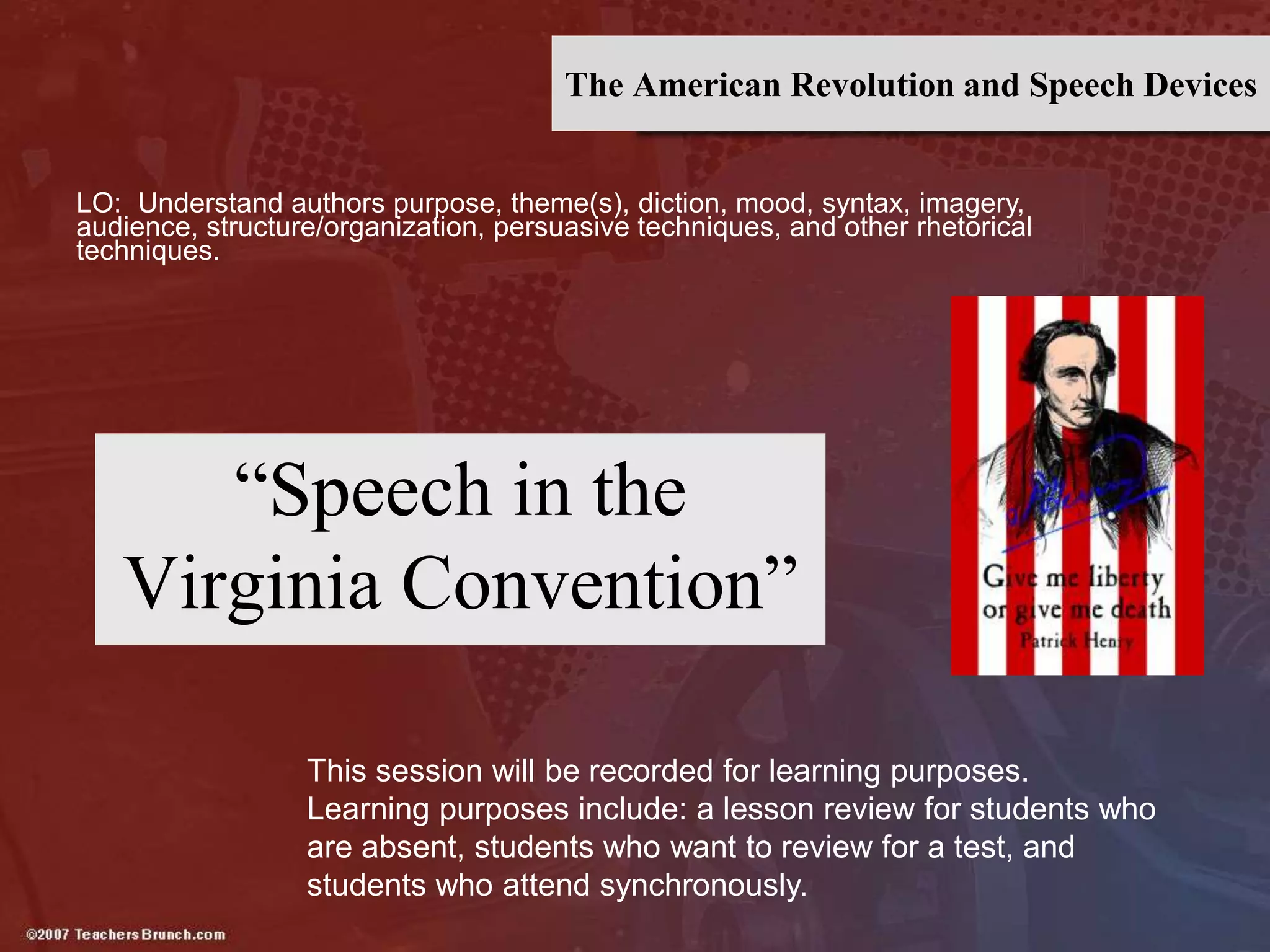
“Speech in the
Virginia Convention”
LO: Understand authors purpose, theme(s), diction, mood, syntax, imagery,
audience, structure/organization, persuasive techniques, and other rhetorical
techniques.
This session will be recorded for learning purposes.
Learning purposes include: a lesson review for students who
are absent, students who want to review for a test, and
students who attend synchronously.
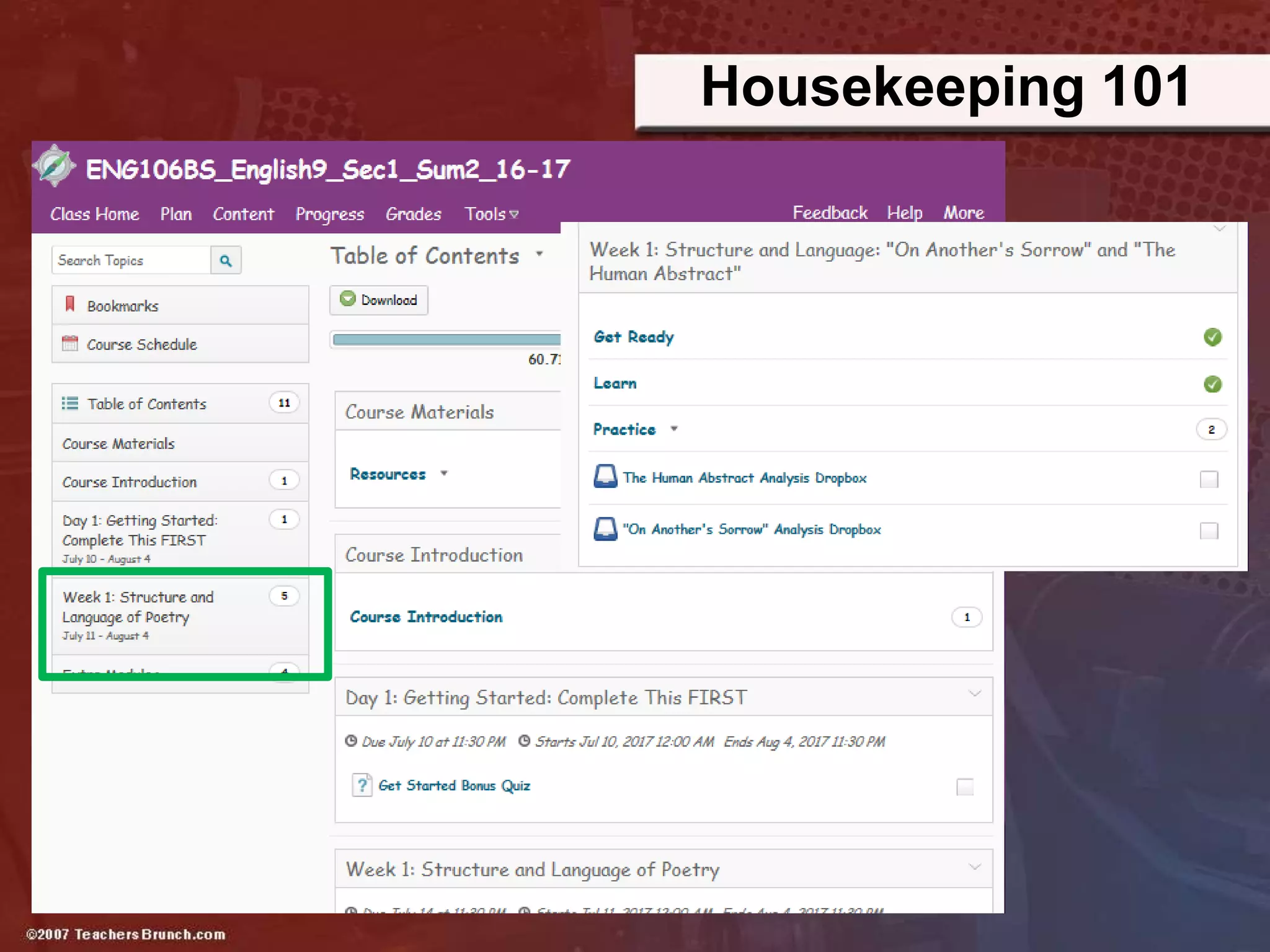
Housekeeping 101
Name some great speakers or speeches
Write it on the board
John Locke’s Beliefs
• all people are born equal.
• education can free people from the
subjugation of tyranny.
• government has a moral obligation to
guarantee that individuals always retain
sovereignty over their own rights,
including ownership of property that
results from their own labor.
1632-1704
The Colonists
• Americans were content to be left alone
in the colonies.
• They had experience in self-government
and were opposed to a standing army.
• They were especially adamant in their
opposition to taxation without
representation.
Patrick Henry
• Patrick Henry was the
most famous orator of
the American
Revolution.
• He delivered this speech
in March 1775 to the
Second Virginia
Provincial Convention.
• Henry uses various
literary devices to create
a style of rhetoric which
sways his audience to
believe that the
Revolution must begin.
• He uses the appeals of
logos and pathos and
establishes ethos
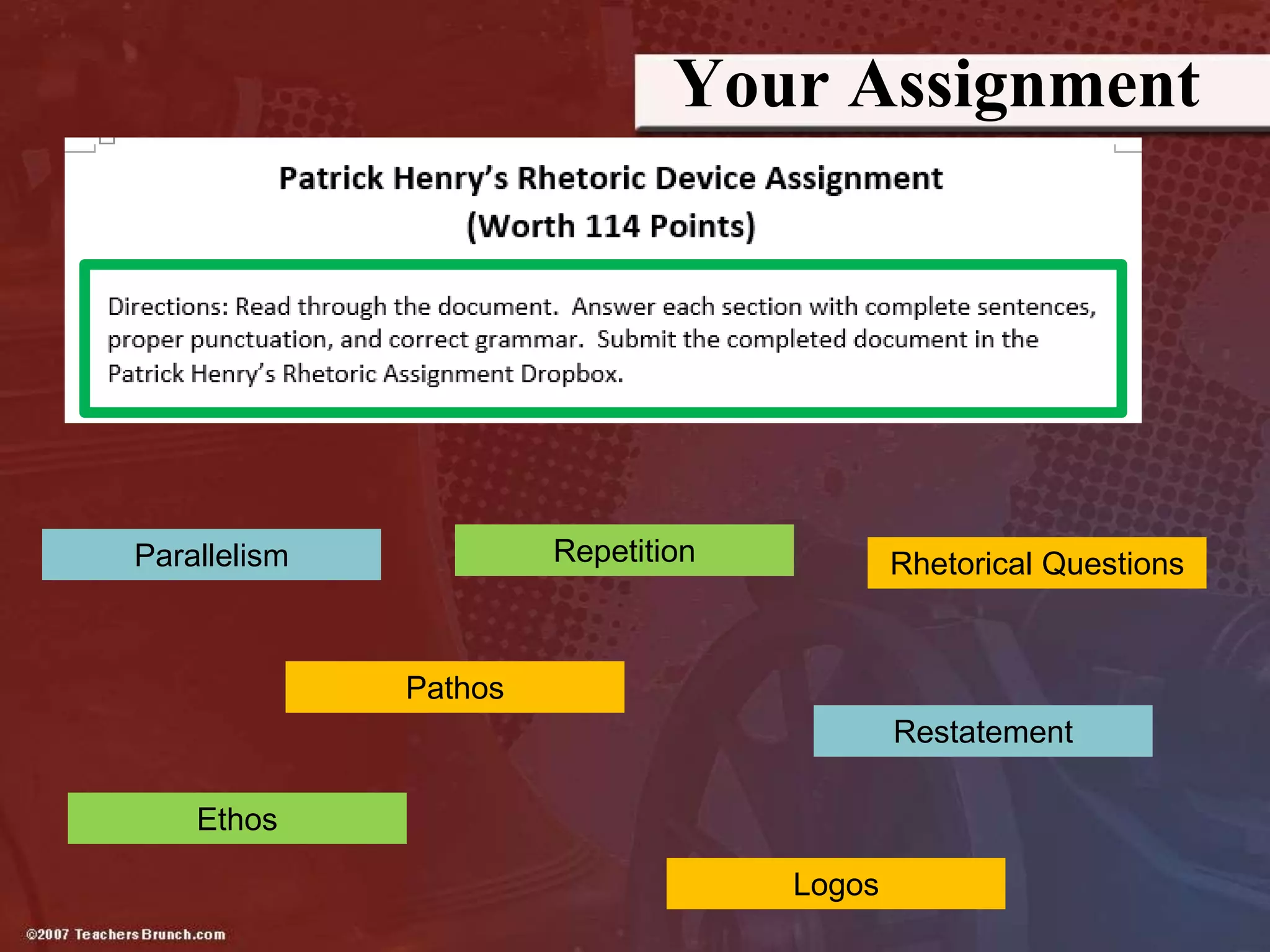
Your Assignment
Parallelism
Pathos
Ethos
Logos
Rhetorical QuestionsRepetition
Restatement
Rhetorical Question
• A question to which no
answer is expected
because the answer is
obvious.
• Often used to
emphasize a point or
create an emotional
effect.
“Can we forge against these
enemies a grand and global
alliance, North and South, East
and West, that can assure a
more fruitful life for all
mankind? Will you join in that
historic effort?”
–JFK Inaugural Address
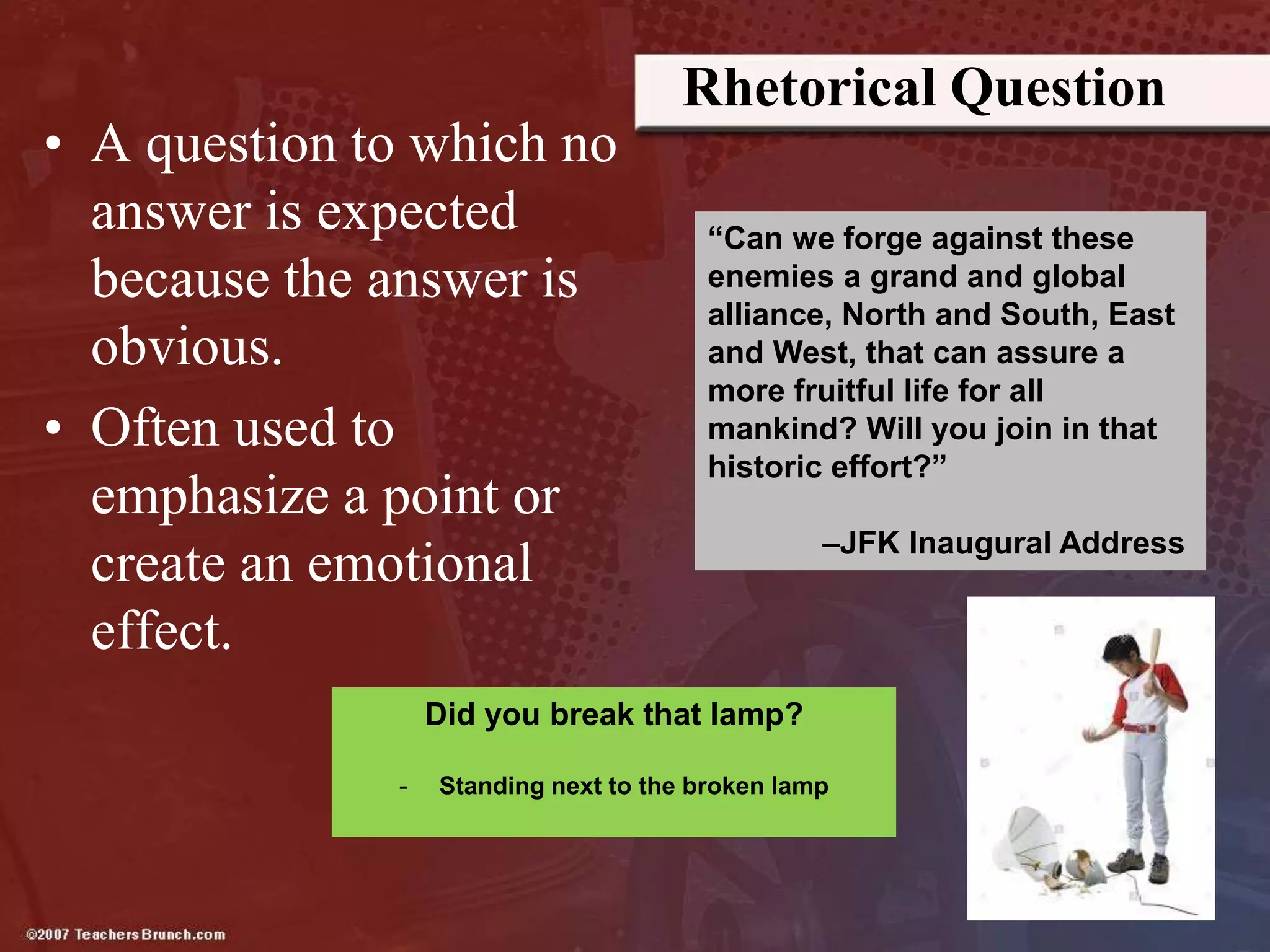
Did you break that lamp?
- Standing next to the broken lamp
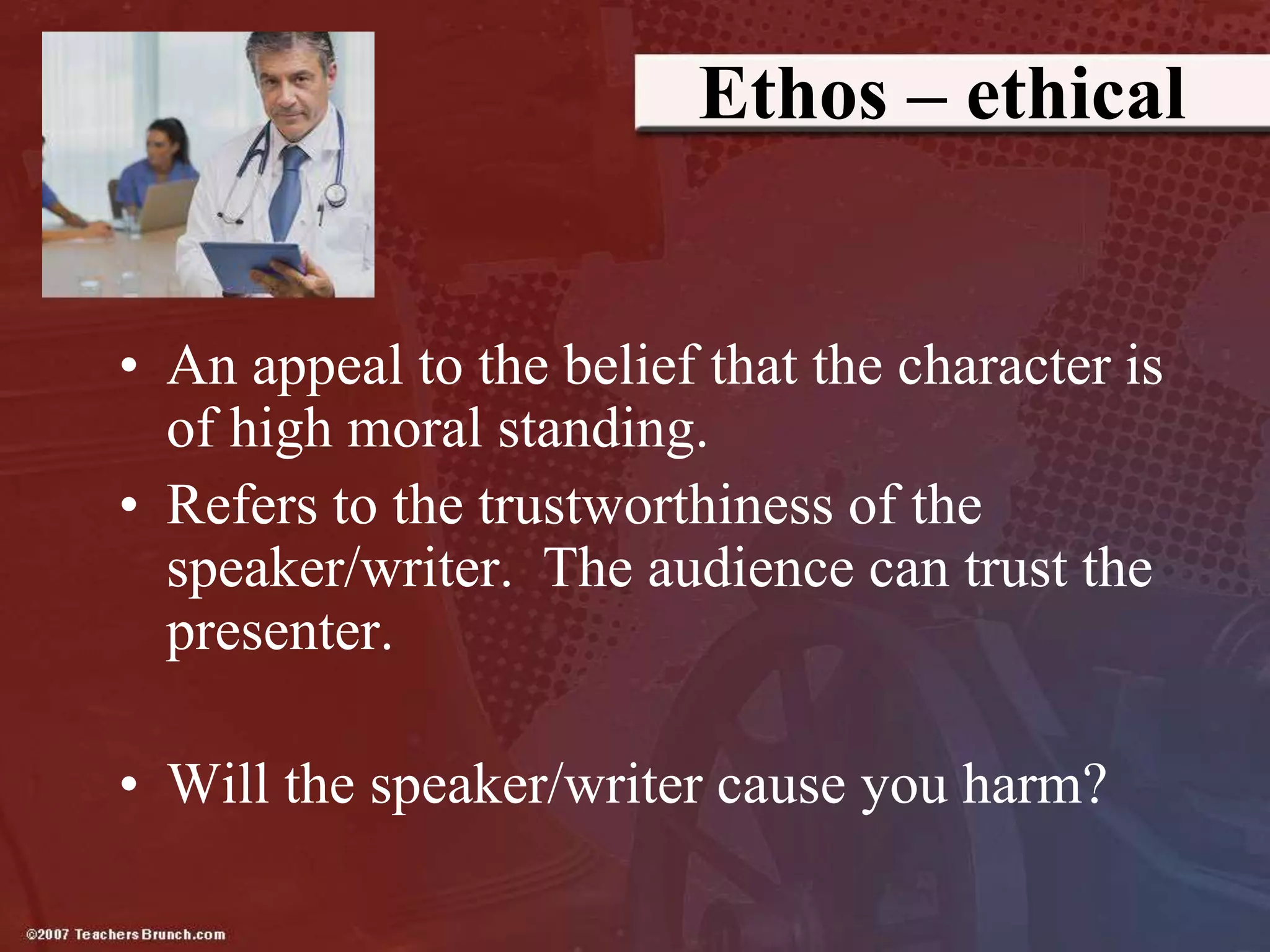
Ethos – ethical
• An appeal to the belief that the character is
of high moral standing.
• Refers to the trustworthiness of the
speaker/writer. The audience can trust the
presenter.
• Will the speaker/writer cause you harm?
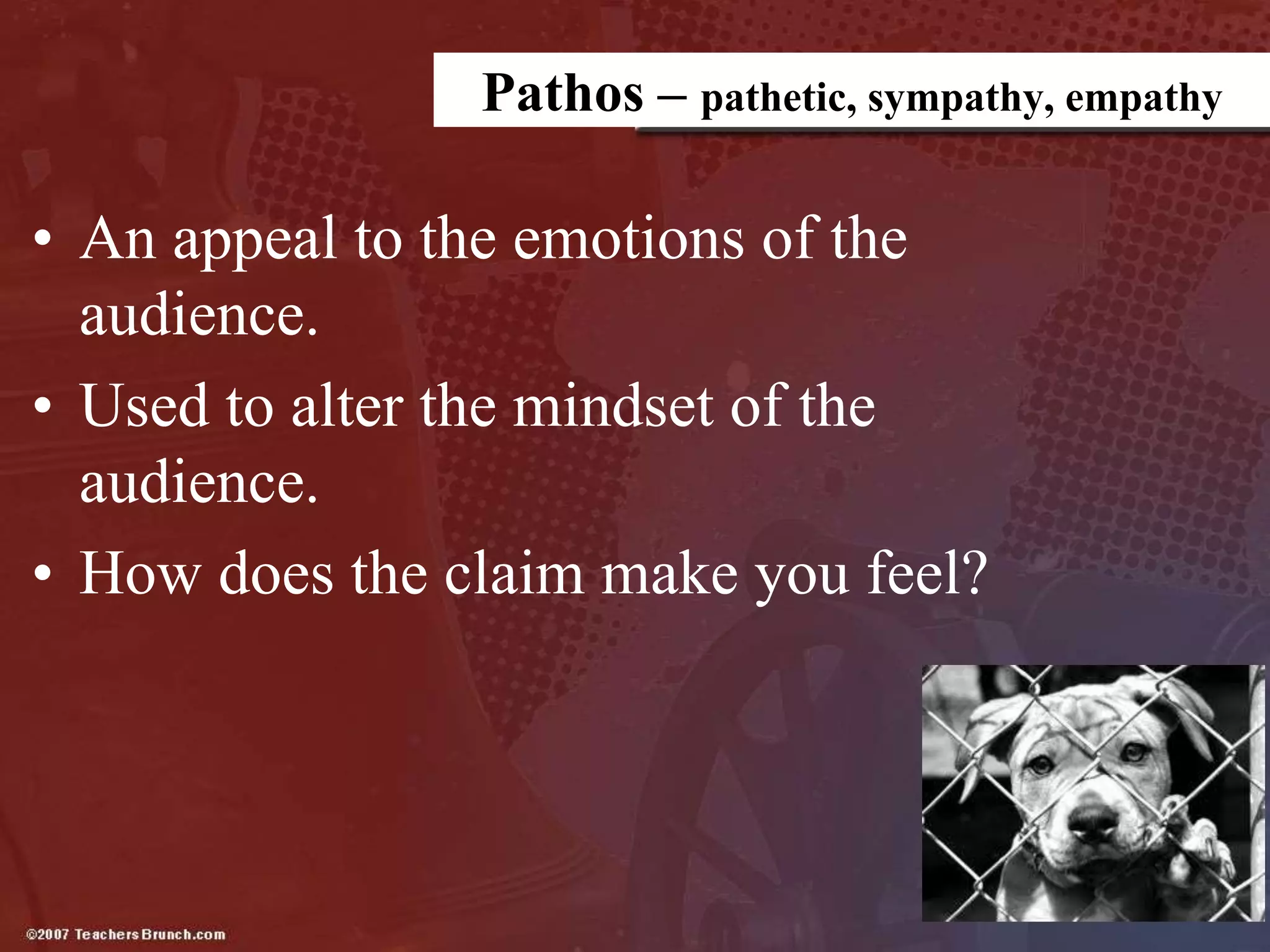
Pathos – pathetic, sympathy, empathy
• An appeal to the emotions of the
audience.
• Used to alter the mindset of the
audience.
• How does the claim make you feel?
Logos – intellect or logic
• An appeal to the left/logical side of the
brain.
• Use of facts and reasoning to persuade
the audience.
• What patterns, conventions and modes
of reasoning do you see?
Parallelism
• Repeated use of a grammatical
structure in a sentence.
– Parts of speech are comparable and
balanced.
– When balanced, the writing flows smoothly
and avoids misunderstandings.
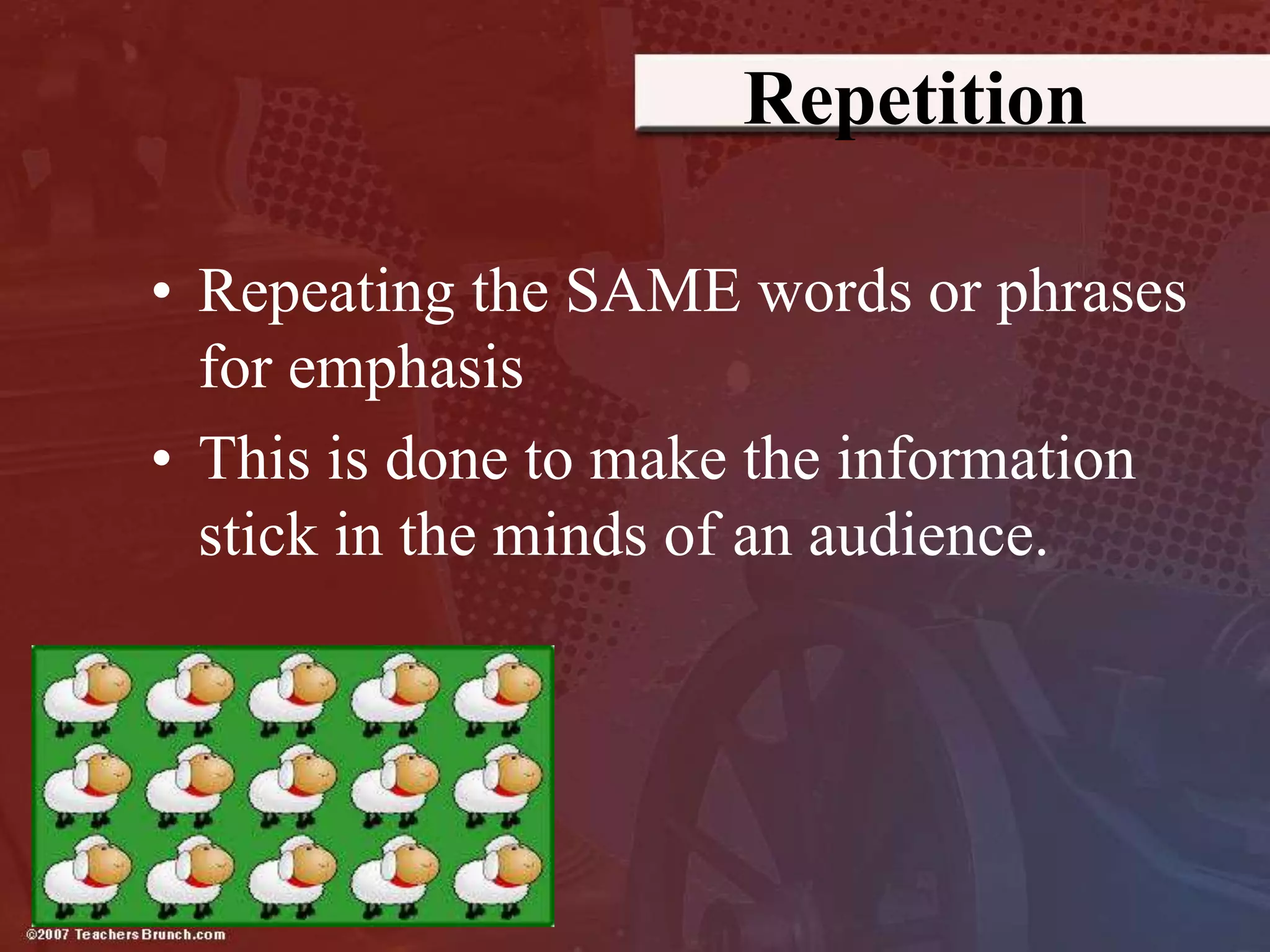
Repetition
• Repeating the SAME words or phrases
for emphasis
• This is done to make the information
stick in the minds of an audience.
Restatement
• Repeating an idea or concept by using
DIFFERENT words or phrases
• This is done to clarify (create a
connection) the information – make it
more clear (more people will
understand).
Today and Tomorrow
Complete the Lessons
Work on the Assignment
Submit the Assignment
Carry on!

Patrick henry and speech devices

  • 1.
    The American Revolutionand Speech Devices “Speech in the Virginia Convention” LO: Understand authors purpose, theme(s), diction, mood, syntax, imagery, audience, structure/organization, persuasive techniques, and other rhetorical techniques. This session will be recorded for learning purposes. Learning purposes include: a lesson review for students who are absent, students who want to review for a test, and students who attend synchronously.
  • 2.
  • 3.
    Name some greatspeakers or speeches Write it on the board
  • 4.
    John Locke’s Beliefs •all people are born equal. • education can free people from the subjugation of tyranny. • government has a moral obligation to guarantee that individuals always retain sovereignty over their own rights, including ownership of property that results from their own labor. 1632-1704
  • 5.
    The Colonists • Americanswere content to be left alone in the colonies. • They had experience in self-government and were opposed to a standing army. • They were especially adamant in their opposition to taxation without representation.
  • 6.
    Patrick Henry • PatrickHenry was the most famous orator of the American Revolution. • He delivered this speech in March 1775 to the Second Virginia Provincial Convention. • Henry uses various literary devices to create a style of rhetoric which sways his audience to believe that the Revolution must begin. • He uses the appeals of logos and pathos and establishes ethos
  • 7.
  • 8.
    Rhetorical Question • Aquestion to which no answer is expected because the answer is obvious. • Often used to emphasize a point or create an emotional effect. “Can we forge against these enemies a grand and global alliance, North and South, East and West, that can assure a more fruitful life for all mankind? Will you join in that historic effort?” –JFK Inaugural Address Did you break that lamp? - Standing next to the broken lamp
  • 9.
    Ethos – ethical •An appeal to the belief that the character is of high moral standing. • Refers to the trustworthiness of the speaker/writer. The audience can trust the presenter. • Will the speaker/writer cause you harm?
  • 10.
    Pathos – pathetic,sympathy, empathy • An appeal to the emotions of the audience. • Used to alter the mindset of the audience. • How does the claim make you feel?
  • 11.
    Logos – intellector logic • An appeal to the left/logical side of the brain. • Use of facts and reasoning to persuade the audience. • What patterns, conventions and modes of reasoning do you see?
  • 12.
    Parallelism • Repeated useof a grammatical structure in a sentence. – Parts of speech are comparable and balanced. – When balanced, the writing flows smoothly and avoids misunderstandings.
  • 13.
    Repetition • Repeating theSAME words or phrases for emphasis • This is done to make the information stick in the minds of an audience.
  • 14.
    Restatement • Repeating anidea or concept by using DIFFERENT words or phrases • This is done to clarify (create a connection) the information – make it more clear (more people will understand).
  • 15.
    Today and Tomorrow Completethe Lessons Work on the Assignment Submit the Assignment Carry on!