Class 42
EWRT 1A
AGENDA

 Turn in Essay #4
 "Presentation:
  Intro to Speech: Speeches: Ethos, Logos, and
   Pathos
  Martin Luther King Jr. “I have a Dream”

 Discussion: "I have a Dream.”
 Rhetorical Strategies
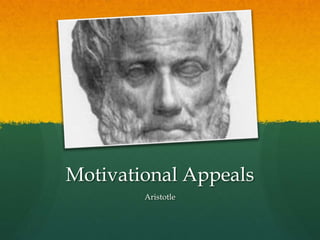
Motivational Appeals
        Aristotle
Introduction to Speech Writing:
  The Art of (Ethical)Persuasion

Three Crucial Motivational Appeals:
 Ethos: Establishing credibility; convincing
  through your character, credentials, or
  knowledge.
 Pathos: Appealing to emotions, values, and
  beliefs.
 Logos: Appealing to reason or logic.
Martin Luther King Jr. has now been
 dead longer than he lived. But what an
        extraordinary life it was.

 At 33, he was pressing the case of civil rights with
  President John Kennedy. At 34, he galvanized the
  nation with his "I Have a Dream" speech. At 35, he
  won the Nobel Peace Prize. At 39, he was
  assassinated, but he left a legacy of hope and
  inspiration that continues today.
 King's most famous speech, "I Have a Dream," was
  delivered in 1963 at the March on Washington, one
  of the largest political rallies for human rights in
  United States history; it called for civil and
  economic rights for African Americans.
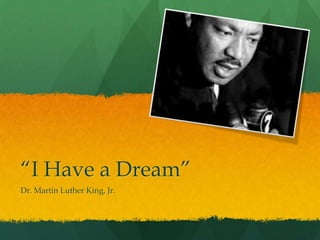
“I Have a Dream”
Dr. Martin Luther King, Jr.
Ethos
 Ethos means the character of the speaker in the eyes
  of the audience. King was born into a well-
  educated, successful family, graduated from
  Morehouse College, and, as the outstanding
  member of his senior class, from Crozer Theological
  Seminary. He received his Ph.D. in philosophy in
  1955, and served as minister of the Dexter Avenue
  Baptist Church from 1955 to 1968. His Nobel Peace
  Prize was received one year after this speech was
  given.
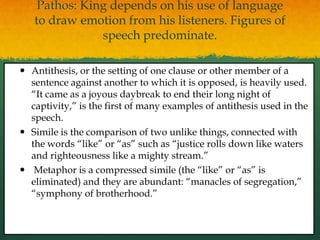
Pathos: King depends on his use of language
   to draw emotion from his listeners. Figures of
               speech predominate.

 Antithesis, or the setting of one clause or other member of a
  sentence against another to which it is opposed, is heavily used.
  “It came as a joyous daybreak to end their long night of
  captivity,” is the first of many examples of antithesis used in the
  speech.
 Simile is the comparison of two unlike things, connected with
  the words “like” or “as” such as “justice rolls down like waters
  and righteousness like a mighty stream.”
 Metaphor is a compressed simile (the “like” or “as” is
  eliminated) and they are abundant: “manacles of segregation,”
  “symphony of brotherhood.”
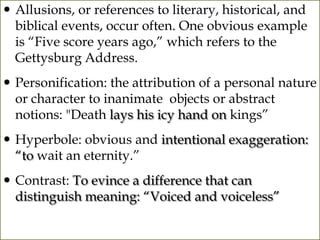
 Allusions, or references to literary, historical, and
  biblical events, occur often. One obvious example
  is “Five score years ago,” which refers to the
  Gettysburg Address.
 Personification: the attribution of a personal nature
  or character to inanimate objects or abstract
  notions: "Death lays his icy hand on kings”
 Hyperbole: obvious and intentional exaggeration:
  “to wait an eternity.”
 Contrast: To evince a difference that can
  distinguish meaning: “Voiced and voiceless”
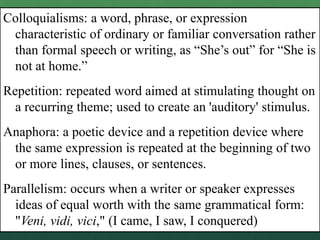
Colloquialisms: a word, phrase, or expression
 characteristic of ordinary or familiar conversation rather
 than formal speech or writing, as “She’s out” for “She is
 not at home.”
Repetition: repeated word aimed at stimulating thought on
  a recurring theme; used to create an 'auditory' stimulus.
Anaphora: a poetic device and a repetition device where
 the same expression is repeated at the beginning of two
 or more lines, clauses, or sentences.
Parallelism: occurs when a writer or speaker expresses
  ideas of equal worth with the same grammatical form:
  "Veni, vidi, vici," (I came, I saw, I conquered)
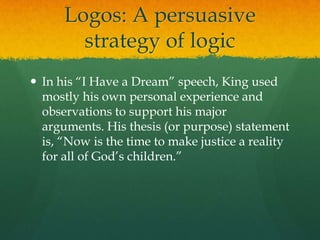
Logos: A persuasive
        strategy of logic
 In his “I Have a Dream” speech, King used
  mostly his own personal experience and
  observations to support his major
  arguments. His thesis (or purpose) statement
  is, “Now is the time to make justice a reality
  for all of God’s children.”
Homework
 Post #46 Find five examples of Pathos through language use in
  “I Have a Dream. ” Slides 8-10 will help.

 Use the list of strategies to generate several ideas for your own
  speech.

 Read: SMG "Oral Presentations” 835-39

 Study the vocabulary words: 24-27

 MONDAY: Bring a clean copy of essay #4, or bring it on your
  device.

Class 42

  • 1.
  • 2.
    AGENDA  Turn inEssay #4  "Presentation:  Intro to Speech: Speeches: Ethos, Logos, and Pathos  Martin Luther King Jr. “I have a Dream”  Discussion: "I have a Dream.”  Rhetorical Strategies
  • 3.
  • 4.
    Introduction to SpeechWriting: The Art of (Ethical)Persuasion Three Crucial Motivational Appeals:  Ethos: Establishing credibility; convincing through your character, credentials, or knowledge.  Pathos: Appealing to emotions, values, and beliefs.  Logos: Appealing to reason or logic.
  • 5.
    Martin Luther KingJr. has now been dead longer than he lived. But what an extraordinary life it was.  At 33, he was pressing the case of civil rights with President John Kennedy. At 34, he galvanized the nation with his "I Have a Dream" speech. At 35, he won the Nobel Peace Prize. At 39, he was assassinated, but he left a legacy of hope and inspiration that continues today.  King's most famous speech, "I Have a Dream," was delivered in 1963 at the March on Washington, one of the largest political rallies for human rights in United States history; it called for civil and economic rights for African Americans.
  • 6.
    “I Have aDream” Dr. Martin Luther King, Jr.
  • 7.
    Ethos  Ethos meansthe character of the speaker in the eyes of the audience. King was born into a well- educated, successful family, graduated from Morehouse College, and, as the outstanding member of his senior class, from Crozer Theological Seminary. He received his Ph.D. in philosophy in 1955, and served as minister of the Dexter Avenue Baptist Church from 1955 to 1968. His Nobel Peace Prize was received one year after this speech was given.
  • 8.
    Pathos: King dependson his use of language to draw emotion from his listeners. Figures of speech predominate.  Antithesis, or the setting of one clause or other member of a sentence against another to which it is opposed, is heavily used. “It came as a joyous daybreak to end their long night of captivity,” is the first of many examples of antithesis used in the speech.  Simile is the comparison of two unlike things, connected with the words “like” or “as” such as “justice rolls down like waters and righteousness like a mighty stream.”  Metaphor is a compressed simile (the “like” or “as” is eliminated) and they are abundant: “manacles of segregation,” “symphony of brotherhood.”
  • 9.
     Allusions, orreferences to literary, historical, and biblical events, occur often. One obvious example is “Five score years ago,” which refers to the Gettysburg Address.  Personification: the attribution of a personal nature or character to inanimate objects or abstract notions: "Death lays his icy hand on kings”  Hyperbole: obvious and intentional exaggeration: “to wait an eternity.”  Contrast: To evince a difference that can distinguish meaning: “Voiced and voiceless”
  • 10.
    Colloquialisms: a word,phrase, or expression characteristic of ordinary or familiar conversation rather than formal speech or writing, as “She’s out” for “She is not at home.” Repetition: repeated word aimed at stimulating thought on a recurring theme; used to create an 'auditory' stimulus. Anaphora: a poetic device and a repetition device where the same expression is repeated at the beginning of two or more lines, clauses, or sentences. Parallelism: occurs when a writer or speaker expresses ideas of equal worth with the same grammatical form: "Veni, vidi, vici," (I came, I saw, I conquered)
  • 11.
    Logos: A persuasive strategy of logic  In his “I Have a Dream” speech, King used mostly his own personal experience and observations to support his major arguments. His thesis (or purpose) statement is, “Now is the time to make justice a reality for all of God’s children.”
  • 12.
    Homework  Post #46Find five examples of Pathos through language use in “I Have a Dream. ” Slides 8-10 will help.  Use the list of strategies to generate several ideas for your own speech.  Read: SMG "Oral Presentations” 835-39  Study the vocabulary words: 24-27  MONDAY: Bring a clean copy of essay #4, or bring it on your device.