Pathophysiology Post-RN BSN Note Chapter 05 Patient With Fluid Electrolyte Burn
Page 1 of 26
Patient With Fluid Electrolyte Burn
Thermal Injury (Burns) – Overview
Epidemiology (USA)
• ~450,000 people require medical care for burns annually.
• ~45,000 require hospitalization.
Role of Skin & Effects of Burns
• Skin protects against environmental hazards and maintains internal balance.
• Major consequences of burn injuries:
o Microbial invasion due to loss of barrier.
o Massive fluid loss (water + electrolytes).
o Impaired thermoregulation.
o Immune suppression.
o High metabolic and reparative demands.
Causes of Burns
1. Flame Burns
o Caused by direct exposure to fire.
2. Scald Burns
o Result from hot liquids.
o In children, may suggest child abuse.
3. Chemical Burns
o Occur due to exposure to industrial chemicals (common in workplaces).
4. Electrical Burns
o Caused by contact with live wires.
o Often more severe due to:
▪ Internal tissue damage.
▪ Presence of entry and exit wounds.
5. Other Sources
o Lightning
Pathophysiology Post-RN BSN Note Chapter 05 Patient With Fluid Electrolyte Burn
Page 2 of 26
o Electromagnetic radiation
o Ionizing radiation
Classification of Burns
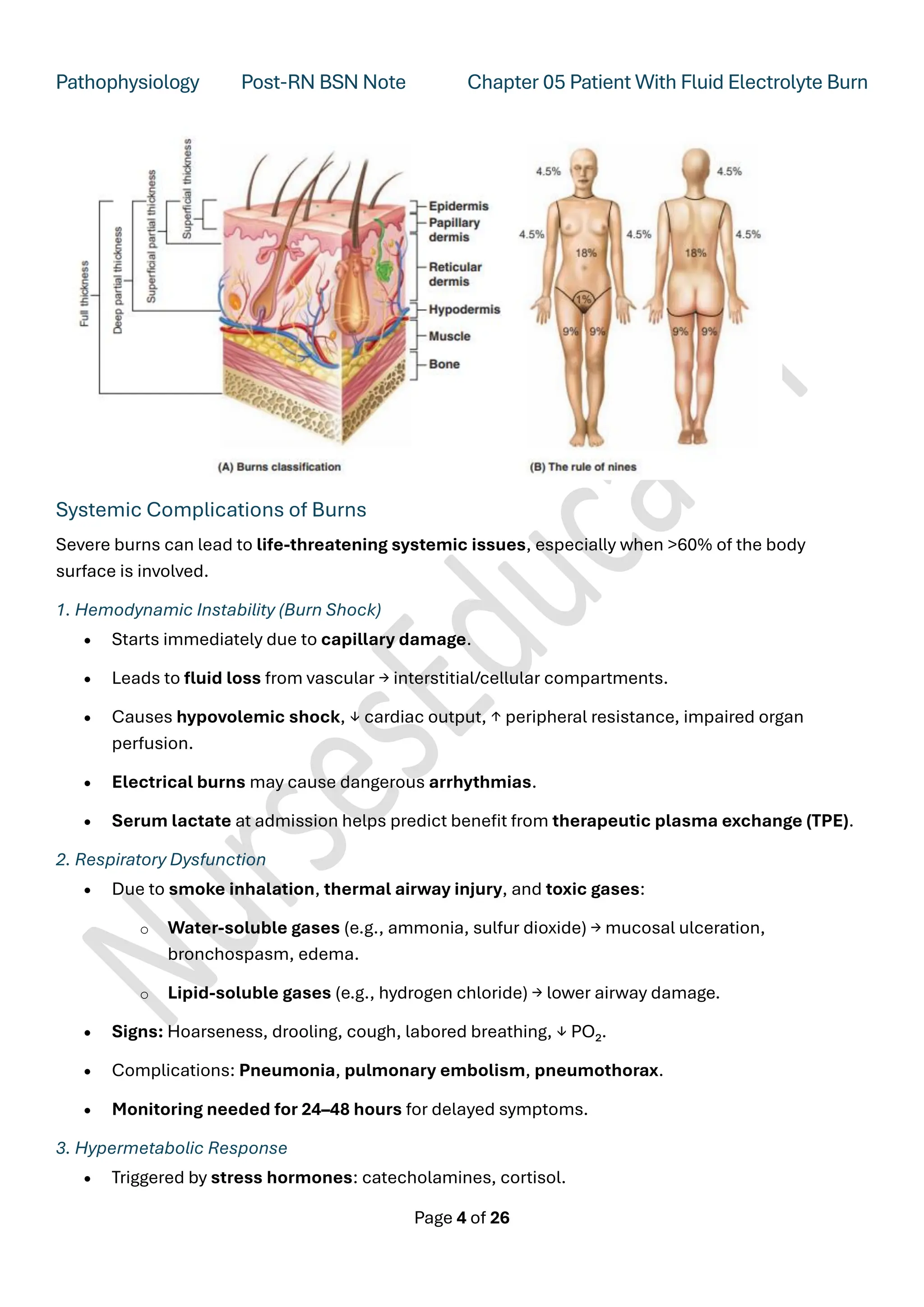
Burns are classified by depth and extent of tissue damage.
Factors Influencing Burn Severity
• Temperature of source
• Duration of exposure
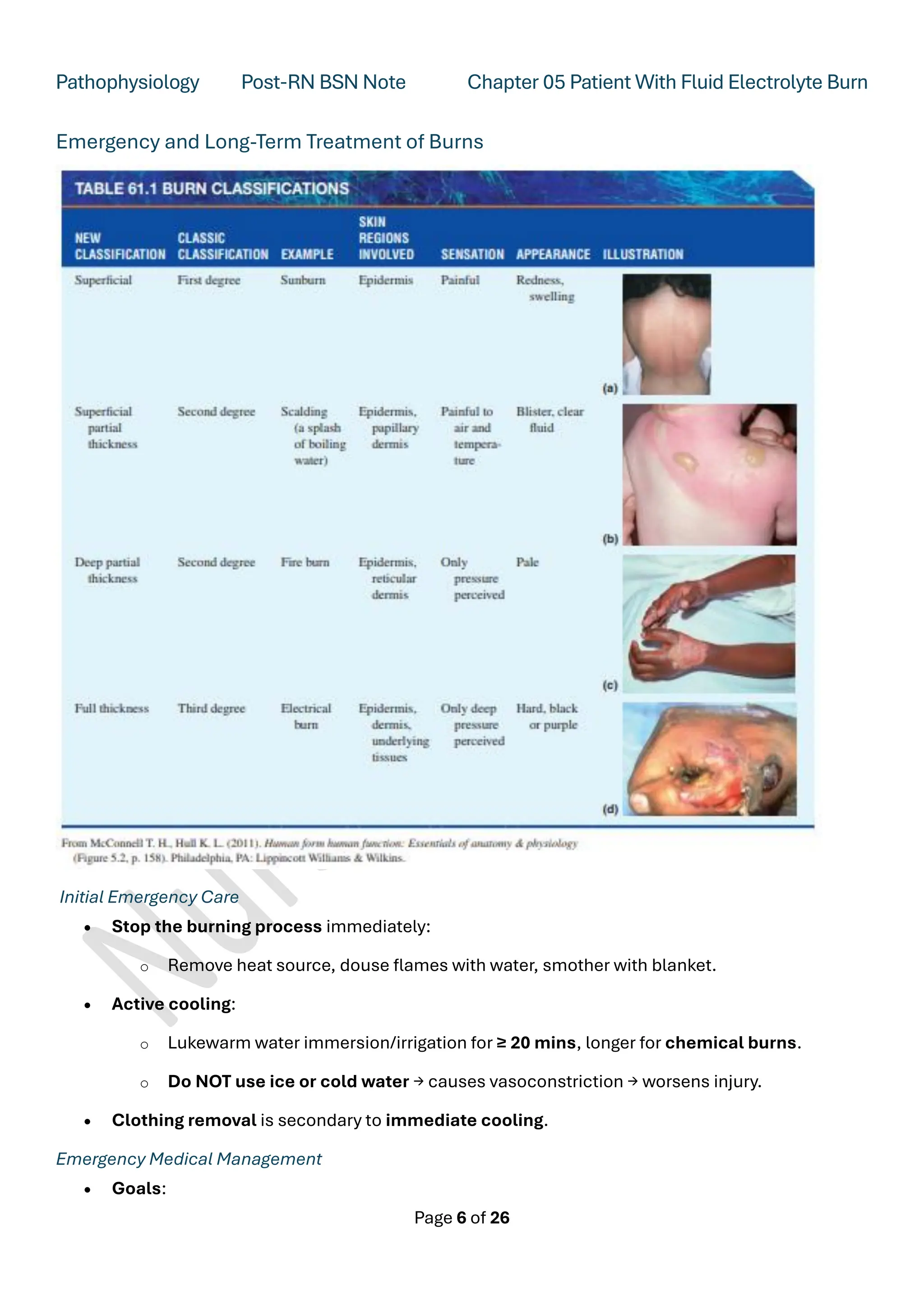
1. First-Degree Burns (Superficial Partial-Thickness)
• Layers involved: Only epidermis
• Appearance: Red/pink, dry, no blisters
• Pain: Painful
• Example: Mild sunburn
• Healing: 3–10 days, no scarring
• Treatment: Palliative (pain relief, fluids)
• Special care needed: Infants, elderly, cancer patients on radiation
2. Second-Degree Burns
a) Partial-Thickness
• Layers involved: Epidermis + part of dermis
• Appearance: Moist, red, blistered
• Pain: Painful and sensitive to air, touch, temperature
• Healing: 1–2 weeks
• Blister care: Do not rupture—promotes healing
b) Full-Thickness
• Layers involved: Entire epidermis + dermis
• Appearance: Mottled pink, red, waxy white; flat, dry blisters
• Pain: Painful (nerves present); ↓ sensation in deeper areas
• Healing: ~1 month
• Outcome: Soft skin with scarring, possible sensation loss
Pathophysiology Post-RN BSN Note Chapter 05 Patient With Fluid Electrolyte Burn
Page 3 of 26
• Treatment: Hydration, prevent further tissue damage, promote re-epithelialization
3. Third-Degree Burns (Full-Thickness)
• Layers involved: Extends into subcutaneous tissue; may affect muscle & bone
• Appearance: Waxy white, tan, brown, red, black; leathery, dry, hard
• Pain: Painless (nerve endings destroyed)
• Special sign: Thrombosed vessels visible
• Pattern: Surrounded by 2nd- and 1st-degree burns (target-like pattern)
• Healing: Slow, often needs skin grafts (>1.5 inches); small burns heal from edges
• Outcome: Permanent scarring likely
Extent of Burn – TBSA (Total Body Surface Area)
Rule of Nines
• Head = 9%
• Each arm = 9%
• Each leg = 18%
• Anterior trunk = 18%
• Posterior trunk = 18%
• Perineum = 1%
Factors Increasing Burn Severity
• Location: Face, hands, feet, genitalia
• Inhalation or electrical burns
• Other injuries, trauma, or psychosocial issues
• Preexisting conditions
• Genital burns often require hospitalization due to edema and infection risk
Pathophysiology Post-RN BSN Note Chapter 05 Patient With Fluid Electrolyte Burn
Page 4 of 26
Systemic Complications of Burns
Severe burns can lead to life-threatening systemic issues, especially when >60% of the body
surface is involved.
1. Hemodynamic Instability (Burn Shock)
• Starts immediately due to capillary damage.
• Leads to fluid loss from vascular → interstitial/cellular compartments.
• Causes hypovolemic shock, ↓ cardiac output, ↑ peripheral resistance, impaired organ
perfusion.
• Electrical burns may cause dangerous arrhythmias.
• Serum lactate at admission helps predict benefit from therapeutic plasma exchange (TPE).
2. Respiratory Dysfunction
• Due to smoke inhalation, thermal airway injury, and toxic gases:
o Water-soluble gases (e.g., ammonia, sulfur dioxide) → mucosal ulceration,
bronchospasm, edema.
o Lipid-soluble gases (e.g., hydrogen chloride) → lower airway damage.
• Signs: Hoarseness, drooling, cough, labored breathing, ↓ PO₂.
• Complications: Pneumonia, pulmonary embolism, pneumothorax.
• Monitoring needed for 24–48 hours for delayed symptoms.
3. Hypermetabolic Response
• Triggered by stress hormones: catecholamines, cortisol.
Pathophysiology Post-RN BSN Note Chapter 05 Patient With Fluid Electrolyte Burn
Page 5 of 26
• Features:
o ↑ oxygen and glucose use
o Protein/fat catabolism
o ↑ heat production
• Peaks at 7–17 days, decreases with healing.
• Nutritional support critical: enteral/parenteral feeding to prevent weight/muscle loss.
4. Multi-Organ Dysfunction (MOD)
a) Renal Dysfunction
• Causes: hypovolemia, burn toxins, nephrotoxic drugs.
• Early phase: anuria
• Later phase: hypermetabolism → ↑ urine output & nitrogen loss
b) Gastrointestinal Issues
• ↓ peristalsis, gastric dilation → vomiting, impaction
• Curling ulcers (stress + ischemia): prevented with PPIs
• Early tube feeding prevents ulcers, preserves gut function
c) Neurologic Changes
• Causes: hypoxia, head trauma, CO poisoning, electrical injury
• Effects: confusion, insomnia, lethargy, memory loss
d) Musculoskeletal Complications
• May involve fractures, deep tissue damage, hypertrophic scars, contractures
• Worsened by catabolic state
5. Sepsis
• Major cause of mortality in burns.
• Sources: burn wound, pneumonia, UTI, invasive devices.
• Loss of skin compromises immune barrier.
• Shift from normal to pathogenic flora increases infection risk.
• Impaired immune cell delivery to injury sites.
Pathophysiology Post-RN BSN Note Chapter 05 Patient With Fluid Electrolyte Burn
Page 6 of 26
Emergency and Long-Term Treatment of Burns
Initial Emergency Care
• Stop the burning process immediately:
o Remove heat source, douse flames with water, smother with blanket.
• Active cooling:
o Lukewarm water immersion/irrigation for ≥ 20 mins, longer for chemical burns.
o Do NOT use ice or cold water → causes vasoconstriction → worsens injury.
• Clothing removal is secondary to immediate cooling.
Emergency Medical Management
• Goals:
Pathophysiology Post-RN BSN Note Chapter 05 Patient With Fluid Electrolyte Burn
Page 7 of 26
o Resuscitation (fluid therapy),
o Cardiac/respiratory stabilization,
o Pain control,
o Emotional support
• IV fluids (e.g., per Parkland formula) to treat burn shock
• Airway and breathing are top priorities, especially in suspected inhalation injury
Hospital Treatment Phases
Acute Phase
• Maintain cardiorespiratory function
• Pain control (opioids commonly used)
• Wound care:
o Preserve blisters on superficial burns ("nature’s dressing")
o Apply topical antimicrobials (e.g., silver sulfadiazine)
o Deep burns → early excision and skin grafting
Wound Excision
• Remove eschar early to reduce infection and promote healing
• Circumferential burns may require:
o Escharotomy (longitudinal incision of eschar)
o Fasciotomy (through muscle fascia)
o Done after some fluid stabilization, but before tissue hypoxia/necrosis
Infection Control
• Systemic infection = leading cause of morbidity
• Use:
o Microbial surveillance
o Protective isolation
o Prophylactic antibiotics (selectively for major burns)
Skin Grafting
1. Timing
• Often performed during initial excision surgery
Pathophysiology Post-RN BSN Note Chapter 05 Patient With Fluid Electrolyte Burn
Page 8 of 26
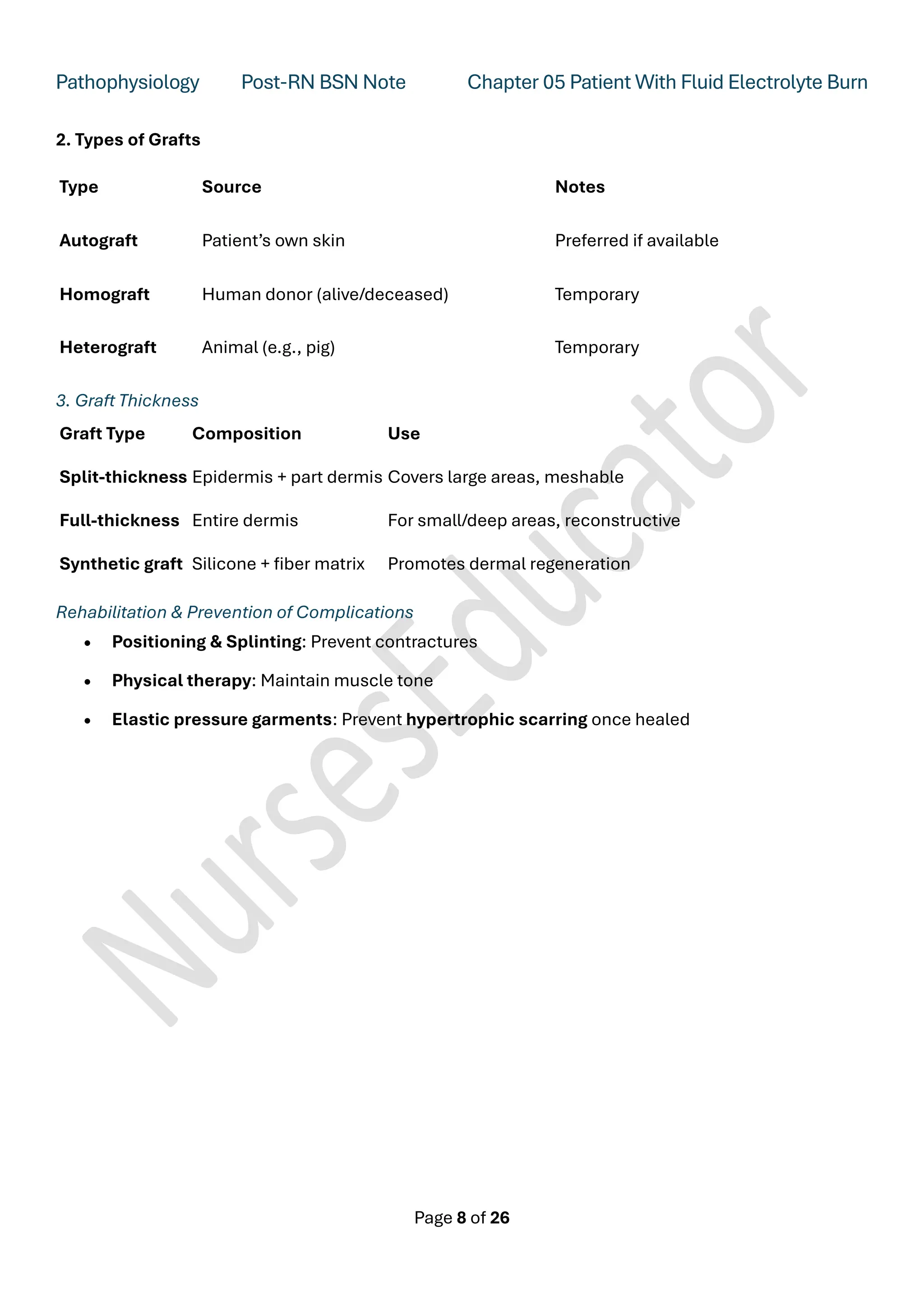
2. Types of Grafts
Type Source Notes
Autograft Patient’s own skin Preferred if available
Homograft Human donor (alive/deceased) Temporary
Heterograft Animal (e.g., pig) Temporary
3. Graft Thickness
Graft Type Composition Use
Split-thickness Epidermis + part dermis Covers large areas, meshable
Full-thickness Entire dermis For small/deep areas, reconstructive
Synthetic graft Silicone + fiber matrix Promotes dermal regeneration
Rehabilitation & Prevention of Complications
• Positioning & Splinting: Prevent contractures
• Physical therapy: Maintain muscle tone
• Elastic pressure garments: Prevent hypertrophic scarring once healed
Pathophysiology Post-RN BSN Note Chapter 05 Patient With Fluid Electrolyte Burn
Page 9 of 26
Homeostasis imbalance
➢ Homeostasis imbalance is the disability of the internal environment to remain in equilibrium in the
face of internal, external and environmental influences.
➢ Homeostatic imbalance occurs when cells in the body experience a deficiency, such as nutritional
deficiencies resulting from an malnutrition or when cells are exposed to toxins.
Intracellular (ICF) & extracellular (ECF)
Body water in the average adult male is about 60% of body weight (or about 42 L of water).
➢ Approximately 50% of female’s body weight is made up of body water due to excess adipose
tissue.
➢ In the adult, the fluid in the Intracellular (ICF) compartment constitutes approximately 40% of
body weight.
➢ Fluid in the Extracellular (ECF) constitutes approximately 20%.
➢ The fluid in the ECF compartment is further divided into two major subdivisions: plasma
compartment & interstitial fluid compartment.
Mechanism Of Fluid Movement
➢ Lipid-soluble substances e.g., O2 & CO2, which dissolve in the lipid bilayer of the cell membrane,
pass directly through the membrane.
Cerebrospinal
Fluid (CSF),
peritoneal,
pleural &
pericardial
cavities; the
joint spaces;
and the
gastrointestinal
tract
Pathophysiology Post-RN BSN Note Chapter 05 Patient With Fluid Electrolyte Burn
Page 10 of 26
➢ While sodium [Na+] and potassium [K+] rely on transport mechanisms such as the Na+/K+ pump
located in the cell membrane for movement across the membrane. Because the Na+/K+ pump
relies on adenosine triphosphate (ATP) and the enzyme ATPase for energy, it is often referred to as
the Na+/K+-ATPase membrane pump.
➢ Water crosses the cell membrane by osmosis using special transmembrane protein channels that
are called aquaporin
Starling's Hypothesis
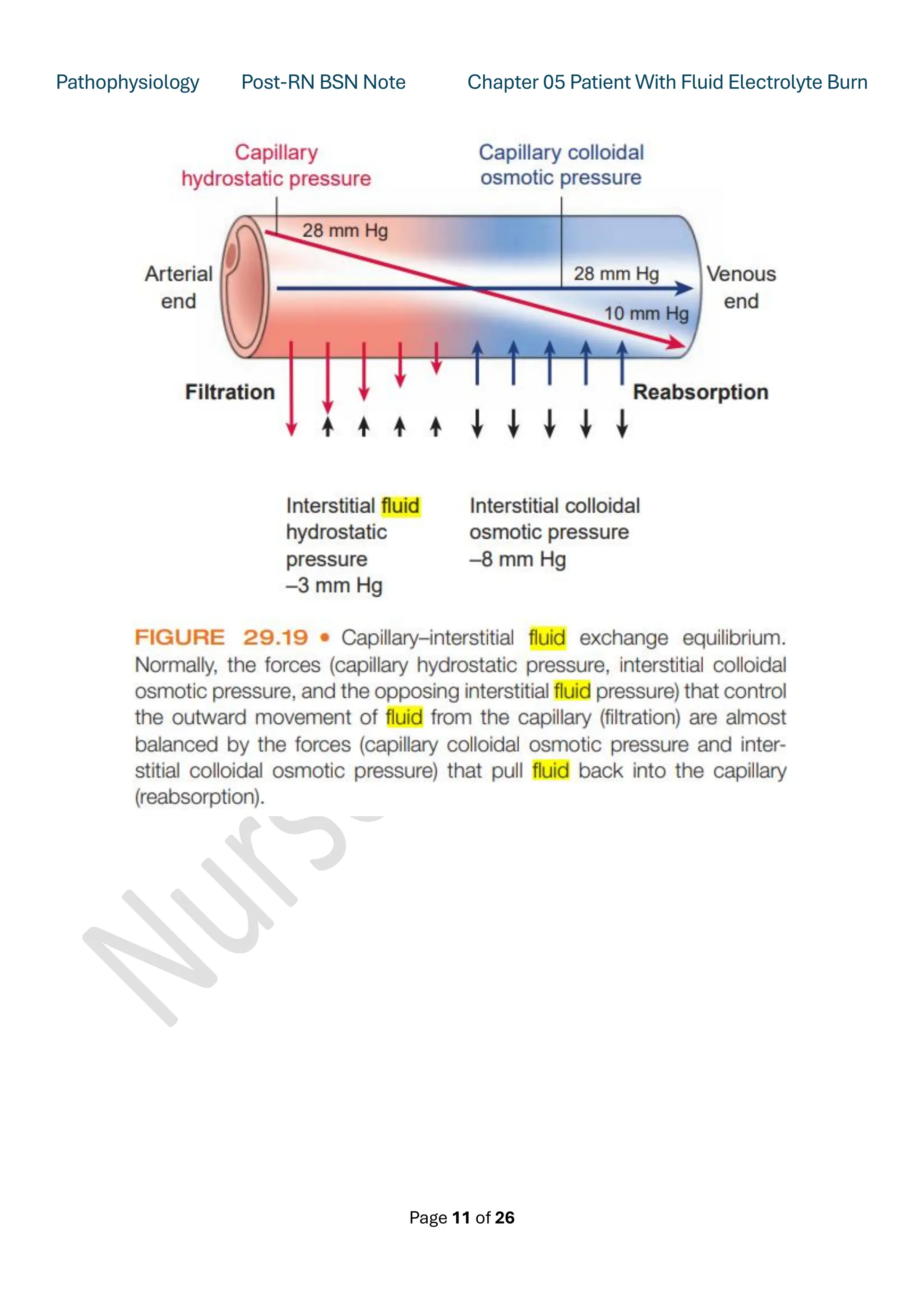
Starling's hypothesis states that the fluid movement due to filtration across the wall of a capillary is
dependent on the balance between the hydrostatic pressure gradient and the oncotic pressure
gradient across the capillary.
The four Starling's forces are:
1. Hydrostatic pressure in the capillary (pc)
2. Hydrostatic pressure in the interstitium (pi)
3. Oncotic pressure in the capillary (pc )
4. Oncotic pressure in the interstitium (pi )
➢ Normally, the movement of fluid between the capillary bed and the interstitial spaces is
continuous.
➢ As Earnest Henry Starling pointed out, a state of equilibrium exists as long as equal amounts of
fluid enter and leave the interstitial spaces. This is referred to as “Starling forces”.
➢ The hydrostatic pressure at the arterial end of the capillary is higher than at the venous end.
➢ The capillary colloidal osmotic pressure and opposing interstitial osmotic pressure determine the
reabsorption of fluid at the venous end of the capillary. A slight imbalance in forces causes slightly
more filtration of fluid into interstitial spaces than absorption back into the capillary. It is this fluid
that is returned to the circulation by the lymphatic system.
Pathophysiology Post-RN BSN Note Chapter 05 Patient With Fluid Electrolyte Burn
Page 11 of 26
Pathophysiology Post-RN BSN Note Chapter 05 Patient With Fluid Electrolyte Burn
Page 12 of 26
Pathophysiology Post-RN BSN Note Chapter 05 Patient With Fluid Electrolyte Burn
Page 13 of 26
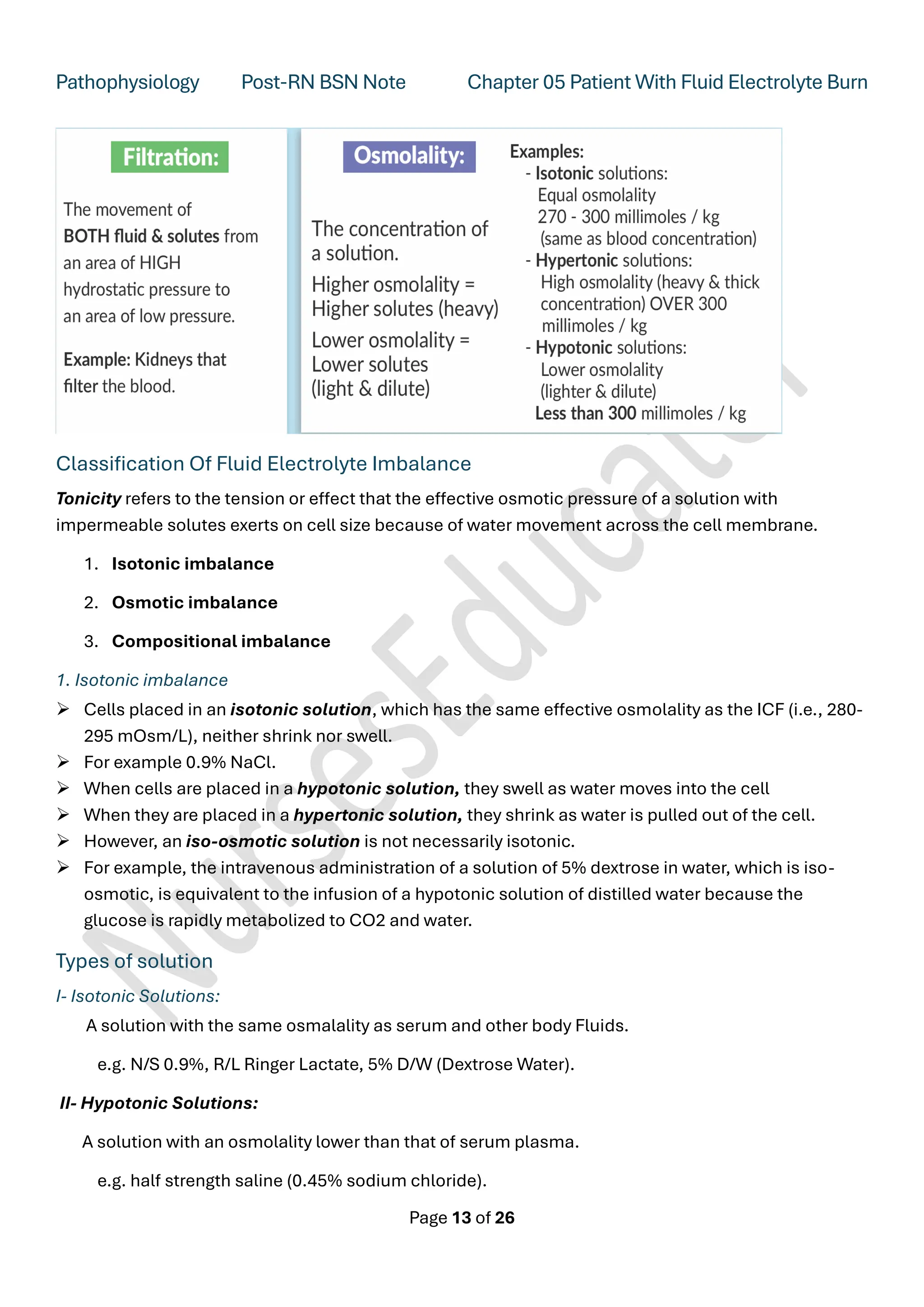
Classification Of Fluid Electrolyte Imbalance
Tonicity refers to the tension or effect that the effective osmotic pressure of a solution with
impermeable solutes exerts on cell size because of water movement across the cell membrane.
1. Isotonic imbalance
2. Osmotic imbalance
3. Compositional imbalance
1. Isotonic imbalance
➢ Cells placed in an isotonic solution, which has the same effective osmolality as the ICF (i.e., 280-
295 mOsm/L), neither shrink nor swell.
➢ For example 0.9% NaCl.
➢ When cells are placed in a hypotonic solution, they swell as water moves into the cell
➢ When they are placed in a hypertonic solution, they shrink as water is pulled out of the cell.
➢ However, an iso-osmotic solution is not necessarily isotonic.
➢ For example, the intravenous administration of a solution of 5% dextrose in water, which is iso-
osmotic, is equivalent to the infusion of a hypotonic solution of distilled water because the
glucose is rapidly metabolized to CO2 and water.
Types of solution
I- Isotonic Solutions:
A solution with the same osmalality as serum and other body Fluids.
e.g. N/S 0.9%, R/L Ringer Lactate, 5% D/W (Dextrose Water).
II- Hypotonic Solutions:
A solution with an osmolality lower than that of serum plasma.
e.g. half strength saline (0.45% sodium chloride).
Pathophysiology Post-RN BSN Note Chapter 05 Patient With Fluid Electrolyte Burn
Page 14 of 26
III- Hypertonic Solution:
A solution with an osmalality higher than that of serum.
e.g. D/S 0.9%, D/S 0.18%, D/S 0.45%, D10W, D25W.
Isotonic Imbalance
➢ Intracellular fluid volume remains constant
➢ External loss: vomiting, diarrhoea, haemorrhage, burning
➢ Internal loss: ileus, ascites, pleural effusion
➢ Therapy: volume replacement with isotonic solution
2. Osmotic imbalance
➢ As water moves across the semipermeable membrane, it generates a pressure called the osmotic
pressure.
➢ The magnitude of the osmotic pressure represents the hydrostatic pressure (measured in
millimeters of mercury [mm Hg]) needed to oppose the movement of water across the membrane.
➢ The osmotic activity that non-diffusible particles exert in pulling water from one side of the semi-
permeable membrane to the other is measured by a unit called an osmole.
➢ Osmolarity refers to the osmolar concentration in 1 L of solution (mOsm/L).
➢ Osmolality to the osmolar concentration in 1 kg of water (mOsm/kg of H2 O).
Pathophysiology Post-RN BSN Note Chapter 05 Patient With Fluid Electrolyte Burn
Page 15 of 26
3. Compositional Imbalance
➢ Fluid imbalance can arise due to hypovolemia, normovolemia with maldistribution of fluid, and
hypovolemia.
➢ Trauma is among the most frequent causes of hypovolemia, with its often profuse attendant blood
loss.
➢ Another common cause is dehydration, which primarily entails loss of plasma rather than whole
blood.
Body water balance
➢ Total body water (TBW) varies with sex and weight (i.e., fat is approximately 10% water by
composition, compared with 75% for skeletal muscle).
➢ In young adult males, TBW approximates 60% of body weight, while TBW is approximately 50% for
young adult females.
➢ The TBW tends to decrease with old age due to more adipose tissue and less muscle.
➢ TBW constitutes approximately 75% of body weight in full-term infants and an even greater
proportion in premature infant.
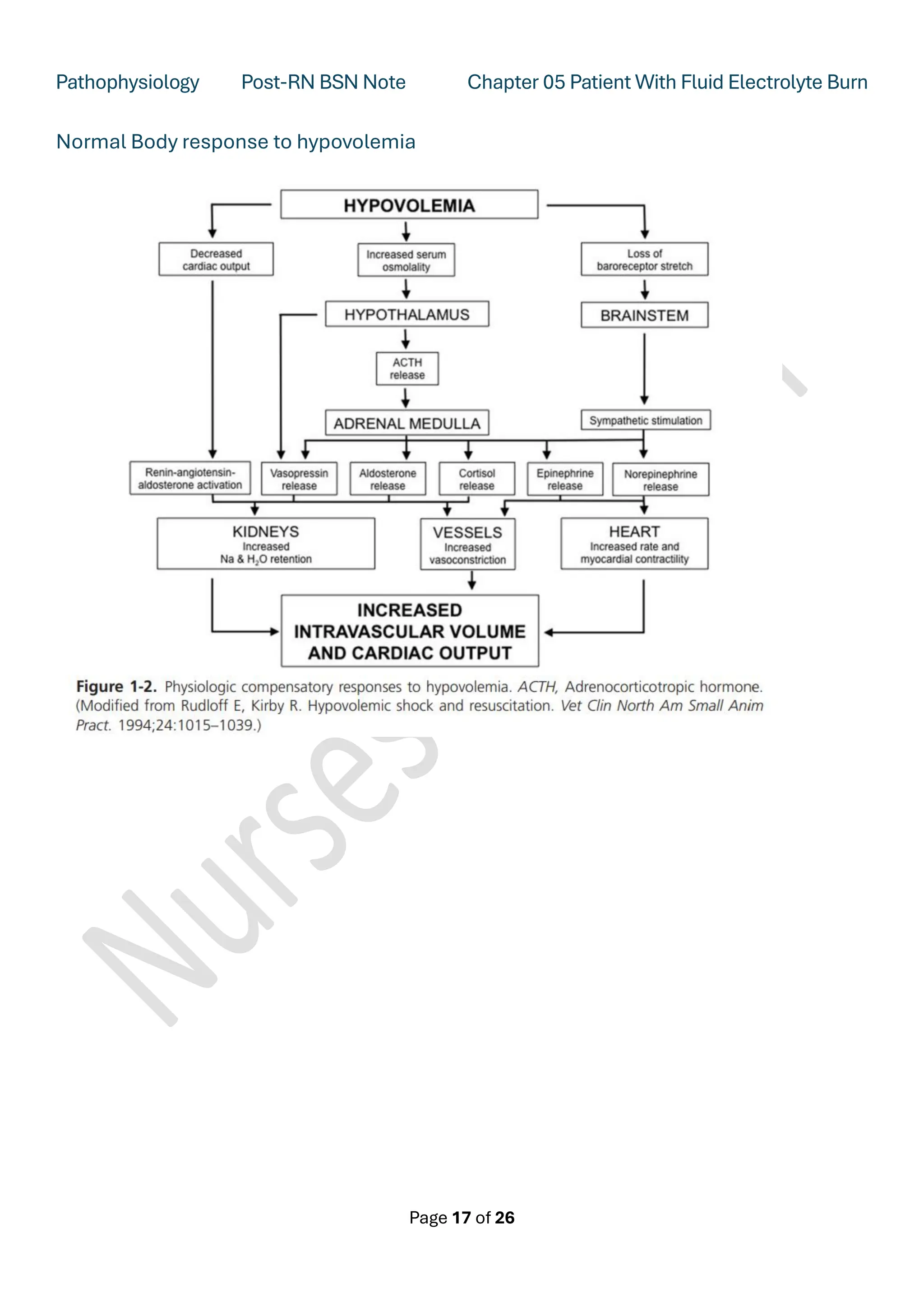
➢ Fluid volume deficit (hypovolemia)is characterized by a decrease in the ECF, including the
circulating blood volume.
➢ The term isotonic fluid volume deficit is used to differentiate the type of fluid deficit in which there
are proportionate losses in sodium and water.
➢ When the effective circulating blood volume is compromised, the condition is often referred to as
hypovolemia.
Pathophysiology Post-RN BSN Note Chapter 05 Patient With Fluid Electrolyte Burn
Page 16 of 26
Pathophysiology Post-RN BSN Note Chapter 05 Patient With Fluid Electrolyte Burn
Page 17 of 26
Normal Body response to hypovolemia
Pathophysiology Post-RN BSN Note Chapter 05 Patient With Fluid Electrolyte Burn
Page 18 of 26
Pathophysiology of hypovolemia
Hypervolemia
➢ Fluid volume excess represents an isotonic expansion of the ECF compartment with increases in
both interstitial and vascular volumes.
➢ Although increased fluid volume is usually the result of a disease condition, this is not always true.
➢ For example, a compensatory isotonic expansion of body fluids can occur in healthy people during
hot weather as a mechanism for increasing body heat loss.
➢ Sodium helps with muscle contraction and transmission of nerve impulses.
➢ Sodium mainly hangs out in the OUTSIDE of the cell in fluid and helps water move inside and
outside the cell as needed.
➢ Hyponatremia represents a plasma sodium concentration below 135 mEq/L (135 mmol/L).
➢ It is one of the most common electrolyte disorders seen in general hospital patients and is also
common in the outpatient population.
Pathophysiology Post-RN BSN Note Chapter 05 Patient With Fluid Electrolyte Burn
Page 19 of 26
Pathophysiology Post-RN BSN Note Chapter 05 Patient With Fluid Electrolyte Burn
Page 20 of 26
Pathophysiology Of Hyponatraemia
Pathophysiology Post-RN BSN Note Chapter 05 Patient With Fluid Electrolyte Burn
Page 21 of 26
Hypernatremia
➢ Hypernatremia implies a plasma sodium level above 145 mEq/L (145 mmol/L) and a serum
osmolality greater than 295 mOsm/kg.
➢ Because sodium is functionally an impermeable solute, it contributes to tonicity and induces
movement of water across cell membranes.
➢ Hypernatremia is characterized by hypertonicity of ECF and almost always causes cellular
dehydration.
Pathophysiology Post-RN BSN Note Chapter 05 Patient With Fluid Electrolyte Burn
Page 22 of 26
Remember:“No FRIED foods for you!”(too much salt)
Pathophysiology of hyprenatraemia
Hypokalemia
➢ Potassium is the second most abundant cation in the body and the major cation in the ICF
compartment.
➢ Approximately 98% of body potassium is contained within body cells, with an intracellular
concentration of 140 to 150 mEq/L (140 to 150 mmol/L).
Pathophysiology Post-RN BSN Note Chapter 05 Patient With Fluid Electrolyte Burn
Page 23 of 26
➢ The potassium content of the ECF (3.5 to 5 mEq/L [3.5 to 5 mmol/L]) is considerably lower.
➢ Hypokalemia refers to a decrease in plasma potassium levels below 3.5 mEq/L (3.5 mmol/L).
Pathophysiology Post-RN BSN Note Chapter 05 Patient With Fluid Electrolyte Burn
Page 24 of 26
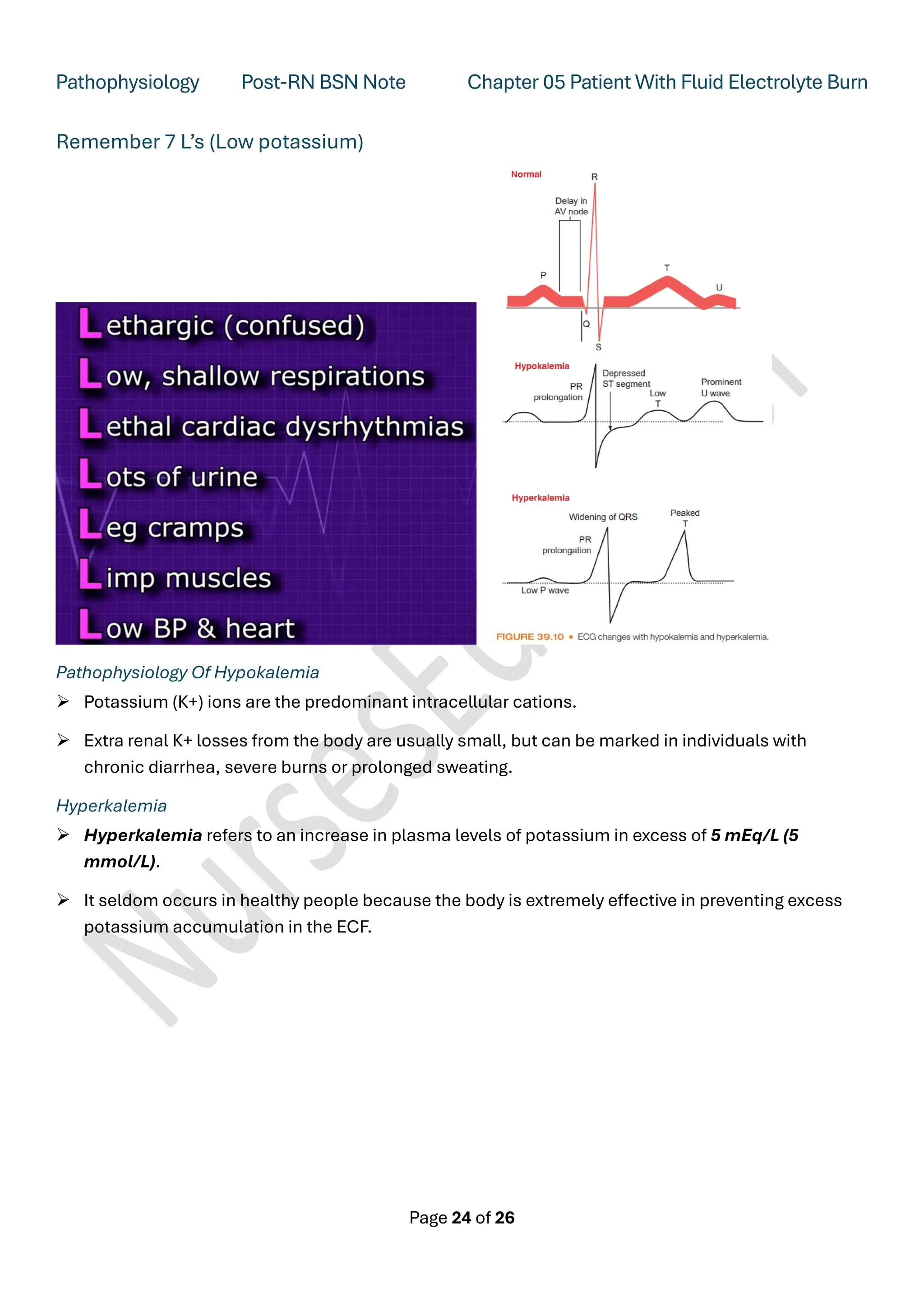
Remember 7 L’s (Low potassium)
Pathophysiology Of Hypokalemia
➢ Potassium (K+) ions are the predominant intracellular cations.
➢ Extra renal K+ losses from the body are usually small, but can be marked in individuals with
chronic diarrhea, severe burns or prolonged sweating.
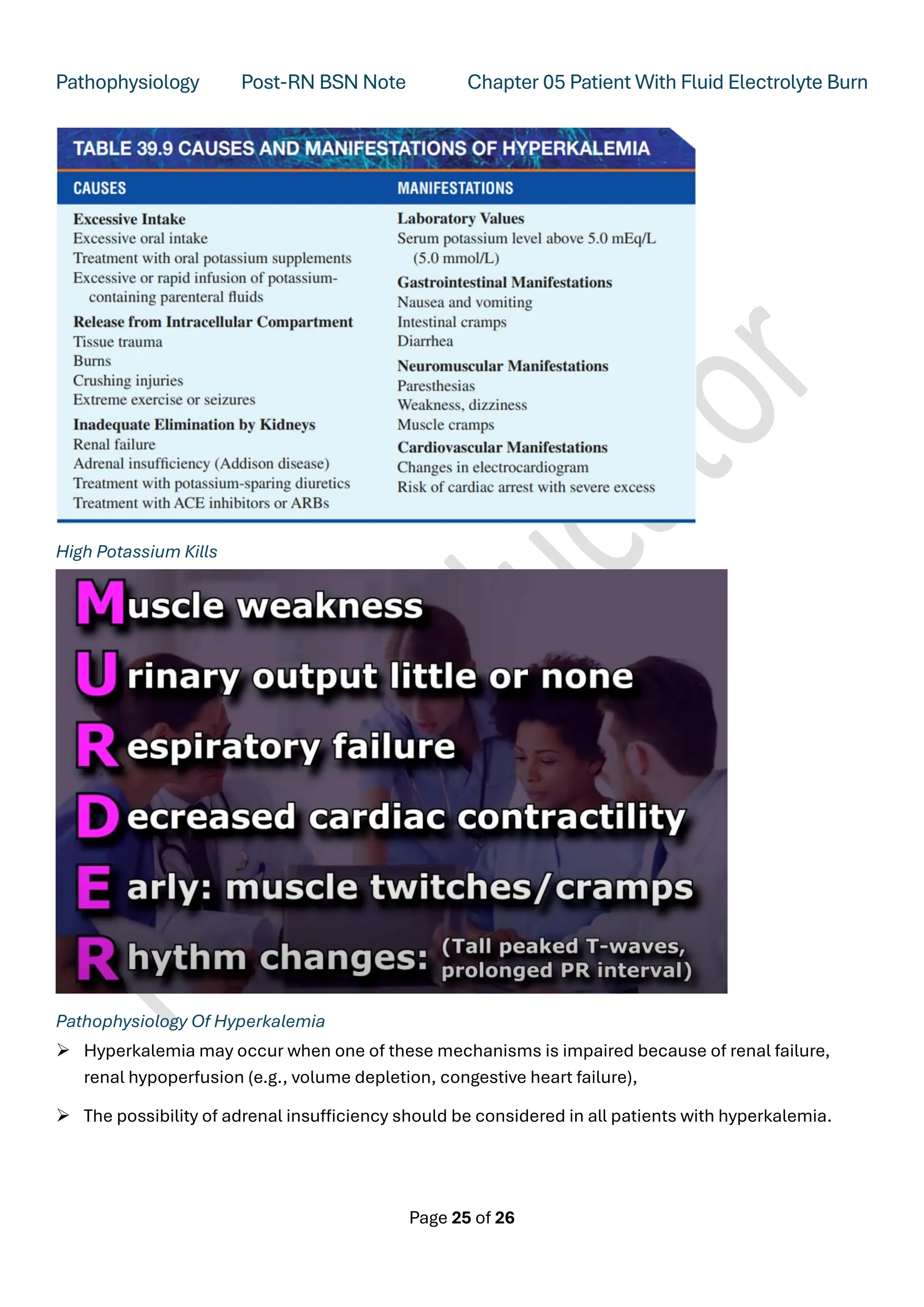
Hyperkalemia
➢ Hyperkalemia refers to an increase in plasma levels of potassium in excess of 5 mEq/L (5
mmol/L).
➢ It seldom occurs in healthy people because the body is extremely effective in preventing excess
potassium accumulation in the ECF.
Pathophysiology Post-RN BSN Note Chapter 05 Patient With Fluid Electrolyte Burn
Page 25 of 26
High Potassium Kills
Pathophysiology Of Hyperkalemia
➢ Hyperkalemia may occur when one of these mechanisms is impaired because of renal failure,
renal hypoperfusion (e.g., volume depletion, congestive heart failure),
➢ The possibility of adrenal insufficiency should be considered in all patients with hyperkalemia.
Pathophysiology Post-RN BSN Note Chapter 05 Patient With Fluid Electrolyte Burn
Page 26 of 26
References
➢ Grossman, S. (2014). Porth's pathophysiology: Concepts of altered health states. Lippincott
Williams & Wilkins. Pp.1019-1061
➢ Danish, M, I. (2020). Short text book of pathology. Paramount Books (Pvt) Ltd

Pathophysiology Chapter 5 Electrolyte Imbalance in Burn Patient Notes.pdf

  • 1.
    Pathophysiology Post-RN BSNNote Chapter 05 Patient With Fluid Electrolyte Burn Page 1 of 26 Patient With Fluid Electrolyte Burn Thermal Injury (Burns) – Overview Epidemiology (USA) • ~450,000 people require medical care for burns annually. • ~45,000 require hospitalization. Role of Skin & Effects of Burns • Skin protects against environmental hazards and maintains internal balance. • Major consequences of burn injuries: o Microbial invasion due to loss of barrier. o Massive fluid loss (water + electrolytes). o Impaired thermoregulation. o Immune suppression. o High metabolic and reparative demands. Causes of Burns 1. Flame Burns o Caused by direct exposure to fire. 2. Scald Burns o Result from hot liquids. o In children, may suggest child abuse. 3. Chemical Burns o Occur due to exposure to industrial chemicals (common in workplaces). 4. Electrical Burns o Caused by contact with live wires. o Often more severe due to: ▪ Internal tissue damage. ▪ Presence of entry and exit wounds. 5. Other Sources o Lightning
  • 2.
    Pathophysiology Post-RN BSNNote Chapter 05 Patient With Fluid Electrolyte Burn Page 2 of 26 o Electromagnetic radiation o Ionizing radiation Classification of Burns Burns are classified by depth and extent of tissue damage. Factors Influencing Burn Severity • Temperature of source • Duration of exposure 1. First-Degree Burns (Superficial Partial-Thickness) • Layers involved: Only epidermis • Appearance: Red/pink, dry, no blisters • Pain: Painful • Example: Mild sunburn • Healing: 3–10 days, no scarring • Treatment: Palliative (pain relief, fluids) • Special care needed: Infants, elderly, cancer patients on radiation 2. Second-Degree Burns a) Partial-Thickness • Layers involved: Epidermis + part of dermis • Appearance: Moist, red, blistered • Pain: Painful and sensitive to air, touch, temperature • Healing: 1–2 weeks • Blister care: Do not rupture—promotes healing b) Full-Thickness • Layers involved: Entire epidermis + dermis • Appearance: Mottled pink, red, waxy white; flat, dry blisters • Pain: Painful (nerves present); ↓ sensation in deeper areas • Healing: ~1 month • Outcome: Soft skin with scarring, possible sensation loss
  • 3.
    Pathophysiology Post-RN BSNNote Chapter 05 Patient With Fluid Electrolyte Burn Page 3 of 26 • Treatment: Hydration, prevent further tissue damage, promote re-epithelialization 3. Third-Degree Burns (Full-Thickness) • Layers involved: Extends into subcutaneous tissue; may affect muscle & bone • Appearance: Waxy white, tan, brown, red, black; leathery, dry, hard • Pain: Painless (nerve endings destroyed) • Special sign: Thrombosed vessels visible • Pattern: Surrounded by 2nd- and 1st-degree burns (target-like pattern) • Healing: Slow, often needs skin grafts (>1.5 inches); small burns heal from edges • Outcome: Permanent scarring likely Extent of Burn – TBSA (Total Body Surface Area) Rule of Nines • Head = 9% • Each arm = 9% • Each leg = 18% • Anterior trunk = 18% • Posterior trunk = 18% • Perineum = 1% Factors Increasing Burn Severity • Location: Face, hands, feet, genitalia • Inhalation or electrical burns • Other injuries, trauma, or psychosocial issues • Preexisting conditions • Genital burns often require hospitalization due to edema and infection risk
  • 4.
    Pathophysiology Post-RN BSNNote Chapter 05 Patient With Fluid Electrolyte Burn Page 4 of 26 Systemic Complications of Burns Severe burns can lead to life-threatening systemic issues, especially when >60% of the body surface is involved. 1. Hemodynamic Instability (Burn Shock) • Starts immediately due to capillary damage. • Leads to fluid loss from vascular → interstitial/cellular compartments. • Causes hypovolemic shock, ↓ cardiac output, ↑ peripheral resistance, impaired organ perfusion. • Electrical burns may cause dangerous arrhythmias. • Serum lactate at admission helps predict benefit from therapeutic plasma exchange (TPE). 2. Respiratory Dysfunction • Due to smoke inhalation, thermal airway injury, and toxic gases: o Water-soluble gases (e.g., ammonia, sulfur dioxide) → mucosal ulceration, bronchospasm, edema. o Lipid-soluble gases (e.g., hydrogen chloride) → lower airway damage. • Signs: Hoarseness, drooling, cough, labored breathing, ↓ PO₂. • Complications: Pneumonia, pulmonary embolism, pneumothorax. • Monitoring needed for 24–48 hours for delayed symptoms. 3. Hypermetabolic Response • Triggered by stress hormones: catecholamines, cortisol.
  • 5.
    Pathophysiology Post-RN BSNNote Chapter 05 Patient With Fluid Electrolyte Burn Page 5 of 26 • Features: o ↑ oxygen and glucose use o Protein/fat catabolism o ↑ heat production • Peaks at 7–17 days, decreases with healing. • Nutritional support critical: enteral/parenteral feeding to prevent weight/muscle loss. 4. Multi-Organ Dysfunction (MOD) a) Renal Dysfunction • Causes: hypovolemia, burn toxins, nephrotoxic drugs. • Early phase: anuria • Later phase: hypermetabolism → ↑ urine output & nitrogen loss b) Gastrointestinal Issues • ↓ peristalsis, gastric dilation → vomiting, impaction • Curling ulcers (stress + ischemia): prevented with PPIs • Early tube feeding prevents ulcers, preserves gut function c) Neurologic Changes • Causes: hypoxia, head trauma, CO poisoning, electrical injury • Effects: confusion, insomnia, lethargy, memory loss d) Musculoskeletal Complications • May involve fractures, deep tissue damage, hypertrophic scars, contractures • Worsened by catabolic state 5. Sepsis • Major cause of mortality in burns. • Sources: burn wound, pneumonia, UTI, invasive devices. • Loss of skin compromises immune barrier. • Shift from normal to pathogenic flora increases infection risk. • Impaired immune cell delivery to injury sites.
  • 6.
    Pathophysiology Post-RN BSNNote Chapter 05 Patient With Fluid Electrolyte Burn Page 6 of 26 Emergency and Long-Term Treatment of Burns Initial Emergency Care • Stop the burning process immediately: o Remove heat source, douse flames with water, smother with blanket. • Active cooling: o Lukewarm water immersion/irrigation for ≥ 20 mins, longer for chemical burns. o Do NOT use ice or cold water → causes vasoconstriction → worsens injury. • Clothing removal is secondary to immediate cooling. Emergency Medical Management • Goals:
  • 7.
    Pathophysiology Post-RN BSNNote Chapter 05 Patient With Fluid Electrolyte Burn Page 7 of 26 o Resuscitation (fluid therapy), o Cardiac/respiratory stabilization, o Pain control, o Emotional support • IV fluids (e.g., per Parkland formula) to treat burn shock • Airway and breathing are top priorities, especially in suspected inhalation injury Hospital Treatment Phases Acute Phase • Maintain cardiorespiratory function • Pain control (opioids commonly used) • Wound care: o Preserve blisters on superficial burns ("nature’s dressing") o Apply topical antimicrobials (e.g., silver sulfadiazine) o Deep burns → early excision and skin grafting Wound Excision • Remove eschar early to reduce infection and promote healing • Circumferential burns may require: o Escharotomy (longitudinal incision of eschar) o Fasciotomy (through muscle fascia) o Done after some fluid stabilization, but before tissue hypoxia/necrosis Infection Control • Systemic infection = leading cause of morbidity • Use: o Microbial surveillance o Protective isolation o Prophylactic antibiotics (selectively for major burns) Skin Grafting 1. Timing • Often performed during initial excision surgery
  • 8.
    Pathophysiology Post-RN BSNNote Chapter 05 Patient With Fluid Electrolyte Burn Page 8 of 26 2. Types of Grafts Type Source Notes Autograft Patient’s own skin Preferred if available Homograft Human donor (alive/deceased) Temporary Heterograft Animal (e.g., pig) Temporary 3. Graft Thickness Graft Type Composition Use Split-thickness Epidermis + part dermis Covers large areas, meshable Full-thickness Entire dermis For small/deep areas, reconstructive Synthetic graft Silicone + fiber matrix Promotes dermal regeneration Rehabilitation & Prevention of Complications • Positioning & Splinting: Prevent contractures • Physical therapy: Maintain muscle tone • Elastic pressure garments: Prevent hypertrophic scarring once healed
  • 9.
    Pathophysiology Post-RN BSNNote Chapter 05 Patient With Fluid Electrolyte Burn Page 9 of 26 Homeostasis imbalance ➢ Homeostasis imbalance is the disability of the internal environment to remain in equilibrium in the face of internal, external and environmental influences. ➢ Homeostatic imbalance occurs when cells in the body experience a deficiency, such as nutritional deficiencies resulting from an malnutrition or when cells are exposed to toxins. Intracellular (ICF) & extracellular (ECF) Body water in the average adult male is about 60% of body weight (or about 42 L of water). ➢ Approximately 50% of female’s body weight is made up of body water due to excess adipose tissue. ➢ In the adult, the fluid in the Intracellular (ICF) compartment constitutes approximately 40% of body weight. ➢ Fluid in the Extracellular (ECF) constitutes approximately 20%. ➢ The fluid in the ECF compartment is further divided into two major subdivisions: plasma compartment & interstitial fluid compartment. Mechanism Of Fluid Movement ➢ Lipid-soluble substances e.g., O2 & CO2, which dissolve in the lipid bilayer of the cell membrane, pass directly through the membrane. Cerebrospinal Fluid (CSF), peritoneal, pleural & pericardial cavities; the joint spaces; and the gastrointestinal tract
  • 10.
    Pathophysiology Post-RN BSNNote Chapter 05 Patient With Fluid Electrolyte Burn Page 10 of 26 ➢ While sodium [Na+] and potassium [K+] rely on transport mechanisms such as the Na+/K+ pump located in the cell membrane for movement across the membrane. Because the Na+/K+ pump relies on adenosine triphosphate (ATP) and the enzyme ATPase for energy, it is often referred to as the Na+/K+-ATPase membrane pump. ➢ Water crosses the cell membrane by osmosis using special transmembrane protein channels that are called aquaporin Starling's Hypothesis Starling's hypothesis states that the fluid movement due to filtration across the wall of a capillary is dependent on the balance between the hydrostatic pressure gradient and the oncotic pressure gradient across the capillary. The four Starling's forces are: 1. Hydrostatic pressure in the capillary (pc) 2. Hydrostatic pressure in the interstitium (pi) 3. Oncotic pressure in the capillary (pc ) 4. Oncotic pressure in the interstitium (pi ) ➢ Normally, the movement of fluid between the capillary bed and the interstitial spaces is continuous. ➢ As Earnest Henry Starling pointed out, a state of equilibrium exists as long as equal amounts of fluid enter and leave the interstitial spaces. This is referred to as “Starling forces”. ➢ The hydrostatic pressure at the arterial end of the capillary is higher than at the venous end. ➢ The capillary colloidal osmotic pressure and opposing interstitial osmotic pressure determine the reabsorption of fluid at the venous end of the capillary. A slight imbalance in forces causes slightly more filtration of fluid into interstitial spaces than absorption back into the capillary. It is this fluid that is returned to the circulation by the lymphatic system.
  • 11.
    Pathophysiology Post-RN BSNNote Chapter 05 Patient With Fluid Electrolyte Burn Page 11 of 26
  • 12.
    Pathophysiology Post-RN BSNNote Chapter 05 Patient With Fluid Electrolyte Burn Page 12 of 26
  • 13.
    Pathophysiology Post-RN BSNNote Chapter 05 Patient With Fluid Electrolyte Burn Page 13 of 26 Classification Of Fluid Electrolyte Imbalance Tonicity refers to the tension or effect that the effective osmotic pressure of a solution with impermeable solutes exerts on cell size because of water movement across the cell membrane. 1. Isotonic imbalance 2. Osmotic imbalance 3. Compositional imbalance 1. Isotonic imbalance ➢ Cells placed in an isotonic solution, which has the same effective osmolality as the ICF (i.e., 280- 295 mOsm/L), neither shrink nor swell. ➢ For example 0.9% NaCl. ➢ When cells are placed in a hypotonic solution, they swell as water moves into the cell ➢ When they are placed in a hypertonic solution, they shrink as water is pulled out of the cell. ➢ However, an iso-osmotic solution is not necessarily isotonic. ➢ For example, the intravenous administration of a solution of 5% dextrose in water, which is iso- osmotic, is equivalent to the infusion of a hypotonic solution of distilled water because the glucose is rapidly metabolized to CO2 and water. Types of solution I- Isotonic Solutions: A solution with the same osmalality as serum and other body Fluids. e.g. N/S 0.9%, R/L Ringer Lactate, 5% D/W (Dextrose Water). II- Hypotonic Solutions: A solution with an osmolality lower than that of serum plasma. e.g. half strength saline (0.45% sodium chloride).
  • 14.
    Pathophysiology Post-RN BSNNote Chapter 05 Patient With Fluid Electrolyte Burn Page 14 of 26 III- Hypertonic Solution: A solution with an osmalality higher than that of serum. e.g. D/S 0.9%, D/S 0.18%, D/S 0.45%, D10W, D25W. Isotonic Imbalance ➢ Intracellular fluid volume remains constant ➢ External loss: vomiting, diarrhoea, haemorrhage, burning ➢ Internal loss: ileus, ascites, pleural effusion ➢ Therapy: volume replacement with isotonic solution 2. Osmotic imbalance ➢ As water moves across the semipermeable membrane, it generates a pressure called the osmotic pressure. ➢ The magnitude of the osmotic pressure represents the hydrostatic pressure (measured in millimeters of mercury [mm Hg]) needed to oppose the movement of water across the membrane. ➢ The osmotic activity that non-diffusible particles exert in pulling water from one side of the semi- permeable membrane to the other is measured by a unit called an osmole. ➢ Osmolarity refers to the osmolar concentration in 1 L of solution (mOsm/L). ➢ Osmolality to the osmolar concentration in 1 kg of water (mOsm/kg of H2 O).
  • 15.
    Pathophysiology Post-RN BSNNote Chapter 05 Patient With Fluid Electrolyte Burn Page 15 of 26 3. Compositional Imbalance ➢ Fluid imbalance can arise due to hypovolemia, normovolemia with maldistribution of fluid, and hypovolemia. ➢ Trauma is among the most frequent causes of hypovolemia, with its often profuse attendant blood loss. ➢ Another common cause is dehydration, which primarily entails loss of plasma rather than whole blood. Body water balance ➢ Total body water (TBW) varies with sex and weight (i.e., fat is approximately 10% water by composition, compared with 75% for skeletal muscle). ➢ In young adult males, TBW approximates 60% of body weight, while TBW is approximately 50% for young adult females. ➢ The TBW tends to decrease with old age due to more adipose tissue and less muscle. ➢ TBW constitutes approximately 75% of body weight in full-term infants and an even greater proportion in premature infant. ➢ Fluid volume deficit (hypovolemia)is characterized by a decrease in the ECF, including the circulating blood volume. ➢ The term isotonic fluid volume deficit is used to differentiate the type of fluid deficit in which there are proportionate losses in sodium and water. ➢ When the effective circulating blood volume is compromised, the condition is often referred to as hypovolemia.
  • 16.
    Pathophysiology Post-RN BSNNote Chapter 05 Patient With Fluid Electrolyte Burn Page 16 of 26
  • 17.
    Pathophysiology Post-RN BSNNote Chapter 05 Patient With Fluid Electrolyte Burn Page 17 of 26 Normal Body response to hypovolemia
  • 18.
    Pathophysiology Post-RN BSNNote Chapter 05 Patient With Fluid Electrolyte Burn Page 18 of 26 Pathophysiology of hypovolemia Hypervolemia ➢ Fluid volume excess represents an isotonic expansion of the ECF compartment with increases in both interstitial and vascular volumes. ➢ Although increased fluid volume is usually the result of a disease condition, this is not always true. ➢ For example, a compensatory isotonic expansion of body fluids can occur in healthy people during hot weather as a mechanism for increasing body heat loss. ➢ Sodium helps with muscle contraction and transmission of nerve impulses. ➢ Sodium mainly hangs out in the OUTSIDE of the cell in fluid and helps water move inside and outside the cell as needed. ➢ Hyponatremia represents a plasma sodium concentration below 135 mEq/L (135 mmol/L). ➢ It is one of the most common electrolyte disorders seen in general hospital patients and is also common in the outpatient population.
  • 19.
    Pathophysiology Post-RN BSNNote Chapter 05 Patient With Fluid Electrolyte Burn Page 19 of 26
  • 20.
    Pathophysiology Post-RN BSNNote Chapter 05 Patient With Fluid Electrolyte Burn Page 20 of 26 Pathophysiology Of Hyponatraemia
  • 21.
    Pathophysiology Post-RN BSNNote Chapter 05 Patient With Fluid Electrolyte Burn Page 21 of 26 Hypernatremia ➢ Hypernatremia implies a plasma sodium level above 145 mEq/L (145 mmol/L) and a serum osmolality greater than 295 mOsm/kg. ➢ Because sodium is functionally an impermeable solute, it contributes to tonicity and induces movement of water across cell membranes. ➢ Hypernatremia is characterized by hypertonicity of ECF and almost always causes cellular dehydration.
  • 22.
    Pathophysiology Post-RN BSNNote Chapter 05 Patient With Fluid Electrolyte Burn Page 22 of 26 Remember:“No FRIED foods for you!”(too much salt) Pathophysiology of hyprenatraemia Hypokalemia ➢ Potassium is the second most abundant cation in the body and the major cation in the ICF compartment. ➢ Approximately 98% of body potassium is contained within body cells, with an intracellular concentration of 140 to 150 mEq/L (140 to 150 mmol/L).
  • 23.
    Pathophysiology Post-RN BSNNote Chapter 05 Patient With Fluid Electrolyte Burn Page 23 of 26 ➢ The potassium content of the ECF (3.5 to 5 mEq/L [3.5 to 5 mmol/L]) is considerably lower. ➢ Hypokalemia refers to a decrease in plasma potassium levels below 3.5 mEq/L (3.5 mmol/L).
  • 24.
    Pathophysiology Post-RN BSNNote Chapter 05 Patient With Fluid Electrolyte Burn Page 24 of 26 Remember 7 L’s (Low potassium) Pathophysiology Of Hypokalemia ➢ Potassium (K+) ions are the predominant intracellular cations. ➢ Extra renal K+ losses from the body are usually small, but can be marked in individuals with chronic diarrhea, severe burns or prolonged sweating. Hyperkalemia ➢ Hyperkalemia refers to an increase in plasma levels of potassium in excess of 5 mEq/L (5 mmol/L). ➢ It seldom occurs in healthy people because the body is extremely effective in preventing excess potassium accumulation in the ECF.
  • 25.
    Pathophysiology Post-RN BSNNote Chapter 05 Patient With Fluid Electrolyte Burn Page 25 of 26 High Potassium Kills Pathophysiology Of Hyperkalemia ➢ Hyperkalemia may occur when one of these mechanisms is impaired because of renal failure, renal hypoperfusion (e.g., volume depletion, congestive heart failure), ➢ The possibility of adrenal insufficiency should be considered in all patients with hyperkalemia.
  • 26.
    Pathophysiology Post-RN BSNNote Chapter 05 Patient With Fluid Electrolyte Burn Page 26 of 26 References ➢ Grossman, S. (2014). Porth's pathophysiology: Concepts of altered health states. Lippincott Williams & Wilkins. Pp.1019-1061 ➢ Danish, M, I. (2020). Short text book of pathology. Paramount Books (Pvt) Ltd