Made by: Karen Maestre Olivares.
C.I: 28.189.488
PAST SIMPLE
• DEFINITION: The past simple, also know as the simple past, is the verb
tense used in the English language to narrate events that ocurred at a
specific moment in the past. Correspons in it is meaning to the simple past
tense in Spanish.
• COMPLEMENTS: The past simple generally has temporary expressions
that refer to the past, such as:
PAST SIMPLE
Yesterday
Then
When?
Last night- week-
month- year-
tuesday
How long
ago?
Ago
In
• WITH REGULAR VERB: When the verb is reglar, the statements are
constructed using the verb in the infinitive and the ending ed (or D if the
infinive end in E) Is added to them.
EXAMPLES:
1. Leonardo da vinci painted the Mona Lisa.
2. The teacher used a red pencil to correct the exams.
AFFIRMATIVE SIMPLE PAST
• WITH INRREGULAR VERD: Edit when the verb is irregular, it changes
the way it is written:
EXAMPLES:
1. I went fishing last weekend.
2. I have bought a car.
AFFIRMATIVE SIMPLE PAST
To express a negation in the past tense, it is necessary to use, in both regular
and irregular verbs, the auxiliary in the past tense plus not (did not or didn´t
+ the verd in the infinitive)
EXAMPLES:
1. I didn¨t go to Barcelona last month.
2. I didn¨t do my homework yesterday.
NEGATIVE SIMPLE PAST
To ask questions it is necessary to use the auxiliary did + the subject (I, You,
He, She, It, We and They) + the verb in infinitive + the complement.
EXAMPLES:
1. Did you see the thief¨s face?
2. Did you visit your grandparents last week?
INTERROGATIVE SIMPLE PAST
USES OF THE SIMPLE PAST
Actions that happened
at a specific time in the
past, either known or
implied
Actions that
started and
ended in the
past
Actions in the
past that are
not repeated in
the present
Actions that
happened at a
specific time and
have already ended
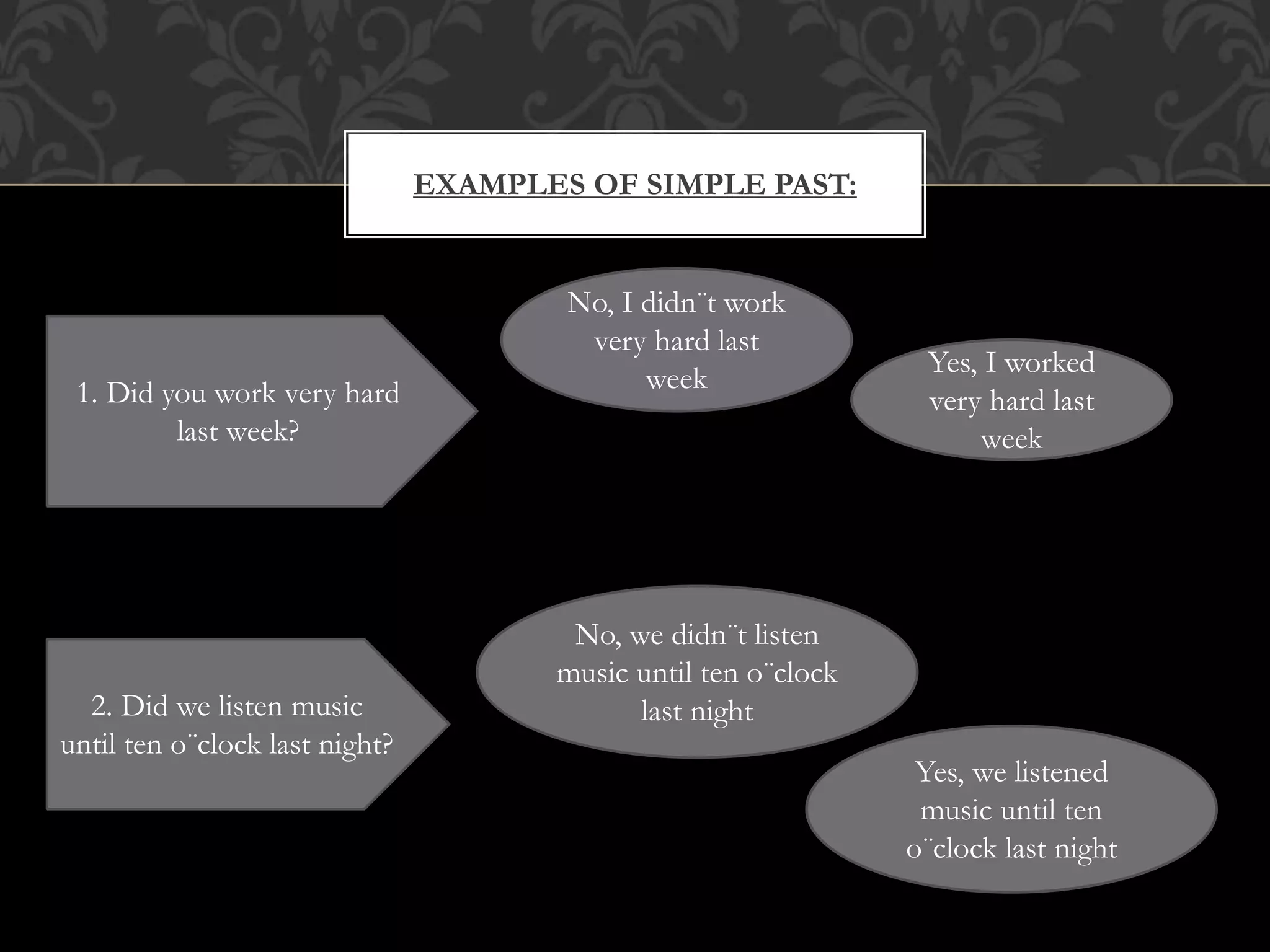
EXAMPLES OF SIMPLE PAST:
1. Did you work very hard
last week?
No, I didn¨t work
very hard last
week
Yes, I worked
very hard last
week
2. Did we listen music
until ten o¨clock last night?
No, we didn¨t listen
music until ten o¨clock
last night
Yes, we listened
music until ten
o¨clock last night
EXAMPLES OF SIMPLE PAST:
3. Did he want to visit
London?
No, she did¨t want to
visit London
Yes, she wanted
to visit London
4. Did she smoke a lot?
No, he didn¨t watch
television until twelve
o¨clock last night
Yes, she watched
television until
twelve o¨clock last
night
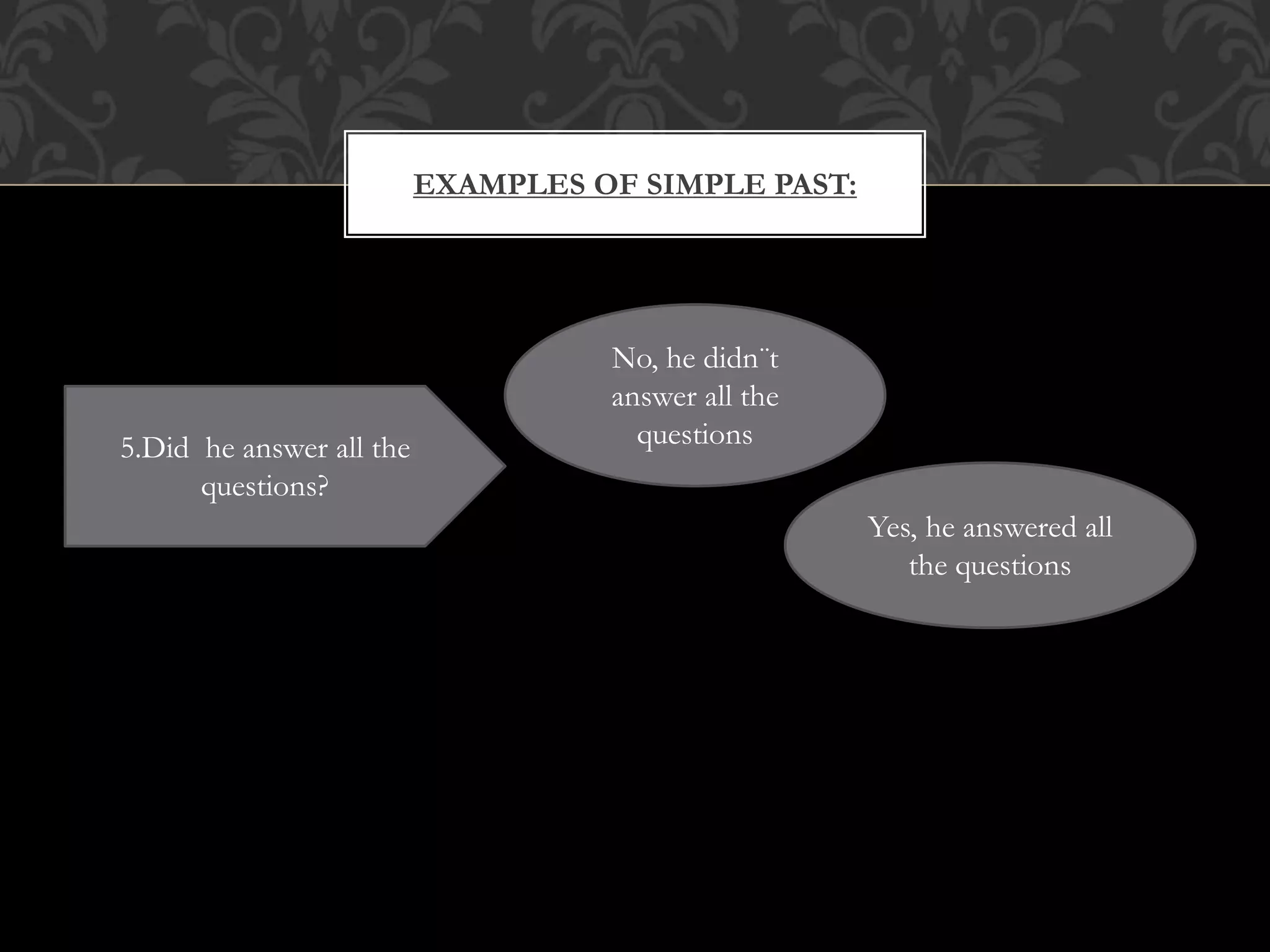
EXAMPLES OF SIMPLE PAST:
5.Did he answer all the
questions?
No, he didn¨t
answer all the
questions
Yes, he answered all
the questions
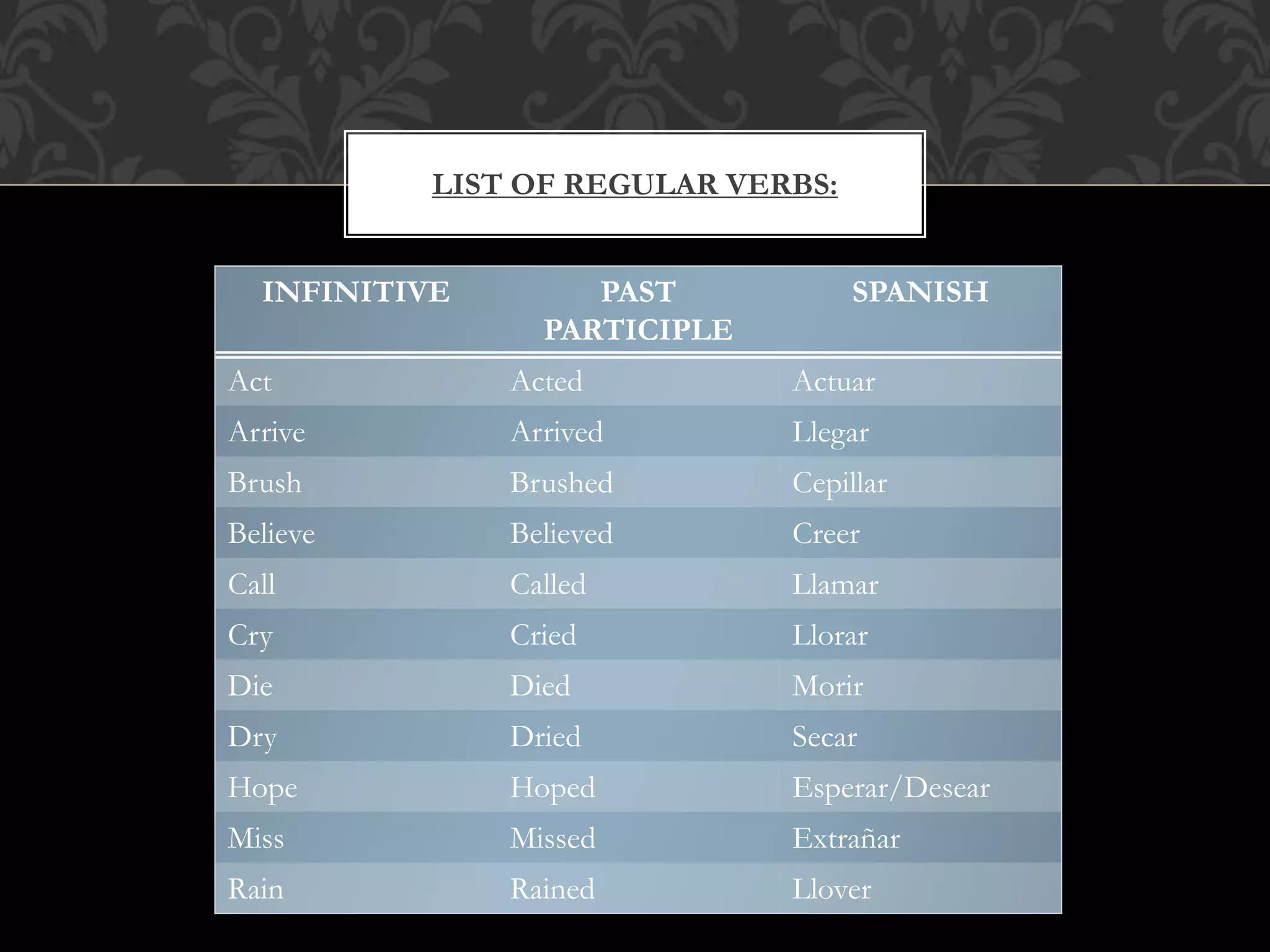
LIST OF REGULAR VERBS:
INFINITIVE PAST
PARTICIPLE
SPANISH
Act Acted Actuar
Arrive Arrived Llegar
Brush Brushed Cepillar
Believe Believed Creer
Call Called Llamar
Cry Cried Llorar
Die Died Morir
Dry Dried Secar
Hope Hoped Esperar/Desear
Miss Missed Extrañar
Rain Rained Llover
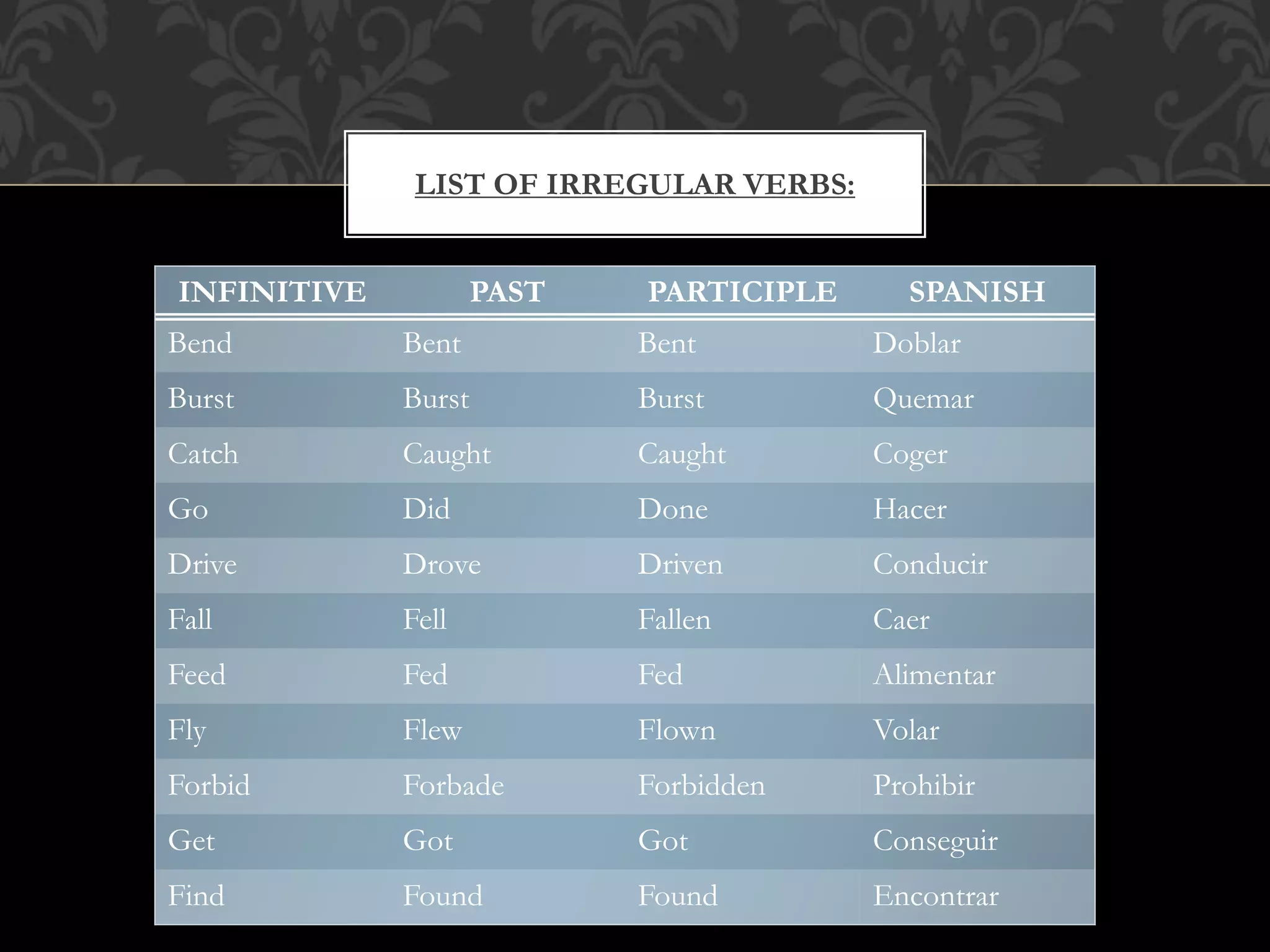
LIST OF IRREGULAR VERBS:
INFINITIVE PAST PARTICIPLE SPANISH
Bend Bent Bent Doblar
Burst Burst Burst Quemar
Catch Caught Caught Coger
Go Did Done Hacer
Drive Drove Driven Conducir
Fall Fell Fallen Caer
Feed Fed Fed Alimentar
Fly Flew Flown Volar
Forbid Forbade Forbidden Prohibir
Get Got Got Conseguir
Find Found Found Encontrar

Past simple - Karen M

  • 1.
    Made by: KarenMaestre Olivares. C.I: 28.189.488 PAST SIMPLE
  • 2.
    • DEFINITION: Thepast simple, also know as the simple past, is the verb tense used in the English language to narrate events that ocurred at a specific moment in the past. Correspons in it is meaning to the simple past tense in Spanish. • COMPLEMENTS: The past simple generally has temporary expressions that refer to the past, such as: PAST SIMPLE Yesterday Then When? Last night- week- month- year- tuesday How long ago? Ago In
  • 3.
    • WITH REGULARVERB: When the verb is reglar, the statements are constructed using the verb in the infinitive and the ending ed (or D if the infinive end in E) Is added to them. EXAMPLES: 1. Leonardo da vinci painted the Mona Lisa. 2. The teacher used a red pencil to correct the exams. AFFIRMATIVE SIMPLE PAST
  • 4.
    • WITH INRREGULARVERD: Edit when the verb is irregular, it changes the way it is written: EXAMPLES: 1. I went fishing last weekend. 2. I have bought a car. AFFIRMATIVE SIMPLE PAST
  • 5.
    To express anegation in the past tense, it is necessary to use, in both regular and irregular verbs, the auxiliary in the past tense plus not (did not or didn´t + the verd in the infinitive) EXAMPLES: 1. I didn¨t go to Barcelona last month. 2. I didn¨t do my homework yesterday. NEGATIVE SIMPLE PAST
  • 6.
    To ask questionsit is necessary to use the auxiliary did + the subject (I, You, He, She, It, We and They) + the verb in infinitive + the complement. EXAMPLES: 1. Did you see the thief¨s face? 2. Did you visit your grandparents last week? INTERROGATIVE SIMPLE PAST
  • 7.
    USES OF THESIMPLE PAST Actions that happened at a specific time in the past, either known or implied Actions that started and ended in the past Actions in the past that are not repeated in the present Actions that happened at a specific time and have already ended
  • 8.
    EXAMPLES OF SIMPLEPAST: 1. Did you work very hard last week? No, I didn¨t work very hard last week Yes, I worked very hard last week 2. Did we listen music until ten o¨clock last night? No, we didn¨t listen music until ten o¨clock last night Yes, we listened music until ten o¨clock last night
  • 9.
    EXAMPLES OF SIMPLEPAST: 3. Did he want to visit London? No, she did¨t want to visit London Yes, she wanted to visit London 4. Did she smoke a lot? No, he didn¨t watch television until twelve o¨clock last night Yes, she watched television until twelve o¨clock last night
  • 10.
    EXAMPLES OF SIMPLEPAST: 5.Did he answer all the questions? No, he didn¨t answer all the questions Yes, he answered all the questions
  • 11.
    LIST OF REGULARVERBS: INFINITIVE PAST PARTICIPLE SPANISH Act Acted Actuar Arrive Arrived Llegar Brush Brushed Cepillar Believe Believed Creer Call Called Llamar Cry Cried Llorar Die Died Morir Dry Dried Secar Hope Hoped Esperar/Desear Miss Missed Extrañar Rain Rained Llover
  • 12.
    LIST OF IRREGULARVERBS: INFINITIVE PAST PARTICIPLE SPANISH Bend Bent Bent Doblar Burst Burst Burst Quemar Catch Caught Caught Coger Go Did Done Hacer Drive Drove Driven Conducir Fall Fell Fallen Caer Feed Fed Fed Alimentar Fly Flew Flown Volar Forbid Forbade Forbidden Prohibir Get Got Got Conseguir Find Found Found Encontrar