
HELLO EVERYONE !!!
Today, we will tell you
about 3 problems :
->The Simple past.
->The Past Continuous.
->The Past Simple and
Continuous.

LET’S BEGIN !
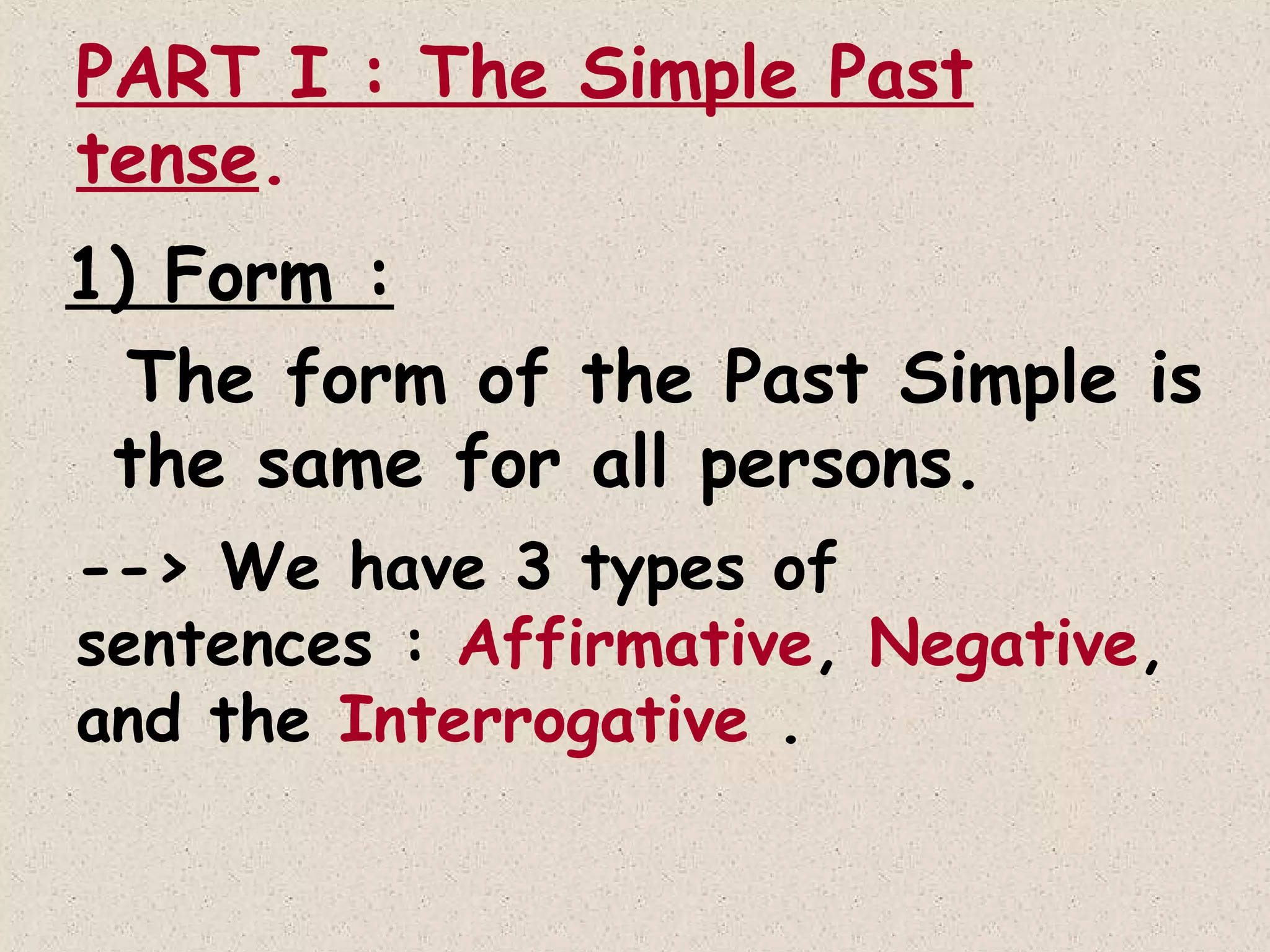
PART I : The Simple Past
tense.
1) Form :
The form of the Past Simple is
the same for all persons.
--> We have 3 types of
sentences : Affirmative, Negative,
and the Interrogative .
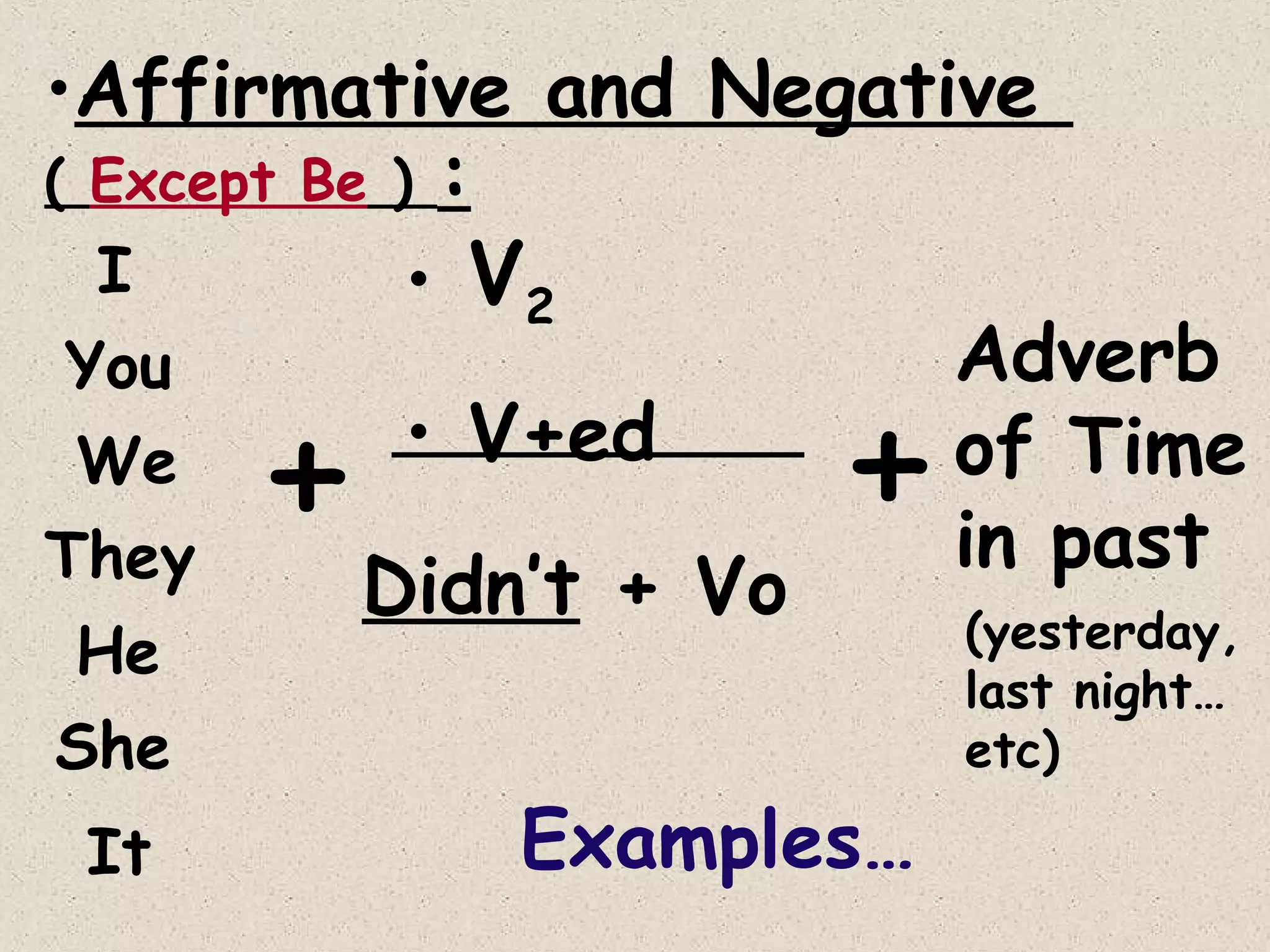
•Affirmative and Negative
( Except Be ) :
I
• V2
Adverb
You
• V+ed
of Time
We
in past
They
Didn’t + Vo
(yesterday,

+

He
She
It

+

last night…
etc)

Examples…
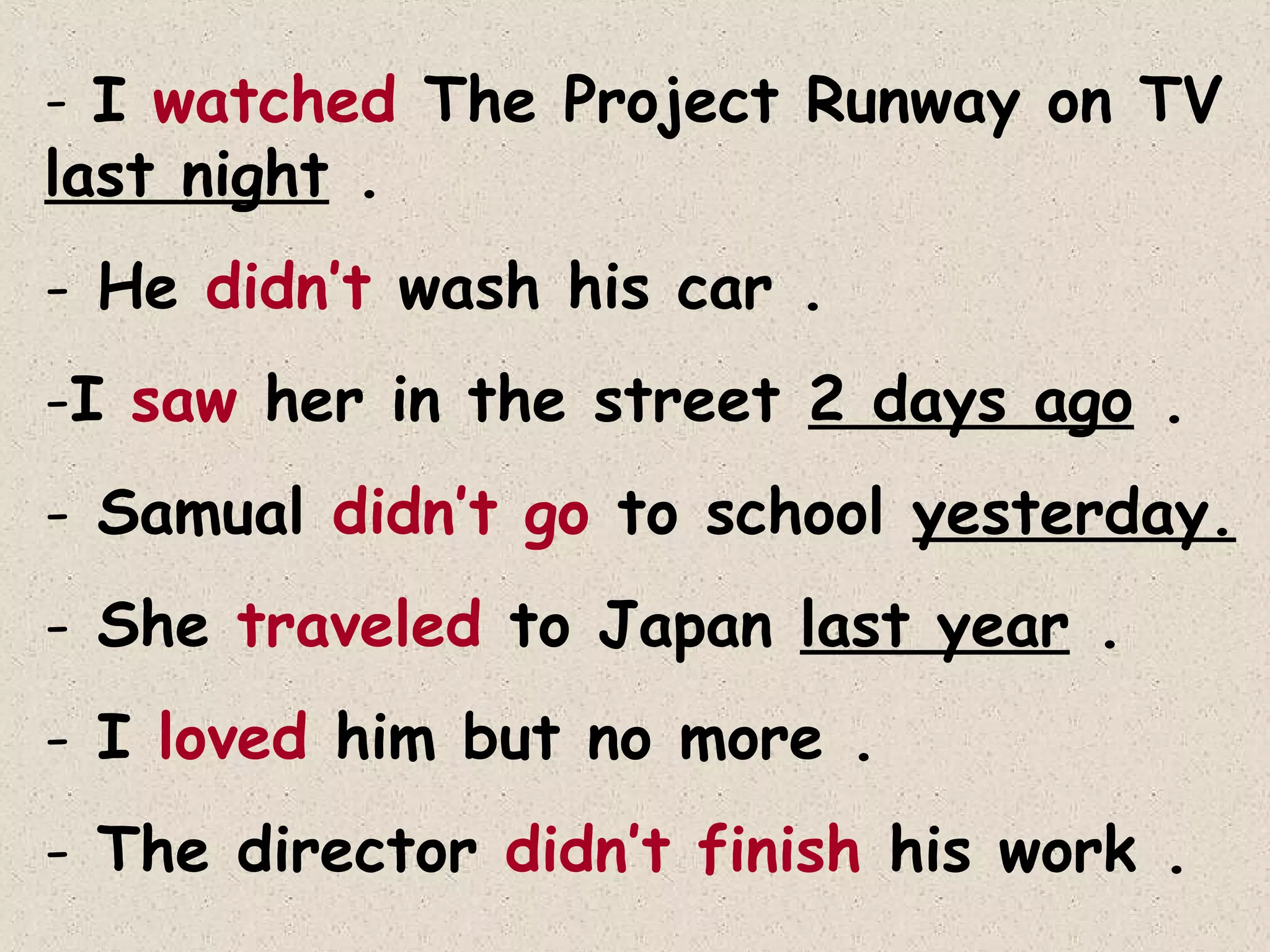
- I watched The Project Runway on TV

last night .

- He didn’t wash his car .
-I saw her in the street 2 days ago .
- Samual didn’t go to school yesterday.
- She traveled to Japan last year .
- I loved him but no more .
- The director didn’t finish his work .
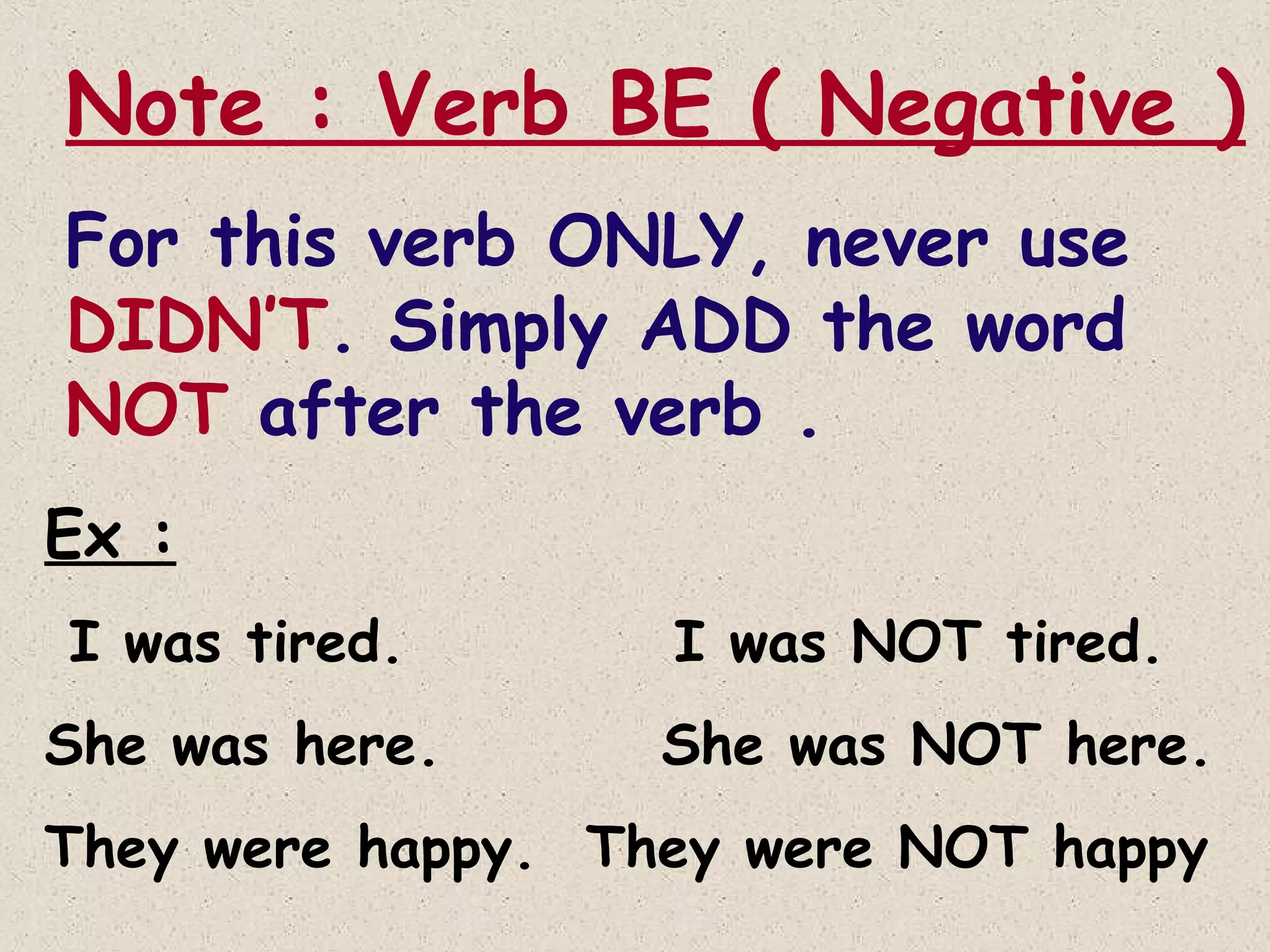
Note : Verb BE ( Negative )
For this verb ONLY, never use
DIDN’T. Simply ADD the word
NOT after the verb .
Ex :
I was tired.
She was here.

I was NOT tired.
She was NOT here.

They were happy. They were NOT happy
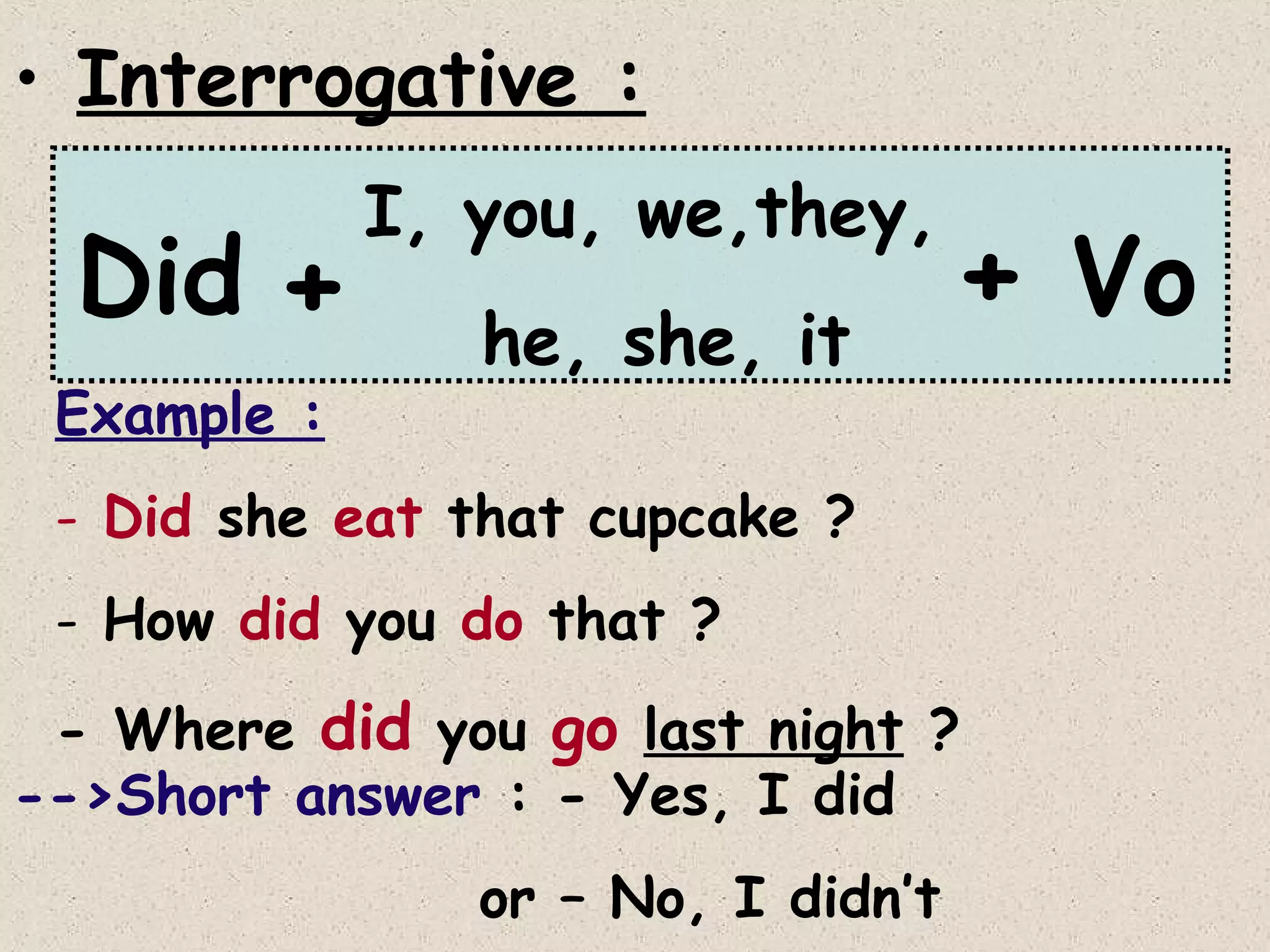
• Interrogative :

Did +
Example :

I, you, we,they,
he, she, it

+ Vo

- Did she eat that cupcake ?
- How did you do that ?
- Where did you go last night ?
-->Short answer : - Yes, I did
or – No, I didn’t
In addition, English has TWO
types of verbs in the past
tense :
• Regular verbs
• Irregular verbs
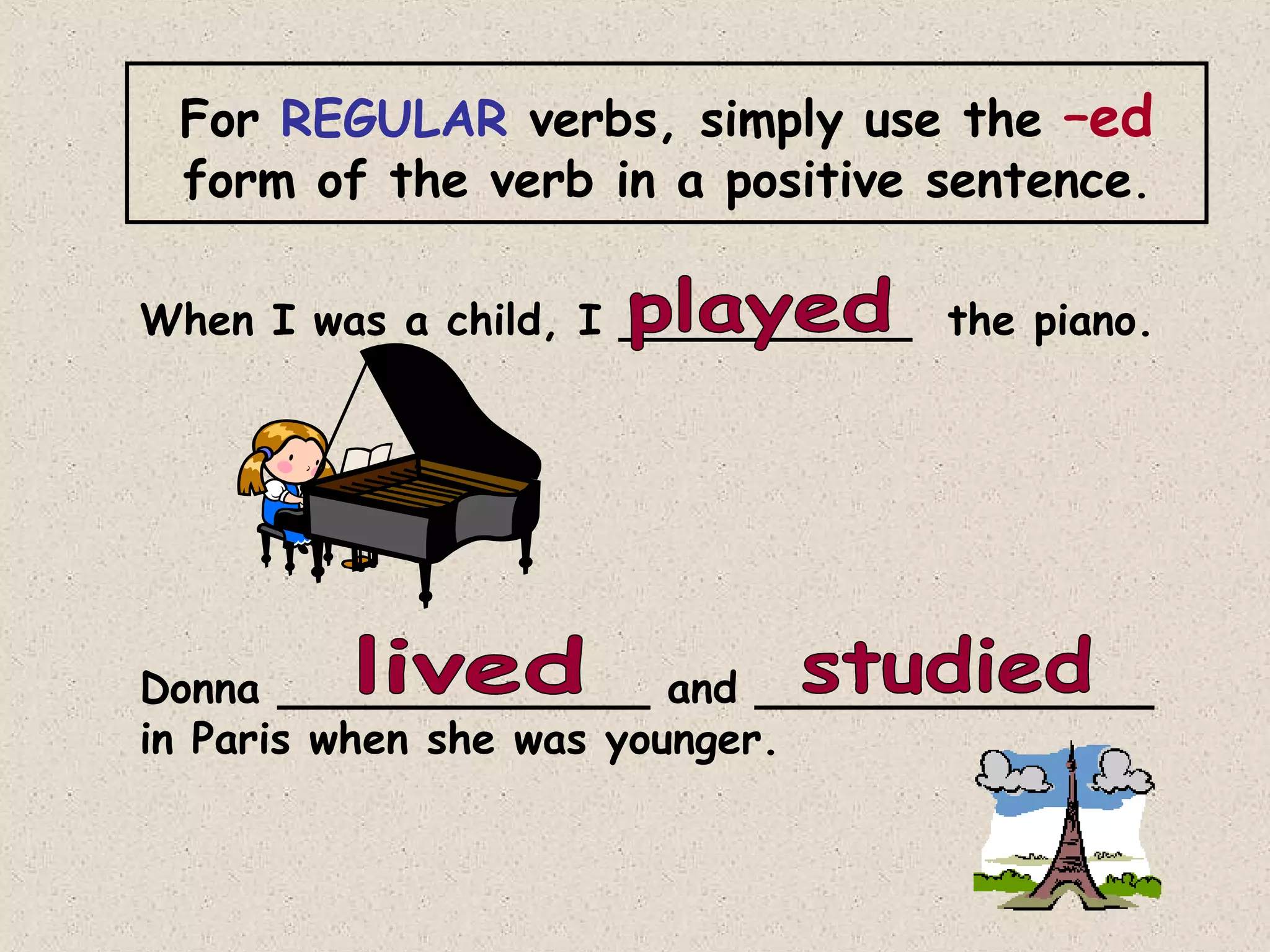
For REGULAR verbs, simply use the –ed
form of the verb in a positive sentence.
When I was a child, I ___________ the piano.

Donna ______________ and _______________
in Paris when she was younger.
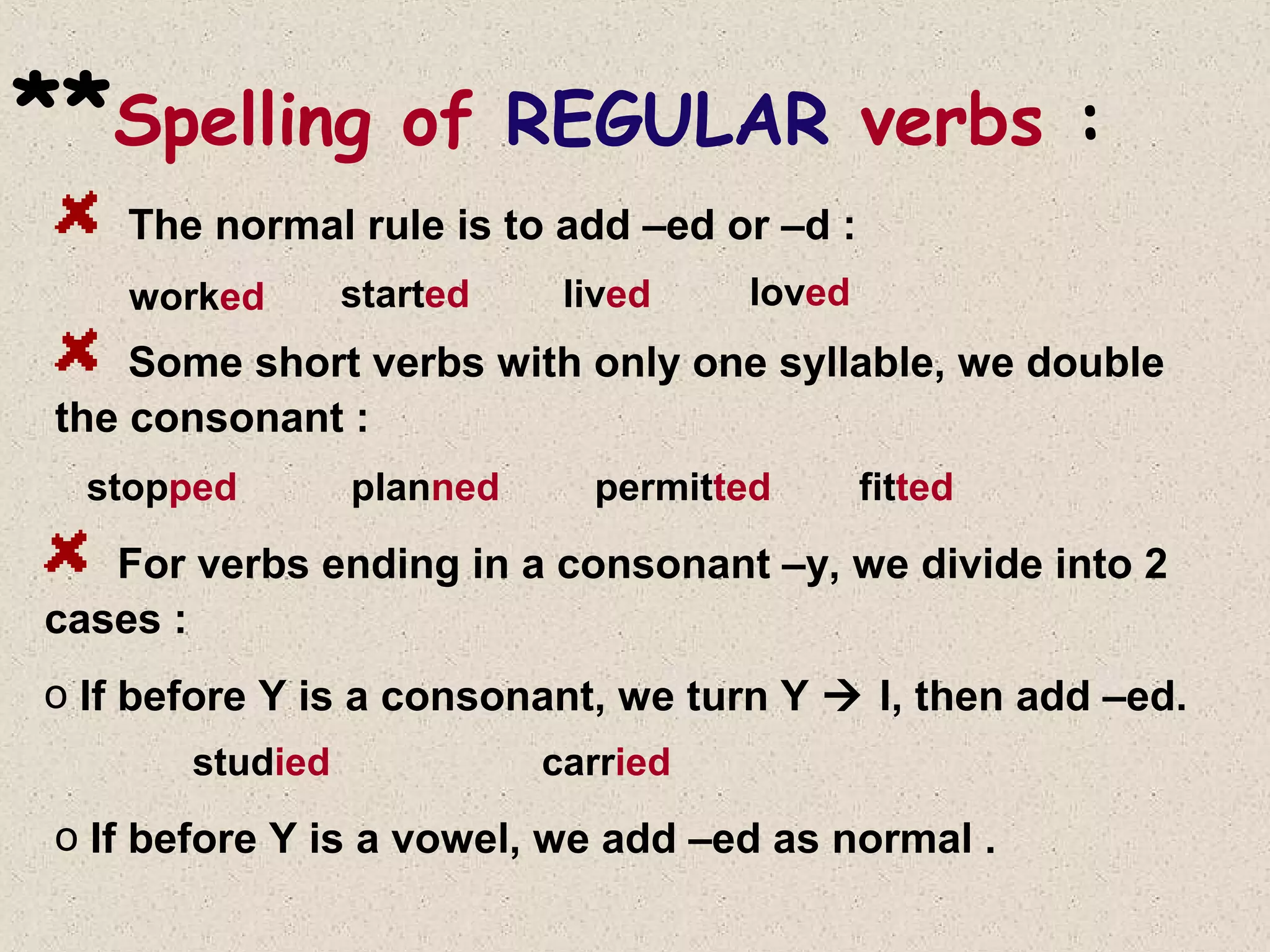
**Spelling

of REGULAR verbs :

The normal rule is to add –ed or –d :
worked

started

lived

loved

Some short verbs with only one syllable, we double
the consonant :
stopped

planned

permitted

fitted

For verbs ending in a consonant –y, we divide into 2
cases :
o If before Y is a consonant, we turn Y  I, then add –ed.
studied

carried

o If before Y is a vowel, we add –ed as normal .
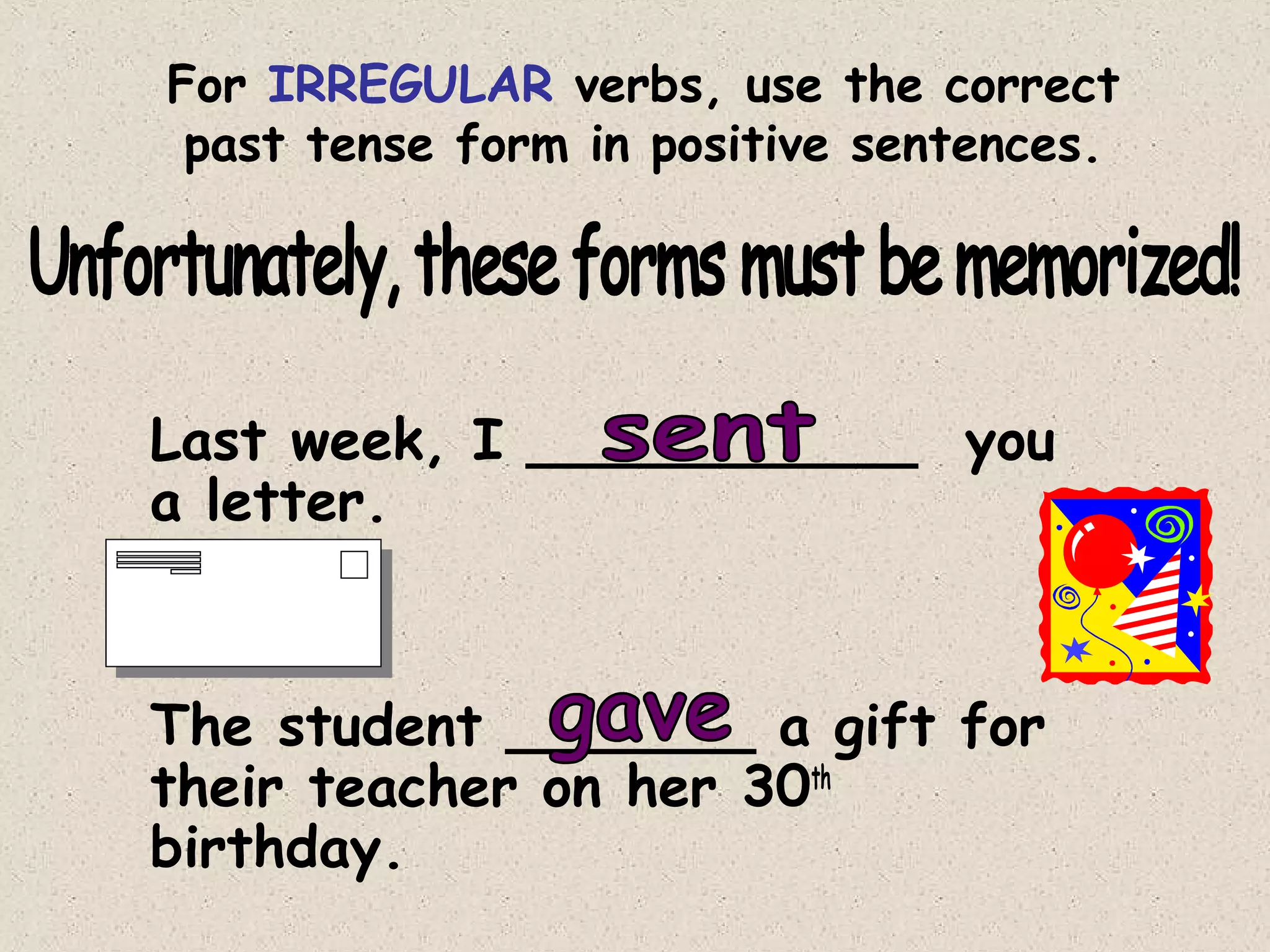
For IRREGULAR verbs, use the correct
past tense form in positive sentences.

Last week, I ___________ you
a letter.

The student _______ a gift for
their teacher on her 30th
birthday.
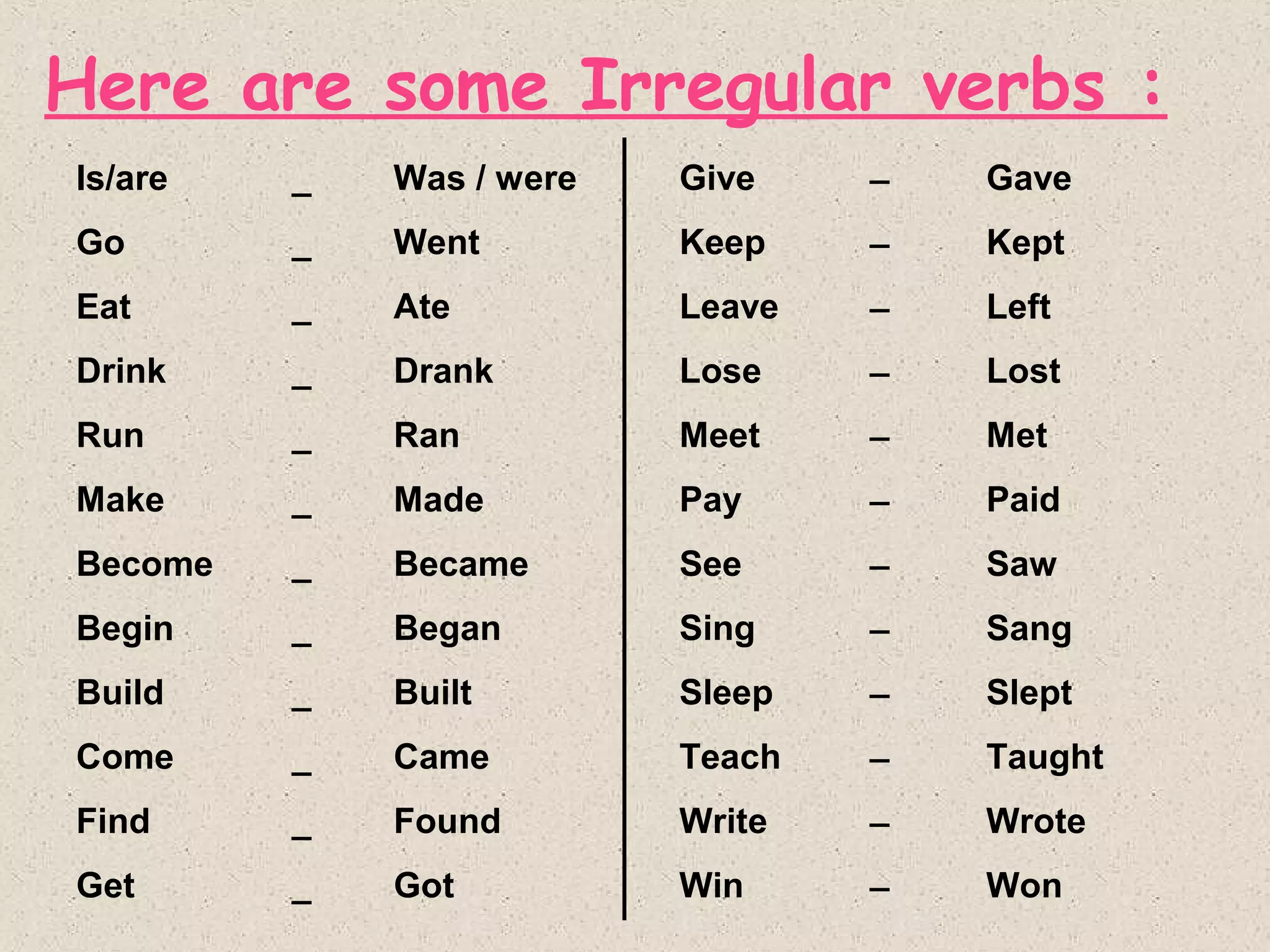
Here are some Irregular verbs :
Is/are

_

Was / were

Give

_

Gave

Go

_

Went

Keep

_

Kept

Eat

_

Ate

Leave

_

Left

Drink

_

Drank

Lose

_

Lost

Run

_

Ran

Meet

_

Met

Make

_

Made

Pay

_

Paid

Become

_

Became

See

_

Saw

Begin

_

Began

Sing

_

Sang

Build

_

Built

Sleep

_

Slept

Come

_

Came

Teach

_

Taught

Find

_

Found

Write

_

Wrote

Get

_

Got

Win

_

Won
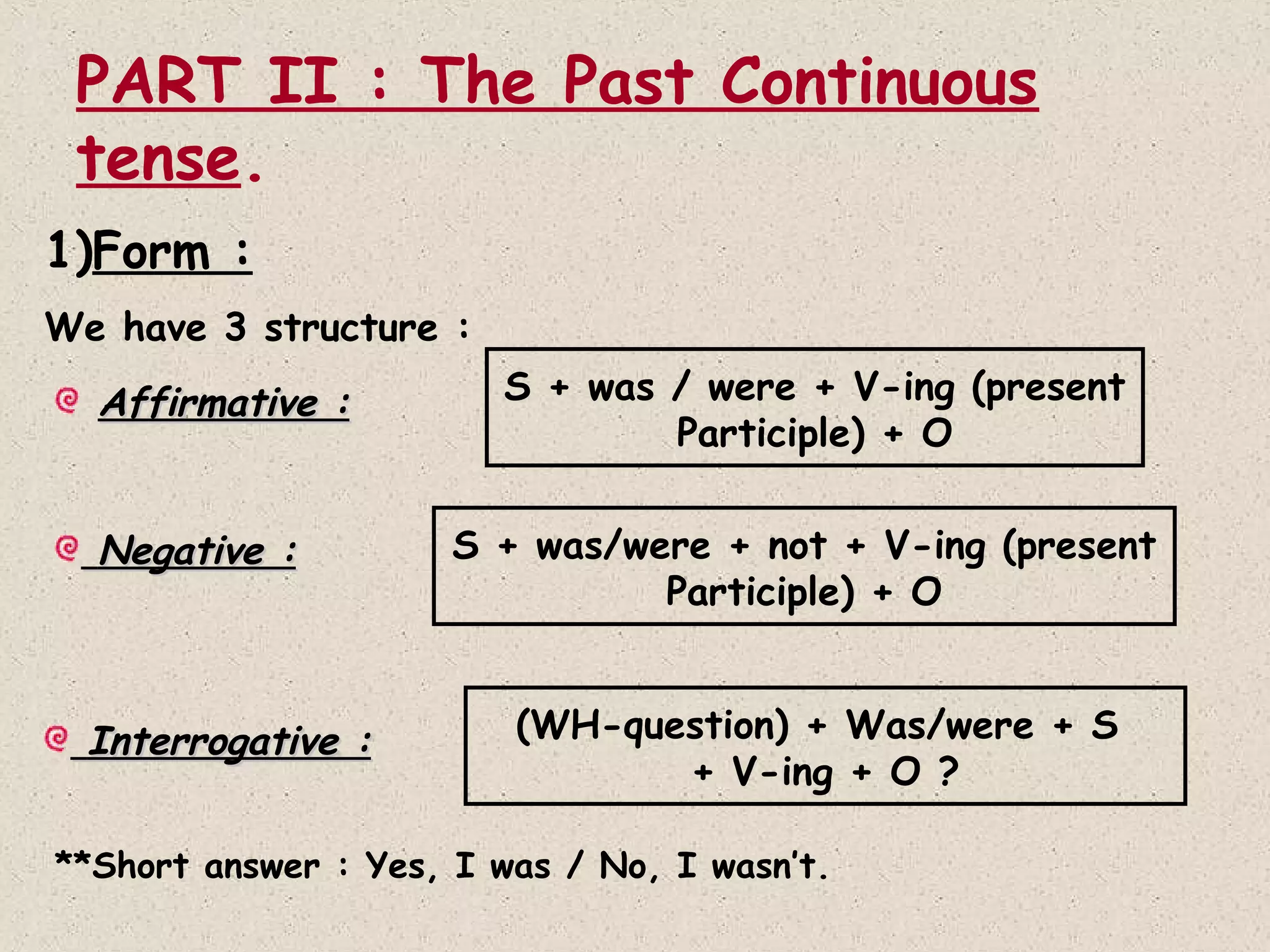
PART II : The Past Continuous
tense.
1)Form :
We have 3 structure :

Affirmative :
Negative :

Interrogative :

S + was / were + V-ing (present
Participle) + O
S + was/were + not + V-ing (present
Participle) + O
(WH-question) + Was/were + S
+ V-ing + O ?

**Short answer : Yes, I was / No, I wasn’t.
Examples:
- My mom was trying to call me last
night, but I wasn’t home.
- The kids were studying last night at
9:00.
-I was cleaning my house all day
yesterday.
- They were NOT arguing last night.
- Were she going there yesterday ?
Important Note about
Past Continuous !
Some verbs are NOT typically used in the
continuous tense. Instead, we prefer to use
these verbs in the simple tenses (simple
present or past).
These verbs are called STATIVE (or nonaction) verbs. Here are some examples:
want
like
love
hate
know need
see
hear
believe
understand
have (possession)
forget
remember belong
Examples:
I liked Rome.
NOT:
I was liking Rome.
She had a headache.
NOT:
She was having a headache.
I knew the answer.
NOT:
I was knowing the answer.
Using both tenses together:
Sometimes we use both the simple
past and the past continuous
together to mean . . .
That one action (simple past)
interrupted a continuing action (past
continuous)
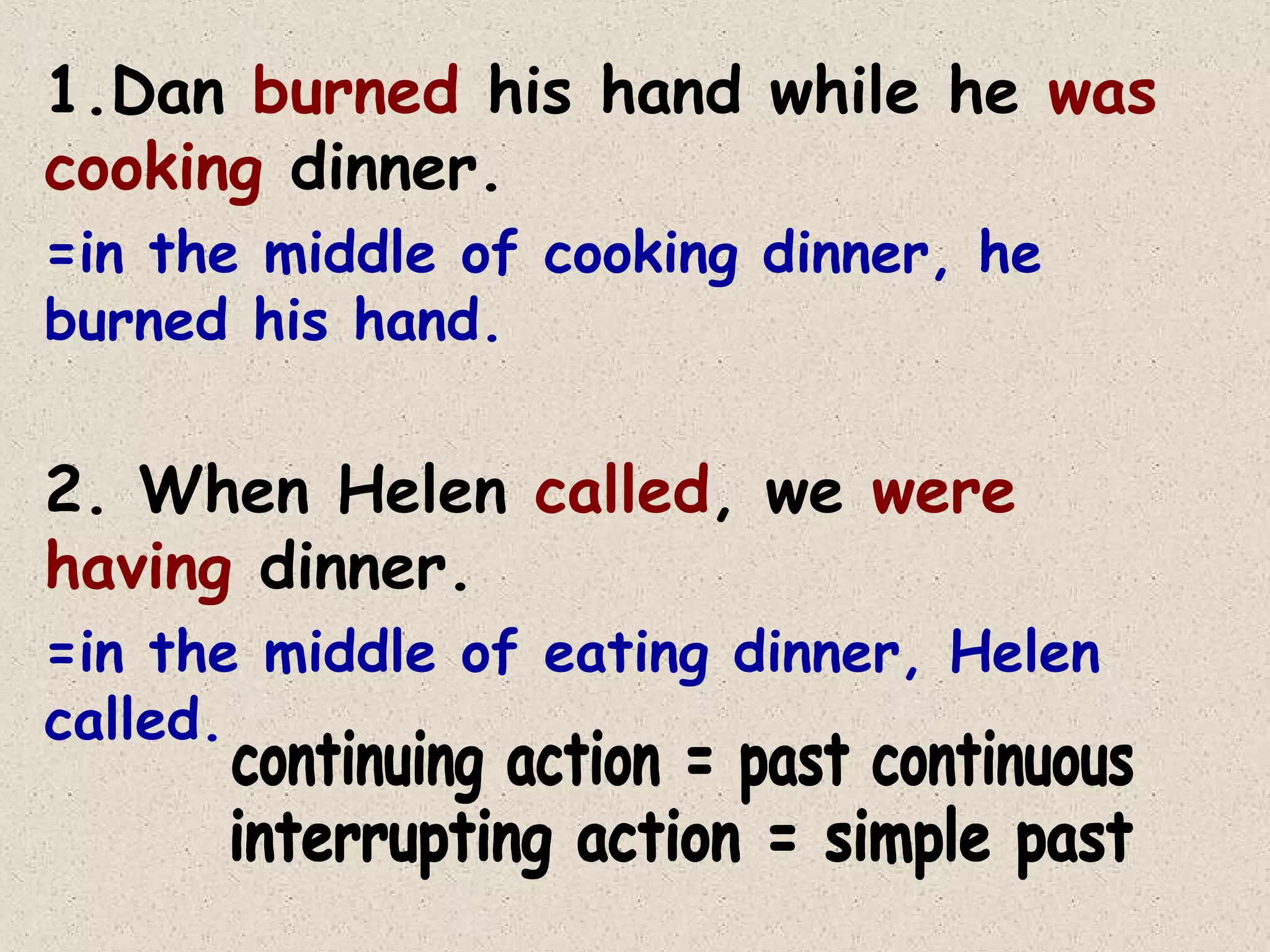
1.Dan burned his hand while he was
cooking dinner.
=in the middle of cooking dinner, he
burned his hand.

2. When Helen called, we were
having dinner.
=in the middle of eating dinner, Helen
called.
And we have some linking-words to
make sentences with 2 actions :
• WHEN
• WHILE
• SUDDENLY
• ETC…
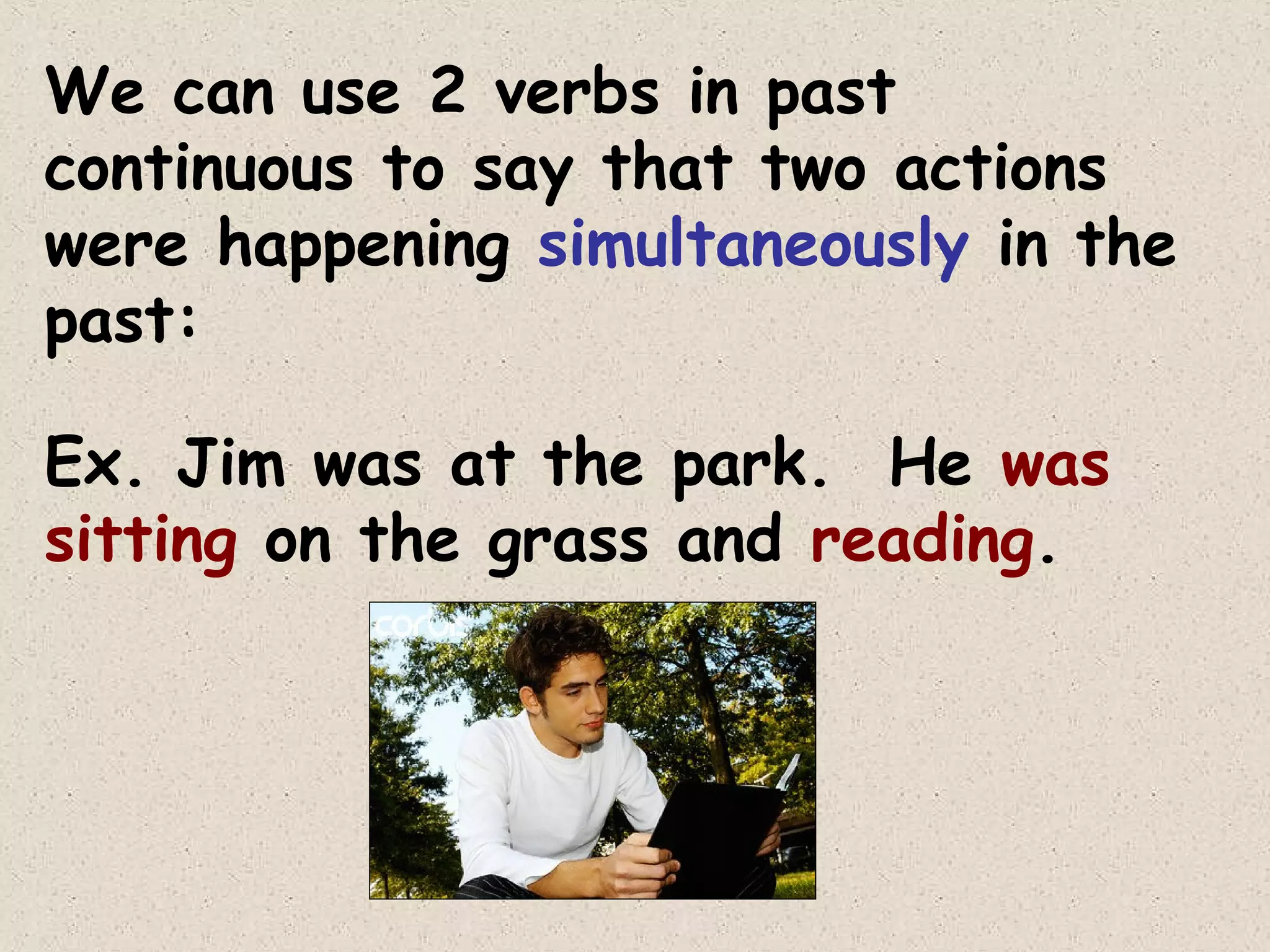
We can use 2 verbs in past
continuous to say that two actions
were happening simultaneously in the
past:
Ex. Jim was at the park. He was
sitting on the grass and reading.
Thuyet trinh 1

Thuyet trinh 1

  • 1.
    HELLO EVERYONE !!! Today,we will tell you about 3 problems : ->The Simple past. ->The Past Continuous. ->The Past Simple and Continuous. LET’S BEGIN !
  • 2.
    PART I :The Simple Past tense. 1) Form : The form of the Past Simple is the same for all persons. --> We have 3 types of sentences : Affirmative, Negative, and the Interrogative .
  • 3.
    •Affirmative and Negative (Except Be ) : I • V2 Adverb You • V+ed of Time We in past They Didn’t + Vo (yesterday, + He She It + last night… etc) Examples…
  • 4.
    - I watchedThe Project Runway on TV last night . - He didn’t wash his car . -I saw her in the street 2 days ago . - Samual didn’t go to school yesterday. - She traveled to Japan last year . - I loved him but no more . - The director didn’t finish his work .
  • 5.
    Note : VerbBE ( Negative ) For this verb ONLY, never use DIDN’T. Simply ADD the word NOT after the verb . Ex : I was tired. She was here. I was NOT tired. She was NOT here. They were happy. They were NOT happy
  • 6.
    • Interrogative : Did+ Example : I, you, we,they, he, she, it + Vo - Did she eat that cupcake ? - How did you do that ? - Where did you go last night ? -->Short answer : - Yes, I did or – No, I didn’t
  • 7.
    In addition, Englishhas TWO types of verbs in the past tense : • Regular verbs • Irregular verbs
  • 8.
    For REGULAR verbs,simply use the –ed form of the verb in a positive sentence. When I was a child, I ___________ the piano. Donna ______________ and _______________ in Paris when she was younger.
  • 9.
    **Spelling of REGULAR verbs: The normal rule is to add –ed or –d : worked started lived loved Some short verbs with only one syllable, we double the consonant : stopped planned permitted fitted For verbs ending in a consonant –y, we divide into 2 cases : o If before Y is a consonant, we turn Y  I, then add –ed. studied carried o If before Y is a vowel, we add –ed as normal .
  • 10.
    For IRREGULAR verbs,use the correct past tense form in positive sentences. Last week, I ___________ you a letter. The student _______ a gift for their teacher on her 30th birthday.
  • 11.
    Here are someIrregular verbs : Is/are _ Was / were Give _ Gave Go _ Went Keep _ Kept Eat _ Ate Leave _ Left Drink _ Drank Lose _ Lost Run _ Ran Meet _ Met Make _ Made Pay _ Paid Become _ Became See _ Saw Begin _ Began Sing _ Sang Build _ Built Sleep _ Slept Come _ Came Teach _ Taught Find _ Found Write _ Wrote Get _ Got Win _ Won
  • 12.
    PART II :The Past Continuous tense. 1)Form : We have 3 structure : Affirmative : Negative : Interrogative : S + was / were + V-ing (present Participle) + O S + was/were + not + V-ing (present Participle) + O (WH-question) + Was/were + S + V-ing + O ? **Short answer : Yes, I was / No, I wasn’t.
  • 13.
    Examples: - My momwas trying to call me last night, but I wasn’t home. - The kids were studying last night at 9:00. -I was cleaning my house all day yesterday. - They were NOT arguing last night. - Were she going there yesterday ?
  • 14.
    Important Note about PastContinuous ! Some verbs are NOT typically used in the continuous tense. Instead, we prefer to use these verbs in the simple tenses (simple present or past). These verbs are called STATIVE (or nonaction) verbs. Here are some examples: want like love hate know need see hear believe understand have (possession) forget remember belong
  • 15.
    Examples: I liked Rome. NOT: Iwas liking Rome. She had a headache. NOT: She was having a headache. I knew the answer. NOT: I was knowing the answer.
  • 16.
    Using both tensestogether: Sometimes we use both the simple past and the past continuous together to mean . . . That one action (simple past) interrupted a continuing action (past continuous)
  • 17.
    1.Dan burned hishand while he was cooking dinner. =in the middle of cooking dinner, he burned his hand. 2. When Helen called, we were having dinner. =in the middle of eating dinner, Helen called.
  • 18.
    And we havesome linking-words to make sentences with 2 actions : • WHEN • WHILE • SUDDENLY • ETC…
  • 19.
    We can use2 verbs in past continuous to say that two actions were happening simultaneously in the past: Ex. Jim was at the park. He was sitting on the grass and reading.