UNIVERSIDAD CENTRAL DEL ECUADOR 
FACULTAD DE FILOSOFÍA, LETRAS Y CIENCIAS DE LA EDUCACIÓN 
CARRERA PLURILINGUE 
ASIGNATURA: CURRICULO 
NOMBRE: KAROL BOLAÑOS
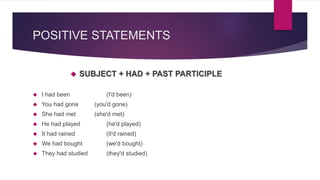
POSITIVE STATEMENTS 
 SUBJECT + HAD + PAST PARTICIPLE 
 I had been (I'd been) 
 You had gone (you'd gone) 
 She had met (she'd met) 
 He had played (he'd played) 
 It had rained (it'd rained) 
 We had bought (we'd bought) 
 They had studied (they'd studied)
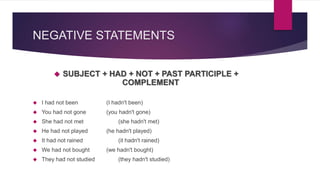
NEGATIVE STATEMENTS 
 SUBJECT + HAD + NOT + PAST PARTICIPLE + 
COMPLEMENT 
 I had not been (I hadn't been) 
 You had not gone (you hadn't gone) 
 She had not met (she hadn't met) 
 He had not played (he hadn't played) 
 It had not rained (it hadn't rained) 
 We had not bought (we hadn't bought) 
 They had not studied (they hadn't studied)
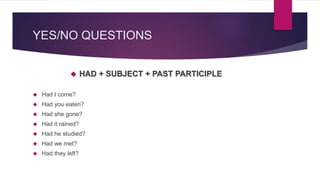
YES/NO QUESTIONS 
 HAD + SUBJECT + PAST PARTICIPLE 
 Had I come? 
 Had you eaten? 
 Had she gone? 
 Had it rained? 
 Had he studied? 
 Had we met? 
 Had they left?
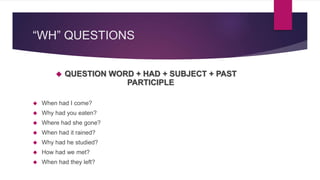
“WH” QUESTIONS 
 QUESTION WORD + HAD + SUBJECT + PAST 
PARTICIPLE 
 When had I come? 
 Why had you eaten? 
 Where had she gone? 
 When had it rained? 
 Why had he studied? 
 How had we met? 
 When had they left?
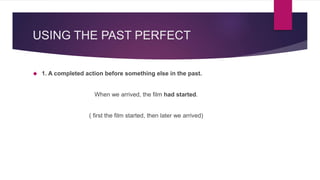
USING THE PAST PERFECT 
 1. A completed action before something else in the past. 
When we arrived, the film had started. 
( first the film started, then later we arrived)
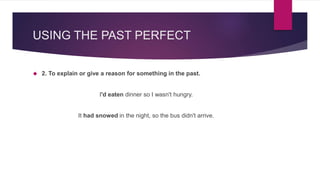
USING THE PAST PERFECT 
 2. To explain or give a reason for something in the past. 
I'd eaten dinner so I wasn't hungry. 
It had snowed in the night, so the bus didn't arrive.
USING THE PAST PERFECT 
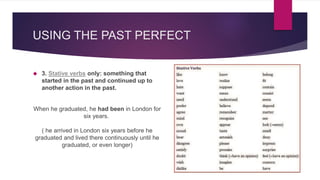
 3. Stative verbs only: something that 
started in the past and continued up to 
another action in the past. 
When he graduated, he had been in London for 
six years. 
( he arrived in London six years before he 
graduated and lived there continuously until he 
graduated, or even longer)
USING THE PAST PERFECT 
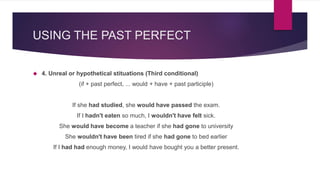
 4. Unreal or hypothetical stituations (Third conditional) 
(if + past perfect, ... would + have + past participle) 
If she had studied, she would have passed the exam. 
If I hadn't eaten so much, I wouldn't have felt sick. 
She would have become a teacher if she had gone to university 
She wouldn't have been tired if she had gone to bed earlier 
If I had had enough money, I would have bought you a better present.
USING THE PAST PERFECT 
 5. In reported speech : The past perfect is common when we report people's 
words or thoughts. 
John said that he had never eaten sushi before. 
I thought I had sent her a birthday card, but I was wrong. 
She told me that she had studied, but I knew she had not. 
She wondered why their classmates had been so unkind to her.

Past perfect tense

  • 1.
    UNIVERSIDAD CENTRAL DELECUADOR FACULTAD DE FILOSOFÍA, LETRAS Y CIENCIAS DE LA EDUCACIÓN CARRERA PLURILINGUE ASIGNATURA: CURRICULO NOMBRE: KAROL BOLAÑOS
  • 2.
    POSITIVE STATEMENTS SUBJECT + HAD + PAST PARTICIPLE  I had been (I'd been)  You had gone (you'd gone)  She had met (she'd met)  He had played (he'd played)  It had rained (it'd rained)  We had bought (we'd bought)  They had studied (they'd studied)
  • 3.
    NEGATIVE STATEMENTS SUBJECT + HAD + NOT + PAST PARTICIPLE + COMPLEMENT  I had not been (I hadn't been)  You had not gone (you hadn't gone)  She had not met (she hadn't met)  He had not played (he hadn't played)  It had not rained (it hadn't rained)  We had not bought (we hadn't bought)  They had not studied (they hadn't studied)
  • 4.
    YES/NO QUESTIONS HAD + SUBJECT + PAST PARTICIPLE  Had I come?  Had you eaten?  Had she gone?  Had it rained?  Had he studied?  Had we met?  Had they left?
  • 5.
    “WH” QUESTIONS QUESTION WORD + HAD + SUBJECT + PAST PARTICIPLE  When had I come?  Why had you eaten?  Where had she gone?  When had it rained?  Why had he studied?  How had we met?  When had they left?
  • 6.
    USING THE PASTPERFECT  1. A completed action before something else in the past. When we arrived, the film had started. ( first the film started, then later we arrived)
  • 7.
    USING THE PASTPERFECT  2. To explain or give a reason for something in the past. I'd eaten dinner so I wasn't hungry. It had snowed in the night, so the bus didn't arrive.
  • 8.
    USING THE PASTPERFECT  3. Stative verbs only: something that started in the past and continued up to another action in the past. When he graduated, he had been in London for six years. ( he arrived in London six years before he graduated and lived there continuously until he graduated, or even longer)
  • 9.
    USING THE PASTPERFECT  4. Unreal or hypothetical stituations (Third conditional) (if + past perfect, ... would + have + past participle) If she had studied, she would have passed the exam. If I hadn't eaten so much, I wouldn't have felt sick. She would have become a teacher if she had gone to university She wouldn't have been tired if she had gone to bed earlier If I had had enough money, I would have bought you a better present.
  • 10.
    USING THE PASTPERFECT  5. In reported speech : The past perfect is common when we report people's words or thoughts. John said that he had never eaten sushi before. I thought I had sent her a birthday card, but I was wrong. She told me that she had studied, but I knew she had not. She wondered why their classmates had been so unkind to her.