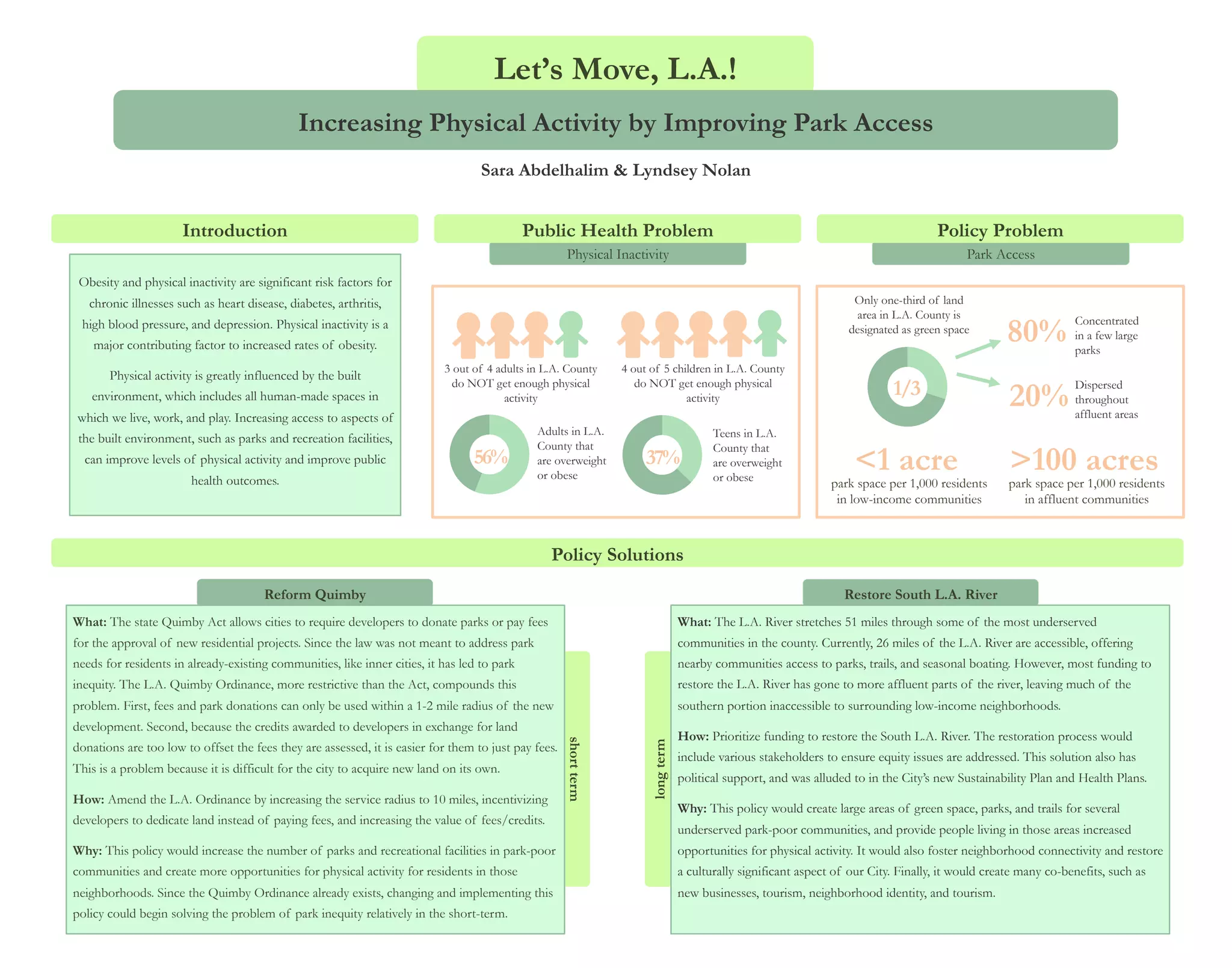
Let’s Move, L.A.!
Increasing Physical Activity by Improving Park Access
Sara Abdelhalim & Lyndsey Nolan
Obesity and physical inactivity are significant risk factors for
chronic illnesses such as heart disease, diabetes, arthritis,
high blood pressure, and depression. Physical inactivity is a
major contributing factor to increased rates of obesity.
Physical activity is greatly influenced by the built
environment, which includes all human-made spaces in
which we live, work, and play. Increasing access to aspects of
the built environment, such as parks and recreation facilities,
can improve levels of physical activity and improve public
health outcomes.
Introduction
longterm
Restore South L.A. River
What: The L.A. River stretches 51 miles through some of the most underserved
communities in the county. Currently, 26 miles of the L.A. River are accessible, offering
nearby communities access to parks, trails, and seasonal boating. However, most funding to
restore the L.A. River has gone to more affluent parts of the river, leaving much of the
southern portion inaccessible to surrounding low-income neighborhoods.
How: Prioritize funding to restore the South L.A. River. The restoration process would
include various stakeholders to ensure equity issues are addressed. This solution also has
political support, and was alluded to in the City’s new Sustainability Plan and Health Plans.
Why: This policy would create large areas of green space, parks, and trails for several
underserved park-poor communities, and provide people living in those areas increased
opportunities for physical activity. It would also foster neighborhood connectivity and restore
a culturally significant aspect of our City. Finally, it would create many co-benefits, such as
new businesses, tourism, neighborhood identity, and tourism.
Policy Solutions
shortterm
Reform Quimby
What: The state Quimby Act allows cities to require developers to donate parks or pay fees
for the approval of new residential projects. Since the law was not meant to address park
needs for residents in already-existing communities, like inner cities, it has led to park
inequity. The L.A. Quimby Ordinance, more restrictive than the Act, compounds this
problem. First, fees and park donations can only be used within a 1-2 mile radius of the new
development. Second, because the credits awarded to developers in exchange for land
donations are too low to offset the fees they are assessed, it is easier for them to just pay fees.
This is a problem because it is difficult for the city to acquire new land on its own.
How: Amend the L.A. Ordinance by increasing the service radius to 10 miles, incentivizing
developers to dedicate land instead of paying fees, and increasing the value of fees/credits.
Why: This policy would increase the number of parks and recreational facilities in park-poor
communities and create more opportunities for physical activity for residents in those
neighborhoods. Since the Quimby Ordinance already exists, changing and implementing this
policy could begin solving the problem of park inequity relatively in the short-term.
Physical Inactivity
Public Health Problem
Only one-third of land
area in L.A. County is
designated as green space
80%
20%
Concentrated
in a few large
parks
Dispersed
throughout
affluent areas
1/3
park space per 1,000 residents
in low-income communities
<1 acre >100 acres
park space per 1,000 residents
in affluent communities
Park Access
Policy Problem
4 out of 5 children in L.A. County
do NOT get enough physical
activity
56% 37%
Adults in L.A.
County that
are overweight
or obese
Teens in L.A.
County that
are overweight
or obese
3 out of 4 adults in L.A. County
do NOT get enough physical
activity

Park Poster - Final - Abdelhalim and Nolan

  • 1.
    Let’s Move, L.A.! IncreasingPhysical Activity by Improving Park Access Sara Abdelhalim & Lyndsey Nolan Obesity and physical inactivity are significant risk factors for chronic illnesses such as heart disease, diabetes, arthritis, high blood pressure, and depression. Physical inactivity is a major contributing factor to increased rates of obesity. Physical activity is greatly influenced by the built environment, which includes all human-made spaces in which we live, work, and play. Increasing access to aspects of the built environment, such as parks and recreation facilities, can improve levels of physical activity and improve public health outcomes. Introduction longterm Restore South L.A. River What: The L.A. River stretches 51 miles through some of the most underserved communities in the county. Currently, 26 miles of the L.A. River are accessible, offering nearby communities access to parks, trails, and seasonal boating. However, most funding to restore the L.A. River has gone to more affluent parts of the river, leaving much of the southern portion inaccessible to surrounding low-income neighborhoods. How: Prioritize funding to restore the South L.A. River. The restoration process would include various stakeholders to ensure equity issues are addressed. This solution also has political support, and was alluded to in the City’s new Sustainability Plan and Health Plans. Why: This policy would create large areas of green space, parks, and trails for several underserved park-poor communities, and provide people living in those areas increased opportunities for physical activity. It would also foster neighborhood connectivity and restore a culturally significant aspect of our City. Finally, it would create many co-benefits, such as new businesses, tourism, neighborhood identity, and tourism. Policy Solutions shortterm Reform Quimby What: The state Quimby Act allows cities to require developers to donate parks or pay fees for the approval of new residential projects. Since the law was not meant to address park needs for residents in already-existing communities, like inner cities, it has led to park inequity. The L.A. Quimby Ordinance, more restrictive than the Act, compounds this problem. First, fees and park donations can only be used within a 1-2 mile radius of the new development. Second, because the credits awarded to developers in exchange for land donations are too low to offset the fees they are assessed, it is easier for them to just pay fees. This is a problem because it is difficult for the city to acquire new land on its own. How: Amend the L.A. Ordinance by increasing the service radius to 10 miles, incentivizing developers to dedicate land instead of paying fees, and increasing the value of fees/credits. Why: This policy would increase the number of parks and recreational facilities in park-poor communities and create more opportunities for physical activity for residents in those neighborhoods. Since the Quimby Ordinance already exists, changing and implementing this policy could begin solving the problem of park inequity relatively in the short-term. Physical Inactivity Public Health Problem Only one-third of land area in L.A. County is designated as green space 80% 20% Concentrated in a few large parks Dispersed throughout affluent areas 1/3 park space per 1,000 residents in low-income communities <1 acre >100 acres park space per 1,000 residents in affluent communities Park Access Policy Problem 4 out of 5 children in L.A. County do NOT get enough physical activity 56% 37% Adults in L.A. County that are overweight or obese Teens in L.A. County that are overweight or obese 3 out of 4 adults in L.A. County do NOT get enough physical activity