
Paradigm Shift in Nursing Profession
BY
Dharmesh Chaturvedi
Senior Nursing Superintendent
Sub Divisional Railway Hospital
Ranapratap Nagar, Udaipur (NWR)
What is Paradigm
• Derived from Latin word ‘paradigma’ used to
refer to ‘a model or pattern’.
• It is a set of ideas that are used for
understanding or explaining something,
especially in a particular subject.
• A paradigm shift is a major change in the concepts
and practices of how something works or is
accomplished.
• Old data re-examined that led to a newer
understanding of issues and subsequent actions
causing a paradigm shift.
• Thomas Kuhn said that a series of small,
successful changes to conventional wisdom
may ultimately progress to a considerable
change.
• It changes the rule of the game and the
roadmap directing emerging possibilities.
Nurses' Contribution in Anti-COVID-19
1. Providing health education, screening services,
and support for the general public in high-risk
categories.
2. Prevent nosocomial infection and surveillance.
3. Implementing appropriate preparations and
precautions in health care settings.
4. Protection of patients with immune deficits or
underlying diseases .
5. Providing over all health care to patients with
COVID-19
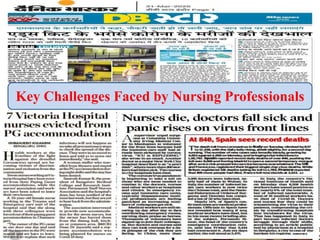
Key Challenges Faced by Nursing Professionals
Key Challenges Faced by
Nursing Professionals During COVID-19
Shortage of PPE
Concerned regarding safety
Unavailability of transport and accommodation.
Inadequate quarantine facilities & support
services.
Communication gap
Physical exhaustion and Mental stress
Ethical dilemma
Financial crisis
Lack of equipments & supply
Lack of training and skill updation
Post COVID-19
Paradigm Shift in Clinical Nursing
‘Telehealth’
Home-based elderly care, rehabilitation and
palliative care.
Flexibility to work in different health care
settings.
Expand nursing skills. Nurse led health clinics
Autonomy to nurses at bedside.
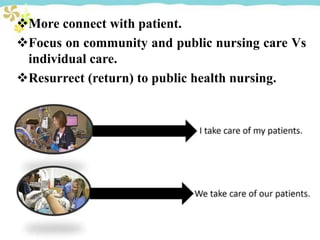
More connect with patient.
Focus on community and public nursing care Vs
individual care.
Resurrect (return) to public health nursing.
Infection prevention policies, Quarantine
centres.
BMW management and advanced cleaning,
spraying and disinfecting.
More focus on health care workers (asset)
Digital technology in surveillance, health
education.
Continuing nursing education
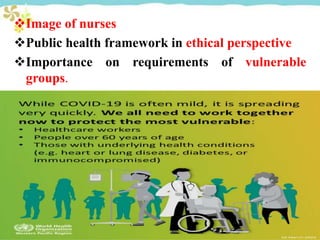
Image of nurses
Public health framework in ethical perspective
Importance on requirements of vulnerable
groups.
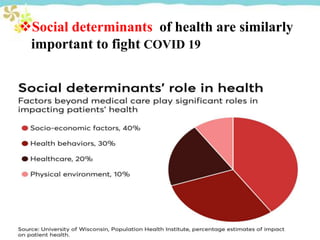
Social determinants of health are similarly
important to fight COVID 19
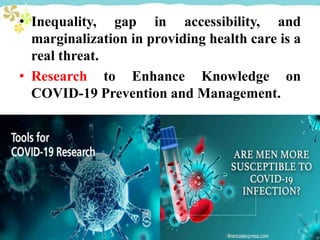
• Inequality, gap in accessibility, and
marginalization in providing health care is a
real threat.
• Research to Enhance Knowledge on
COVID-19 Prevention and Management.
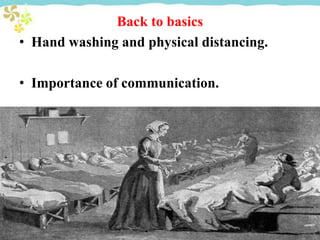
Back to basics
• Hand washing and physical distancing.
• Importance of communication.
• Use of data in COVID 19.
• Nurse as a Social reformer.
PARADIGM SHIFT
THANK
YOU

Paradigm shift in nursing profession

  • 1.
    Paradigm Shift inNursing Profession BY Dharmesh Chaturvedi Senior Nursing Superintendent Sub Divisional Railway Hospital Ranapratap Nagar, Udaipur (NWR)
  • 3.
    What is Paradigm •Derived from Latin word ‘paradigma’ used to refer to ‘a model or pattern’. • It is a set of ideas that are used for understanding or explaining something, especially in a particular subject.
  • 5.
    • A paradigmshift is a major change in the concepts and practices of how something works or is accomplished. • Old data re-examined that led to a newer understanding of issues and subsequent actions causing a paradigm shift.
  • 6.
    • Thomas Kuhnsaid that a series of small, successful changes to conventional wisdom may ultimately progress to a considerable change. • It changes the rule of the game and the roadmap directing emerging possibilities.
  • 7.
    Nurses' Contribution inAnti-COVID-19 1. Providing health education, screening services, and support for the general public in high-risk categories. 2. Prevent nosocomial infection and surveillance. 3. Implementing appropriate preparations and precautions in health care settings. 4. Protection of patients with immune deficits or underlying diseases . 5. Providing over all health care to patients with COVID-19
  • 8.
    Key Challenges Facedby Nursing Professionals
  • 9.
    Key Challenges Facedby Nursing Professionals During COVID-19 Shortage of PPE Concerned regarding safety Unavailability of transport and accommodation. Inadequate quarantine facilities & support services.
  • 10.
    Communication gap Physical exhaustionand Mental stress Ethical dilemma Financial crisis Lack of equipments & supply Lack of training and skill updation
  • 11.
    Post COVID-19 Paradigm Shiftin Clinical Nursing ‘Telehealth’ Home-based elderly care, rehabilitation and palliative care. Flexibility to work in different health care settings. Expand nursing skills. Nurse led health clinics Autonomy to nurses at bedside.
  • 12.
    More connect withpatient. Focus on community and public nursing care Vs individual care. Resurrect (return) to public health nursing.
  • 13.
    Infection prevention policies,Quarantine centres. BMW management and advanced cleaning, spraying and disinfecting. More focus on health care workers (asset) Digital technology in surveillance, health education. Continuing nursing education
  • 14.
    Image of nurses Publichealth framework in ethical perspective Importance on requirements of vulnerable groups.
  • 15.
    Social determinants ofhealth are similarly important to fight COVID 19
  • 16.
    • Inequality, gapin accessibility, and marginalization in providing health care is a real threat. • Research to Enhance Knowledge on COVID-19 Prevention and Management.
  • 17.
    Back to basics •Hand washing and physical distancing. • Importance of communication.
  • 18.
    • Use ofdata in COVID 19. • Nurse as a Social reformer.
  • 19.