This research article describes a study that produced bio-oil from a mixture of wastes through pyrolysis and thermal cracking in the presence of hydrogen. Four bio-oil fractions were obtained and analyzed: two from pyrolysis alone (OPH and OPL) and two from pyrolysis followed by thermal cracking (OCH and OCL). The fractions obtained from cracking contained lower molecular weight compounds and fewer oxygenated species compared to those from pyrolysis alone. Over 300 compounds were tentatively identified in the fractions using comprehensive two-dimensional gas chromatography coupled with time-of-flight mass spectrometry. The fractions obtained from cracking were composed primarily of aliphatic and aromatic hydrocarbons, similar to petroleum-based naphtha.
![Research Article Open Access
Fundamentals of Renewable
Energy and Applications
Volume 5 • Issue 6 • 1000194
J Fundam Renewable Energy Appl
ISSN: 2090-4541 JFRA, an open access journal
Veses et al., J Fundam Renewable Energy Appl 2015, 5:6
http://dx.doi.org/10.4172/2090-4541.1000194
Keywords: Thermal cracking; Biomass pyrolysis; Hydrogen;
Chromatography
Introduction
The recent environmental restrictions on the use of fossil fuels
have intensified research into new alternative energy sources. Many
alternative technologies to produce cleaner fuels have been developed,
including the use of biomass, which offers a promising potential [1-4].
Biomass is a renewable source which has received attention due to
various characteristics, particularly its low cost and wide availability.
Biomass can be converted into bio-fuel by means of different processes,
e.g., reductive combustion, liquefaction, pyrolysis and gasification [5].
The use of biomass is particularly interesting when it involves waste
products such as waste vegetable oil, fruit seeds, sugarcane bagasse,
sugarcane straw, rice husks, coconut fibers, and coffee grounds, which
are also potential sources of energy [6-8].
Bio-oil from biomass pyrolysis, also known as pyrolysis oil, is
a dark brown almost black liquid with a characteristic smoky odor,
whose elemental composition is analogous to that of the biomass from
which it derives. It is a complex mixture of oxygenated compounds
with a significant amount of water originating from the moisture of
the biomass and from cracking reactions. Bio-oil may also contain
small coal particles and dissolved alkali metals coming from the ash.
Its composition depends on the raw material and on the operating
conditions used in its production. Pyrolysis oil is an aqueous
microemulsion resulting from the products of fragmentation of
cellulose, hemicellulose and lignin [9,10].
Much attention has focused on pyrolysis, a biomass thermal
decomposition process, for which the literature describes numerous
different reactors and conditions [11-13]. The presence of oxygen exerts
a highly negative impact on the potential uses for bio-oil. For example,
oxygen it lowers the heating value, gives rise to immiscibility with
petroleum fuels, and leads to corrosiveness and instability during long-
term storage and transportation [14]. The biomass pyrolysis process is
an economically feasible option for producing chemicals and/or fuels
[15,16]. The bio- oil resulting from the pyrolysis process consists of a
mixture of more than 300 organic compounds [17], but its processing,
separation and characterization pose technological challenges. In the
thermal cracking process, the volatile compounds generated during
pyrolysis also present a promising potential for energy generation
[18]. Moreover, the upgrading process, which involves the reduction of
oxygenates and is necessary to improve the quality of bio-oil, normally
*Corresponding author: Renato Cataluña Veses, Instituto de Química,
Universidade Federal do Rio Grande do Sul, Porto Alegre, RS, Av. Bento
Gonçalves, 9500, Brazil, Tel: +55 5133086306; Fax: +55 5133087304; E-mail:
rcv@ufrgs.br
Received September 26, 2015; Accepted November 28, 2015; Published
November 30, 2015
Citation: Veses RC, Shah Z, Kuamoto PM, Caramão EB, Machado ME, et al.
(2015) Bio-Oil Production by Thermal Cracking in the Presence of Hydrogen. J
Fundam Renewable Energy Appl 5: 194. doi:10.4172/20904541.1000194
Copyright: © 2015 Veses RC, et al. This is an open-access article distributed
under the terms of the Creative Commons Attribution License, which permits
unrestricted use, distribution, and reproduction in any medium, provided the
original author and source are credited.
Abstract
This paper describes the bio-oil production process of a mixture of agricultural wastes: discarded soybean frying
oil, coffee and sawdust, by pyrolysis and thermal cracking in the presence of hydrogen. The fractions obtained in the
pyrolysis and/or cracking processes were divided into a light fraction and a heavy one. All the fractions were analyzed
by comprehensive two-dimensional gas chromatography with time-of-flight mass spectrometry detection (GC×GC/
TOFMS). The characteristics of the fractions obtained in from the cracking process in the presence of hydrogen were
similar to those of petroleum-based naphtha, while the fractions obtained by pyrolysis contained significant quantities of
compounds such as furanmethanol, hexanol, and benzofuran, whose commercial value is high.
Bio-Oil Production by Thermal Cracking in the Presence of Hydrogen
Renato Cataluña Veses1*
, Zeban Shah1
, Pedro Motifumi Kuamoto1
, Elina B. Caramão1
, Maria Elisabete Machado1
and Rosângela da Silva2
1
Instituto de Química, Federal University of Rio Grande do Sul, Brazil
2
Pontifical Catholic University of Rio Grande do Sul, RS, Brazil
requires processes such as catalytic cracking, hydrogenation and steam
reforming [19-22].
Hydropyrolysis is an important technique for improving the quality
of bio-oil produced from biomass pyrolysis. Hydrogen is a reducing
gas and cracking biomass in the presence of hydrogen can reduce the
oxygen content in bio-oil [23]. This paper discusses the characterization
of bio-oil generated from the pyrolysis of a mixture of wastes: discarded
soybean frying oil, coffee grounds and sawdust. The thermal cracking
process, which was performed in the presence of hydrogen in order
to upgrade the bio-oil, resulted in lower molecular weight fractions
and substantially reduced the content of oxygenated and nitrogenated
species.
Experimental Materials
The bio-oil was obtained by pyrolysis of a mixture (1: 1: 1, in mass)
of wastes: discarded soybean frying oil, coffee grounds and eucalyptus
sawdust. The frying oil was mixed with the solids after their particle size
was reduced to 0.21 mm. To this mixture were added calcium oxide (20
mass %) and sufficient water to produce a malleable mass that could
be moulded into cylindrical samples (50 mm × 180 mm). The samples
were allowed to dry at room temperature for a week.
Biomass pyrolysis and thermal cracking of the bio-oil
The bio-oil was produced by conventional pyrolysis of the
cylindrical samples in an electrically heated stainless steel reactor.
Before beginning the pyrolysis, the system was purged for 20 minutes
with Argon containing 5% of hydrogen (100 mL min-1
). After purging,
the pyrolysis started and the system was heated to 850˚C at a heating
rate of 15˚C min-1. The volatiles produced during the process were](https://image.slidesharecdn.com/b71a007c-5e06-49ff-8d9e-69db1f810bc2-160526162437/85/Paper2-Reanto-1-320.jpg)
![Research Article Open Access
Fundamentals of Renewable
Energy and Applications
Volume 5 • Issue 6 • 1000194
J Fundam Renewable Energy Appl
ISSN: 2090-4541 JFRA, an open access journal
Veses et al., J Fundam Renewable Energy Appl 2015, 5:6
http://dx.doi.org/10.4172/2090-4541.1000194
Keywords: Thermal cracking; Biomass pyrolysis; Hydrogen;
Chromatography
Introduction
The recent environmental restrictions on the use of fossil fuels
have intensified research into new alternative energy sources. Many
alternative technologies to produce cleaner fuels have been developed,
including the use of biomass, which offers a promising potential [1-4].
Biomass is a renewable source which has received attention due to
various characteristics, particularly its low cost and wide availability.
Biomass can be converted into bio-fuel by means of different processes,
e.g., reductive combustion, liquefaction, pyrolysis and gasification [5].
The use of biomass is particularly interesting when it involves waste
products such as waste vegetable oil, fruit seeds, sugarcane bagasse,
sugarcane straw, rice husks, coconut fibers, and coffee grounds, which
are also potential sources of energy [6-8].
Bio-oil from biomass pyrolysis, also known as pyrolysis oil, is
a dark brown almost black liquid with a characteristic smoky odor,
whose elemental composition is analogous to that of the biomass from
which it derives. It is a complex mixture of oxygenated compounds
with a significant amount of water originating from the moisture of
the biomass and from cracking reactions. Bio-oil may also contain
small coal particles and dissolved alkali metals coming from the ash.
Its composition depends on the raw material and on the operating
conditions used in its production. Pyrolysis oil is an aqueous
microemulsion resulting from the products of fragmentation of
cellulose, hemicellulose and lignin [9,10].
Much attention has focused on pyrolysis, a biomass thermal
decomposition process, for which the literature describes numerous
different reactors and conditions [11-13]. The presence of oxygen exerts
a highly negative impact on the potential uses for bio-oil. For example,
oxygen it lowers the heating value, gives rise to immiscibility with
petroleum fuels, and leads to corrosiveness and instability during long-
term storage and transportation [14]. The biomass pyrolysis process is
an economically feasible option for producing chemicals and/or fuels
[15,16]. The bio- oil resulting from the pyrolysis process consists of a
mixture of more than 300 organic compounds [17], but its processing,
separation and characterization pose technological challenges. In the
thermal cracking process, the volatile compounds generated during
pyrolysis also present a promising potential for energy generation
[18]. Moreover, the upgrading process, which involves the reduction of
oxygenates and is necessary to improve the quality of bio-oil, normally
*Corresponding author: Renato Cataluña Veses, Instituto de Química,
Universidade Federal do Rio Grande do Sul, Porto Alegre, RS, Av. Bento
Gonçalves, 9500, Brazil, Tel: +55 5133086306; Fax: +55 5133087304; E-mail:
rcv@ufrgs.br
Received September 26, 2015; Accepted November 28, 2015; Published
November 30, 2015
Citation: Veses RC, Shah Z, Kuamoto PM, Caramão EB, Machado ME, et al.
(2015) Bio-Oil Production by Thermal Cracking in the Presence of Hydrogen. J
Fundam Renewable Energy Appl 5: 194. doi:10.4172/20904541.1000194
Copyright: © 2015 Veses RC, et al. This is an open-access article distributed
under the terms of the Creative Commons Attribution License, which permits
unrestricted use, distribution, and reproduction in any medium, provided the
original author and source are credited.
Abstract
This paper describes the bio-oil production process of a mixture of agricultural wastes: discarded soybean frying
oil, coffee and sawdust, by pyrolysis and thermal cracking in the presence of hydrogen. The fractions obtained in the
pyrolysis and/or cracking processes were divided into a light fraction and a heavy one. All the fractions were analyzed
by comprehensive two-dimensional gas chromatography with time-of-flight mass spectrometry detection (GC×GC/
TOFMS). The characteristics of the fractions obtained in from the cracking process in the presence of hydrogen were
similar to those of petroleum-based naphtha, while the fractions obtained by pyrolysis contained significant quantities of
compounds such as furanmethanol, hexanol, and benzofuran, whose commercial value is high.
Bio-Oil Production by Thermal Cracking in the Presence of Hydrogen
Renato Cataluña Veses1*
, Zeban Shah1
, Pedro Motifumi Kuamoto1
, Elina B. Caramão1
, Maria Elisabete Machado1
and Rosângela da Silva2
1
Instituto de Química, Federal University of Rio Grande do Sul, Brazil
2
Pontifical Catholic University of Rio Grande do Sul, RS, Brazil
requires processes such as catalytic cracking, hydrogenation and steam
reforming [19-22].
Hydropyrolysis is an important technique for improving the quality
of bio-oil produced from biomass pyrolysis. Hydrogen is a reducing
gas and cracking biomass in the presence of hydrogen can reduce the
oxygen content in bio-oil [23]. This paper discusses the characterization
of bio-oil generated from the pyrolysis of a mixture of wastes: discarded
soybean frying oil, coffee grounds and sawdust. The thermal cracking
process, which was performed in the presence of hydrogen in order
to upgrade the bio-oil, resulted in lower molecular weight fractions
and substantially reduced the content of oxygenated and nitrogenated
species.
Experimental Materials
The bio-oil was obtained by pyrolysis of a mixture (1: 1: 1, in mass)
of wastes: discarded soybean frying oil, coffee grounds and eucalyptus
sawdust. The frying oil was mixed with the solids after their particle size
was reduced to 0.21 mm. To this mixture were added calcium oxide (20
mass %) and sufficient water to produce a malleable mass that could
be moulded into cylindrical samples (50 mm × 180 mm). The samples
were allowed to dry at room temperature for a week.
Biomass pyrolysis and thermal cracking of the bio-oil
The bio-oil was produced by conventional pyrolysis of the
cylindrical samples in an electrically heated stainless steel reactor.
Before beginning the pyrolysis, the system was purged for 20 minutes
with Argon containing 5% of hydrogen (100 mL min-1
). After purging,
the pyrolysis started and the system was heated to 850˚C at a heating
rate of 15˚C min-1. The volatiles produced during the process were](https://image.slidesharecdn.com/b71a007c-5e06-49ff-8d9e-69db1f810bc2-160526162437/75/Paper2-Reanto-1-2048.jpg)
![Citation: Veses RC, Shah Z, Kuamoto PM, Caramão EB, Machado ME, et al. (2015) Bio-Oil Production by Thermal Cracking in the Presence of Hydrogen. J Fundam
Renewable Energy Appl 5: 194. doi:10.4172/20904541.1000194
Volume 5 • Issue 6 • 1000194
J Fundam Renewable Energy Appl
ISSN: 2090-4541 JFRA, an open access journal
Page 3 of 7
OCL). The other compounds contained in the fractions of this study
are listed in the Appendix.
As can be seen in Table 1, the oxygenated compounds in the OPH
fraction alcohols include furanmethanol (8% in area) and hexanol
(2% in area). These two alcohols are important raw materials for the
preparation of a wide range of drugs and industrial products of high
commercial and industrial value [29]. Benzofuran and dioxyethane
ethers are also present in the OPH fraction in percentage areas of 4.0
and 2.0, respectively. Benzofuran is considered an important class of
heterocyclic compounds which is present in numerous bioactive natural
products and in pharmaceuticals and polymers. Benzofuran is one of
the most important heterocyclic rings due to its broad microbiological
range. Medicinal chemistry is widely involved in the synthesis of the
benzofuran ring owing to its clinical importance. Benzofuran can be
used as an enzyme activator and inhibitor, as an antimicrobial, anti-
inflammatory, anti-cancer, antiviral, anti-tuberculosis, antioxidant
agent, etc. [30].
The four fractions of this study contained phenolic compounds,
namely, around 7% OPL, 4% OCH and OCL, and 3% OPH. These
compounds are widely employed in the production of phenolic resins
[31]. They also have antioxidant and antimicrobial properties that
inhibit the proliferation of microorganisms, corrosion and deposits
when added to diesel fuel formulations and/or biodiesel for use in
engines (use of biomass-derived compounds) [32,33].
Moreover, chemical products containing oxygen are produced
mainly from fossil fuels, through the oxidation or hydration of olefins
to introduce oxygen containing functional groups. Fortunately, these
functional groups are already present in bio-oil. Therefore, obtaining
Product yields from pyrolysis and thermal cracking
Pyrolysis product distribution depends on reaction parameters
such as temperature, heating rate and reactant particle size, as well as
on the starting biomass.
The oil fractions obtained in this work came from the same raw
materials and the same operational conditions, but from different
production processes. The OCH sample was obtained by pyrolysis
followed by thermal cracking, while the OPH sample was obtained
solely by pyrolysis. The application of thermal cracking after pyrolysis
led to a significant increase in the condensed fraction at the temperature
of 5˚C. The average yield of the pyrolysis process is approximately 30%
oil fractions, 50% aqueous fractions, and 20% gas phase (uncondensed,
obtained by difference). In the pyrolysis process, the oil fraction
condensed at a temperature of 100˚C corresponds to approximately
90% of the oil fraction. Pyrolysis process followed by thermal cracking
results in a distribution of approximately 40% of the fraction condensed
at a temperature of 5˚C (OCL) and 60% of the oil fraction condensed at
a temperature of 100˚C (OCH).
Composition of bio-oil fractions
Given that the four bio-oil fractions are very complex mixtures
of different chemical species derived from depolymerization and
fragmentation of the main components of the biomass, which comprise
a wide range of molecular weights, a GC×GC/TOFMS was used for
their identification.
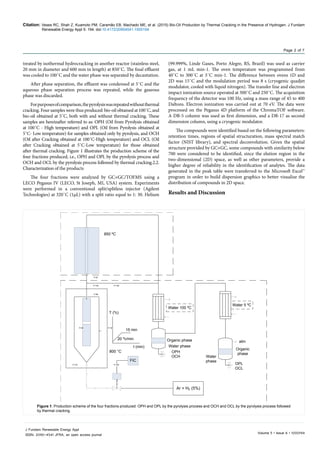
The compositions of the four bio-oil fractions shown in Figure 2 are
groupedaccordingtotypesofchemicalcompounds:acids,aldehydes,ketones,
alcohols, phenols, aromatics, cyclic and aliphatic hydrocarbons, ethers
and nitrogen compounds. The compounds were tentatively identified
when the similarity between a sample’s spectrum and that of the library
was greater than 750. In total, 214 compounds in OCH, 324 in OCL, 84
in OPH and 312 in OPL were tentatively identified.
Some observations apply both to the bio-oils obtained from
thermal degradation and to the light fraction of pyrolysis (OPL-Figure
2). For example, note that there is a high proportion of hydrocarbon
compounds, the most important ones being aromatics and aliphatics,
representing between 57 and 79 wt % of the products. On the other
hand, the OPH sample obtained by pyrolysis and condensed at 100˚C
(fraction containing heavy compounds) is composed mainly of ketones
and nitrogens, and smaller amounts of alcohols, ethers and phenols.
This fraction does not contain hydrocarbons. Nitrogenous compounds
in bio-oil originate from the thermal degradation of caffeine derivatives
contained in coffee grounds.
As can be seen in Figure 2, the fractions obtained by pyrolysis
and thermal cracking (OCH and OCL) consist mostly of aliphatic,
aromatic and cyclic hydrocarbons. The OPH fraction is composed
mainly of hydrocarbons with nitrogen (46% in area) and oxygen (47%
in area) compounds. The oxygen content in pyrolysis bio-oils usually
varies from 45 to 50 w/w%, and oxygen is present in most of the more
than 300 compounds [10,24,25]. The distribution of these compounds
depends mainly on the type of biomass and the process conditions.
The presence of oxygenated compounds in bio-oil reduces its calorific
value and renders it chemically unstable [9], limiting its use as fuel or in
formulations for direct use in diesel cycle engines [9,26,27]. However,
when separated, they present high added commercial value [28].
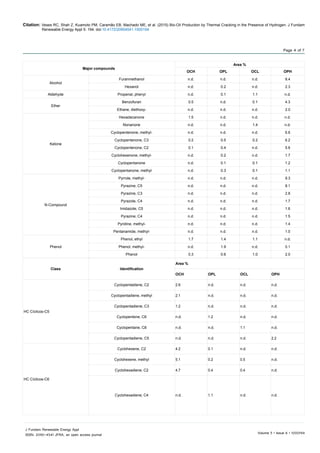
Table 1 lists the main identified compounds and their corresponding
percentage area in the bio-oil and fractions (OPH, OPL, OCH and
60
50
40
30
OPH OPL
60
50
40
30
OCH OCL
Figure 2: Percentage of peak area by chemical class for the OPH, OPL, OCH
and OCL fractions.](https://image.slidesharecdn.com/b71a007c-5e06-49ff-8d9e-69db1f810bc2-160526162437/85/Paper2-Reanto-3-320.jpg)
![Citation: Veses RC, Shah Z, Kuamoto PM, Caramão EB, Machado ME, et al. (2015) Bio-Oil Production by Thermal Cracking in the Presence of Hydrogen. J Fundam
Renewable Energy Appl 5: 194. doi:10.4172/20904541.1000194
Volume 5 • Issue 6 • 1000194
J Fundam Renewable Energy Appl
ISSN: 2090-4541 JFRA, an open access journal
Page 5 of 7
HC diaromatico
Indene, methyl 1.3 1.2 1.3 n.d.
Indene, C2 1.1 n.d. n.d. n.d.
indene n.d. 2.4 1.4 n.d.
Naphthalene, dihydro- n.d. 1.8 n.d. n.d.
Indane n.d. 1.0 0.5 n.d.
Naphthalene, methyl n.d. 0.6 1.1 n.d.
Heptadiene 2.4 n.d. 0.6 n.d.
Dodecadiene n.d. 1.3 n.d. n.d.
Toluene 6.2 1.0 0.1 0.2
Benzene 2.1 n.d. 2.1 n.d.
Benzene, C3 3.9 2.0 3.4 n.d.
Benzene, C4 1.0 3.4 1.9 n.d.
Benzene, C5 0.1 1.3 0.3 n.d.
Benzene, C2 n.d. 1.1 6.3 n.d.
Octene 2.9 2.7 1.3 n.d.
Decene 1.3 n.d. 1.0 n.d.
Dodecene n.d. 1.7 1.0 n.d.
Undecene 0.6 1.2 0.6 n.d.
Octane 6.9 1.7 0.4 n.d.
Nonane 1.0 n.d. 1.5 n.d.
Tridecane 0.4. 4.4 1.1 n.d.
Pentadecane 0.6 1.2 0.8 n.d.
Docecane 03 1.0 0.5 n.d.
Table 1: Main identified compounds and their corresponding percentage area in the bio-oil and fractions (OPH, OPL, OCH and OCL).
value-added chemicals from bio-oil is a potential approach for the
efficient use of biomass energy.
With respect to the N-compounds present only in the OPH fraction,
pyrazines corresponded to 25% in area. Pyrazine is an important
product that participates together with benzene in the synthesis of
quinoxaline, also known as benzopyrazine, which is rare in its natural
state, but is easy to synthesize. Quinoxaline and its derivatives are very
industrially important because of their ability to inhibit metal corrosion
[34] in the preparation of porphyrins [35]. The pharmaceutical industry
has a potential interest in them because of their broad spectrum of
biological properties [36-38].
The composition of the OPH fraction contained practically no
aromatic hydrocarbons. On the other hand, the OPL, OCH and OCL
fractions each presented approximately 16% in area of alkylbenzenes,
which could be isolated and, together with the pyrazines of the OPH
fraction, serve as raw material for the synthesis of quinoxaline and its
derivatives.
The OCL and OCH fractions obtained by thermal cracking in
the presence of a mixture of argon and 5% hydrogen resulted in the
elimination of oxygen (deoxygenation) with the formation of water
[39], and a stronger breakdown of the heavier organic compounds into
lighter organic compounds, as well as the elimination of nitrogen from
the nitrogenated compounds. This is illustrated in Figure 2 and in the
supplementary material. Because thermal cracking produces various
fragments of C-C, they may undergo oligomerization to form olefins,
which in turn may undergo aromatization followed by alkylation and
isomerization, producing aromatics.
The OCH and OCL fractions presented percentage areas of 82 and
84, respectively, of these hydrocarbons. The OPL fraction obtained
by pyrolysis showed a profile similar to that of the OCH and OCL](https://image.slidesharecdn.com/b71a007c-5e06-49ff-8d9e-69db1f810bc2-160526162437/85/Paper2-Reanto-5-320.jpg)