Name :- Pritiba B. Gohil 
Roll No. :- 23 
Course No. 1 :- The Renaissance Literature 
Presentation Topic :- Poem : Death Be Not Proud 
Enrolment No :- PG 14101016 
M.A. English Semester - 1 
Batch Year :- 2014 - 2016 
Submitted to :- 
Department of English 
Maharaja Krishnakumarsinhji Bhavnagar University
Death Be Not Proud 
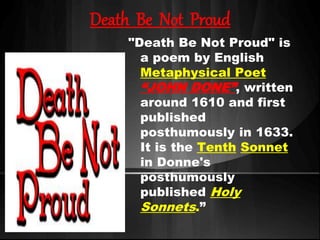
"Death Be Not Proud" is 
a poem by English 
Metaphysical Poet 
“JOHN DONE”, written 
around 1610 and first 
published 
posthumously in 1633. 
It is the Tenth Sonnet 
in Donne's 
posthumously 
published Holy 
Sonnets.”
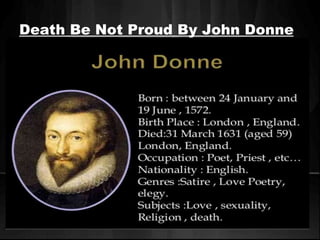
Death Be Not Proud By John Donne
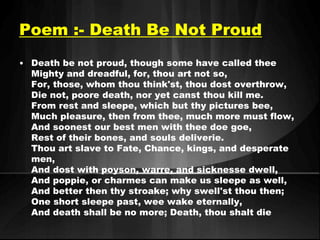
Poem :- Death Be Not Proud 
• Death be not proud, though some have called thee 
Mighty and dreadful, for, thou art not so, 
For, those, whom thou think'st, thou dost overthrow, 
Die not, poore death, nor yet canst thou kill me. 
From rest and sleepe, which but thy pictures bee, 
Much pleasure, then from thee, much more must flow, 
And soonest our best men with thee doe goe, 
Rest of their bones, and souls deliverie. 
Thou art slave to Fate, Chance, kings, and desperate 
men, 
And dost with poyson, warre, and sicknesse dwell, 
And poppie, or charmes can make us sleepe as well, 
And better then thy stroake; why swell'st thou then; 
One short sleepe past, wee wake eternally, 
And death shall be no more; Death, thou shalt die
Themes Of This Poem :- 
• Mortality 
• Dreams 
• Hopes 
• Plans 
• Religion 
• Courage
About This Poem :- 
• John Donne’s view on this ultimate reality 
called “DEATH”. 
• Here in this poem poet address to death 
saying that there is no need for death to 
Be Proud though some people call it very 
powerful and dangerous, it is neither 
powerful nor dangerous. 
• According to John Donne picture of death 
is nothing but sleep and rest.
Death as a SLAVE :- 
• John Donne says that Death is nothing but 
merely a slave of this four things. 
1.Faith 
2.Chance 
3.Kings 
4.Distress in life.
Three Places Where Death 
Lives Forever :- 
• In this poem John Donne says that Death 
lives in these three places forever, this 
places are like a home for Death where 
death lives. 
1. War 
2. Poisson 
3. Sickness.
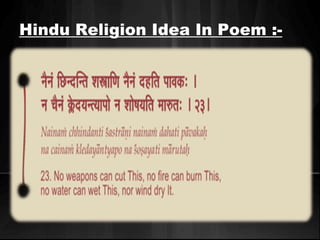
Hindu Religion Idea In Poem :-
Central Idea of 
“The Bhagwat Gita” :- 
• According to Bhagwat Gita, the Soul, or Atman has the 
properties that Weapons cannot pierce it, fire cannot 
burn it, water cannot moisten it and wind cannot dry it 
(Chapter 2.23). 
"nainam chindanti shastrani 
nainam dahati pavakah 
na chainam kledayanty apo 
na sosayati marutah" 
• (Bhagwat Gita : Chapter Two verse 23) 
"Sri Krishna said: The soul can never be cut to pieces 
by any weapon, nor burned by fire, nor moistened by 
water, nor withered by the wind.”
Conclusion :- 
• John Donne concludes his Sonnet saying 
that death need not became proud, this 
life is one sleep in a sense that it is full of 
illusion but death librates us from that 
illusion and we wake up forever. 
• Donne believes that if death is accepted 
with this spirit, there is no death at all. 
Death it self would die.
• Let’s watch this wonderful poem 
“Death Be Not Proud”.
Thank You ……

Death Be Not Proud Poem

  • 1.
    Name :- PritibaB. Gohil Roll No. :- 23 Course No. 1 :- The Renaissance Literature Presentation Topic :- Poem : Death Be Not Proud Enrolment No :- PG 14101016 M.A. English Semester - 1 Batch Year :- 2014 - 2016 Submitted to :- Department of English Maharaja Krishnakumarsinhji Bhavnagar University
  • 2.
    Death Be NotProud "Death Be Not Proud" is a poem by English Metaphysical Poet “JOHN DONE”, written around 1610 and first published posthumously in 1633. It is the Tenth Sonnet in Donne's posthumously published Holy Sonnets.”
  • 3.
    Death Be NotProud By John Donne
  • 4.
    Poem :- DeathBe Not Proud • Death be not proud, though some have called thee Mighty and dreadful, for, thou art not so, For, those, whom thou think'st, thou dost overthrow, Die not, poore death, nor yet canst thou kill me. From rest and sleepe, which but thy pictures bee, Much pleasure, then from thee, much more must flow, And soonest our best men with thee doe goe, Rest of their bones, and souls deliverie. Thou art slave to Fate, Chance, kings, and desperate men, And dost with poyson, warre, and sicknesse dwell, And poppie, or charmes can make us sleepe as well, And better then thy stroake; why swell'st thou then; One short sleepe past, wee wake eternally, And death shall be no more; Death, thou shalt die
  • 5.
    Themes Of ThisPoem :- • Mortality • Dreams • Hopes • Plans • Religion • Courage
  • 6.
    About This Poem:- • John Donne’s view on this ultimate reality called “DEATH”. • Here in this poem poet address to death saying that there is no need for death to Be Proud though some people call it very powerful and dangerous, it is neither powerful nor dangerous. • According to John Donne picture of death is nothing but sleep and rest.
  • 7.
    Death as aSLAVE :- • John Donne says that Death is nothing but merely a slave of this four things. 1.Faith 2.Chance 3.Kings 4.Distress in life.
  • 8.
    Three Places WhereDeath Lives Forever :- • In this poem John Donne says that Death lives in these three places forever, this places are like a home for Death where death lives. 1. War 2. Poisson 3. Sickness.
  • 9.
  • 10.
    Central Idea of “The Bhagwat Gita” :- • According to Bhagwat Gita, the Soul, or Atman has the properties that Weapons cannot pierce it, fire cannot burn it, water cannot moisten it and wind cannot dry it (Chapter 2.23). "nainam chindanti shastrani nainam dahati pavakah na chainam kledayanty apo na sosayati marutah" • (Bhagwat Gita : Chapter Two verse 23) "Sri Krishna said: The soul can never be cut to pieces by any weapon, nor burned by fire, nor moistened by water, nor withered by the wind.”
  • 11.
    Conclusion :- •John Donne concludes his Sonnet saying that death need not became proud, this life is one sleep in a sense that it is full of illusion but death librates us from that illusion and we wake up forever. • Donne believes that if death is accepted with this spirit, there is no death at all. Death it self would die.
  • 12.
    • Let’s watchthis wonderful poem “Death Be Not Proud”.
  • 13.