The Paleo Diet
The Western Diet
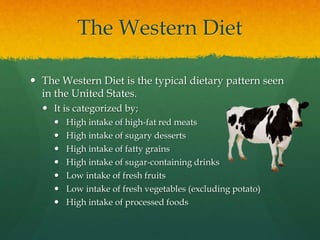
 The Western Diet is the typical dietary pattern seen
in the United States.
 It is categorized by;
 High intake of high-fat red meats
 High intake of sugary desserts
 High intake of fatty grains
 High intake of sugar-containing drinks
 Low intake of fresh fruits
 Low intake of fresh vegetables (excluding potato)
 High intake of processed foods
Food Processing
 Food Processing is the transformation of ingredients
into food. So…
 Cow  Beef  Cooked steak
 Wheat Dough  Breads, Cereals, Pasta
 Milk  Curds/Whey  Cheese, Butter, Cream,
Yogurt
Some of these processes are more detrimental to the
nutrient quality of the food than are others…
The Western Lifestyle
 Western Diet – high intake of processed foods,
lower intake of fruits, vegetables, legumes, etc…
 Low levels of physical activity
 Constant access and exposure to food marketing &
products
 High Stress, Relatively low-movement work
Environments
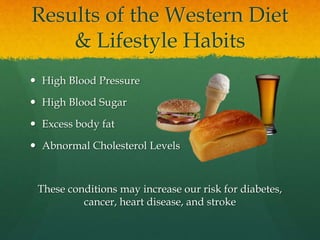
Results of the Western Diet
& Lifestyle Habits
 High Blood Pressure
 High Blood Sugar
 Excess body fat
 Abnormal Cholesterol Levels
These conditions may increase our risk for diabetes,
cancer, heart disease, and stroke
A bit of a background…
 Paleo stands for Paleolithic Era
 Paleolithic era refers to the Stone Age, a primitive time
in human history when simple stone tools were used.
 The Paleolithic Era was largely defined by the hunting
and gathering of foods
 Long walks/runs  Movement a natural/crucial part of
daily life
 Strenuous Work/Large energy expenditure
 Regular seasonal food shortages, unplanned starvation
More on Paleo
 The modern Paleo diet is a nutrition plan that
eliminates the consumption of processed foods – it
does so in an attempt to recreate the dietary
conditions experienced by early humans.
 What did the cave men/women eat?
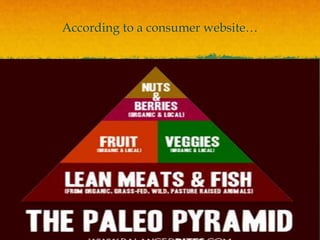
 Hunted/Gathered fish, game, nuts, berries, seeds, root
vegetables, etc…
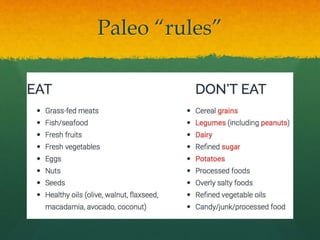
According to a consumer website…
Paleo “rules”
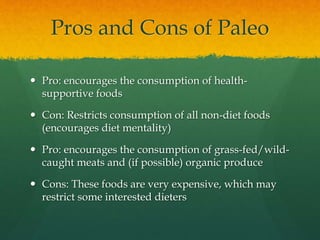
Pros and Cons of Paleo
 Pro: encourages the consumption of health-
supportive foods
 Con: Restricts consumption of all non-diet foods
(encourages diet mentality)
 Pro: encourages the consumption of grass-fed/wild-
caught meats and (if possible) organic produce
 Cons: These foods are very expensive, which may
restrict some interested dieters
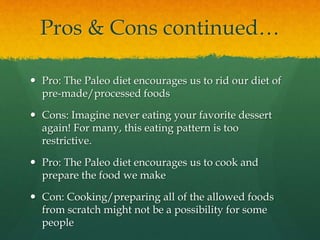
Pros & Cons continued…
 Pro: The Paleo diet encourages us to rid our diet of
pre-made/processed foods
 Cons: Imagine never eating your favorite dessert
again! For many, this eating pattern is too
restrictive.
 Pro: The Paleo diet encourages us to cook and
prepare the food we make
 Con: Cooking/preparing all of the allowed foods
from scratch might not be a possibility for some
people
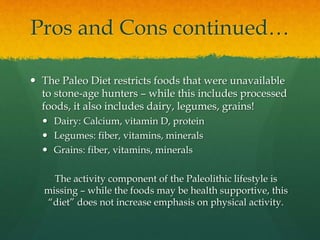
Pros and Cons continued…
 The Paleo Diet restricts foods that were unavailable
to stone-age hunters – while this includes processed
foods, it also includes dairy, legumes, grains!
 Dairy: Calcium, vitamin D, protein
 Legumes: fiber, vitamins, minerals
 Grains: fiber, vitamins, minerals
The activity component of the Paleolithic lifestyle is
missing – while the foods may be health supportive, this
“diet” does not increase emphasis on physical activity.
Conclusion
Some small studies have shown that Adherence to the Paleo
diet helps reduce inflammation, control blood sugar,
improve cholesterol, reduce body fat, and reduce blood
pressure. However, according to the Mayo Clinic…
“A paleo diet may help you lose weight or maintain your
weight. It may also have other beneficial health effects.
However, there are no long-term clinical studies about the
benefits and potential risks of the diet.”
You might be able to achieve the same health benefits by
getting enough exercise and eating a balanced, healthy diet
with a lot of fruits and vegetables.
To Paleo, or not to Paleo…
Is it feasible?
Is it affordable?
Is it right for you?
General Discussion
Work Cited:
 "How to Really Eat Like a Hunter-Gatherer: Why the Paleo Diet Is Half-
Baked [Interactive & Infographic]." Scientific American Global RSS. N.p.,
n.d. Web. 1 Mar. 2015. http://www.scientificamerican.com/article/why-
paleo-diet-half-baked-how-hunter-gatherer-really-eat/.
 "Paleo for Dummies – Part 1." Alexandria Crossfit Revolutionizing Fitness.
N.p., n.d. Web. 1 Mar. 2015.
http://www.alexandriacrossfit.com/blog/paleo-for-dummies-part-1/.
 "Nutrition and Healthy Eating." Paleo Diet: What Is It and Why Is It so
Popular? N.p., n.d. Web. 06 Mar. 2015.
<http://www.mayoclinic.org/healthy-living/nutrition-and-healthy-
eating/in-depth/paleo-diet/art-20111182?pg=2>.
 "Should We Eat Like Our Caveman Ancestors?" Should We Eat Like Our
Caveman Ancestors? N.p., n.d. Web. 1 Mar. 2015.
<http://www.eatright.org/resource/health/weight-loss/fad-
diets/should-we-eat-like-our-caveman-ancestors>.

Paleo Diet

  • 1.
  • 2.
    The Western Diet The Western Diet is the typical dietary pattern seen in the United States.  It is categorized by;  High intake of high-fat red meats  High intake of sugary desserts  High intake of fatty grains  High intake of sugar-containing drinks  Low intake of fresh fruits  Low intake of fresh vegetables (excluding potato)  High intake of processed foods
  • 3.
    Food Processing  FoodProcessing is the transformation of ingredients into food. So…  Cow  Beef  Cooked steak  Wheat Dough  Breads, Cereals, Pasta  Milk  Curds/Whey  Cheese, Butter, Cream, Yogurt Some of these processes are more detrimental to the nutrient quality of the food than are others…
  • 4.
    The Western Lifestyle Western Diet – high intake of processed foods, lower intake of fruits, vegetables, legumes, etc…  Low levels of physical activity  Constant access and exposure to food marketing & products  High Stress, Relatively low-movement work Environments
  • 5.
    Results of theWestern Diet & Lifestyle Habits  High Blood Pressure  High Blood Sugar  Excess body fat  Abnormal Cholesterol Levels These conditions may increase our risk for diabetes, cancer, heart disease, and stroke
  • 6.
    A bit ofa background…  Paleo stands for Paleolithic Era  Paleolithic era refers to the Stone Age, a primitive time in human history when simple stone tools were used.  The Paleolithic Era was largely defined by the hunting and gathering of foods  Long walks/runs  Movement a natural/crucial part of daily life  Strenuous Work/Large energy expenditure  Regular seasonal food shortages, unplanned starvation
  • 7.
    More on Paleo The modern Paleo diet is a nutrition plan that eliminates the consumption of processed foods – it does so in an attempt to recreate the dietary conditions experienced by early humans.  What did the cave men/women eat?  Hunted/Gathered fish, game, nuts, berries, seeds, root vegetables, etc…
  • 8.
    According to aconsumer website…
  • 9.
  • 10.
    Pros and Consof Paleo  Pro: encourages the consumption of health- supportive foods  Con: Restricts consumption of all non-diet foods (encourages diet mentality)  Pro: encourages the consumption of grass-fed/wild- caught meats and (if possible) organic produce  Cons: These foods are very expensive, which may restrict some interested dieters
  • 11.
    Pros & Conscontinued…  Pro: The Paleo diet encourages us to rid our diet of pre-made/processed foods  Cons: Imagine never eating your favorite dessert again! For many, this eating pattern is too restrictive.  Pro: The Paleo diet encourages us to cook and prepare the food we make  Con: Cooking/preparing all of the allowed foods from scratch might not be a possibility for some people
  • 12.
    Pros and Conscontinued…  The Paleo Diet restricts foods that were unavailable to stone-age hunters – while this includes processed foods, it also includes dairy, legumes, grains!  Dairy: Calcium, vitamin D, protein  Legumes: fiber, vitamins, minerals  Grains: fiber, vitamins, minerals The activity component of the Paleolithic lifestyle is missing – while the foods may be health supportive, this “diet” does not increase emphasis on physical activity.
  • 13.
    Conclusion Some small studieshave shown that Adherence to the Paleo diet helps reduce inflammation, control blood sugar, improve cholesterol, reduce body fat, and reduce blood pressure. However, according to the Mayo Clinic… “A paleo diet may help you lose weight or maintain your weight. It may also have other beneficial health effects. However, there are no long-term clinical studies about the benefits and potential risks of the diet.” You might be able to achieve the same health benefits by getting enough exercise and eating a balanced, healthy diet with a lot of fruits and vegetables.
  • 14.
    To Paleo, ornot to Paleo… Is it feasible? Is it affordable? Is it right for you? General Discussion
  • 15.
    Work Cited:  "Howto Really Eat Like a Hunter-Gatherer: Why the Paleo Diet Is Half- Baked [Interactive & Infographic]." Scientific American Global RSS. N.p., n.d. Web. 1 Mar. 2015. http://www.scientificamerican.com/article/why- paleo-diet-half-baked-how-hunter-gatherer-really-eat/.  "Paleo for Dummies – Part 1." Alexandria Crossfit Revolutionizing Fitness. N.p., n.d. Web. 1 Mar. 2015. http://www.alexandriacrossfit.com/blog/paleo-for-dummies-part-1/.  "Nutrition and Healthy Eating." Paleo Diet: What Is It and Why Is It so Popular? N.p., n.d. Web. 06 Mar. 2015. <http://www.mayoclinic.org/healthy-living/nutrition-and-healthy- eating/in-depth/paleo-diet/art-20111182?pg=2>.  "Should We Eat Like Our Caveman Ancestors?" Should We Eat Like Our Caveman Ancestors? N.p., n.d. Web. 1 Mar. 2015. <http://www.eatright.org/resource/health/weight-loss/fad- diets/should-we-eat-like-our-caveman-ancestors>.