BASICS OF JAVA 
BY: PALASH SL GUPTA
INDEX 
• INTRODUCTION 
• HISTORY 
• BENEFITS OF JAVA 
• SHORTCOMINGS OF JAVA 
• JAVA IN ACTION 
• GENERAL PROGRAMS 
• USE OF JAVA IN MODERN LIFE 
• END OF PRESENTATION
INTRODUCTION 
• Java is a third generation high level 
programming language 
• It is simple 
• Easy to use 
• Familiar 
• secure 
• And many more
HISTORY OF JAVA 
• In 1991 Sun Microsystems under the 
leadership of James Gosling formed a 
programming language called “OAK” 
• In 1995 Sun changed the name “OAK” to the 
well known “JAVA” 
• The official logo of java (a coffee cup) was 
came to existence at a coffee shop near Sun 
Microsystems
HISTORY OF JAVA 
• In 1995 Sun released the first public 
implementation as java 1.0 
• On November-13-2006 Sun made java as an 
open source 
• On May-08-2008 Sun finished the process of 
making java’s core code
BENEFITS OF JAVA 
• Platform –Independent and Portable 
• Object –Oriented 
• Robust and Secure 
• Distributed 
• Simple, Small and Familiar 
• Multithreaded and Interactive 
• Scalability and Performance
OBJECT ORIENTED PROGRAMMING OOPS 
• Emphasis on data rather than procedure 
• Programs are divide into objects 
• Provides security 
• Multiple objects can be created that already 
coexists 
• New data and Functions can easily be created 
anywhere in program
BASIC CONCEPT OF OOPS 
• Objects 
• Classes 
• Data Abstraction and Encapsulation 
• Inheritance 
• Polymorphism 
• Dynamic Binding
SHORTCOMINGS OF JAVA 
• Running Bytecode through interpreter is not 
as fast as running machine code which is 
specific to that program 
• Because it is Platform Independent it is 
difficult to use platform specific features (e.g. 
windows taskbar, quick launch) in java 
• Java interpreter must be installed on your 
computer in order to run java programs
JAVA IN ACTION 
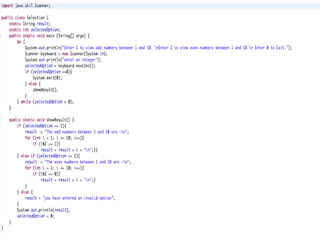
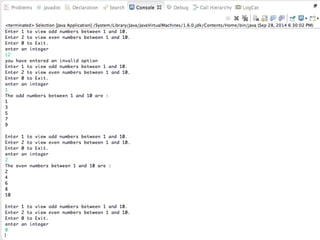
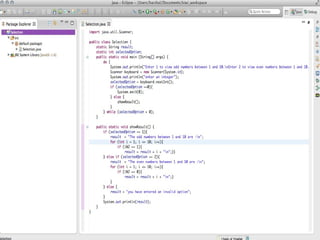
• Generally java programs can be compiled in 
two ways 
I. By using Eclipse(java compiler) 
II. Or by command prompt 
•. Generally Eclipse is used most
GENERAL PROGRAMS 
• General java program for hello 
class Hello 
{ 
public static void main(String args[]) 
{ 
System.out.println(“Hello”); 
} 
}
GENERAL PROGRAMS 
• Program using for loop 
class Hello 
{ 
public static void main(String args[]) 
{ 
int i; 
for(i=1;i<=10;i++) 
System.out.println(“hello”); 
} 
}
GENERAL PROGRAMS 
• Program using if-else condition 
Class Large 
{ 
public static void main(String args[]) 
{ 
int a=5,b=7 
if(a>b) 
System.out.println(“a is large no”); 
else 
System.out.println(“b is large no”); 
} 
}
USE OF JAVA IN MODERN LIFE 
• It is used as an operating systems in basic 
mobiles 
• It used in Web Developing and Designing 
• It is used in Networking 
• It is used in GUI 
• It is used in designing games 
• Etc.
THANKS 
ANY QUESTIONS ??????

PALASH SL GUPTA

  • 1.
    BASICS OF JAVA BY: PALASH SL GUPTA
  • 2.
    INDEX • INTRODUCTION • HISTORY • BENEFITS OF JAVA • SHORTCOMINGS OF JAVA • JAVA IN ACTION • GENERAL PROGRAMS • USE OF JAVA IN MODERN LIFE • END OF PRESENTATION
  • 3.
    INTRODUCTION • Javais a third generation high level programming language • It is simple • Easy to use • Familiar • secure • And many more
  • 4.
    HISTORY OF JAVA • In 1991 Sun Microsystems under the leadership of James Gosling formed a programming language called “OAK” • In 1995 Sun changed the name “OAK” to the well known “JAVA” • The official logo of java (a coffee cup) was came to existence at a coffee shop near Sun Microsystems
  • 5.
    HISTORY OF JAVA • In 1995 Sun released the first public implementation as java 1.0 • On November-13-2006 Sun made java as an open source • On May-08-2008 Sun finished the process of making java’s core code
  • 6.
    BENEFITS OF JAVA • Platform –Independent and Portable • Object –Oriented • Robust and Secure • Distributed • Simple, Small and Familiar • Multithreaded and Interactive • Scalability and Performance
  • 7.
    OBJECT ORIENTED PROGRAMMINGOOPS • Emphasis on data rather than procedure • Programs are divide into objects • Provides security • Multiple objects can be created that already coexists • New data and Functions can easily be created anywhere in program
  • 8.
    BASIC CONCEPT OFOOPS • Objects • Classes • Data Abstraction and Encapsulation • Inheritance • Polymorphism • Dynamic Binding
  • 9.
    SHORTCOMINGS OF JAVA • Running Bytecode through interpreter is not as fast as running machine code which is specific to that program • Because it is Platform Independent it is difficult to use platform specific features (e.g. windows taskbar, quick launch) in java • Java interpreter must be installed on your computer in order to run java programs
  • 10.
    JAVA IN ACTION • Generally java programs can be compiled in two ways I. By using Eclipse(java compiler) II. Or by command prompt •. Generally Eclipse is used most
  • 11.
    GENERAL PROGRAMS •General java program for hello class Hello { public static void main(String args[]) { System.out.println(“Hello”); } }
  • 12.
    GENERAL PROGRAMS •Program using for loop class Hello { public static void main(String args[]) { int i; for(i=1;i<=10;i++) System.out.println(“hello”); } }
  • 13.
    GENERAL PROGRAMS •Program using if-else condition Class Large { public static void main(String args[]) { int a=5,b=7 if(a>b) System.out.println(“a is large no”); else System.out.println(“b is large no”); } }
  • 17.
    USE OF JAVAIN MODERN LIFE • It is used as an operating systems in basic mobiles • It used in Web Developing and Designing • It is used in Networking • It is used in GUI • It is used in designing games • Etc.
  • 18.