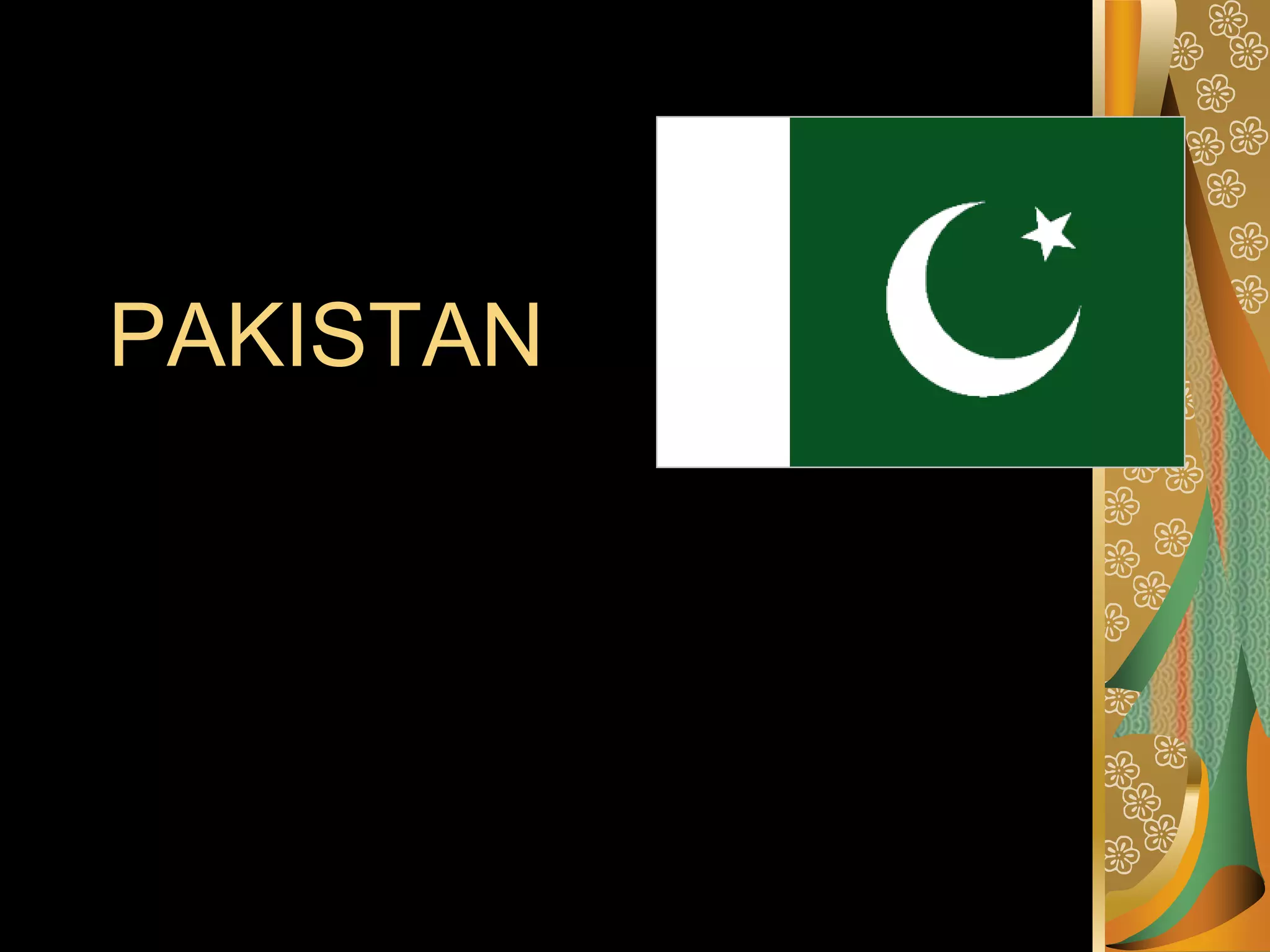
PAKISTAN
Location
 country located in the mountainous
 region adjoining Central Asia and the
 Middle East.
 Has a 1,046 kilometer (650 mile)
 coastline along the Arabian Sea and
 Gulf of Oman in the south, and is
 bordered by Afghanistan and Iran in the
 west, the Republic of India in the east
 and the People's Republic of China in
 the far northeast.[
 Pakistan has been called part of the
 New Middle East.[8]
Capital- Islamabad

Largest city- Karachi

Currency- Pakistani Rupee

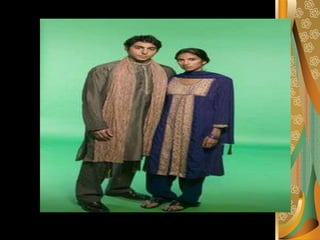
The estimated population of Pakistan is
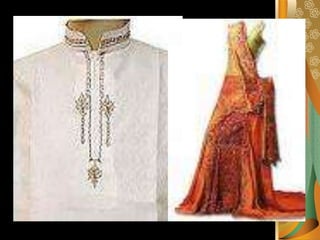
172,800,000. making it the world's sixth most-
populous country, behind Brazil and ahead of
Russia.
Geography
 Pakistan covers 340,403 square miles
 (881,640 km2)
 Apart from the 1,046-kilometre (650 mi)
 Arabian Sea coastline, Pakistan's land
 borders total 6,774 kilometres—
 2,430 kilometres (1,509 mi) with
 Afghanistan to the NW
 523 kilometres (325 mi) with China to the
 NE, 2,912 kilometres (1,809 mi) with India
 to the E and 909 kilometres (565 mi) with
 Iran to the SW
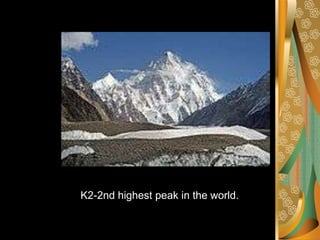
The northern and western highlands
of Pakistan contain the towering
Karakoram and Pamir mountain
ranges, which include some of the
world's highest peaks: K2 (28,250 ft;
8,611 m) and Nanga Parbat (26,660
ft; 8,126 m).
K2-2nd highest peak in the world.
The Baluchistan Plateau lies to the
west, and the Thar Desert and an
expanse of alluvial plains, the Punjab
and Sind, lie to the east.
The 1,000-mile-long (1,609-km) Indus
River and its tributaries flow through
the country from the Kashmir region
to the Arabian
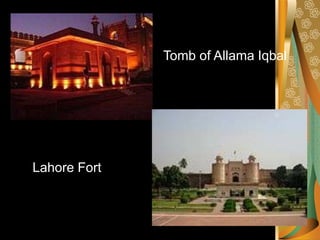
Tomb of Allama Iqbal


Lahore Fort
Languages

 multilingual country
 English is the official language
 Urdu is the national language.
 Punjabi is the most commonly spoken
 language of Pakistan. The following
 are major languages spoken in
 Pakistan
Language

 The following are major languages
 spoken in Pakistan:
   Punjabi (Panjabi) 61 million
   Pashto (three major varieties) 19 million
   Sindhi 19 million
   Seraiki (Saraiki) 14 million
   Urdu 11 million
   Balochi (three major varieties) 6 million
Religion

 second-most populous Muslim-
 majority country
 also has the second-largest Shi'a
 population in the world.
 About 95% of the Pakistanis are
 Muslim. Almost 85% of Pakistani
 Muslims are Sunni Muslims and 15%
 are Shi'a Muslims
Religion

 The Religious breakup of the country
 is as follows[13]:
 Islam 173,000,000 (95%) (nearly 85%
 are Sunni Muslims and 15% are Shi'a
 Muslims).
 Hinduism 3,200,000 (1.85%)
 Christianity 2,800,000 (1.6%)
 Sikhs Around 20,000 (0.04%)
Politics
  Pakistan politics has taken place in the
  framework of a federal republic
  system of government has at times been
  parliamentary, presidential, or semi-presidential.
  In the current semi-presidential system, the
  President of Pakistan is the head of state, the
  Prime Minister is head of government, and there
  is a multi-party system.
  Executive power is exercised by the government.
  Legislative power is largely vested in the
  Parliament.
Economy
 is the 26th largest economy in the
 world in terms of purchasing power,
 and the 47th largest in absolute dollar
 terms.

 Pakistan's economy mainly
 encompasses textiles, chemicals,
 food processing, agriculture and other
 industries.
The economy has suffered in the past
from decades of internal political
disputes, a fast growing population,
mixed levels of foreign investment,
and a costly, ongoing confrontation
with neighboring India.
Climate
  Pakistan has four seasons:
  - a cool, dry winter from December through February;
  - a hot, dry spring from March through May
  - the summer rainy season, or southwest monsoon
  period, from June through September;
  - the retreating monsoon period of October and
  November.

Rainfall can vary radically from year to year, and
 successive patterns of flooding and drought are also
 not uncommon.
Traditional dress
 Salwar kameez (shalwar qameez) is the
 national dress of Pakistan.
 Salwars are loose trousers designed in
 various styles.
 The salwar kameez is important especially
 during the festivals celebrated in Pakistan,
 for men as well as women.
 Salwar kameez is also popular due to the
 comfort factor.
The kameez is large and loose fitting
tunic worn with the baggy salwar.
Although the sherwani originated in
India during the 18th century, it is also
the national dress for men in
Pakistan.
The achkan is yet another important
dress of Pakistan.
An achkan is a long jacket, which also
originated in the 19th century in India.
These are long sleeved coats
reaching all the way to the knees. At
times, achkan can even go lower.
HEALTH
Alternative therapies have been
utilized by people in Pakistan who
have faith in spiritual healers,
clergymen, hakeems, homeopaths or
even many quacks
traditional medicine sector has
become an important source of health
care, especially in rural and tribal
areas of the country
half the population (66%) lives in the
rural part of the country
Poverty, compounded by illiteracy,
low status of women, and inadequate
water and sanitation facilities, has a
deep impact on health indicators
two main divisions: the public domain
and the private domain
Pakistan

Pakistan

  • 1.
  • 2.
    Location country locatedin the mountainous region adjoining Central Asia and the Middle East. Has a 1,046 kilometer (650 mile) coastline along the Arabian Sea and Gulf of Oman in the south, and is bordered by Afghanistan and Iran in the west, the Republic of India in the east and the People's Republic of China in the far northeast.[ Pakistan has been called part of the New Middle East.[8]
  • 3.
    Capital- Islamabad Largest city-Karachi Currency- Pakistani Rupee The estimated population of Pakistan is 172,800,000. making it the world's sixth most- populous country, behind Brazil and ahead of Russia.
  • 4.
    Geography Pakistan covers340,403 square miles (881,640 km2) Apart from the 1,046-kilometre (650 mi) Arabian Sea coastline, Pakistan's land borders total 6,774 kilometres— 2,430 kilometres (1,509 mi) with Afghanistan to the NW 523 kilometres (325 mi) with China to the NE, 2,912 kilometres (1,809 mi) with India to the E and 909 kilometres (565 mi) with Iran to the SW
  • 5.
    The northern andwestern highlands of Pakistan contain the towering Karakoram and Pamir mountain ranges, which include some of the world's highest peaks: K2 (28,250 ft; 8,611 m) and Nanga Parbat (26,660 ft; 8,126 m).
  • 6.
    K2-2nd highest peakin the world.
  • 7.
    The Baluchistan Plateaulies to the west, and the Thar Desert and an expanse of alluvial plains, the Punjab and Sind, lie to the east. The 1,000-mile-long (1,609-km) Indus River and its tributaries flow through the country from the Kashmir region to the Arabian
  • 8.
    Tomb of AllamaIqbal Lahore Fort
  • 9.
    Languages multilingual country English is the official language Urdu is the national language. Punjabi is the most commonly spoken language of Pakistan. The following are major languages spoken in Pakistan
  • 10.
    Language The followingare major languages spoken in Pakistan: Punjabi (Panjabi) 61 million Pashto (three major varieties) 19 million Sindhi 19 million Seraiki (Saraiki) 14 million Urdu 11 million Balochi (three major varieties) 6 million
  • 11.
    Religion second-most populousMuslim- majority country also has the second-largest Shi'a population in the world. About 95% of the Pakistanis are Muslim. Almost 85% of Pakistani Muslims are Sunni Muslims and 15% are Shi'a Muslims
  • 12.
    Religion The Religiousbreakup of the country is as follows[13]: Islam 173,000,000 (95%) (nearly 85% are Sunni Muslims and 15% are Shi'a Muslims). Hinduism 3,200,000 (1.85%) Christianity 2,800,000 (1.6%) Sikhs Around 20,000 (0.04%)
  • 13.
    Politics Pakistanpolitics has taken place in the framework of a federal republic system of government has at times been parliamentary, presidential, or semi-presidential. In the current semi-presidential system, the President of Pakistan is the head of state, the Prime Minister is head of government, and there is a multi-party system. Executive power is exercised by the government. Legislative power is largely vested in the Parliament.
  • 14.
    Economy is the26th largest economy in the world in terms of purchasing power, and the 47th largest in absolute dollar terms. Pakistan's economy mainly encompasses textiles, chemicals, food processing, agriculture and other industries.
  • 15.
    The economy hassuffered in the past from decades of internal political disputes, a fast growing population, mixed levels of foreign investment, and a costly, ongoing confrontation with neighboring India.
  • 16.
    Climate Pakistanhas four seasons: - a cool, dry winter from December through February; - a hot, dry spring from March through May - the summer rainy season, or southwest monsoon period, from June through September; - the retreating monsoon period of October and November. Rainfall can vary radically from year to year, and successive patterns of flooding and drought are also not uncommon.
  • 17.
    Traditional dress Salwarkameez (shalwar qameez) is the national dress of Pakistan. Salwars are loose trousers designed in various styles. The salwar kameez is important especially during the festivals celebrated in Pakistan, for men as well as women. Salwar kameez is also popular due to the comfort factor.
  • 18.
    The kameez islarge and loose fitting tunic worn with the baggy salwar. Although the sherwani originated in India during the 18th century, it is also the national dress for men in Pakistan.
  • 19.
    The achkan isyet another important dress of Pakistan. An achkan is a long jacket, which also originated in the 19th century in India. These are long sleeved coats reaching all the way to the knees. At times, achkan can even go lower.
  • 22.
    HEALTH Alternative therapies havebeen utilized by people in Pakistan who have faith in spiritual healers, clergymen, hakeems, homeopaths or even many quacks traditional medicine sector has become an important source of health care, especially in rural and tribal areas of the country
  • 23.
    half the population(66%) lives in the rural part of the country Poverty, compounded by illiteracy, low status of women, and inadequate water and sanitation facilities, has a deep impact on health indicators two main divisions: the public domain and the private domain