Painting
Painting is the practice of applying
paint, pigment, color or other medium
to a solid surface. The medium is
commonly applied to the base with a
brush, but other implements, such as
knives, sponges, and airbrushes, can be
used. The final work is also called a
painting.
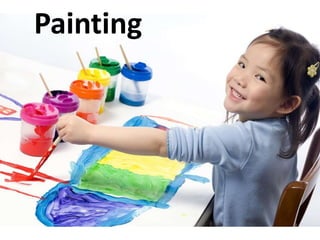
• Paint is entirely different from other
media. It has qualities of flow and
freedom.
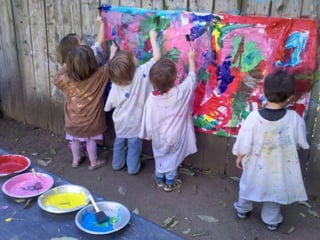
• When painting, a child becomes focused
on the interplay of mind, muscle, action
and interaction.
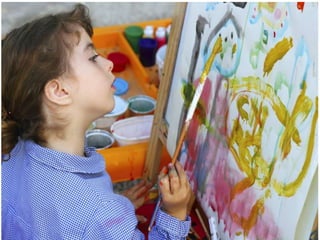
• Creating a painting for the young child is
a first and foremost a sensory
experience.
When children Paint, they develop:
• Physically, by using the large muscles of the
arm to control the paint brush.
• Socially, by working alongside others
• Emotionally, by being trusted to handle paint
that is easy to spill and messy to work with,
• Perceptually, by observing the visual effects of
their motions and identifying the resulting
colors, shapes and lines.
• Cognitively, by learning a painting
vocabulary and by observing how
paint changes physically when it
mixes and dries, and
• Art awareness, responding to
painting don by the artist.
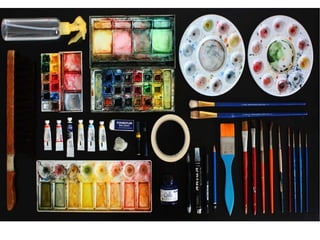
Painting Materials/Tools for Young
Children• Paintbrushes
• Sponge
• Sponge brushes
• Paint rollers
• Feathers and feather dusters,
• Branches and twigs
• Squeeze bottle such as empty shampoo or lotion
containers and craft sticks with cloth tape to an
end.
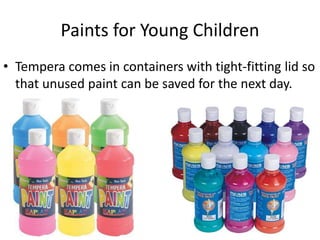
Paints for Young Children
• Tempera comes in containers with tight-fitting lid so
that unused paint can be saved for the next day.
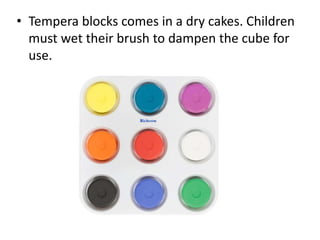
• Tempera blocks comes in a dry cakes. Children
must wet their brush to dampen the cube for
use.
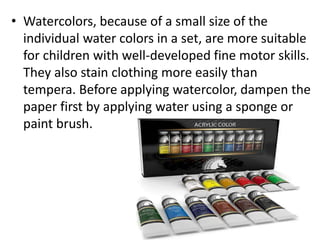
• Watercolors, because of a small size of the
individual water colors in a set, are more suitable
for children with well-developed fine motor skills.
They also stain clothing more easily than
tempera. Before applying watercolor, dampen the
paper first by applying water using a sponge or
paint brush.
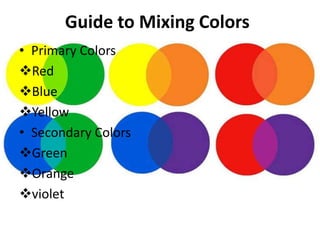
Guide to Mixing Colors
• Primary Colors
Red
Blue
Yellow
• Secondary Colors
Green
Orange
violet
Adding White
• Red + White = Pink
• Blue + White = Pastel Blue
• Green + white = Mint Green
• Orange + white = Peach
• Purple + white = Lavender
• Brown + white = Tan
Adding Black
• Black + white = Gray
• Black + Red = Brown
• Black + Yellow = Olive Green
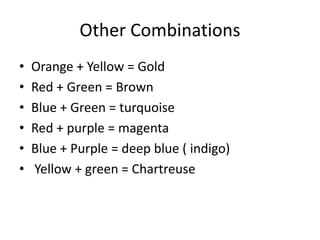
Other Combinations
• Orange + Yellow = Gold
• Red + Green = Brown
• Blue + Green = turquoise
• Red + purple = magenta
• Blue + Purple = deep blue ( indigo)
• Yellow + green = Chartreuse
Painting Exploration for Toddlers
• Group composition age : 1-3
• Group size : One at a time
• Time Frame : 1 Hour session
• Objectives : In this activity children will develop
Physically
Socially
Emotionally
Cognitively
Art awareness
• Setup : Have children wear smocks to protect
their clothes. Transition in Outdoors. Painting
on the easel.
• Materials : small bucket, water, Brushes , two
colors of thick liquid tempera paint and paper.
• Procedure :
A. Transition in
Give the children bucket of water
and brushes. Bring them outdoors to paint the
walls and pavement. Mime painting while
singing a song like “paint a rainbow”
B. What to do:
1. Stay with the child for the first few
painting experience.
2. Give a few simple directions in the
beginning.
3. While the child is painting, do not
interrupt until the child is done.
4. Do not worry if the children mix
up the paint colors.
C. What to say
1. Brief Instruction, interfere only if they will put the
paintbrush in their mouth.
2. Teach painting vocabulary.
3. Give descriptive comments that focuses on the
effects of color mixing and kind of lines the child
has made.
D. Transition out
1. Let the children paint until they feel they are
finished, then guide them into the sink too wash
their hands.
2. Let the child clean the place by returning all the
materials and wiping the drips by a cloth.
Painting Exploration for 3 Years Old
and Up
• As children develop better control of
their muscles and the fluid nature of
paint, they are now ready for a wider
variety of activities.
• Aside from basic painting activities,
offer them use of more colors and
kinds of paint as well as experiment
with adding textures to the paint.
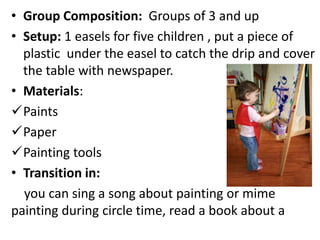
• Group Composition: Groups of 3 and up
• Setup: 1 easels for five children , put a piece of
plastic under the easel to catch the drip and cover
the table with newspaper.
• Materials:
Paints
Paper
Painting tools
• Transition in:
you can sing a song about painting or mime
painting during circle time, read a book about a
painter, recite a poem or do a finger play.
When the children are ready , make sure
that you set up a situation or rule for taking
turns.
What to do:
Remember that for children, the
process is more important than the product.
Let painting experience for children
remember to open-ended activities that
allow color mixing, accept exploration, and
foster concentration and reflection.
• What to say:
–Remember not to interrupt children while
painting. Wait for them to look up, or save
conversation for later. You may ask
questions such;
“How did you make this color?”
“which brush did you use to make this
line?”
“why do you think the paint dripped like
this?”
• Transition out:
–Children often announce with great satisfaction
when they are finished painting. Remind the
children to cleanup the place and to wash their
hands. Show them where and how to take their
own painting to dry. Make sure they wear their
smock on until this chore is done to avoid
accident and stains.
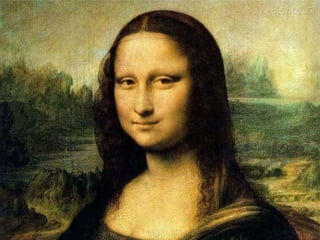
Art Awareness
Display and discuss paintings by artist from
different times and cultures. Focus the discussion
on how the artist made the different colors.
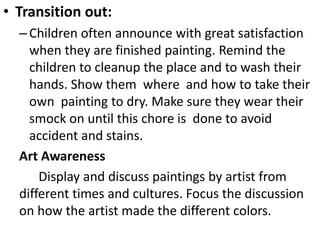
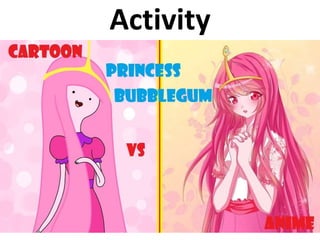
Activity
Manage Problems
Teachers should determine the cause of troubling
behavior before attempting to correct it. Reflecting
upon the factors influencing a problem will provide a
framework for intervention. For example, if a child is
regularly misbehaving when he or she is sitting next
to a specific friend, rearranging seating may be the
answer. When possible, teachers should help students
learn how to control and modify their behavior before
it escalates into a larger issue. Teachers need to work
together to reinforce intervention strategies. This will
underscore behavioral expectations and maximize
success.
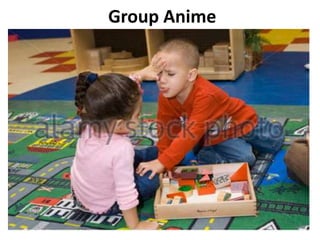
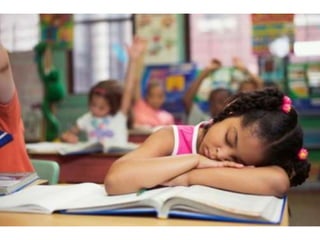
Observe and
analyze the
following
pictures in the
next slides.
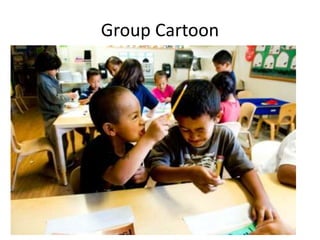
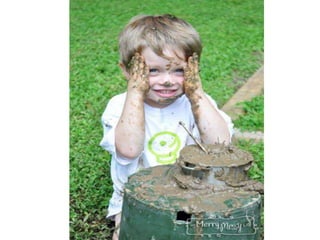
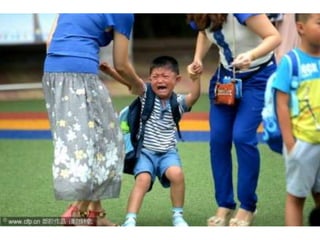
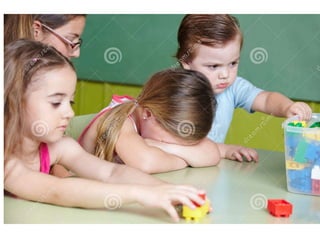
As a teacher
someday, how
would you
handle the
following
scenario in a
classroom
setting.
Group Anime
Group Cartoon
Thank you so much for the
cooperation….
God Bless!!!

Painting

  • 1.
  • 2.
    Painting is thepractice of applying paint, pigment, color or other medium to a solid surface. The medium is commonly applied to the base with a brush, but other implements, such as knives, sponges, and airbrushes, can be used. The final work is also called a painting.
  • 4.
    • Paint isentirely different from other media. It has qualities of flow and freedom. • When painting, a child becomes focused on the interplay of mind, muscle, action and interaction. • Creating a painting for the young child is a first and foremost a sensory experience.
  • 6.
    When children Paint,they develop: • Physically, by using the large muscles of the arm to control the paint brush. • Socially, by working alongside others • Emotionally, by being trusted to handle paint that is easy to spill and messy to work with, • Perceptually, by observing the visual effects of their motions and identifying the resulting colors, shapes and lines.
  • 7.
    • Cognitively, bylearning a painting vocabulary and by observing how paint changes physically when it mixes and dries, and • Art awareness, responding to painting don by the artist.
  • 9.
    Painting Materials/Tools forYoung Children• Paintbrushes • Sponge • Sponge brushes • Paint rollers • Feathers and feather dusters, • Branches and twigs • Squeeze bottle such as empty shampoo or lotion containers and craft sticks with cloth tape to an end.
  • 11.
    Paints for YoungChildren • Tempera comes in containers with tight-fitting lid so that unused paint can be saved for the next day.
  • 12.
    • Tempera blockscomes in a dry cakes. Children must wet their brush to dampen the cube for use.
  • 13.
    • Watercolors, becauseof a small size of the individual water colors in a set, are more suitable for children with well-developed fine motor skills. They also stain clothing more easily than tempera. Before applying watercolor, dampen the paper first by applying water using a sponge or paint brush.
  • 14.
    Guide to MixingColors • Primary Colors Red Blue Yellow • Secondary Colors Green Orange violet
  • 15.
    Adding White • Red+ White = Pink • Blue + White = Pastel Blue • Green + white = Mint Green • Orange + white = Peach • Purple + white = Lavender • Brown + white = Tan
  • 16.
    Adding Black • Black+ white = Gray • Black + Red = Brown • Black + Yellow = Olive Green
  • 17.
    Other Combinations • Orange+ Yellow = Gold • Red + Green = Brown • Blue + Green = turquoise • Red + purple = magenta • Blue + Purple = deep blue ( indigo) • Yellow + green = Chartreuse
  • 18.
    Painting Exploration forToddlers • Group composition age : 1-3 • Group size : One at a time • Time Frame : 1 Hour session • Objectives : In this activity children will develop Physically Socially Emotionally Cognitively Art awareness
  • 19.
    • Setup :Have children wear smocks to protect their clothes. Transition in Outdoors. Painting on the easel. • Materials : small bucket, water, Brushes , two colors of thick liquid tempera paint and paper. • Procedure : A. Transition in Give the children bucket of water and brushes. Bring them outdoors to paint the walls and pavement. Mime painting while singing a song like “paint a rainbow”
  • 20.
    B. What todo: 1. Stay with the child for the first few painting experience. 2. Give a few simple directions in the beginning. 3. While the child is painting, do not interrupt until the child is done. 4. Do not worry if the children mix up the paint colors.
  • 21.
    C. What tosay 1. Brief Instruction, interfere only if they will put the paintbrush in their mouth. 2. Teach painting vocabulary. 3. Give descriptive comments that focuses on the effects of color mixing and kind of lines the child has made. D. Transition out 1. Let the children paint until they feel they are finished, then guide them into the sink too wash their hands. 2. Let the child clean the place by returning all the materials and wiping the drips by a cloth.
  • 22.
    Painting Exploration for3 Years Old and Up • As children develop better control of their muscles and the fluid nature of paint, they are now ready for a wider variety of activities. • Aside from basic painting activities, offer them use of more colors and kinds of paint as well as experiment with adding textures to the paint.
  • 23.
    • Group Composition:Groups of 3 and up • Setup: 1 easels for five children , put a piece of plastic under the easel to catch the drip and cover the table with newspaper. • Materials: Paints Paper Painting tools • Transition in: you can sing a song about painting or mime painting during circle time, read a book about a
  • 24.
    painter, recite apoem or do a finger play. When the children are ready , make sure that you set up a situation or rule for taking turns. What to do: Remember that for children, the process is more important than the product. Let painting experience for children remember to open-ended activities that allow color mixing, accept exploration, and foster concentration and reflection.
  • 25.
    • What tosay: –Remember not to interrupt children while painting. Wait for them to look up, or save conversation for later. You may ask questions such; “How did you make this color?” “which brush did you use to make this line?” “why do you think the paint dripped like this?”
  • 26.
    • Transition out: –Childrenoften announce with great satisfaction when they are finished painting. Remind the children to cleanup the place and to wash their hands. Show them where and how to take their own painting to dry. Make sure they wear their smock on until this chore is done to avoid accident and stains. Art Awareness Display and discuss paintings by artist from different times and cultures. Focus the discussion on how the artist made the different colors.
  • 27.
  • 28.
    Manage Problems Teachers shoulddetermine the cause of troubling behavior before attempting to correct it. Reflecting upon the factors influencing a problem will provide a framework for intervention. For example, if a child is regularly misbehaving when he or she is sitting next to a specific friend, rearranging seating may be the answer. When possible, teachers should help students learn how to control and modify their behavior before it escalates into a larger issue. Teachers need to work together to reinforce intervention strategies. This will underscore behavioral expectations and maximize success.
  • 29.
    Observe and analyze the following picturesin the next slides. As a teacher someday, how would you handle the following scenario in a classroom setting.
  • 30.
  • 31.
  • 36.
    Thank you somuch for the cooperation…. God Bless!!!