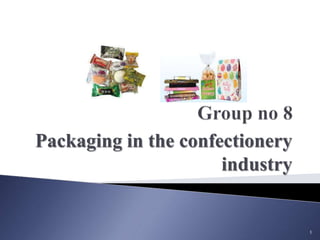
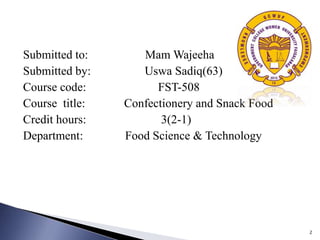
Packaging in the confectionery
industry
1
Submitted to: Mam Wajeeha
Submitted by: Uswa Sadiq(63)
Course code: FST-508
Course title: Confectionery and Snack Food
Credit hours: 3(2-1)
Department: Food Science & Technology
2
Packaging
Purpose of
packaging
Metal cans
Paper and
associated
materials
Metal foils Wraps
3
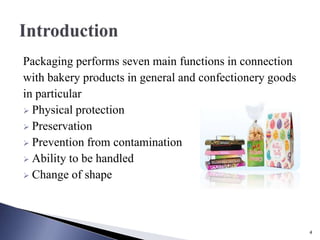
Packaging performs seven main functions in connection
with bakery products in general and confectionery goods
in particular
 Physical protection
 Preservation
 Prevention from contamination
 Ability to be handled
 Change of shape
4
The main reasons for using a package on any
food is
 Serves as a container for distribution and sales
 Protects the contents
 It describes and advertises the product in the package
5
Metal cans
Paper and
associated
materials
Metal foils Wraps
6
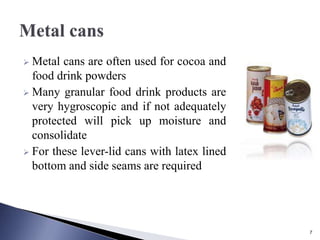
 Metal cans are often used for cocoa and
food drink powders
 Many granular food drink products are
very hygroscopic and if not adequately
protected will pick up moisture and
consolidate
 For these lever-lid cans with latex lined
bottom and side seams are required
7
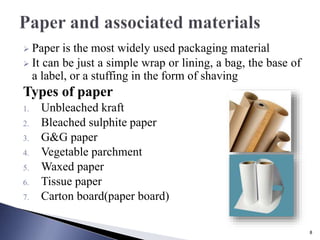
 Paper is the most widely used packaging material
 It can be just a simple wrap or lining, a bag, the base of
a label, or a stuffing in the form of shaving
Types of paper
1. Unbleached kraft
2. Bleached sulphite paper
3. G&G paper
4. Vegetable parchment
5. Waxed paper
6. Tissue paper
7. Carton board(paper board)
8
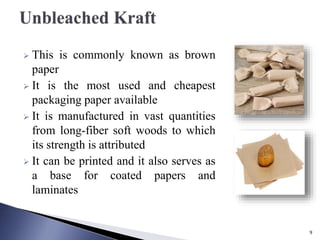
 This is commonly known as brown
paper
 It is the most used and cheapest
packaging paper available
 It is manufactured in vast quantities
from long-fiber soft woods to which
its strength is attributed
 It can be printed and it also serves as
a base for coated papers and
laminates
9
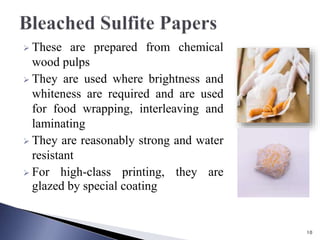
 These are prepared from chemical
wood pulps
 They are used where brightness and
whiteness are required and are used
for food wrapping, interleaving and
laminating
 They are reasonably strong and water
resistant
 For high-class printing, they are
glazed by special coating
10
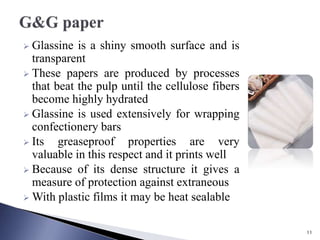
 Glassine is a shiny smooth surface and is
transparent
 These papers are produced by processes
that beat the pulp until the cellulose fibers
become highly hydrated
 Glassine is used extensively for wrapping
confectionery bars
 Its greaseproof properties are very
valuable in this respect and it prints well
 Because of its dense structure it gives a
measure of protection against extraneous
 With plastic films it may be heat sealable
11
Vegetable Parchment
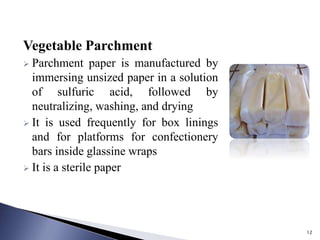
 Parchment paper is manufactured by
immersing unsized paper in a solution
of sulfuric acid, followed by
neutralizing, washing, and drying
 It is used frequently for box linings
and for platforms for confectionery
bars inside glassine wraps
 It is a sterile paper
12
13
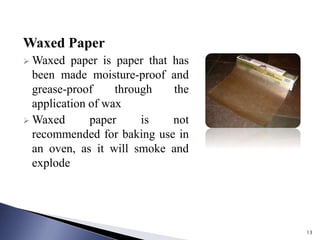
Waxed Paper
 Waxed paper is paper that has
been made moisture-proof and
grease-proof through the
application of wax
 Waxed paper is not
recommended for baking use in
an oven, as it will smoke and
explode
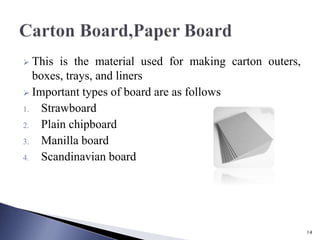
 This is the material used for making carton outers,
boxes, trays, and liners
 Important types of board are as follows
1. Strawboard
2. Plain chipboard
3. Manilla board
4. Scandinavian board
14
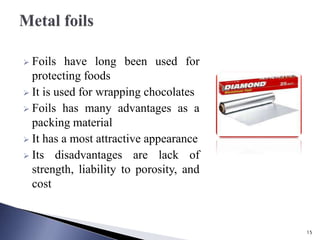
 Foils have long been used for
protecting foods
 It is used for wrapping chocolates
 Foils has many advantages as a
packing material
 It has a most attractive appearance
 Its disadvantages are lack of
strength, liability to porosity, and
cost
15
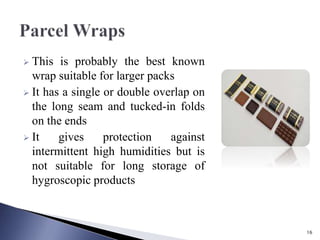
 This is probably the best known
wrap suitable for larger packs
 It has a single or double overlap on
the long seam and tucked-in folds
on the ends
 It gives protection against
intermittent high humidities but is
not suitable for long storage of
hygroscopic products
16
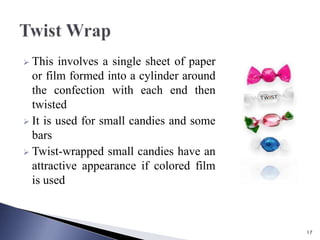
 This involves a single sheet of paper
or film formed into a cylinder around
the confection with each end then
twisted
 It is used for small candies and some
bars
 Twist-wrapped small candies have an
attractive appearance if colored film
is used
17
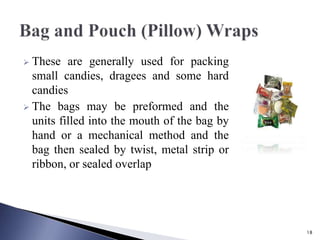
 These are generally used for packing
small candies, dragees and some hard
candies
 The bags may be preformed and the
units filled into the mouth of the bag by
hand or a mechanical method and the
bag then sealed by twist, metal strip or
ribbon, or sealed overlap
18
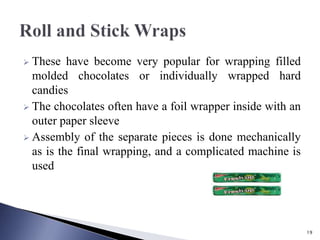
 These have become very popular for wrapping filled
molded chocolates or individually wrapped hard
candies
 The chocolates often have a foil wrapper inside with an
outer paper sleeve
 Assembly of the separate pieces is done mechanically
as is the final wrapping, and a complicated machine is
used
19
 Each packaging material protect and preserves food
 Labels carry information for the consumer,some of this
information is required by law
 Consumers are attracted to innovative package design
The main purpose of packaging are
 To preserve the product
 To protect from damage
 To make the product more innovative
20
 Bennion, E.B., Bamford, G.S.T., Bent, A.J. (1997).
Packaging of confectionery products
 Paine, F.A. and Paine, H.Y. (1993) A handbook of food
packaging. Chapman and hall, london
 British Carton Association (1984) Handbook of
cartonboard and carton test procedures. The practical
packaging series. Institute of packaging, melton
mowbray
21
22

Packaging in the confectionery industry

  • 1.
    Packaging in theconfectionery industry 1
  • 2.
    Submitted to: MamWajeeha Submitted by: Uswa Sadiq(63) Course code: FST-508 Course title: Confectionery and Snack Food Credit hours: 3(2-1) Department: Food Science & Technology 2
  • 3.
    Packaging Purpose of packaging Metal cans Paperand associated materials Metal foils Wraps 3
  • 4.
    Packaging performs sevenmain functions in connection with bakery products in general and confectionery goods in particular  Physical protection  Preservation  Prevention from contamination  Ability to be handled  Change of shape 4
  • 5.
    The main reasonsfor using a package on any food is  Serves as a container for distribution and sales  Protects the contents  It describes and advertises the product in the package 5
  • 6.
  • 7.
     Metal cansare often used for cocoa and food drink powders  Many granular food drink products are very hygroscopic and if not adequately protected will pick up moisture and consolidate  For these lever-lid cans with latex lined bottom and side seams are required 7
  • 8.
     Paper isthe most widely used packaging material  It can be just a simple wrap or lining, a bag, the base of a label, or a stuffing in the form of shaving Types of paper 1. Unbleached kraft 2. Bleached sulphite paper 3. G&G paper 4. Vegetable parchment 5. Waxed paper 6. Tissue paper 7. Carton board(paper board) 8
  • 9.
     This iscommonly known as brown paper  It is the most used and cheapest packaging paper available  It is manufactured in vast quantities from long-fiber soft woods to which its strength is attributed  It can be printed and it also serves as a base for coated papers and laminates 9
  • 10.
     These areprepared from chemical wood pulps  They are used where brightness and whiteness are required and are used for food wrapping, interleaving and laminating  They are reasonably strong and water resistant  For high-class printing, they are glazed by special coating 10
  • 11.
     Glassine isa shiny smooth surface and is transparent  These papers are produced by processes that beat the pulp until the cellulose fibers become highly hydrated  Glassine is used extensively for wrapping confectionery bars  Its greaseproof properties are very valuable in this respect and it prints well  Because of its dense structure it gives a measure of protection against extraneous  With plastic films it may be heat sealable 11
  • 12.
    Vegetable Parchment  Parchmentpaper is manufactured by immersing unsized paper in a solution of sulfuric acid, followed by neutralizing, washing, and drying  It is used frequently for box linings and for platforms for confectionery bars inside glassine wraps  It is a sterile paper 12
  • 13.
    13 Waxed Paper  Waxedpaper is paper that has been made moisture-proof and grease-proof through the application of wax  Waxed paper is not recommended for baking use in an oven, as it will smoke and explode
  • 14.
     This isthe material used for making carton outers, boxes, trays, and liners  Important types of board are as follows 1. Strawboard 2. Plain chipboard 3. Manilla board 4. Scandinavian board 14
  • 15.
     Foils havelong been used for protecting foods  It is used for wrapping chocolates  Foils has many advantages as a packing material  It has a most attractive appearance  Its disadvantages are lack of strength, liability to porosity, and cost 15
  • 16.
     This isprobably the best known wrap suitable for larger packs  It has a single or double overlap on the long seam and tucked-in folds on the ends  It gives protection against intermittent high humidities but is not suitable for long storage of hygroscopic products 16
  • 17.
     This involvesa single sheet of paper or film formed into a cylinder around the confection with each end then twisted  It is used for small candies and some bars  Twist-wrapped small candies have an attractive appearance if colored film is used 17
  • 18.
     These aregenerally used for packing small candies, dragees and some hard candies  The bags may be preformed and the units filled into the mouth of the bag by hand or a mechanical method and the bag then sealed by twist, metal strip or ribbon, or sealed overlap 18
  • 19.
     These havebecome very popular for wrapping filled molded chocolates or individually wrapped hard candies  The chocolates often have a foil wrapper inside with an outer paper sleeve  Assembly of the separate pieces is done mechanically as is the final wrapping, and a complicated machine is used 19
  • 20.
     Each packagingmaterial protect and preserves food  Labels carry information for the consumer,some of this information is required by law  Consumers are attracted to innovative package design The main purpose of packaging are  To preserve the product  To protect from damage  To make the product more innovative 20
  • 21.
     Bennion, E.B.,Bamford, G.S.T., Bent, A.J. (1997). Packaging of confectionery products  Paine, F.A. and Paine, H.Y. (1993) A handbook of food packaging. Chapman and hall, london  British Carton Association (1984) Handbook of cartonboard and carton test procedures. The practical packaging series. Institute of packaging, melton mowbray 21
  • 22.