A RANDOMIZED TRIAL COMPARING
TF-CBTAND TF-CBT PLUS
ENGAGEMENT STRATEGIES FOR
FOSTER PARENTS
Lucy Berliner, Shannon Dorsey, Michael Pullmann
University of Washington
BAPSCAN
Edinburgh, Scotland
April 14, 2015
Study Background
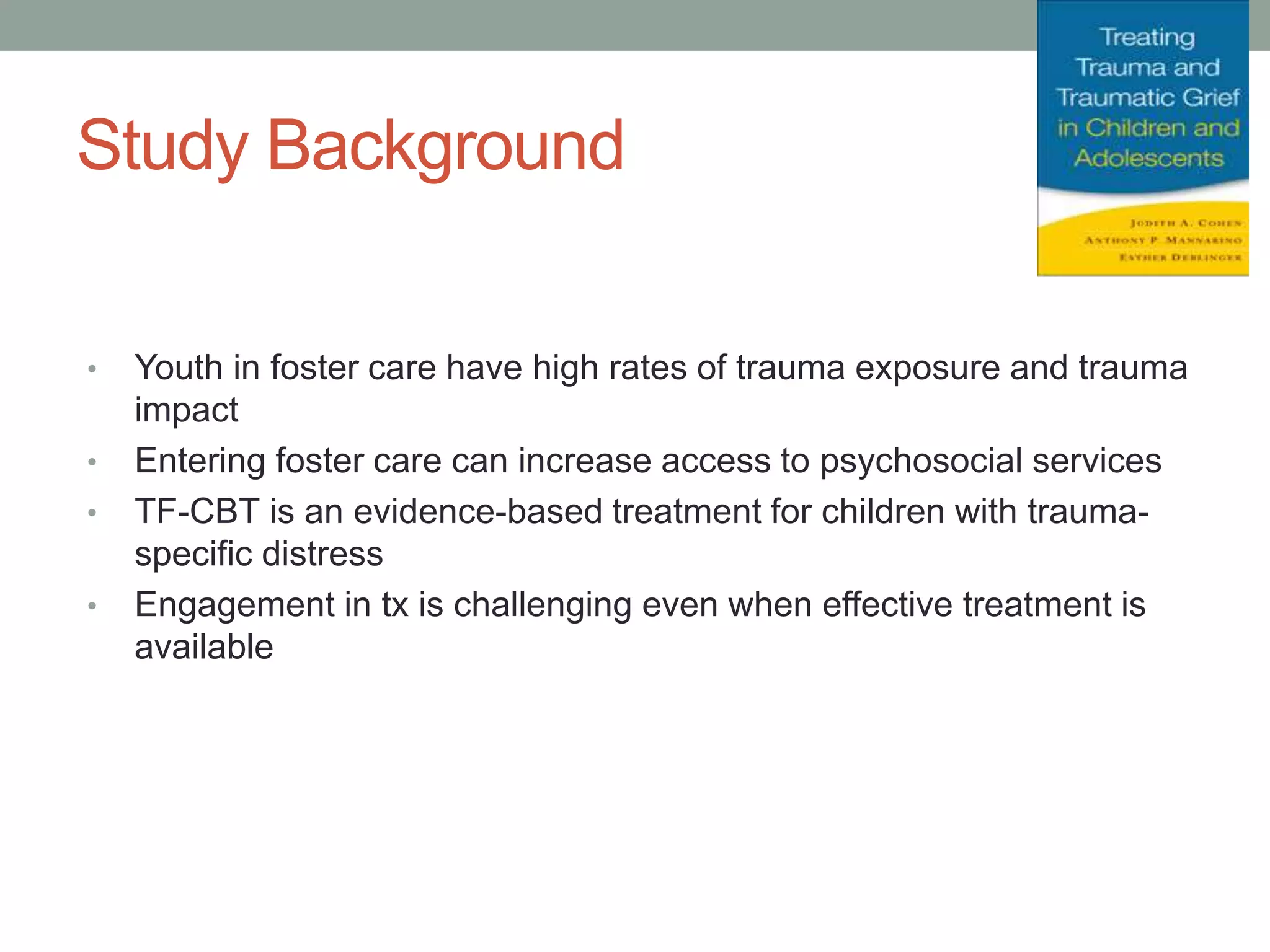
• Youth in foster care have high rates of trauma exposure and trauma
impact
• Entering foster care can increase access to psychosocial services
• TF-CBT is an evidence-based treatment for children with trauma-
specific distress
• Engagement in tx is challenging even when effective treatment is
available
Study Rationale and Hypothesis
• Engagement challenges for active therapies may be even
greater for foster parents
• Not traditionally an expectation
• Mary McKay’s evidence-based engagement steps work to
increase attendance
• Elicit client concerns, identify perceptual barriers to mental health
tx, actively problem solve concrete barriers, convey hope for
positive outcome.
Hypothesis: Addition of engagement strategies will
increase foster parent involvement in an active therapy
Procedure
• Permission, consent/assent obtained from all parties
(state, bio parent, foster parents, therapists, youth)
• Randomized to engagement/standard delivery (pre-tx
phone call; first in-person session)
• All children received TF-CBT
• Fidelity to TF-CBT, engagement checked by audio
recording
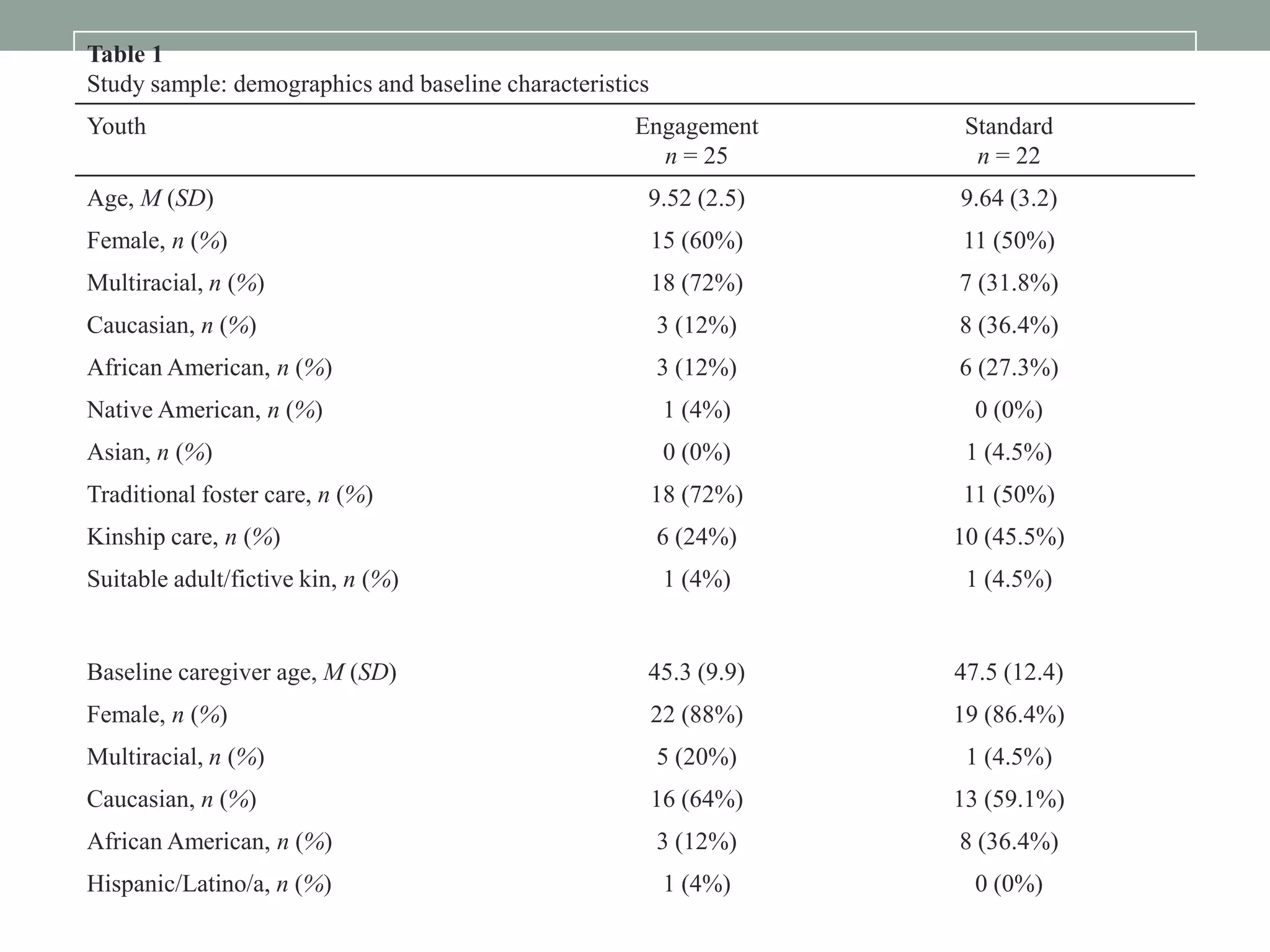
Table 1
Study sample: demographics and baseline characteristics
Youth Engagement
n = 25
Standard
n = 22
Age, M (SD) 9.52 (2.5) 9.64 (3.2)
Female, n (%) 15 (60%) 11 (50%)
Multiracial, n (%) 18 (72%) 7 (31.8%)
Caucasian, n (%) 3 (12%) 8 (36.4%)
African American, n (%) 3 (12%) 6 (27.3%)
Native American, n (%) 1 (4%) 0 (0%)
Asian, n (%) 0 (0%) 1 (4.5%)
Traditional foster care, n (%) 18 (72%) 11 (50%)
Kinship care, n (%) 6 (24%) 10 (45.5%)
Suitable adult/fictive kin, n (%) 1 (4%) 1 (4.5%)
Baseline caregiver age, M (SD) 45.3 (9.9) 47.5 (12.4)
Female, n (%) 22 (88%) 19 (86.4%)
Multiracial, n (%) 5 (20%) 1 (4.5%)
Caucasian, n (%) 16 (64%) 13 (59.1%)
African American, n (%) 3 (12%) 8 (36.4%)
Hispanic/Latino/a, n (%) 1 (4%) 0 (0%)
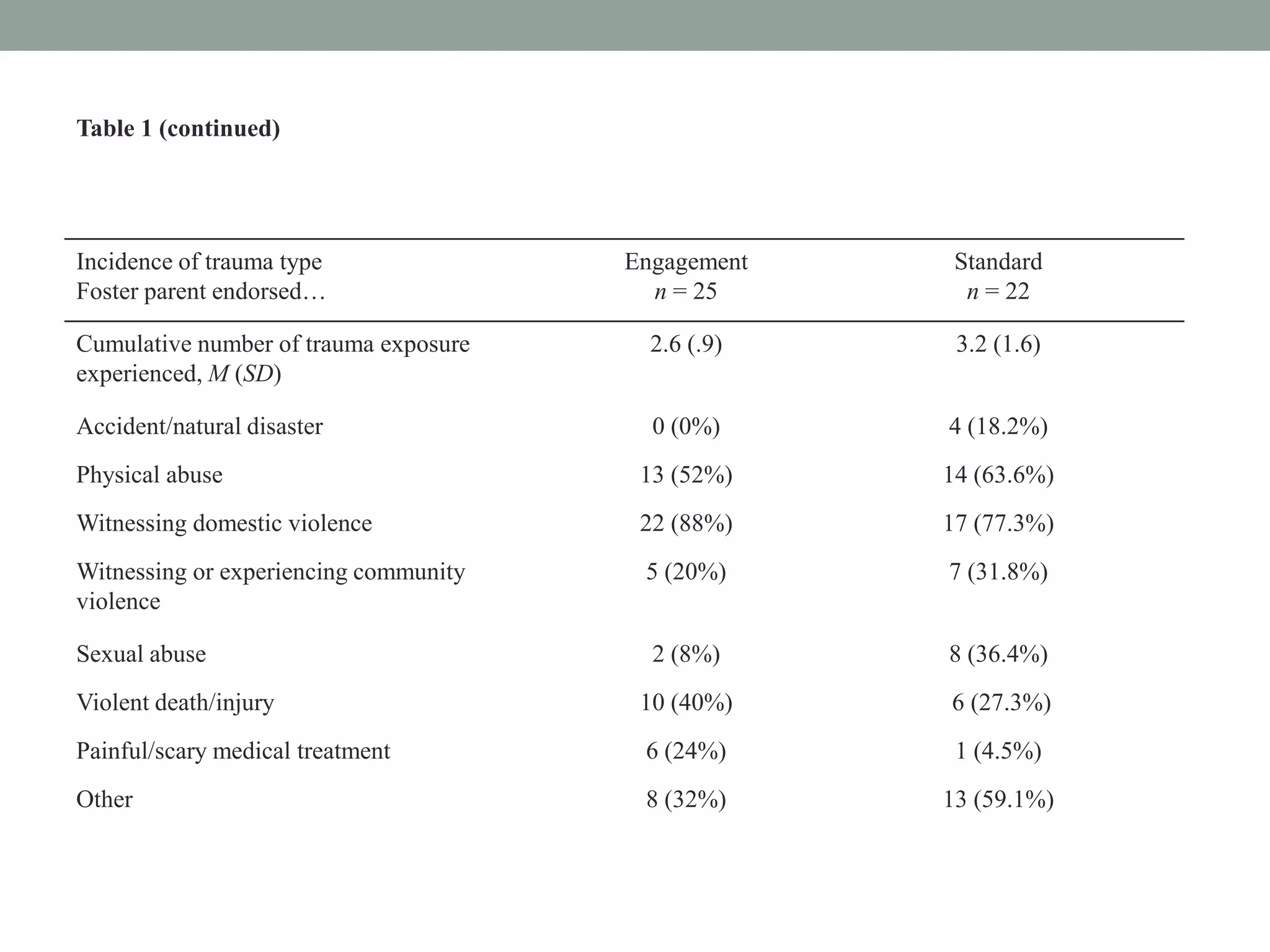
Table 1 (continued)
Incidence of trauma type
Foster parent endorsed…
Engagement
n = 25
Standard
n = 22
Cumulative number of trauma exposure
experienced, M (SD)
2.6 (.9) 3.2 (1.6)
Accident/natural disaster 0 (0%) 4 (18.2%)
Physical abuse 13 (52%) 14 (63.6%)
Witnessing domestic violence 22 (88%) 17 (77.3%)
Witnessing or experiencing community
violence
5 (20%) 7 (31.8%)
Sexual abuse 2 (8%) 8 (36.4%)
Violent death/injury 10 (40%) 6 (27.3%)
Painful/scary medical treatment 6 (24%) 1 (4.5%)
Other 8 (32%) 13 (59.1%)
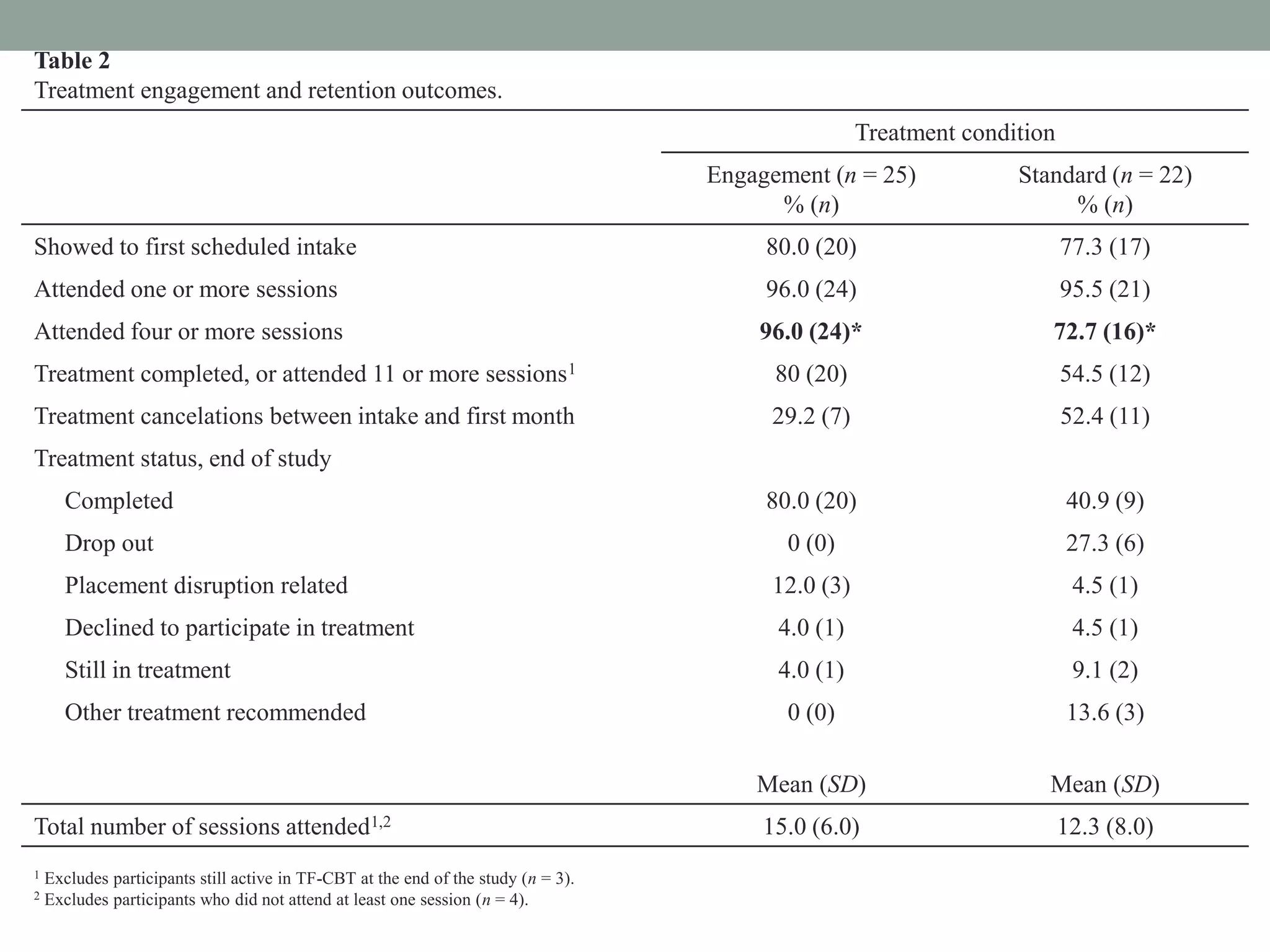
Table 2
Treatment engagement and retention outcomes.
Treatment condition
Engagement (n = 25)
% (n)
Standard (n = 22)
% (n)
Showed to first scheduled intake 80.0 (20) 77.3 (17)
Attended one or more sessions 96.0 (24) 95.5 (21)
Attended four or more sessions 96.0 (24)* 72.7 (16)*
Treatment completed, or attended 11 or more sessions1 80 (20) 54.5 (12)
Treatment cancelations between intake and first month 29.2 (7) 52.4 (11)
Treatment status, end of study
Completed 80.0 (20) 40.9 (9)
Drop out 0 (0) 27.3 (6)
Placement disruption related 12.0 (3) 4.5 (1)
Declined to participate in treatment 4.0 (1) 4.5 (1)
Still in treatment 4.0 (1) 9.1 (2)
Other treatment recommended 0 (0) 13.6 (3)
Mean (SD) Mean (SD)
Total number of sessions attended1,2 15.0 (6.0) 12.3 (8.0)
1 Excludes participants still active in TF-CBT at the end of the study (n = 3).
2 Excludes participants who did not attend at least one session (n = 4).
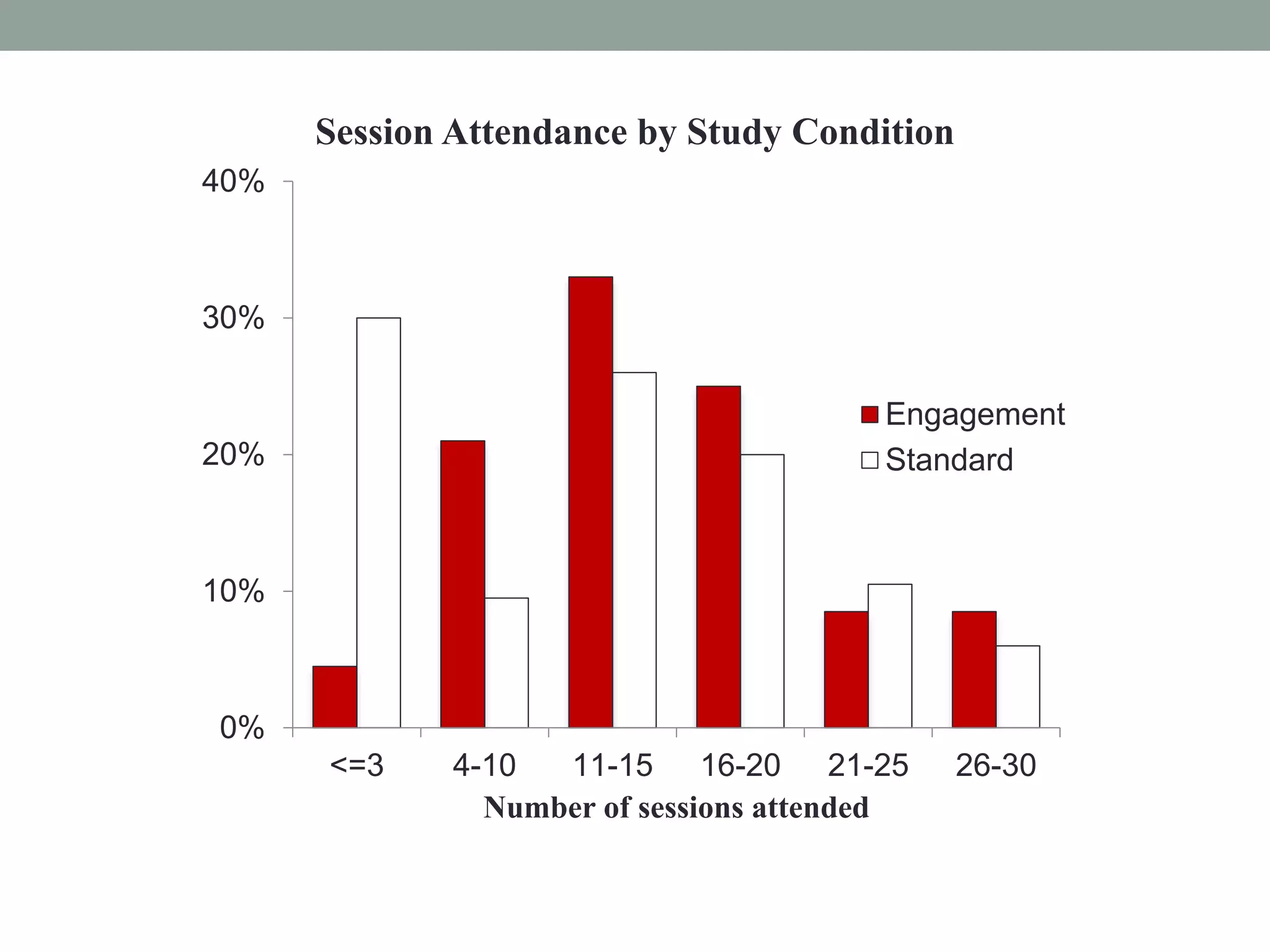
0%
10%
20%
30%
40%
<=3 4-10 11-15 16-20 21-25 26-30
Number of sessions attended
Session Attendance by Study Condition
Engagement
Standard
0
20
40
60
80
100
Baseline End of treatment 3-month post treatment
Meanscore
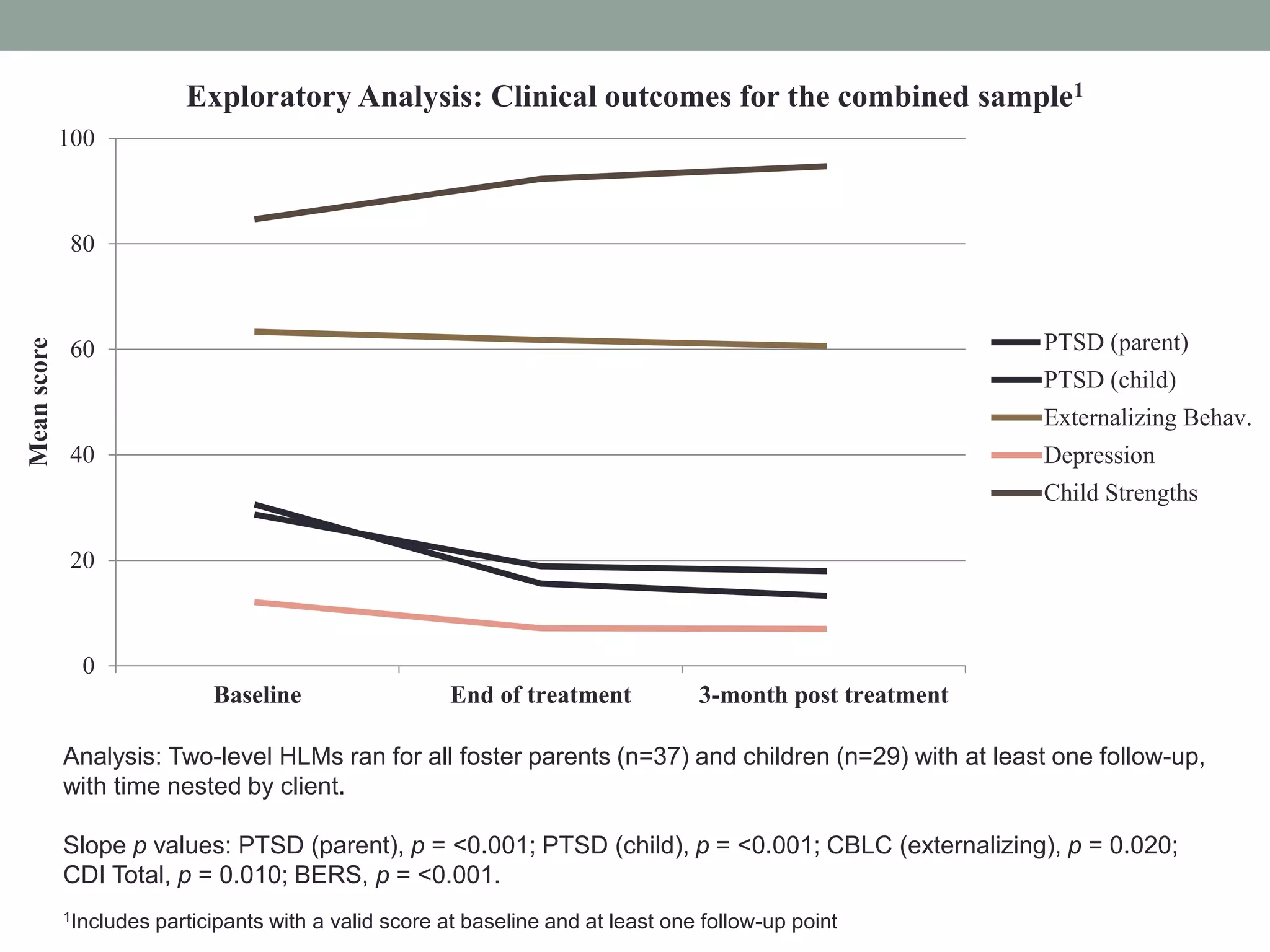
Exploratory Analysis: Clinical outcomes for the combined sample1
PTSD (parent)
PTSD (child)
Externalizing Behav.
Depression
Child Strengths
Analysis: Two-level HLMs ran for all foster parents (n=37) and children (n=29) with at least one follow-up,
with time nested by client.
Slope p values: PTSD (parent), p = <0.001; PTSD (child), p = <0.001; CBLC (externalizing), p = 0.020;
CDI Total, p = 0.010; BERS, p = <0.001.
1Includes participants with a valid score at baseline and at least one follow-up point
Conclusions
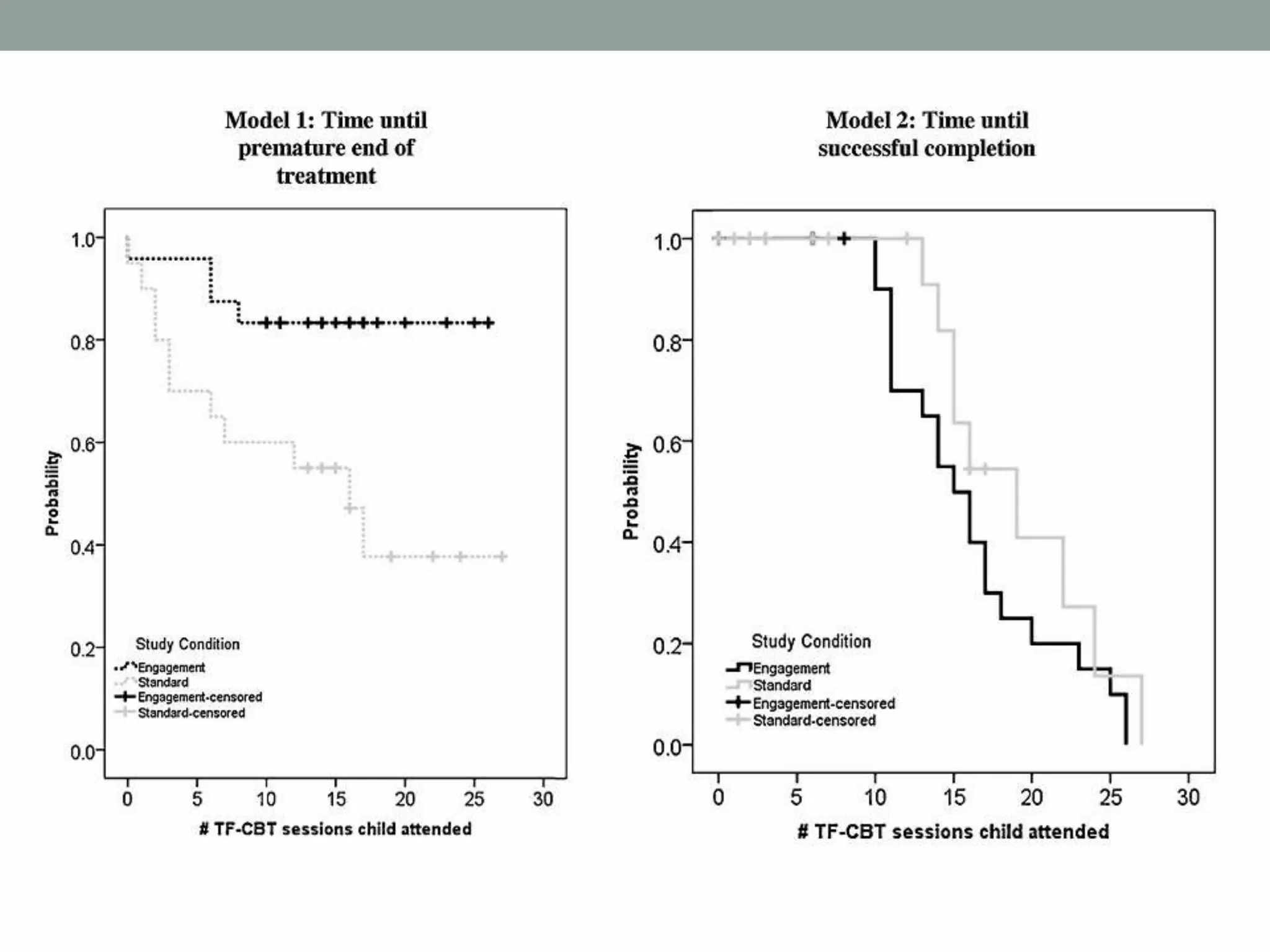
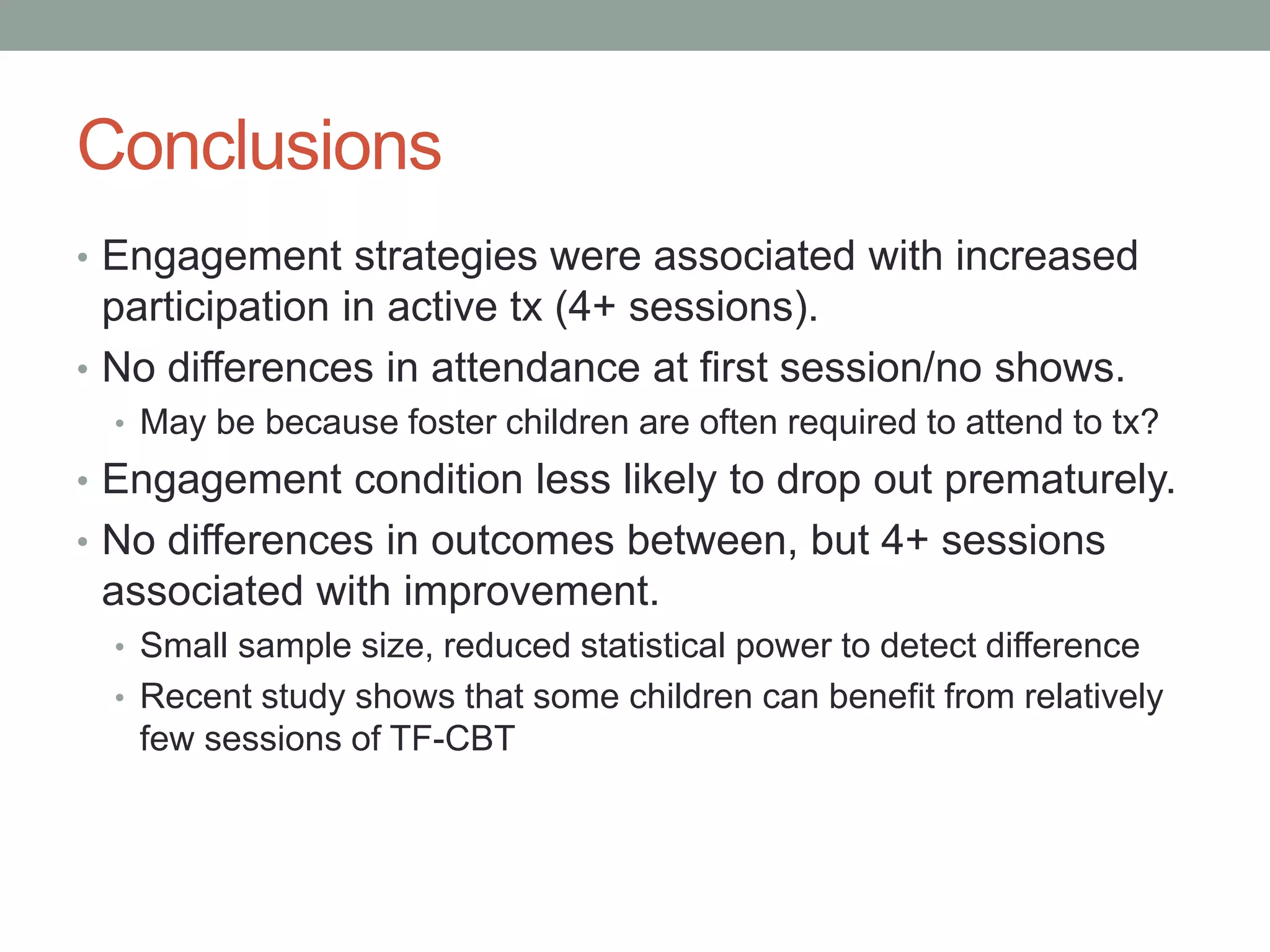
• Engagement strategies were associated with increased
participation in active tx (4+ sessions).
• No differences in attendance at first session/no shows.
• May be because foster children are often required to attend to tx?
• Engagement condition less likely to drop out prematurely.
• No differences in outcomes between, but 4+ sessions
associated with improvement.
• Small sample size, reduced statistical power to detect difference
• Recent study shows that some children can benefit from relatively
few sessions of TF-CBT
Published Papers
• Dorsey, S., Pullmann, M., Berliner, L., Koschmann, E. F.,
McKay, M., & Deblinger, E. (2014). Engaging foster
parents in treatment: A randomized trial of supplementing
Trauma-focused Cognitive Behavioral Therapy with
evidence-based engagement strategies. Child Abuse and
Neglect. Advance online publication. PMCID:
PMC4160402. doi:10.1016/j.chiabu.2014.03.020
•
• Dorsey, S., Conover, K., & Cox, J. R. (2014). Improving
foster parent engagement: Using qualitative methods to
guide tailoring of evidence-based engagement strategies.
Journal of Clinical Child and Adolescent Psychology.
Advance online publication. PMCID: PMC4160431.
doi:10.1080/15374416.2013.876643

A Randomized Trial Comparing TF-CBT and TF-CBT Plus Engagement Strategies for Foster Parents

  • 1.
    A RANDOMIZED TRIALCOMPARING TF-CBTAND TF-CBT PLUS ENGAGEMENT STRATEGIES FOR FOSTER PARENTS Lucy Berliner, Shannon Dorsey, Michael Pullmann University of Washington BAPSCAN Edinburgh, Scotland April 14, 2015
  • 2.
    Study Background • Youthin foster care have high rates of trauma exposure and trauma impact • Entering foster care can increase access to psychosocial services • TF-CBT is an evidence-based treatment for children with trauma- specific distress • Engagement in tx is challenging even when effective treatment is available
  • 3.
    Study Rationale andHypothesis • Engagement challenges for active therapies may be even greater for foster parents • Not traditionally an expectation • Mary McKay’s evidence-based engagement steps work to increase attendance • Elicit client concerns, identify perceptual barriers to mental health tx, actively problem solve concrete barriers, convey hope for positive outcome. Hypothesis: Addition of engagement strategies will increase foster parent involvement in an active therapy
  • 4.
    Procedure • Permission, consent/assentobtained from all parties (state, bio parent, foster parents, therapists, youth) • Randomized to engagement/standard delivery (pre-tx phone call; first in-person session) • All children received TF-CBT • Fidelity to TF-CBT, engagement checked by audio recording
  • 5.
    Table 1 Study sample:demographics and baseline characteristics Youth Engagement n = 25 Standard n = 22 Age, M (SD) 9.52 (2.5) 9.64 (3.2) Female, n (%) 15 (60%) 11 (50%) Multiracial, n (%) 18 (72%) 7 (31.8%) Caucasian, n (%) 3 (12%) 8 (36.4%) African American, n (%) 3 (12%) 6 (27.3%) Native American, n (%) 1 (4%) 0 (0%) Asian, n (%) 0 (0%) 1 (4.5%) Traditional foster care, n (%) 18 (72%) 11 (50%) Kinship care, n (%) 6 (24%) 10 (45.5%) Suitable adult/fictive kin, n (%) 1 (4%) 1 (4.5%) Baseline caregiver age, M (SD) 45.3 (9.9) 47.5 (12.4) Female, n (%) 22 (88%) 19 (86.4%) Multiracial, n (%) 5 (20%) 1 (4.5%) Caucasian, n (%) 16 (64%) 13 (59.1%) African American, n (%) 3 (12%) 8 (36.4%) Hispanic/Latino/a, n (%) 1 (4%) 0 (0%)
  • 6.
    Table 1 (continued) Incidenceof trauma type Foster parent endorsed… Engagement n = 25 Standard n = 22 Cumulative number of trauma exposure experienced, M (SD) 2.6 (.9) 3.2 (1.6) Accident/natural disaster 0 (0%) 4 (18.2%) Physical abuse 13 (52%) 14 (63.6%) Witnessing domestic violence 22 (88%) 17 (77.3%) Witnessing or experiencing community violence 5 (20%) 7 (31.8%) Sexual abuse 2 (8%) 8 (36.4%) Violent death/injury 10 (40%) 6 (27.3%) Painful/scary medical treatment 6 (24%) 1 (4.5%) Other 8 (32%) 13 (59.1%)
  • 7.
    Table 2 Treatment engagementand retention outcomes. Treatment condition Engagement (n = 25) % (n) Standard (n = 22) % (n) Showed to first scheduled intake 80.0 (20) 77.3 (17) Attended one or more sessions 96.0 (24) 95.5 (21) Attended four or more sessions 96.0 (24)* 72.7 (16)* Treatment completed, or attended 11 or more sessions1 80 (20) 54.5 (12) Treatment cancelations between intake and first month 29.2 (7) 52.4 (11) Treatment status, end of study Completed 80.0 (20) 40.9 (9) Drop out 0 (0) 27.3 (6) Placement disruption related 12.0 (3) 4.5 (1) Declined to participate in treatment 4.0 (1) 4.5 (1) Still in treatment 4.0 (1) 9.1 (2) Other treatment recommended 0 (0) 13.6 (3) Mean (SD) Mean (SD) Total number of sessions attended1,2 15.0 (6.0) 12.3 (8.0) 1 Excludes participants still active in TF-CBT at the end of the study (n = 3). 2 Excludes participants who did not attend at least one session (n = 4).
  • 8.
    0% 10% 20% 30% 40% <=3 4-10 11-1516-20 21-25 26-30 Number of sessions attended Session Attendance by Study Condition Engagement Standard
  • 10.
    0 20 40 60 80 100 Baseline End oftreatment 3-month post treatment Meanscore Exploratory Analysis: Clinical outcomes for the combined sample1 PTSD (parent) PTSD (child) Externalizing Behav. Depression Child Strengths Analysis: Two-level HLMs ran for all foster parents (n=37) and children (n=29) with at least one follow-up, with time nested by client. Slope p values: PTSD (parent), p = <0.001; PTSD (child), p = <0.001; CBLC (externalizing), p = 0.020; CDI Total, p = 0.010; BERS, p = <0.001. 1Includes participants with a valid score at baseline and at least one follow-up point
  • 11.
    Conclusions • Engagement strategieswere associated with increased participation in active tx (4+ sessions). • No differences in attendance at first session/no shows. • May be because foster children are often required to attend to tx? • Engagement condition less likely to drop out prematurely. • No differences in outcomes between, but 4+ sessions associated with improvement. • Small sample size, reduced statistical power to detect difference • Recent study shows that some children can benefit from relatively few sessions of TF-CBT
  • 12.
    Published Papers • Dorsey,S., Pullmann, M., Berliner, L., Koschmann, E. F., McKay, M., & Deblinger, E. (2014). Engaging foster parents in treatment: A randomized trial of supplementing Trauma-focused Cognitive Behavioral Therapy with evidence-based engagement strategies. Child Abuse and Neglect. Advance online publication. PMCID: PMC4160402. doi:10.1016/j.chiabu.2014.03.020 • • Dorsey, S., Conover, K., & Cox, J. R. (2014). Improving foster parent engagement: Using qualitative methods to guide tailoring of evidence-based engagement strategies. Journal of Clinical Child and Adolescent Psychology. Advance online publication. PMCID: PMC4160431. doi:10.1080/15374416.2013.876643

Editor's Notes

  • #6 Table 1.
  • #7 Table 1 (continued).
  • #8 Table 2. small sample size but difference in the predicted direction
  • #9 Figure 2.
  • #10 Figure 3.
  • #11 Table 3. Measures PTSD (parent and child): UCLA Posttraumatic Stress Disorder-Reaction Index (UCLA PSTD-RI) Externalizing behaviors: Child Behavior Checklist School-aged version (CBCL) Depression: Children’s Depression Inventory (CDI) Child strengths: Behavioral and Emotional Rating Scale (BERS)