Welcome to IST
      Early Childhood Classes


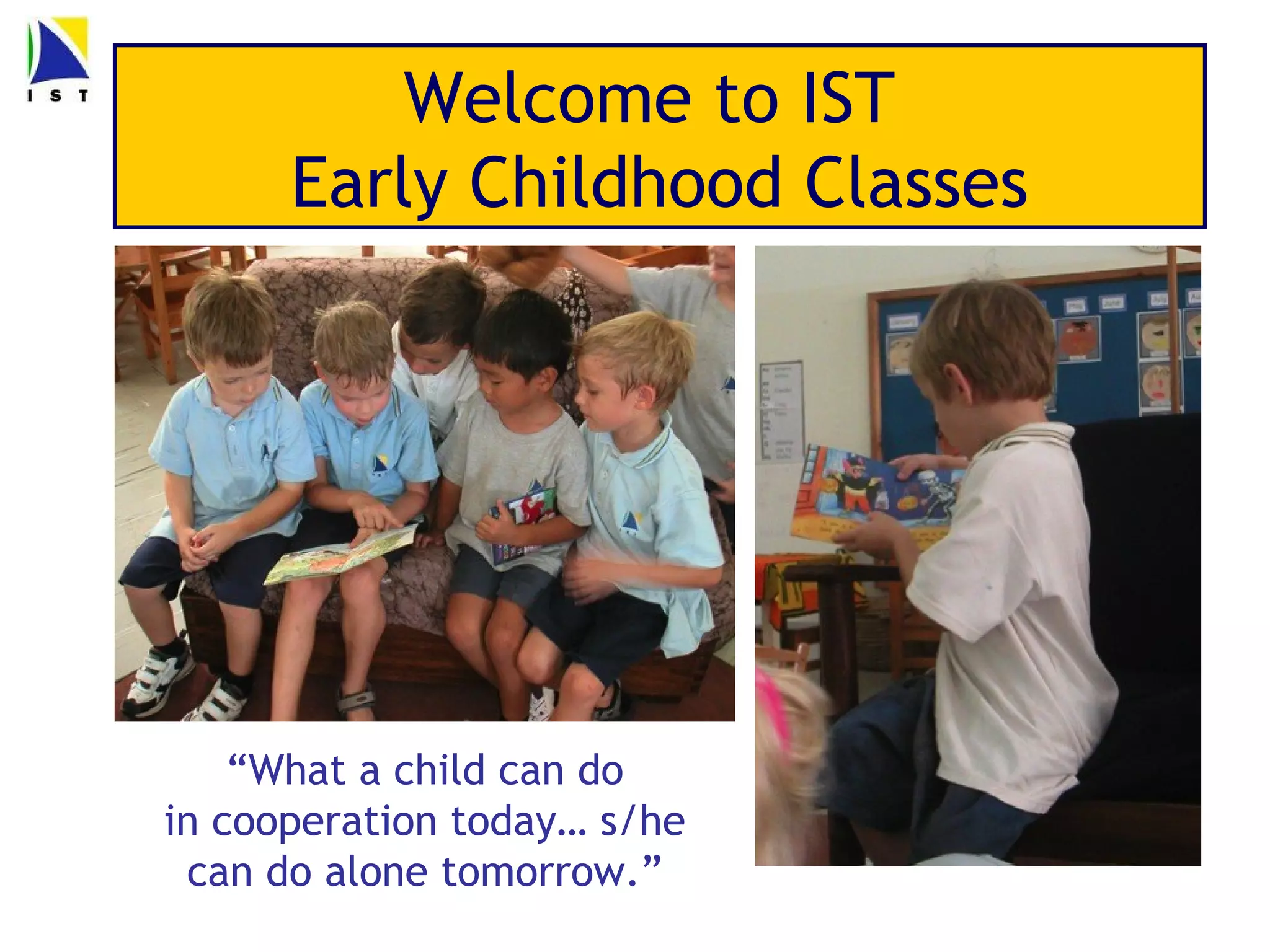
    “What a child can do
in cooperation today… s/he
 can do alone tomorrow.”
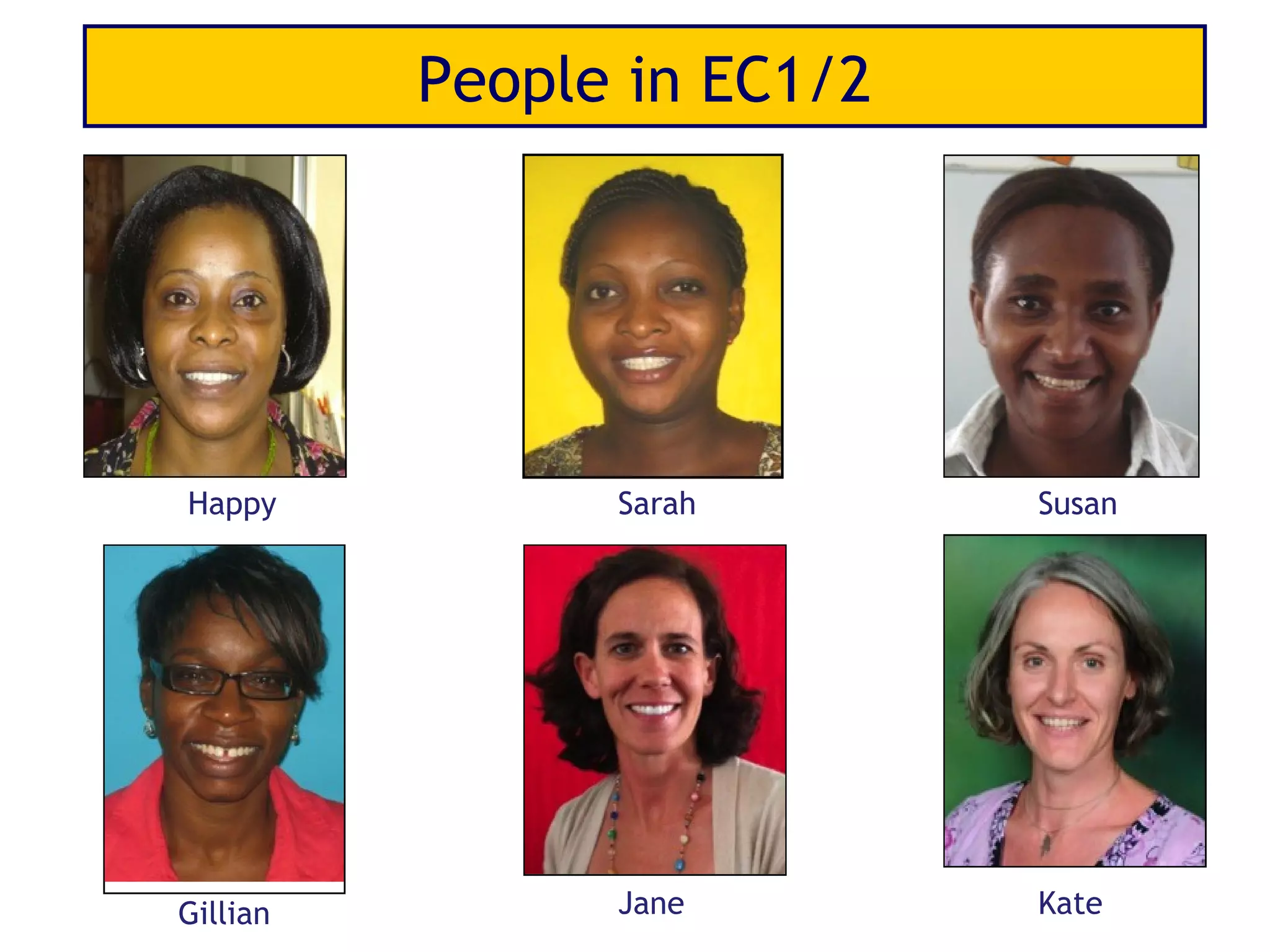
People in EC1/2


Happy           Sarah       Susan


Gillian         Jane        Kate
Our Philosophy
   Independence
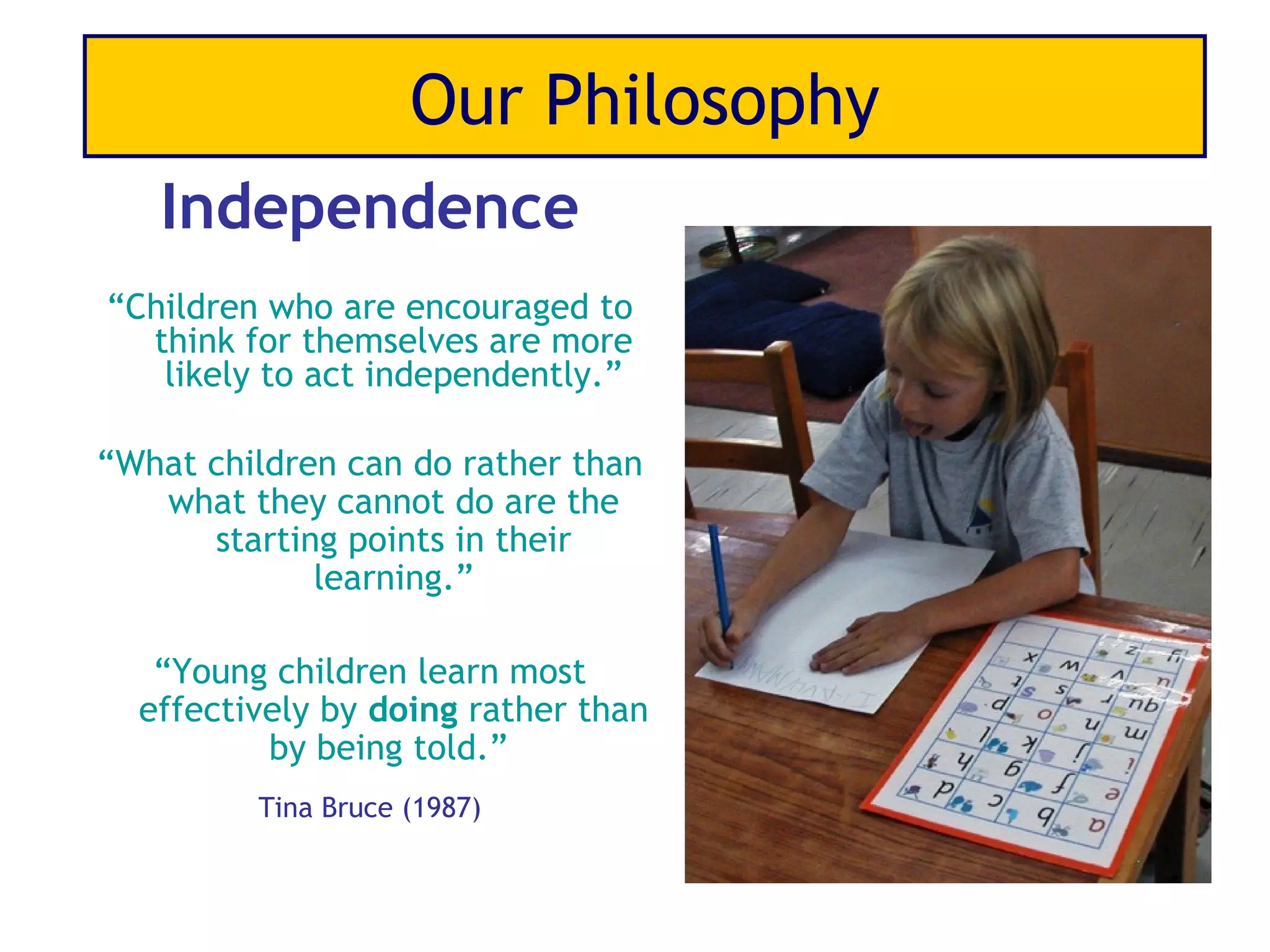
“Children who are encouraged to
  think for themselves are more
   likely to act independently.”

“What children can do rather than
   what they cannot do are the
      starting points in their
             learning.”

   “Young children learn most
  effectively by doing rather than
          by being told.”
         Tina Bruce (1987)
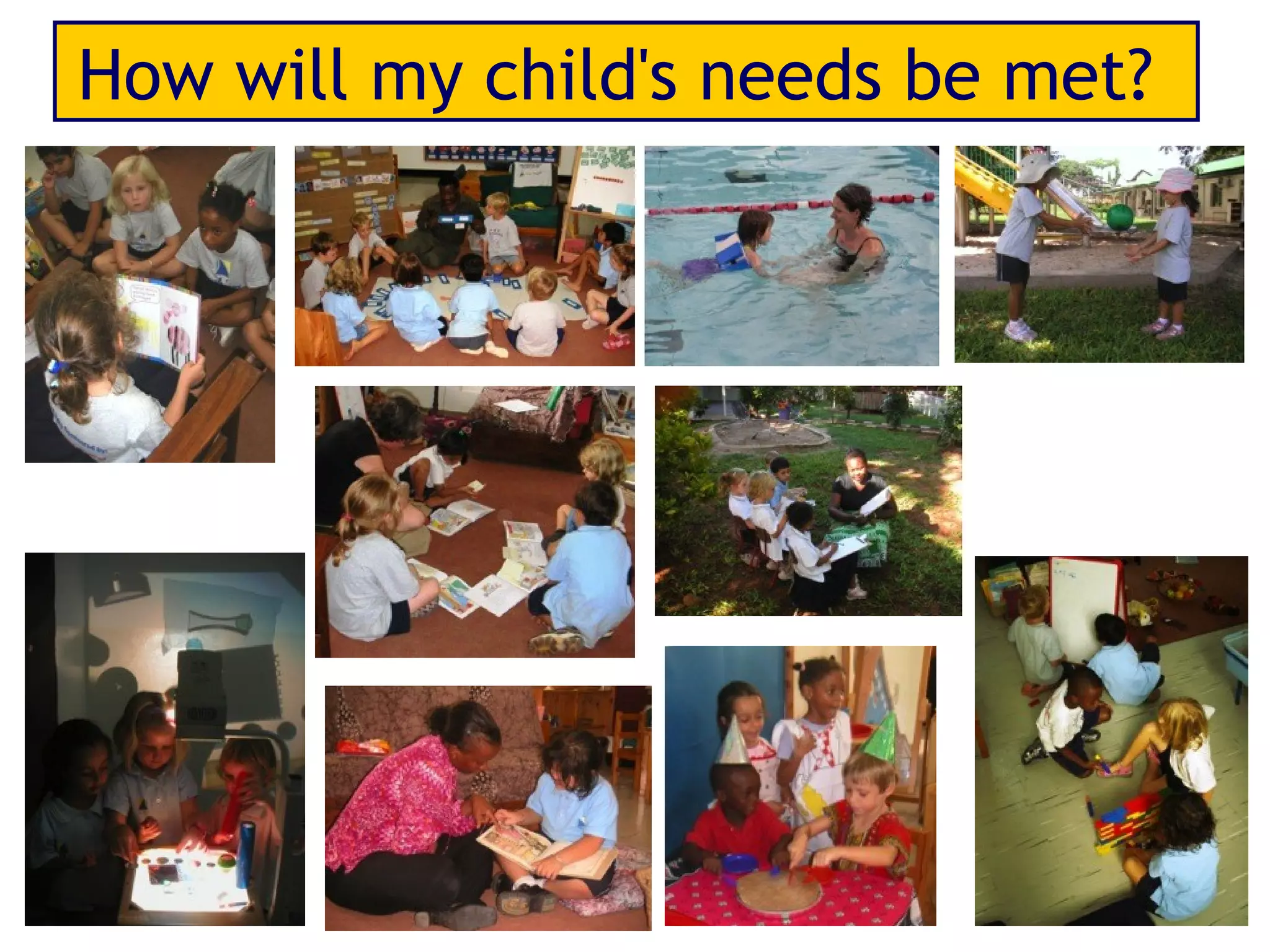
How will my child's needs be met?
Language

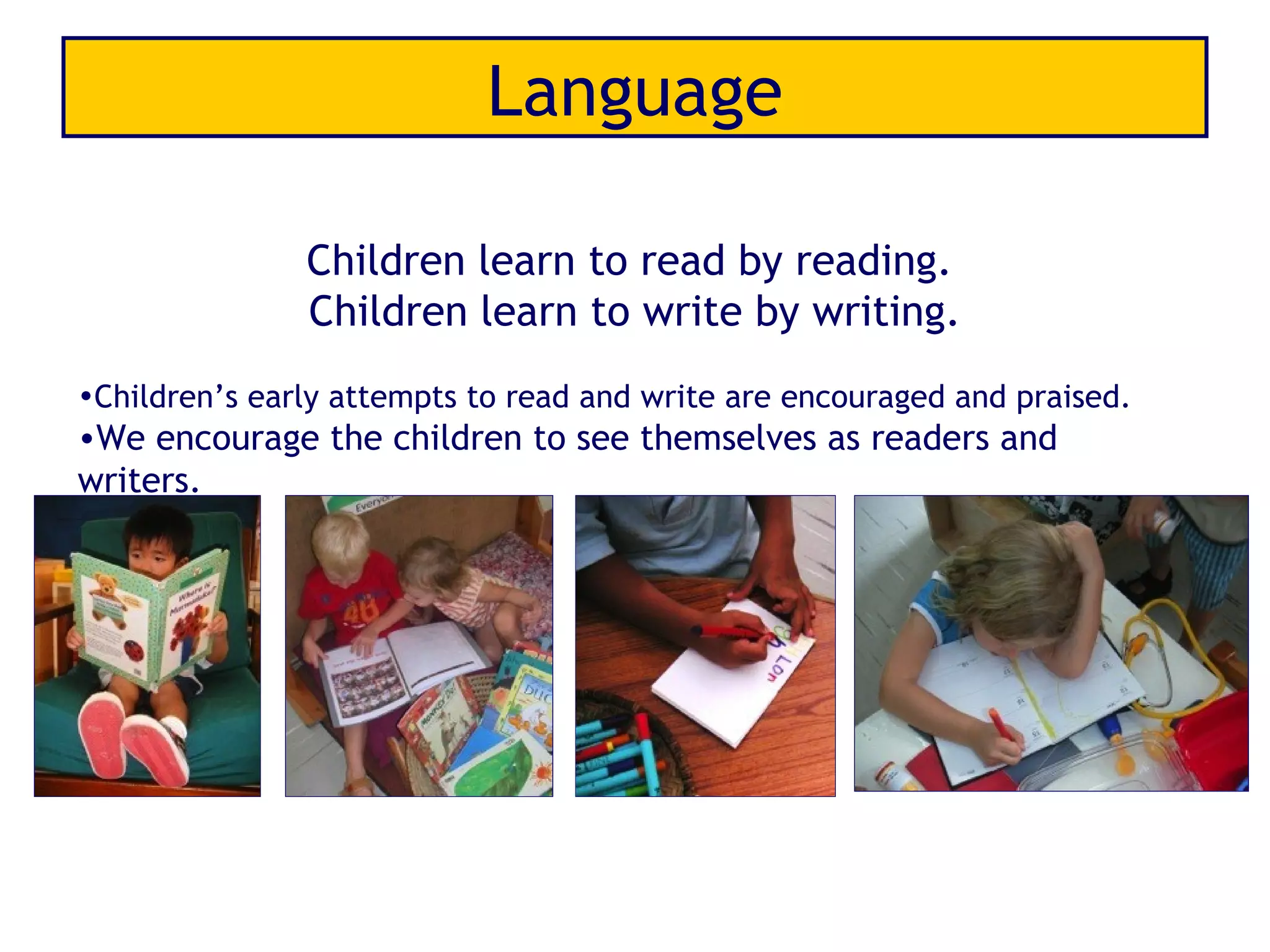
               Children learn to read by reading.
               Children learn to write by writing.
•Children’s early attempts to read and write are encouraged and praised.
•We encourage the children to see themselves as readers and
writers.
Language
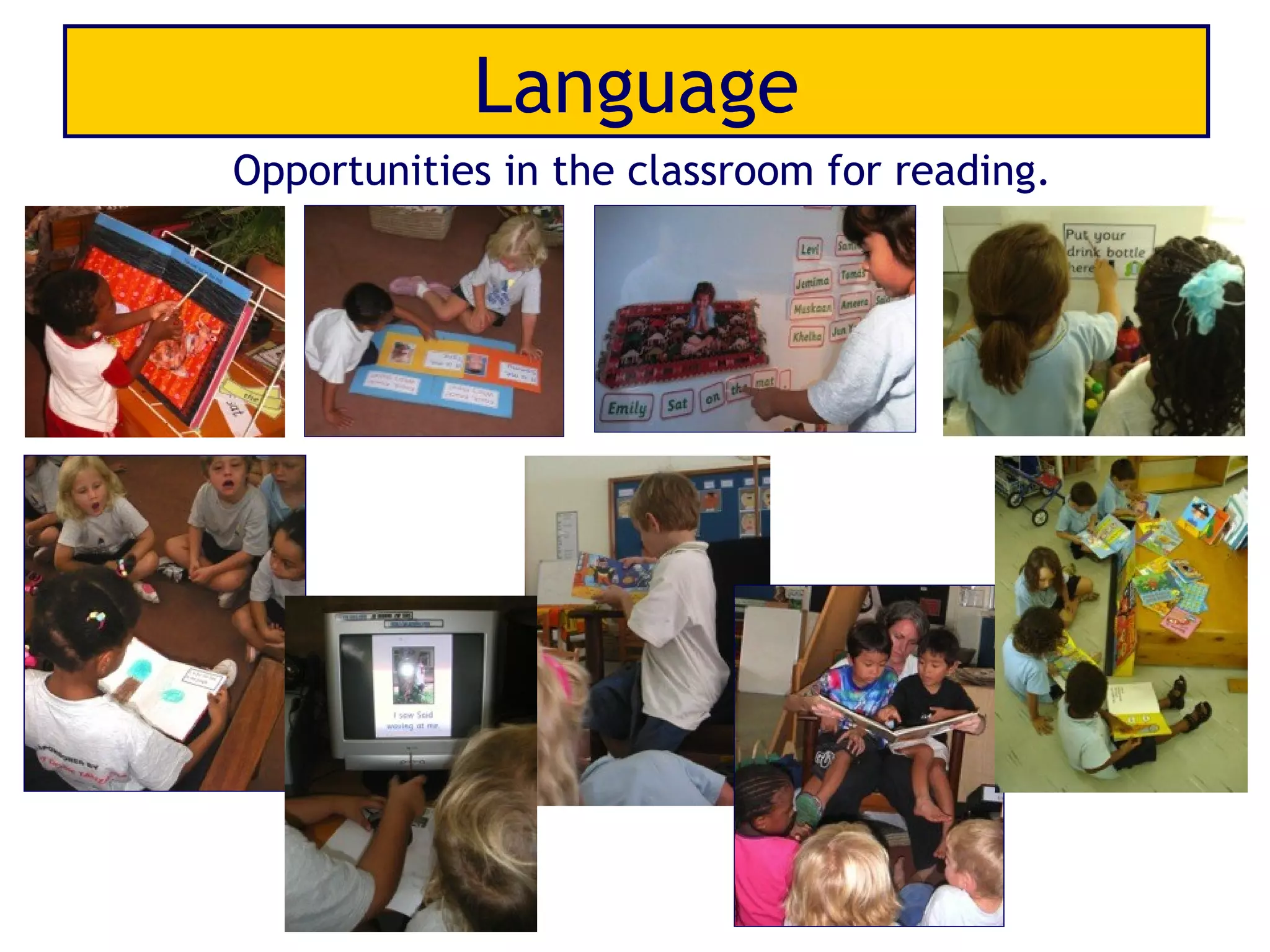
Opportunities in the classroom for reading.
Language


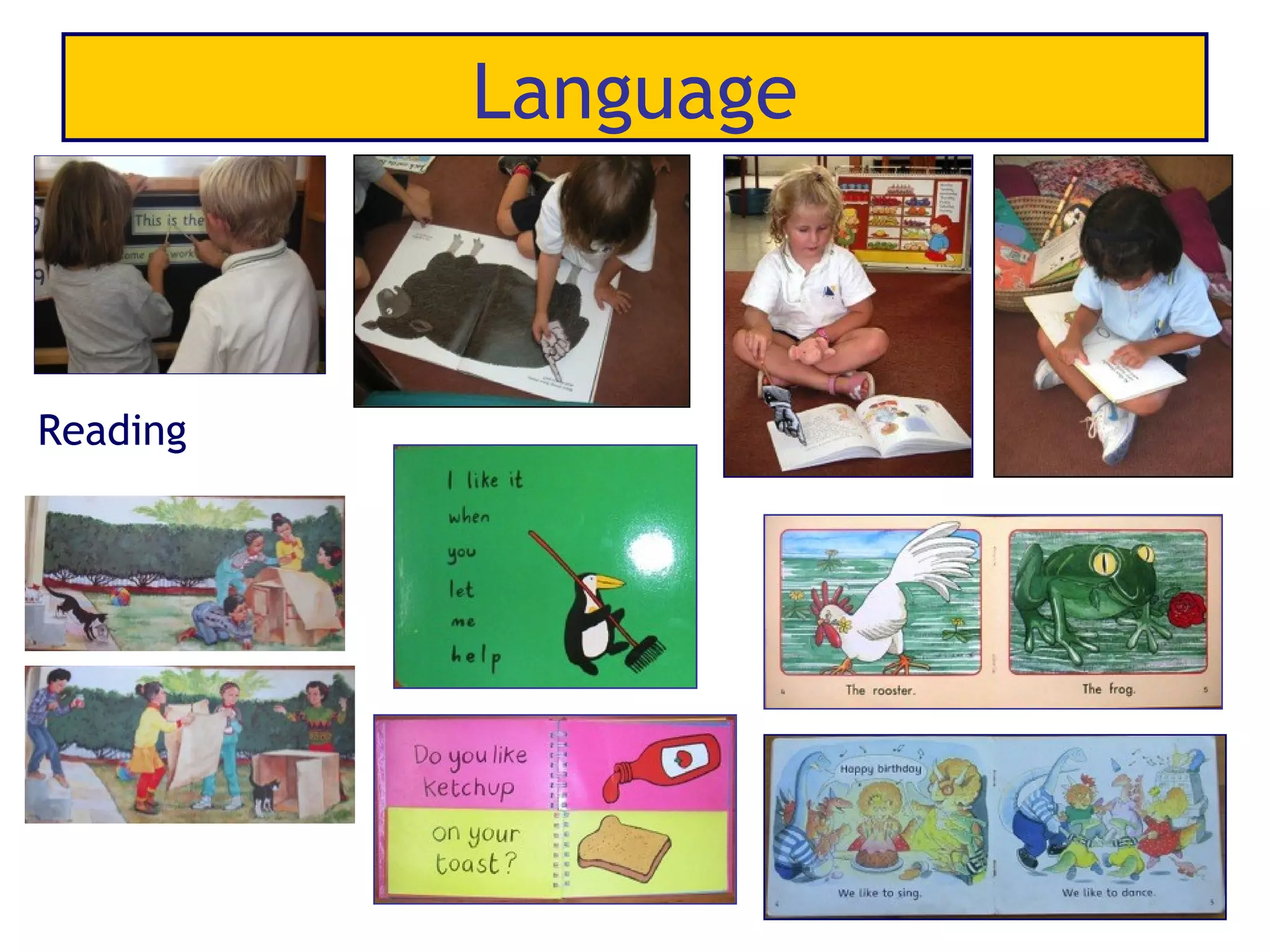
Reading
Language
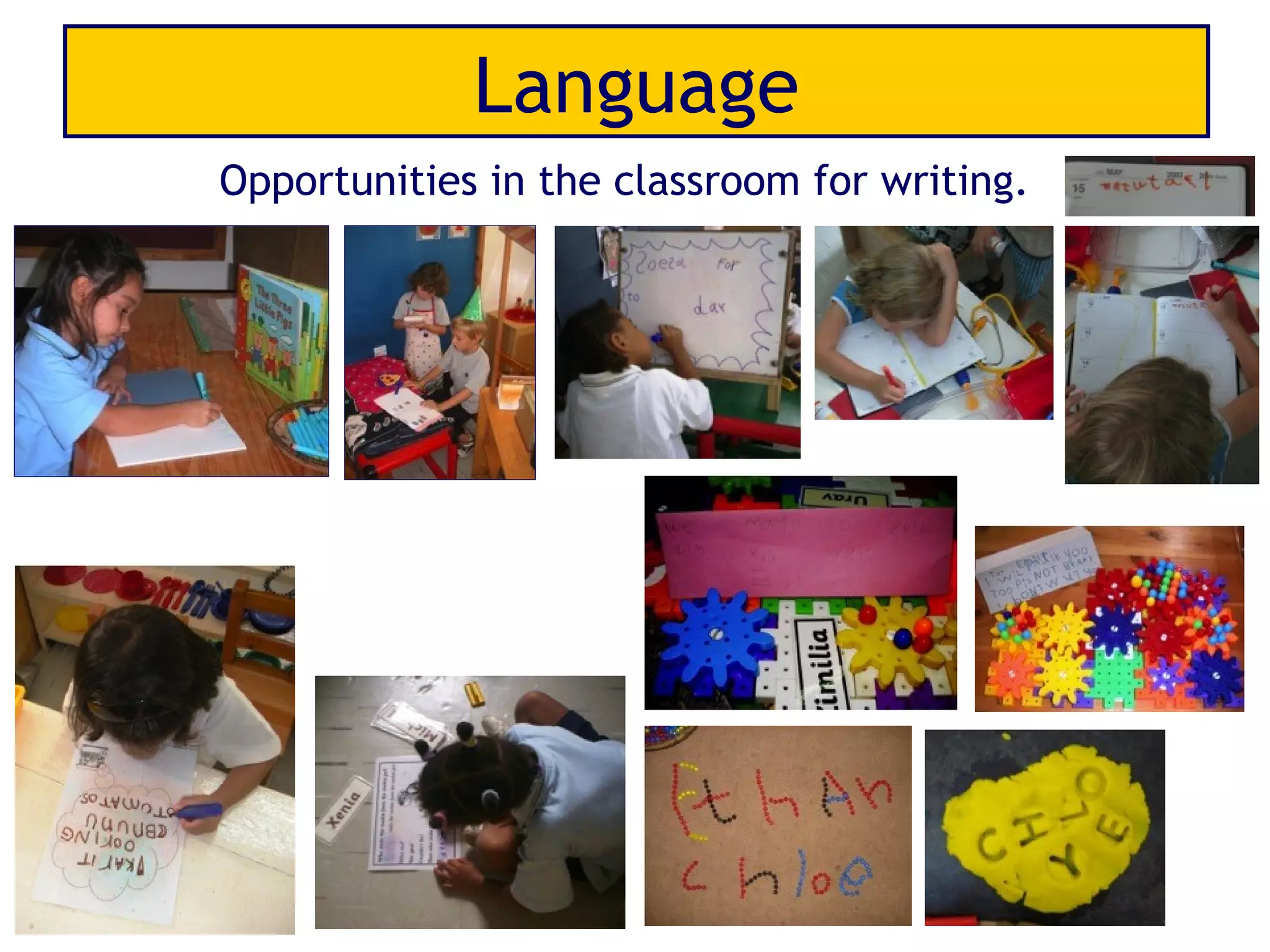
Opportunities in the classroom for writing.
Language
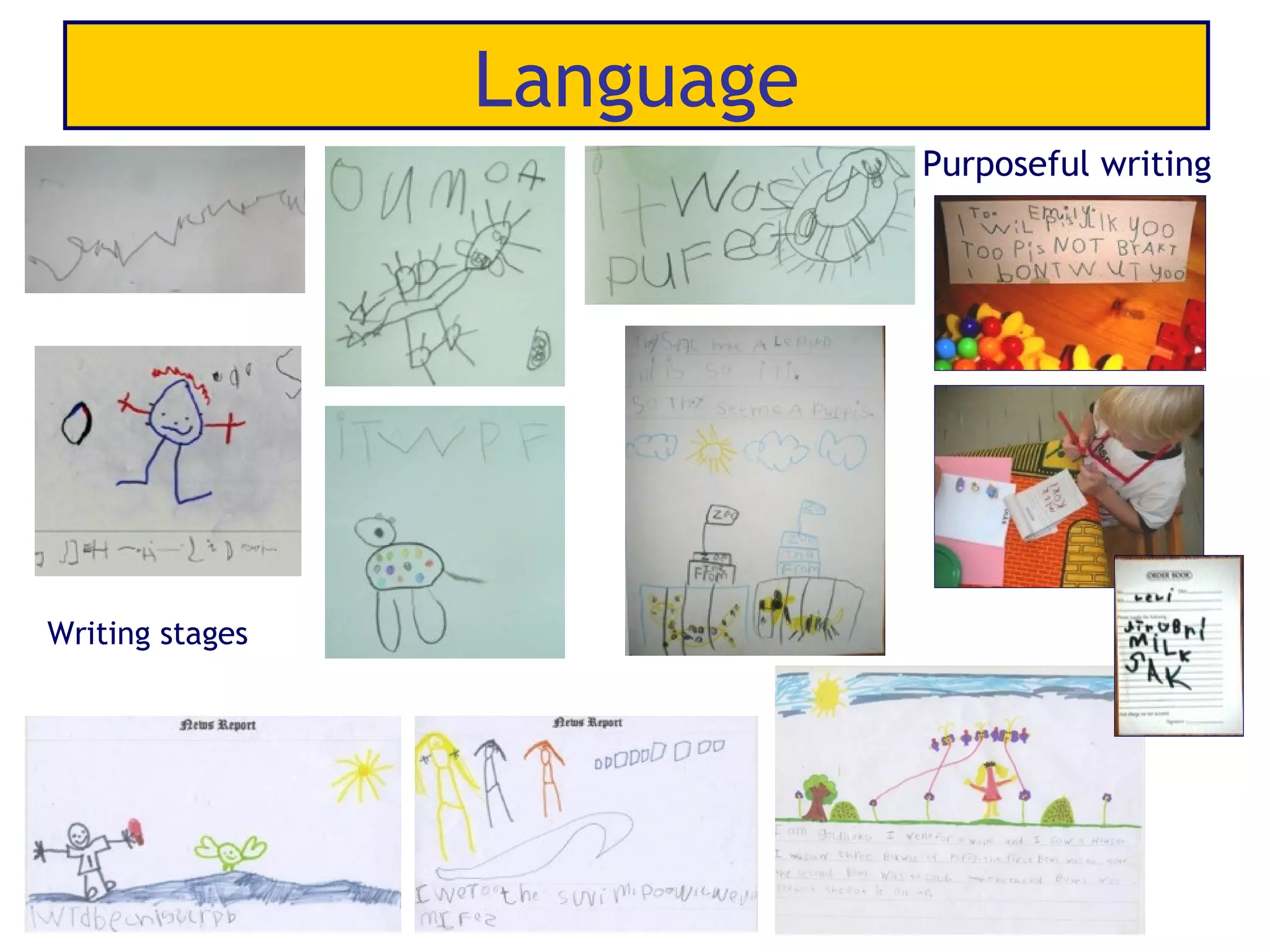
                            Purposeful writing


Writing stages
Language
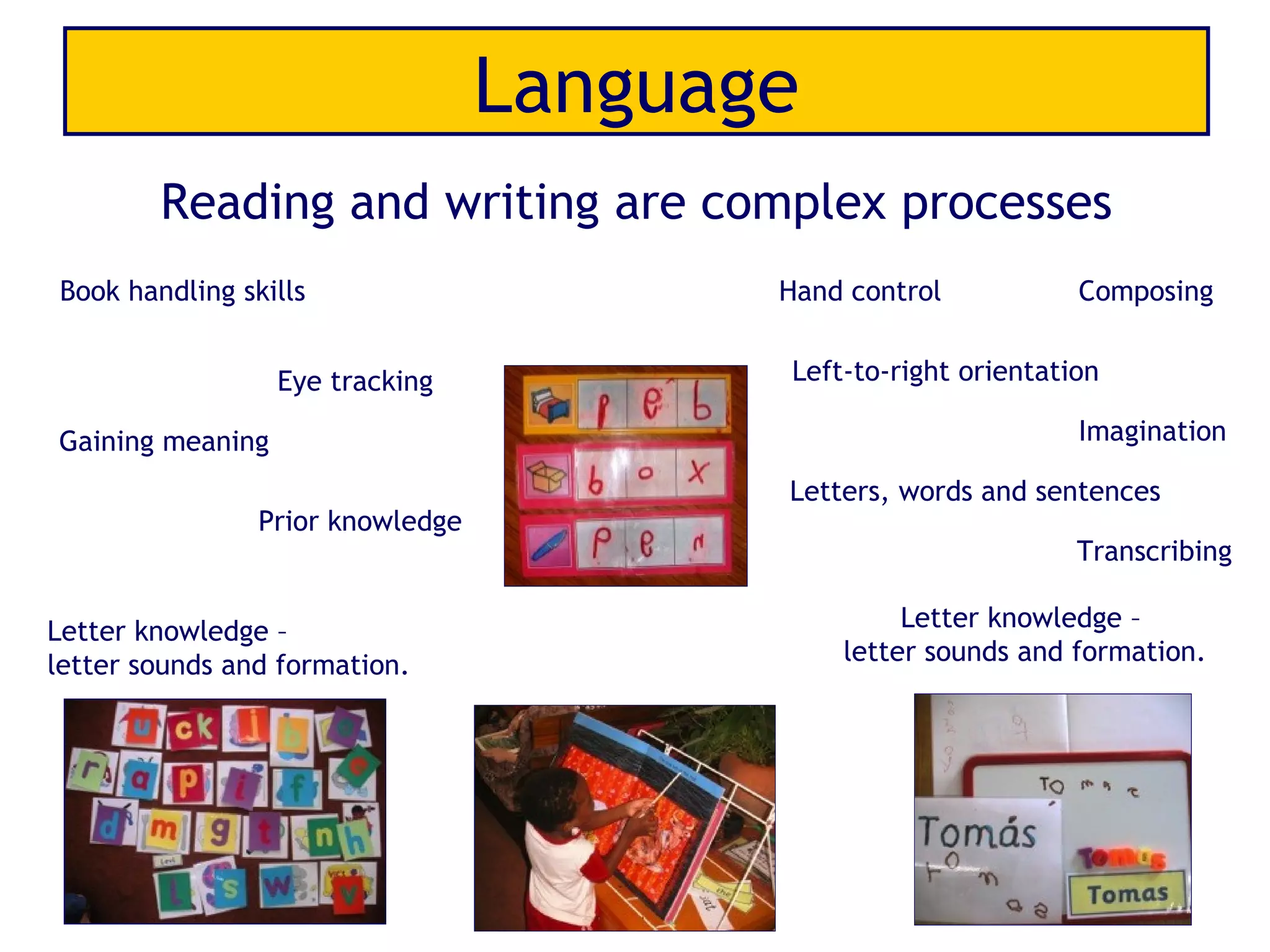
        Reading and writing are complex processes
Book handling skills                     Hand control           Composing


                  Eye tracking           Left-to-right orientation

Gaining meaning                                                 Imagination

                                         Letters, words and sentences
                Prior knowledge
                                                                Transcribing

Letter knowledge –                                Letter knowledge –
letter sounds and formation.                 letter sounds and formation.
Mathematics
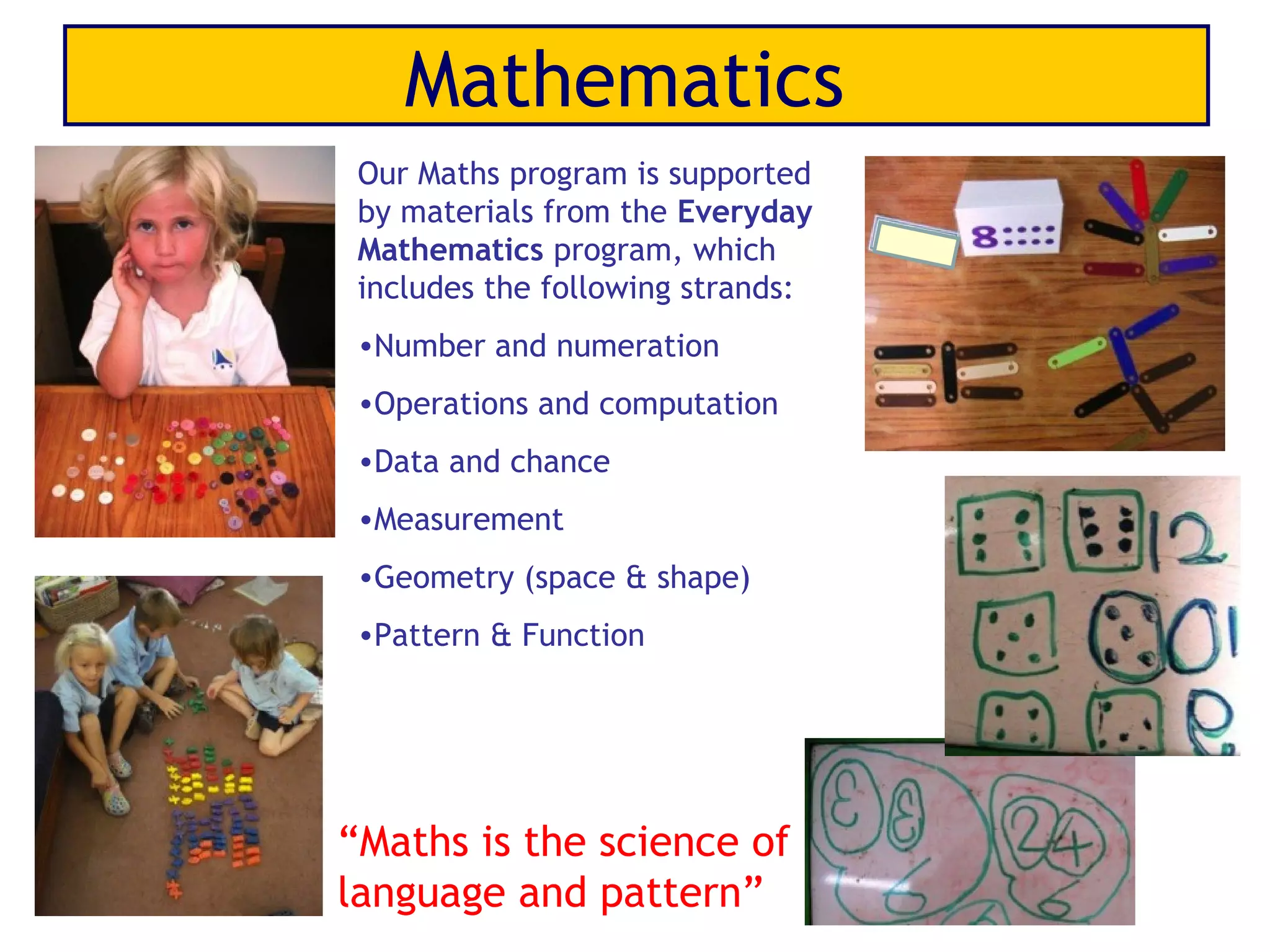
 Our Maths program is supported
 by materials from the Everyday
 Mathematics program, which
 includes the following strands:
 •Number and numeration
 •Operations and computation
 •Data and chance
 •Measurement
 •Geometry (space & shape)
 •Pattern & Function


“Maths is the science of
language and pattern”
Mathematics
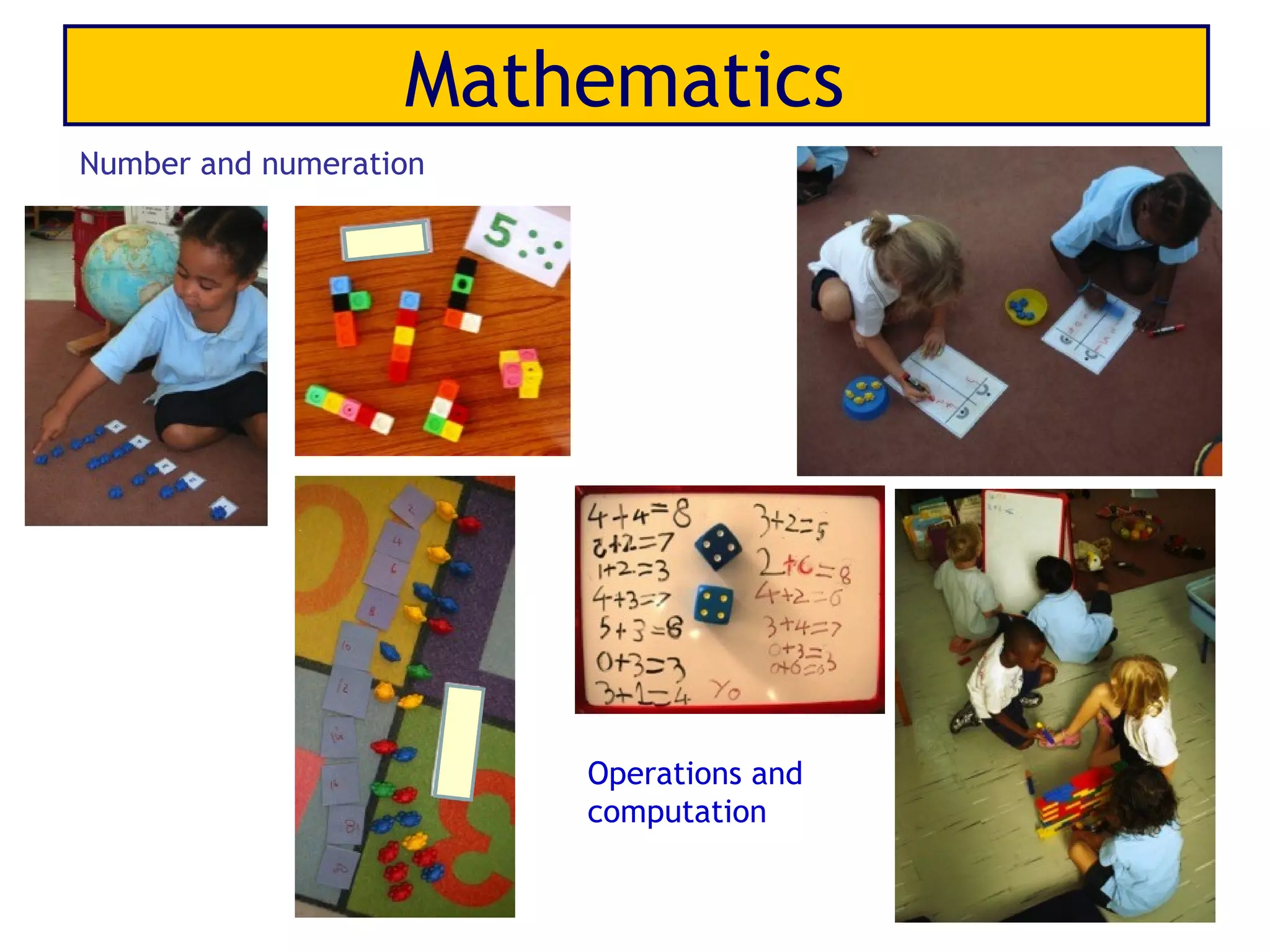
Number and numeration


                        Operations and
                        computation
Mathematics


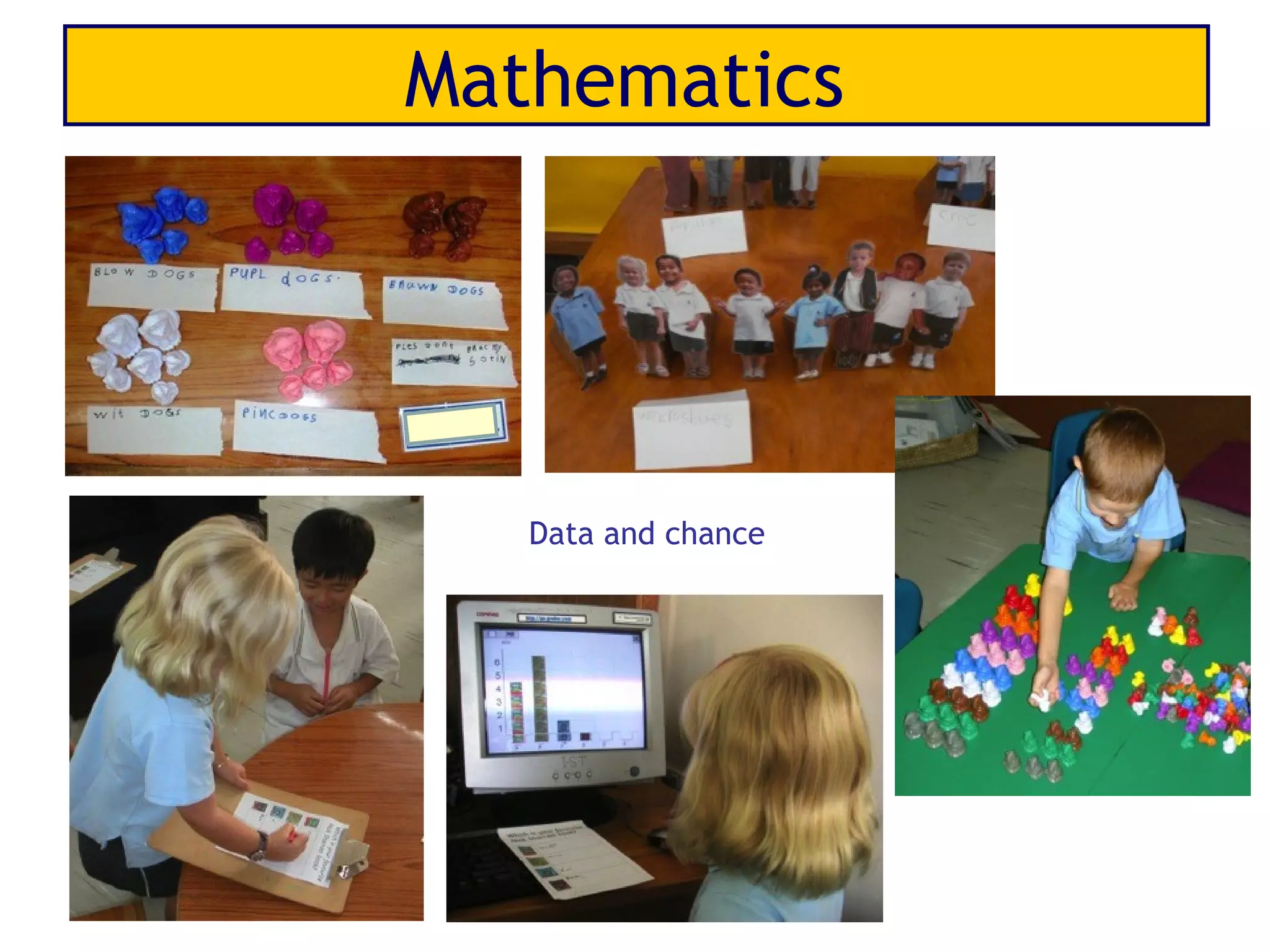
   Data and chance
Mathematics
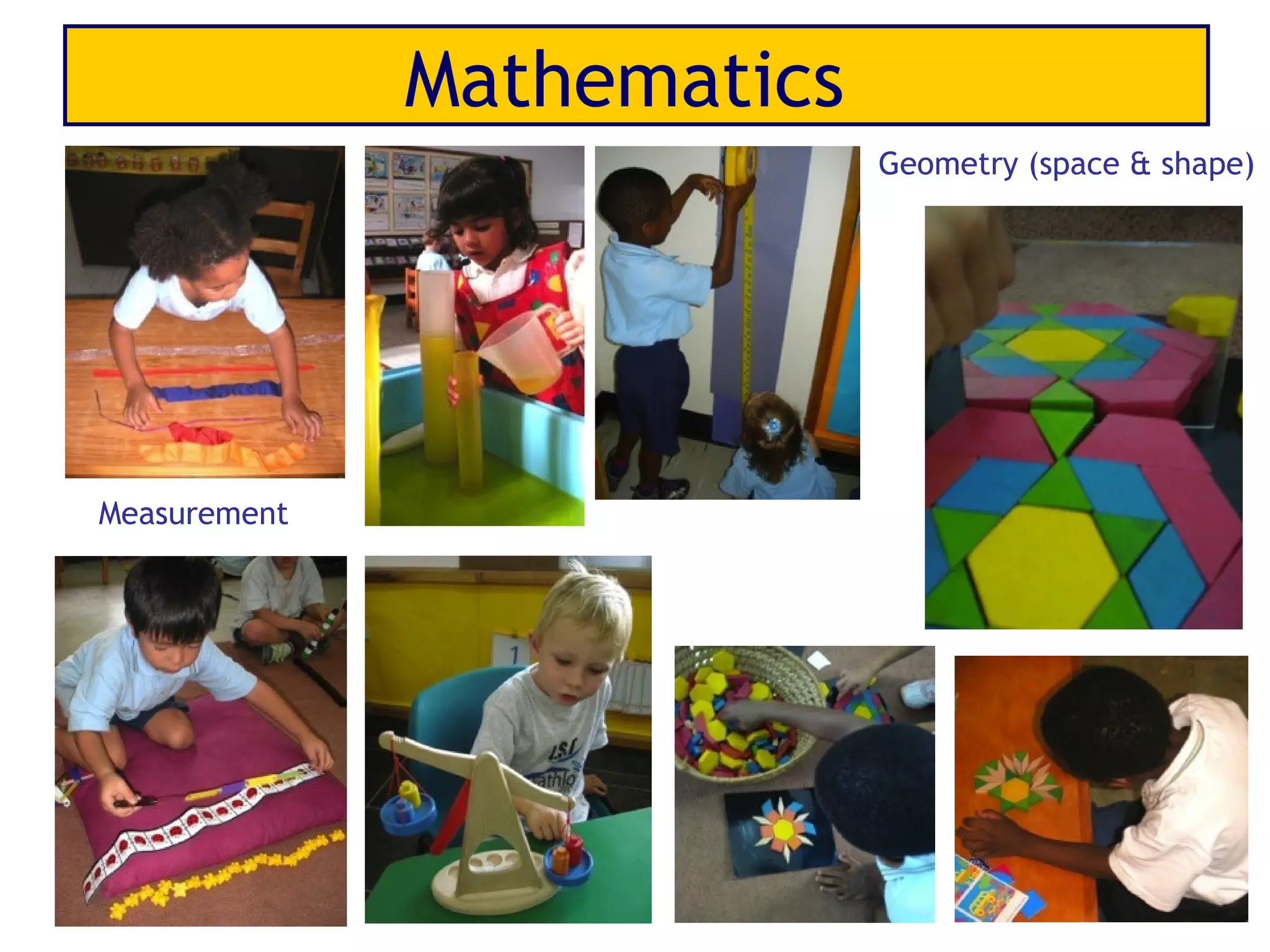
                            Geometry (space & shape)


Measurement
Mathematics


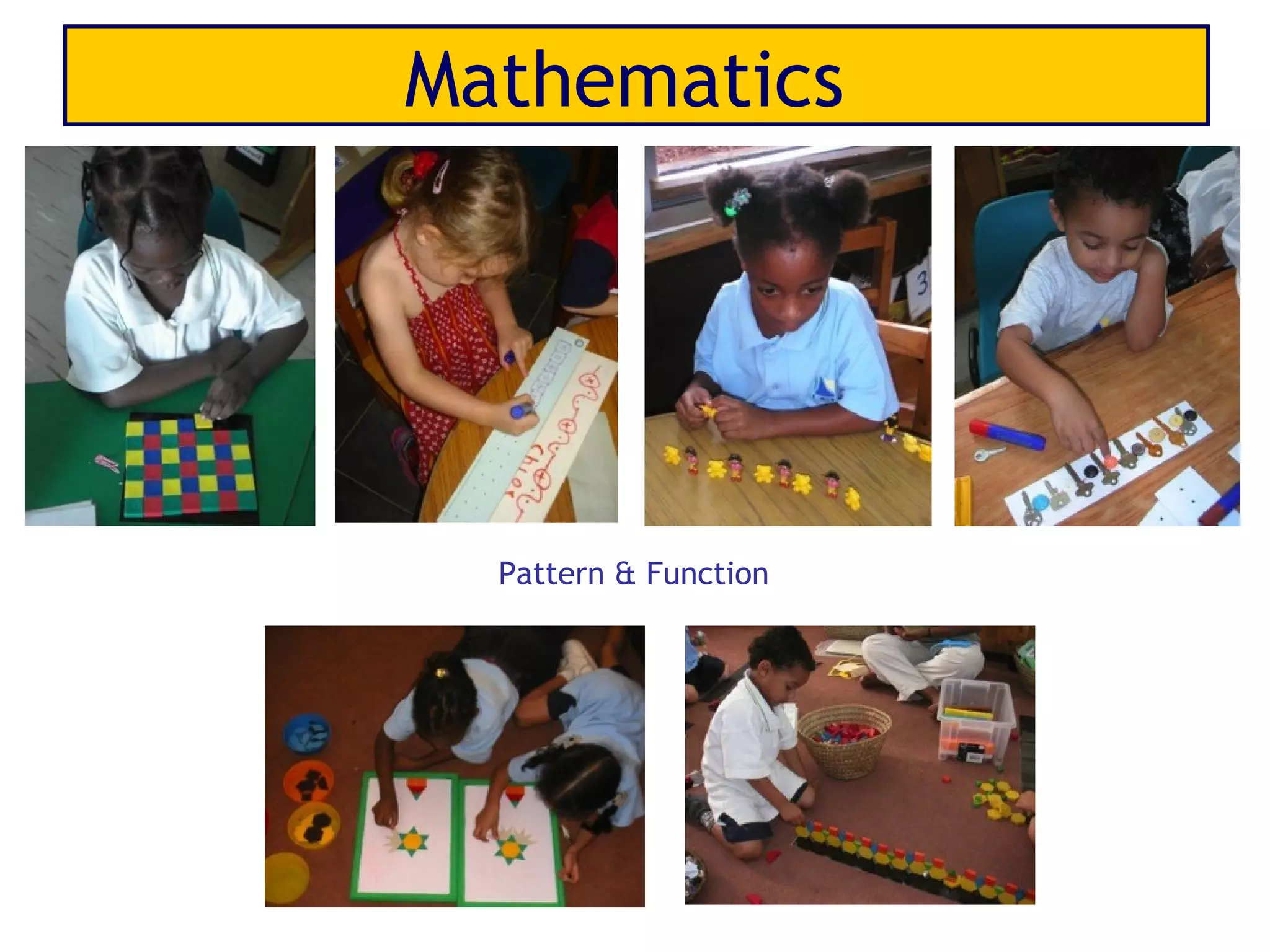
  Pattern & Function
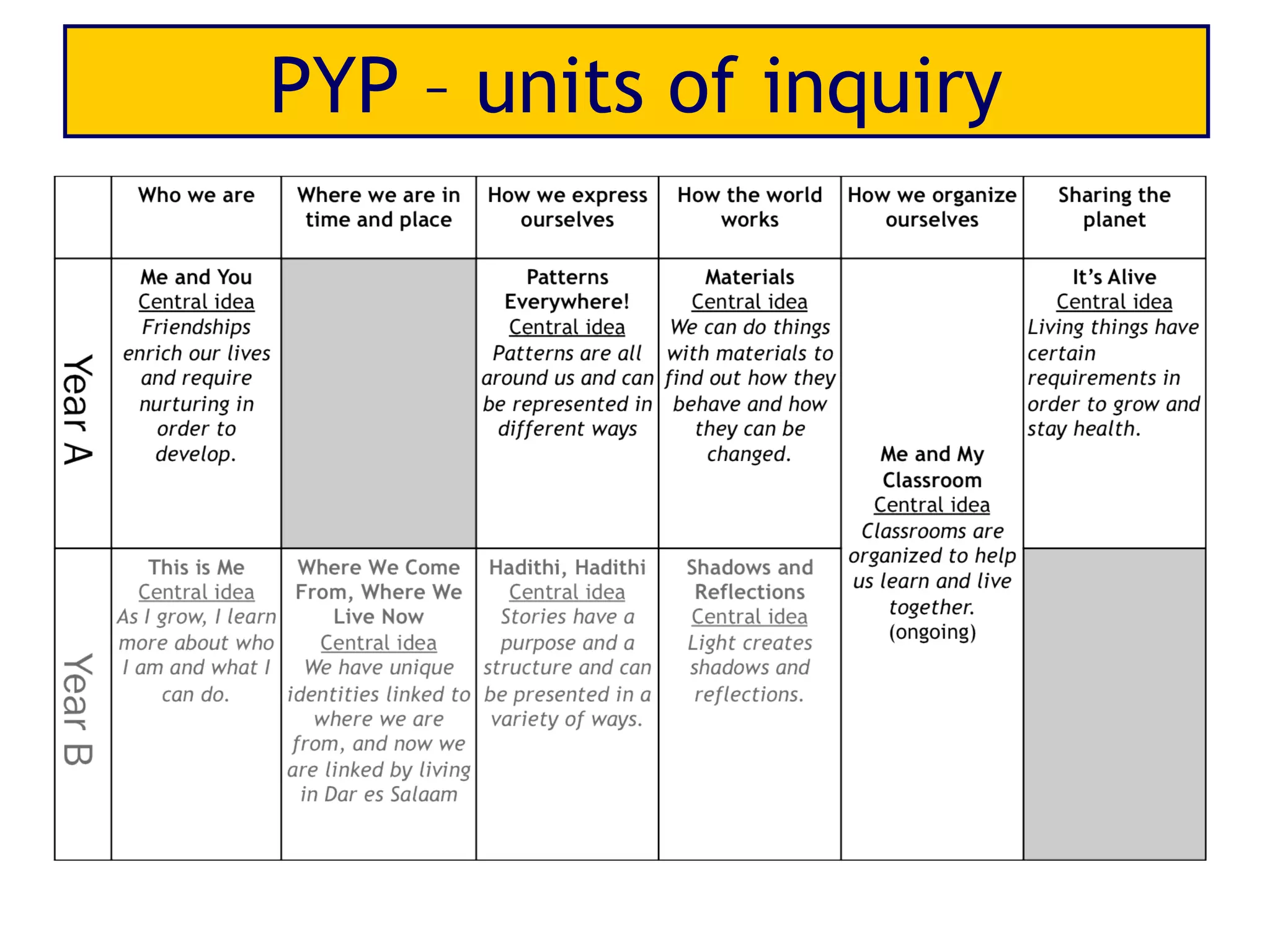
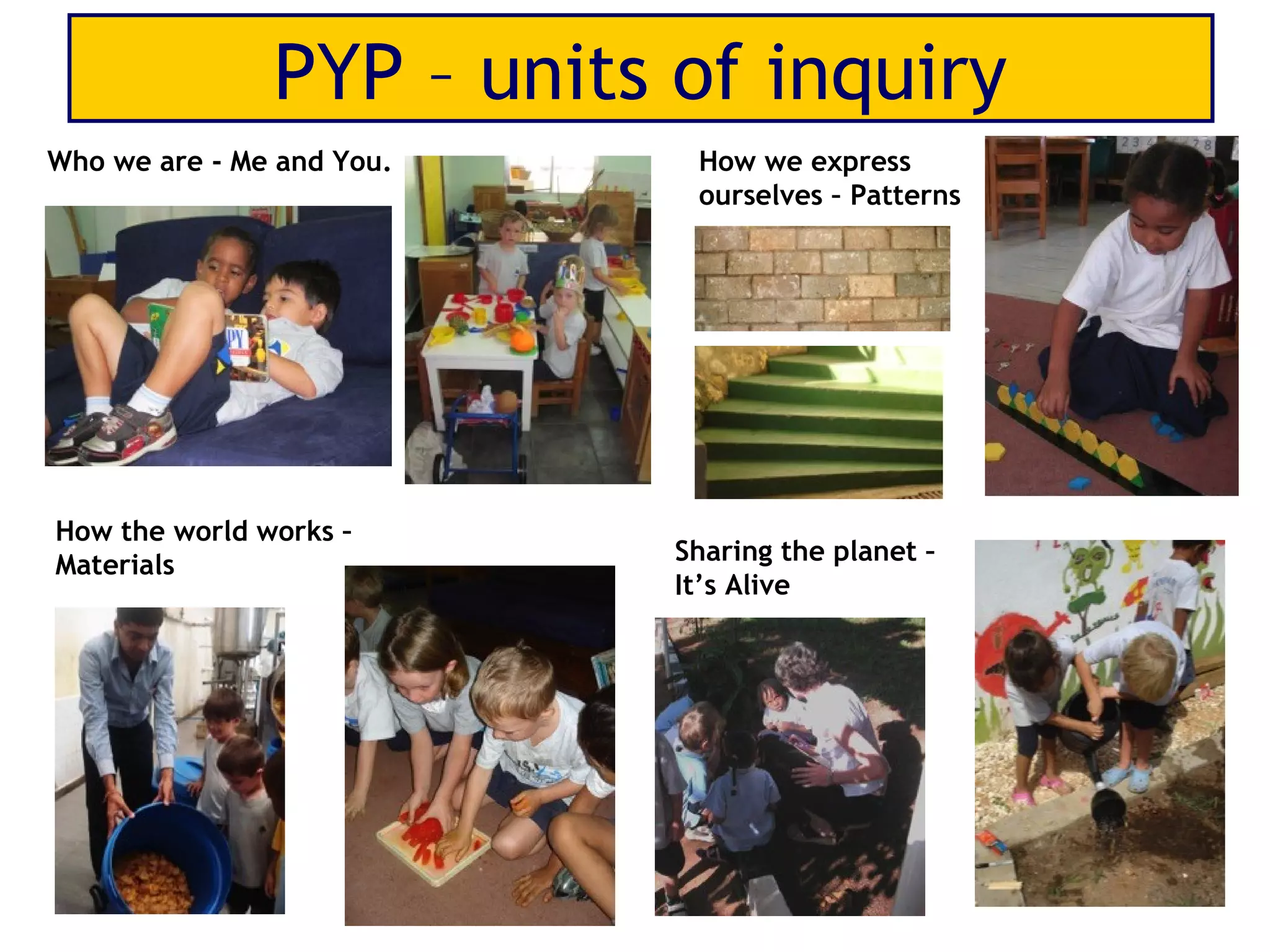
PYP – units of inquiry
Who we are - Me and You.    How we express
                            ourselves – Patterns


How the world works –
Materials                  Sharing the planet –
                           It’s Alive
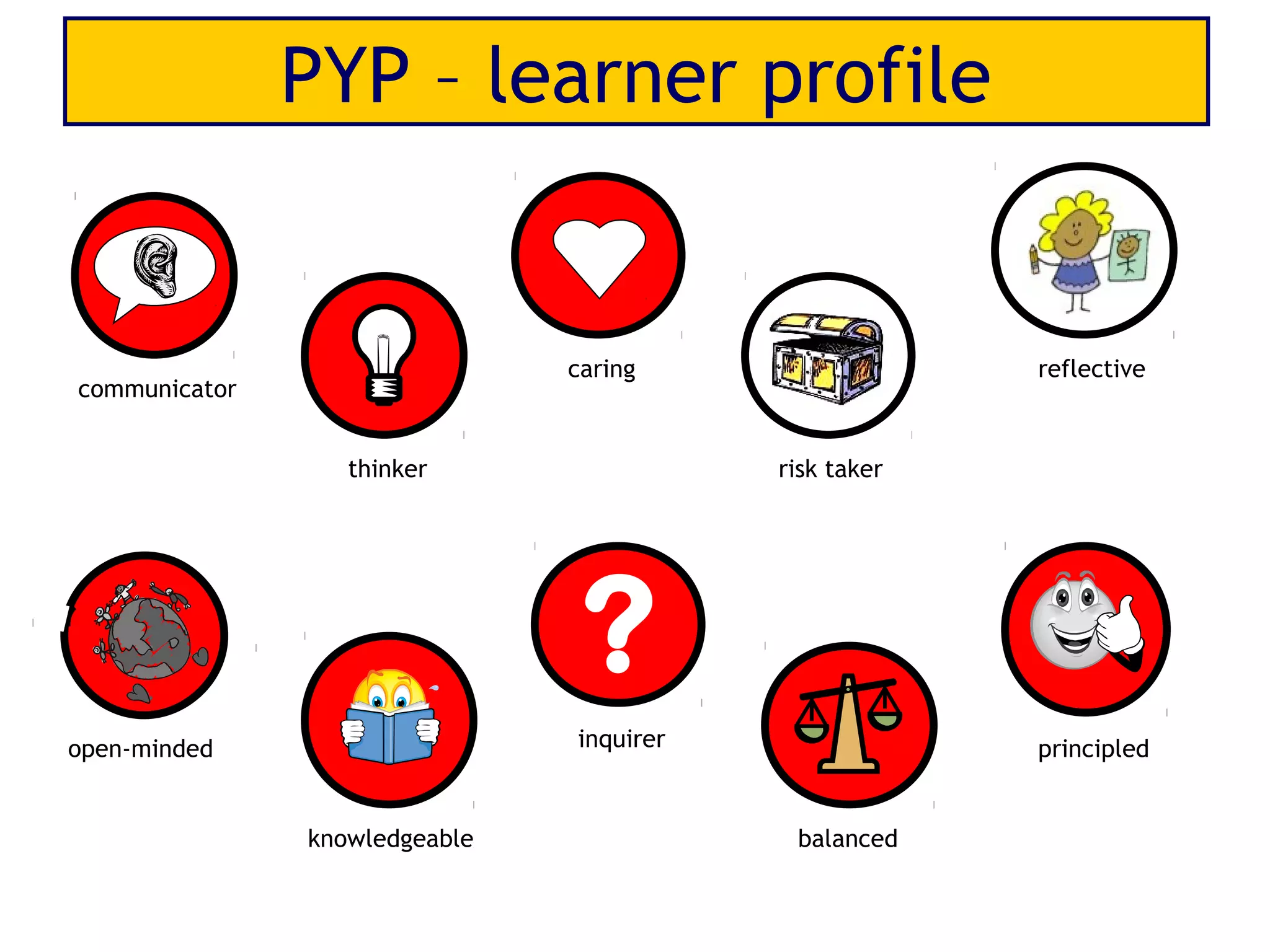
PYP – learner profile


                               caring                  reflective
communicator


                  thinker                 risk taker


                                ?
open-minded                    inquirer                principled


  ?            knowledgeable               balanced
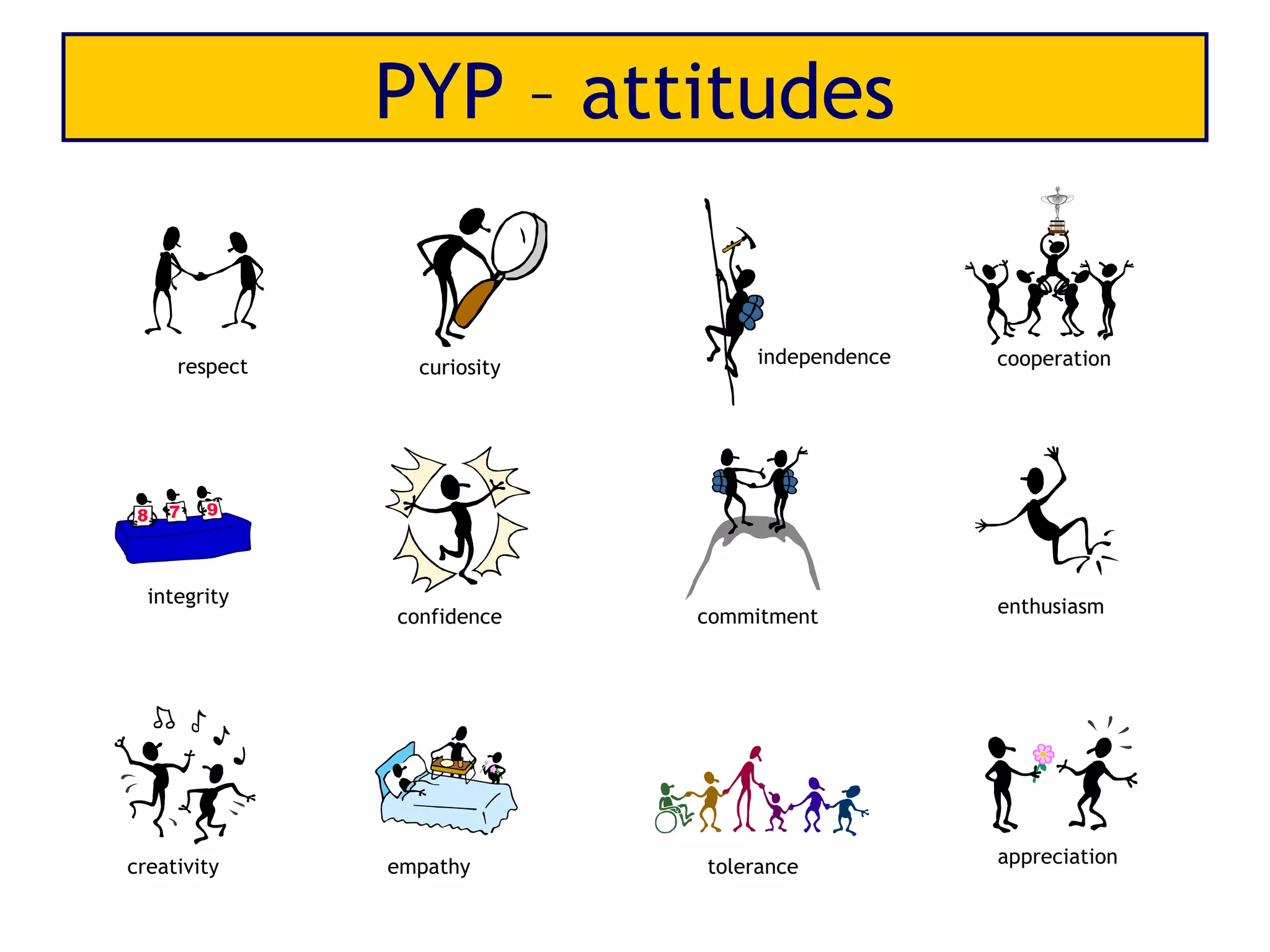
PYP – attitudes


     respect                     independence   cooperation
                 curiosity


  integrity                                     enthusiasm
               confidence    commitment


creativity     empathy       tolerance          appreciation
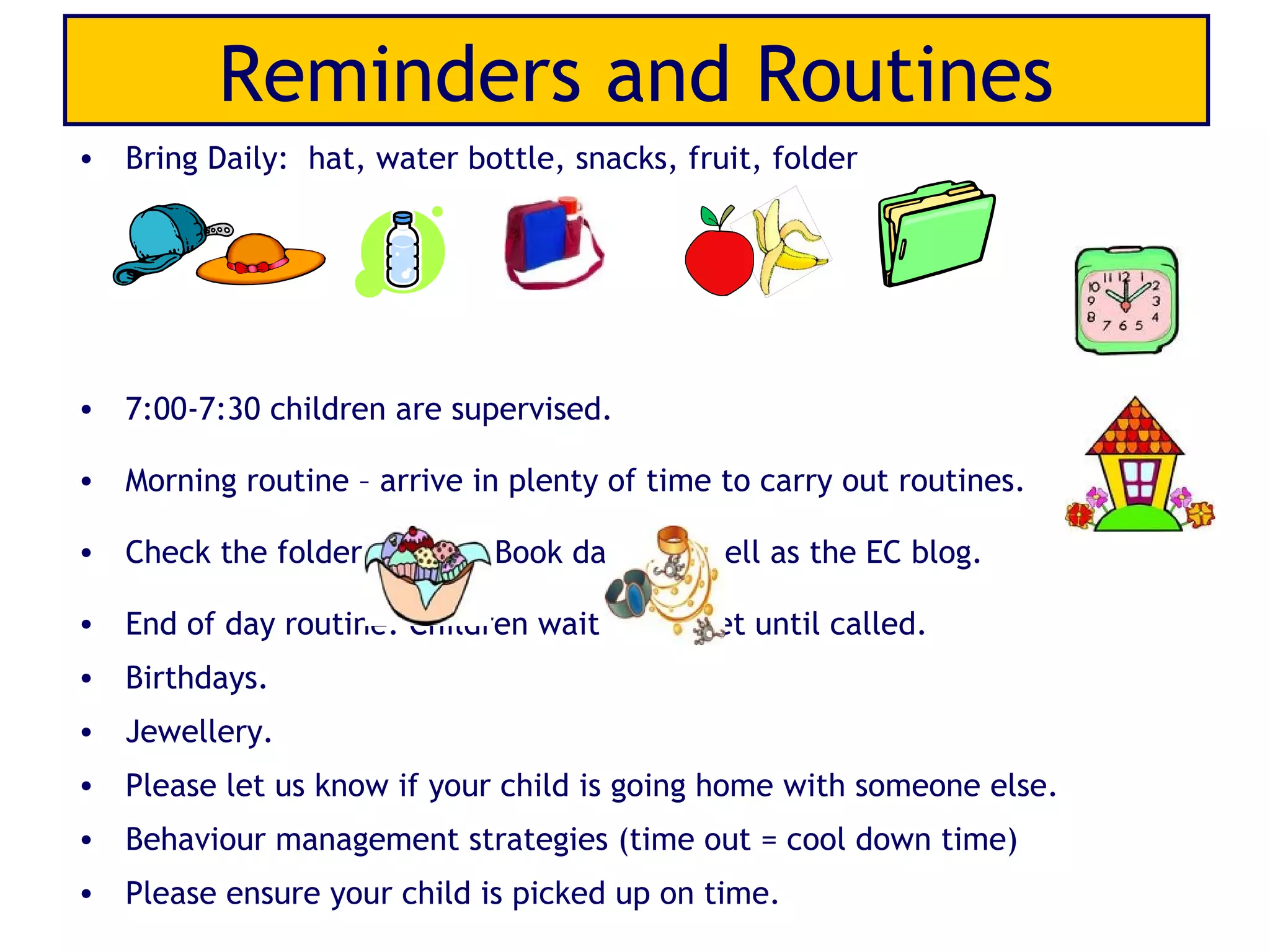
Reminders and Routines
• Bring Daily: hat, water bottle, snacks, fruit, folder


• 7:00-7:30 children are supervised.

• Morning routine – arrive in plenty of time to carry out routines.

• Check the folder and link Book daily, as well as the EC blog.

• End of day routine: Children wait on carpet until called.
• Birthdays.
• Jewellery.
• Please let us know if your child is going home with someone else.
• Behaviour management strategies (time out = cool down time)
• Please ensure your child is picked up on time.

2012 8-parent open house for emailing

  • 1.
    Welcome to IST Early Childhood Classes “What a child can do in cooperation today… s/he can do alone tomorrow.”
  • 2.
    People in EC1/2 Happy Sarah Susan Gillian Jane Kate
  • 3.
    Our Philosophy Independence “Children who are encouraged to think for themselves are more likely to act independently.” “What children can do rather than what they cannot do are the starting points in their learning.” “Young children learn most effectively by doing rather than by being told.” Tina Bruce (1987)
  • 4.
    How will mychild's needs be met?
  • 5.
    Language Children learn to read by reading. Children learn to write by writing. •Children’s early attempts to read and write are encouraged and praised. •We encourage the children to see themselves as readers and writers.
  • 6.
    Language Opportunities in theclassroom for reading.
  • 7.
  • 8.
    Language Opportunities in theclassroom for writing.
  • 9.
    Language Purposeful writing Writing stages
  • 10.
    Language Reading and writing are complex processes Book handling skills Hand control Composing Eye tracking Left-to-right orientation Gaining meaning Imagination Letters, words and sentences Prior knowledge Transcribing Letter knowledge – Letter knowledge – letter sounds and formation. letter sounds and formation.
  • 11.
    Mathematics Our Mathsprogram is supported by materials from the Everyday Mathematics program, which includes the following strands: •Number and numeration •Operations and computation •Data and chance •Measurement •Geometry (space & shape) •Pattern & Function “Maths is the science of language and pattern”
  • 12.
    Mathematics Number and numeration Operations and computation
  • 13.
    Mathematics Data and chance
  • 14.
    Mathematics Geometry (space & shape) Measurement
  • 15.
  • 16.
    PYP – unitsof inquiry
  • 17.
    PYP – unitsof inquiry Who we are - Me and You. How we express ourselves – Patterns How the world works – Materials Sharing the planet – It’s Alive
  • 18.
    PYP – learnerprofile caring reflective communicator thinker risk taker ? open-minded inquirer principled ? knowledgeable balanced
  • 19.
    PYP – attitudes respect independence cooperation curiosity integrity enthusiasm confidence commitment creativity empathy tolerance appreciation
  • 20.
    Reminders and Routines •Bring Daily: hat, water bottle, snacks, fruit, folder • 7:00-7:30 children are supervised. • Morning routine – arrive in plenty of time to carry out routines. • Check the folder and link Book daily, as well as the EC blog. • End of day routine: Children wait on carpet until called. • Birthdays. • Jewellery. • Please let us know if your child is going home with someone else. • Behaviour management strategies (time out = cool down time) • Please ensure your child is picked up on time.

Editor's Notes

  • #5 We expect to have children in our classes:- with different learning rates and styles at different developmental stages with social, emotional and personal differences Continually assessing – formally and informally to feed into planning. We meet their needs in a variety of ways… Variety of grouping strategies, including ability, interest, friendship, individual, pairs or whole class Differentiated activities according to children ’s ability Opportunities for children to select activities according to interest Teaching assistants
  • #6 Recording the title of the book they are going to take home encourages children to see themselves as a writer. This task also gives the children a reason to write.
  • #7 Story time Reading the ‘Big Book’ Library visits Guided reading sessions Author and illustrator focus Computer books Messages and signs around the room Daily browsing time in the form of ERIC time A readily available book area in the classroom
  • #8 Reading strategies: Reading from memory, Using the pictures as clues to the text, Pointing to each word as you read to help focus on each word, Recognizing repetition in the text, Looking at initial letters and making sensible predictions, Using knowledge of story language, Building on a bank of common words read on sight. Looking at the picture and reading from memory is not ‘cheating’, it is an important stage of learning to read. The p urpose of reading: enjoyment and meaningful
  • #9 Well set-up writing area with envelopes, cards, postcards, books, messages and a variety of writing tools. Recording the title of the book they take home Modelling writing – class message, class stories Opportunities to write in variety of classroom areas; the role-play area, the construction area.
  • #10 Mark making Role play writing Letter-like forms Random letters Linking letter forms to sounds heard in a word Inventive spellings Able to spell familiar words When children have a purpose to write it makes them eager to write.
  • #12 Wherever possible we have built Maths into our Units of Inquiry. All activities are hands-on, concrete and practical and we aim to establish understanding of real Maths concepts. Activities are often open-ended and leave opportunities for exploration and thinking at their own level. Emphasis is placed on the learning process rather than quick right answers. Mistakes are viewed as an important part of the learning process.
  • #13 Saying number sequentially, counting a group of objects accurately – 1:1, conservation of number, concrete understanding of the number system e.g counting forwards and backwards, recalling a number immediately before or after a given number (one more/less), recognizing numerals and value they present, estimating – sensible guess, counting in two’s, familiar with doubles, developing an understanding of the concept of addition and subtraction
  • #14 Sorting/grouping – being able to explain their criteria, collecting their own information, collecting class information and interpreting it, transferring information.
  • #15 Vocabulary!!!! Correct mathematical vocabulary.
  • #16 Pattern is early algebra. Recognizing – continuing creating – describing – labelling – transferring. What Do We Want Children To Learn About Mathematics? To explore and use materials flexibly. To recognize and create patterns. To sort, match, order and count objects. To ask questions. To compare size and shape. To explore the concept of measurement. To develop an awareness of number. To explore the language and value of numbers using concrete materials – counts, reads and records in own way (concept, connecting, symbolic) . To see mathematics in real situations. To estimate and predict outcomes.