

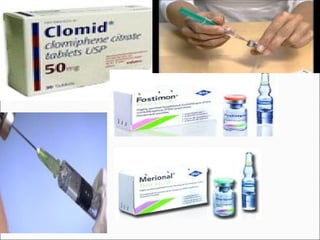

Prof. Mahmoud Zakherah
Prof of Obstetrics and Gynecology,
Women’s Health Hospital Assiut
mszakhera@yahoo.com
2017
Definitions
Infertility
Subfertility
Sterility
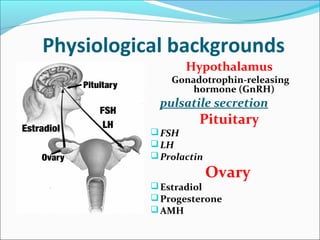
Physiological backgrounds
Hypothalamus
Gonadotrophin-releasing
hormone (GnRH)
pulsatile secretion
Pituitary
FSH
LH
Prolactin
Ovary
Estradiol
Progesterone
AMH
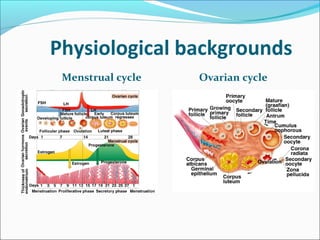
Physiological backgrounds
Menstrual cycle Ovarian cycle
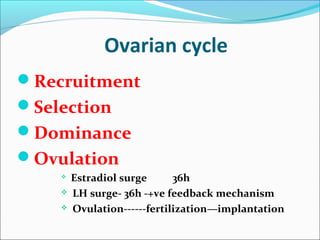
Ovarian cycle
Recruitment
Selection
Dominance
Ovulation
 Estradiol surge 36h
 LH surge- 36h -+ve feedback mechanism
 Ovulation------fertilization—implantation
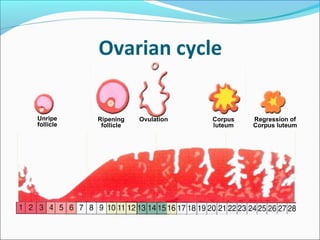
Ovarian cycle
Unripe
follicle
Ripening
follicle
Ovulation Corpus
luteum
Regression of
Corpus luteum
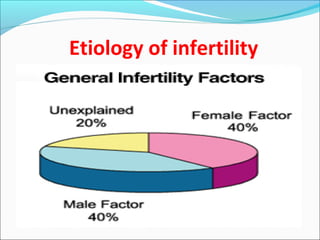
Etiology of infertility
Ovulatory disorders
Ovulatory disorders are a common
cause of infertility 20% , which in most
cases is treatable with ovulation
induction agents.
 The goal of therapy in these women is
monofollicular development and
subsequent ovulation.
Ovulatory disorders
The method of ovulation
induction selected by the clinician
should be based upon the
underlying cause of anovulation
and the efficacy, costs, risks, and
potential complications associated
with each method as they apply to
the individual woman.
Diagnosis of Ovarian factor
Investigations
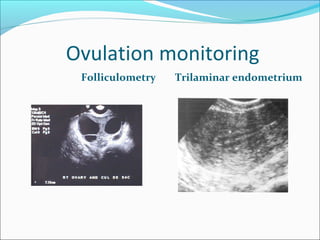
Ovulation monitoring: (transvaginal
sonography (follicle 18mm) U/S:
folliculometry
Midluteal progesterone: (day 21) >3 ng/ml,
>10 ng/ml
Premenstrual biopsy : (PEB): Secretory
changes (not done)---???????
Endometrial scratching
Ovulation monitoring
Folliculometry Trilaminar endometrium
Anovulation
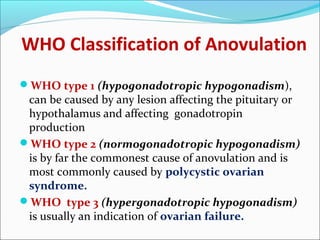
WHO Classification of Anovulation
WHO type 1 (hypogonadotropic hypogonadism),
can be caused by any lesion affecting the pituitary or
hypothalamus and affecting gonadotropin
production
WHO type 2 (normogonadotropic hypogonadism)
is by far the commonest cause of anovulation and is
most commonly caused by polycystic ovarian
syndrome.
WHO type 3 (hypergonadotropic hypogonadism)
is usually an indication of ovarian failure.
1- WHO Group - I
(Hypogonadotropic hypogonadism)
Hypothalamic pituitary failure (5 to 10 %)
These patients present with primary (Kallman’s)
or secondary amenorrhoea (Sheehan’s syndrome),
anorexia.
They have very low serum oestradiol due to low
FSH and LH secretion from the pituitary gland
(hypogonadotrophic hypogonadism).
-ve progestagen challenge test .
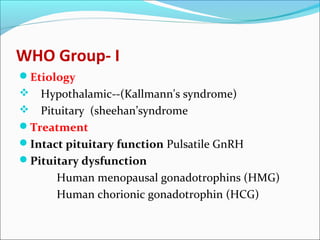
WHO Group- I
Etiology
 Hypothalamic--(Kallmann's syndrome)
 Pituitary (sheehan’syndrome
Treatment
Intact pituitary function Pulsatile GnRH
Pituitary dysfunction
Human menopausal gonadotrophins (HMG)
Human chorionic gonadotrophin (HCG)
 
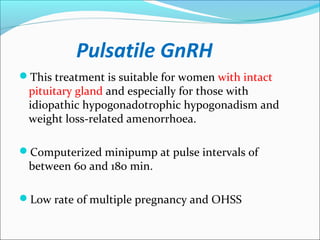
Pulsatile GnRH
This treatment is suitable for women with intact
pituitary gland and especially for those with
idiopathic hypogonadotrophic hypogonadism and
weight loss-related amenorrhoea.
Computerized minipump at pulse intervals of
between 60 and 180 min.
Low rate of multiple pregnancy and OHSS
WHO Group 1
Evidence
They should be offered pulsatile
gonadotrophin-releasing hormone
or gonadotrophins (HMG) because
these are effective in inducing
ovulation. ( B)
2-WHO Group II (hypothalamic
pituitary dysfunction (70 to 85%(
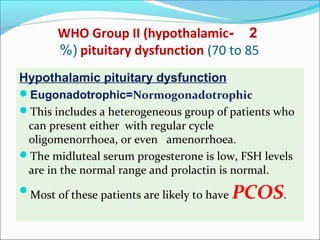
Hypothalamic pituitary dysfunction
Eugonadotrophic=Normogonadotrophic
This includes a heterogeneous group of patients who
can present either with regular cycle
oligomenorrhoea, or even amenorrhoea.
The midluteal serum progesterone is low, FSH levels
are in the normal range and prolactin is normal.
Most of these patients are likely to have PCOS.
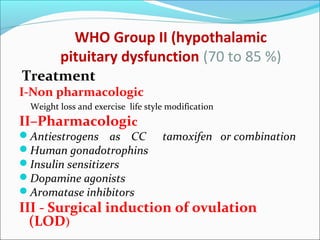
WHO Group II (hypothalamic
pituitary dysfunction (70 to 85 %)
Treatment
I-Non pharmacologic
Weight loss and exercise life style modification
II–Pharmacologic
Antiestrogens as CC tamoxifen or combination
Human gonadotrophins
Insulin sensitizers
Dopamine agonists
Aromatase inhibitors
III - Surgical induction of ovulation
(LOD)
I-Non Pharmacologic
Induction
Of
Ovulation
Non Pharmacologic Induction of
ovulation
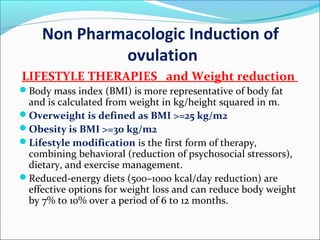
LIFESTYLE THERAPIES and Weight reduction
Body mass index (BMI) is more representative of body fat
and is calculated from weight in kg/height squared in m.
Overweight is defined as BMI >=25 kg/m2
Obesity is BMI >=30 kg/m2
Lifestyle modification is the first form of therapy,
combining behavioral (reduction of psychosocial stressors),
dietary, and exercise management.
Reduced-energy diets (500–1000 kcal/day reduction) are
effective options for weight loss and can reduce body weight
by 7% to 10% over a period of 6 to 12 months.
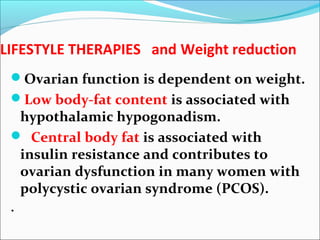
LIFESTYLE THERAPIES and Weight reduction
Ovarian function is dependent on weight.
Low body-fat content is associated with
hypothalamic hypogonadism.
 Central body fat is associated with
insulin resistance and contributes to
ovarian dysfunction in many women with
polycystic ovarian syndrome (PCOS).
.
LIFESTYLE THERAPIES and Weight reduction
Lifestyle modification in overweight infertile
women with PCOS leads to a reduction of
central fat and improved insulin sensitivity,
decreased hyperandrogenemia, lowered
luteinizing hormone (LH) concentrations, and
restoration of normal fertility in many cases
(Hoeger, 2001; Kiddy, 1992).
Even a 5 to 10 percent reduction in body weight
has been shown to be successful in these
women (Crosignani, 2003; Kiddy, 1992; Pasquali,
1989
LIFESTYLE THERAPIES and Weight reduction
Apart from diet, exercise can also improve
insulin sensitivity.
Weight loss and exercise are inexpensive and
should be recommended as first-line management
of obese women with PCOS.
Environmental toxins
Smoking
Caffeine
Stress
Non Pharmacologic Induction of
ovulation
Evidence
Weight loss, exercise, and lifestyle modifications
have been proven effective in restoring ovulatory
cycles and achieving pregnancy in overweight
women with PCOS and should be the first-line
option for these women. (II-3A)
Morbidly obese women should seek expert advice
about pregnancy risk. (III-A)
II- Pharmacologic
Induction
of Ovulation
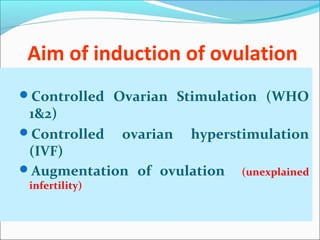
Aim of induction of ovulation
Controlled Ovarian Stimulation (WHO
1&2)
Controlled ovarian hyperstimulation
(IVF)
Augmentation of ovulation (unexplained
infertility)
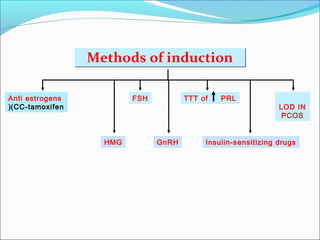
Methods of inductionMethods of induction
Anti estrogens
(CC-tamoxifen(
HMG
FSH
GnRH
TTT of PRL
Insulin-sensitizing drugs
LOD IN
PCOS
1-anti estrogens
Clomiphen
eCitrate (CC)
Tamoxife
n
A. Clomiphene citrate (CC(
Clomiphene citrate is a standard treatment for
induction of ovulation in these patients with
ovulatory dysfunction..
The standard dosage is 50 -100 milligrams (mg) of
clomiphene per day for five consecutive days.
Ovulation at a high rate (70–90%) and, although the
pregnancy rate is lower (30–40%)(LH levels and or
the antiestrogenic effects).
Clomiphene citrate
Pharmacokinetics
Absorption: Absorbed readily from the GI tract.
Distribution: May undergo enterohepatic
recirculation or may be stored in body fat.
Metabolism: Metabolized by the liver.
Excretion: Half-life is about 5 days. Drug is excreted
principally in feces via biliary elimination
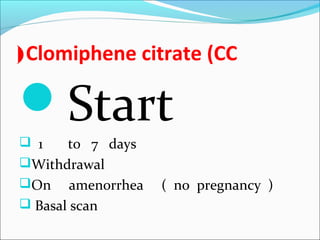
Clomiphene citrate (CC(
Start
 1 to 7 days
Withdrawal
On amenorrhea ( no pregnancy )
 Basal scan
Clomiphene citrate (CC(
Repeat
Back to back cycles
Washout cycle in between
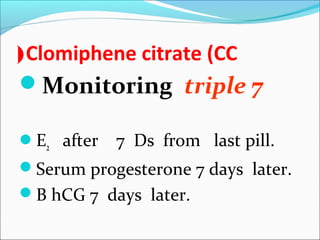
Clomiphene citrate (CC(
Monitoring triple 7
E2 after 7 Ds from last pill.
Serum progesterone 7 days later.
B hCG 7 days later.
A. Clomiphene citrate (CC(
Evidence.
 Patients with polycystic ovary syndrome should
be offered clomifene citrate (or tamoxifen) as
first-line therapy for up to 12 months because it is
likely to induce ovulation(A).
 Risk of multiple pregnancy (7% to 9%)with
ovulation induction using clomiphene citrate (I-
A).
Clomiphene citrate (CC(
A Cochrane meta-analysis (2009) ;
There is no increase in spontaneous
abortion or congenital abnormalities
in CC-induced pregnancies.
 Evidence of benefit than placebo
Clomiphene failure
Ovulation failure (CC resistant) Those who do
not respond to 150 mg per day are considered to be
clomifene resistant (10–30%).
Conception failure (due to indésirable effets
of CC or due to un diagosed causes).
Decreasing endometrial thickness and endometrial
perfusion which affect implantation
Dryness of cervical mucosa which affects sperms
motility
High follicular phase LH
Clomiphene failure
Extended CC theapy (100 mg/day for days 7-10 days)
Combined therapy :
 CC and Dexamethazone (Congenital adrenal hyperplasia)
 CC and Growth hormone
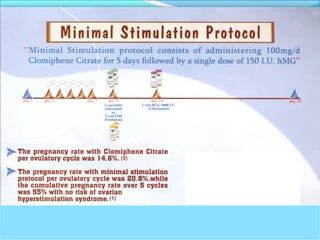
 CC and Gonadotrophins (minimal stimulation )
 Prior Ocs then Cc treatment
 Cc and dopamine agonists
 Cc and NAC
 CC and ketoconazole
 CC and metformin
 CC and Estrogens(Estradiol or phytoestrogens )
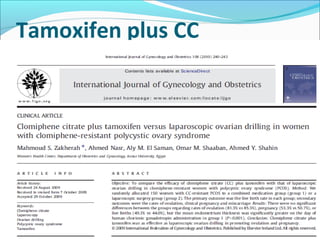
 Cc plus Tamoxifen (Zakherah etal .2010)
Nitric oxide donors and CC
Concomitant use of Isosorbid
monoitrate ( Effox 10-20 mg)
tab with CC seems to improve
the ovulation and pregnancy
rates in the patients with PCOS
with no significant increase in
side effects as compared with CC
alone.
Sildenafil and CC
Sildenafil being a selective PDE5 isoenzyme inhibitor
enhances the effect of nitric oxide by inhibiting PDE5,
which is responsible for degradation of cGMP.
Sildenafil citrate 25 mg orally or vaginally in induction
of ovulation lead to increase number of follicles,
endometrial thickness and so increase pregnancy rate.
Sildenafil thermosensitive vaginal gels might result in
improved potential of pregnancy in anovulatory
patients with clomiphene citrate failure due to thin
endometrium.

Dexamethazone
Cc 100 3-7 D
Low dose 0,5 mg
High dose 2mg ( 1mg /12
5-14).
N Acetylcysteine and CC
NAC as an adjuvant to CC for induction of ovulation
can improve the ovulation and pregnancy rates in
PCOS patients and may also have some beneficial
impacts on endometrial thickness. NAC is well-
tolerated, safe, and inexpensive and may be a novel
adjuvant treatment to improve the induction of
ovulation outcomes in PCOS patients. NAC exerts its
effect due to its mucolytic and metabolic actions
especially insulin sensitising effect
Tamoxifen plus CC
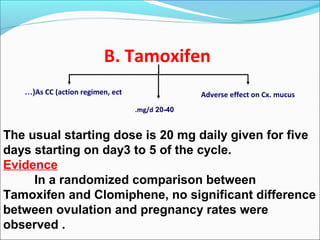
B. Tamoxifen
As CC (action regimen, ect…(
20-40mg/d.
Adverse effect on Cx. mucus
The usual starting dose is 20 mg daily given for five
days starting on day3 to 5 of the cycle.
Evidence
In a randomized comparison between
Tamoxifen and Clomiphene, no significant difference
between ovulation and pregnancy rates were
observed .
2-Insulins Sensitizing Drugs
Metformin (500 mg tds or 850 mg bd
with meals)
Monotherapy
Metformin used alone improves the ovulation rate (OR
2.12; 95% CI 1.5–3.0) and clinical pregnancy rate (OR
3.86; 95% CI 2.18–6.84) compared with placebo or no
treatment, but not the livebirth rate (OR 1.0; 95% CI
0.16–6.39)(Cochrane Database of Systematic Reviews
2010).
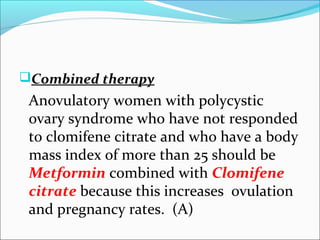
Combined therapy
Anovulatory women with polycystic
ovary syndrome who have not responded
to clomifene citrate and who have a body
mass index of more than 25 should be
Metformin combined with Clomifene
citrate because this increases ovulation
and pregnancy rates. (A)
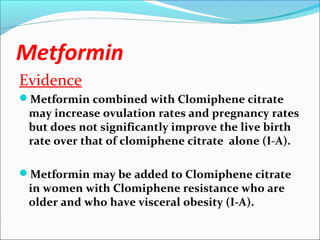
Metformin
Evidence
Metformin combined with Clomiphene citrate
may increase ovulation rates and pregnancy rates
but does not significantly improve the live birth
rate over that of clomiphene citrate alone (I-A).
Metformin may be added to Clomiphene citrate
in women with Clomiphene resistance who are
older and who have visceral obesity (I-A).
Metformin- combined therapy
Clomiphene resistant : Metformin & CC
produced significant improvement.
Recent study- Letrozole & Metformin also
showed promising results.
3-Gonadotrophins
Types
1. HMG
2. FSH
3. HCG
Gonadotrophins
Indications :
Hypogonadotropic (WHO class 1) : anovulatory
women with hypopituitarism or as second-line
therapy in women with hypothalamic amenorrhea.
Normogonadotropic (WHO class 2): anovulatory
women who have not ovulated or conceived with
clomiphene treatment.
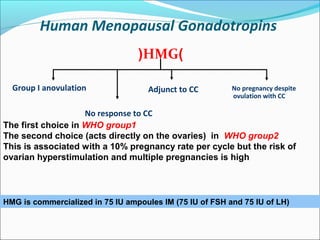
Human Menopausal Gonadotropins
)HMG(
Group I anovulation
No response to CC
Adjunct to CC No pregnancy despite
ovulation with CC
The first choice in WHO group1
The second choice )acts directly on the ovaries( in WHO group2
This is associated with a 10% pregnancy rate per cycle but the risk of
ovarian hyperstimulation and multiple pregnancies is high
HMG is commercialized in 75 IU ampoules IM )75 IU of FSH and 75 IU of LH(
Protocols
Chronic low-dose, step up protocol
Conventional dose step-up
Step down protocol:
Human Menopausal Gonadotropins
Evidence
Gonadotropin should be considered second-line
therapy for fertility in anovulatory women with PCOS.
The treatment requires ultrasound and laboratory
monitoring.
High costs and the risk of multiple pregnancy and
ovarian hyperstimulation syndrome are drawbacks of
the treatment. (II-2A)
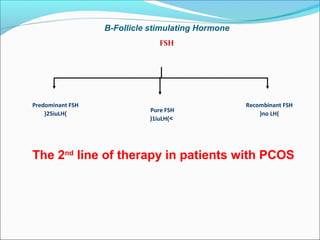
B-Follicle stimulating Hormone
FSH
Predominant FSH
)25iuLH(
Pure FSH
)>1iuLH(
Recombinant FSH
)no LH(
The 2nd
line of therapy in patients with PCOS
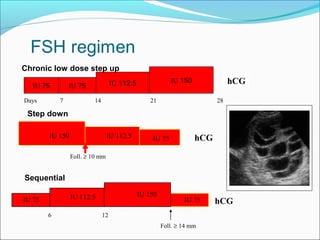
Days 7 14 21 28
hCG
150IU 112.5IU 75IU hCG
Foll. ≥ 10 mm
75IU112.5IU 150IU
6 12
75IU hCG
Foll. ≥ 14 mm
½
75IU 75IU 112.5IU 150IU
Chronic low dose step up
Step down
Sequential
C-Human Chorionic Gonadotropin (hCG)
 
 Surrogate LH surge -Ovulation triggering
 Final oocyte maturation
HCG 5000- 10,000 IU S/C or IM
Ovulation will usually occur about 36 hours
after hCG is administered gate LH surge
GnRH agonist may be used to trigger
ovulation especially in antagonist protocols
5-Dopamine agonists
 Normal Serum Prolactin ----400-500 mlU/ml (20-
25 ng/ml
 Hyperprolactinaemia can be found in 15% of women
with anovulation, and in 75% of women with both
anovulation and galactorrhoea.
The presence of hyperprolactinemia should always be
confirmed by several measurements of serum
prolactin.
5-Dopamine agonists
An MRI of the head should be done in any woman
with hyperprolactinemia in whom the cause is not
obvious (eg, neuroleptic drug therapy, primary
hypothyroidism).
Primary hypothyroidism---prolactin-stimulating
action of thyrotrophin-releasing hormone (TRH).
Subclinicah hypothyrodism TSH ≤ 2,5 IU
5-Dopamine agonists
There are three treatment options:
Dopamine agonists
The first-line treatment is the use of dopamine agonists which lower
prolactin concentration and cause shrinkage of a prolactinoma if
present.
Surgery
Transphenoidal pituitary adenomectomy is seldom USED
Radiotherapyis used very infrequently
Dopamine agonists
Bromocriptine is by far the most widely used drug
orally (2.5 to 20 mg divided into two or three doses) or
intravaginally
Cabergoline, a prolactin-lowering drug with long-
lasting effect, most patients require doses as low as 0.5
to 1.0 mg per week.
Lisuride 0.2mg tablets
Quinagolide hydrochloride (NORPROLAC) non
Ergot dopamine agonist(0.025 mg per day and increase
to 0.075 mg per day )
5-Dopamine agonists
Evidence
Women with ovulatory disorders due to
hyperprolactinaemia should be offered treatment
with dopamine agonists.
Consideration should be given to safety for use in
pregnancy and minimising cost when prescribing.
(A).
It is recommended that the minimal length of
dopamine agonist therapy in patients wit
prolactinoma should be one year
6-GnRH
Types
 Pulsatile GnRh in women with clomifene citrate-
resistant polycystic ovary syndrome is a research
context.(A)
 GnRH Agonists should not be offered (A).
 GnRH Antagonists should not be offered (A).
In IVF agonist or antagonist protocols
Pulsatile GnRh
Pulsatile GnRH(60 to 90 minutes) administration is
indicated for women with hypogonadotropic
hypogonadal anovulation (WHO class 1) who have
normal pituitary function
The intravenous route appears superior to the
subcutaneous route
Chances of multifollicular development and ovarian
hyperstimulation are low
7-Aromatase Inhibitors
Letrozole (Femara) and anastrozole (Not FDA approved for
IO)
Letrozole (third-generation aromatase inhibitor )
 2.5 mg OD/BD on D 3-7
A prolonged duration for 10 days has been evaluated)
FDA approved for postmenopausal breast cancer
Lacks unfavorable effects on endometrium seen with
CC and has shorter half life.
Initial evidence is encouraging and results are similar
to clomifene, but larger trials are required
7-Aromatase Inhibitors
Aromatase inhibitor has the following
advantages over CC:
1.It does not deplete ERs throughout the
body
2.It keeps the hypothalamopituitary axis
intact
3.It is short acting (45 min half-life).
7-Aromatase Inhibitors
letrozole ensures
improved endometrial
thickness, cervical mucus,
monofollicular, and better
folliculogenesis
WHO Group 3
(Hypergonadotropic hypogonadism(
10 to 30 %,these women present with primary or
secondary amenorrhea
low endogenous estrogen and highly elevated
FSH levels
Premature ovarian insufficiency (POI)
(depleted)
Resistant ovary syndrome (unresponsive )
No value of laparoscopy or biopsy
Hypergonadotropic hypogonadism
Intermittent and unpredictable
ovarian function and spontaneous
pregnancies have been reported in
approximately 5–10% of cases
subsequent to the diagnosis
DHEA therapy 75mg/day
Unexplained infertility
Unexplained infertility Inability to conceive
after one year with routine (standard, basic)
investigations of infertility showing no
abnormality.
 incidence: 10-20%
Women should be informed that clomifene
citrate treatment increases the chance of
pregnancy.
DHEA therapy 75mg/day
IVF may the ideal solution especially in age
above 30 ys old.
Conclusions
Ovarian stimulation is the fundamental tool of
subfertility treatment.
Different options pose challenges.
Choice depends on doctors expertise and
patients condition.
Aim is to Increases the pregnancy rate.
Judicious monitoring to avoid complications.
Ovarian stimulation  non surgical 2017

Ovarian stimulation non surgical 2017

  • 2.
    Prof. Mahmoud Zakherah Profof Obstetrics and Gynecology, Women’s Health Hospital Assiut mszakhera@yahoo.com 2017
  • 3.
  • 4.
    Physiological backgrounds Hypothalamus Gonadotrophin-releasing hormone (GnRH) pulsatilesecretion Pituitary FSH LH Prolactin Ovary Estradiol Progesterone AMH
  • 5.
  • 6.
    Ovarian cycle Recruitment Selection Dominance Ovulation  Estradiolsurge 36h  LH surge- 36h -+ve feedback mechanism  Ovulation------fertilization—implantation
  • 7.
  • 8.
  • 9.
    Ovulatory disorders Ovulatory disordersare a common cause of infertility 20% , which in most cases is treatable with ovulation induction agents.  The goal of therapy in these women is monofollicular development and subsequent ovulation.
  • 10.
    Ovulatory disorders The methodof ovulation induction selected by the clinician should be based upon the underlying cause of anovulation and the efficacy, costs, risks, and potential complications associated with each method as they apply to the individual woman.
  • 11.
  • 12.
    Diagnosis of Ovarianfactor Investigations Ovulation monitoring: (transvaginal sonography (follicle 18mm) U/S: folliculometry Midluteal progesterone: (day 21) >3 ng/ml, >10 ng/ml Premenstrual biopsy : (PEB): Secretory changes (not done)---??????? Endometrial scratching
  • 13.
  • 14.
  • 15.
    WHO Classification ofAnovulation WHO type 1 (hypogonadotropic hypogonadism), can be caused by any lesion affecting the pituitary or hypothalamus and affecting gonadotropin production WHO type 2 (normogonadotropic hypogonadism) is by far the commonest cause of anovulation and is most commonly caused by polycystic ovarian syndrome. WHO type 3 (hypergonadotropic hypogonadism) is usually an indication of ovarian failure.
  • 16.
    1- WHO Group- I (Hypogonadotropic hypogonadism) Hypothalamic pituitary failure (5 to 10 %) These patients present with primary (Kallman’s) or secondary amenorrhoea (Sheehan’s syndrome), anorexia. They have very low serum oestradiol due to low FSH and LH secretion from the pituitary gland (hypogonadotrophic hypogonadism). -ve progestagen challenge test .
  • 17.
    WHO Group- I Etiology Hypothalamic--(Kallmann's syndrome)  Pituitary (sheehan’syndrome Treatment Intact pituitary function Pulsatile GnRH Pituitary dysfunction Human menopausal gonadotrophins (HMG) Human chorionic gonadotrophin (HCG)  
  • 18.
    Pulsatile GnRH This treatmentis suitable for women with intact pituitary gland and especially for those with idiopathic hypogonadotrophic hypogonadism and weight loss-related amenorrhoea. Computerized minipump at pulse intervals of between 60 and 180 min. Low rate of multiple pregnancy and OHSS
  • 19.
    WHO Group 1 Evidence Theyshould be offered pulsatile gonadotrophin-releasing hormone or gonadotrophins (HMG) because these are effective in inducing ovulation. ( B)
  • 20.
    2-WHO Group II(hypothalamic pituitary dysfunction (70 to 85%( Hypothalamic pituitary dysfunction Eugonadotrophic=Normogonadotrophic This includes a heterogeneous group of patients who can present either with regular cycle oligomenorrhoea, or even amenorrhoea. The midluteal serum progesterone is low, FSH levels are in the normal range and prolactin is normal. Most of these patients are likely to have PCOS.
  • 21.
    WHO Group II(hypothalamic pituitary dysfunction (70 to 85 %) Treatment I-Non pharmacologic Weight loss and exercise life style modification II–Pharmacologic Antiestrogens as CC tamoxifen or combination Human gonadotrophins Insulin sensitizers Dopamine agonists Aromatase inhibitors III - Surgical induction of ovulation (LOD)
  • 22.
  • 23.
    Non Pharmacologic Inductionof ovulation LIFESTYLE THERAPIES and Weight reduction Body mass index (BMI) is more representative of body fat and is calculated from weight in kg/height squared in m. Overweight is defined as BMI >=25 kg/m2 Obesity is BMI >=30 kg/m2 Lifestyle modification is the first form of therapy, combining behavioral (reduction of psychosocial stressors), dietary, and exercise management. Reduced-energy diets (500–1000 kcal/day reduction) are effective options for weight loss and can reduce body weight by 7% to 10% over a period of 6 to 12 months.
  • 24.
    LIFESTYLE THERAPIES andWeight reduction Ovarian function is dependent on weight. Low body-fat content is associated with hypothalamic hypogonadism.  Central body fat is associated with insulin resistance and contributes to ovarian dysfunction in many women with polycystic ovarian syndrome (PCOS). .
  • 25.
    LIFESTYLE THERAPIES andWeight reduction Lifestyle modification in overweight infertile women with PCOS leads to a reduction of central fat and improved insulin sensitivity, decreased hyperandrogenemia, lowered luteinizing hormone (LH) concentrations, and restoration of normal fertility in many cases (Hoeger, 2001; Kiddy, 1992). Even a 5 to 10 percent reduction in body weight has been shown to be successful in these women (Crosignani, 2003; Kiddy, 1992; Pasquali, 1989
  • 26.
    LIFESTYLE THERAPIES andWeight reduction Apart from diet, exercise can also improve insulin sensitivity. Weight loss and exercise are inexpensive and should be recommended as first-line management of obese women with PCOS. Environmental toxins Smoking Caffeine Stress
  • 27.
    Non Pharmacologic Inductionof ovulation Evidence Weight loss, exercise, and lifestyle modifications have been proven effective in restoring ovulatory cycles and achieving pregnancy in overweight women with PCOS and should be the first-line option for these women. (II-3A) Morbidly obese women should seek expert advice about pregnancy risk. (III-A)
  • 28.
  • 30.
    Aim of inductionof ovulation Controlled Ovarian Stimulation (WHO 1&2) Controlled ovarian hyperstimulation (IVF) Augmentation of ovulation (unexplained infertility)
  • 31.
    Methods of inductionMethodsof induction Anti estrogens (CC-tamoxifen( HMG FSH GnRH TTT of PRL Insulin-sensitizing drugs LOD IN PCOS
  • 32.
  • 33.
    A. Clomiphene citrate(CC( Clomiphene citrate is a standard treatment for induction of ovulation in these patients with ovulatory dysfunction.. The standard dosage is 50 -100 milligrams (mg) of clomiphene per day for five consecutive days. Ovulation at a high rate (70–90%) and, although the pregnancy rate is lower (30–40%)(LH levels and or the antiestrogenic effects).
  • 34.
    Clomiphene citrate Pharmacokinetics Absorption: Absorbedreadily from the GI tract. Distribution: May undergo enterohepatic recirculation or may be stored in body fat. Metabolism: Metabolized by the liver. Excretion: Half-life is about 5 days. Drug is excreted principally in feces via biliary elimination
  • 35.
    Clomiphene citrate (CC( Start 1 to 7 days Withdrawal On amenorrhea ( no pregnancy )  Basal scan
  • 36.
    Clomiphene citrate (CC( Repeat Backto back cycles Washout cycle in between
  • 37.
    Clomiphene citrate (CC( Monitoringtriple 7 E2 after 7 Ds from last pill. Serum progesterone 7 days later. B hCG 7 days later.
  • 38.
    A. Clomiphene citrate(CC( Evidence.  Patients with polycystic ovary syndrome should be offered clomifene citrate (or tamoxifen) as first-line therapy for up to 12 months because it is likely to induce ovulation(A).  Risk of multiple pregnancy (7% to 9%)with ovulation induction using clomiphene citrate (I- A).
  • 39.
    Clomiphene citrate (CC( ACochrane meta-analysis (2009) ; There is no increase in spontaneous abortion or congenital abnormalities in CC-induced pregnancies.  Evidence of benefit than placebo
  • 40.
    Clomiphene failure Ovulation failure(CC resistant) Those who do not respond to 150 mg per day are considered to be clomifene resistant (10–30%). Conception failure (due to indésirable effets of CC or due to un diagosed causes). Decreasing endometrial thickness and endometrial perfusion which affect implantation Dryness of cervical mucosa which affects sperms motility High follicular phase LH
  • 41.
    Clomiphene failure Extended CCtheapy (100 mg/day for days 7-10 days) Combined therapy :  CC and Dexamethazone (Congenital adrenal hyperplasia)  CC and Growth hormone  CC and Gonadotrophins (minimal stimulation )  Prior Ocs then Cc treatment  Cc and dopamine agonists  Cc and NAC  CC and ketoconazole  CC and metformin  CC and Estrogens(Estradiol or phytoestrogens )  Cc plus Tamoxifen (Zakherah etal .2010)
  • 42.
    Nitric oxide donorsand CC Concomitant use of Isosorbid monoitrate ( Effox 10-20 mg) tab with CC seems to improve the ovulation and pregnancy rates in the patients with PCOS with no significant increase in side effects as compared with CC alone.
  • 43.
    Sildenafil and CC Sildenafilbeing a selective PDE5 isoenzyme inhibitor enhances the effect of nitric oxide by inhibiting PDE5, which is responsible for degradation of cGMP. Sildenafil citrate 25 mg orally or vaginally in induction of ovulation lead to increase number of follicles, endometrial thickness and so increase pregnancy rate. Sildenafil thermosensitive vaginal gels might result in improved potential of pregnancy in anovulatory patients with clomiphene citrate failure due to thin endometrium. 
  • 44.
    Dexamethazone Cc 100 3-7D Low dose 0,5 mg High dose 2mg ( 1mg /12 5-14).
  • 45.
    N Acetylcysteine andCC NAC as an adjuvant to CC for induction of ovulation can improve the ovulation and pregnancy rates in PCOS patients and may also have some beneficial impacts on endometrial thickness. NAC is well- tolerated, safe, and inexpensive and may be a novel adjuvant treatment to improve the induction of ovulation outcomes in PCOS patients. NAC exerts its effect due to its mucolytic and metabolic actions especially insulin sensitising effect
  • 46.
  • 48.
    B. Tamoxifen As CC(action regimen, ect…( 20-40mg/d. Adverse effect on Cx. mucus The usual starting dose is 20 mg daily given for five days starting on day3 to 5 of the cycle. Evidence In a randomized comparison between Tamoxifen and Clomiphene, no significant difference between ovulation and pregnancy rates were observed .
  • 49.
    2-Insulins Sensitizing Drugs Metformin(500 mg tds or 850 mg bd with meals) Monotherapy Metformin used alone improves the ovulation rate (OR 2.12; 95% CI 1.5–3.0) and clinical pregnancy rate (OR 3.86; 95% CI 2.18–6.84) compared with placebo or no treatment, but not the livebirth rate (OR 1.0; 95% CI 0.16–6.39)(Cochrane Database of Systematic Reviews 2010).
  • 50.
    Combined therapy Anovulatory womenwith polycystic ovary syndrome who have not responded to clomifene citrate and who have a body mass index of more than 25 should be Metformin combined with Clomifene citrate because this increases ovulation and pregnancy rates. (A)
  • 51.
    Metformin Evidence Metformin combined withClomiphene citrate may increase ovulation rates and pregnancy rates but does not significantly improve the live birth rate over that of clomiphene citrate alone (I-A). Metformin may be added to Clomiphene citrate in women with Clomiphene resistance who are older and who have visceral obesity (I-A).
  • 52.
    Metformin- combined therapy Clomipheneresistant : Metformin & CC produced significant improvement. Recent study- Letrozole & Metformin also showed promising results.
  • 53.
  • 55.
    Gonadotrophins Indications : Hypogonadotropic (WHOclass 1) : anovulatory women with hypopituitarism or as second-line therapy in women with hypothalamic amenorrhea. Normogonadotropic (WHO class 2): anovulatory women who have not ovulated or conceived with clomiphene treatment.
  • 56.
    Human Menopausal Gonadotropins )HMG( GroupI anovulation No response to CC Adjunct to CC No pregnancy despite ovulation with CC The first choice in WHO group1 The second choice )acts directly on the ovaries( in WHO group2 This is associated with a 10% pregnancy rate per cycle but the risk of ovarian hyperstimulation and multiple pregnancies is high HMG is commercialized in 75 IU ampoules IM )75 IU of FSH and 75 IU of LH(
  • 57.
    Protocols Chronic low-dose, stepup protocol Conventional dose step-up Step down protocol: Human Menopausal Gonadotropins
  • 58.
    Human Menopausal Gonadotropins Evidence Gonadotropinshould be considered second-line therapy for fertility in anovulatory women with PCOS. The treatment requires ultrasound and laboratory monitoring. High costs and the risk of multiple pregnancy and ovarian hyperstimulation syndrome are drawbacks of the treatment. (II-2A)
  • 59.
    B-Follicle stimulating Hormone FSH PredominantFSH )25iuLH( Pure FSH )>1iuLH( Recombinant FSH )no LH( The 2nd line of therapy in patients with PCOS
  • 60.
    Days 7 1421 28 hCG 150IU 112.5IU 75IU hCG Foll. ≥ 10 mm 75IU112.5IU 150IU 6 12 75IU hCG Foll. ≥ 14 mm ½ 75IU 75IU 112.5IU 150IU Chronic low dose step up Step down Sequential
  • 61.
    C-Human Chorionic Gonadotropin(hCG)    Surrogate LH surge -Ovulation triggering  Final oocyte maturation HCG 5000- 10,000 IU S/C or IM Ovulation will usually occur about 36 hours after hCG is administered gate LH surge GnRH agonist may be used to trigger ovulation especially in antagonist protocols
  • 62.
    5-Dopamine agonists  NormalSerum Prolactin ----400-500 mlU/ml (20- 25 ng/ml  Hyperprolactinaemia can be found in 15% of women with anovulation, and in 75% of women with both anovulation and galactorrhoea. The presence of hyperprolactinemia should always be confirmed by several measurements of serum prolactin.
  • 63.
    5-Dopamine agonists An MRIof the head should be done in any woman with hyperprolactinemia in whom the cause is not obvious (eg, neuroleptic drug therapy, primary hypothyroidism). Primary hypothyroidism---prolactin-stimulating action of thyrotrophin-releasing hormone (TRH). Subclinicah hypothyrodism TSH ≤ 2,5 IU
  • 64.
    5-Dopamine agonists There arethree treatment options: Dopamine agonists The first-line treatment is the use of dopamine agonists which lower prolactin concentration and cause shrinkage of a prolactinoma if present. Surgery Transphenoidal pituitary adenomectomy is seldom USED Radiotherapyis used very infrequently
  • 65.
    Dopamine agonists Bromocriptine isby far the most widely used drug orally (2.5 to 20 mg divided into two or three doses) or intravaginally Cabergoline, a prolactin-lowering drug with long- lasting effect, most patients require doses as low as 0.5 to 1.0 mg per week. Lisuride 0.2mg tablets Quinagolide hydrochloride (NORPROLAC) non Ergot dopamine agonist(0.025 mg per day and increase to 0.075 mg per day )
  • 66.
    5-Dopamine agonists Evidence Women withovulatory disorders due to hyperprolactinaemia should be offered treatment with dopamine agonists. Consideration should be given to safety for use in pregnancy and minimising cost when prescribing. (A). It is recommended that the minimal length of dopamine agonist therapy in patients wit prolactinoma should be one year
  • 67.
    6-GnRH Types  Pulsatile GnRhin women with clomifene citrate- resistant polycystic ovary syndrome is a research context.(A)  GnRH Agonists should not be offered (A).  GnRH Antagonists should not be offered (A). In IVF agonist or antagonist protocols
  • 68.
    Pulsatile GnRh Pulsatile GnRH(60to 90 minutes) administration is indicated for women with hypogonadotropic hypogonadal anovulation (WHO class 1) who have normal pituitary function The intravenous route appears superior to the subcutaneous route Chances of multifollicular development and ovarian hyperstimulation are low
  • 69.
    7-Aromatase Inhibitors Letrozole (Femara)and anastrozole (Not FDA approved for IO) Letrozole (third-generation aromatase inhibitor )  2.5 mg OD/BD on D 3-7 A prolonged duration for 10 days has been evaluated) FDA approved for postmenopausal breast cancer Lacks unfavorable effects on endometrium seen with CC and has shorter half life. Initial evidence is encouraging and results are similar to clomifene, but larger trials are required
  • 70.
    7-Aromatase Inhibitors Aromatase inhibitorhas the following advantages over CC: 1.It does not deplete ERs throughout the body 2.It keeps the hypothalamopituitary axis intact 3.It is short acting (45 min half-life).
  • 71.
    7-Aromatase Inhibitors letrozole ensures improvedendometrial thickness, cervical mucus, monofollicular, and better folliculogenesis
  • 72.
    WHO Group 3 (Hypergonadotropichypogonadism( 10 to 30 %,these women present with primary or secondary amenorrhea low endogenous estrogen and highly elevated FSH levels Premature ovarian insufficiency (POI) (depleted) Resistant ovary syndrome (unresponsive ) No value of laparoscopy or biopsy
  • 73.
    Hypergonadotropic hypogonadism Intermittent andunpredictable ovarian function and spontaneous pregnancies have been reported in approximately 5–10% of cases subsequent to the diagnosis DHEA therapy 75mg/day
  • 74.
    Unexplained infertility Unexplained infertilityInability to conceive after one year with routine (standard, basic) investigations of infertility showing no abnormality.  incidence: 10-20% Women should be informed that clomifene citrate treatment increases the chance of pregnancy. DHEA therapy 75mg/day IVF may the ideal solution especially in age above 30 ys old.
  • 75.
    Conclusions Ovarian stimulation isthe fundamental tool of subfertility treatment. Different options pose challenges. Choice depends on doctors expertise and patients condition. Aim is to Increases the pregnancy rate. Judicious monitoring to avoid complications.