OTITIS
EXTERNA
DR VISHNU VANDANA KAVATUR
SIR H N RELIANCE FOUNDATION HOSPITAL
Definition
 It is a generalised condition of the skin in EAC
 It is characterised by general oedema & erythema which may be
associated with itchy discomfort with or without ear discharge
Predisposing Factors
Aetiology
INFECTIVE :
Bacterial
Localised otitis externa (furuncle)
Diffuse otitis externa
 Malignant otitis externa

Fungal
 Otomycosis
Viral
Herpes zoster oticus
 Otitis Externa Haemmorhagica
Microbiology
Aetiology
REACTIVE:
Eczematous otitis externa
Seborrheic otitis externa
 Irritant/Allergic
Up to 25% of patients may be clinically hypersensitive to topical medication. Steroids
may also sensitize the ear and can be a major exacerbating factor in some patients.
This hypersensitivity can be through both atopic and non-atopic ‘allergic’ mechanisms
and may or may not involve IgE.
Pathogenesis
Clinical course of otitis externa can be divided into:
Pre-inflammatory stage
Acute inflammatory stage
 Chronic inflammatory stage
Pre-inflammatory Stage
Protective lipid/acid balance is lost
Stratum Corneum – oedematous
 Blocks sebaceous/apocrine glands - aural fullness/itching
Acute Inflammatory Stage
There is progressively thickening exudate, increasing oedema
obliteration of lumen and increasing pain
3 grades:
 mild: little or no obliteration
 moderate: sub-total obliteration
 severe: complete obliteration
Severe stage – cervical lymphadenopathy
Chronic Inflammatory Stage
Inflammations lasting > 6 months
Thickening of external canal skin
 Fibrous canal stenosis
 Acquired Atresia of the external ear
Diagnosis
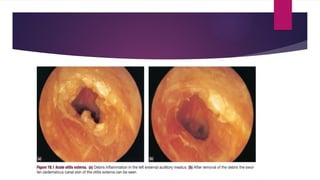
 Otitis externa is a clinical diagnosis based on symptoms and signs:
 pain, itch, oedema and erythema of the external auditory canal with or
without purulent otorrhoea and debris in the meatus
 An active Chronic otitis media may be identifiable in some cases
Epidemiology
 Otitis externa is estimated to have a prevalence of 0.4% per year
 It affects approximately 10% of the population during their lifetime
Outcome
 If untreated, mild attacks of otitis externa often spontaneously resolve as
the epithelial barrier becomes re-established, the piloapocrine units
produce normal secretions and the PH of the canal returns to normal.
 If the inflammation progresses faster than repair, increasing pain, otorrhoea
and oedema of the canal occurs and the patient‘s condition will
deteriorate
Complications
 Lymphadenopathy
 Erysipelas
 Parotitis
 Perichondritis/ Chondritis/ Cellulitis
 Malignant otitis externa
 Canal fibrosis and stenosis
Management
The principles of treatment of otitis externa are as follows:
thorough and regular aural toilet
topical medication to the external auditory canal, with or without a wick
analgesia
treatment of regional and/or systemic complications with systemic antibiotics
 prevention of aetiological factors that could lead to exacerbation or
recurrence.
Treatment of Acute Otitis Externa
 Ear toilet - Toilet remains the most effective single treatment for otitis
externa
 Medicated wicks
 Glycerol and ichthammol (90% : 10%)
 Antibiotic-steroid preparation
 Acidifying/antiseptic agents – gentian violet
Mild astringent – 8% aluminium acetate/3% silver nitrate
Treatment of Acute Otitis Externa
 Antibiotics
 Topical antibiotics – (Neomycin/Ciprofloxacin/Ofloxacin)
 with/without corticosteroids
Broad spectrum systemic antibiotics
 Analgesics
Treatment of Chronic Otitis Externa
GOAL- prevent stenosis & restore normal skin in EAC
Frequent inspection & debridment of EAC
Antibiotic-corticosteroid topical applications
EAC can be painted with gentian violet/ triamcinolone/nystatin
 Treat underlying causes – Seborrhoea, Psoriasis, Neurodermatitis
 Canalplasty with skin grafting – restore canal patency and hearing
Prevention
 Avoid water entry/ avoid using cotton buds/avoid digital manipulation of
ear canal
 Swimmers are instructed to use ear plugs
Otitis Externa ear PowerPoint presentation

Otitis Externa ear PowerPoint presentation

  • 1.
    OTITIS EXTERNA DR VISHNU VANDANAKAVATUR SIR H N RELIANCE FOUNDATION HOSPITAL
  • 2.
    Definition  It isa generalised condition of the skin in EAC  It is characterised by general oedema & erythema which may be associated with itchy discomfort with or without ear discharge
  • 3.
  • 4.
    Aetiology INFECTIVE : Bacterial Localised otitisexterna (furuncle) Diffuse otitis externa  Malignant otitis externa  Fungal  Otomycosis Viral Herpes zoster oticus  Otitis Externa Haemmorhagica
  • 5.
  • 6.
    Aetiology REACTIVE: Eczematous otitis externa Seborrheicotitis externa  Irritant/Allergic Up to 25% of patients may be clinically hypersensitive to topical medication. Steroids may also sensitize the ear and can be a major exacerbating factor in some patients. This hypersensitivity can be through both atopic and non-atopic ‘allergic’ mechanisms and may or may not involve IgE.
  • 7.
    Pathogenesis Clinical course ofotitis externa can be divided into: Pre-inflammatory stage Acute inflammatory stage  Chronic inflammatory stage
  • 8.
    Pre-inflammatory Stage Protective lipid/acidbalance is lost Stratum Corneum – oedematous  Blocks sebaceous/apocrine glands - aural fullness/itching
  • 9.
    Acute Inflammatory Stage Thereis progressively thickening exudate, increasing oedema obliteration of lumen and increasing pain 3 grades:  mild: little or no obliteration  moderate: sub-total obliteration  severe: complete obliteration Severe stage – cervical lymphadenopathy
  • 10.
    Chronic Inflammatory Stage Inflammationslasting > 6 months Thickening of external canal skin  Fibrous canal stenosis  Acquired Atresia of the external ear
  • 11.
    Diagnosis  Otitis externais a clinical diagnosis based on symptoms and signs:  pain, itch, oedema and erythema of the external auditory canal with or without purulent otorrhoea and debris in the meatus  An active Chronic otitis media may be identifiable in some cases
  • 13.
    Epidemiology  Otitis externais estimated to have a prevalence of 0.4% per year  It affects approximately 10% of the population during their lifetime
  • 14.
    Outcome  If untreated,mild attacks of otitis externa often spontaneously resolve as the epithelial barrier becomes re-established, the piloapocrine units produce normal secretions and the PH of the canal returns to normal.  If the inflammation progresses faster than repair, increasing pain, otorrhoea and oedema of the canal occurs and the patient‘s condition will deteriorate
  • 15.
    Complications  Lymphadenopathy  Erysipelas Parotitis  Perichondritis/ Chondritis/ Cellulitis  Malignant otitis externa  Canal fibrosis and stenosis
  • 16.
    Management The principles oftreatment of otitis externa are as follows: thorough and regular aural toilet topical medication to the external auditory canal, with or without a wick analgesia treatment of regional and/or systemic complications with systemic antibiotics  prevention of aetiological factors that could lead to exacerbation or recurrence.
  • 17.
    Treatment of AcuteOtitis Externa  Ear toilet - Toilet remains the most effective single treatment for otitis externa  Medicated wicks  Glycerol and ichthammol (90% : 10%)  Antibiotic-steroid preparation  Acidifying/antiseptic agents – gentian violet Mild astringent – 8% aluminium acetate/3% silver nitrate
  • 18.
    Treatment of AcuteOtitis Externa  Antibiotics  Topical antibiotics – (Neomycin/Ciprofloxacin/Ofloxacin)  with/without corticosteroids Broad spectrum systemic antibiotics  Analgesics
  • 19.
    Treatment of ChronicOtitis Externa GOAL- prevent stenosis & restore normal skin in EAC Frequent inspection & debridment of EAC Antibiotic-corticosteroid topical applications EAC can be painted with gentian violet/ triamcinolone/nystatin  Treat underlying causes – Seborrhoea, Psoriasis, Neurodermatitis  Canalplasty with skin grafting – restore canal patency and hearing
  • 20.
    Prevention  Avoid waterentry/ avoid using cotton buds/avoid digital manipulation of ear canal  Swimmers are instructed to use ear plugs