Gianluca Varisco, CISO Arduino
Paris Open Source Summit - 10/12/2019
The evolving (IoT) security
landscape
@gvarisco
TODAY FORMERLY
Who am I? @gvarisco
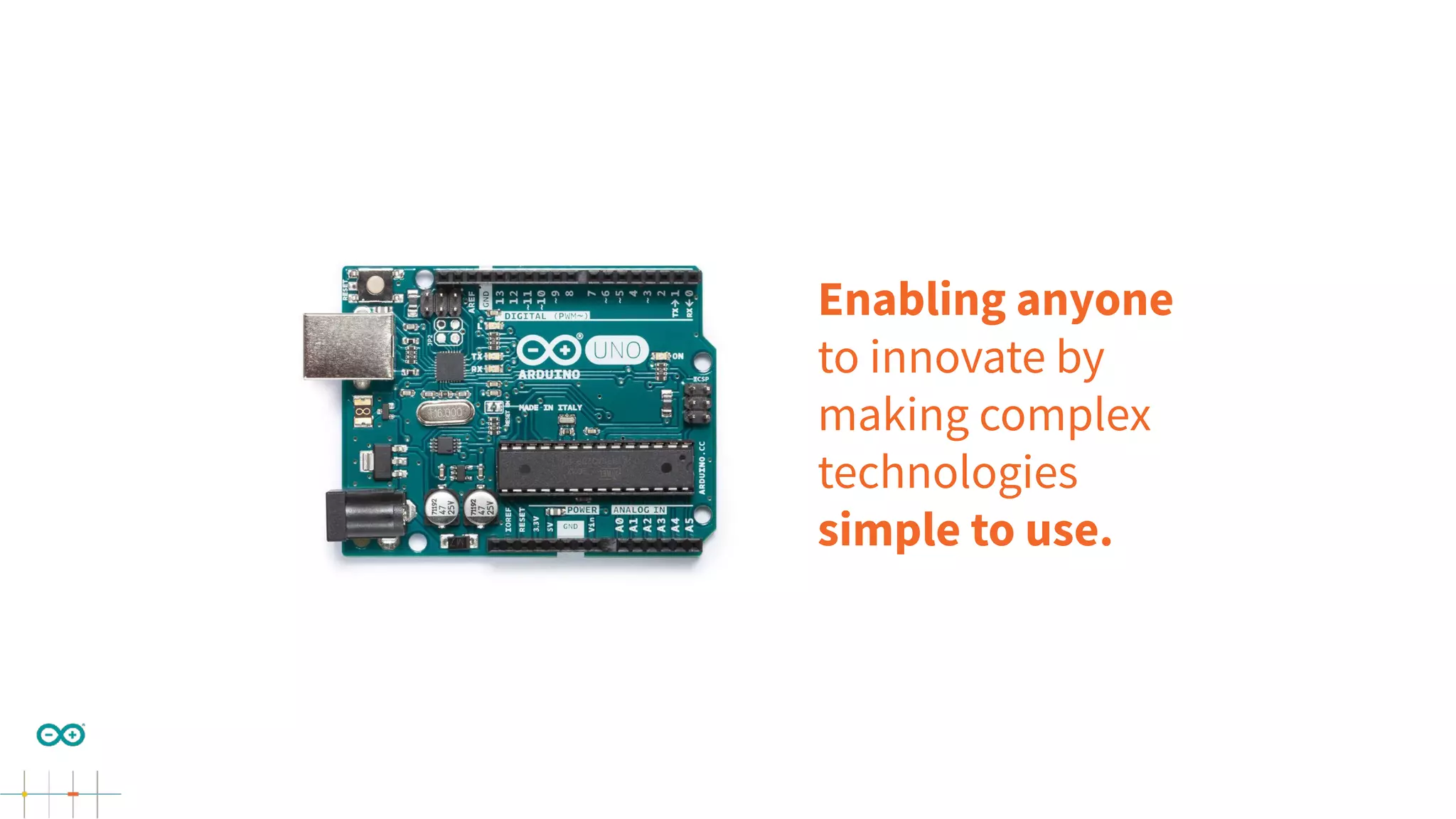
Enabling anyone
to innovate by
making complex
technologies
simple to use.
Developing secure and reliable IoT
applications can be hard
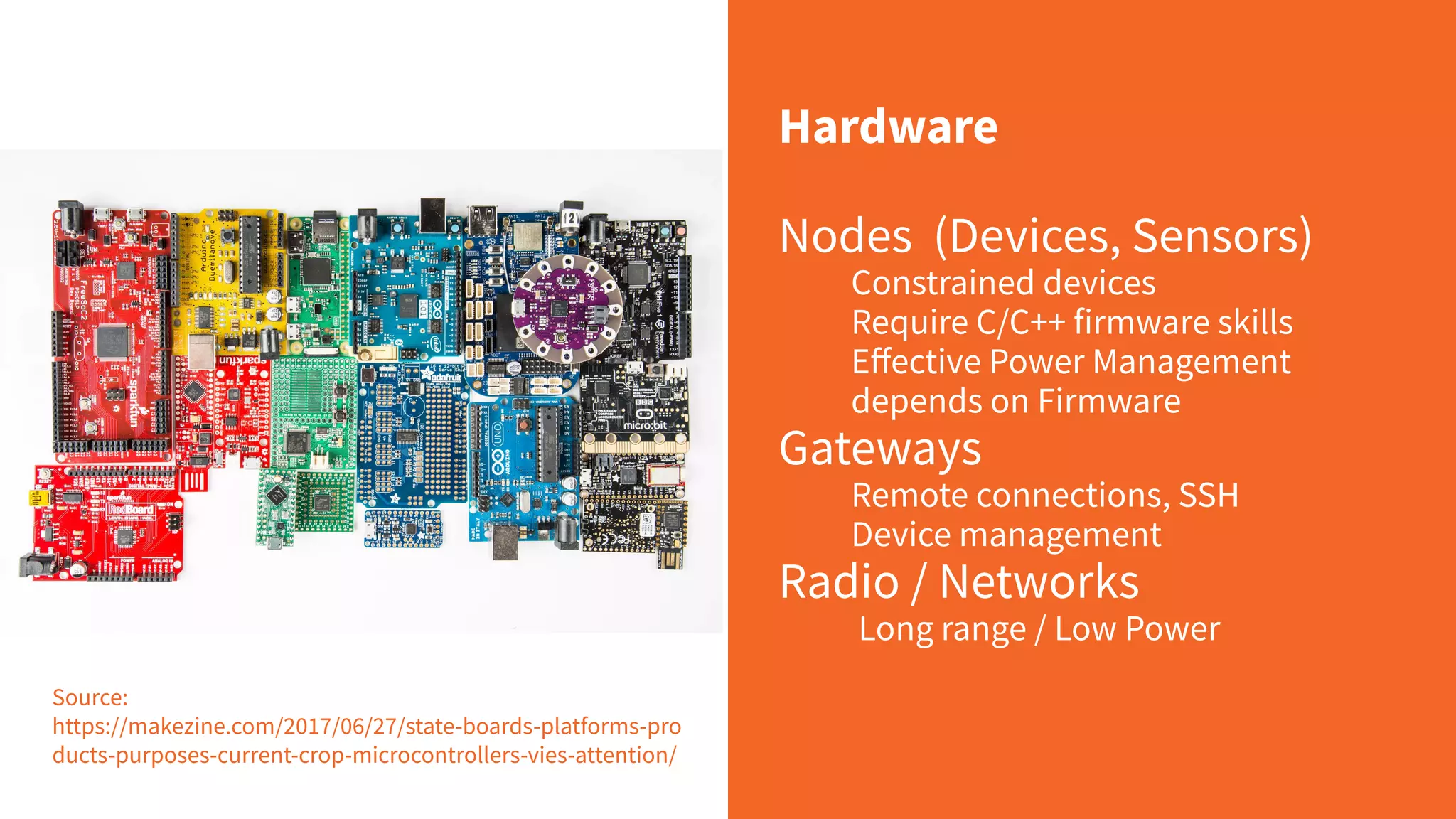
Hardware
Nodes (Devices, Sensors)
Constrained devices
Require C/C++ firmware skills
Effective Power Management
depends on Firmware
Gateways
Remote connections, SSH
Device management
Radio / Networks
Long range / Low Power
Source:
https://makezine.com/2017/06/27/state-boards-platforms-pro
ducts-purposes-current-crop-microcontrollers-vies-attention/
Cloud Software
Many different
languages, protocols,
libraries, security
standards, etc.
Data & persistence
Different data formats
make data manipulation
and interpretation
difficult
8
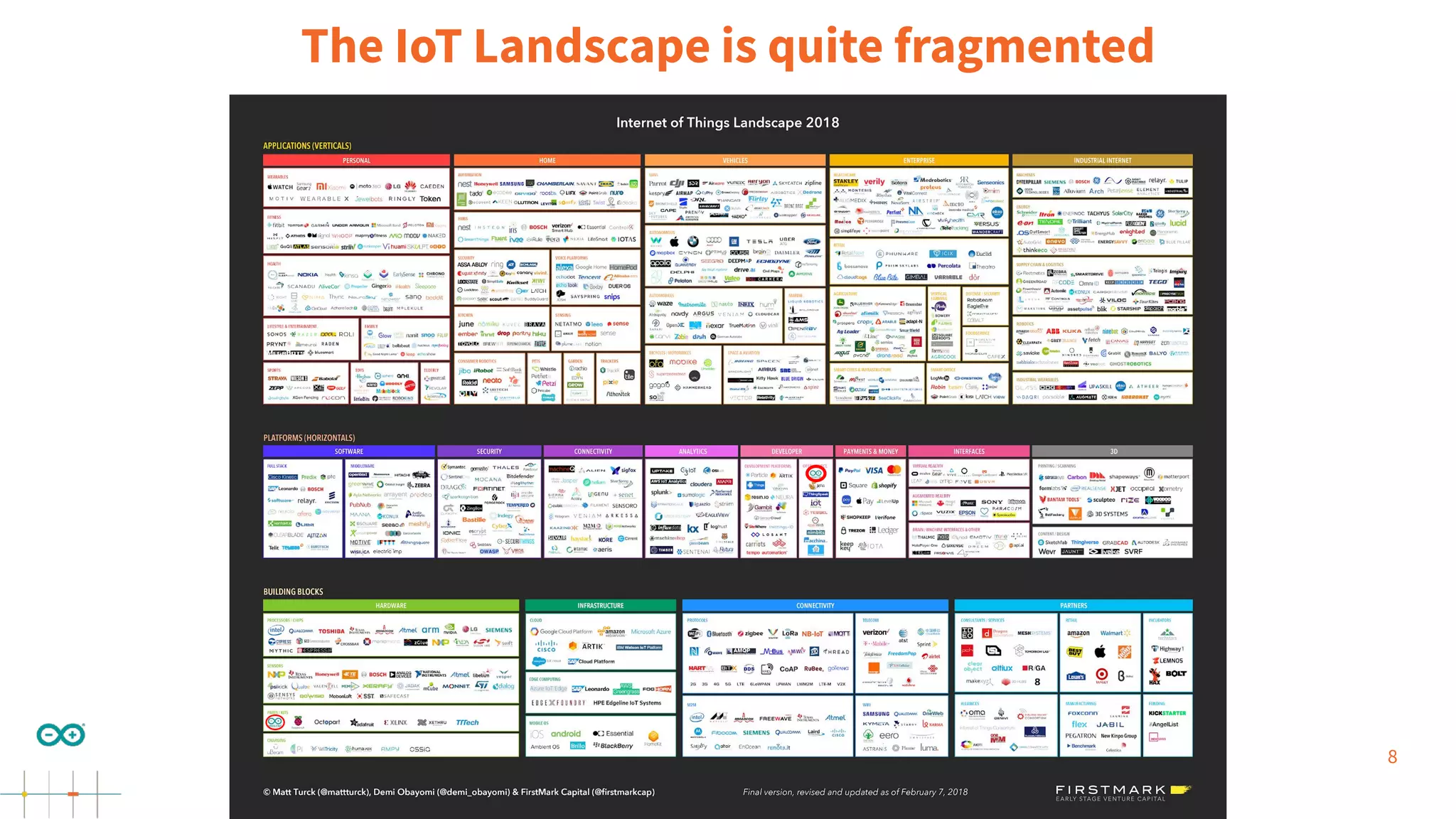
The IoT Landscape is quite fragmented
9
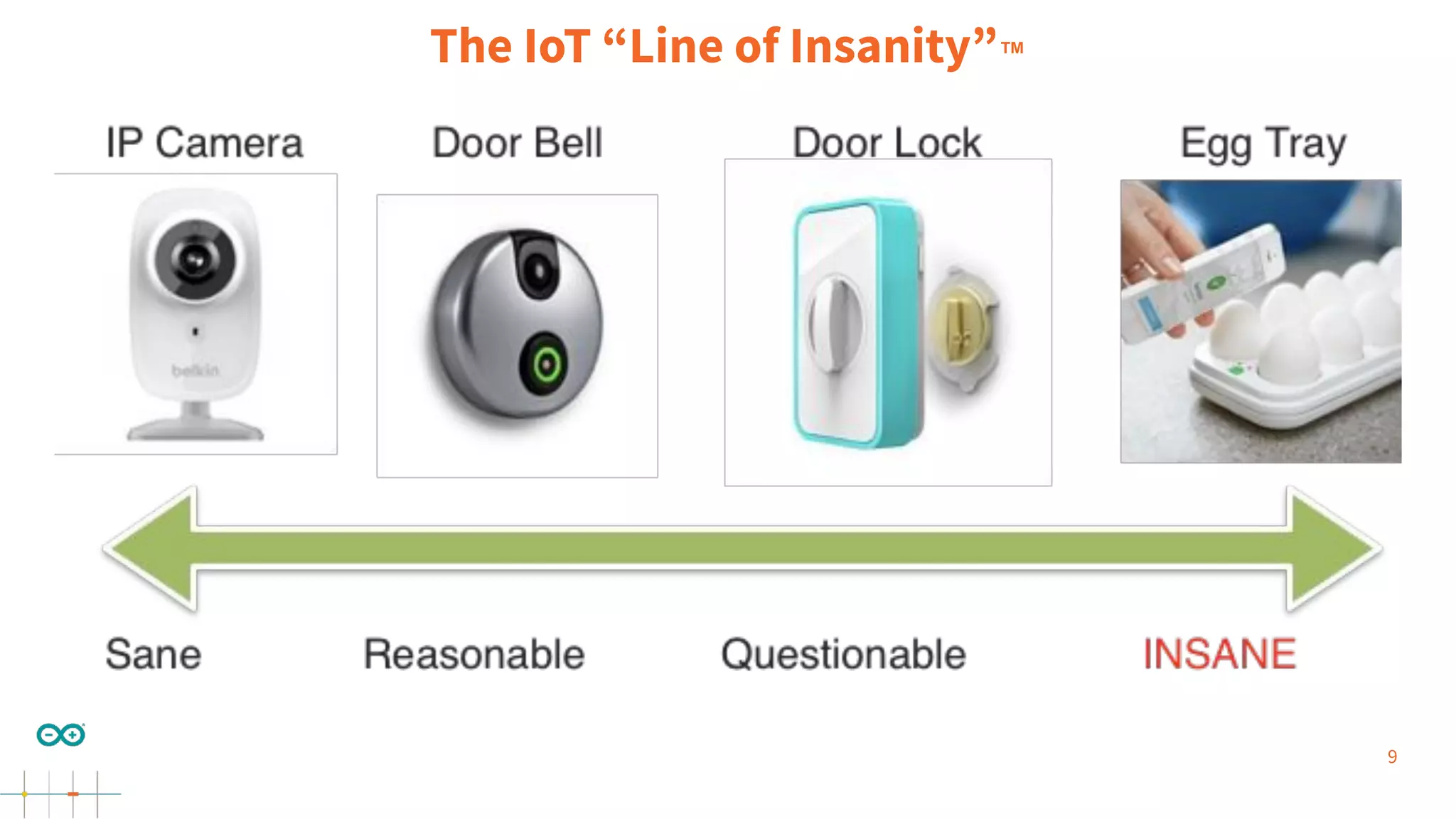
The IoT “Line of Insanity”™
We are drowning in technology.
We are not becoming more secure.
11
− Not realizing to be potential targets
− Treating cybersecurity as an IT
problem
− Thinking threats are only external
rather than internal or accidental
− Thinking the cloud provider is in
charge of data/infra security (oh,
and backups!)
− Not using properly their e-mail
infrastructure, especially if managed
by 3rd parties
We are wasting billions to “defend
ourselves” from APTs. Buying
Next-Gen appliances. Following
predictions and hypes.
Don't be scared to go back to
basics with your cybersecurity
strategy.
Many of us are still making the same, old mistakes
12
− PERVASIVENESS: You won’t have one IoT device, you’ll have ten.
− That’s a lot of new attack surface to your life and/or business
− UNIQUENESS: IoT devices are a wild-west of mixed technologies.
− How do I patch firmware on these dozen devices?
− Which random vendor made the HW inside the device?
So? What’s wrong in IoT?
13
− ECOSYSTEM: Your vendor may be leveraging six other vendors
− Where’s your data going once it enters that IoT device?
− Who has access to your network via proxy connections?
So? What’s wrong in IoT?
14
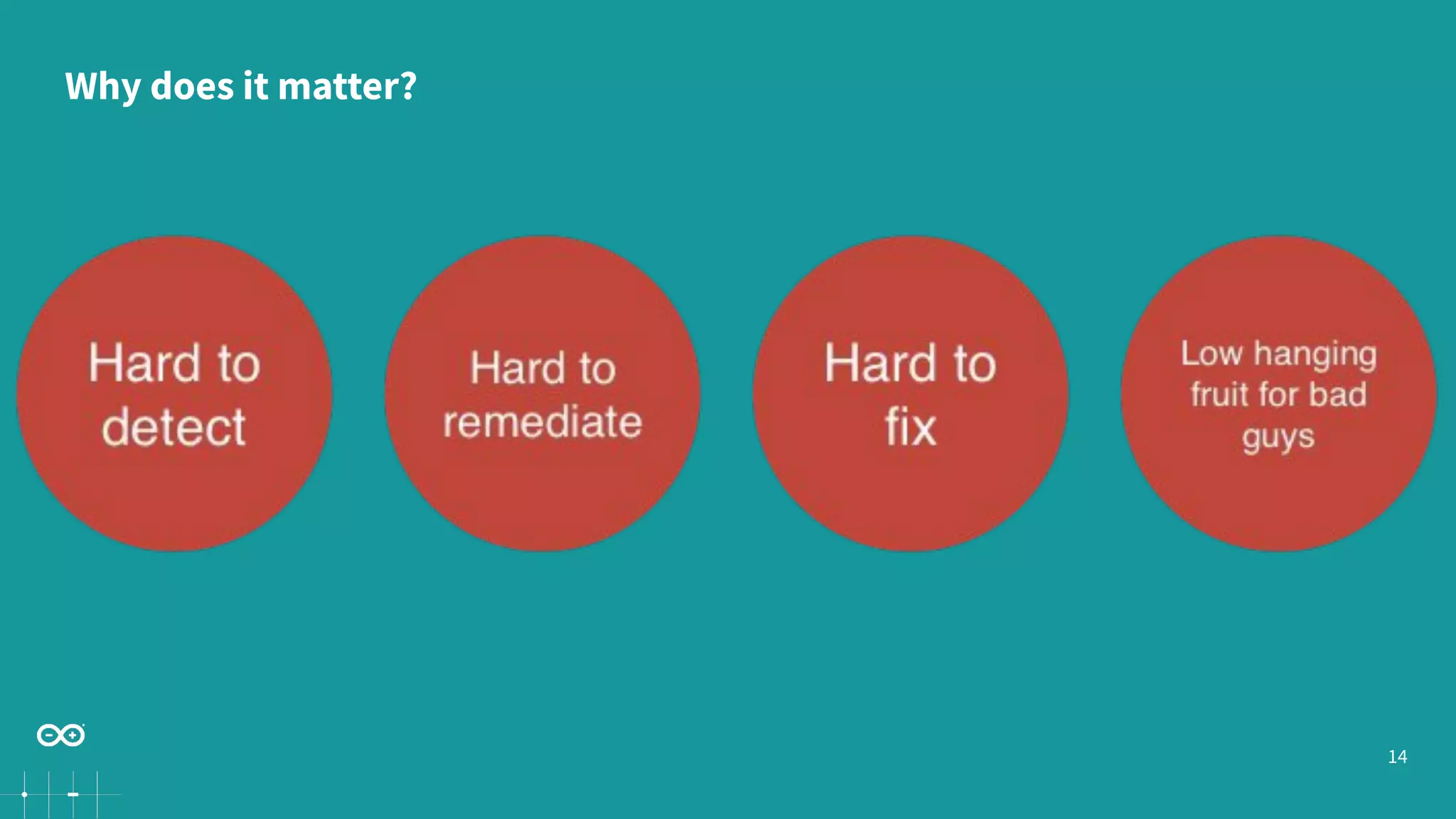
Why does it matter?
15
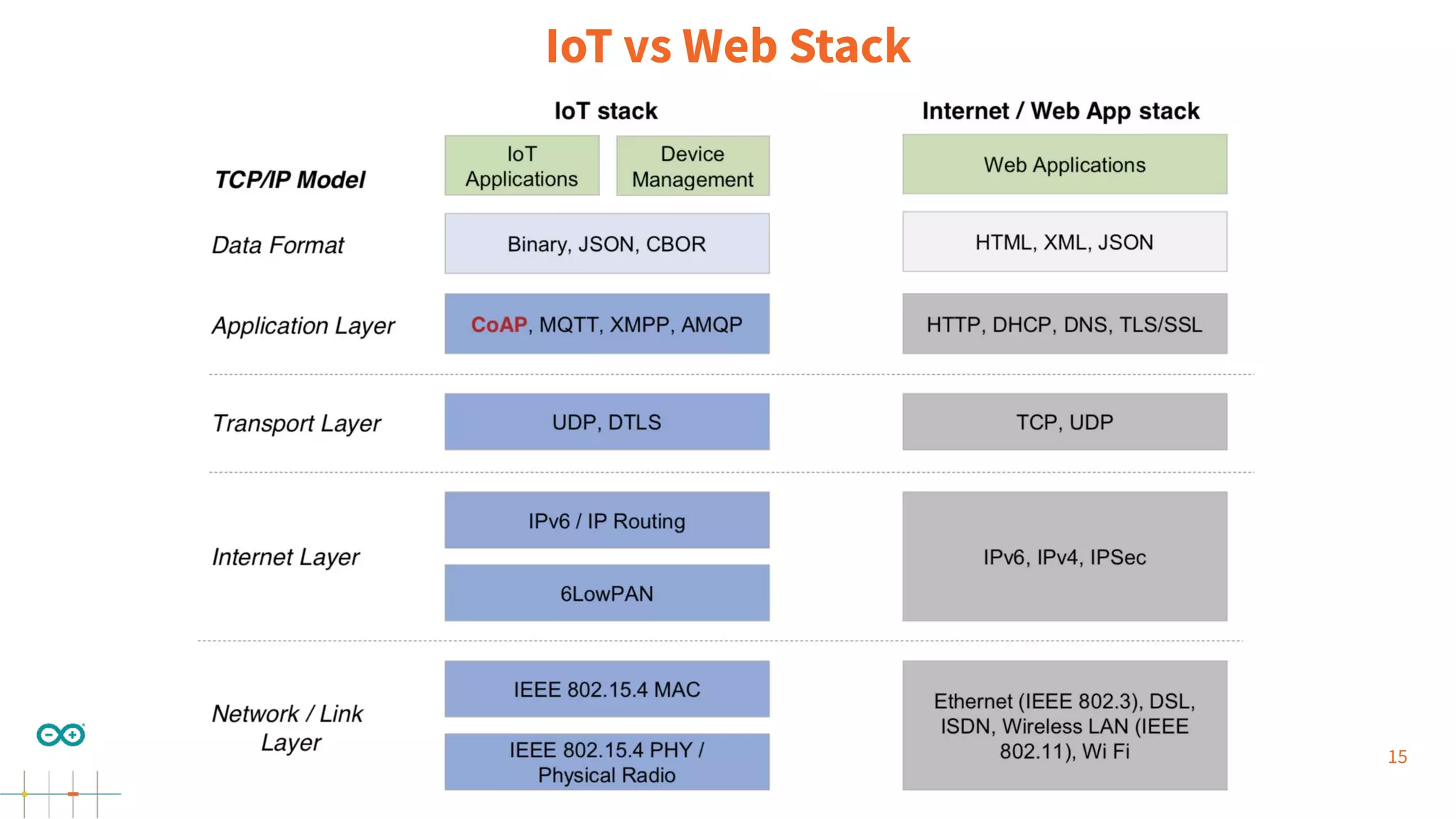
IoT vs Web Stack
16
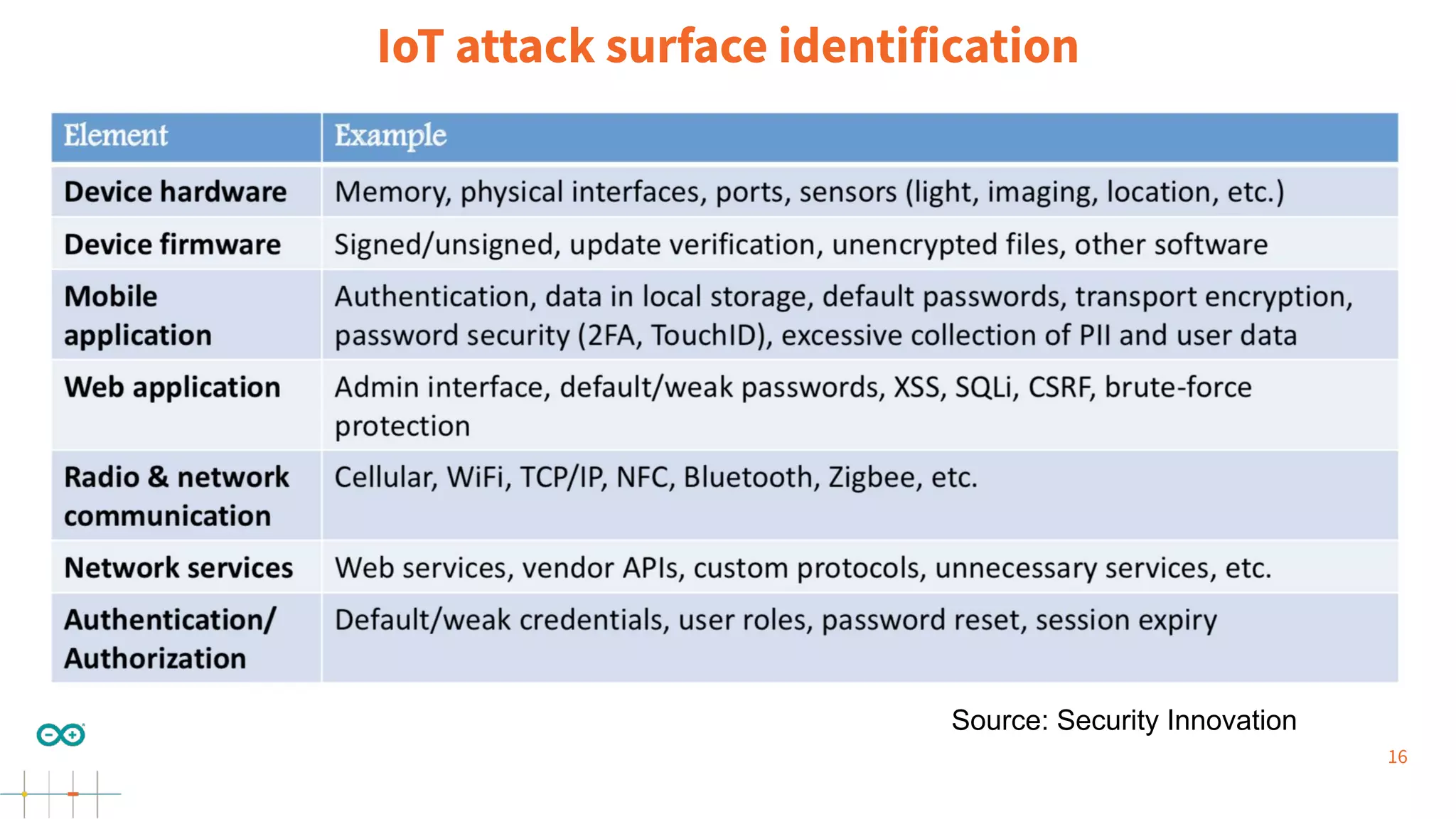
IoT attack surface identification
Source: Security Innovation
17
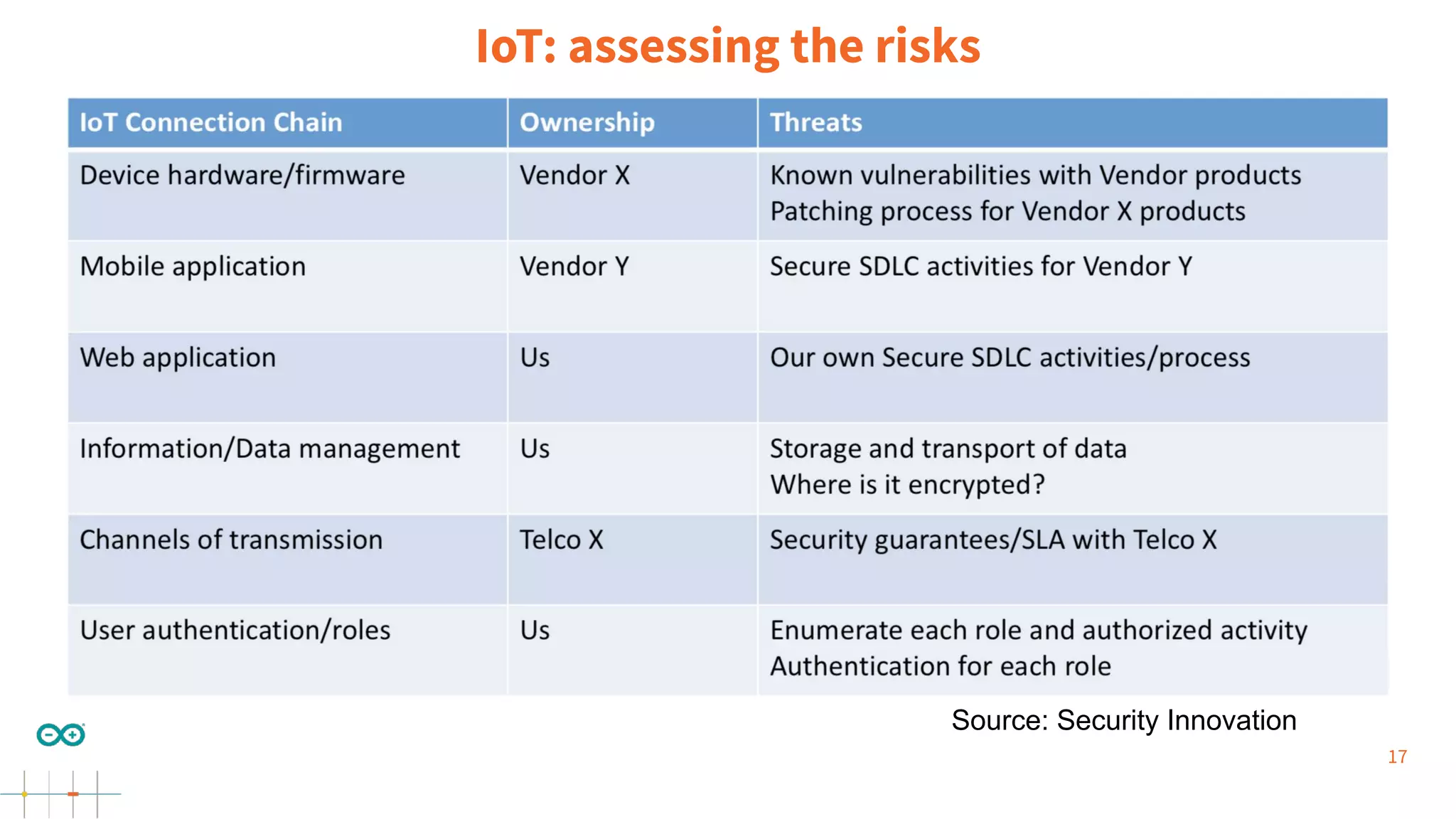
IoT: assessing the risks
Source: Security Innovation
18
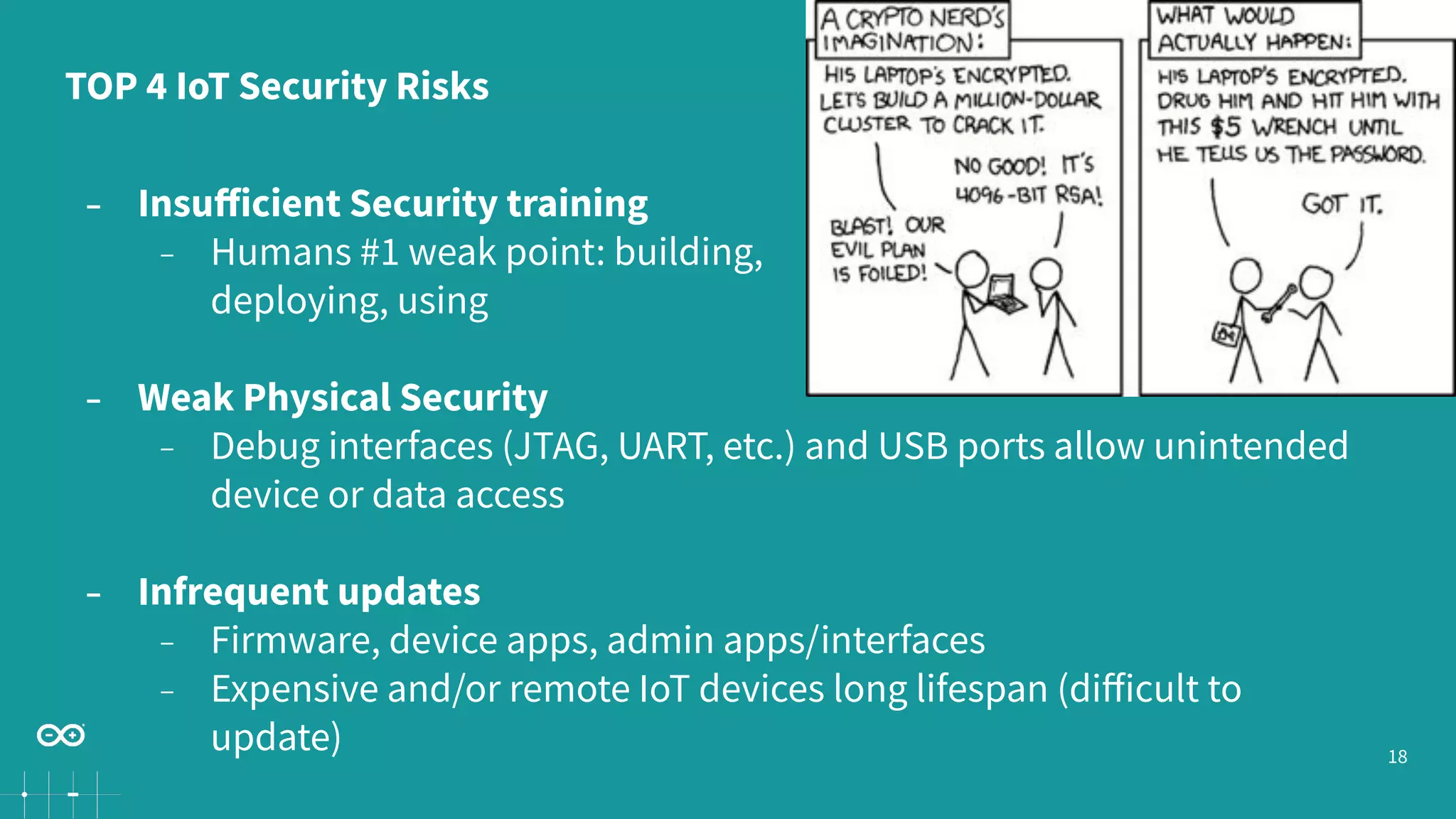
− Insufficient Security training
− Humans #1 weak point: building,
deploying, using
− Weak Physical Security
− Debug interfaces (JTAG, UART, etc.) and USB ports allow unintended
device or data access
− Infrequent updates
− Firmware, device apps, admin apps/interfaces
− Expensive and/or remote IoT devices long lifespan (difficult to
update)
TOP 4 IoT Security Risks
19
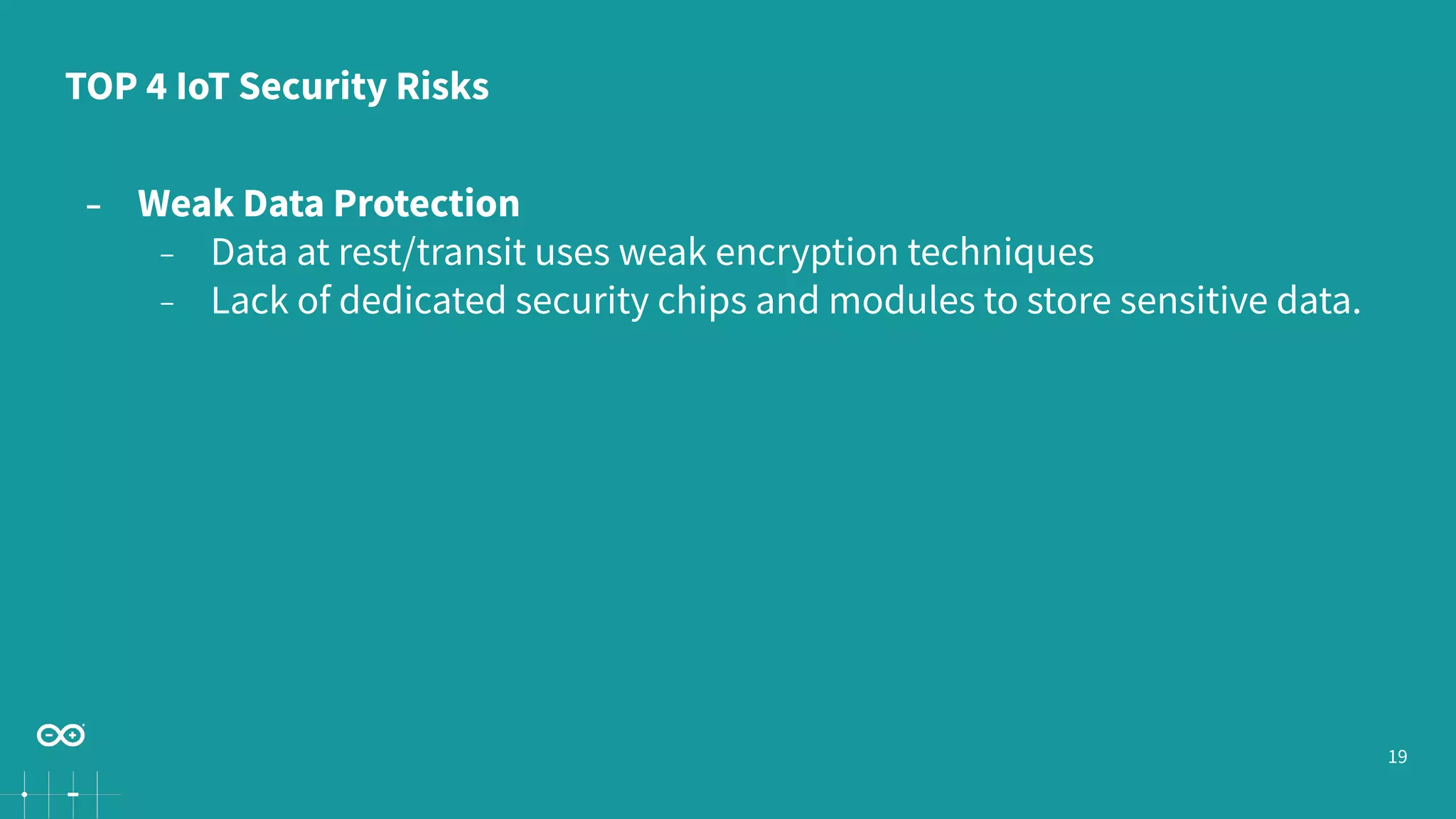
− Weak Data Protection
− Data at rest/transit uses weak encryption techniques
− Lack of dedicated security chips and modules to store sensitive data.
TOP 4 IoT Security Risks
20
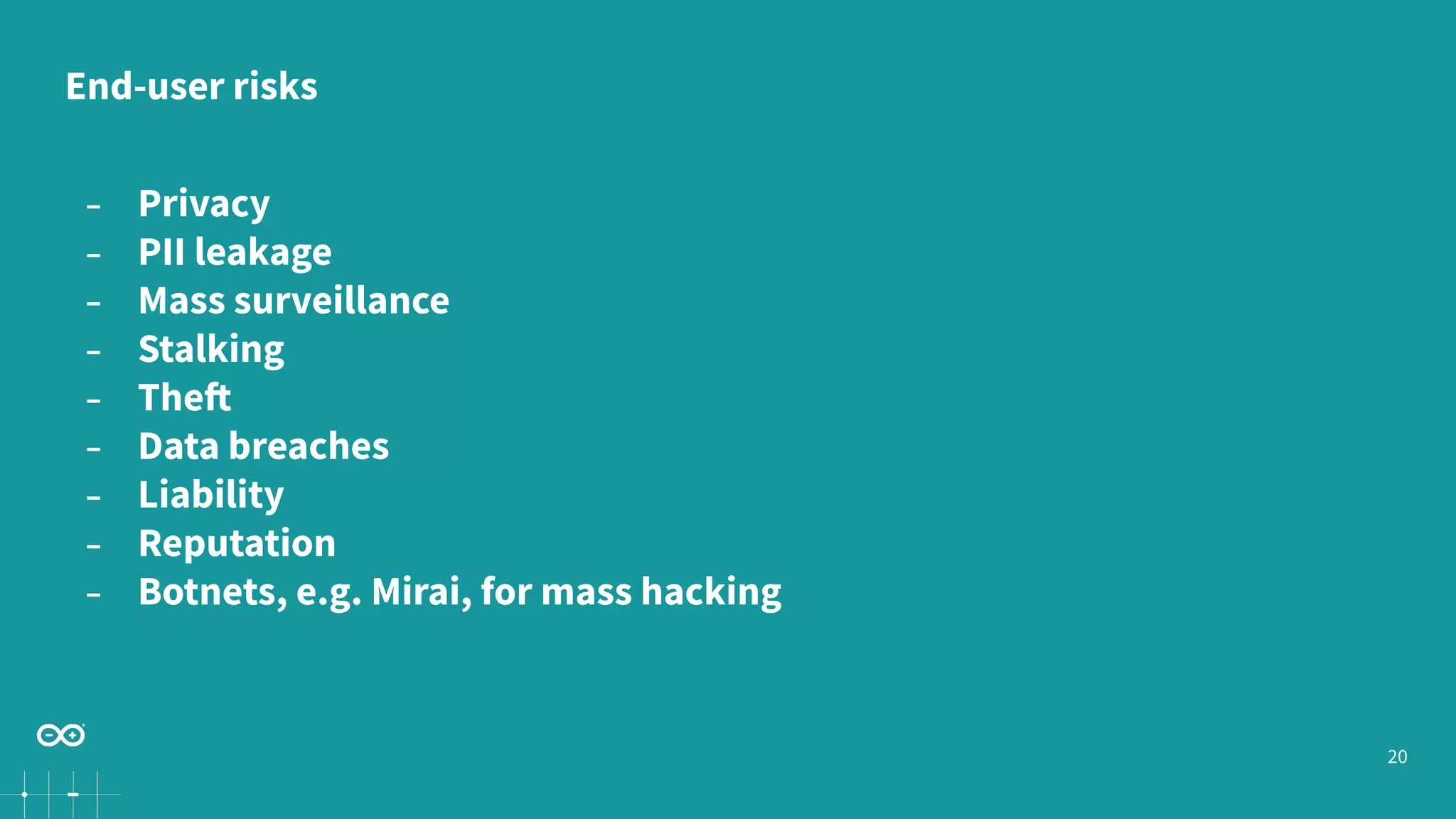
− Privacy
− PII leakage
− Mass surveillance
− Stalking
− Theft
− Data breaches
− Liability
− Reputation
− Botnets, e.g. Mirai, for mass hacking
End-user risks
IoT Security Excuses
(aka #YOLOSEC)
22
− Vulnerabilities bypassing password protection:
− Memory corruption issues (Buffer Overflow, Format String, etc.)
− CSRF
− Backdoor accounts
− Lack of brute-force protection
I am safe, I changed all my passwords
23
− Patches are often late by years
− Many IoT devices do not get a patch, ever
I am safe, I regularly patch all of my IoT devices
24
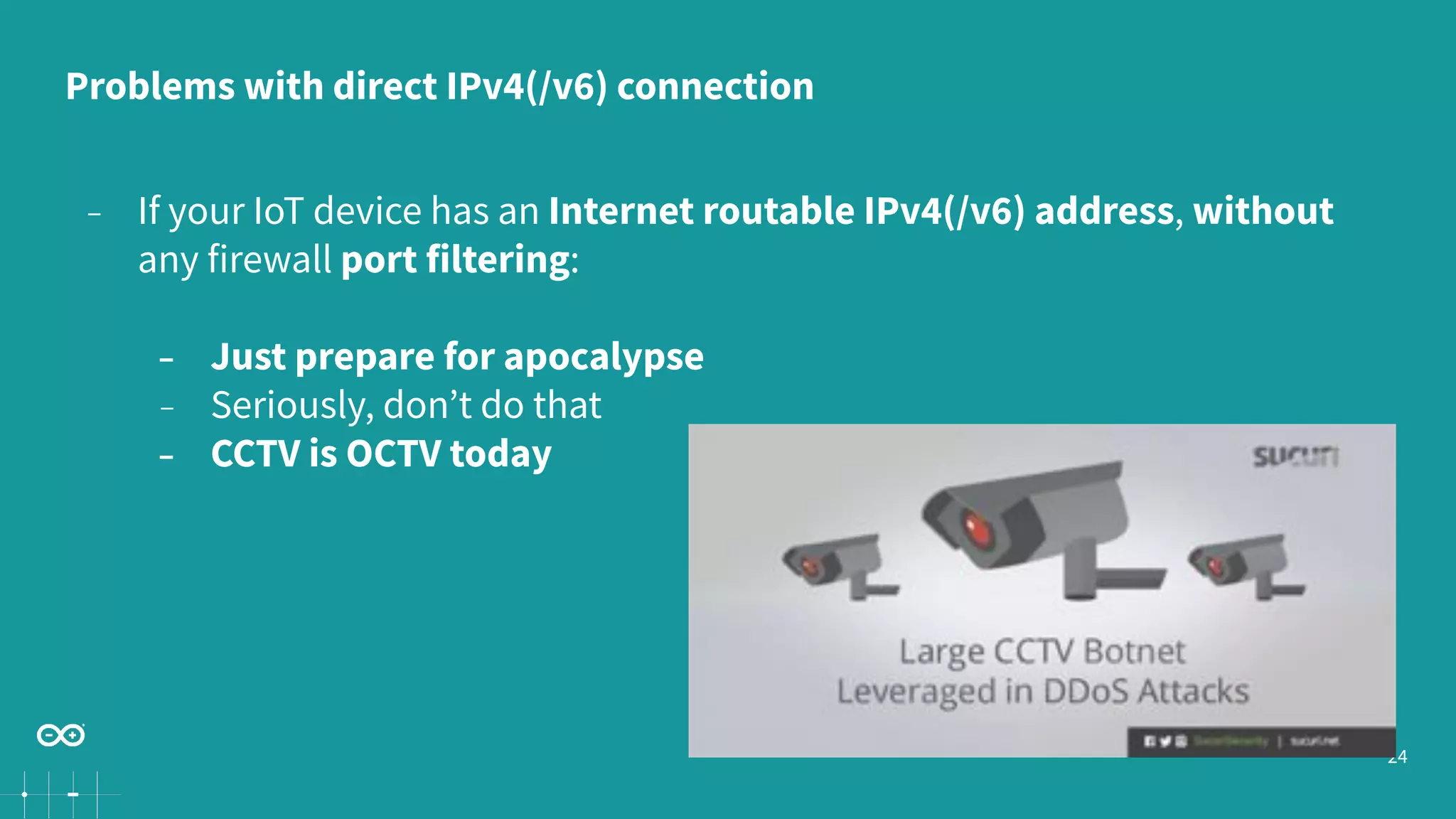
− If your IoT device has an Internet routable IPv4(/v6) address, without
any firewall port filtering:
− Just prepare for apocalypse
− Seriously, don’t do that
− CCTV is OCTV today
Problems with direct IPv4(/v6) connection
25
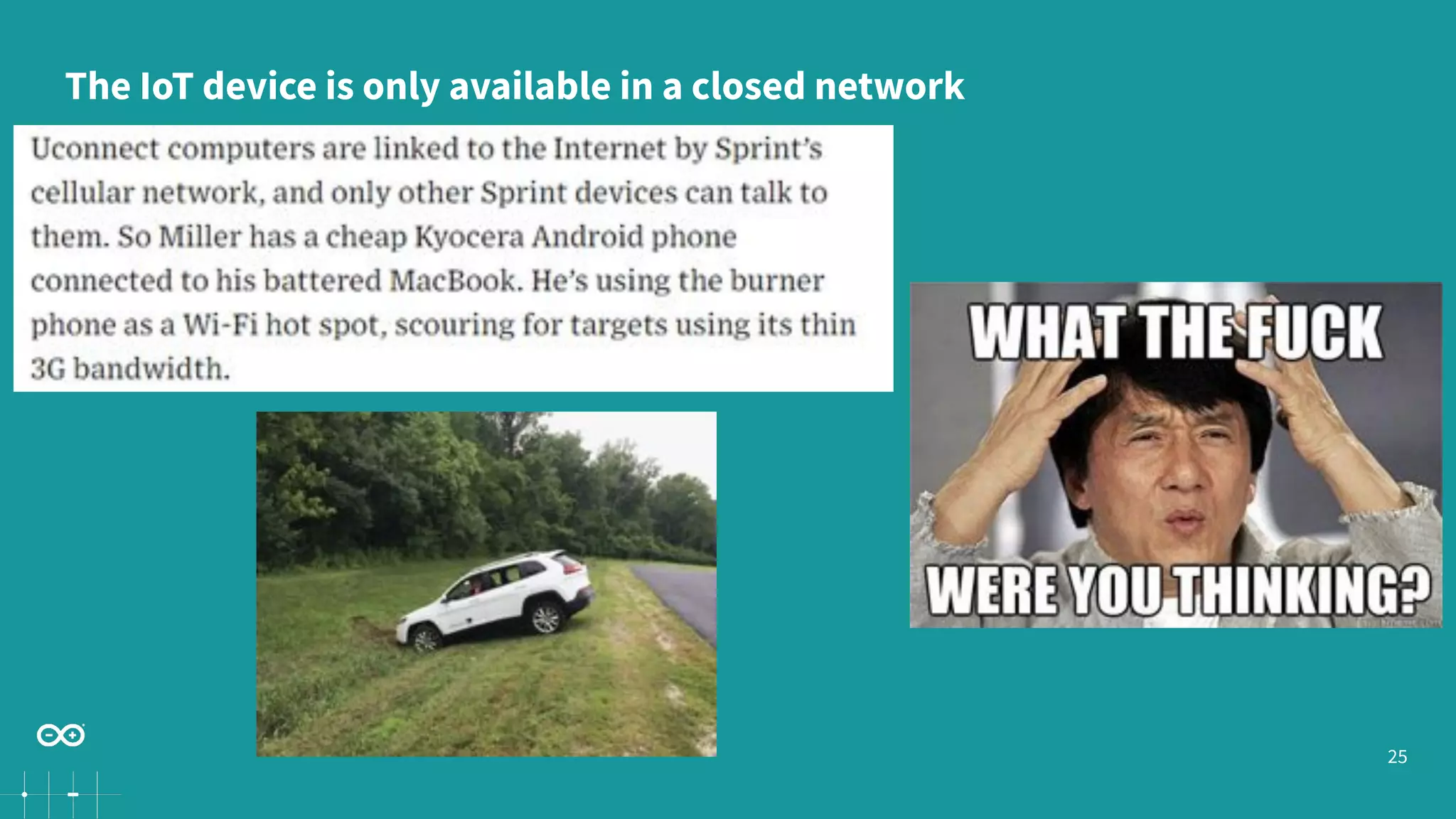
The IoT device is only available in a closed network
26
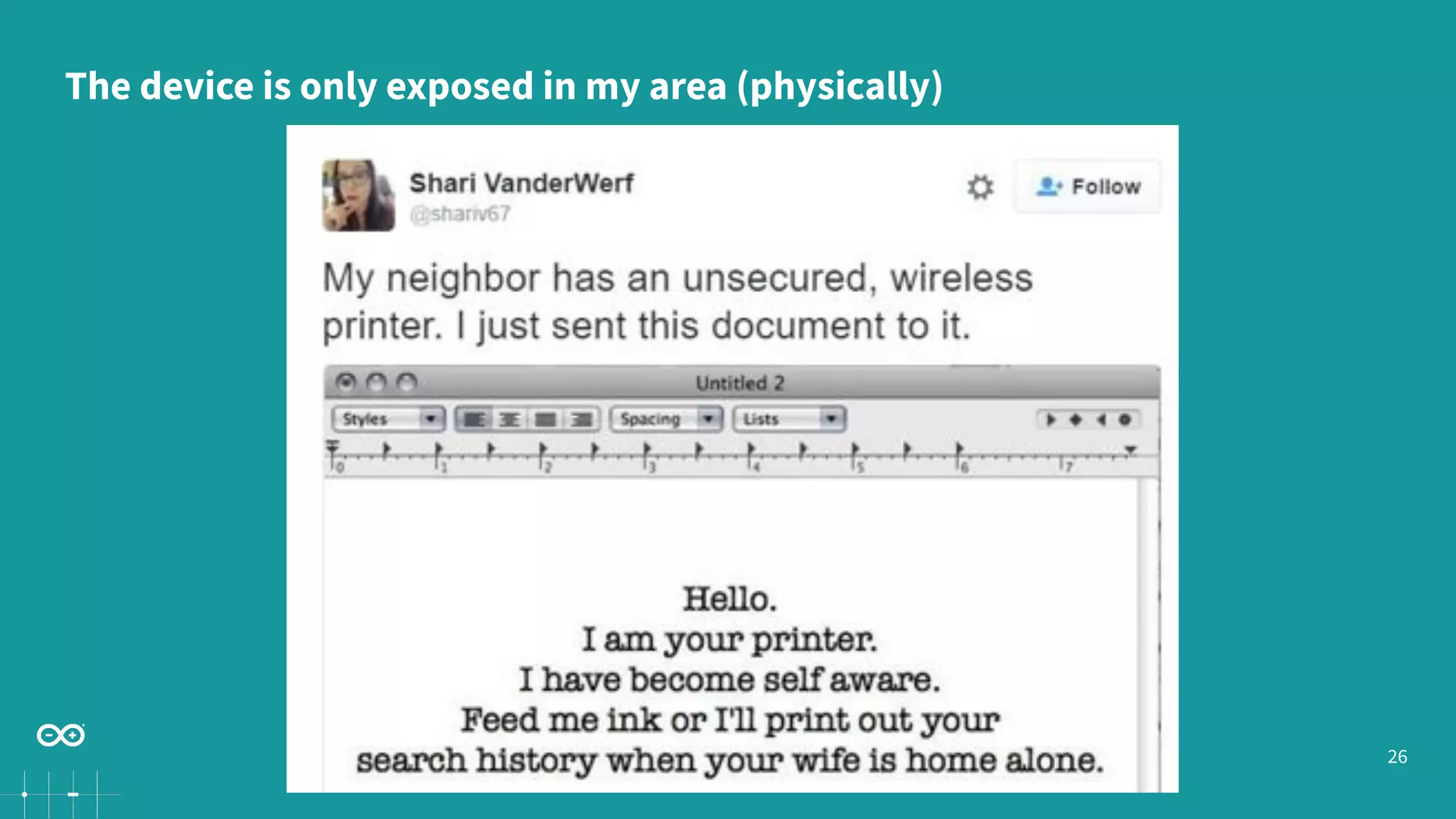
The device is only exposed in my area (physically)
27
− NAT is sneaky evil
− Users believe they are safe behind home router NAT
− Developers created ways to connect devices behind NAT, seamless
I am safe, home network, behind NAT
28
Think again:
− UPNP
− IPv6
− Teredo (encapsulates IPv6 packets within UDP/IPv4 datagrams)
− Cloud
I am safe, home network, behind NAT
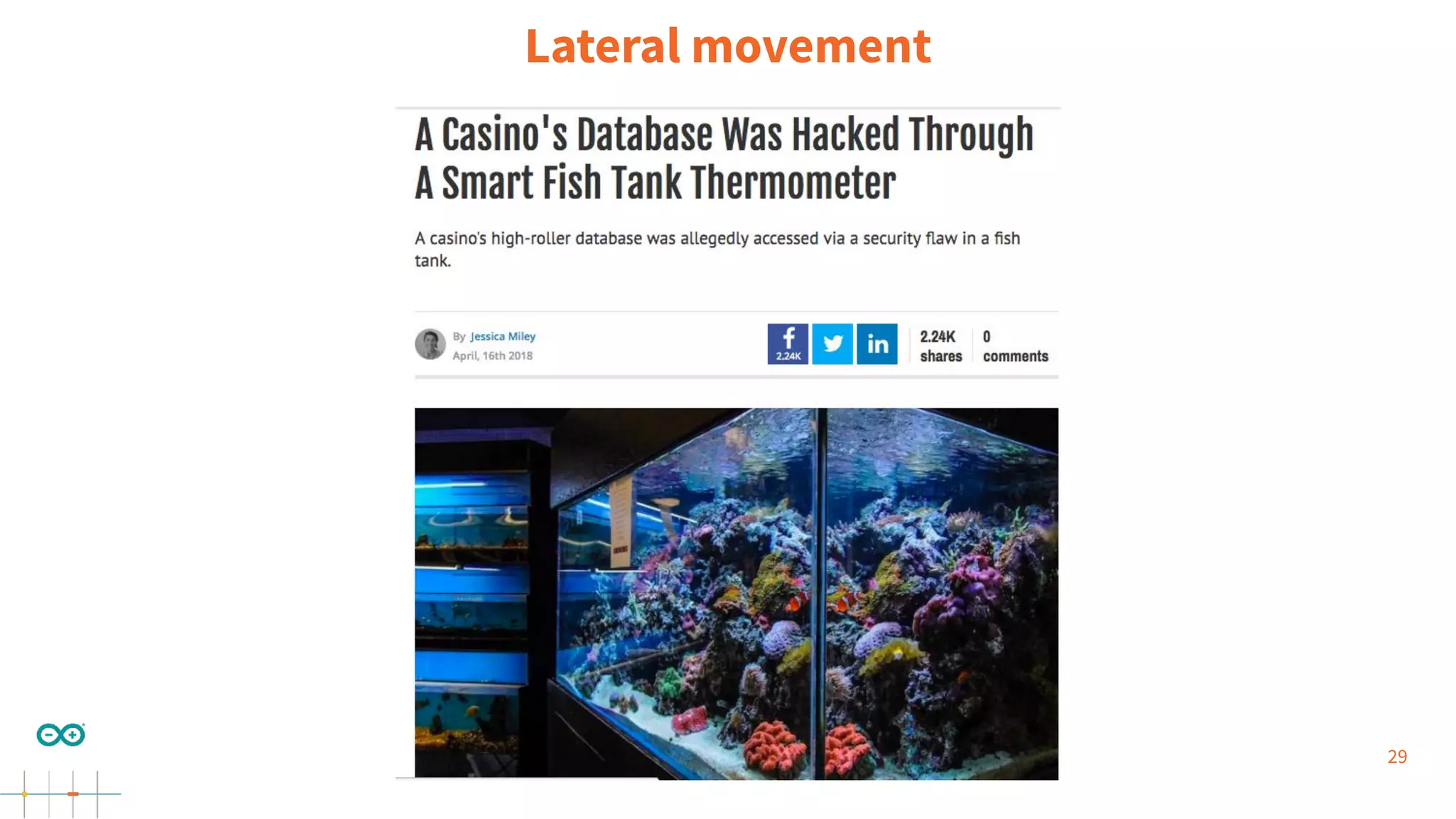
29
Lateral movement
For the next 5-10 years, assume
your IoT device has horrible
security holes it won’t receive
patches for, ever.
Lack of visibility is in fact the main
precursor to security incidents.
Many of us don’t have IR capabilities.
They all immediately PANIC!
Organizations are still getting breached due to poor
key/credentials management, unpatched
applications and misconfigured services (eg. cloud
databases).
33
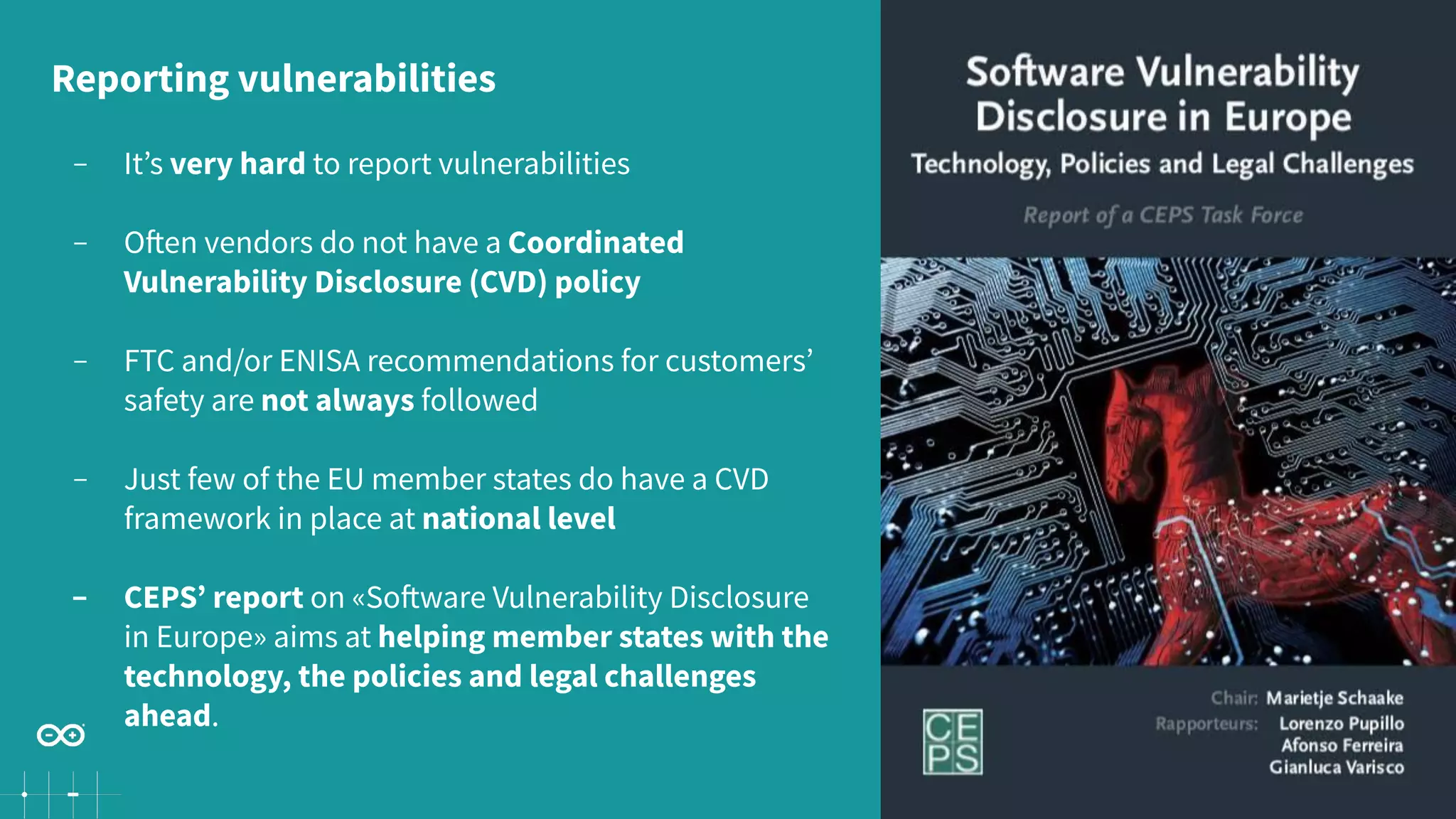
− It’s very hard to report vulnerabilities
− Often vendors do not have a Coordinated
Vulnerability Disclosure (CVD) policy
− FTC and/or ENISA recommendations for customers’
safety are not always followed
− Just few of the EU member states do have a CVD
framework in place at national level
− CEPS’ report on «Software Vulnerability Disclosure
in Europe» aims at helping member states with the
technology, the policies and legal challenges
ahead.
Reporting vulnerabilities
34
Mandatory Shodan slide
www.shodan.io
Our strategy
36
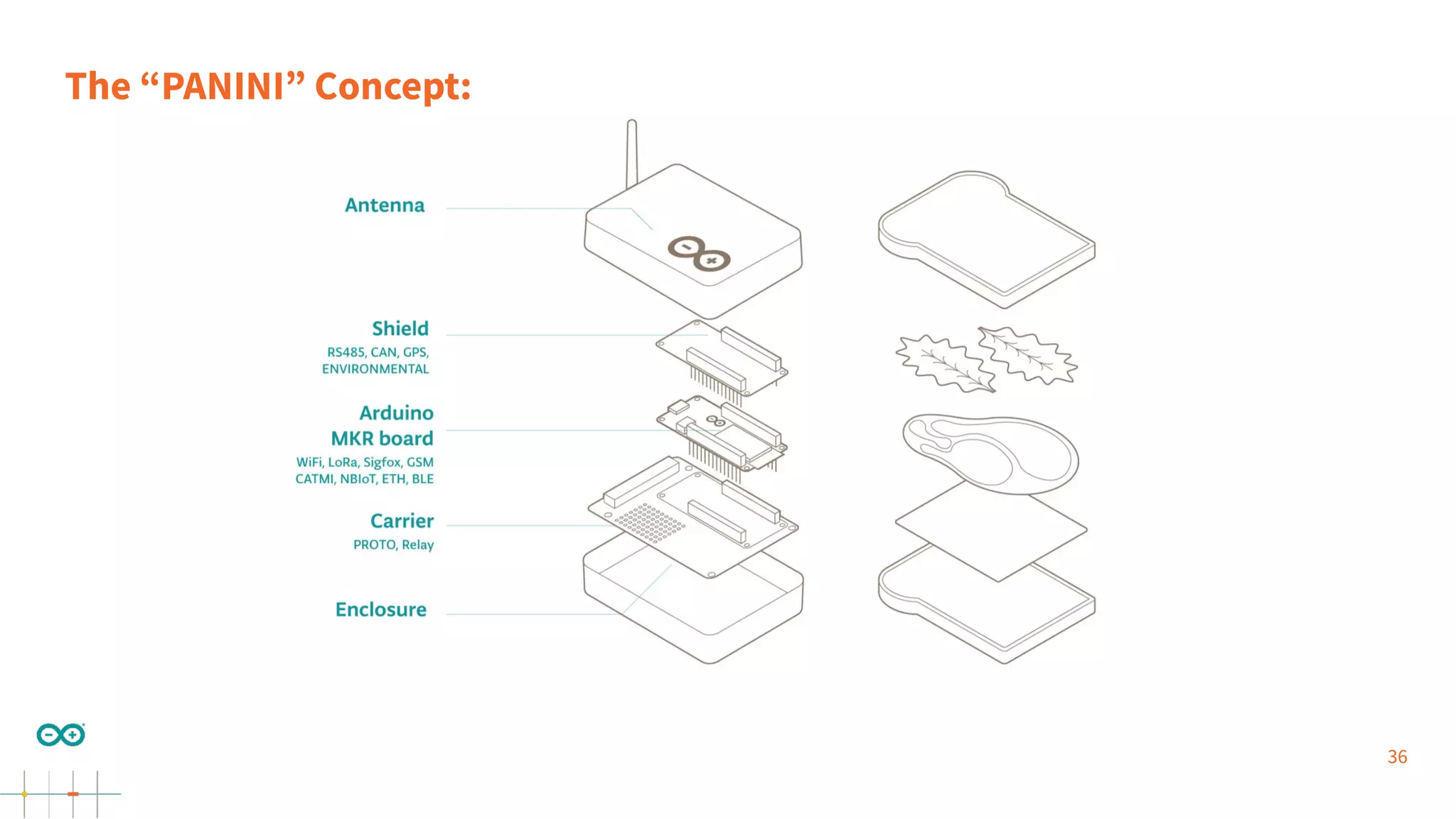
The “PANINI” Concept:
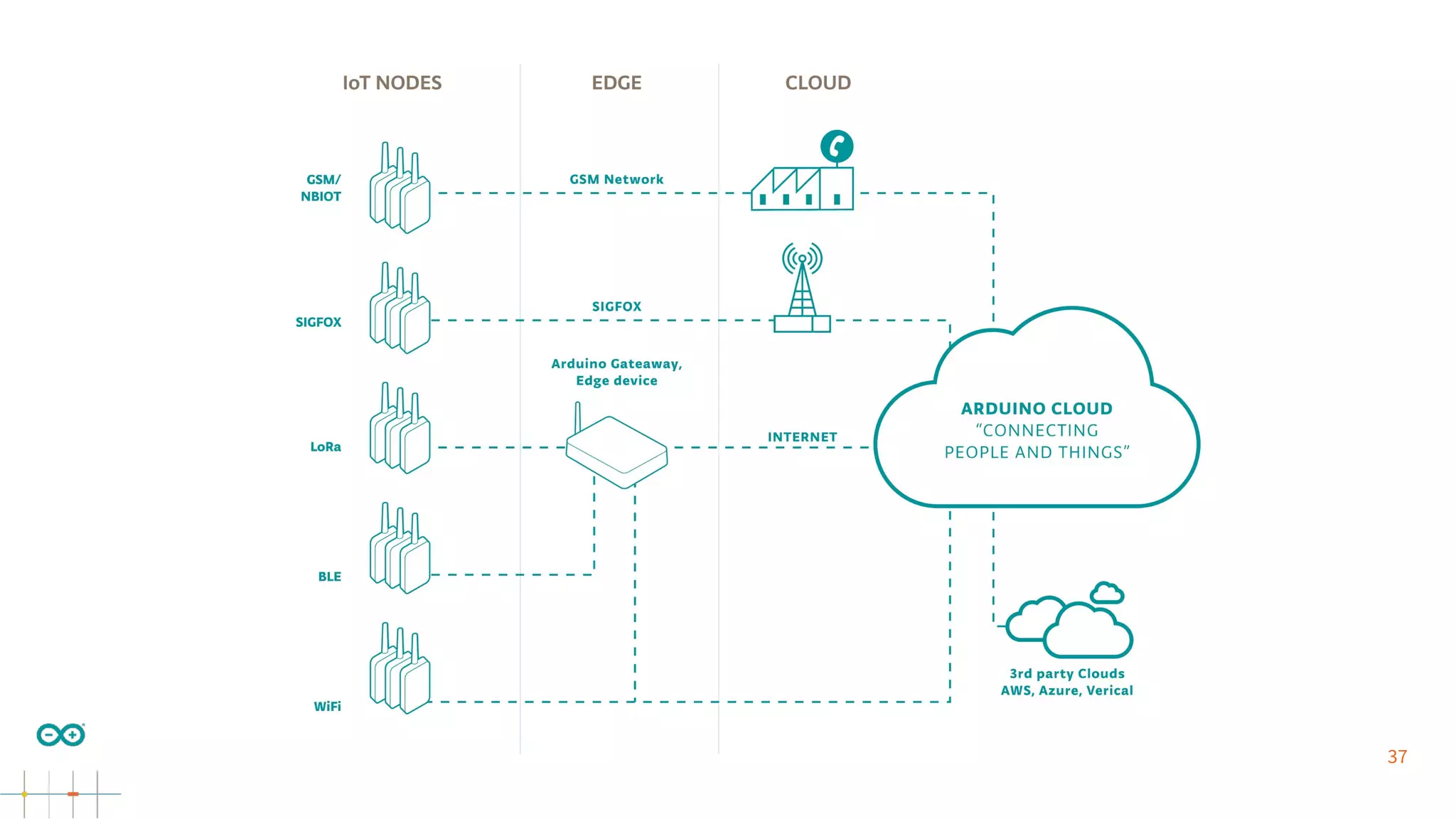
37
38
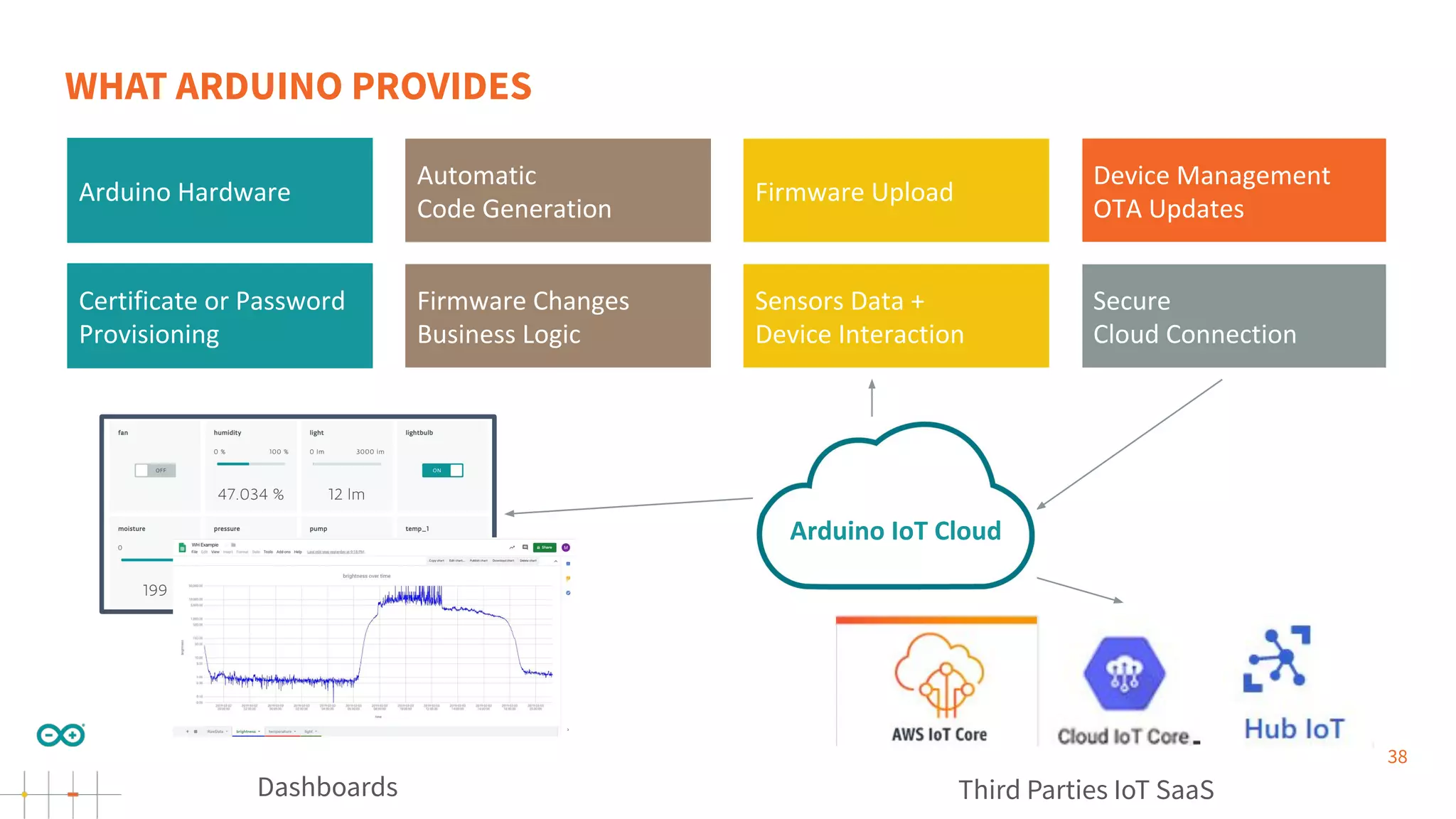
WHAT ARDUINO PROVIDES
Sensors Data +
Device Interaction
Automatic
Code Generation
Arduino Hardware
Secure
Cloud Connection
Device Management
OTA Updates
Firmware Changes
Business Logic
Firmware Upload
Certificate or Password
Provisioning
Dashboards Third Parties IoT SaaS
Arduino IoT Cloud
39
Security
Secure in every layer
Hardware
Software
Data
40
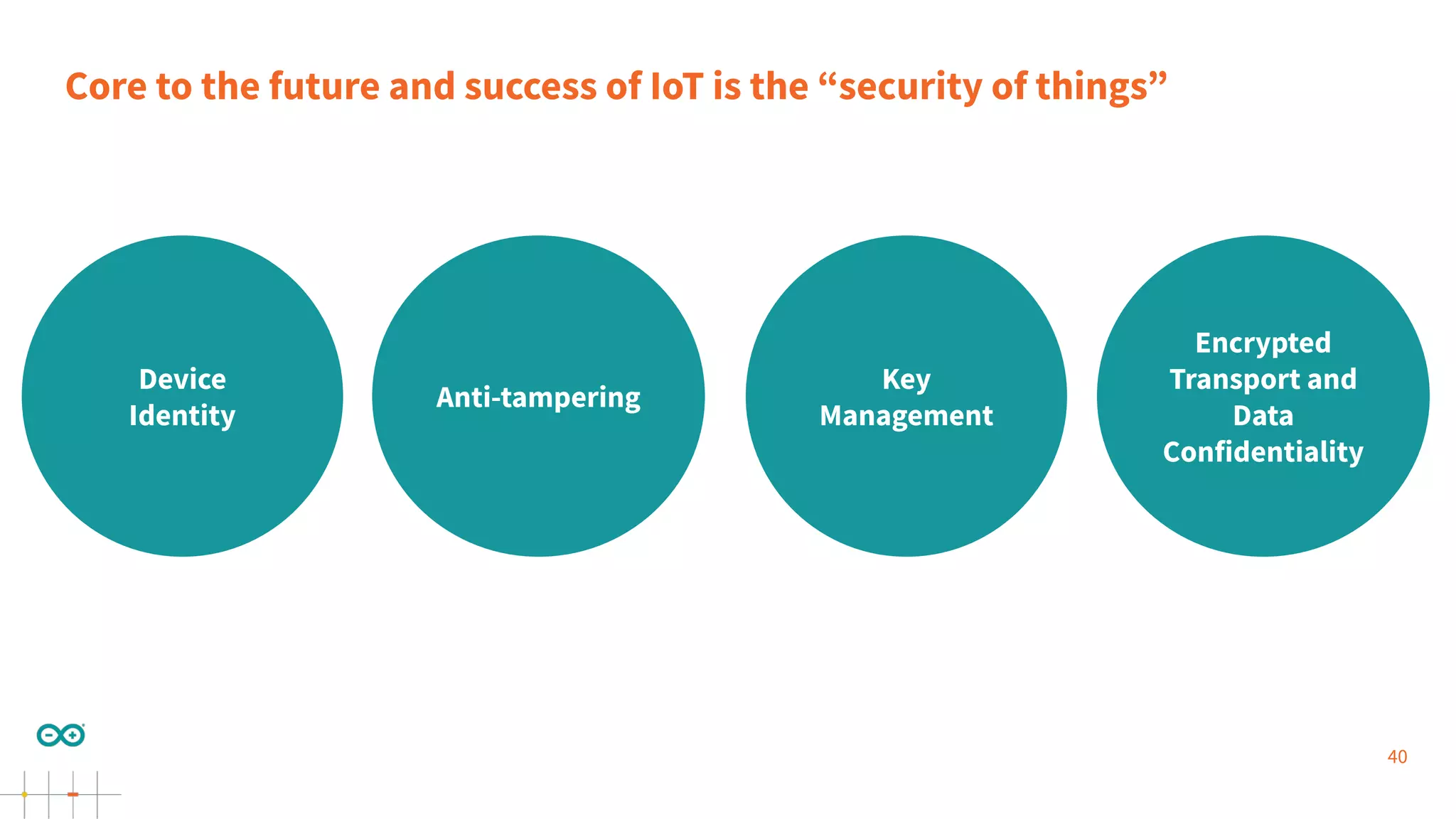
Core to the future and success of IoT is the “security of things”
Device
Identity
Anti-tampering
Key
Management
Encrypted
Transport and
Data
Confidentiality
41
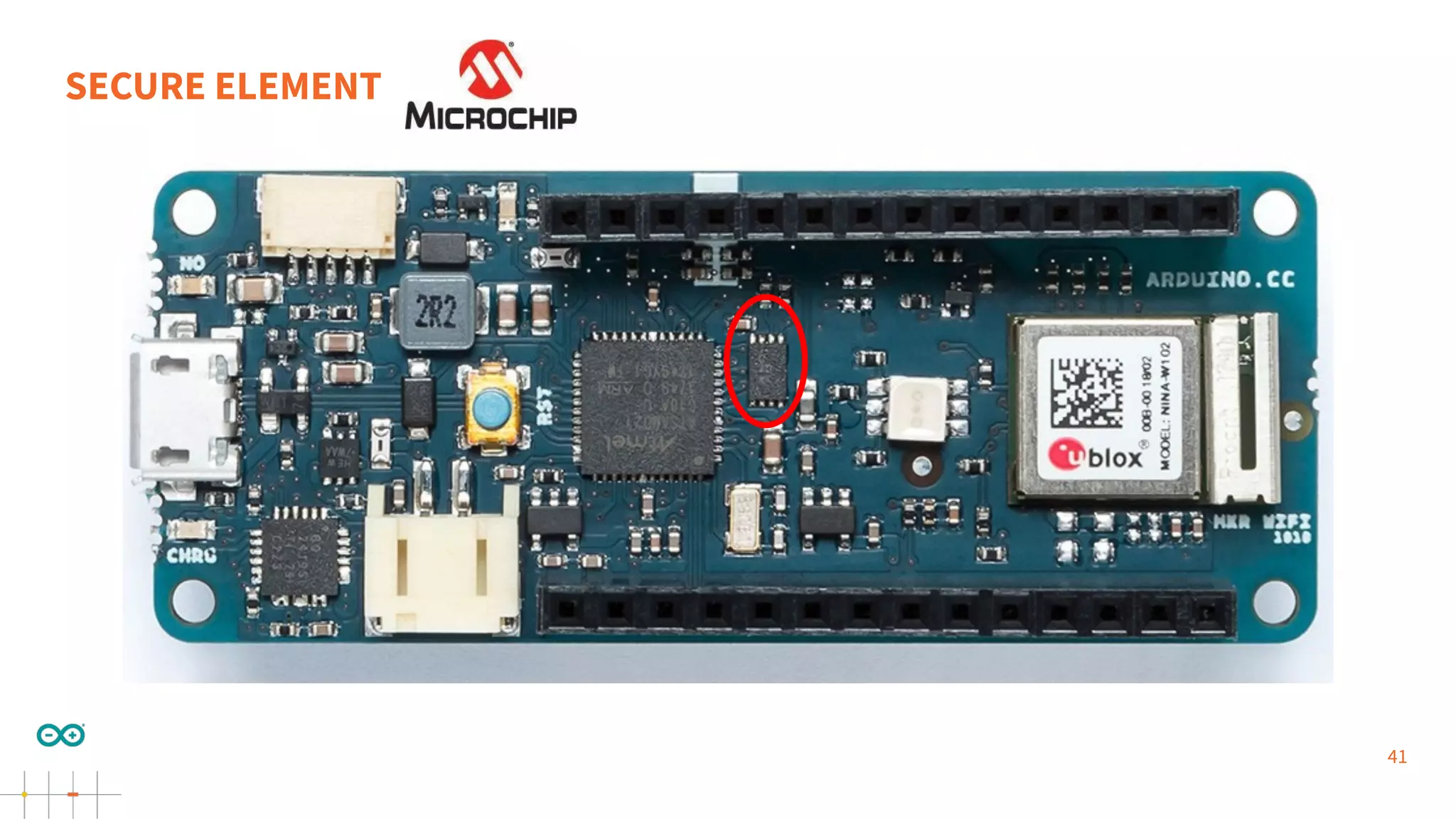
SECURE ELEMENT
42
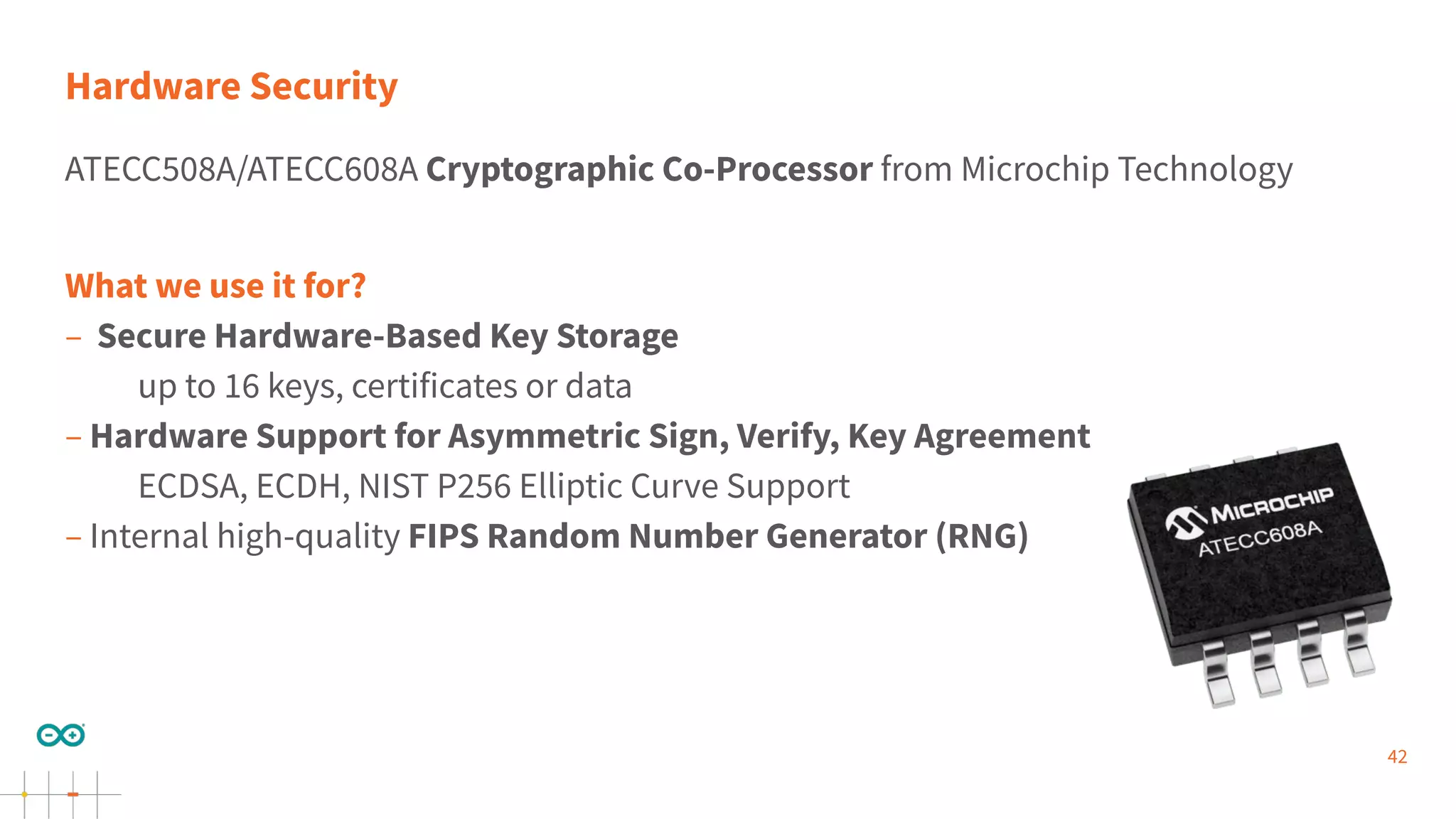
Hardware Security
ATECC508A/ATECC608A Cryptographic Co-Processor from Microchip Technology
What we use it for?
– Secure Hardware-Based Key Storage
up to 16 keys, certificates or data
– Hardware Support for Asymmetric Sign, Verify, Key Agreement
ECDSA, ECDH, NIST P256 Elliptic Curve Support
– Internal high-quality FIPS Random Number Generator (RNG)
43
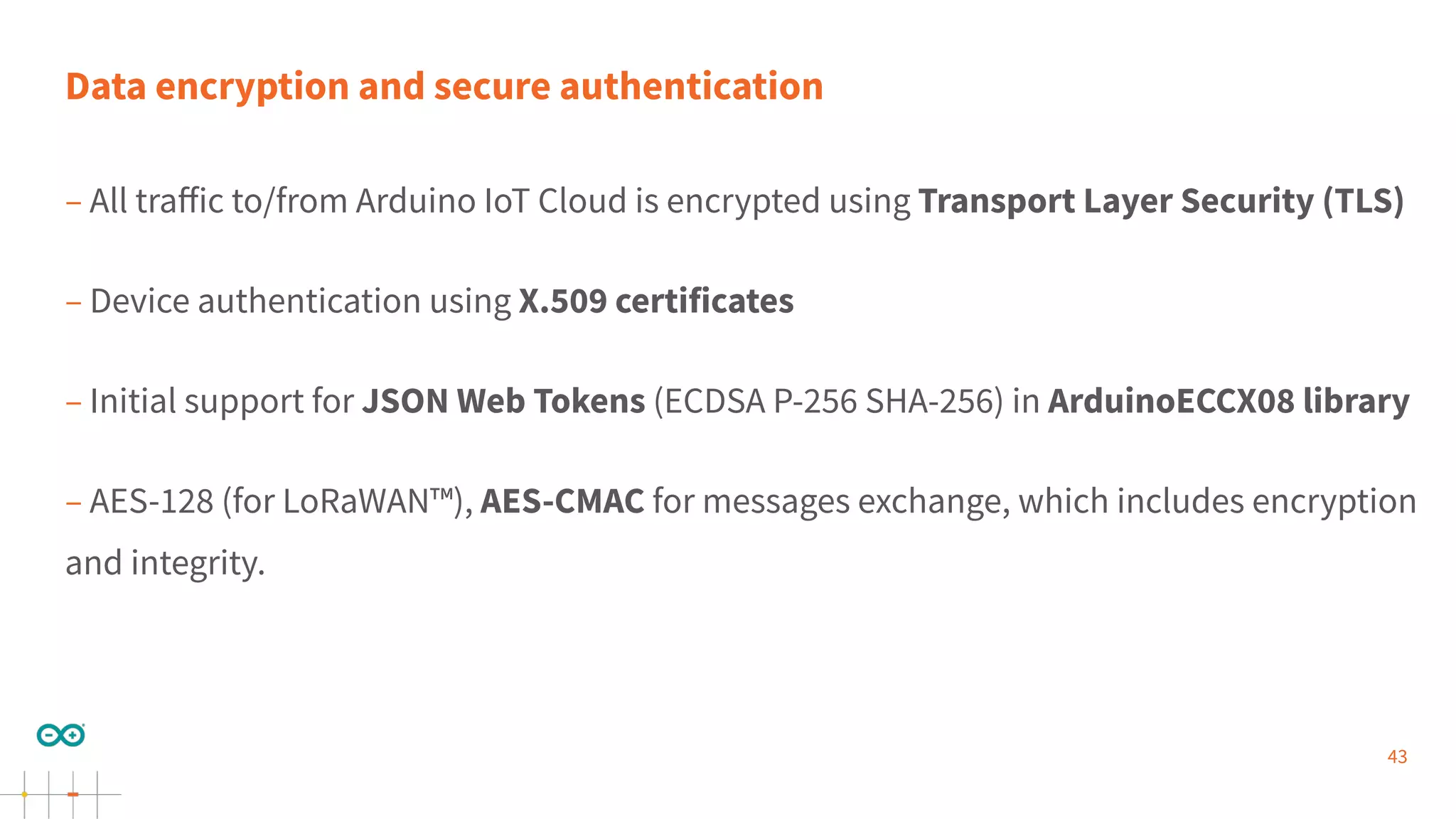
Data encryption and secure authentication
– All traffic to/from Arduino IoT Cloud is encrypted using Transport Layer Security (TLS)
– Device authentication using X.509 certificates
– Initial support for JSON Web Tokens (ECDSA P-256 SHA-256) in ArduinoECCX08 library
– AES-128 (for LoRaWAN™), AES-CMAC for messages exchange, which includes encryption
and integrity.
THAT’S A WRAP,
THANK YOU!
Gianluca Varisco <g.varisco@arduino.cc>
@gvarisco

#OSSPARIS19 : The evolving (IoT) security landscape - Gianluca Varisco, Arduino

  • 1.
    Gianluca Varisco, CISOArduino Paris Open Source Summit - 10/12/2019 The evolving (IoT) security landscape @gvarisco
  • 2.
  • 3.
    Enabling anyone to innovateby making complex technologies simple to use.
  • 4.
    Developing secure andreliable IoT applications can be hard
  • 5.
    Hardware Nodes (Devices, Sensors) Constraineddevices Require C/C++ firmware skills Effective Power Management depends on Firmware Gateways Remote connections, SSH Device management Radio / Networks Long range / Low Power Source: https://makezine.com/2017/06/27/state-boards-platforms-pro ducts-purposes-current-crop-microcontrollers-vies-attention/
  • 6.
    Cloud Software Many different languages,protocols, libraries, security standards, etc.
  • 7.
    Data & persistence Differentdata formats make data manipulation and interpretation difficult
  • 8.
    8 The IoT Landscapeis quite fragmented
  • 9.
    9 The IoT “Lineof Insanity”™
  • 10.
    We are drowningin technology. We are not becoming more secure.
  • 11.
    11 − Not realizingto be potential targets − Treating cybersecurity as an IT problem − Thinking threats are only external rather than internal or accidental − Thinking the cloud provider is in charge of data/infra security (oh, and backups!) − Not using properly their e-mail infrastructure, especially if managed by 3rd parties We are wasting billions to “defend ourselves” from APTs. Buying Next-Gen appliances. Following predictions and hypes. Don't be scared to go back to basics with your cybersecurity strategy. Many of us are still making the same, old mistakes
  • 12.
    12 − PERVASIVENESS: Youwon’t have one IoT device, you’ll have ten. − That’s a lot of new attack surface to your life and/or business − UNIQUENESS: IoT devices are a wild-west of mixed technologies. − How do I patch firmware on these dozen devices? − Which random vendor made the HW inside the device? So? What’s wrong in IoT?
  • 13.
    13 − ECOSYSTEM: Yourvendor may be leveraging six other vendors − Where’s your data going once it enters that IoT device? − Who has access to your network via proxy connections? So? What’s wrong in IoT?
  • 14.
  • 15.
  • 16.
    16 IoT attack surfaceidentification Source: Security Innovation
  • 17.
    17 IoT: assessing therisks Source: Security Innovation
  • 18.
    18 − Insufficient Securitytraining − Humans #1 weak point: building, deploying, using − Weak Physical Security − Debug interfaces (JTAG, UART, etc.) and USB ports allow unintended device or data access − Infrequent updates − Firmware, device apps, admin apps/interfaces − Expensive and/or remote IoT devices long lifespan (difficult to update) TOP 4 IoT Security Risks
  • 19.
    19 − Weak DataProtection − Data at rest/transit uses weak encryption techniques − Lack of dedicated security chips and modules to store sensitive data. TOP 4 IoT Security Risks
  • 20.
    20 − Privacy − PIIleakage − Mass surveillance − Stalking − Theft − Data breaches − Liability − Reputation − Botnets, e.g. Mirai, for mass hacking End-user risks
  • 21.
  • 22.
    22 − Vulnerabilities bypassingpassword protection: − Memory corruption issues (Buffer Overflow, Format String, etc.) − CSRF − Backdoor accounts − Lack of brute-force protection I am safe, I changed all my passwords
  • 23.
    23 − Patches areoften late by years − Many IoT devices do not get a patch, ever I am safe, I regularly patch all of my IoT devices
  • 24.
    24 − If yourIoT device has an Internet routable IPv4(/v6) address, without any firewall port filtering: − Just prepare for apocalypse − Seriously, don’t do that − CCTV is OCTV today Problems with direct IPv4(/v6) connection
  • 25.
    25 The IoT deviceis only available in a closed network
  • 26.
    26 The device isonly exposed in my area (physically)
  • 27.
    27 − NAT issneaky evil − Users believe they are safe behind home router NAT − Developers created ways to connect devices behind NAT, seamless I am safe, home network, behind NAT
  • 28.
    28 Think again: − UPNP −IPv6 − Teredo (encapsulates IPv6 packets within UDP/IPv4 datagrams) − Cloud I am safe, home network, behind NAT
  • 29.
  • 30.
    For the next5-10 years, assume your IoT device has horrible security holes it won’t receive patches for, ever.
  • 31.
    Lack of visibilityis in fact the main precursor to security incidents.
  • 32.
    Many of usdon’t have IR capabilities. They all immediately PANIC! Organizations are still getting breached due to poor key/credentials management, unpatched applications and misconfigured services (eg. cloud databases).
  • 33.
    33 − It’s veryhard to report vulnerabilities − Often vendors do not have a Coordinated Vulnerability Disclosure (CVD) policy − FTC and/or ENISA recommendations for customers’ safety are not always followed − Just few of the EU member states do have a CVD framework in place at national level − CEPS’ report on «Software Vulnerability Disclosure in Europe» aims at helping member states with the technology, the policies and legal challenges ahead. Reporting vulnerabilities
  • 34.
  • 35.
  • 36.
  • 37.
  • 38.
    38 WHAT ARDUINO PROVIDES SensorsData + Device Interaction Automatic Code Generation Arduino Hardware Secure Cloud Connection Device Management OTA Updates Firmware Changes Business Logic Firmware Upload Certificate or Password Provisioning Dashboards Third Parties IoT SaaS Arduino IoT Cloud
  • 39.
    39 Security Secure in everylayer Hardware Software Data
  • 40.
    40 Core to thefuture and success of IoT is the “security of things” Device Identity Anti-tampering Key Management Encrypted Transport and Data Confidentiality
  • 41.
  • 42.
    42 Hardware Security ATECC508A/ATECC608A CryptographicCo-Processor from Microchip Technology What we use it for? – Secure Hardware-Based Key Storage up to 16 keys, certificates or data – Hardware Support for Asymmetric Sign, Verify, Key Agreement ECDSA, ECDH, NIST P256 Elliptic Curve Support – Internal high-quality FIPS Random Number Generator (RNG)
  • 43.
    43 Data encryption andsecure authentication – All traffic to/from Arduino IoT Cloud is encrypted using Transport Layer Security (TLS) – Device authentication using X.509 certificates – Initial support for JSON Web Tokens (ECDSA P-256 SHA-256) in ArduinoECCX08 library – AES-128 (for LoRaWAN™), AES-CMAC for messages exchange, which includes encryption and integrity.
  • 44.
    THAT’S A WRAP, THANKYOU! Gianluca Varisco <g.varisco@arduino.cc> @gvarisco