OSI
MODEL, PORTS, AND PROTOCOLS
sales@infosectrain.com | Contact Us -1800-843-7890
CHEAT SHEET
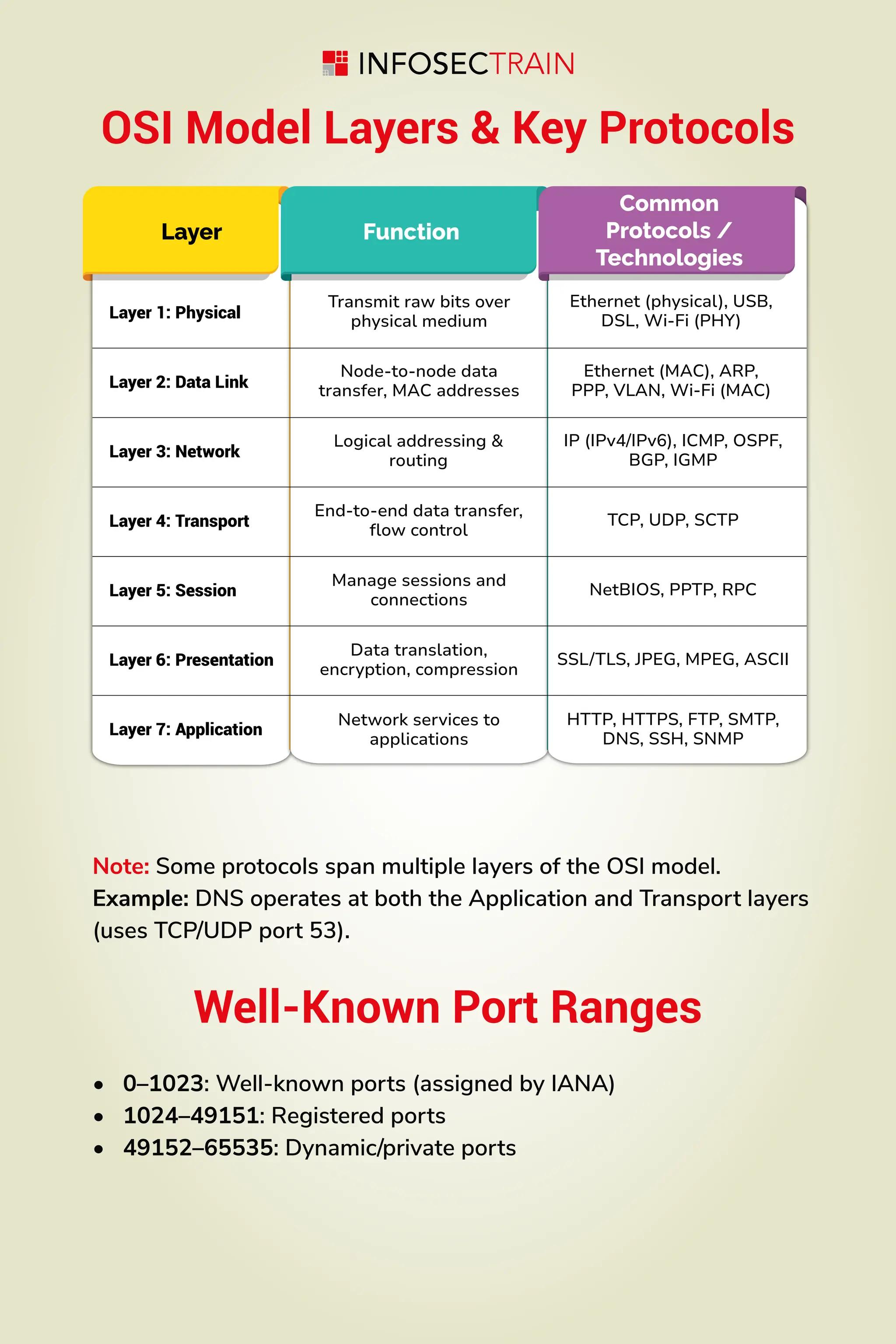
Layer Function
Common
Protocols /
Technologies
Transmit raw bits over
physical medium
Ethernet (physical), USB,
DSL, Wi-Fi (PHY)
Ethernet (MAC), ARP,
PPP, VLAN, Wi-Fi (MAC)
Node-to-node data
transfer, MAC addresses
Logical addressing &
routing
IP (IPv4/IPv6), ICMP, OSPF,
BGP, IGMP
TCP, UDP, SCTP
End-to-end data transfer,
๏ฌ‚ow control
Manage sessions and
connections
NetBIOS, PPTP, RPC
Data translation,
encryption, compression
SSL/TLS, JPEG, MPEG, ASCII
Layer 1: Physical
Layer 2: Data Link
Layer 3: Network
Layer 4: Transport
Layer 5: Session
Layer 6: Presentation
Layer 7: Application
Network services to
applications
HTTP, HTTPS, FTP, SMTP,
DNS, SSH, SNMP
Note: Some protocols span multiple layers of the OSI model.
Example: DNS operates at both the Application and Transport layers
(uses TCP/UDP port 53).
โ€ข 0โ€“1023: Well-known ports (assigned by IANA)
โ€ข 1024โ€“49151: Registered ports
โ€ข 49152โ€“65535: Dynamic/private ports
Well-Known Port Ranges
OSI Model Layers & Key Protocols
Common Protocols and
Default Port Numbers
Protocol Port(s) TCP / UDP Description
Web traf๏ฌc
(non-secure)
Secure web traf๏ฌc
(SSL/TLS)
File transfer control
File transfer data
Secure remote login
Remote terminal
access
Email sending
Domain Name
System
Email retrieval
Advanced email
retrieval
Network
management
Directory services
Windows ๏ฌle
sharing
Remote desktop
Network time
synchronization
VoIP signaling
System logging
MySQL database
server
Microsoft SQL
Server
Simple ๏ฌle transfer
HTTP
HTTPS
FTP (Control)
FTP (Data)
SSH
Telnet
SMTP
DNS
POP3
IMAP
SNMP
LDAP
SMB
RDP
NTP
SIP
Syslog
MySQL
MSSQL
TFTP
DHCP
80
443
21
20
22
23
25
53
110
143
161
389
445
3389
123
5060
514
3306
1433
69
67 (server),
68 (client)
Dynamic IP
addressing
TCP
TCP
TCP
TCP
TCP
TCP
TCP
TCP/UDP
TCP
TCP
UDP
TCP/UDP
TCP
UDP
TCP/UDP
UDP
TCP
TCP
UDP
UDP
TCP
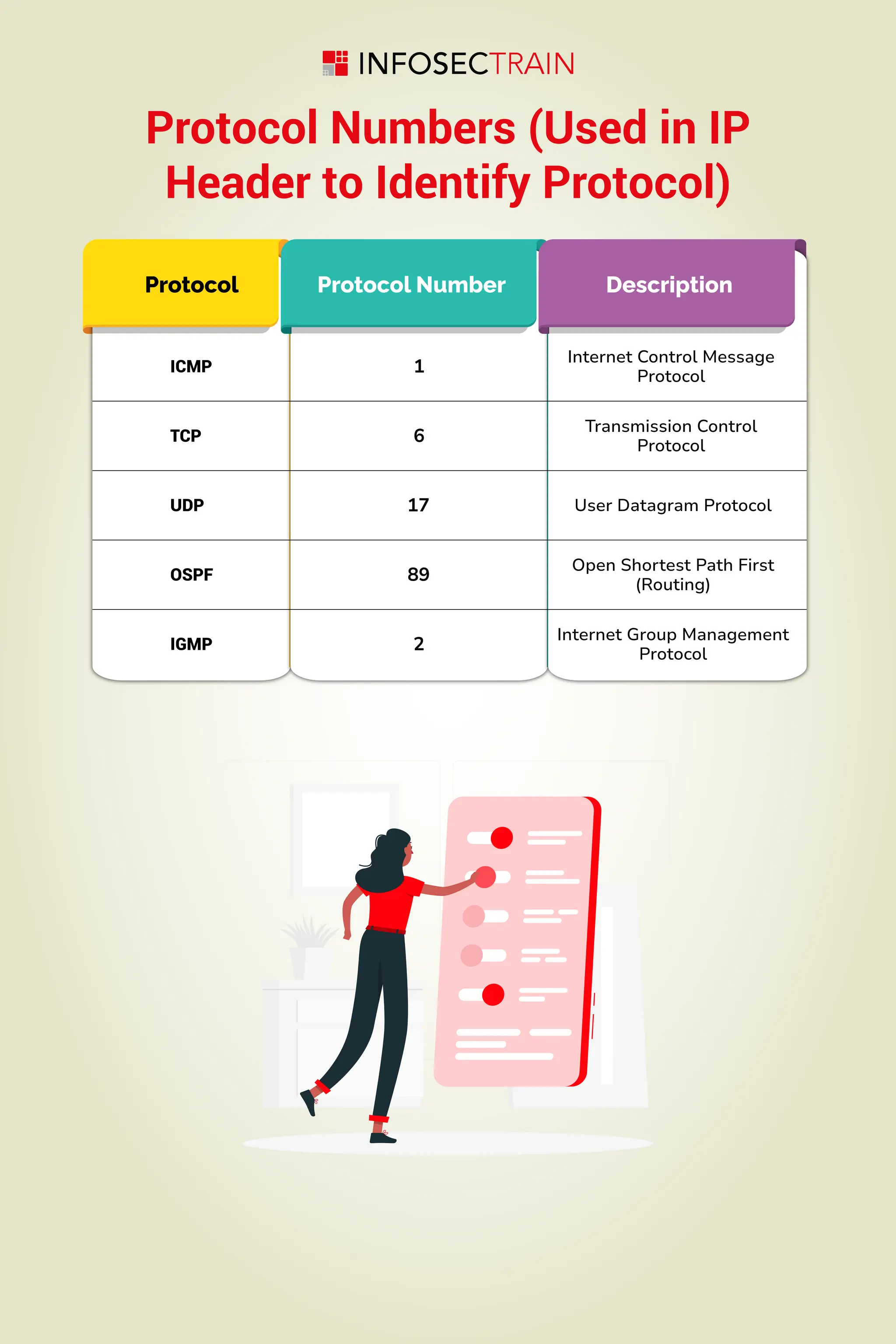
Protocol Protocol Number Description
1
Internet Control Message
Protocol
Transmission Control
Protocol
6
17 User Datagram Protocol
Open Shortest Path First
(Routing)
89
2
Internet Group Management
Protocol
ICMP
TCP
UDP
OSPF
IGMP
Protocol Numbers (Used in IP
Header to Identify Protocol)
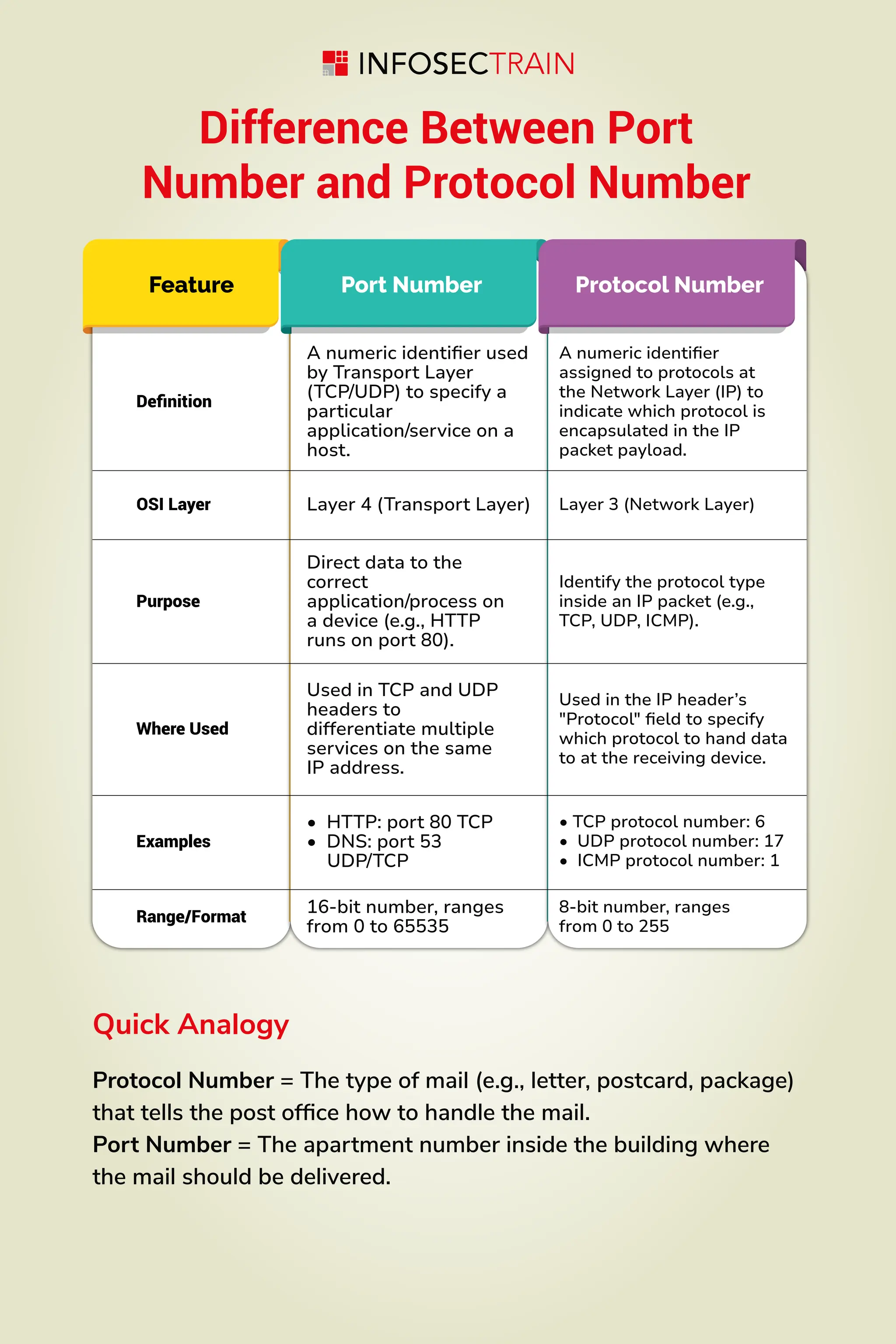
Difference Between Port
Number and Protocol Number
Feature Port Number Protocol Number
A numeric identi๏ฌer used
by Transport Layer
(TCP/UDP) to specify a
particular
application/service on a
host.
Direct data to the
correct
application/process on
a device (e.g., HTTP
runs on port 80).
Layer 4 (Transport Layer)
16-bit number, ranges
from 0 to 65535
Used in TCP and UDP
headers to
differentiate multiple
services on the same
IP address.
โ€ข HTTP: port 80 TCP
โ€ข DNS: port 53
UDP/TCP
A numeric identi๏ฌer
assigned to protocols at
the Network Layer (IP) to
indicate which protocol is
encapsulated in the IP
packet payload.
Identify the protocol type
inside an IP packet (e.g.,
TCP, UDP, ICMP).
Layer 3 (Network Layer)
8-bit number, ranges
from 0 to 255
Used in the IP headerโ€™s
"Protocol" ๏ฌeld to specify
which protocol to hand data
to at the receiving device.
โ€ข TCP protocol number: 6
โ€ข UDP protocol number: 17
โ€ข ICMP protocol number: 1
De๏ฌnition
OSI Layer
Range/Format
Purpose
Where Used
Examples
Quick Analogy
Protocol Number = The type of mail (e.g., letter, postcard, package)
that tells the post of๏ฌce how to handle the mail.
Port Number = The apartment number inside the building where
the mail should be delivered.

OSI MODEL, PORTS, AND PROTOCOLS CHEAT SHEET

  • 1.
    OSI MODEL, PORTS, ANDPROTOCOLS sales@infosectrain.com | Contact Us -1800-843-7890 CHEAT SHEET
  • 2.
    Layer Function Common Protocols / Technologies Transmitraw bits over physical medium Ethernet (physical), USB, DSL, Wi-Fi (PHY) Ethernet (MAC), ARP, PPP, VLAN, Wi-Fi (MAC) Node-to-node data transfer, MAC addresses Logical addressing & routing IP (IPv4/IPv6), ICMP, OSPF, BGP, IGMP TCP, UDP, SCTP End-to-end data transfer, ๏ฌ‚ow control Manage sessions and connections NetBIOS, PPTP, RPC Data translation, encryption, compression SSL/TLS, JPEG, MPEG, ASCII Layer 1: Physical Layer 2: Data Link Layer 3: Network Layer 4: Transport Layer 5: Session Layer 6: Presentation Layer 7: Application Network services to applications HTTP, HTTPS, FTP, SMTP, DNS, SSH, SNMP Note: Some protocols span multiple layers of the OSI model. Example: DNS operates at both the Application and Transport layers (uses TCP/UDP port 53). โ€ข 0โ€“1023: Well-known ports (assigned by IANA) โ€ข 1024โ€“49151: Registered ports โ€ข 49152โ€“65535: Dynamic/private ports Well-Known Port Ranges OSI Model Layers & Key Protocols
  • 3.
    Common Protocols and DefaultPort Numbers Protocol Port(s) TCP / UDP Description Web traf๏ฌc (non-secure) Secure web traf๏ฌc (SSL/TLS) File transfer control File transfer data Secure remote login Remote terminal access Email sending Domain Name System Email retrieval Advanced email retrieval Network management Directory services Windows ๏ฌle sharing Remote desktop Network time synchronization VoIP signaling System logging MySQL database server Microsoft SQL Server Simple ๏ฌle transfer HTTP HTTPS FTP (Control) FTP (Data) SSH Telnet SMTP DNS POP3 IMAP SNMP LDAP SMB RDP NTP SIP Syslog MySQL MSSQL TFTP DHCP 80 443 21 20 22 23 25 53 110 143 161 389 445 3389 123 5060 514 3306 1433 69 67 (server), 68 (client) Dynamic IP addressing TCP TCP TCP TCP TCP TCP TCP TCP/UDP TCP TCP UDP TCP/UDP TCP UDP TCP/UDP UDP TCP TCP UDP UDP TCP
  • 4.
    Protocol Protocol NumberDescription 1 Internet Control Message Protocol Transmission Control Protocol 6 17 User Datagram Protocol Open Shortest Path First (Routing) 89 2 Internet Group Management Protocol ICMP TCP UDP OSPF IGMP Protocol Numbers (Used in IP Header to Identify Protocol)
  • 5.
    Difference Between Port Numberand Protocol Number Feature Port Number Protocol Number A numeric identi๏ฌer used by Transport Layer (TCP/UDP) to specify a particular application/service on a host. Direct data to the correct application/process on a device (e.g., HTTP runs on port 80). Layer 4 (Transport Layer) 16-bit number, ranges from 0 to 65535 Used in TCP and UDP headers to differentiate multiple services on the same IP address. โ€ข HTTP: port 80 TCP โ€ข DNS: port 53 UDP/TCP A numeric identi๏ฌer assigned to protocols at the Network Layer (IP) to indicate which protocol is encapsulated in the IP packet payload. Identify the protocol type inside an IP packet (e.g., TCP, UDP, ICMP). Layer 3 (Network Layer) 8-bit number, ranges from 0 to 255 Used in the IP headerโ€™s "Protocol" ๏ฌeld to specify which protocol to hand data to at the receiving device. โ€ข TCP protocol number: 6 โ€ข UDP protocol number: 17 โ€ข ICMP protocol number: 1 De๏ฌnition OSI Layer Range/Format Purpose Where Used Examples Quick Analogy Protocol Number = The type of mail (e.g., letter, postcard, package) that tells the post of๏ฌce how to handle the mail. Port Number = The apartment number inside the building where the mail should be delivered.