DEFINITION
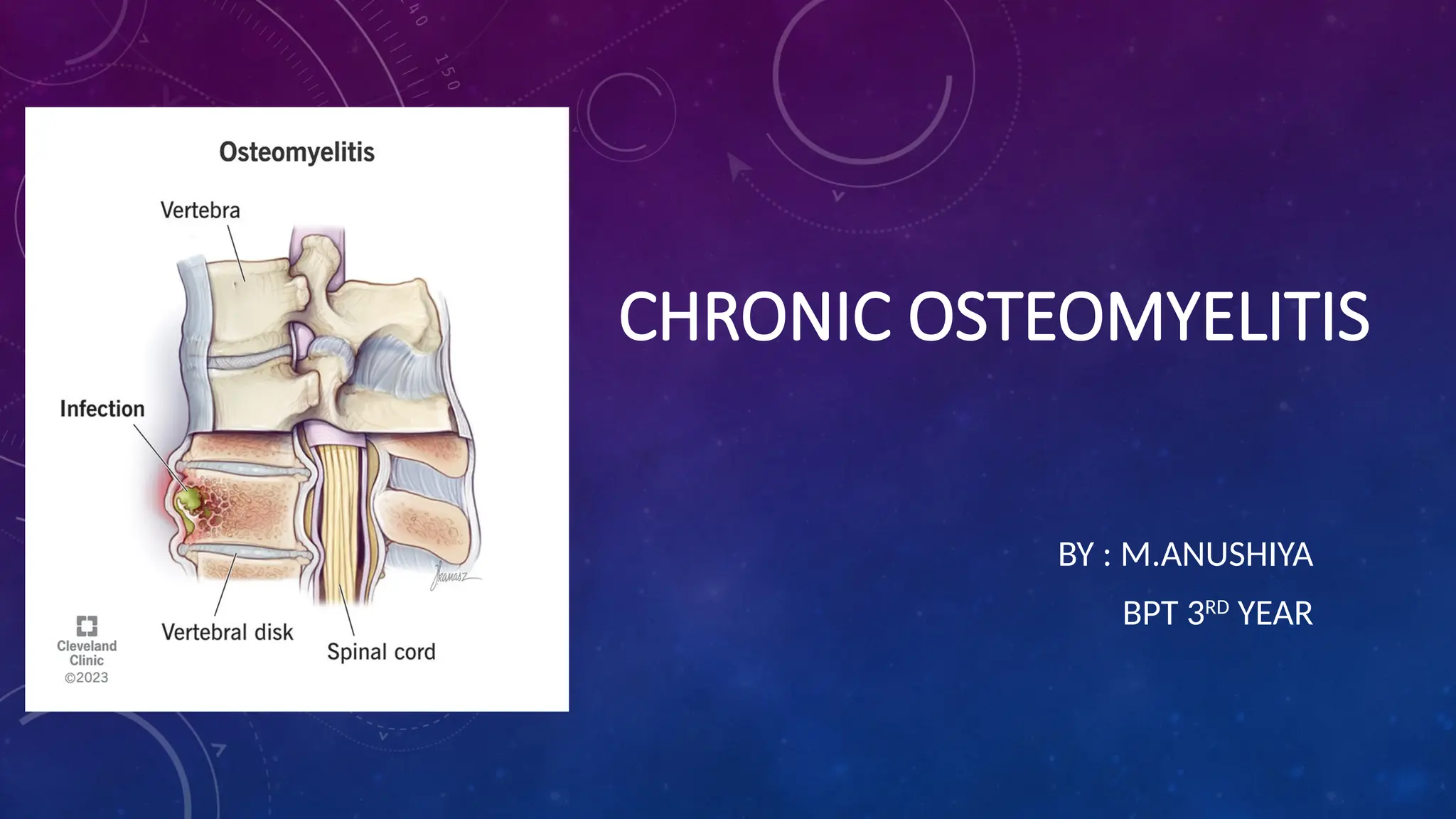
• Chronic osteomyelitisis a persisting pyogenic infection of
bone caused by infective agent
• More than 6 weeks duration characterised by recurrent
attacks of inflammation with sinuses discharging pus.
3.
AETIOLOGY
• The causativeorganisms are usually S.aureus ,S.epidermidis and
streptococcus pyogenes
• An acute osteomyelitis becomes chronic due to one of the following
cause :
1. Improper drainage of pus in the acute stage
2. Formation of undrained ,non collapsible cavity in the bone
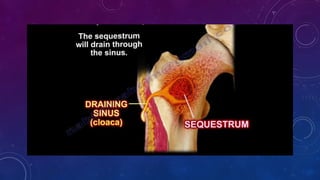
3. Presence of sequestrum
4. Presence of foreign bodies in case of open injuries
5.
DIFFERENCE BTW ACUTEAND CHRONIC
Acute Osteomyelitis
• Occurs suddenly
• Often after an infection or
injury
Chronic osteomyelitis
• Develops over time
• Results of inadequately
treated acute osteomyelitis
6.
CLASSIFICATION BASED ONCIERNY MADER
• Type I : Medullary osteomyelitis
• Type ll : Superficial osteomyelitis
• Type III : Localized osteomyelitis
• Type IV : Diffuse osteomyelitis
7.
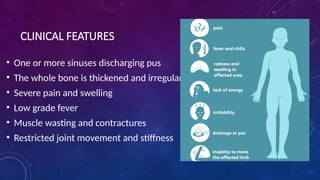
CLINICAL FEATURES
• Oneor more sinuses discharging pus
• The whole bone is thickened and irregular
• Severe pain and swelling
• Low grade fever
• Muscle wasting and contractures
• Restricted joint movement and stiffness
8.
RADIOLOGICAL FEATURES
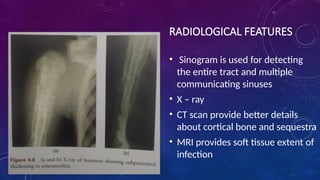
• Sinogramis used for detecting
the entire tract and multiple
communicating sinuses
• X – ray
• CT scan provide better details
about cortical bone and sequestra
• MRI provides soft tissue extent of
infection
9.
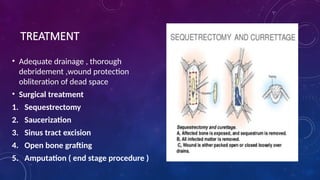
TREATMENT
• Adequate drainage, thorough
debridement ,wound protection
obliteration of dead space
• Surgical treatment
1. Sequestrectomy
2. Saucerization
3. Sinus tract excision
4. Open bone grafting
5. Amputation ( end stage procedure )