INSTITUTE OF RURAL MANAGEMENT
PRESENTATION
ON
ORGANIC FARMING AND ORGANIC FOOD
PRESENTED BY: ADITYA MISHRA
SECTION : C
SCHOLAR NO : 1202032
ORGANIC
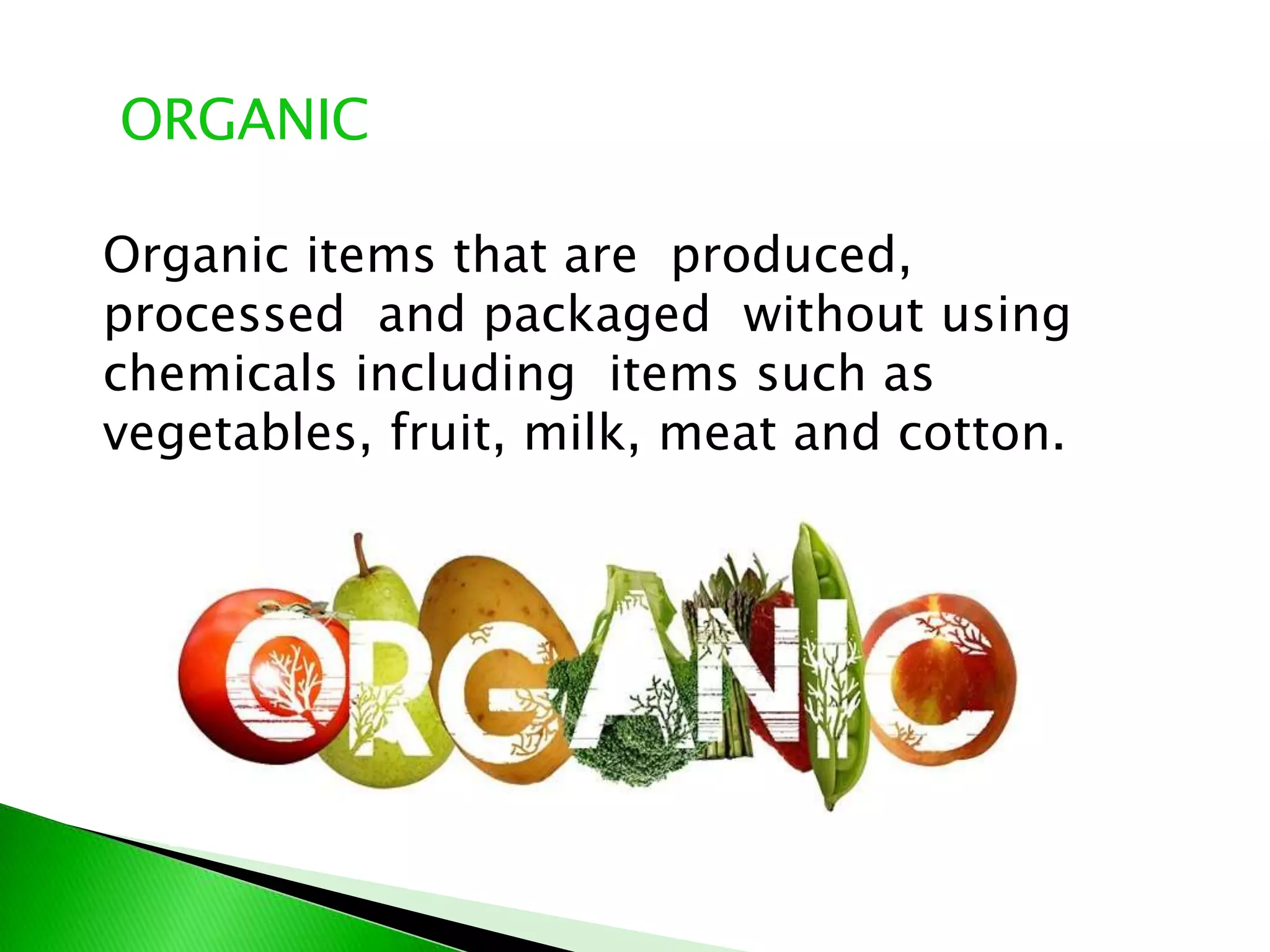
Organic items that are produced,
processed and packaged without using
chemicals including items such as
vegetables, fruit, milk, meat and cotton.
ORGANIC FARMING
 In organic farming vegetables, crops, meat and other food are
produced without chemicals. Fertilizers, pesticides, growth
hormones and antibiotics are forbidden.
 Farmers also use crop rotation to preserve the good
qualities of soils and avoid monoculture.
NO:
 artificial fertilizers
 synthetic pesticides
 GMO
 growth regulators
 artificial feed additives
 antibiotics are not preventively used on
animals
The mission of agriculture is not only to
produce enough food, but also to take
account the effects to the:
 environment
 human health
 animal welfare
 social and regional development
 Positive effect to biodiversity;
 Fewer contaminants (such as pesticides,
antibiotics and nitrates);
 Scientific studies have shown, there are more
vitamins and minerals in organically produced
food:
In organic milk, more antioxydants, 50% more of
vitamine E, beta-carotene.
EXPORTS
 The total volume of export during 2020-21 was
888179.68 MT. The organic food export realization
was around INR 707849.52 Lakhs (1040.95 million
USD).
 Organic products are exported to USA, European
Union, Canada, Great Britain, Korea Republic, Israel,
Switzerland, Ecuador, Vietnam, Australia etc.
Government Promote Organic Farming
The Centre has been promoting organic farming
through various government schemes such as :
Paramparagat Krishi Vikas Yojana (PKVY)
 Mission Organic Value Chain Development in
North East Region (MOVCDNER).
Disadvantages of organic farming
•Organic food is more expensive because farmers do not get
as much out of their land as conventional farmers do. Organic
products may cost up to 40% more.
•Production costs are higher because farmers need more
workers .
•Marketing and distribution is not efficient because organic
food is produced in smaller amounts.
•Food illnesses may happen more often
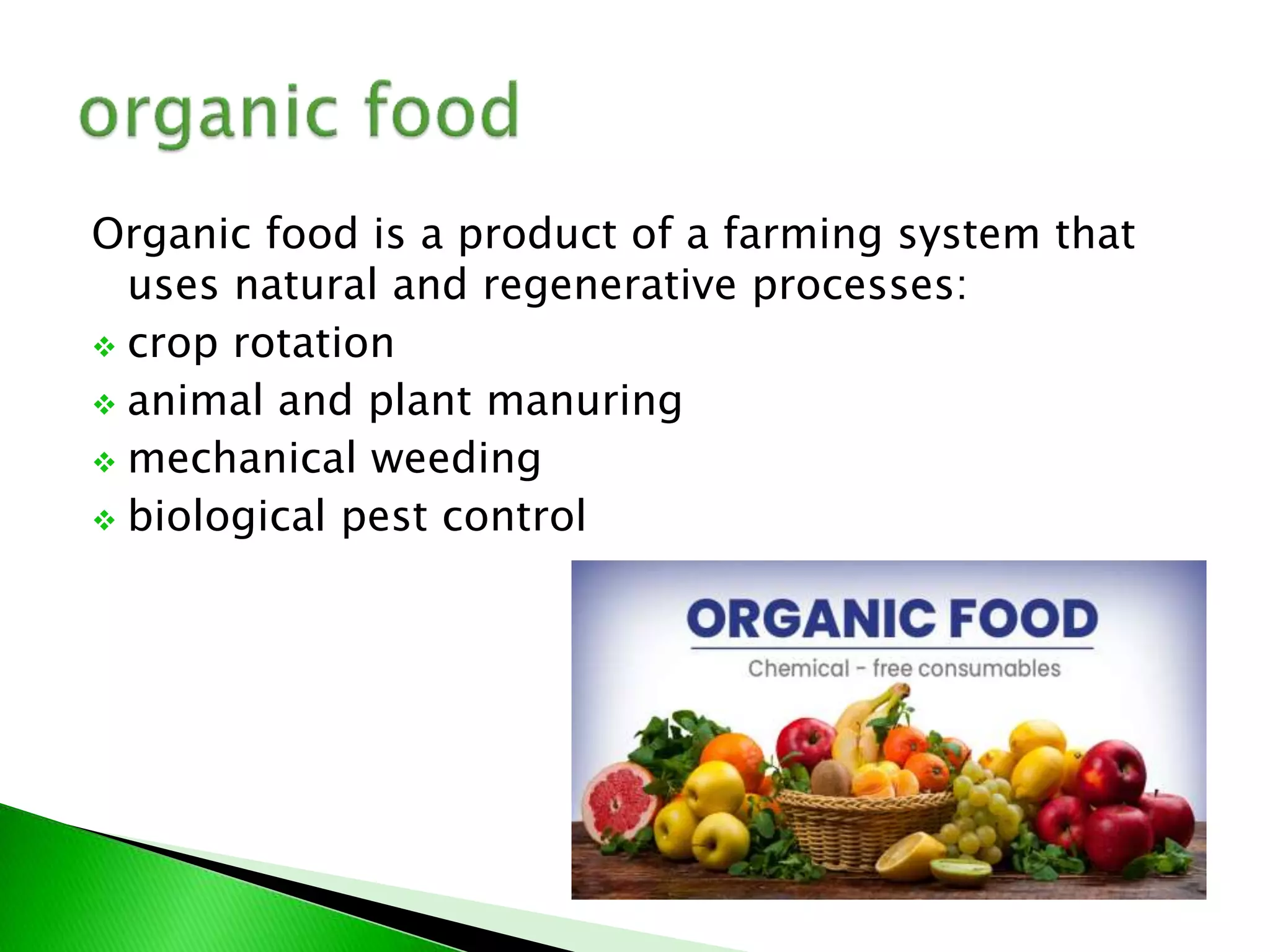
Organic food is a product of a farming system that
uses natural and regenerative processes:
 crop rotation
 animal and plant manuring
 mechanical weeding
 biological pest control
Benefits of Organic Food
They are natural foods.
They are healthier.
They are sustainable.
They guarantee the highest quality.
They taste better.
THANK YOU

organic_farmig ppt.ppt

  • 1.
    INSTITUTE OF RURALMANAGEMENT PRESENTATION ON ORGANIC FARMING AND ORGANIC FOOD PRESENTED BY: ADITYA MISHRA SECTION : C SCHOLAR NO : 1202032
  • 2.
    ORGANIC Organic items thatare produced, processed and packaged without using chemicals including items such as vegetables, fruit, milk, meat and cotton.
  • 3.
    ORGANIC FARMING  Inorganic farming vegetables, crops, meat and other food are produced without chemicals. Fertilizers, pesticides, growth hormones and antibiotics are forbidden.  Farmers also use crop rotation to preserve the good qualities of soils and avoid monoculture.
  • 4.
    NO:  artificial fertilizers synthetic pesticides  GMO  growth regulators  artificial feed additives  antibiotics are not preventively used on animals
  • 5.
    The mission ofagriculture is not only to produce enough food, but also to take account the effects to the:  environment  human health  animal welfare  social and regional development
  • 6.
     Positive effectto biodiversity;  Fewer contaminants (such as pesticides, antibiotics and nitrates);  Scientific studies have shown, there are more vitamins and minerals in organically produced food: In organic milk, more antioxydants, 50% more of vitamine E, beta-carotene.
  • 7.
    EXPORTS  The totalvolume of export during 2020-21 was 888179.68 MT. The organic food export realization was around INR 707849.52 Lakhs (1040.95 million USD).  Organic products are exported to USA, European Union, Canada, Great Britain, Korea Republic, Israel, Switzerland, Ecuador, Vietnam, Australia etc.
  • 8.
    Government Promote OrganicFarming The Centre has been promoting organic farming through various government schemes such as : Paramparagat Krishi Vikas Yojana (PKVY)  Mission Organic Value Chain Development in North East Region (MOVCDNER).
  • 9.
    Disadvantages of organicfarming •Organic food is more expensive because farmers do not get as much out of their land as conventional farmers do. Organic products may cost up to 40% more. •Production costs are higher because farmers need more workers . •Marketing and distribution is not efficient because organic food is produced in smaller amounts. •Food illnesses may happen more often
  • 10.
    Organic food isa product of a farming system that uses natural and regenerative processes:  crop rotation  animal and plant manuring  mechanical weeding  biological pest control
  • 11.
    Benefits of OrganicFood They are natural foods. They are healthier. They are sustainable. They guarantee the highest quality. They taste better.
  • 13.