Why Organic Food is the demand of the hour in 2021 for the well-
being of every human in general? Which will be the benefits of
organic food?
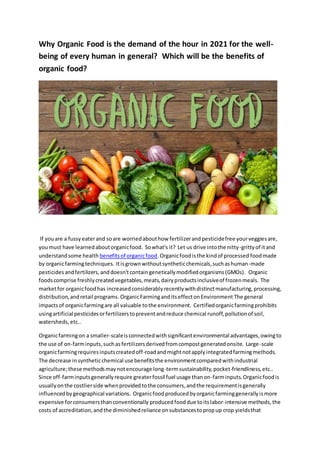
If youare a fussyeaterand soare worriedabouthow fertilizerandpesticidefree yourveggiesare,
youmust have learnedaboutorganicfood. Sowhat's it? Let us drive intothe nitty-grittyof itand
understandsome health benefitsof organicfood.Organicfoodisthe kindof processed foodmade
by organicfarmingtechniques. Itisgrownwithoutsyntheticchemicals,suchashuman-made
pesticidesandfertilizers,anddoesn'tcontaingeneticallymodifiedorganisms(GMOs). Organic
foodscomprise freshlycreatedvegetables,meats,dairyproductsinclusiveof frozenmeals. The
marketfor organicfoodhas increasedconsiderablyrecentlywithdistinctmanufacturing,processing,
distribution,andretail programs. OrganicFarminganditseffectonEnvironment The general
impactsof organicfarmingare all valuable tothe environment. Certifiedorganicfarmingprohibits
usingartificial pesticidesorfertilizerstopreventandreduce chemical runoff,pollutionof soil,
watersheds,etc..
Organicfarmingon a smaller-scaleisconnectedwithsignificantenvironmental advantages,owingto
the use of on-farminputs,suchasfertilizersderivedfromcompostgeneratedonsite. Large-scale
organicfarmingrequiresinputscreatedoff-roadandmightnotapplyintegratedfarmingmethods.
The decrease in syntheticchemical use benefitsthe environmentcomparedwithindustrial
agriculture;these methodsmaynotencourage long-termsustainability,pocket-friendliness,etc..
Since off-farminputsgenerallyrequire greaterfossil fuel usage thanon-farminputs.Organicfoodis
usuallyonthe costlierside whenprovidedtothe consumers,andthe requirementisgenerally
influencedbygeographical variations. Organicfoodproducedbyorganicfarminggenerallyismore
expensive forconsumersthanconventionally producedfooddue toitslabor-intensive methods,the
costs of accreditation,andthe diminishedreliance onsubstancestopropup crop yieldsthat
frequentlyresultsinunequal accesstoorganicfood.Research,studies,polls,etc.,indicatesthat
higherwealthandeducationlevelsare relatedtoorganicfoodpurchasesandconsumption. In
certainlower-income nations,trendsreveal the productionof certifiedorganicfoodtoexportto
wealthierstates,whichthencreatesasituationwhere the farmersthemselvescannotaffordtobuy
the organic foodstheyare producing. Thisapproachbringseconomicgainsto the farmersinthe
brief runand causesfoodinsecurityasfarmershave beenpressurednottomake foodcrops that
couldfeedboththemandtheirregional communities.
Certifiedorganicfarminghasalsobecome abigbusinessinmanyareas,withlargerfarming
operationsplayingakeyrole innational andglobal certifiedorganicfoodmarkets. Bigfood-
processingcompaniesoftenbuyfromone farmingoperationthatgeneratesorganiccropson
thousandsof acres,insteadof frommany smallerfarmswhicheachgrow on smalleracres. A clinic
that effectivelylimitsthe participationof farmersinthose organicfoodmarkets,whichinturnalso
causesdisparity amongfarmersbecause the organiccertificationprocesscanbe prohibitively
expensive tosome smaller-scale farmersthatinturnoccasionallycanmake themforgothe whole
organiccertificationprocess.Organicfarminghasgainedpopularityasorganicfoodhas increasedin
popularityconsiderablyasconsumershave soughtandpurchasedfoodsthattheyperceive as
wholesomeanddevelopedinwaysthatbenefitthe environment. Some researchshowsjusthow
organicfoodhas greaternutrientcontentcomparedto industriallygrownproducts,andpeople even
claimit to be tastier.TopBenefitsof OrganicFoodListedbelow are afew of the amazingbenefitsof
organicfood. Greater Than Content -- Asperthe lateststudies,organicfoodingestioncanleadto
more intake of mutuallybeneficial antioxidantsandrestrictedexposure toheavymetals. The
positive effectsof antioxidantsonoverall healthhave beendemonstratedinmanyscientificstudies,
particularlythose derivedfromorganicfoods. The positiveeffects of antioxidantsobtainedfrom
organicfoodscomprise preventingheartdisease,cancer,visionissues,premature aging,and
cognitive malfunction. Thatisbecause organicfoodsare free fromforeignchemicalsandGMOs that
normallyrespondwithvitamins, minerals,organiccompounds,andminerals,thusloweringthe
essential positive impactsof antioxidantsinfoodgoods.
Increasedoverall wellbeing -- The use of organictechniquessuchasgreenmanure tofertilizethe
landsand harvestrotationinpestanddisease managementworkwell increatingsafer,healthier,
and smellierfinal foodproductssinceorganicfoodisn'tprocessedorproducedbythe usage of
chemical pesticidesorchemical fertilizers,itdoesnotinclude anycomponentsof poisonous
chemicalsandmaynot affecthumanwellbeinginharmful ways.
Healthyorganicfood simplymeanshealthyindividualsandbetternourishmentforabetterlivingfor
bothpeople andanimals. Resistance toAntibiotics -- Due tohumansbeingvulnerabletovarious
healthissuesanddiseases,theymusttake precautionarymeasurestoensure theystayhealthy,
whichcan be accomplishedbygettingvariousvaccinationsandantibioticmedicationwhenanew
strainof virusor bacteriaisaccomplished.Non-organicfoodresources,especiallylivestockandfeeds,
use vaccines,growthhormones,animal byproducts,andantibioticstotreatandfeedthe animals.
Whenhumanseat non-organicfooditems,theyindirectlyconsume antibiotics,growthhormones,
and pathogenswhichweakenimmunesystemsinantibiotics,vaccines,hormones,andanimal
byproductsoverdose. Thismayalterthe immune system, therebyrenderinghumansunable to
defendthemselvesfromdiseases. The benefitsof organicfoodistheirproductionprocessesdonot
involve antibiotics,growthhormones,animal byproducts,orpathogens.Betterflavor -- Maintaining
nutritionaside,the sugarandmineral arrangementsinorganicfoodsare tastybecause the crops are
givenmore time todevelopandolder. Natural andenvironmentallyfriendlyagricultural production
methods(natural farmingmethods) wouldbe the reasonforitsbetterflavorinorganicfood
products. It is oftenreportedthatthe flavorof organic vegetablesandfruitsisof higherqualitythan
industriallygrown.HighlyNutritious -- Organicfoodproductscontainveryhighnutritional content
because theydon'tinclude modifiedrartificial ingredientscomparedtoconventionalagricultural
fooditems. Anotherelementthatmakesthemhighlynutritiousisthattheyare giventime to
developandare suppliedwiththe finestnatural conditionssuchasfertilizersmade fromcompost
and development. The mineral andvitamincontentsof organicfoodproductsare almostalways
large as the soil life doesn'tdeteriorate due tosyntheticchemicals,andwellnessoffersthe most
acceptable mechanismforcropstoaccess soil nutrients.ConclusionOrganicfarmingisbeneficial to
society,butorganicfoodconsumptionisalsobeneficialtothe people atlarge because it'shighly
nutritiousanddoesnotresultinanyharm to the body. Still,onthe otherhand,it'scostly. Keeping
the organic fooditemsfree of insectsprovestobe a hassle tothe farmers.
Thus if organicfoodis a boonor bane is to getyour owncustomeror potential consumertopick.

Organic food

  • 1.
    Why Organic Foodis the demand of the hour in 2021 for the well- being of every human in general? Which will be the benefits of organic food? If youare a fussyeaterand soare worriedabouthow fertilizerandpesticidefree yourveggiesare, youmust have learnedaboutorganicfood. Sowhat's it? Let us drive intothe nitty-grittyof itand understandsome health benefitsof organicfood.Organicfoodisthe kindof processed foodmade by organicfarmingtechniques. Itisgrownwithoutsyntheticchemicals,suchashuman-made pesticidesandfertilizers,anddoesn'tcontaingeneticallymodifiedorganisms(GMOs). Organic foodscomprise freshlycreatedvegetables,meats,dairyproductsinclusiveof frozenmeals. The marketfor organicfoodhas increasedconsiderablyrecentlywithdistinctmanufacturing,processing, distribution,andretail programs. OrganicFarminganditseffectonEnvironment The general impactsof organicfarmingare all valuable tothe environment. Certifiedorganicfarmingprohibits usingartificial pesticidesorfertilizerstopreventandreduce chemical runoff,pollutionof soil, watersheds,etc.. Organicfarmingon a smaller-scaleisconnectedwithsignificantenvironmental advantages,owingto the use of on-farminputs,suchasfertilizersderivedfromcompostgeneratedonsite. Large-scale organicfarmingrequiresinputscreatedoff-roadandmightnotapplyintegratedfarmingmethods. The decrease in syntheticchemical use benefitsthe environmentcomparedwithindustrial agriculture;these methodsmaynotencourage long-termsustainability,pocket-friendliness,etc.. Since off-farminputsgenerallyrequire greaterfossil fuel usage thanon-farminputs.Organicfoodis usuallyonthe costlierside whenprovidedtothe consumers,andthe requirementisgenerally influencedbygeographical variations. Organicfoodproducedbyorganicfarminggenerallyismore expensive forconsumersthanconventionally producedfooddue toitslabor-intensive methods,the costs of accreditation,andthe diminishedreliance onsubstancestopropup crop yieldsthat
  • 2.
    frequentlyresultsinunequal accesstoorganicfood.Research,studies,polls,etc.,indicatesthat higherwealthandeducationlevelsare relatedtoorganicfoodpurchasesandconsumption.In certainlower-income nations,trendsreveal the productionof certifiedorganicfoodtoexportto wealthierstates,whichthencreatesasituationwhere the farmersthemselvescannotaffordtobuy the organic foodstheyare producing. Thisapproachbringseconomicgainsto the farmersinthe brief runand causesfoodinsecurityasfarmershave beenpressurednottomake foodcrops that couldfeedboththemandtheirregional communities. Certifiedorganicfarminghasalsobecome abigbusinessinmanyareas,withlargerfarming operationsplayingakeyrole innational andglobal certifiedorganicfoodmarkets. Bigfood- processingcompaniesoftenbuyfromone farmingoperationthatgeneratesorganiccropson thousandsof acres,insteadof frommany smallerfarmswhicheachgrow on smalleracres. A clinic that effectivelylimitsthe participationof farmersinthose organicfoodmarkets,whichinturnalso causesdisparity amongfarmersbecause the organiccertificationprocesscanbe prohibitively expensive tosome smaller-scale farmersthatinturnoccasionallycanmake themforgothe whole organiccertificationprocess.Organicfarminghasgainedpopularityasorganicfoodhas increasedin popularityconsiderablyasconsumershave soughtandpurchasedfoodsthattheyperceive as wholesomeanddevelopedinwaysthatbenefitthe environment. Some researchshowsjusthow organicfoodhas greaternutrientcontentcomparedto industriallygrownproducts,andpeople even claimit to be tastier.TopBenefitsof OrganicFoodListedbelow are afew of the amazingbenefitsof organicfood. Greater Than Content -- Asperthe lateststudies,organicfoodingestioncanleadto more intake of mutuallybeneficial antioxidantsandrestrictedexposure toheavymetals. The positive effectsof antioxidantsonoverall healthhave beendemonstratedinmanyscientificstudies, particularlythose derivedfromorganicfoods. The positiveeffects of antioxidantsobtainedfrom organicfoodscomprise preventingheartdisease,cancer,visionissues,premature aging,and cognitive malfunction. Thatisbecause organicfoodsare free fromforeignchemicalsandGMOs that normallyrespondwithvitamins, minerals,organiccompounds,andminerals,thusloweringthe essential positive impactsof antioxidantsinfoodgoods. Increasedoverall wellbeing -- The use of organictechniquessuchasgreenmanure tofertilizethe landsand harvestrotationinpestanddisease managementworkwell increatingsafer,healthier, and smellierfinal foodproductssinceorganicfoodisn'tprocessedorproducedbythe usage of chemical pesticidesorchemical fertilizers,itdoesnotinclude anycomponentsof poisonous chemicalsandmaynot affecthumanwellbeinginharmful ways. Healthyorganicfood simplymeanshealthyindividualsandbetternourishmentforabetterlivingfor bothpeople andanimals. Resistance toAntibiotics -- Due tohumansbeingvulnerabletovarious healthissuesanddiseases,theymusttake precautionarymeasurestoensure theystayhealthy, whichcan be accomplishedbygettingvariousvaccinationsandantibioticmedicationwhenanew strainof virusor bacteriaisaccomplished.Non-organicfoodresources,especiallylivestockandfeeds, use vaccines,growthhormones,animal byproducts,andantibioticstotreatandfeedthe animals. Whenhumanseat non-organicfooditems,theyindirectlyconsume antibiotics,growthhormones, and pathogenswhichweakenimmunesystemsinantibiotics,vaccines,hormones,andanimal byproductsoverdose. Thismayalterthe immune system, therebyrenderinghumansunable to defendthemselvesfromdiseases. The benefitsof organicfoodistheirproductionprocessesdonot involve antibiotics,growthhormones,animal byproducts,orpathogens.Betterflavor -- Maintaining
  • 3.
    nutritionaside,the sugarandmineral arrangementsinorganicfoodsaretastybecause the crops are givenmore time todevelopandolder. Natural andenvironmentallyfriendlyagricultural production methods(natural farmingmethods) wouldbe the reasonforitsbetterflavorinorganicfood products. It is oftenreportedthatthe flavorof organic vegetablesandfruitsisof higherqualitythan industriallygrown.HighlyNutritious -- Organicfoodproductscontainveryhighnutritional content because theydon'tinclude modifiedrartificial ingredientscomparedtoconventionalagricultural fooditems. Anotherelementthatmakesthemhighlynutritiousisthattheyare giventime to developandare suppliedwiththe finestnatural conditionssuchasfertilizersmade fromcompost and development. The mineral andvitamincontentsof organicfoodproductsare almostalways large as the soil life doesn'tdeteriorate due tosyntheticchemicals,andwellnessoffersthe most acceptable mechanismforcropstoaccess soil nutrients.ConclusionOrganicfarmingisbeneficial to society,butorganicfoodconsumptionisalsobeneficialtothe people atlarge because it'shighly nutritiousanddoesnotresultinanyharm to the body. Still,onthe otherhand,it'scostly. Keeping the organic fooditemsfree of insectsprovestobe a hassle tothe farmers. Thus if organicfoodis a boonor bane is to getyour owncustomeror potential consumertopick.