ORAL TEST GUIDELINES


 The oral exam is an opportunity for you to demonstrate
your knowledge, your presentation/speaking skills, as well
             as your ability to communicate.

                         Professor Angel Watler Archbold
Evaluation based on……
How?
This 1st Oral Exam will be done in couples.

Option 1. The students will be presented with a
problem and should be able to present a
solution. The problem will be new, i.e., not a
problem we have solved during the class.
Option 2: You may be asked to describe the
experience and training you have that is related
to the functions or activities performed in the
class.


Option 3: You may be asked to role-play a
situation related to Units 7 & 8 with another
person to demonstrate your skill in this activity.
Option 4: You may be asked to watch a video
scenario and critique how a situation was handled
or answer questions about what you observed,
what you heard, or how you would handle the
situation.


Option 5: You may be asked to make
A phone call to the US and talk to a
Native speaker about a specific topic,
Request, etc.
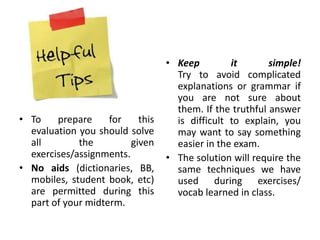
• Keep         it       simple!
                                    Try to avoid complicated
                                    explanations or grammar if
                                    you are not sure about
                                    them. If the truthful answer
• To    prepare     for    this     is difficult to explain, you
  evaluation you should solve       may want to say something
  all        the         given      easier in the exam.
  exercises/assignments.          • The solution will require the
• No aids (dictionaries, BB,        same techniques we have
  mobiles, student book, etc)       used during exercises/
  are permitted during this         vocab learned in class.
  part of your midterm.
• 1. Listen carefully to each
  question and make sure you
  understand exactly what is being
  asked.     Teachers      can not
  interpret questions for you, but if
  you do not hear all of a question,    3. Pause briefly after a question is
  or are not sure if you understand     asked.     Take a few seconds to
  a question, ask for the question      compose your thoughts--quickly
  to be repeated.                       review in your mind the parts of the
                                        question or the main areas of
• 2. Pay particular attention to key    information that you need to cover,
  words, directional words, and         and organize how you will go
  multiple parts of questions.          through this before you begin to
                                        answer the question.
                                        4. If you don't know the answer to
                                        the question, try not to panic. Just
                                        give the best answer that you can for
                                        the question. Try not to ramble if
                                        you do not know or are unsure of the
                                        answer to a question.
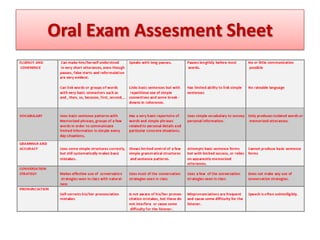
Oral Exam Assesment Sheet
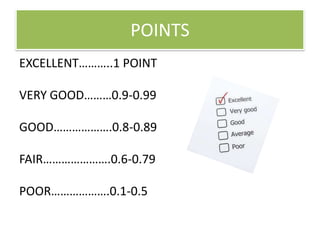
POINTS
EXCELLENT………..1 POINT

VERY GOOD………0.9-0.99

GOOD……………….0.8-0.89

FAIR………………….0.6-0.79

POOR……………….0.1-0.5
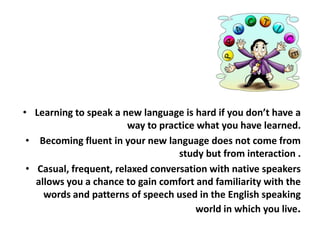
• Learning to speak a new language is hard if you don’t have a
                        way to practice what you have learned.
 • Becoming fluent in your new language does not come from
                                   study but from interaction .
 • Casual, frequent, relaxed conversation with native speakers
   allows you a chance to gain comfort and familiarity with the
     words and patterns of speech used in the English speaking
                                       world in which you live.

Oral exam guidelines

  • 1.
    ORAL TEST GUIDELINES The oral exam is an opportunity for you to demonstrate your knowledge, your presentation/speaking skills, as well as your ability to communicate. Professor Angel Watler Archbold
  • 2.
  • 3.
    How? This 1st OralExam will be done in couples. Option 1. The students will be presented with a problem and should be able to present a solution. The problem will be new, i.e., not a problem we have solved during the class.
  • 4.
    Option 2: Youmay be asked to describe the experience and training you have that is related to the functions or activities performed in the class. Option 3: You may be asked to role-play a situation related to Units 7 & 8 with another person to demonstrate your skill in this activity.
  • 5.
    Option 4: Youmay be asked to watch a video scenario and critique how a situation was handled or answer questions about what you observed, what you heard, or how you would handle the situation. Option 5: You may be asked to make A phone call to the US and talk to a Native speaker about a specific topic, Request, etc.
  • 6.
    • Keep it simple! Try to avoid complicated explanations or grammar if you are not sure about them. If the truthful answer • To prepare for this is difficult to explain, you evaluation you should solve may want to say something all the given easier in the exam. exercises/assignments. • The solution will require the • No aids (dictionaries, BB, same techniques we have mobiles, student book, etc) used during exercises/ are permitted during this vocab learned in class. part of your midterm.
  • 7.
    • 1. Listencarefully to each question and make sure you understand exactly what is being asked. Teachers can not interpret questions for you, but if you do not hear all of a question, 3. Pause briefly after a question is or are not sure if you understand asked. Take a few seconds to a question, ask for the question compose your thoughts--quickly to be repeated. review in your mind the parts of the question or the main areas of • 2. Pay particular attention to key information that you need to cover, words, directional words, and and organize how you will go multiple parts of questions. through this before you begin to answer the question. 4. If you don't know the answer to the question, try not to panic. Just give the best answer that you can for the question. Try not to ramble if you do not know or are unsure of the answer to a question.
  • 8.
  • 9.
  • 10.
    • Learning tospeak a new language is hard if you don’t have a way to practice what you have learned. • Becoming fluent in your new language does not come from study but from interaction . • Casual, frequent, relaxed conversation with native speakers allows you a chance to gain comfort and familiarity with the words and patterns of speech used in the English speaking world in which you live.